




Montbretia/Crocosmia
* Common name: Montbretia
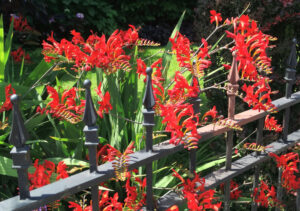
Crocosmia ‘Lucifer’ in full bloom along a fence in July.
Credit: Susan Weigel
* Botanical name: Crocosmia
* What it is: Native to Africa, montbretia/crocosmia is a July- and August-blooming iris-family perennial flower with red, orange, or bright-gold tubular flowers and strappy leaves.
Shoots emerge from bulb-like structures called “corms” in spring and send out arching flower stems that are lined with bright, hummingbird-attracting flowers that open in sequence.
Montbretia isn’t very well known because it was marginally winter-hardy in our previously colder winters, but it’s become a much more reliable perennial in the past 20 years here.
Plants are heat- and drought-tough. They’re occasionally browsed by rabbits but usually not by deer.
‘Lucifer’ is the most common variety (it’s a red bloomer), but several newer varieties are available that bloom orange, orange-red, or gold.
* Size: Plants grow two to three feet tall. Space plants 15 to 18 inches apart, or if you’re planting corms in spring, space those about eight inches apart.
* Where to use: Sunny perennial gardens and borders, south- or west-facing house foundations, and pollinator gardens are the main uses. Avoid wet clay spots, which can encourage roots to rot in winter. Plants bloom best in all-day sun or sites with at least six to eight hours of direct sun per day.
* Care: Flowering stems can be cut off after the flowers brown. Cut frost-killed foliage to the ground at season’s end or some time before new growth emerges the following spring.
Fertilizer usually isn’t needed, but a scattering of granular, organic or long-acting flower fertilizer is fine in early spring if you’re growing montbretia in a mixed garden with other perennials and flowering shrubs.
After establishing a new plant in the first year by keeping the soil consistently damp, water usually isn’t needed from then on except in extended dry spells.
Plants sometimes are attacked by spider mites in late summer, soon after flowering finishes. Either spray them off with a stiff spray of hose water, treat with horticultural oil, or cut off damaged foliage if it starts looking too ratty for your taste.
* Great partners: Most any warm-colored, sun-loving summer perennial pairs well, such as black-eyed susan, daylily, sunflower, red or golden coneflowers, bee balm, and yarrow. St. Johnswort and gold or yellow shrub roses are good shrubby partners. And dwarf goldthread falsecypress is a good evergreen partner.