

• Home
  • Contact
  • Site Map
George Weigel - Central PA Gardening
  • Landscape 1
  • Landscape 2
  • Landscape 3
  • Landscape 4
  • Garden Drawings
  • George's Talks & Trips
  • Patriot-News/Pennlive Posts
  • Buy Helpful Info

Navigation

  • Ramblings and Readlings Home
  • Storage Shed (Useful Past Columns)
  • About George
  • Sign Up for George's Free E-Column
  • Plant Profiles
    • Annuals
    • Edibles
    • Roses
    • Bulbs/Corms/Tubers
    • Evergreens/Conifers
    • Flowering shrubs
    • Ornamental Grasses
    • Perennials
      • Amsonia (blue star)
      • Foamybells 'Alabama Sunrise'
      • Dianthus Firewitch
      • Campanula Blue Clips
      • Japanese painted fern
      • Creeping sedum 'Angelina'
      • Aster 'Lady in Black'
      • Crested iris
      • Salvia 'Marcus'
      • Euphorbia 'Bonfire'
      • Ligularia 'Britt-Marie Crawford'
      • Hosta 'Sagae'
      • Phlox 'Jeana'
      • Baptisia 'Purple Smoke'
      • Coralbells 'Electra'
      • Hosta 'June'
      • Creeping sedum 'Tricolor'
      • Variegated Solomon's seal
      • Foamybells 'Sweet Tea'
      • Lenten rose 'HGC Pink Frost'
      • Foamybells 'Tapestry'
      • Dwarf catmint
      • Astilbe 'Visions'
      • Coneflower PowWow 'Wild Berry'
      • Maidenhair fern
      • Goldenrod Little Lemon
      • Dwarf Shasta daisy
      • Indian pinks
      • Coralbells 'Bronze Wave'
      • Mountain mint
      • Christmas fern
      • Creeping sedum 'John Creech'
      • Liriope Purple Explosion
      • Dwarf Russian sages
      • Hardy begonia
      • Betony 'Hummelo'
      • Ornamental onion 'Summer Beauty'
      • Brunnera 'Silver Heart'
      • Lily 'Forever Susan'
      • Butterfly weed
      • Blazing star
      • Phlox 'Shortwood'
      • Allegheny spurge
      • Toad lily
      • Aromatic aster
      • Salvia 'Caradonna'
      • Candytuft
      • Sweet woodruff
      • Lavender 'Phenomenal'
      • Anemone Wild Swan and Dreaming Swan
      • Hardy hibiscus 'Midnight Marvel'
      • Black-eyed susan 'American Gold Rush'
      • Ornamental onion 'Millenium'
      • Aster Kickin' series
      • Sedum SunSparkler series
      • Autumn fern 'Brilliance'
      • Salvia Sensation Compact Deep Blue
      • Goat's beard 'Misty Lace'
      • Phlox 'Minnie Pearl'
      • Coneflower Sombrero series
      • Yarrow Little Moonshine
      • Hens and chicks Chick Charms
      • Giant hyssop 'Blue Fortune'
      • Coralbells Primo 'Black Pearl'
      • Montauk daisy
      • Peony 'Bartzella'
      • Lily-of-the-Nile (Agapanthus)
      • Lamium 'Purple Dragon'
      • Hardy hibiscus Summerific Series
      • Creeping sedum 'Atlantis'
      • Goldenrod 'Little Miss Sunshine'
      • Astilbe 'Pumila'
      • Barrenwort
      • Brunnera 'Jack Frost'
      • Catmint 'Walker's Low'
      • Centaurea 'Amethyst in Snow'
      • Coneflower Big Sky series
      • Coneflower 'Coconut Lime'
      • Coneflower 'Pink Double Delight'
      • Coralbells 'Citronelle'
      • Coralbells 'Caramel'
      • Coralbells 'Gypsy Dancer'
      • Coreopsis 'Zagreb'
      • Goldenrod 'Golden Fleece'
      • Euphorbia Helena's Blush'
      • Foamybells 'Stoplight'
      • Foamflower 'Sugar and Spice'
      • Gaillardia 'Goblin'
      • Gaillardia 'Oranges and Lemons'
      • Hardy geranium 'Biokovo'
      • Hardy geranium Rozanne
      • Hosta 'Krossa Regal'
      • Lamium 'Pink Chablis'
      • Lamium 'White Nancy'
      • Leadwort
      • Lenten rose
      • Liriope 'Big Blue'
      • Old-fashioned bleeding heart
      • Russian sage 'Little Spire'
      • Salvia 'May Night'
      • Sedum 'Autumn Joy'
      • Sedum 'Neon' and 'Brilliant'
      • Variegated liriope
      • Veronica 'Waterperry Blue'
    • Trees
    • Vines
  • Timely Tips
  • George’s Handy Lists
  • George's Friends
  • Photo Galleries
  • Public Gardens Worth Seeing
  • Links and Resources
  • Support George’s Efforts


George’s “Pennsylvania Month-by-Month Gardening” helps you know when to do what in the landscape.

Read More | Order Now


Pennsylvania Getting
Started Garden Guide

Click Here


George’s “Survivor Plant List” is a 19-page booklet detailing hundreds of the toughest and highest-performing plants.

Click Here


Has the info here been useful? Support George’s efforts by clicking below.


Looking for other ways to support George?

Click Here

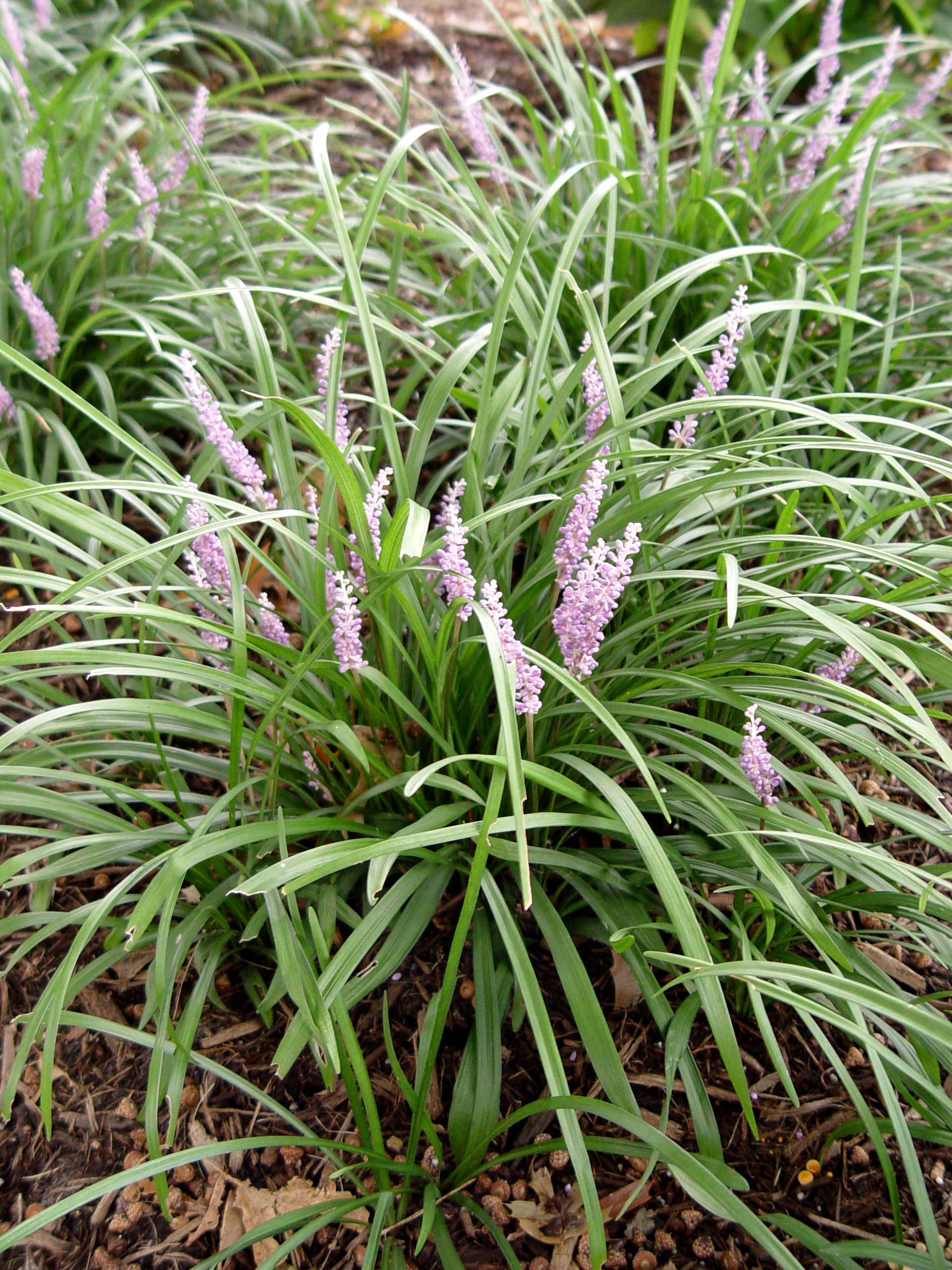
Liriope ‘Big Blue’

Liriope 'Big Blue'

* Common name: Lilyturf ‘Big Blue’

* Botanical name: Liriope muscari ‘Big Blue’

* What it is: One of the toughest and most versatile perennial flowers you’ll ever grow, liriope ‘Big Blue’ has grassy-looking foliage and purple flower spikes that last from late August into early fall. It then gets non-messy, black berries that birds eat in fall. The foliage stays green most winters.

* Size: Foliage grows about a foot tall with flower spikes that poke a few inches higher.

* Where to use: One of those rare plants that will take sun or shade, damp or dry and everything in between. Makes a great edging but also an excellent, dense groundcover, even in dry shade under trees where little else will grow.

* Care: Needs only occasional watering in the worst dry spells and little, if any, fertilizer. Cut to a stub each March before new growth starts. Last year’s leaves will brown out later in the spring if you don’t. Even a lawn mower or weed whacker is fine… you won’t hurt them. ‘Big Blue’ creeps slowly, not invasively like Liriope spicata types. But if it spreads where you don’t want it, it divides easily in spring or fall to make new plants.

* Great partner: Contrasts nicely with the wide leaves of hosta or dark-leafed coralbells in shadier settings. Also makes nice underplantings around trees and pairs well with boxwoods in a more formal front-yard setting.



Comments


3 comments

  • Joe Wallin says:
    January 5, 2017 at 4:48 pm

    My planting is now about 4 years old and although it flowered pretty well the first year, has produced little to no flowers the past three years. We live in central Florida and the about half of the plants are in a border under a Queen palm, while the others are on the west side of the house interspersed with azalea plants. Any suggestions?

  • George says:
    January 5, 2017 at 6:33 pm

    Joe,
    Most liriope varieties aren’t very strong bloomers to start with. The more stress from things like poor soil, drought or root competition and the more shade, bloom is even less. I like liriope for its durability, versatility and grassy texture. I look at any flowers as a bonus.
    You might try fertilizing them (maybe three or four times in the sandy soil of Florida) and maybe dividing them if you’d like to trade off possibly more flowering for the thickness of a 4-year-old groundcover.
    If you were starting from scratch, I’d recommend the variety Purple Explosion. It’s the best liriope bloomer I’ve run across.

  • Joe Wallin says:
    January 6, 2017 at 10:47 am

    Hi George,
    Thanks for the info.
    I have been fertilizing them three or four times a year with Sunniland “Bloom Special” fertilizer (2-10-10). I will try dividing them, as some are now spreading into the path on the side of the house and have to be divided anyway. When I do, I’ll amend the soil a bit. Our sub-division is built on an old citrus grove and it is mostly sand and clay. The builders didn’t do much to improve the soil. Regardless, I’ll just have to be happy with the nice foliage and whatever blooms they produce.
    Thanks again.
    Joe

Leave a Reply

Click here to cancel reply.


George's Certifications
  • Home
  • Garden House-Calls
  • George's Talks & Trips
  • Disclosure

© 2020 George Weigel | Site designed and programmed by Pittsburgh Web Developer Andy Weigel using WordPress