


Leucothoe ‘ReJoyce’
* Common name: Coast leucothoe ‘ReJoyce’
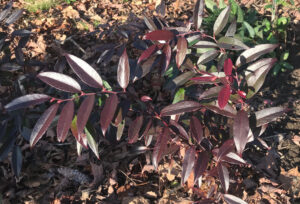
Fall/winter foliage of leucothoe ‘ReJoyce’
Credit: Plants Nouveau
* Botanical name: Leucothoe axillaris ‘ReJoyce’
* What it is: Sometimes nicknamed “dog hobble,” this southeastern-U.S. native broad-leaf evergreen is distinctive for its red new leaves in spring and then its burgundy-purple fall foliage that holds through winter.
Greg Joyce at Edgar Joyce Nursery in New Jersey discovered the variety, which is also deer-resistant and resistant to the root-rot and fungal leaf-spot diseases that sometimes affect leucothoes.
Plants produce small urn-shaped white flowers in spring and grow in an arching habit. The leaves are glossy, slender, and come to a point at the tip.
ReJoyce is an overall impressive-enough performer that it won a 2025 Gold Medal Award from the Pennsylvania Horticultural Society as a plant deserving more use in mid-Atlantic landscapes.
* Size: Plants grow two to three feet tall and about three feet wide.
* Where to use: Leucothoe does best in morning sun/afternoon shade or in sites with dappled light throughout the day. It also prefers damp, acidic, organic-rich soil.
Good landscape locations are eastern and northern house foundations, partly shaded rain gardens, shade gardens, and woodland edges. If massed three feet apart, ReJoyce makes a good shady groundcover. Avoid hot, dry, windy areas.
* Care: Test the soil before planting and add any sulfur or fertilizer that’s recommended to make the soil more acidic and fertile. An annual spring scattering of a granular, acidifying fertilizer such as Holly-Tone is usually helpful.
Keep the soil consistently damp the whole first season to help the roots establish. Then soak weekly in ensuing years during hot, dry spells in summer.
To control size, shorten and thin out branches after plants finish blooming in spring. Plants also can be lightly sheared, but that diminishes the natural arching habit. If size is OK, pruning is not needed.
* Great partner: Pairs well with upright shade perennials that also prefer damp, “woodsy” soil, such as ferns, bleeding heart, Japanese anemone, astilbe, goats beard or ligularia. Sedges or Japanese forestgrass are good grassy partners. Foamflowers are a good low-growing perennial partner.