


Chaste tree (Vitex)
* Common name: Chaste tree
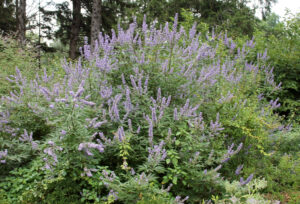
A chaste tree (Vitex) in full bloom.
* Botanical name: Vitex agnus-castus
* What it is: Just about everyone short of discerning horticulturists thinks the chaste tree is a butterfly bush when they see one blooming this time of year.
It’s easy to understand because chaste trees have the same shrubby habit and long, slender, lavender flower spikes of more familiar butterfly bushes.
Now that most non-native butterfly bushes have fallen out of favor for their seed-around tendencies, gardeners are looking for replacements. Not many shrubs bloom in late summer, though.
Chaste trees are the closest look-alike, and although they’re also not U.S. natives (they’re native to the Mediterranean), chaste trees aren’t on Pennsylvania’s invasive-plant watch list.
Besides the big, showy flowers, chaste trees seldom run into any bug or disease issues, deer don’t like them, and they’re both heat- and drought-tough once established.
The main factor that’s kept them from becoming more widely used is that they’ve been traditionally borderline winter-hardy in Pennsylvania’s climate. However, newer varieties like the bluish-lavender ‘Shoal Creek’ and Bailey Nursery’s 2023 lavender-blooming Queen Bee are reliably hardy, especially given our trend toward warmer winters. Those are also heavier bloomers.
* Size: Plants grow five to six feet tall and six to eight feet wide.
* Where to use: Chaste trees make sense anywhere a butterfly bush would have been used, i.e. as specimens in sunny gardens, in mixed gardens, along sunny borders, or in a line as a flowering hedge. Full sun is best, but part shade is doable.
* Care: Fertilizer usually isn’t needed, but if your soil is poor nutritionally or a soil test indicates it, scatter granular fertilizer around the base of chaste trees in spring.
Keep the soil consistently damp the first season, then chaste trees usually don’t need water except in prolonged hot, dry spells.
If size-control pruning is needed, thin excess branches and cut back long branches as needed at the end of winter. Plants can be cut back sharply, even so far as ankle high if a “rejuvenation pruning” is needed or if winter has killed a lot of top growth.
Snip off spent flower spikes as they brown in summer if you like to keep the plant looking neat or want to ensure there’s no chance of unwanted seeding. That “deadheading” also encourages continuing bloom.
* Great partner: Plant around the base with short to mid-sized pink or blue flowers, such as petunias, vinca, or verbena (annuals) or catmint, hardy geraniums, or penstemon (perennials). Blue junipers are good evergreen partners.