



Virginia sweetspire Little Henry
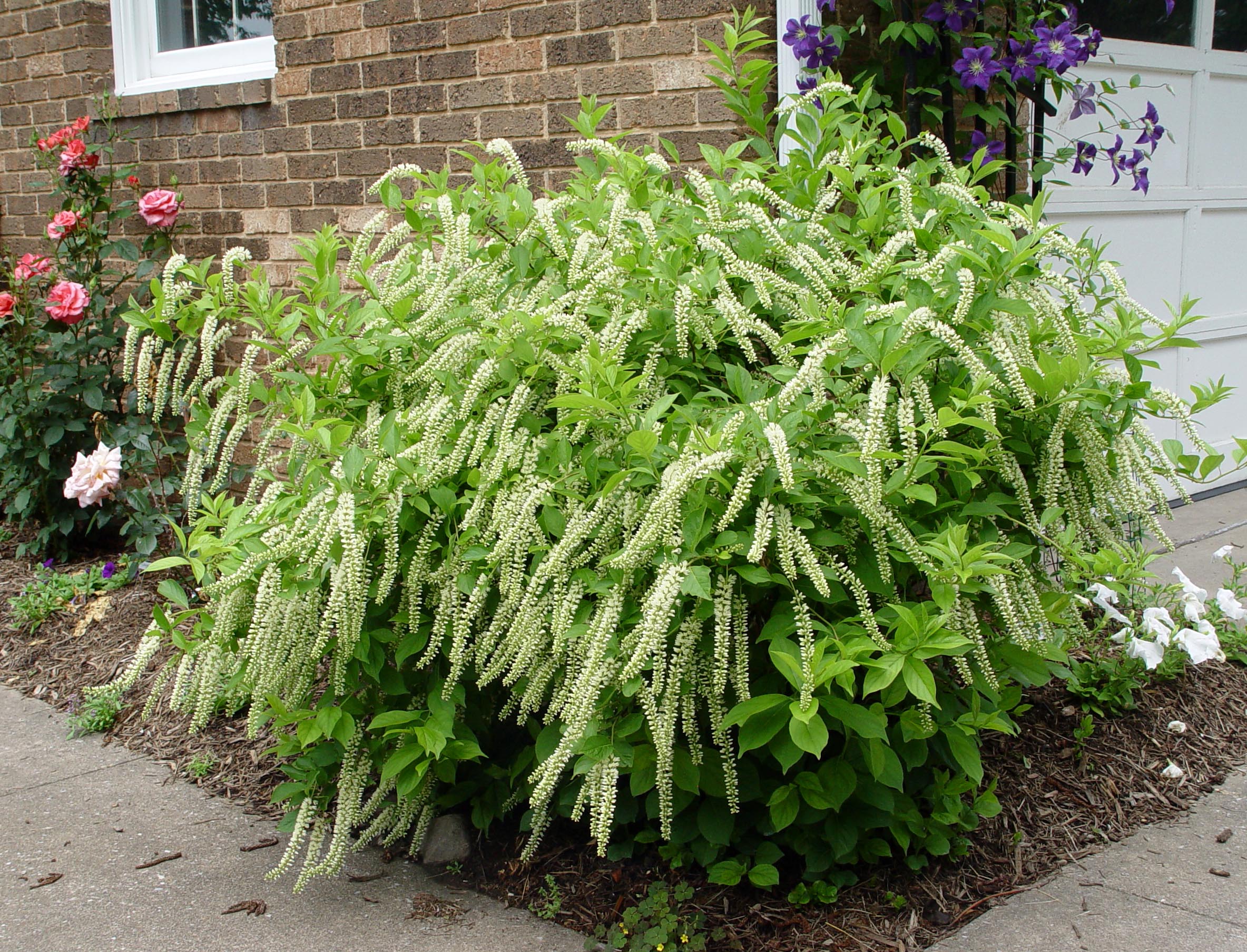
Sweetspire Little Henry blooming in June at George’s garage corner.
* Common name: Virginia sweetspire Little Henry(R)
* Botanical name: Itea virginica ‘Sprich’
* What it is: A compact, native flowering shrub that gets white, arching, bottle-brush flower clusters in late spring and then glossy, rich red leaves for weeks in fall.
* Size: Grows 3 to 4 feet tall and best kept to about 4 feet wide. Will gradually colonize wider if you don’t sever root shoots.
* Where to use: Little Henry is very versatile. Part shade and damp soil is ideal, but it’ll also take shade or full sun and even a fairly brutal drought once established. Makes a nice foundation plant but also works well as a low ornamental hedge or edging shrub, such as along a property line or walk.
* Care: Keep well watered the first full year until roots establish. The main maintenance is to shear plants back to about 2 feet immediately after bloom in late spring or early summer. Also snip off any dead branch tips after plants leaf out in early spring. Sever any root shoots that pop up where you don’t want them to spread and plant them in a new area or give to friends. (They re-root easily.) A feeding at winter’s end with a balanced, granular organic fertilizer such as Plant-tone is optional.
* Great partner: Try ringing three or four Little Henries around a dark-leafed ‘Diabolo’ ninebark for a great shrub combo. In shadier spots, surround Little Henry with pink impatiens.
Little Henry in a hedge setting in George’s back yard.
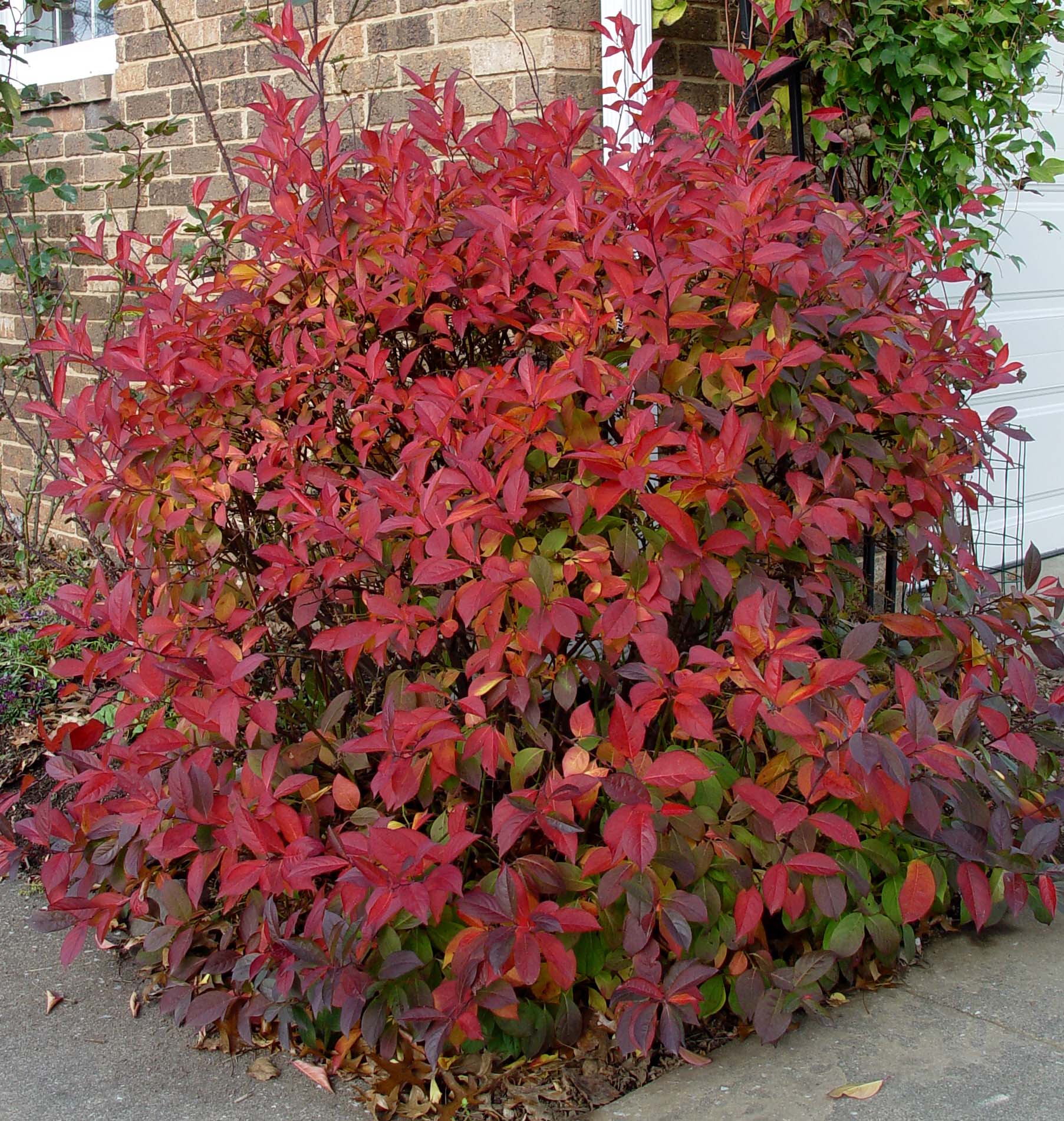
The same plant in fall.

What might happen if I pruned my wayward Little Henry’s Garnet now, or in early Spring. Due to health issues it just got away from me this Summer.
Thanks, Rose Sanders
Rose,
You wouldn’t kill them, but you’ll reduce and maybe eliminate the coming year’s flowers if you prune sweetspires between fall and early spring. Unless they really look overgrown, the ideal move would be to let them flower next spring and then cut them back hard right after the blooms fade.
George
Can I plant a virginia sweetspire in December?
What about a hearty hibiscus?
I am in zone 8.
Bonnie,
I’d wait to plant both of those in spring in our Zone 6, but I don’t know about planting times in Zone 8. You might check with a local garden center or your county Extension office for the best advice.
I love the look of these! Thinking of buying to plant as a foundation/hedge plant along a sidewalk to my front door. Is there a way to keep them at minimum of perhaps 2′ or 3′ vs the beautiful bush plant I see in your photos? Or would this even work? If so, how would I manage this? Another question is if they are cut back, do they provide the beautiful fall foliage? Thanks!
Tamara,
Yes, you can cut back sweetspires right after they flower to keep them 2 to 3 feet tall. They’ll grow new leaves and shoots the rest of the summer after pruning and turn that nice shade of rich red in fall.
Will they do well in zone 4 (sw WI)?
I’m not sure, but I can tell you the hardiness rating is only down to Zone 5, so I doubt it. I’d check at a local garden center to see if they carry sweetspire. If not, the winter-hardiness issue is probably why.
The leaves are dropping off our itea. Any suggestions. They are 5 years old and looked great and just noticed this today.
J. Durkee,
I could take a wild guess at heat or drought stress, but without seeing the plant, investigating the possibilities or even knowing where you’re located, it’s impossible to say why the leaves are dropping. Could be a lot of things. Your local Extension office may have a diagnostic clinic or Master Gardener question line that could help.
I have mine in moist soil. First season went well but this year not much growth. Is it necessary to trim back after flowering to insure growth the rest of the summer?
Richard,
Sweetspires prefer moist soil, but if all the rain this summer took it from moist to soggy, it’s possible that stunted growth. My sweetspires had an excellent season, but my soil is well drained.
You don’t have to prune these at all if the size is OK. Pruning after bloom might make them a little “bushier,” but it isn’t necessary for good growth or flowering. I lightly trim mine to make them slightly neater in the loose-hedge setting where I’m growing them.
Hi! I am in climate zone 7, Philadelphia Pennsylvania. Can I transplant my Little Henry sweetspire and Amsonia now? Thank you so much.
Marita,
Yes, early October is a good time to transplant both sweetspire and amsonia. Keep them watered after the move until the ground freezes.
End of winter through early spring is another good time, although not as good as early fall.