

The Best New Perennial Flowers of 2016
January 26th, 2016
A non-floppy sage, a showy but hardy hibiscus, and a pair of coneflowers in new colors headline the list of new perennial flowers hitting the market in 2016.
Let’s take a look at some the best of the best of these perennial newcomers showing up now in catalogs and primed to go on sale in garden centers this spring.
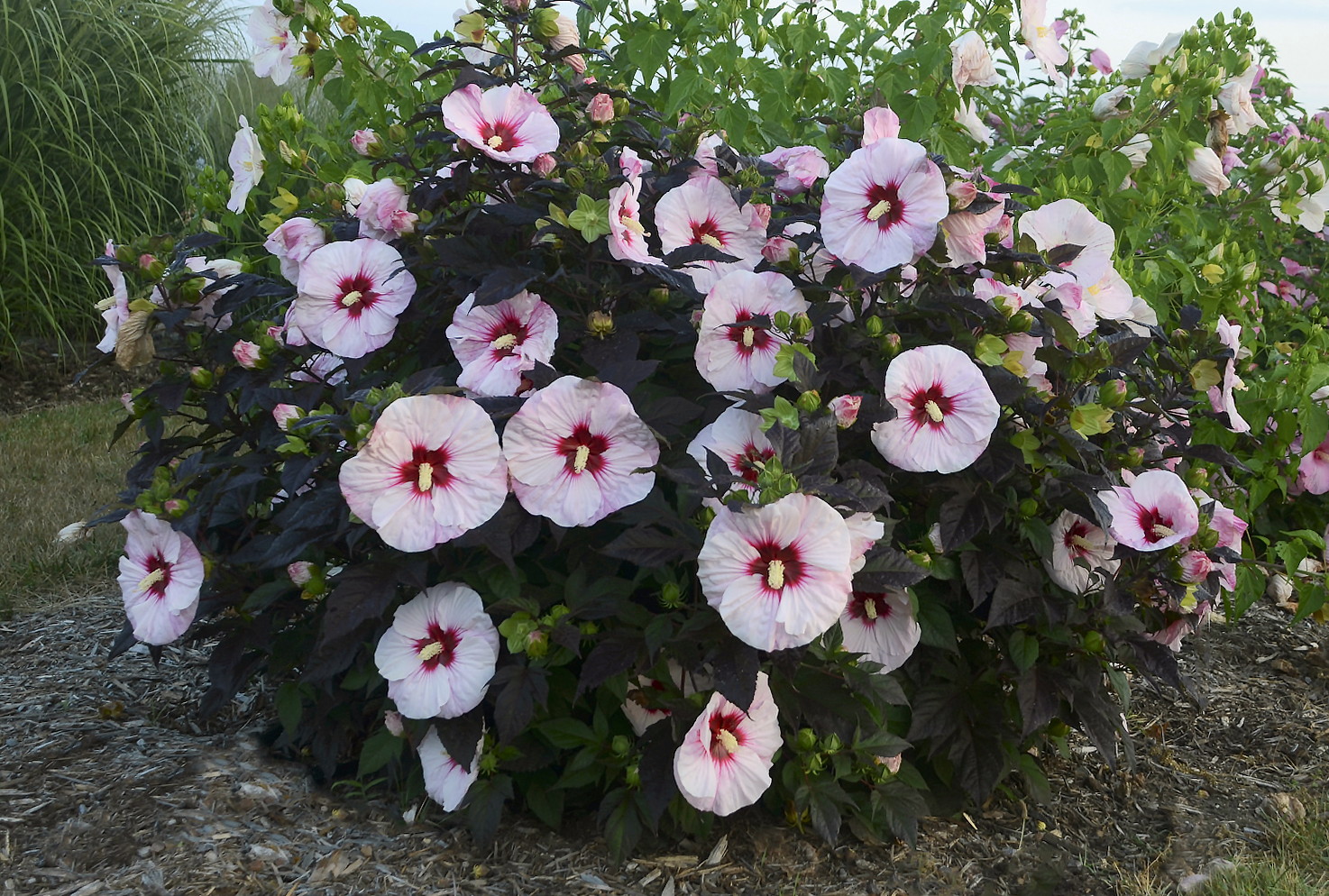
Hibiscus Summerific Perfect Storm
Credit: Walters Gardens
Hibiscus Summerific ‘Perfect Storm’ and ‘Berry Awesome’
Fans of big flowers will love most any hardy hibiscus (a.k.a. rose mallow), but these two new ones from Proven Winners are exceptional head-turners.
“These plants bloom all summer long, and they have nice leaf and flower colors,” says Bryan Benner, a grower at the wholesale Quality Greenhouses near Dillsburg who rates these as his favorite new perennials of 2016.
‘Perfect Storm’ has large, 8-inch, trumpet-shaped flowers of white with a red throat and dark black-purple leaves. It’s also one of the more compact hibiscus varieties, growing to a bushy 3 feet tall.
‘Berry Awesome’ has the same big flowers, but they’re ruffled and a vibrant lavender-pink in color with a cherry-red throat. It has dark-green foliage and grows to about 5 feet.
Penstemon Rock Candy
This little blooming machine is the heaviest-flowering penstemon I’ve ever seen. The pink version of this series was literally covered with hot-pink tubular blooms most of last July in Penn State’s Trial Gardens in Lancaster County.

Penstemon Pink Rock Candy
Chester County’s Star Roses and Plants is introducing three new colors of Rock Candy penstemons in 2016 – Light Pink, Ruby, and Blue in addition to the existing Pink and Purple ones.
Penstemon is a U.S. native perennial that’s also attractive to hummingbirds and pollinators. The Rock Candy series grows only about 1 foot tall and blooms most of the summer.
Russian sage ‘Peek-a-Blue’ and ‘Rocketman’
Russian sage is one of the longest-blooming, most trouble-free perennials, but it has one trait working against it – it’s a flopper.
That’s why Montgomery County author and “Perennial Diva” Stephanie Cohen likes these two new Russian sage varieties… they’re short, compact varieties that don’t flop.
“These basically take all kinds of soils, so long as it’s well-drained,” she says. “Deer do not eat them. Both flower a long time with lavender flowers.”
And Cohen adds that all Russian sages are great choices for going long stretches without water, something she thinks is an important trait as water becomes increasingly valuable.
‘Peek-a-Blue’ grows 2 feet tall and has finely dissected leaves. ‘Rocketman’ is slightly taller and has non-dissected foliage.
Both do best in full sun.
Agastache ‘Peachie Keen’ and ‘Rosie Posie’
Stephanie Cohen also likes agastache for its long-blooming and water-saving traits, and she especially likes the 2016 newcomers ‘Peachie Keen’ and ‘Rosie Posie.’
“Deer do not eat these, they attract butterflies, they’re fragrant, and they’re long-flowering, starting in midsummer,” she says.
‘Peachie Keen’ grows 2 feet tall and blooms apricot-peach. ‘Rosie Posie’ grows 18 inches tall and blooms hot pink mixed with purple-magenta.
Agastache is in the mint family and so does spread, but not invasively so.
Echinacea Sombrero ‘Baja Burgundy’
The Sombrero series of coneflowers is one of the better ones to come along lately, and the newest addition is ‘Baja Burgundy,’ a variety with deep burgundy blooms.
Katie Rotella of Ball Horticultural Co., which grows Sombrero coneflowers, likes this one as well as any new perennial not only for the rich flower color but also for its sturdy branching, its heavy blooming, and its ability to reliably return each season.
“The plants are also drought resistant, and the spent blooms’ seed heads feed songbirds, too,” she says.
‘Baja Burgundy’ grows about 20 inches tall, blooms for weeks in July and August, and performs best in full sun.
Echinacea Butterfly ‘Rainbow Marcella’
Another new coneflower that Ashcombe Farm and Greenhouses perennial manager Carleen Vorisek picks as her top 2016 perennial is this one that blooms in an interesting shade resembling orange sherbet.
Introduced by Plants Nouveau, coneflower ‘Rainbow Marcella’ is a heavy bloomer that also returns well year after year – unlike some coneflowers that peter out after a couple of winters.
It’s also a compact variety, growing about 18 inches tall.
The blooms age to a soft, raspberry pink and are attractive to butterflies and bees.
“Pollinator plants are so popular now, and these are not only perfect for attracting pollinators to your garden, but they are selections of natives,” says Angela Treadwell-Palmer, co-owner of Plants Nouveau. “They make the most beautiful border plants and also look great in mixed planters.”
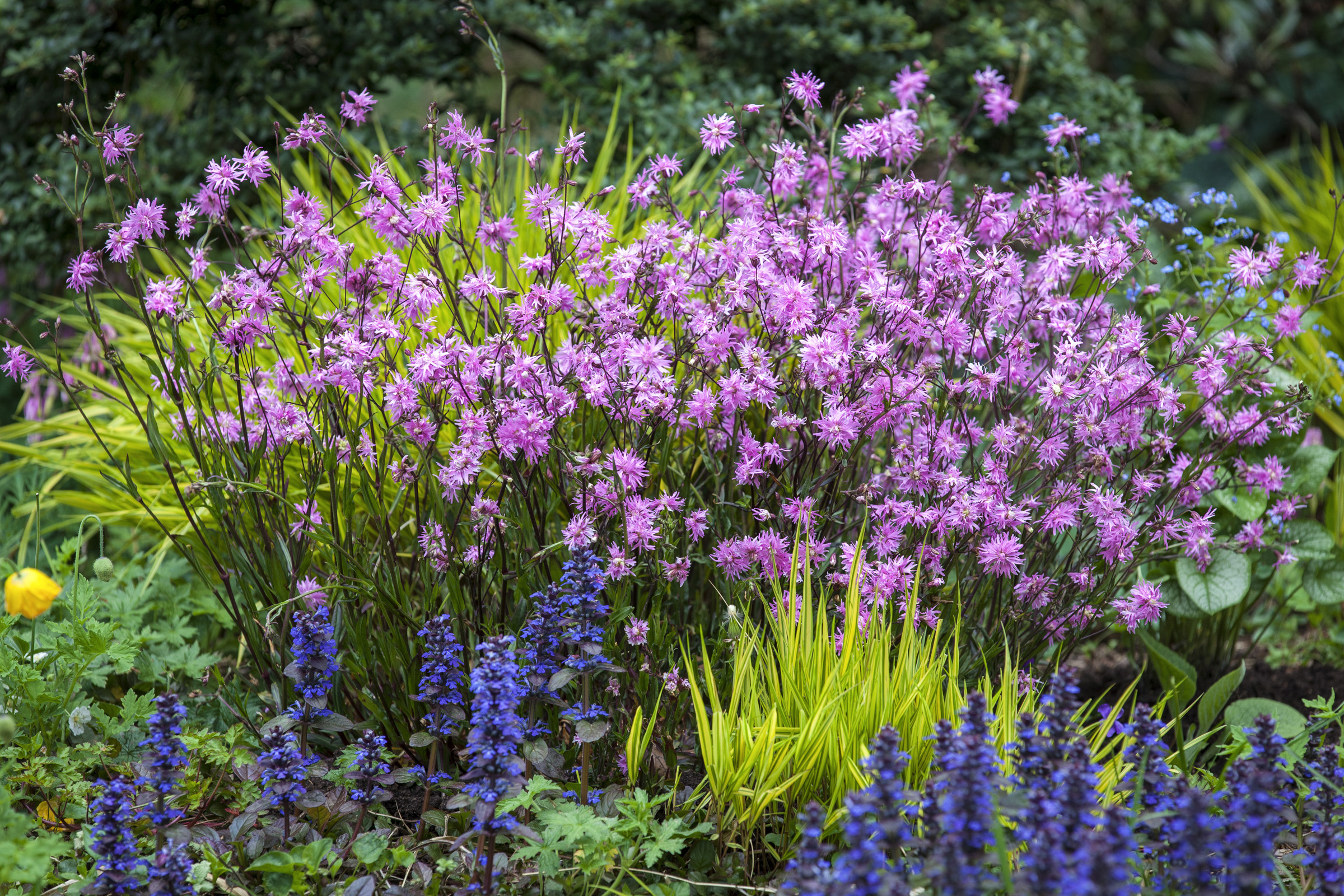
Looking for something different? Few people know or grow this perennial, which the British call “ragged robin.”
Blooms of Bressingham’s marketing director Christine Kelleher thinks gardeners will like lychnis ‘Petite Jenny’ for its long bloom and ability to attract pollinators, including bees, butterflies and hummingbirds.
“It’s showy and floriferous,” she says. “It’s covered with masses of fluffy pink blooms from mid-May into fall. And it has a great compact habit, just 14 inches tall and 18 inches wide… perfect for smaller gardens and containers.”
Lychnis also isn’t a deer favorite in case you have any four-legged eating machines lurking.
Sedum ‘Dark Magic’
Dark foliage is a trendy trait in the garden, and that’s the main attraction of this new drought-tough sedum from Oregon’s Terra Nova Nurseries.
‘Dark Magic’ has burgundy-black stems and succulent leaves, plus a very heavy bloom of pink umbrella clusters in August and September.
It’s also a compact variety, growing to about 20 inches with the flowers, which makes it less floppy than many sedums.

Great info but please include the zones! That’s very important to us here in zone 4 of Central Oregon.
Thanks for reading, but my website is geared to central Pennsylvania. Plant selection is so much more effective when it’s focused to a particular region, which is why I stick with what works here.
Even aside from growing zones, there are a whole lot more variables between central Pa. and central Oregon (soil type, diseases, bugs, etc.) that you’d get far better information by tracking down an expert closer to your region. Maybe there’s an Oregon George out there somewhere…