• Home
  • Contact
  • Site Map
George Weigel - Central PA Gardening
  • Landscape 1
  • Landscape 2
  • Landscape 3
  • Landscape 4
  • Garden Drawings
  • Talks & Trips
  • Patriot-News/Pennlive Posts
  • Buy Helpful Info

Navigation

  • Storage Shed (Useful Past Columns)
  • About George
  • Sign Up for George's Free E-Column
  • Plant Profiles
  • Timely Tips
  • George’s Handy Lists
  • George's Friends
  • Photo Galleries
  • Links and Resources
  • Support George’s Efforts


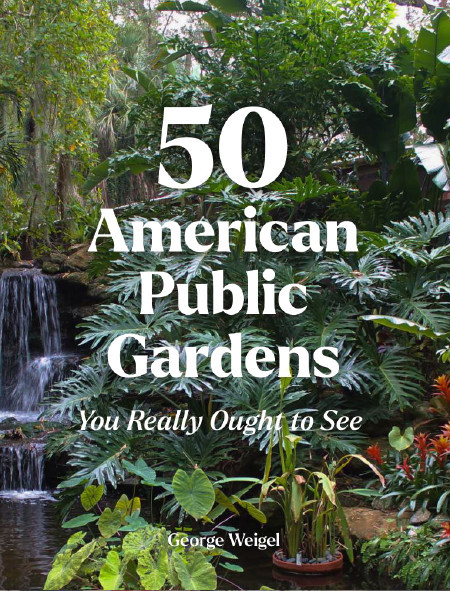
George’s new “50 American Public Gardens You Really Ought to See” e-book steers you to the top gardens to add to your bucket list.

Read More | Order Now


George’s “Survivor Plant List” is a 19-page booklet detailing hundreds of the toughest and highest-performing plants.

Click Here


Has the info here been useful? Support George’s efforts by clicking below.


Looking for other ways to support George?

Click Here

George's Current Ramblings and Readlings

George Signing Off: The Final Post

December 30th, 2025

   Well, this is it. I’ve been writing and running this website for 20 years, and I’ve decided it’s time to pack away GeorgeWeigel.net.

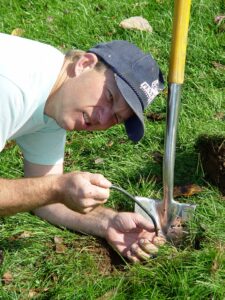
Old George in a familiar position.

   I’ve been gradually shedding different parts of my career now that I’m a full-fledged member of the Medicare and Social Security community.

   My Garden House-Calls consulting business, garden trips, garden talks, landscape drawings, and most free-lance writing is already history. This site is the next-to-last thing to go.

   This post is the last, and once my web-hosting contract runs out at the end of April 2026, the whole site will disappear into Internet Heaven.

   I plan to continue writing weekly garden columns, posts, and in-season Plant Picks of the Week for The Patriot-News and its PennLive.com website. That’s where my garden-writing started in 1993, and so it’s fitting that it’ll be the last gig standing.

   I wrote a post last week going over where you can find articles and photos here that you might want to read or save before it all goes away. Scroll down to see that post.

   I should also remind you once more that if you want a copy of my 19-page “George’s Survivor Plants for Pennsylvania” booklet (the most useful resource I’ve come up with in my 30 years of garden-writing), now’s the time to get it.

   The listing zeroes in on hundreds of my top plant recommendations (specific varieties, too), and it includes light needs, planning sizes, bloom times, and other important factoids you ought to know about each plant. It’s updated for 2025.

   The only place you can get the “Survivor Plants” booklet is directly from me, i.e. through my Buy Helpful Info page.

   You can download a copy for $4.95 or order a paper copy for $7.95, plus $3 shipping. Once this site goes away, so does the booklet.

   The Buy Helpful Info page is also the place where you can download a copy of my “50 American Public Gardens You Really Ought to See” e-book. It’s a $7.95 download.

   And if you’re interested in using any of the articles and photos posted here in a commercial way – say, to reprint in your own writings, site, or publication – I’d be happy to sell you the rights and email you copies.

   Articles are $25, and photos are $10. Email me at george@georgeweigel.net before that address also goes away. (I don’t mind if you want to grab and save any of the files for your own use.)

   I’ve been writing posts and adding “content” (what used to be called articles and photos) to this site for more than 20 years now.

   I never intended it to make money (which it didn’t), and so I didn’t charge subscription fees or clutter up the site with ads. My main purpose was to share info with fellow gardeners as well as to set up an online base for my one-time Garden House-Calls consulting business and the many garden trips I used to do.

   Occasional donations from generous gardeners and the marginal income through the sale of my books and Survivor Plants booklets helped with the funding a little, but I basically ate most of the operational costs and production time.

   I’m super-grateful to everyone who contributed in one way or another over the years. Thanks so much! You can see the names of contributors on my George’s Friends page.

   Of all the avenues I’ve taken in my career, writing is easily my favorite. I’ve really enjoyed the research, the creativity of crafting factoid jumbles into stories, and especially sharing discoveries that I think others will find useful and helpful. I still do.

   Blending my favorite pastime of gardening with my Penn State training in writing has been the perfect career combo. I’m glad someone was willing to pay for the results so I could make a living out of it! And I’m glad I timed it before AI bots completely take over garden-writing.

   My parting wish is that all of you gardening friends and treasured readers will have many more healthy years of digging-in-the-dirt fun.

   I know many of you share my belief that despite the dirt, the sweat, the sore backs, the oppressive heat, the annoying blackflies, the endless stream of weeds, the never-cooperative weather, and the frustration of dealing with hungry deer, rabbits, and groundhogs, there’s still no better day than one spent in the garden.

   Second best is a day writing about gardening.

   Thank you for giving me that opportunity. And happy gardening always!


Past Posts Still Worth Checking Out

December 9th, 2025

   Time is winding down if you want to read and/or save anything I’ve written here over the past 20 years of GeorgeWeigel.net.

George, right, interviewing Tim Clymer for a gardening article of the past.

   I’m retiring this site at the end of the year, and when my web hosting contract runs out at the end of April 2026, the site and everything in it will disappear into Internet Heaven.

   That means now’s the time to sniff around here and mine whatever gardening info-nuggets you might have missed – or ones that you read a few years ago and forgot.

   I don’t mind if you want to grab and save any of the files for your own use. But if you’d like to use any articles or photos commercially – say, to reprint in your own writings, site, or publication – I’d be happy to sell you the rights and email you copies. Articles are $25, and photos are $10. Email me at george@georgeweigel.net before that address also goes away.

   As for what to find where, a good starting point is to check out the archived topic lists at left.

   The Plant Profiles listing guides you to rundowns on the 300+ high-performing plants that I’ve profiled over the years, including good places to use each plant, good partners for them, and how to care for them.

   The Timely Tips listing is my 12-part calendar on what garden jobs to do each month.

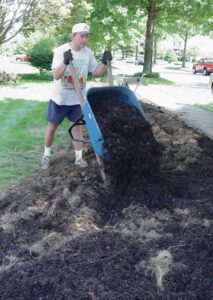
Buried cable lines… one of the many potential pitfalls on a typical gardening day.

   My favorite section is George’s Handy Lists, a set of links that takes you to more than 60 lists to help you garden better (and maybe give you a few chuckles along the way). The entries include topics such as “10 Frankenplants I’d Like to See,” “10 Landscape Plants You’ll Probably Kill,” “10 Murphy’s Laws that Apply to Gardening,” “12 Ways to Keep You from Hurting Yourself in the Garden,” “Ultra-Local Native Plants for Southcentral Pennsylvania,” “The Eight Things that Annoy Gardeners Most,” and “10 Things My Wife Makes Fun of Me For (Gardening Only).”

   If you like looking at plant and garden photos, my Photo Galleries section gives you hundreds of shots I took during the many garden trips I led as well as collections of my “50 Favorite American Garden Settings of All Time,” “50 Favorite International Garden Settings of All Time,” photos from past Philadelphia Flower Shows, photos of some superb Harrisburg-area home gardens, and photos of the Cumberland County home garden I left behind.

   Probably the most useful resource I’ve come up with in my 30 years of garden-writing is my 19-page booklet, “George’s Survivor Plants for Pennsylvania.” I developed it as part of my Garden House-Calls consulting business. The listing zeroes in on hundreds of my top plant recommendations (specific varieties, too), and it includes light needs, planning sizes, bloom times, and other important factoids you ought to know about each plant.

   The only place you can get this “Survivor Plants” booklet is directly from me, i.e. through my Buy Helpful Info page.

   You can download a copy for $4.95 or order a paper copy for $7.95, plus $3 shipping. Once this site goes away, so does the booklet. So if you want one, now’s the time to do it. It’s been updated for 2025.

   The Buy Helpful Info page is also the place where you can download a copy of my “50 American Public Gardens You Really Ought to See” ebook. It’s a $7.95 download.

   If you’re interested in certain topics, look for the Search box at the top right of the home page and type in the topic of choice. A list should pop up of articles on this site that match.

   Another option is to go to the Storage Shed button at the top of the left-side tool bar. This avenue lets you search by categories such as Enviro-Gardening, Flowers, How-To, Mayhem in the Garden, Garden Design/Plant Selection, Fun Stuff, and Everything Else.

   Or you could just keep scrolling down the articles on the home page and hitting the “Older Ramblings and Readlings” button at the bottom to keep going back in time.

   Here are a few past “Readlings” that I liked and believe are still timely and useful:

Read More »


Eight Things I’ve Learned about Gardening

December 2nd, 2025

   I’ve been gardening for 45 years now and have picked up a few practical insights that a.) aren’t always obvious, and b.) aren’t lessons you usually read about in books.

Scientific evidence to the contrary, I’m a believer in improving soil with compost before planting.

   As I head into the final month of this website, I thought I’d share eight of the most important with you.

1.) You really do need to improve the soil.

   This is the one really important part of gardening where I disagree with the experts and the supposed scientific evidence behind it.

   The books all tell you that you shouldn’t add compost or other amendments to the soil, at least when planting trees and shrubs. The reason is the so-called “bathtub effect” – water will drain through the improved soil, then hit the more compacted native soil below and around the hole, causing a backup that leads to root-rotting.

   While that can happen, I don’t think it’s anywhere near the threat that planting into unimproved soil poses. Most of our “soil” is heavily compacted clay, shale, and especially “builder’s soil” that results when home-builders grade a yard, pile up the surface clay and subsoil, then spread a six-inch layer of this plant death trap over the bulldozed site.

   I’ve tried the recommended loosening and planting into existing soil, and it almost always results in severely stunted plants – and often a gradual retreat into death. I can’t tell you how many plants I’ve rescued by digging them up, working a bucket of compost into the planting bed, then replanting.

   I’ve had the best results by preparing planting beds in advance – loosening a foot deep and working about two inches of compost into the soil before planting. That amounts to about a 20-percent compost improvement.

2.) If there’s a “secret” to gardening, it’s water.

   I’ve seen so many fads and miracle products marketed over the years – ones that are supposed to jump-start plant growth.

   Mycorrhizal fungi, vitamin B2, biochar, assorted plant stimulators, magnesium, Super Thrive, and fertilizers in general are among the many things gardeners are told they ought to apply to maximize success.

   While some of them might have some benefit, I’ve found that the best overall plant-growth stimulator is simple water.

   Plants go downhill quickly when they don’t have enough, and they stunt and struggle mightily in hot summers that go long spells without rain – a scenario that’s become our norm lately.

   I’ve found that not enough water is the cause of way more plant woes than nutrient deficiencies, bug problems, or compost added to the soil. Being a good “waterer” leads to success more than any product.

Read More »


Circle of Life in the Yard

November 18th, 2025

   Gardening is recycling at its core… or at least it could/should be.

George playing with his compost.

   When done thoughtfully, growing plants in the yard returns as much to nature as it uses, creating an endless (sorry, Lion King) circle of life.

   Things feed things until it all comes back around. It’s what I like most about composting. When I yank weeds, gather fallen tree leaves, and collect coffee grounds and kitchen peelings in my under-the-sink stainless-steel pail, I don’t look at it as work. It’s harvesting free fertilizer and organic matter.

   I can’t imagine gardening without composting. A hallmark of almost all of the best gardeners I’ve seen in action is a compost bin or three they seem to have tucked away somewhere in the yard.

   It’s never made much sense to me to bag and toss leaves, weeds, and grass clippings and to grind organic kitchen waste down a water-hungry garbage disposer, then turn around and buy bagged mulch and soil amendments from the garden center. Why not make our own out of what we already have?

Read More »


How to Head Off Winter Plant Damage

November 4th, 2025

   Our winters have been consistently warmer these past three decades, but that doesn’t mean we Pennsylvania gardeners can let down our guard like we’re now the semi-tropics.

Just one really cold night is enough to cause damage or death to a tender landscape plant.

   Last winter reminded us that we can still flirt with sub-zero winter nights, even if it’s just for a quick-hit arctic blast or two. Really, that’s all it takes to kill or winter-burn plants that are borderline-hardy.

   Although most of the Harrisburg area has now morphed into USDA Cold Hardiness Zones 7A and 6B (a half of a zone warmer than the turn of the century), we can still get temporary tastes of a Zone 6A or even 5B winter.

   That doesn’t mean it’s foolhardy to take advantage of new possibilities like tea olives, hardy camellias, distyliums, and gardenias, or to feel more comfortable with previous iffy choices such as cherry laurel, figs, aucubas, and skip laurels.

   Most winters now, we probably can get away with all of the above.

Read George’s PennLive column on 16 “southern” plants you now might be able to grow

   What helps stack the odds in your favor is 1.) wise siting, and 2.) a few precautions and winter-prep techniques to mitigate those few extra-cold surprises and erratic temperature ups-and-downs.

Read More »


« Older Ramblings and Readlings

  • Home
  • Garden House-Calls
  • George's Talks & Trips
  • Disclosure

© 2026 George Weigel | Site designed and programmed by Pittsburgh Web Developer Andy Weigel using WordPress