

Best New Trees and Shrubs of 2015
January 17th, 2015
The final entry in this year’s best-new-plants series concludes with a look at interesting new trees and shrubs hitting the market in 2015, including a completely new type of tree.
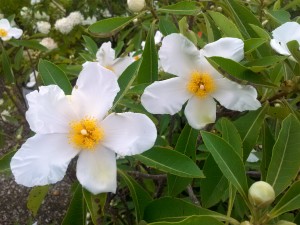
The gordlinia is a new type of tree that’s a cross of gordonia and franklinia.
Watch for these coming to a garden center near you this spring:
Mountain gordlinia. Here’s the new tree, a cross between the compatible gordonia (nicknamed “Loblolly bay”) and the franklinia (discovered in Georgia by America’s first botanist, John Bartram, and named after his friend, Ben Franklin).
Although both of those are U.S. natives, neither is very well known or commonly grown. The gordonia is a non-winter-hardy, broad-leaf, evergreen, while the franklinia is disease-prone and finicky about where it grows, which might explain why it’s now extinct in the wild.
North Carolina State University hybridizer Dr. Tom Ranney managed to cross the two to come up with a small, ornamental tree that salvages the best traits of both parents, including winter survivability at least in warmer parts of Pennsylvania.
“It has nice, showy leaves with white flowers,” says Bryan Benner, a grower at the wholesale Quality Greenhouses near Dillsburg who picked this as his favorite new woody plant of 2015. “It’s much hardier than franklinia with all of its positives.”
I’m test-growing one and so far like the fall color better than any trait – a deep blood-red shade. And the leaves hold late into fall.
You might have to special-request this one at your favorite garden center since it’ll likely to be in short supply.
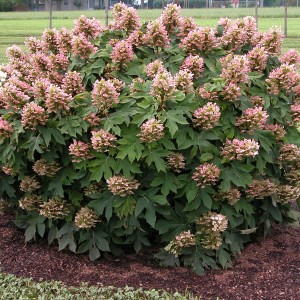
Oakleaf hydrangea ‘Munchkin.’
Credit: U.S. National Arboretum
Oakleaf hydrangea ‘Munchkin.’ Oakleaf hydrangeas are native woodland shrubs with multiple seasons of interest, but they can get a bit big for some gardens (sometimes up to 10 feet tall).
‘Munchkin’ is a new introduction from the U.S. National Arboretum that offers both a compact size and rich pink flowers.
Erica Shaffer, manager at Highland Gardens in Lower Allen Twp., is a fan of this one not only for its garden-friendly size (about 3 feet tall and 5 feet wide) but for its mahogany-purple fall foliage.
“It holds those colored leaves deep into December,” she adds.
The 6-inch-long cone-shaped flowers open white in mid-summer, then turn medium pink and eventually cinnamon brown, Shaffer says.
‘Munchkin’ grows best in part shade.
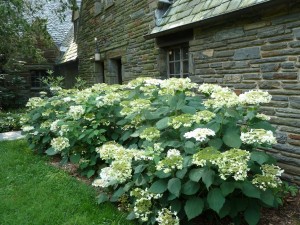
Hydrangea ‘Haas’ Halo.’
Credit: Plants Nouveau
Hydrangea ‘Haas’ Halo.’ Another new twist on a different type of native hydrangea – our woodland smooth hydrangea – is this one selected by retired Delaware Valley College horticulture professor Dr. Frederick Ray.
Using a batch of seedlings given to him by a friend, Joan Haas, Ray found one with particularly large white flowers that hold upright on sturdy stems.
“These are some of the loveliest dried flowers I’ve seen in a long time,” says Angela Treadwell-Palmer, whose Plants Nouveau company is introducing ‘Haas’ Halo.’
Treadwell-Palmer says the variety also is exceptionally drought-tough, grows about 5 feet tall and wide, and handles our summer heat and humidity without problem.
It grows best in part shade but will also do full shade or even full sun if given summer water.
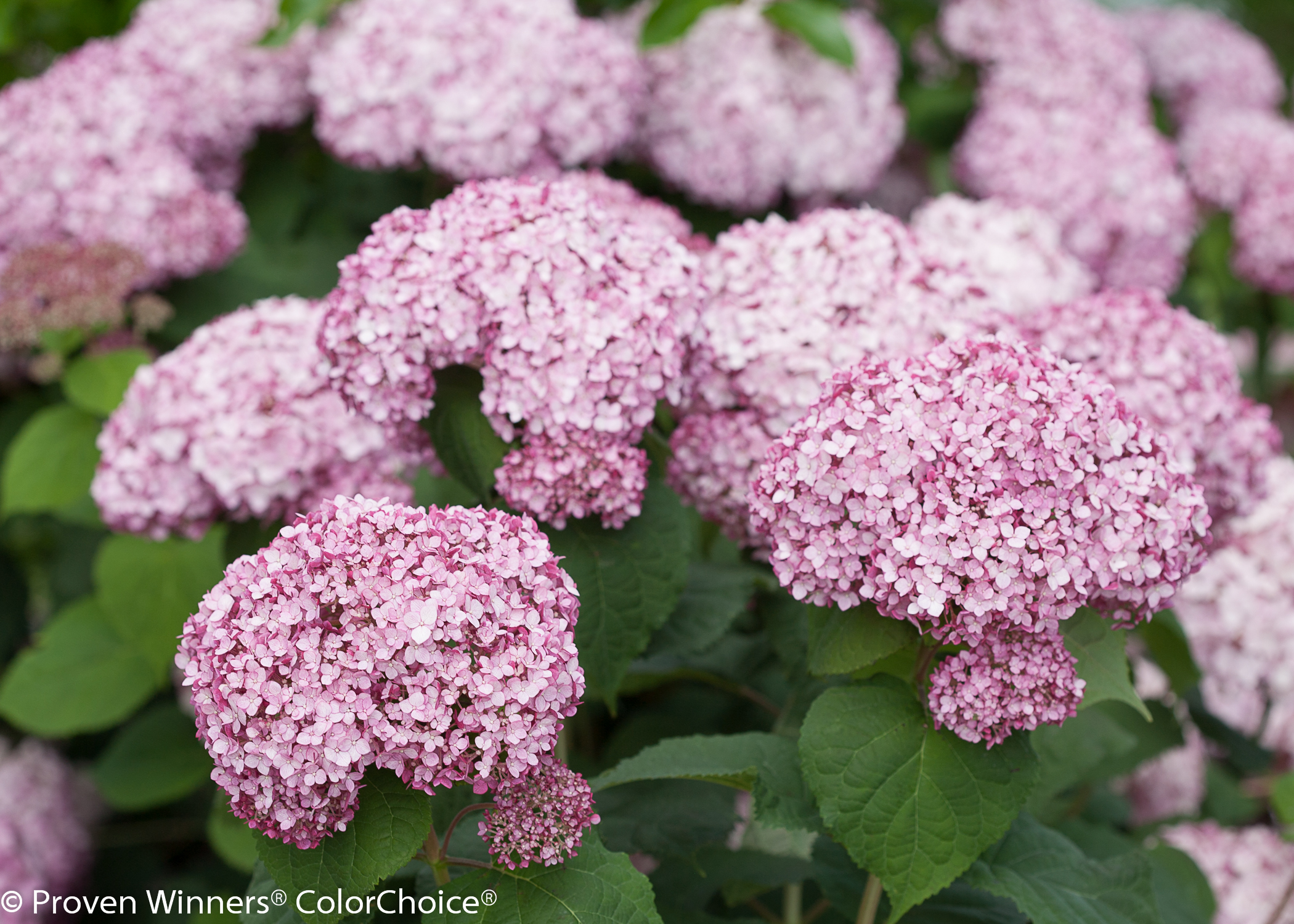
Hydrangea Incrediball Blush.
Credit: Proven Winners/ColorChoice
Hydrangea Incrediball Blush. And yet another new twist on smooth hydrangea is this one, which is Brandon Kuykendall’s favorite new shrub of 2015.
“The attribute I like most about Incrediball Blush is the massive, light-pink blooms it gets starting in early summer,” says Kuykendall, the assistant nursery manager at Ashcombe Farm and Greenhouses in Monroe Twp. “As the blooms age, they turn to green.”
This introduction in the Proven Winners/Color Choice line grows 4 to 5 feet tall and 5 to 6 feet wide in either sun or part shade.
Nandina ‘Tuscan Flame.’ Here’s a compact evergreen for around the house that’s especially good at adding bright color to the winter landscape.
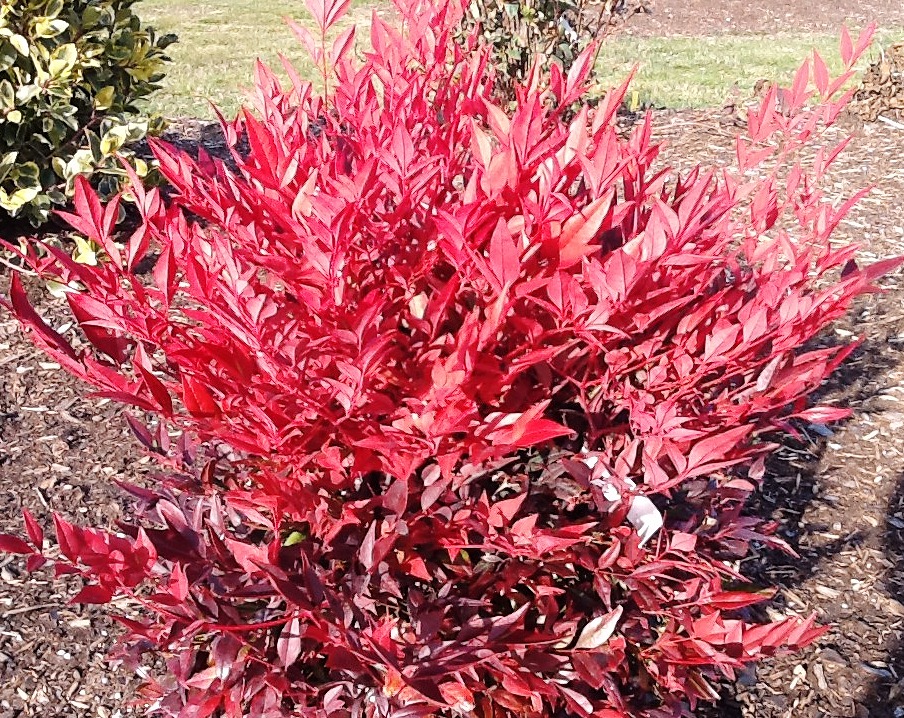
Nandina ‘Tuscan Flame.’
Credit: David Wilson/Garden Splendor Plants
David Wilson, the Lower Paxton Twp. marketing director for Garden Splendor Plants, calls ‘Tuscan Flame’ and “outdoor poinsettia” for its pointed, bright-red leaves in winter.
“It really stands out when there is a fall of snow,” he says. “Unlike several other dwarf nandinas, this one has nice, well defined, lacy leaves that aren’t twisted and cupped.”
‘Tuscan Flame’ grows about 3 feet tall and 2 to 3 feet wide. The season’s new growth is also reddish before the fiery red switchover in late fall. It produces a few red berries, but they’re not showy.
Although nandinas can be borderline winter-hardy in Pennsylvania, Wilson says this variety is reliably cold-tough, even coming through last winter with flying colors here.
Plant ‘Tuscan Flame’ in full sun to part shade.
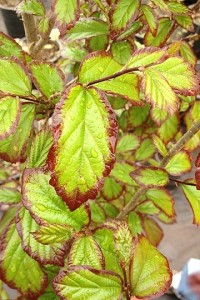
Parrotia Persian Spire.
Credit: UpShoot LLC
Parrotia Persian Spire. Lots of tight landscape situations call for plants that are tall but narrow. Few trees can fill that bill.
This new parrotia tree, sometimes commonly called Persian ironwood, is one with distinctly narrow growth and dense, finer foliage than the species. In about 20 years, it’ll grow to 25 feet tall but only 10 feet across.
“There’s some very unique coloration on this one,” says Maria Zampini, whose Ohio-based UpShoot plant-introduction company is introducing Persian Spire. “The leaves come out maroon and fade to maroon on the edges with green on the inside. Then in the fall, you get a mix of colors… yellow, orange, burgundy and red hues.”
The tree’s bark also eventually exfoliates or peels, adding another dimension of interest, especially in winter when the showy leaves are off.
Plant Persian Spire in full sun to light shade.
Elderberry Lemony Lace. If you’re a fan of bright gold in the landscape, you’ll like this new shrub that combines a neon gold color with lacy leaves for an almost tropical look.
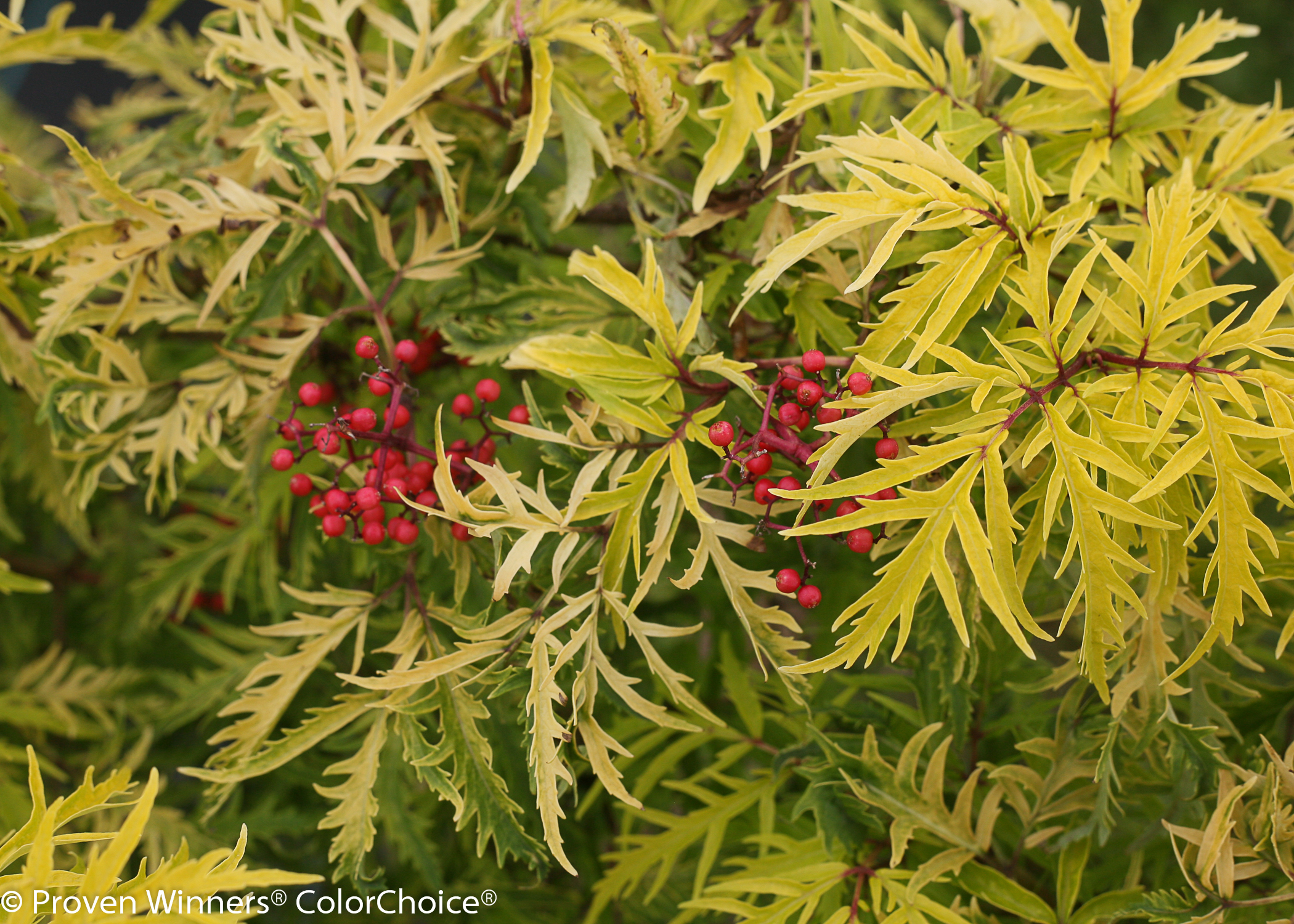
Elderberry Lemony Lace.
Credit: Proven Winners/Color Choice
Lemony Lace is similar to the nearly black-leafed Black Lace elderberry but in a color that Iowa author Kelly Norris describes as “acid yellow” and “just glowing.”
“This is a very textured plant,” says Shannon Downey of Proven Winners/Color Choice, which is introducing Lemony Lace. “It’s also sunburn-resistant.”
The plant produces a few red berry clusters to boot, and it’s not a favorite on the deer menu.
Figure on 5 feet tall and wide, and plant in full sun to part shade.
Read Best New Annual Flowers of 2015
Read Best New Perennial Flowers of 2015

Comments
No comments