



Winter Sowing Seeds
May 20th, 2010
While most everyone else is at the garden center buying $4 six-packs of annual flowers, Pat King is filling her beds and pots for pennies on the dollar.
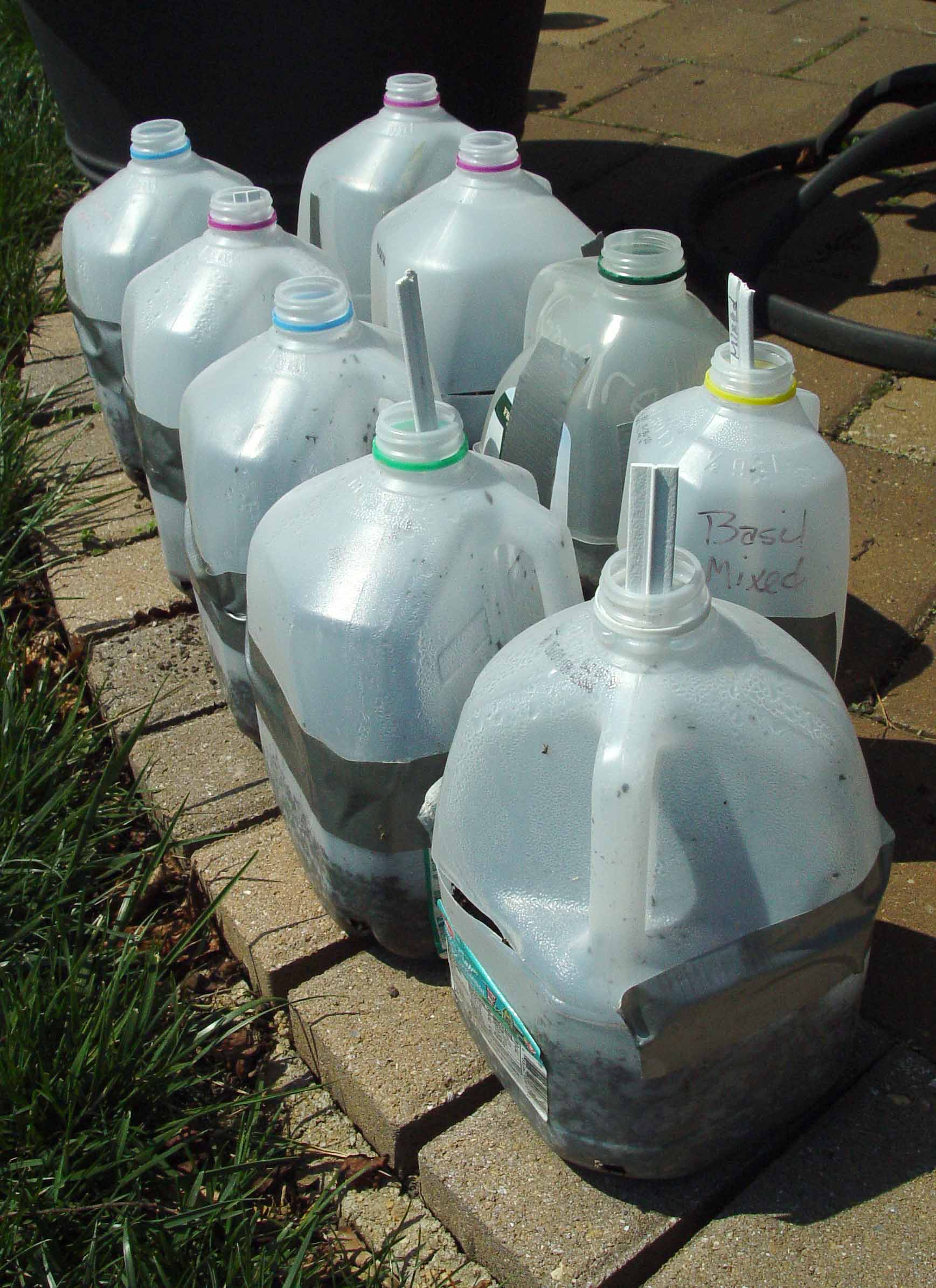
Pat King's winter-sown seeds in plastic jugs.
This avid Swatara Twp. gardener is reaping the rewards of an easy but little-known and even lesser-used frugal-gardening technique called “winter sowing.”
It’s a way to start your own plants from seed without the pitfalls of seed lights, overwatering woes and potential soil spills on the carpet.
King sows her seeds toward the end of winter in recycled plastic milk and tea jugs that she keeps outside on her back patio.
The containers act as mini-greenhouses.
The seeds come up at varying times – depending on their cold-hardiness – and by May, they’re ready to go into the garden.
This is the third year King has winter-sowed in jugs. It’s worked so well that she’s expanded from 11 to 36 jugs – enough to edge most of the patio.
“Years ago I tried to start seeds indoors,” she says. “But my tendency was to overwater. Or I’d forget to water, then end up in trouble again.”
She eventually gave up on the whole idea and came across winter sowing when looking for a gardening project she could do with some neighbor kids.
This was perfect – it’s easy, forgiving, cheap and demonstrates the miracle of how even huge plants like sunflowers originate with seemingly lifeless morsels as small as pinheads.
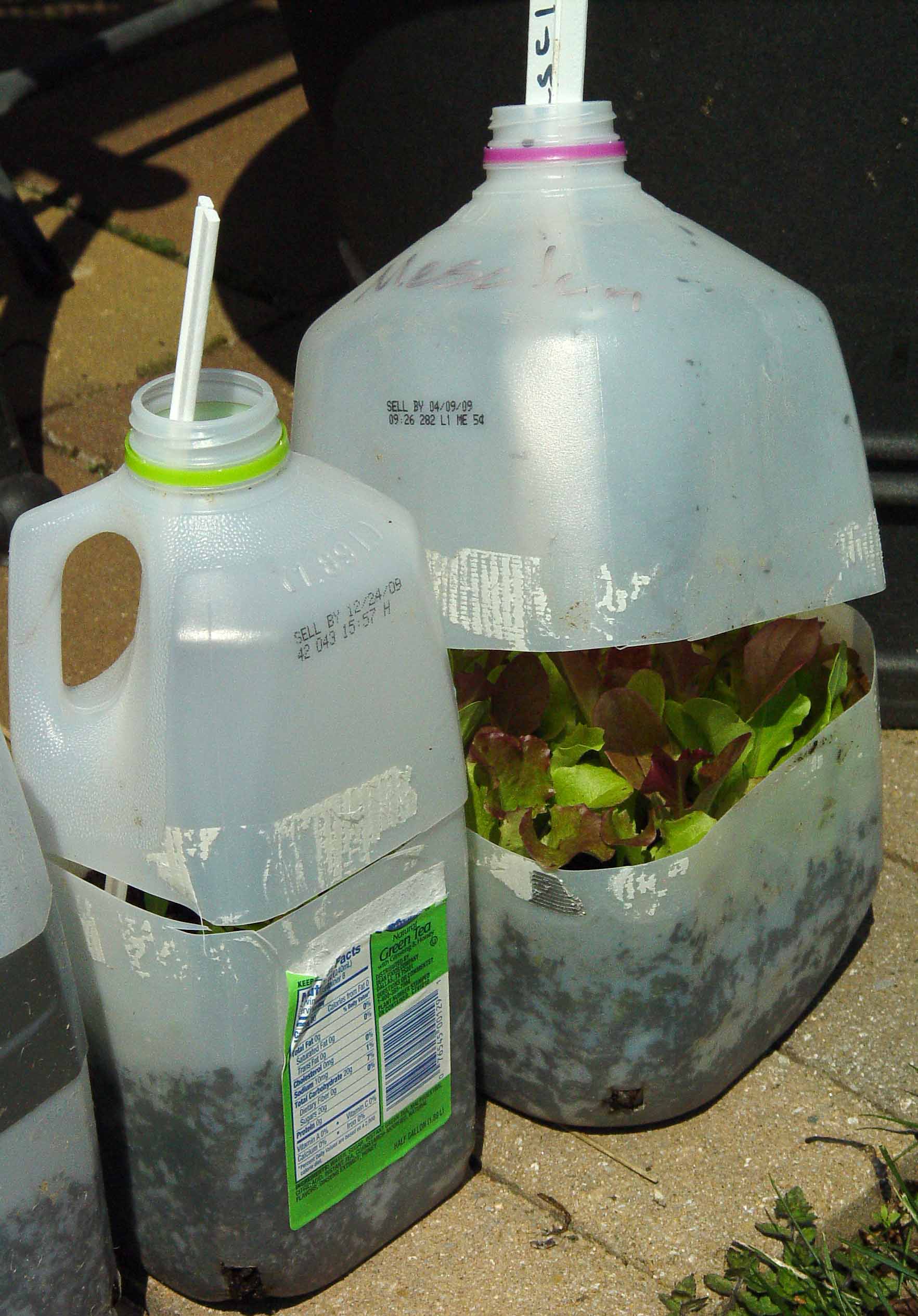
Cut the jugs except at the handles to make a flip-top container.
King uses both gallon and half-gallon plastic jugs, cut in half except at the handles. This creates flip-top containers.
She also cuts small holes at the base of each corner with an X-Acto knife. Those are for drainage.
Then she adds about 4 inches of potting mix to each container, waters it, and when the mix drains, plants the seeds.
“For bigger seeds, I poke them in 1 by 1,” she says. “The little ones, I just scatter them and tamp.”
For labels, she uses cut-up Venetian-blind slats or strips cut from plastic yogurt containers.
The containers then get duct-taped together and set outside with the caps off.
“That lets the rain in and any excess heat out,” says King.
She’s also found it’s best not to duct-tape the whole way around because cracks also let in rain and help ventilate on warm days like we’ve had this spring.
If it’s warm and dry, the seedlings need an occasional soft watering with a sprinkling can.
“These are like little greenhouses,” she says. “It’s very low-cost. My biggest expense was the $9 I paid for a bag of potting soil.”
Most beginners think there’s no way little plants will survive when cold nights hit.
That might be true of the more tender plants, but most perennials, herbs and hardier annual flowers and vegetables do just fine. Plants that naturally reseed themselves in our climate (larkspur, cleome, sweet alyssum, marigolds, nigella, cosmos, etc.) also do very well with winter sowing in jugs.
“If you think about it, even tomatoes, peppers and cucumbers will come up from seeds in the compost pile,” says King. “When you sow in late February to mid-March, you get at least a few weeks’ jump on the season. Plus a lot of seeds do want some cold to germinate.”
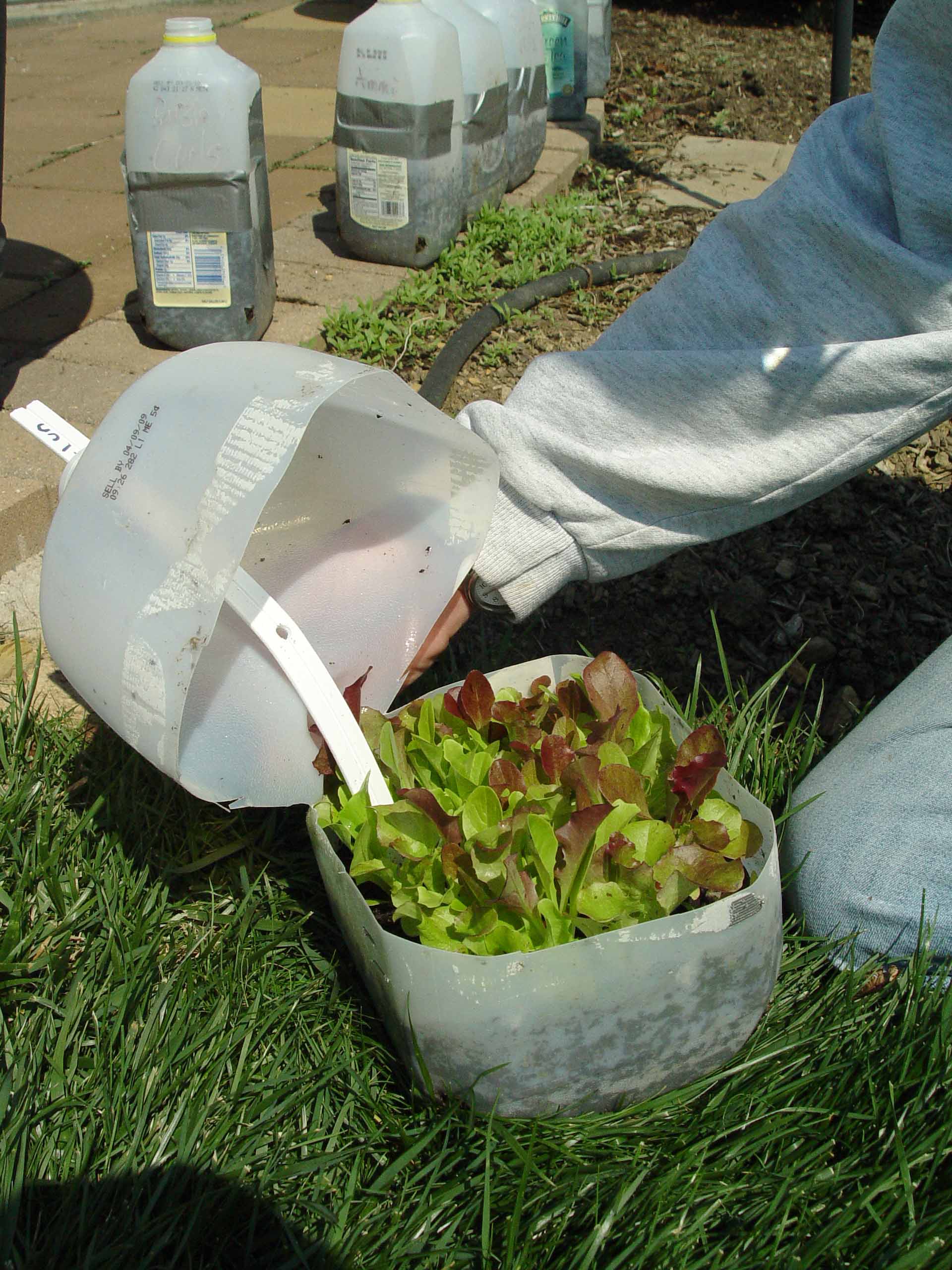
Winter-sown lettuce, ready to be planted.
King has had success starting a variety of edibles this way, including basil, dill, parsley, lettuce, mesclun, Swiss chard, even tomatoes. She says it’s also great for experimenting with oddball flowers not commonly sold in plant form, and seed can be saved, traded or bought at far less cost than finished plants.
Most plants actually grow stronger and stockier in these outdoor mini-greenhouses because they get good light. Indoors, plants tend to get leggy because the combination of warm house temperatures and poor or artificial light makes stems stretch.
King says translucent jugs are perfect. They shield the young seedlings just enough on bright, sunny days but don’t block light like opaque jugs do.
“Most seedlings want some protection from full sunlight,” she says.
One other advantage is that outdoor-sown seedlings don’t need to go through the tricky process of “hardening off.”
As any indoor seed-starter quickly learns, you can’t just take indoor-grown plants and plant them outside in the garden. The light is just too much brighter, and the shock can white out or even kill young leaves.
The solution is gradually introducing the indoor seedlings to increasing light and air over a 7- to 10-day period before planting in the garden.
But since winter-sown plants have been outside from the beginning, they usually adjust from jug to ground immediately.
Not every plant takes to this method, but so many do that it’s easily worth the seed expense.
Tips abound online, but especially check out Trudi Davidoff’s WinterSown.org.
“I’m surprised more people don’t know about this,” says King. “It’s so easy.”
Also easy on the pocketbook.
Good annual flowers for winter sowing: Ageratum, sweet alyssum, snapdragons, calendula, celosia, cosmos, diascia, sunflowers, nicotiana, cosmos, cornflower, browallia, larkspur, nigella, Joseph’s coat, tithonia.
Good perennial flowers for winter sowing: Aster, astilbe, babys breath, gaillardia, liatris, coreopsis, gaura, penstemon, phlox, black-eyed susan, coneflower, Shasta daisy, yarrow, carnation, coralbells, baptisia, hollyhock, salvia, veronica.
Good edibles for winter sowing: Basil, dill, parsley, mesclun, cucumbers, lettuce, peppers, Swiss chard, cabbage, broccoli, cauliflower, kale, collards, melons, spinach, tomatoes, eggplant.

Why such long mini-blind markers? Most people make theirs about 5 or 6 inches. The mini-blind that tall is reducing the amt. of rain fall and air that can get to her seedlings. Just my opinion!
What’s your experience sowing larkspur been like? Any success? Has Pat ever wintersown larkspur in milk jugs? Or do you direct sow in the Fall for next year’s blooms?
I suspect Pat cuts the mini-blinds long so she can see the variety name sticking out the top of the jugs. Those are skinny enough that I don’t think they’d significantly reduce rain or air flow. At least she’s not having any problem with getting things to grow well!
As for larkspur, mine usually reseeds itself. I got it going originally by direct-seeding it in the garden in fall.
Two things usually short-circuit larkspur. One is mulching over the seed heavily enough that it smothers germination. The other is when people mistakenly yank it or hoe it as a weed shortly after it comes up and before they realize it was baby larkspur.
Larkspur doesn’t transplant terribly well, so it’s best direct-seeded. It can be seeded in early spring, too, if you don’t get to it in fall.
I’ve never winter-sown larkspur in containers, but my guess is that would work pretty well – if you’re careful when you go to transplant the seedlings.
George
Those long plant markers came about because the kids used them and rather than correct them and risk losing their interest, I just let it go. It didn’t seem to impair watering or air flow. We had had problems in past years with knowing which seeds were sown in which jug if the labels were down inside, so we thought we’d experiment.
I haven’t wintersown larkspur but I have ipomopsis which self-sows. To prevent the seedlings from being covered when mulching, I use the top and bottom halves of the milk jugs (after the wintersown plants have been planted) to cover the seedlings while the mulch is being placed.
It might be interesting to try wintersowing some larkspur seeds and direct sowing some and see whch method works best. You could also use toilet paper or paper towel cylinders cut to 4 inch lengths, placed in the milk jugs and filled with potting mix to decrease transplant shock since each roll could be put put into the ground without disturbing the fragile young roots. The cardboard will biodegrade.
After this winter, it’s just so good to smell dirt again and see things grow.
I know this says winter sowing, but would it work to use the jugs to start seeds at the very end of winter/beginning of spring to have seedlingd to transplant into the garden. I was not sure if starting in the early winter would change the success of the plants and whether it would get to hot by early spring.
Karen,
Yes, you can use seedlings that come up in these outdoor jugs to transplant into the garden. Just give the plants maybe 2 weeks more time before planting them in the open. Inside the jugs they’re still getting a few degrees of extra warmth, which can make a difference when heavy freezes are still around. In other words, transplant the plants at the normal time, unless you also give them protection in the garden, such as with a floating row cover or a plastic dome.
This is a good way to grow your own plants early from seed without having to resort to indoor lighting and watering. An added benefit is that when you’re ready to transplant, your winter-sowed seedlings in the jug are already acclimated to outdoor temperatures and light.
George
Many thanks for all the information and tips. It is much appreciated. I lov to see plants grow. Tried every winter to plant indoors, but alas soon after transplanting outdoors, my precious plants die. Thanks again for this site, I may now enjoy my hobby.
This is my third year winter sowing also. First year in a new house so I’m starting over from scratch! I’m having a problem keeping the duct tape on. I set out 10 jugs a week ago and today noticed that the tape has come off a few of them. The next batch will be done with shipping tape. Any other ideas?
I run the duct-tape strips up and down and it sticks pretty good. Maybe it’s the brand? Some stickier than others? I’ve never tried shipping tape. That’s worth a try.
Betty, Meri & George,
I’ve been successfully wintersowing more years than I can count. I too learned about this method from Trudy’s website and experience. When applying the 4″ piece of duct tape horizontally make sure the surface is first clean of potting soil and dry. Shipping/Packing tape adhesive will freeze and come off too…I learned this from experience. You may want to try plumbers tape, ultimately even old duct tape has held up the best for me. Make sure what you have is really duct tape…I also found out there are look alikes that don’t have the durability of duct tape.
And larkspur wintersows very well because I don’t have to worry about leaves/mulch covering the seeds/seedlings and rain won’t wash the seed away and wind won’t blow them away. I do sow the seeds sparingly so when I transplant the seedlings I use a soil knife to dig out the seedlings with little disturbance and place the seedling in a hole wedge previously dug with the soil knife in my garden.
As a Master Gardener I’ve been teaching a Wintersowing class for the past eight years every January for the Franklin County Master Gardeners. It keeps my hands in soil and no cabin fever. Be careful though it is easy to get carried away and end up with more seedlings than you can use which I’m sure your friends will appreciate. Happy “wintersowing”!!!