



“Recycling” Tender Plants for Another Season
October 16th, 2008
Three falls ago, the weather turned frigid before I got done emptying my flower pots.
So I lugged a big pot of cut-back, cold-wimpy ‘Black and Blue’ salvia (the non-hallucinogenic kind) into the garage and left it for dead.
Or so I thought.
Come May, the salvia not only survived a dark, unheated garage all winter with zero attention, it was bravely growing new pale-green leaves.
I’ve overwintered the thing since, saving myself a good $12 in ‘Black and Blue’ investments – darn better than the mutual-fund market.
Which brings me to the point of today’s column – garden recycling.
Gardening is fertile recycling territory, but most people think in terms of using margarine tubs to start seeds, old nylons to tie up the sagging arborvitae, and potato peelings for the compost pile.
Where you REALLY cash in is by recycling plants themselves. Instead of letting tender stuff die at frost, consider these salvage methods:
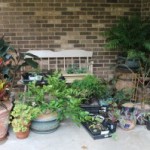
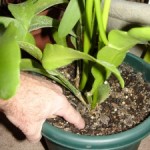
* WINTER AS HOUSEPLANTS. Many pot centerpieces, specimen annuals and tropicals do fine growing as houseplants inside over winter.
They may not flower or look their best, but if you can keep the roots alive, they usually bounce back outside next May.
Move potted candidates inside after hosing them down for bugs. In-ground plants should be dug and potted.
This works both ways. Also consider moving your “real” houseplants outside in summer, where they can double as potted patio plants.
And try potting up a few annuals now, such as impatiens, coleus and wax begonias, and a few tender herbs, such as rosemary and basil, for a sunny windowsill. These may not make it all winter, but you can milk a few extra weeks out of them.
Good candidates for double duty: palms, New Zealand flax (Phormium), ti plant (Cordyline), century plant (Agave), dracaena, citrus trees, ficus, tender ferns, flowering maple (Abutilon), jasmine, Rex begonias.
* SUSPENDED ANIMATION. Like ‘Black and Blue,’ some tender plants go into a “hibernation” in a freeze-free winter home, such as an unheated sun room or basement. They’re best cut back to about a foot before stowing.
Hibernating plants don’t need fertilizer or even much light… just a tad water every now and then to keep the roots from drying. The goal is root survival, not growth.
Next May, move the plants into light, begin watering and fertilizing, and in a few weeks you should have a reborn survivor.
Good candidates: bougainvillea, mandevilla, dipladenia, allamanda, brugmansia, euphorbia, fuchsia, gardenia, tropical hibiscus, princess flower (Tibouchina), alternanthera.
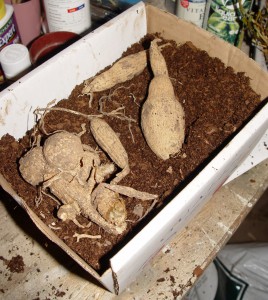
Storing dug-up dahlia tubers in peat moss for winter.
* STORED ROOTS/TUBERS. Popular but winter-wimpy species such as cannas, dahlias and gladioli will spring back to life even when you whack them off at the ankles and store just their underground parts inside.
If you don’t rescue them, they’ll die to the ground at frost, and the roots/tubers usually freeze into mush over winter.
Just before or right after our first light fall frost, cut off tender bulb foliage, dig the roots/tubers and let them dry for a week or so. Then store in ever-so-slightly moistened peat moss, sawdust or perlite in a cool spot (ideally in the 40s).
Some people just toss their tender bulbs/roots into a plastic or paper bag without any added media.
The goal is to walk that fine line between keeping the roots moist enough so as not to shrivel but not so damp that they rot. Check regularly and make amends at early signs of trouble.
Good candidates: cannas, callas, caladium, dahlias, gladioli, bananas, elephant ears, tuberous begonias.
* TAKE CUTTINGS. This involves making babies by rooting cuttings from the tips of a parent plant.
Snip 6-inch sections off the branch tips, pinch off leaves from all but the top set or two, then stick the cuttings about two-thirds of the way down into pots of a light-weight soilless mix.
A good mix is half coarse sand and half vermiculite, perlite and/or light-weight potting mix. Keep the medium consistently damp, and within a few weeks, new roots should poke out from the buried nodes (where you pinched off the lower leaves).
If all goes well, you’ll have a mother plant you can grow as a houseplant by a sunny window or under grow lights over winter. Later in the winter, start more cuttings from that plant to multiply your flock.
Even if only a few things work, they’re free!
Good candidates: coleus, geraniums, perilla, plectranthus, ivy, purple-heart (setcresia), Persian shield.
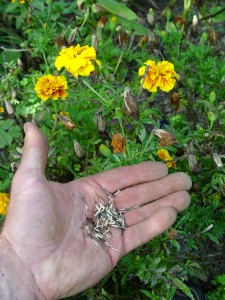
Seeds from some garden plants are easy to collect and easy to start. These marigolds are one example.
* SAVE SEEDS. Most basic of all is collecting seeds from plants that are about to kick the bucket. This goes for veggies as well as annual flowers.
Look for seedheads or pods that are browned and mature. Collect a few whole seedheads or pinch with your fingers to release the seed into marked envelopes.
Dry the seed if it hasn’t already dried on the plant. Store in a cool, dry place. In a jar in a refrigerator is perfect.
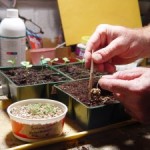
Start the seeds inside late winter through early spring in a light-weight potting mix (and one of those recycled margarine tubs with holes drilled in the bottom).
Many seeds also will germinate if you scatter them outside around Mother’s Day.
Since so many of today’s top varieties are hybrids, you might not get exactly what you started with. Some hybrids are even sterile. On the other hand, you might get something new and possibly more interesting.
Good candidates: marigolds, zinnias, larkspur, ageratum, alyssum, bractheantha, browallia, celosia, cleome, impatiens, nicotiana, petunias, portulaca, salvia, snapdragons, sunflowers, gloriosa daisy, verbena, peppers (ornamental and edible), tomatoes, peas, beans, melons, cucumbers.

What about Petunia Flowers
You might be able to keep them going under lights (or next to a bright window) inside for awhile, but these start best from saved seed (non-hybrids) or cuttings (hybrids).
Searching on how to over winter mandevilla and hibiscus-perfect article and information-one other question should all perennials be cut back to ground and when? Thanks!
Gwen,
Different perennials have different cut-back requirements.
The majority of them have leaves and stems that die back at or some time after fall frost – coreopsis, daylily, hosta, phlox and salvia, for example. They turn completely brown or black, eventually collapse, then push up new growth the next spring.
A lot of others hang in there longer and stay green (or mostly so) through much of the winter. But they also eventually die back to make way for new growth. Examples are liriope, purple coneflower, black-eyed susan, euphorbia and bellflower.
Although you can cut both of those groups to the ground after a killing frost in fall, I think it’s best to let plants alone through winter so long as they’re green. I also like to let behind varieties like coneflowers, black-eyed susan and sedum that offer winter seeds to birds, plus anything I want to reseed itself.
Ones I’d cut and remove now would be varieties you don’t want to self-sow and ones that are bug- or disease-infested. Otherwise, anything that’s browned can be cut either now or at end of winter.
Then there are a few woody-stemmed perennials that get cut back to a few inches but not the whole way to the ground. These include varieties such as Russian sage, artemisia, gaura, hardy geranium and euphorbia. Cut them back either after frost browns the foliage in fall or at the end of winter – your choice.
Finally, a few species are “evergreen perennials” – ones that may discolor over winter but whose top growth doesn’t die back. The plants just go back to growing the following spring. These include perennials such as ajuga, dianthus, some ferns, lamium and some creeping sedums.
Heading into spring, all you do with those is rake out or pick off any ratty foliage and/or cut back any growth that’s longer than you want.
My favorite book that goes into lots of detail about cutbacks and other plant-by-plant perennial maintenance is “The Perennial Care Manual” by Nancy J. Ondra (Storey Publishing, 2009).
I’ve also got plant-by-plant care tips for dozens of perennials under the Plant Profiles section of my web site. Look to the menu along the left side of this page and hit the “Plant Profiles” button, then select “Perennials.”
I’ve seen people that leave Cana Lily bulbs in the ground over winter and they seem to come out every mid summer. There are about twenty of these bulbs in a large circle. Each time I see these plants, they are all RED Cana’s. Is the red bulbs more durable than the others?
Peter,
Could be that particular red one is slightly more cold-hardy than most others, but red cannas aren’t generally more cold-hardy across the board than any other color. Most usually freeze and rot over the winter in our hardiness zone. I’ve never had any of any color survive that I’ve left outside in the ground over winter.
George