
• Home
  • Contact
  • Site Map
George Weigel - Central PA Gardening
  • Landscape 1
  • Landscape 2
  • Landscape 3
  • Landscape 4
  • Garden Drawings
  • Talks & Trips
  • Patriot-News/Pennlive Posts
  • Buy Helpful Info

Navigation

  • Storage Shed (Useful Past Columns)
  • About George
  • Sign Up for George's Free E-Column
  • Plant Profiles
  • Timely Tips
  • George’s Handy Lists
  • George's Friends
  • Photo Galleries
  • Links and Resources
  • Support George’s Efforts


George’s new “50 American Public Gardens You Really Ought to See” e-book steers you to the top gardens to add to your bucket list.

Read More | Order Now


George’s “Survivor Plant List” is a 19-page booklet detailing hundreds of the toughest and highest-performing plants.

Click Here


Has the info here been useful? Support George’s efforts by clicking below.


Looking for other ways to support George?

Click Here

George's Current Ramblings and Readlings

Other Gardens

April 12th, 2011

   If I had enough money and liked New Jersey, I know where I’d be retiring.
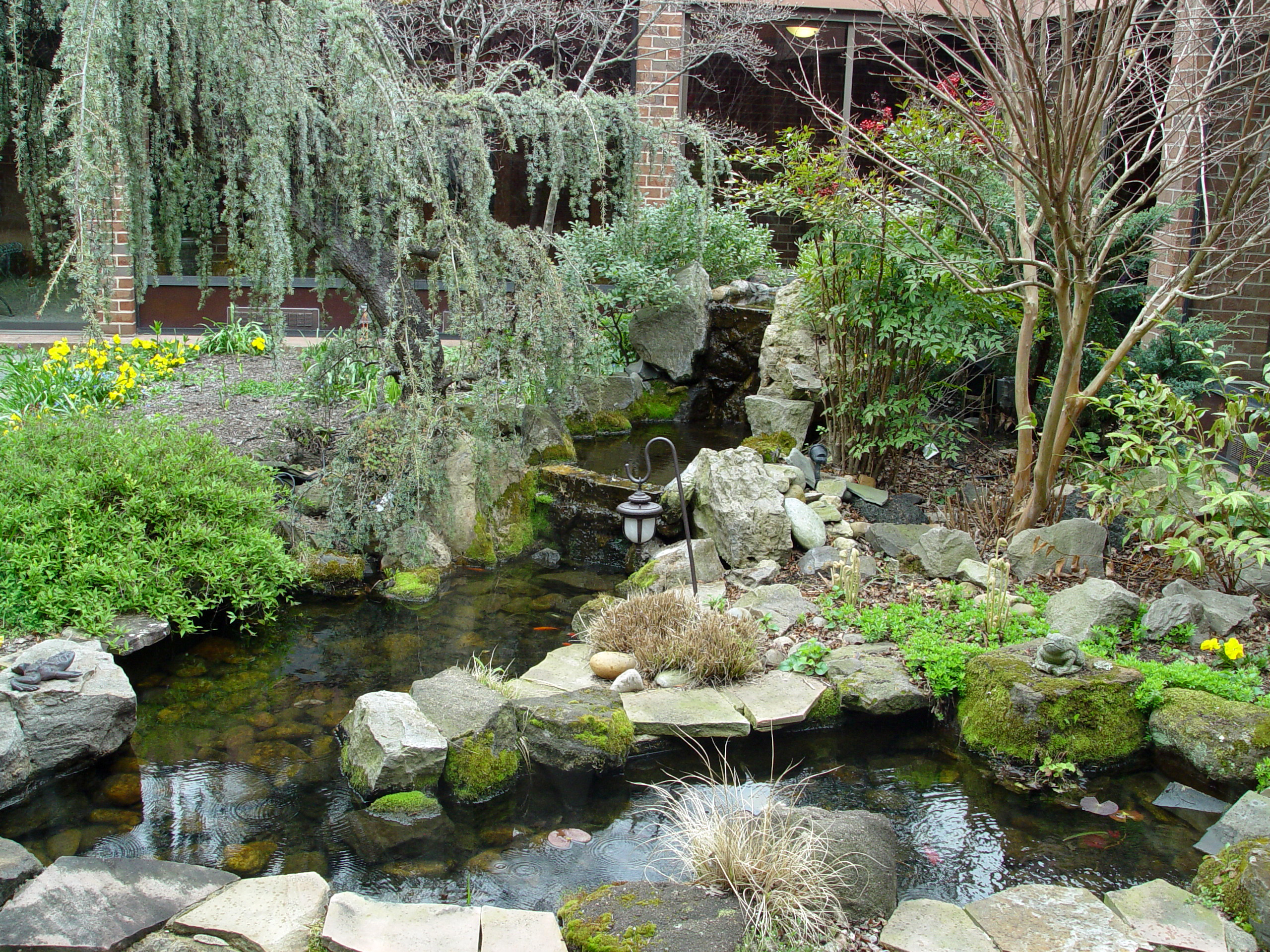
The water garden off the main lobby at Medford Leas.

   Medford Leas.

   I just got back from doing a couple of gardening talks there through Elderhostel’s Road Scholar program, and despite the rain (surprise, surprise), the landscaping was magnificent.

   Medford Leas is a huge, upscale retirement village in Burlington County, N.J. One of the “fringe benefits” is living within the Lewis Barton Arboretum, which includes specimen trees, wooded walking trails, cutting-edge shrubs, vegetable plots and a water garden off the main lobby.

   What’s most amazing is that the resident buildings are arranged in ovals with courtyard gardens in the middle of every cluster. That’s 37 gardens, and they’re all different and all filled with interesting plant choices – not your basic yews, azaleas and forsythia.

   Thanks to covered walkways and roof overhangs, you can walk through this whole network of gardens without getting rained on. That’s a big plus to me since I have a knack for getting rained on every time I try to visit a garden.

   The gardens and the whole arboretum are open to the public. Here’s a link to it if you want to see more: www.medfordleas.org/arboretum.htm.

   Visiting public gardens is a great way to learn plants and get ideas for your own gardens.

   This Saturday is the first outdoor trip my wife, Sue, and I are leading this year through the annual series we do with Lowee’s Group Tours. We’re heading to Winchester, Va., to see that city’s garden tour, which is part of Virginia Garden Week (http://www.vagardenweek.org/). We’re also stopping by the State Arboretum of Virginia (great boxwood collection) and the Colonial gardens at Historic Long Branch.

   On May 27, we’re heading to Richmond, Va., to see one of my top-10 favorite public gardens of all time: Lewis Ginter Botanical Garden. I love the conservatory, the rose garden, the kiddie gardening village and the Japanese garden. We’ll see the city’s nicely landscaped Maymont Park that morning.

   If you’re after ideas, you really need to get to Buffalo for this year’s Garden Walk Buffalo – the nation’s biggest walking garden tour in which 350+ homeowners open their gardens for all to see. It’s a two-day affair, and we’re taking a busload up July 30-31 and also cramming in visits to the annual flower trials at the Erie Basin Marina, the Buffalo Rose Garden and Buffalo’s Japanese Garden.

   I also just posted about 30 pictures Sue and I took at last summer’s Garden Walk Buffalo to give you a feel. Click here to see them.

   We’ll also be going behind the scenes at Longwood Gardens on Aug. 12; visiting three public gardens in New Jersey on Sept. 16 (New Jersey Botanical Garden, Frelinghuysen Arboretum and the trial gardens at Rutgers University); seeing the superb Philly-area Meadowbrook and Chanticleer gardens in their fall glory on Oct. 21, and then doing a “Conservatories for Christmas” tour on Dec. 9 of the U.S. Botanic Garden, Brookside Gardens and Baltimore’s Rawlings Conservatory.

   More details and prices are on my Talks and Trips page.

   Extra bonus this year: We’re giving away five $25 gift cards to Stauffer’s of Kissel Hill (http://www.skh.com/) on every trip.

   To sign up for the trips, call Lowee’s at 717-657-9658 or toll-free 1-888-345-6933 or email CKelly@Lowees.com.

   Sue and I are heading back to Ireland in June to lead another tour group through Harrigan Holidays, but registration is closed on that one. Sorry. We’re thinking about doing a Scotland garden trip so stay tuned for that.
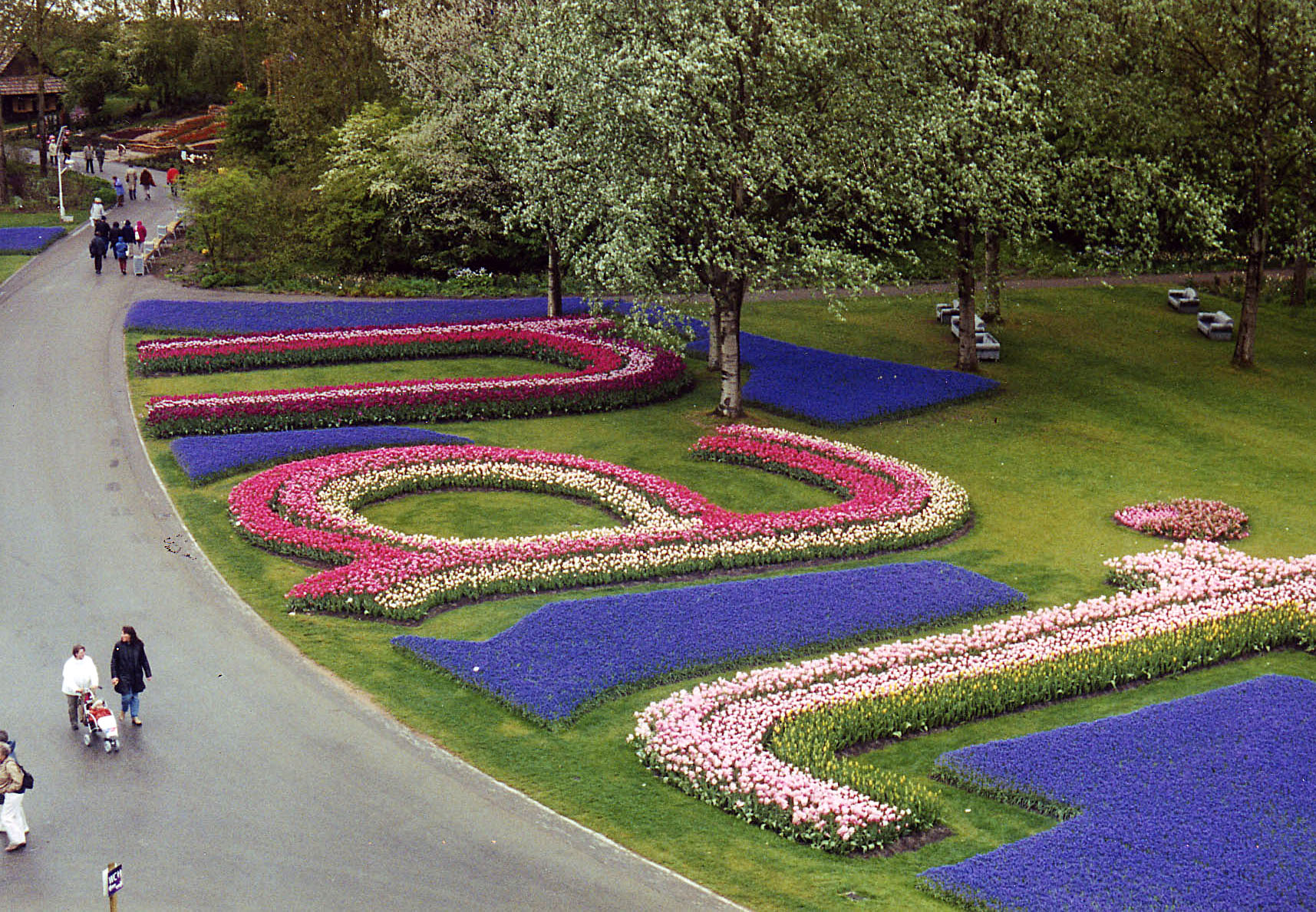
Words spelled out in bulbs at the 2002 Floriade.

   The biggie for next year is a trip to the Netherlands to see the Floriade, a huge flower show held only once every 10 years. Besides the Dutch planting bulbs like there’s no tomorrow, a couple of dozen countries build exhibits to make it a kind of Olympics of gardening.

   Lowee’s just started accepting registrations for that trip. It’s to go April 18-29, 2012, and also will include visits to the Keukenhof gardens, a real working bulb farm, the gargantuan Aalsmeer Flower Market, botanic gardens in Amsterdam and Leiden, a tour of Amsterdam canal-house gardens, the Versailles-like formal gardens at Paleis Het Loo and non-gardening cool stuff like the Zaanse Schans living-history village, the Madurodam Netherlands-in-miniature village, the Rijksmuseum with its priceless Dutch Masters paintings, the Anne Frank House, an Amsterdam canal cruise, the Kroller-Muller Museum, a stop at the Delft Pottery Factory and plenty more.

   I saw the last Floriade in 2002 and couldn’t believe what can be done with bulbs if you plant a gazillion of them. I can’t wait to see what’s in store this time around.

   Lowee’s has all the details at 717-657-9658 or 1-888-345-6933.


Memory Flowers

April 5th, 2011

   Healing and flowers go together.

   It’s no coincidence that folks take bouquets to the hospital or send cut flowers to friends and family recovering from surgery.

Laura Lee Lukunich and her mom, Sandy Reece. Photo by Laura Mathews.

   Laura Lee Lukunich of Hampden Twp. is using flowers for yet another healing purpose – to remember loved ones lost to cancer.

   Lukunich is the Energizer Bunny behind the Passion for Mother’s Flower Memorial Garden along the Conodoguinet Creek in Hampden Twp.’s Youth Park.

   If you’re not familiar with it, it’s been there for less than a year and isn’t quite yet fully finished.

   But coming up Sat., May 7, Lukunich and crew are staging the second annual Passion for Mother’s Flowers memorial ceremony in which family and friends can plant flowers in the garden in memory of cancer-stricken loved ones.

   The ceremony starts at 9 a.m., and besides the flower-planting, it includes music, a prayer and the reading of a poem and the names of everyone being remembered. New this year is a memorial release of birds.

   Flowers are $5 each and can be bought on site. The birds are free if reservations are made by April 22 to Lukunich (laura@lauraleelukunich.com or 761-3380).

   Lukunich founded the organization and garden two years ago when her mother, Sandy Reece of Mechanicsburg, was undergoing chemotherapy for cancer.

   Reece, who’s recovered from the bout, is an avid gardener. One of her biggest worries while hospitalized for 2 weeks was what would happen to her flower beds.

   Lukunich solved that problem by getting out there in the dirt. But it got her to thinking about others who didn’t have a daughter who actually enjoyed weeding.

   That prompted her to offer a garden-care service for those undergoing cancer treatment. For $10 an hour, Lukunich and volunteer helpers will weed, water and care for gardens so the regular gardener can focus on healing.

   Ten percent of the proceeds go to the American Cancer Society with the rest going toward the Memorial Garden. For now, the service is open only to residents of the Camp Hill/Mechanicsburg area.

   The Passion for Mother’s Flowers garden was the second phase of the operation.

   Planted on township-owned land next to the creek, the garden features a centerpiece sculpture, roses, assorted shrubs, vines on trellises and seating, plus a secondary flower garden that faces the creek.

   There’s no charge to see it, and it’s open to the public during daylight hours by entering the Youth Park off of Orr’s Bridge Road.

   Ruell Landscape donated the planting, Lemoyne artist David Hutton donated the metal, floral-themed centerpiece sculpture, and I donated the garden design.

   “Toward summer’s end, the garden was breath-taking,” says Lukunich. “Many visitors were in awe to discover the garden while passing by. So with the addition of nearly all of the remaining features, it will indeed become the sanctuary it was meant to be.”

   The creek-side park is a popular path for walkers, joggers and bikers.

   If you’d like to sponsor any of the remaining permanent plants or garden features or if you’re interested in taking part in the May 7 ceremony, more information is available at www.passionformothersflowers.com, by emailing or calling the above contact information for Lukunich.


The Year’s First Dead Plants

March 29th, 2011

   Do I win a prize for the first killed plants of the season?

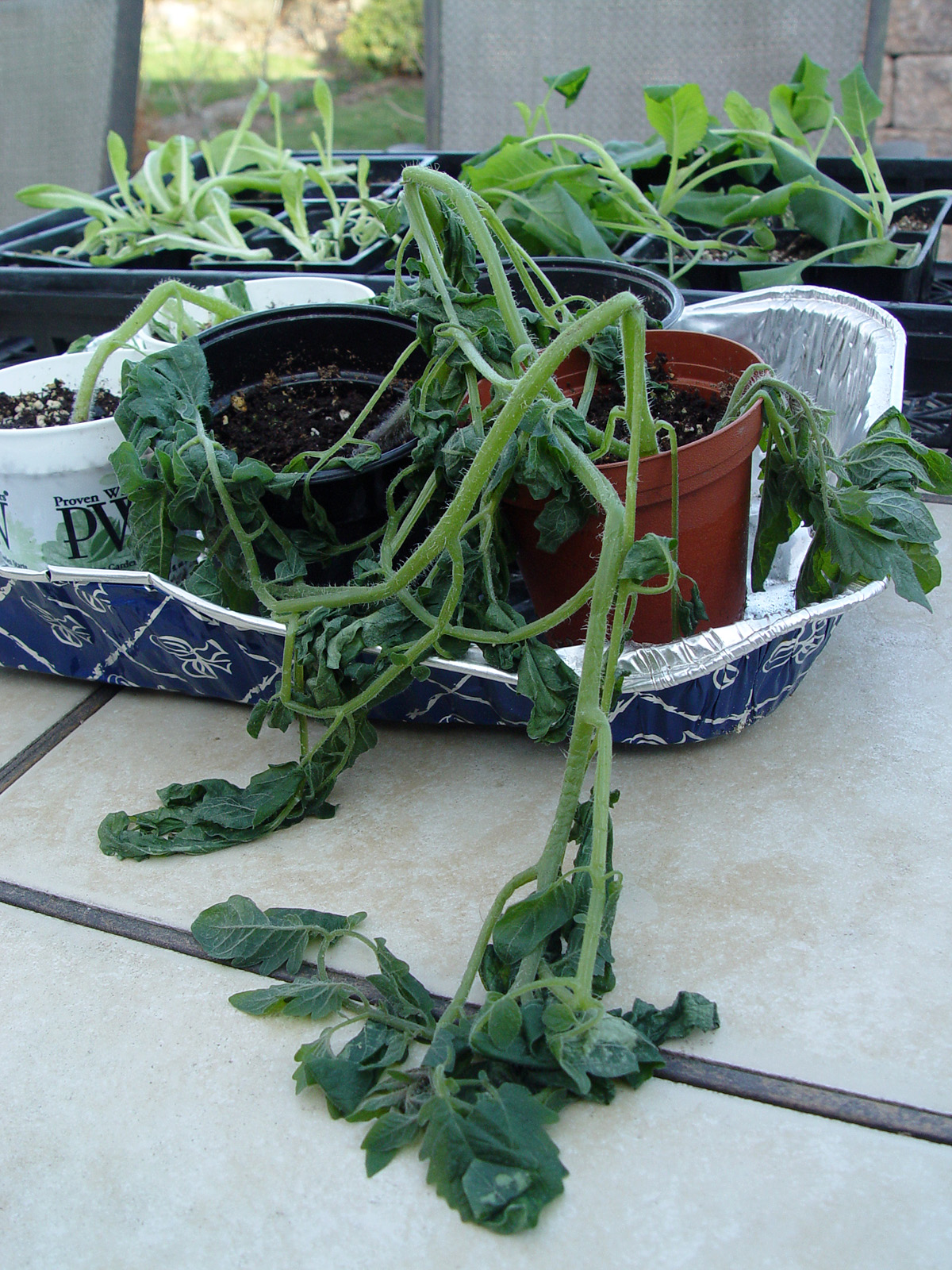
The green mush formerly known as tomatoes.

   I’d like to nominate the green mush shown at right – what was to be my 2011 collection of pre-July ripe tomatoes.

   Every year, I start a few tomatoes inside from seed around the end of January so I’ll have transplantable-size seedlings to go outside under Wall ‘o Water plant protectors each April 1.

   I’ve been doing this for 25 years and have never lost a single tomato. I always go with cherry tomatoes and early-ripening varieties so I have actual good-tasting fresh, ripe tomatoes as early as humanly possible here in central Pa. – usually by the end of June.

   Unless I can get my hands on some super-early greenhouse-grown substitutes, that isn’t going to happen this year.

   Chalk it up to aging or trying to cram too many things into too little time (probably both), but my little band of eight baby tomatoes met a cruel frozen fate Sunday night.

   I thought I’d give the flock a little sun and harden them off a bit for just an hour or so Sunday afternoon while I was planting some seed potatoes.

   All of you similarly aging gardeners know exactly what happened next.

   That’s right. I got distracted cutting a mum here, pulling a weed there, and before you know it, I was running late. I packed up, hustled inside and totally forgot about the tomatoes sitting on the patio table.

   Monday morning, the poor ‘Early Girls,’ ‘Sweeties’ and ‘Manitobas’ were frozen stiff like skinny green popsicles.

Filling a Wall 'o Water.

   I brought them inside hoping for a miracle but ended up with that familiar mush that I usually don’t see on tomatoes until late October.

   They’re goners. I feel like a very reckless parent.

   My main crop is already under lights, but they’re tiny and timed to be ready at the usual unprotected planting time, which is around Mother’s Day.

   I even had three Wall ‘o Waters already set up – their water-filled chambers absorbing the sunlight and warming the soil inside. These things are some of my favorite gardening gizmos, and they really do a great job at protecting plants that otherwise would freeze.

   The only catch is that you actually have to plant the plants inside of them. Do’h!


Streamlined Cleanup

March 22nd, 2011

   I hope you took advantage of the warm weekend (finally!) to get the landscape cleaned up and cut back for the new growing season.

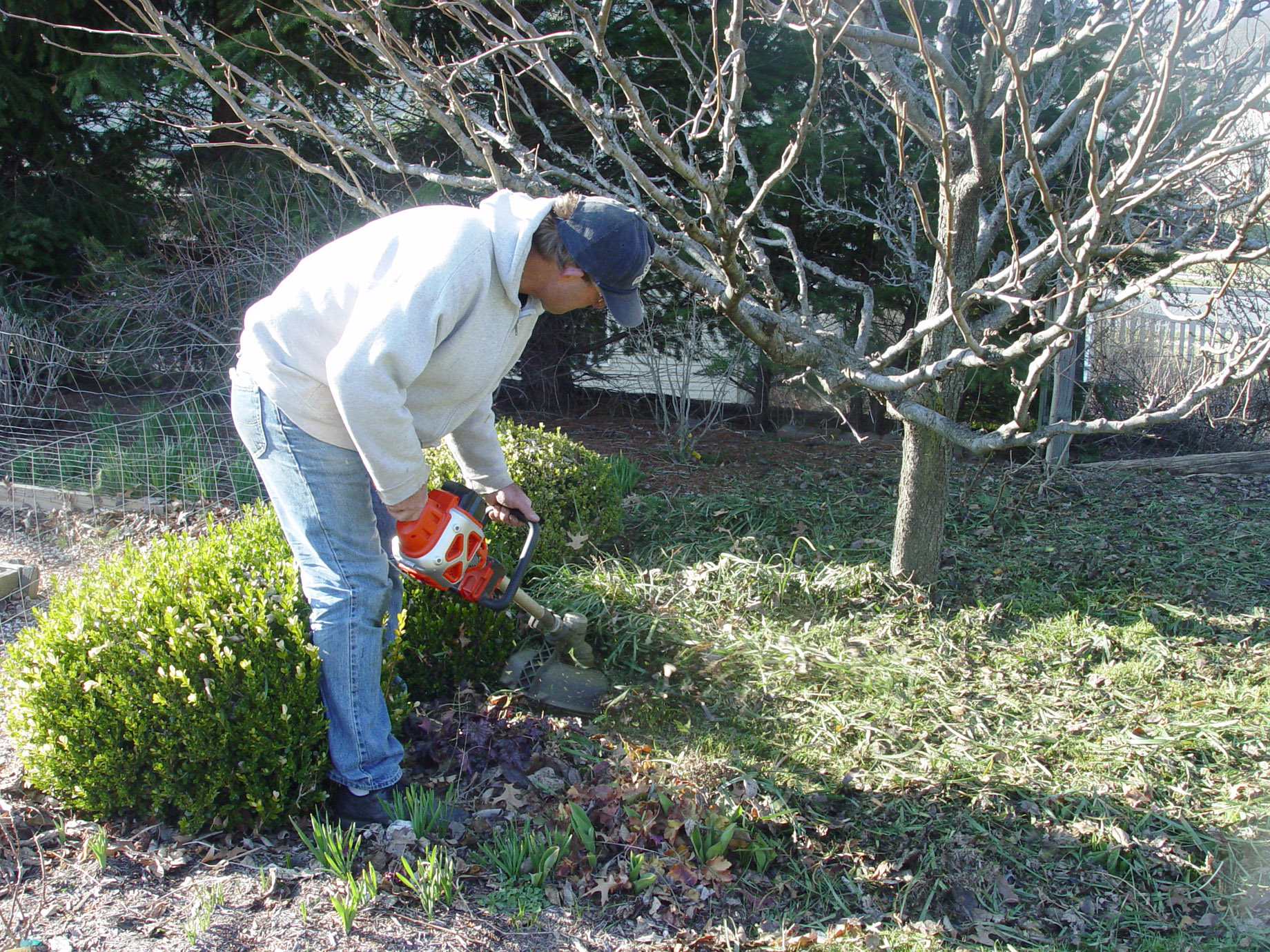
I'm using power tools more these days to do spring yard cleanup jobs.

   This is my biggest spurt of gardening activity for the year since I go light on cleanup in fall, letting behind most leaves and dead foliage as winter insulation and bird food.

   The last few winters gave us snow-free warm spells that were perfect for getting a jump on some things, like edging, pruning and spot cleanups. Not so this winter.

   I got absolutely nothing done in the yard, other than carrying away the rootless remnants of my test ‘Home Run Pink’ shrub rose and a beautiful burgundy-and-lime-leafed ‘Alabama Sunrise’ foamybell – both of which were winter snacks for voles.

   Now that I’m old enough that my joints need no excuse to ache, I’ve been trying to streamline some of this end-of-winter yard work.

   Rather than get down to pull off or cut off dead perennial foliage, I’m using a rake, electric string trimmer and even power shears to do the deed.

   An ordinary leaf rake works fine for perennial leaves that have flopped or are decayed enough to come off easily. That’s what I used to clean up my daylilies, hosta, ajuga, foamflowers, sweet woodruff and creeping veronica, for example.

   For perennials that are brown but still standing, the string trimmer gets the job done pretty fast. I used mine to cut back leadwort (plumbago) groundcover, a patch of barrenwort and beds of hardy geraniums, coralbells and foamybells. Just be careful not to cut into the crown (the growing point) of any of those. Don’t go the whole way back to the ground, in other words.

Don't be fooled by still-green liriope. It should be trimmed back to a stub now.

   The string trimmer saves a ton of work cutting back liriope. This versatile and durable little perennial with the grassy foliage still looks fairly green this time of year. But don’t be fooled.

   In a few more weeks when the new shoots start to emerge, last year’s liriope leaves will brown out and start to look terrible. They don’t green up and go back to summertime form like some plants. The problem is, by then it’s much harder to get rid of the browned leaves while working around the new ones. Save yourself the trouble and whack the liriope leaves back to stubs now.

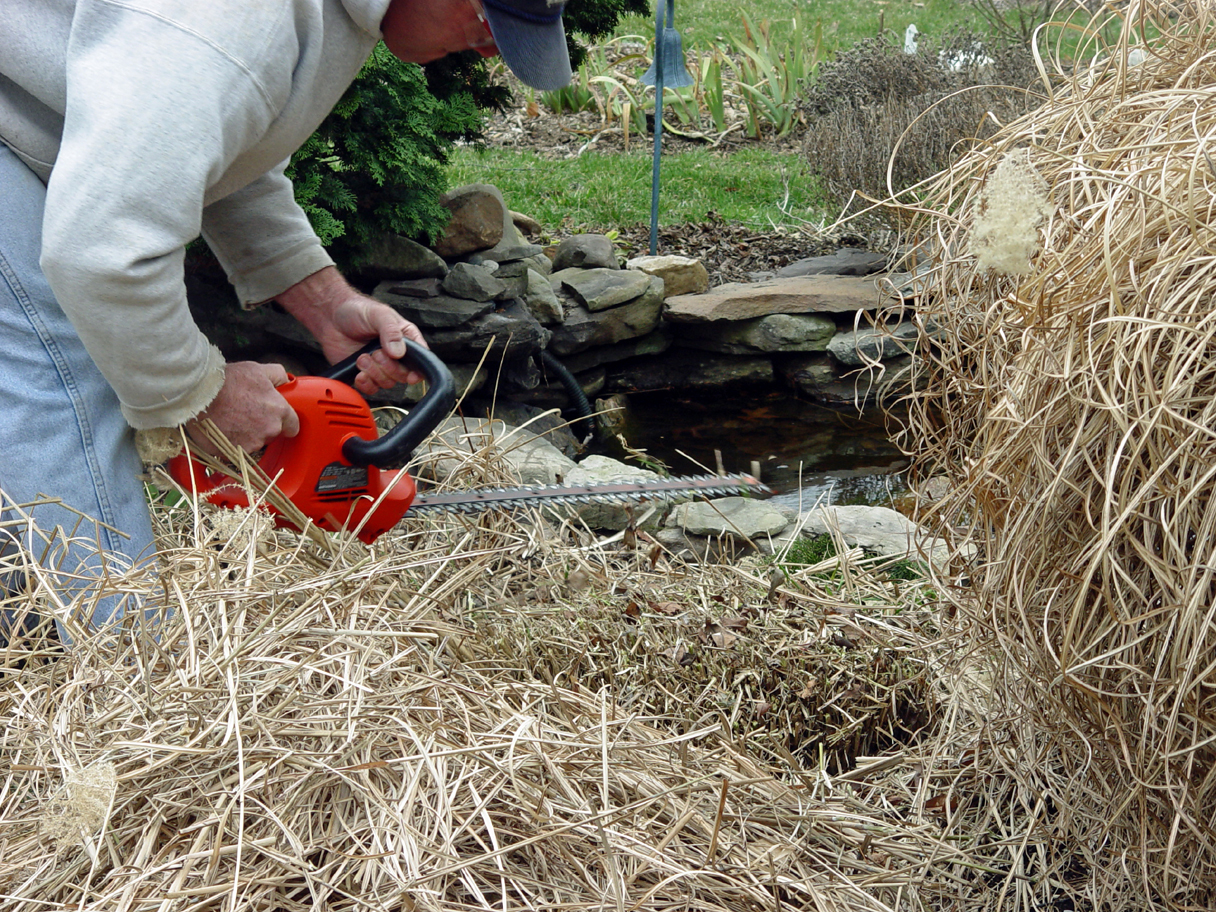
   Some perennials are a bit too sturdy for even a string-trimmer cutback. If you’re under 50 or old-school, get out a pair of long-handled shears. If you’re north of 50 or just want to get the job done, use power shears.

   I used my electric shears to cut back perennials such as mums, sedum, lavender, Russian sage, and, of course, ornamental grasses.

   You know the trick to cutting down ornamental grasses the non-blow-around way, right? Rather than cut the whole bundle down and then try to pick up the blades before the wind blows them across the yard, make yourself a “grass straitjacket” before cutting.

   Get some twine or jute and wrap it tightly around the midsection of the bundle of grass. Then use your shears (or chainsaw) to cut through the bundle a few inches off the ground. The whole thing will topple like a tree, and you (or your spouse) can carry it away already packed up.

   One last whackback is the shrub roses. A question I hear a lot is, “How do I prune ‘Knock Out’ roses?” I think they look best when cut back very hard at the beginning of each season.

   By that, I mean buzzing right through them at about ankle high. These are so tough that you don’t have to get cute.

   I was once talking to Steve Hutton, the CEO at Conard-Pyle Co., about how they prune the thousands and thousands of ‘Knock Outs’ they were growing at the time for the wholesale market. He said they used a farm flail to go down the rows, decapitating the ‘Knock Outs’ at ankle level. A flail is a machine with sharp, whirling blades that spin horizontally. It’s a whole lot more like a gas-powered, sideways guillotine than hand pruners. It’s definitely not a delicate operation. So if you need to take out some frustrations, your ‘Knock Out’ roses would be a good choice.

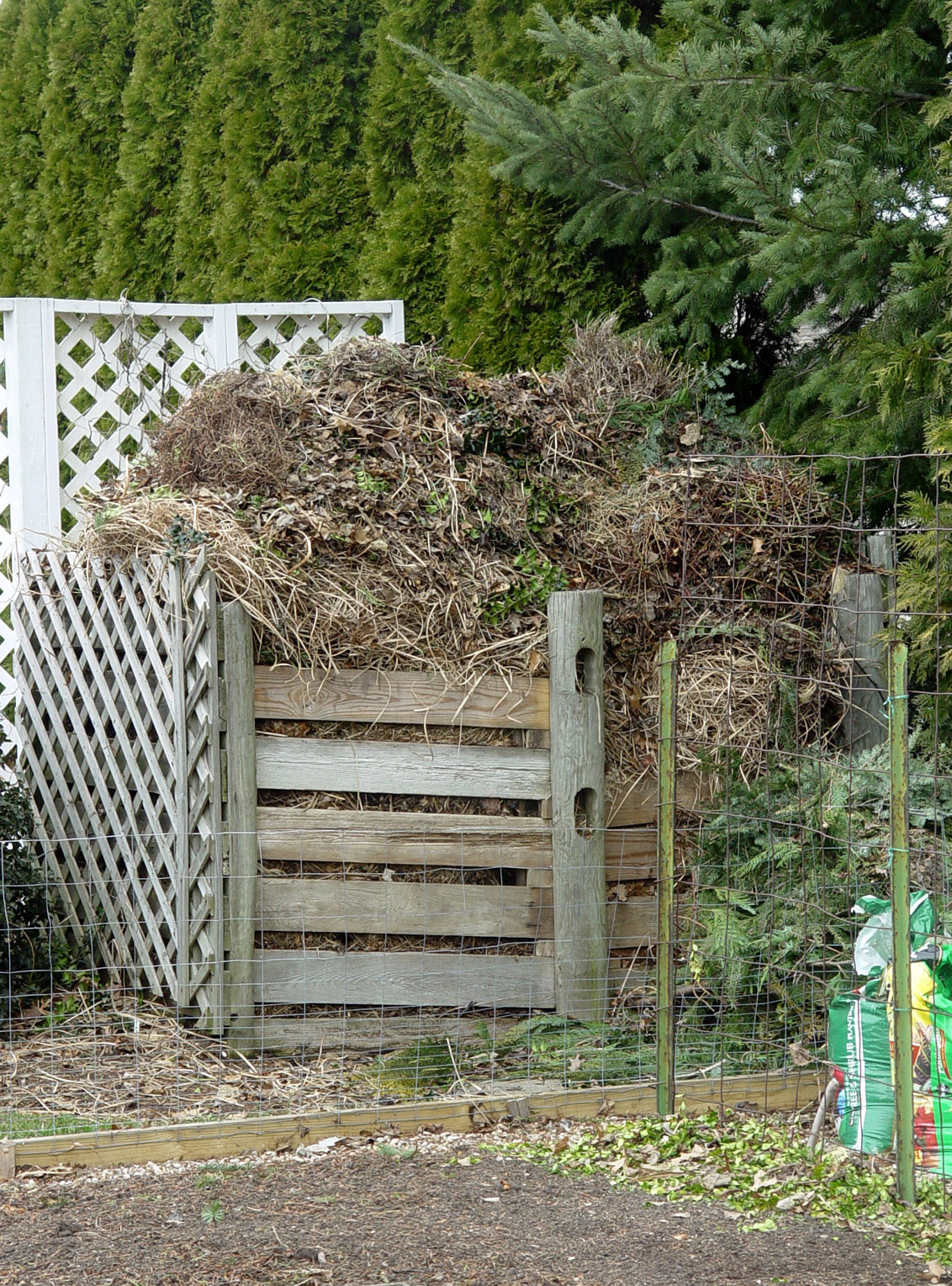
George's Mount Compost.

   ‘Knock Out’ roses don’t have to be pruned if you’re OK with them growing more like 6 feet tall and wide instead of 4 feet. I usually give mine two cuts a year – the March mincing and then a lighter trim after the first main flush ends in June. This second cut not only refreshes the plant and keeps it compact, it forces a bloom shutdown for a couple of weeks while the Japanese beetles are out anyway.

   I rake and compost all of my end-of-winter cuttings, by the way. The shrub and tree prunings and the woodier perennials get run through my chipper-shredder and get dumped on the beds as mulch.

   The rest just get piled up on what’s now Mount Compost.

Holland Here We Come

   The flower-friendly little country of Holland stages one of Earth’s most amazing plant spectacles only once every 10 years.

   It’s called the Floriade, and it’s a sort of gardening Olympics in which countries from all over the world set up horticulture displays in a huge park-like setting. The Dutch go absolutely bonkers with bulb displays, such as spelling out the word “Floriade” in tulips over the size of a football field.

A tiny section of tulips blooming at Floriade 2002.

   Lowee’s Group Tours and I have put together a nearly 2-week trip for next April to go see Floriade 2012 – plus all sorts of other cool Dutch attractions, like the Keukenhof gardens, the palace gardens at Het Loo, a real working bulb farm, the Aalsmeer flower market, the Zaanse Schans living history village, the Anne Frank House, the Rijksmuseum, a few private gardens behind those skinny Amsterdam canal houses, a visit to the Delft Pottery factory and lots more.

   If you’re at all interested, there’s a free informational night coming up Mon., April 4, at 6 p.m. at the Hampden Inn along Union Deposit Road, Lower Paxton Twp. We’ll show you what we’re going to see and go over the planned itinerary.

   Let Lowee’s know if you’re planning to come so they know how many to plan for. Call 657-9658 or email CKelly@lowees.com.


Free Gardens

March 1st, 2011

   Here’s a deal that’s almost too good to be true… a free garden plot, free water and free use of tools.

   All you’ve got to do is round up a few seeds and plants and get up the gumption to go to Ames True Temper near Shiremanstown to take advantage of this generous offer.

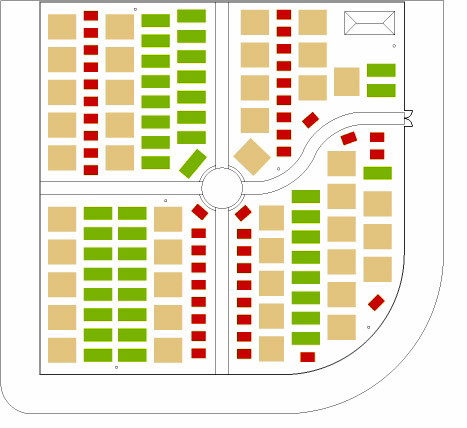
   Ames True Temper just got Hampden Twp. approval to turn a nearly 2-acre grass plot next to its headquarters at 465 Railroad Ave. into a fenced-in community garden of 150 raised beds.

   The company is giving FREE USE of these plots to anyone in the area who’d like to sign up. There’s no catch, no hidden motive, no surprise expense that you find out about later.

   You just have to agree to the rules (things like no drinking, no letting your crops flop onto the neighbor’s plot, no swiping the tools, etc.), and you’ve got a free garden.

   What happened was that this 200-year-old tool company sold last year to the Griffon Corp. As a sort of going-away present to the community, the former owner, Castle Harlan Inc., donated $100,000 to the company’s charitable fund.

   I met Duane Greenly, the company’s CEO, at last weekend’s Pennsylvania Garden Expo, and he said a community garden was a natural fit for a company that makes just about every people-powered yard tool you can imagine.

   Turns out Duane is an avid gardener himself and knows the widespread good of getting hands in the Earth. Like me, his favorite activity is taking a peaceful stroll around the yard to see what changed from the day before.

   He says a free community garden like this gives folks a chance to garden who just don’t have their own space.

   It also helps those who don’t garden because they don’t have or can’t afford the tools or the water. It even addresses the excuse, “But I don’t know how.”

The plot plan for the Ames True Temper Community Gardens.

   The beauty of this garden is that it removes every hurdle except flat-out lack of motivation.

   For one thing, all of the plots will be raised beds, which is by far the best way to grow a successful vegetable garden.

   Second, Ames True Temper will stock a tool shed within the garden so no one has to lug tools back and forth – assuming they own tools in the first place. Being North America’s market leader in non-power lawn and garden tools, the company will have no problem with that.

   Third, the company plans to run hoses through the garden so gardeners won’t have to lug buckets of water from pumps, which discourages people in many community gardens.

   Fourth, with the help of radio host and local arborist Bob Carey, the company recruited Penn-Cumberland Garden Club to help with sign-ups and with running workshops to help newbies figure out what they’re doing.

   A changing team of Penn Cumberlanders (plus Duane himself) staffed a booth at Expo over the weekend to sign up the first 30 takers.

   I’ll be doing the first of the how-to workshops on Fri., May 6, at 6 p.m. at the gardens, which are scheduled to be ready to plant by May 1.

   Although it’s not required, the company is hoping that the gardens yield at least some produce that’s donated to local food banks and anti-hunger programs. This would be a perfect service project for Scout groups, church groups and other civic-minded organizations.

   It’s such a worthy idea on so many fronts. And it’s been well thought out, too, with excellent provisions for security and heading off gardens that start to turn into untended jungles by August.

   The main thing that concerns Duane is the response.

   “That’s what worries me most,” he said, “that people won’t sign up.”

   I would hope that doesn’t turn out to be the case. Interest in vegetable-gardening is higher than I’ve seen it in decades, so the timing seems right.

   Plus, the huge majority of people don’t grow ANY of their own food, so I have to think the potential is there to fill these plots in no time.

   If you’re interested or know of someone within a few miles of the Ames True Temper plant (between Simpson Ferry and Trindle roads just outside of Shiremanstown), make the call.

   You’ve got no excuses now.

   Plots are available in three sizes – 6-by-9 feet, 8-by-18 feet and 16-by-18 feet.

   Contacts at Penn-Cumberland Garden Club are Francesca McNichol at 795-9585 or iimagine27@aol.com and Amy Hatfield at 766-8927 or amyhat@verizon.net.

   At Ames True Temper, the contact is Sue Harley at 730-2619 or sue.harley@amestruetemper.com.


« Older Ramblings and Readlings Newer Ramblings and Readlings »

  • Home
  • Garden House-Calls
  • George's Talks & Trips
  • Disclosure

© 2026 George Weigel | Site designed and programmed by Pittsburgh Web Developer Andy Weigel using WordPress