
• Home
  • Contact
  • Site Map
George Weigel - Central PA Gardening
  • Landscape 1
  • Landscape 2
  • Landscape 3
  • Landscape 4
  • Garden Drawings
  • Talks & Trips
  • Patriot-News/Pennlive Posts
  • Buy Helpful Info

Navigation

  • Storage Shed (Useful Past Columns)
  • About George
  • Sign Up for George's Free E-Column
  • Plant Profiles
  • Timely Tips
  • George’s Handy Lists
  • George's Friends
  • Photo Galleries
  • Links and Resources
  • Support George’s Efforts


George’s new “50 American Public Gardens You Really Ought to See” e-book steers you to the top gardens to add to your bucket list.

Read More | Order Now


George’s “Survivor Plant List” is a 19-page booklet detailing hundreds of the toughest and highest-performing plants.

Click Here


Has the info here been useful? Support George’s efforts by clicking below.


Looking for other ways to support George?

Click Here

George's Current Ramblings and Readlings

Gold Medal Plants

February 15th, 2011

   Wouldn’t it be helpful if when you went to the garden center to pick out a new tree or shrub, 15 of the region’s top plant experts were there to tell you the best of the best?

   Actually, there is something very close to that.

   It’s called the Gold Medal Plant Awards, and it’s a program of the Pennsylvania Horticultural Society (the folks who bring us the Philadelphia Flower Show). Each year, PHS selects a handful of woody plants deserving greater use in home gardens.

   A committee of 15 has been picking the cream of the crop for some two decades now. The result is a list totaling 117 plants — some specific varieties, some straight species — that amounts to a mid-Atlantic All-Star team.
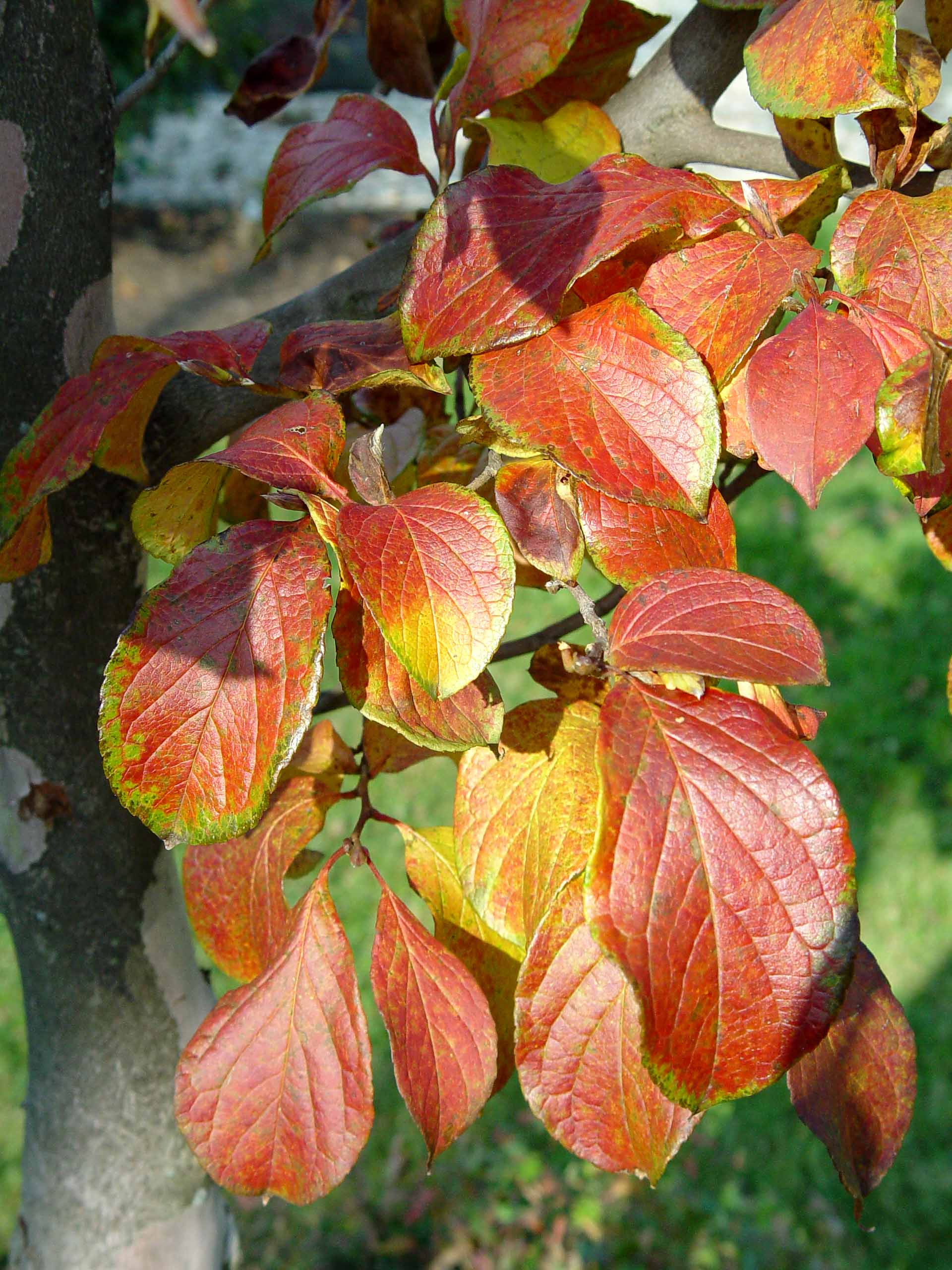
Fall foliage of Gold Medal-winner Korean stewartia.

   Consult the list, and you’d know about such high-octane beauties as the Korean stewartia — a small tree with camellia-like summer flowers, stunning gold/red fall foliage and flaky bark — and a low, spreading broadleaf evergreen called sweetbox that puts out a sweet fragrance better than lilac early each spring.

   The list ranges from fairly well-known and widely available plants as the ‘Limelight’ tree hydrangea and the American holly to hidden gems such as the weeping katsura tree (elegant habit, yellow fall foliage), the Japanese umbrella pine (pyramidal evergreen with straw-like needles) and the seven-son flower (a small tree with white flowers and unusual fall pods).

   The process of how plants get picked — and rejected — is fascinating.

   I got an inside look at it this winter by being invited to be a member of the Gold Medal committee.

   It was humbling to be at the same table with folks I respect as some of the most knowledgeable plant people in our region.

   Steve Mostardi, who owns one of the Philly area’s best garden centers (Mostardi Nursery near Newtown Square) is the chairman.
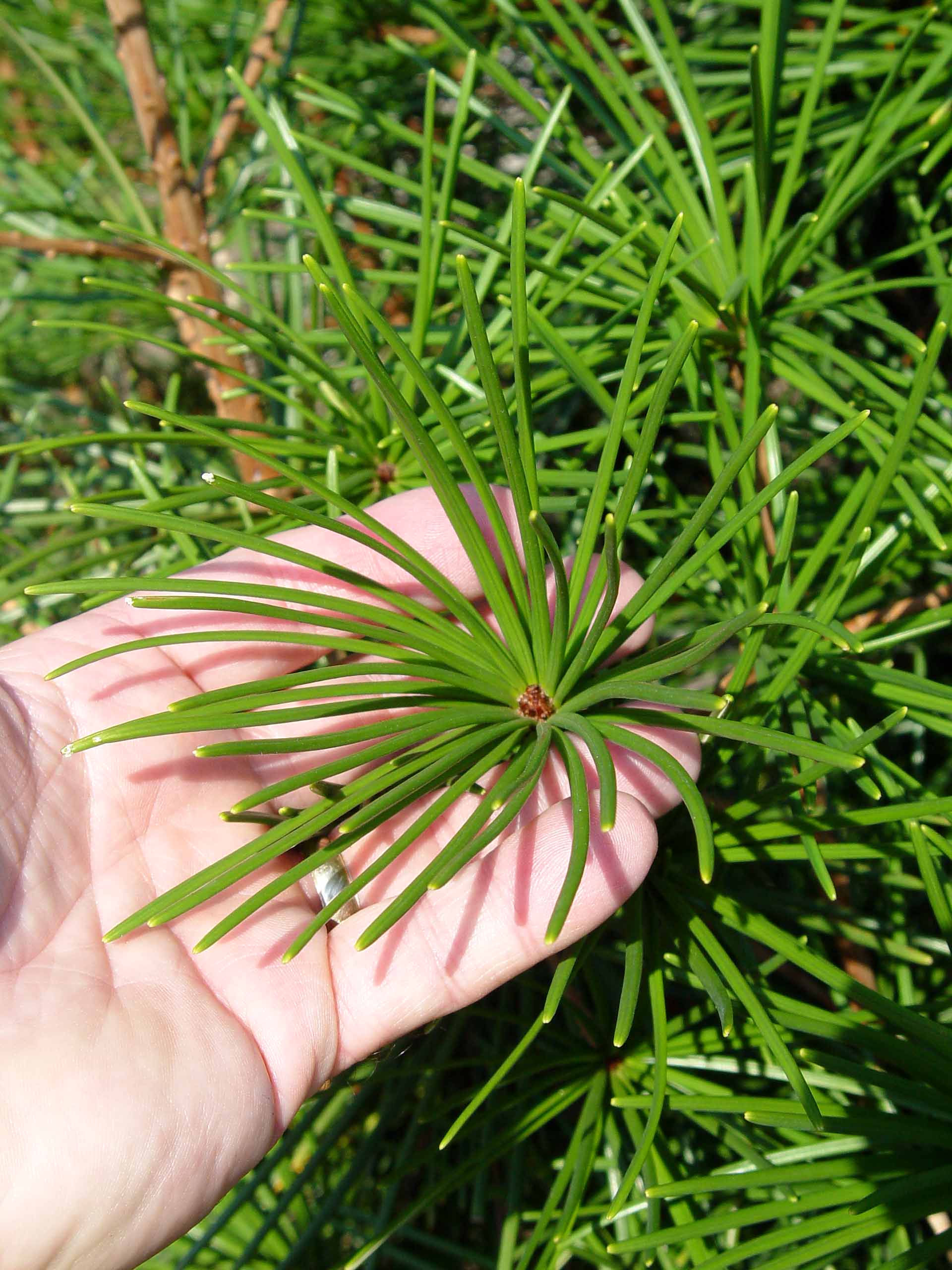
The unusual needles of Japanese umbrella pine.

   Top horticulture guns at Morris Arboretum (Paul Meyer), Chanticleer (Bill Thomas), Brookside Gardens (Phil Normandy) and Scott Arboretum (Rhoda Maurer) are on the panel.

   So is Jack Blandy, whose Stoney Bank Nurseries builds some of those spectacular main-entry gardens each year at the Philadelphia Flower Show. And so is Steve Hutton, the CEO of The Conard-Pyle Co. (Star Roses).

   Three others give a voice to central Pa. — Dr. Richard Bitner (author of two books on conifers and an instructor at Longwood Gardens), Erica Shaffer (who most of you no doubt know as the manager and chief plant geek at Highland Gardens in Lower Allen Twp.), and plant-hunter extraordinaire Barry Yinger, who’s found us such super plants as ‘Moonlight’ Japanese hydrangea vine, a variegated false holly called ‘Goshiki’ and one of my all-time favorites, the Mellow Yellow spirea, which has needle-like foliage in a brilliant gold all season long.

   This group nominates candidates, then meets twice a year to view plants and debate the fine points of each.
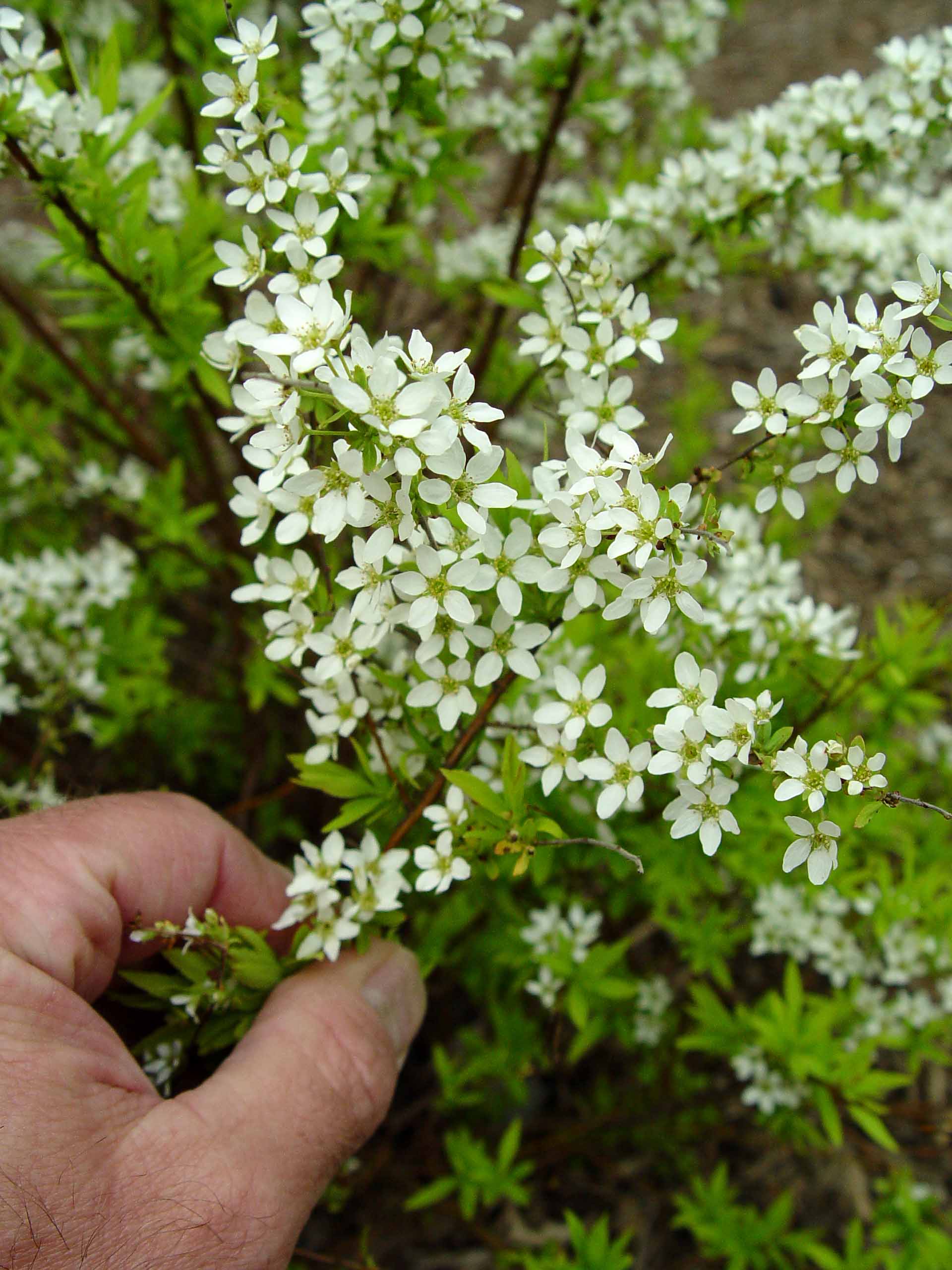
Early-spring flowers of spirea Mellow Yellow.

   These are people who seem to know every intricate detail of plants. If a vine is prone to getting a little too aggressive or a particular hydrangea cultivar is likely to bleach out in a hair too much sun, it’ll get rejected.

   In fact, over the years more nominees have been rejected (171) than awarded Gold Medals (117).

   To make the grade, a plant first has to be a superb performer that’s unlikely to run into any serious bug or disease problems.

   But it also has to be reasonably available on the market, hardy to mid-Atlantic winters, not invasive, growable by ordinary gardeners and deserving of greater notoriety. A plant that’s already very well known or extensively hyped (i.e. ‘Knock Out’ roses or ‘Endless Summer’ hydrangeas) wouldn’t get an award.

   For one or more of these reasons, these are some on the “reject” pile: ‘Forest Pansy’ redbud (canker possibility), burning bush (unwanted seeding), ornamental kiwi vine (too aggressive), skimmia (questionable cold hardiness), and ‘Roman Gold’ cedar (not widely available).

   The latest Gold Medal winners for 2011 are:

   * Bush honeysuckle Cool Splash (Diervilla sessilifolia ‘LPCD Podaras’). A low-growing flowering shrub with variegated leaves and small yellow flowers in summer. Grows 2½ feet tall by 4 feet wide in full sun to part shade.
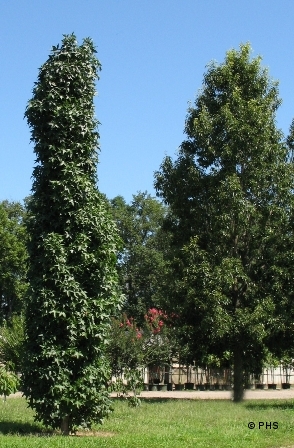
Sweetgum 'Slender Silhouette'

   * Sweetgum ‘Slender Silhouette’ (Liquidambar styraciflua). A very narrow form of our native sweetgum, growing 50 feet tall but only 4 feet around. Produces very few of those spiky seed pods and turns reddish yellow in fall. Full sun to light shade.

   * Bald cypress Debonair ‘Morris’ (Taxodium distichum var. imbricarium). A conifer with soft, pendulous needles that turn bronze in fall before dropping. 60 feet tall, 20 feet wide and tolerates wet soil. Full sun to light shade.

   * Red-twig dogwood ‘Midwinter Fire’ (Cornus sanguinea). A multi-stemmed flowering shrub with white spring flowers but mainly grown for its yellow, orange and red stems in winter after the leaves drop. Grows 8 feet tall, 10 feet wide. Full sun to part shade.

   See more on those and all 117 Gold Medal plants at www.goldmedalplants.org. If you’re going to the Philadelphia Flower Show (March 5-12, www.theflowershow.com), look for a Gold Medal display garden in the PHS Village on the show floor.

   I’ve also got pictures and descriptions of many of these winners in the Plant-of-the-Week Profiles of this site at https://georgeweigel.net/plant-of-the-week-profiles.

Sign of Spring

February 8th, 2011

   The first sign of spring to me isn’t the singing of robins but the arrival of the Pennsylvania Garden Expo.

Reinford Landscape's award-winning display garden from the 2010 Pa. Garden Expo.

   This 3-day garden show at the Farm Show Complex is first out of the gate of the four late-winter shows in day-trip range of Harrisburg. Once Expo gets here, things seem to roll into onion-planting time pretty fast – even if we get a blizzard or two in the meantime.

   This year’s Expo happens Fri., Feb. 25, through Sun., Feb. 27.

   My favorite part is the display gardens. I helped build a few of these in Expo’s early years, and I can tell you a ton of work goes into it in a very short period of time.

   It’s not easy creating a blooming garden in February – complete with water features, outdoor kitchens and paver patios – on top of solid concrete in a matter of days. If you’re curious about what goes on behind the scenes, I wrote an article on it last year. Check it out here.

   Ten local landscapers plan to build gardens this year, and students from area vo-tech and trade schools are building five more.

   These gardens might not be as elaborate as the Philadelphia Flower Show’s theatrical spectacles, but they are very nice and a welcome site when most of us have had enough ice and snow.

   One thing most people come away saying about Expo display gardens is that these are realistic gardens – in other words, ones you could and would actually do in your own yard.

   That’s the point. The idea of Expo isn’t to astound you but to give ideas, information and inspiration to make your home landscape a little nicer.

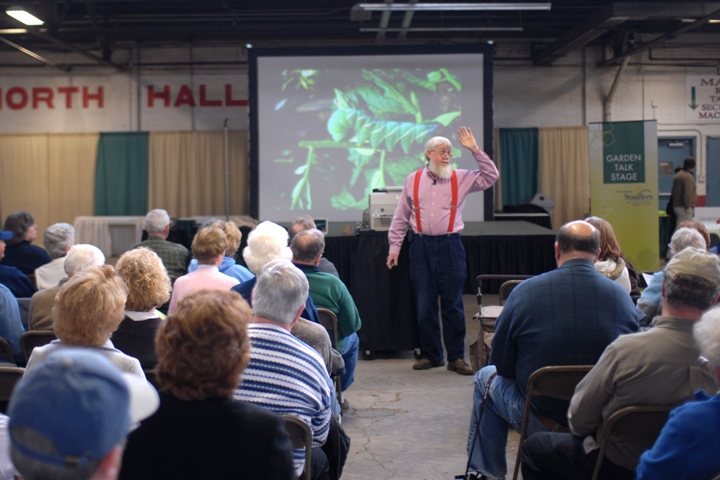
Roger Swain speaking to an Expo crowd.

   The seminars are geared toward that end, too. Coming back once again for talks all three days is the inimitable Roger Swain, he of the red suspenders, beard and “Victory Garden” pedigree.

   Roger is actually Harvard-trained brilliant, but he’s got a down-to-earth manner that connects perfectly with folks who, well, like to get down to the earth. He’s always filled with stories that help you learn without realizing you’ve been “teachered.”

   I’m planning to sit in on Roger’s talk on “Good Enough Grass” (Sat., 3 p.m.) on moving away from our obsession with perfect green carpets.

   Throughout the show, other talks will focus on growing herbs, creating cool-weather container gardens, the psychology of curb appeal and eco-friendly yards.

   I’ll be doing four talks: “10 Ways to Be a Greener Gardener” (Fri., 1:30), a seed-starting demo (Fri., 3:30); “How NOT to Mess Up Your Landscape” (Sat., 10:30) and “Cutting-Edge Plants for Your 2011 Garden” (Sat., 1:30).

   For the first time, I’m also going to have a booth at Expo all three days where I’ll be happy to chat and answer questions.

   My lovely wife, Sue, will be there, too. She’s planning to decorate the booth with plants and run a video montage of photos from some of the great gardens we’ve visited.

   She and my daughter, Erin, also designed one of those nifty pull-down banners with a big flower and my face on it. It makes its public debut at Expo.

   Thinking about heading over? The Expo folks gave me eight tickets that I’m giving away randomly to four of my e-column subscribers. So if you’re on that list, you don’t have to do anything. I’ll email the winners. If you’re not on the list, sign up by hitting the button in the left column. And this would be a good time to get your friends and family to sign up (so they can give you their tickets in case they win).

   Besides the gardens and talks, you’ll find more than 150 vendors and exhibitors of all sorts manning booths at Expo. See the full show details at www.pagardenexpo.org.

   And if you’d also like to see the 2011 edition of that other flower show, the one they have down in Philadelphia, I’m taking three bus loads down through Lowee’s Group Tours on March 7, 9 and 11. It’s $75  (including show admission), and the theme this year re-creates Paris in spring.

   The first bus is already filled, and the second one is almost there, too. Sign up to go by calling Lowee’s at 657-9658 or toll-free 1-888-345-6933.


Ice, Ice Baby

February 1st, 2011

   Well, I’m back from summery South Africa and shell-shocked (but not surprised) at this mixed mess of wintry weather that threatens to flatten our landscapes.

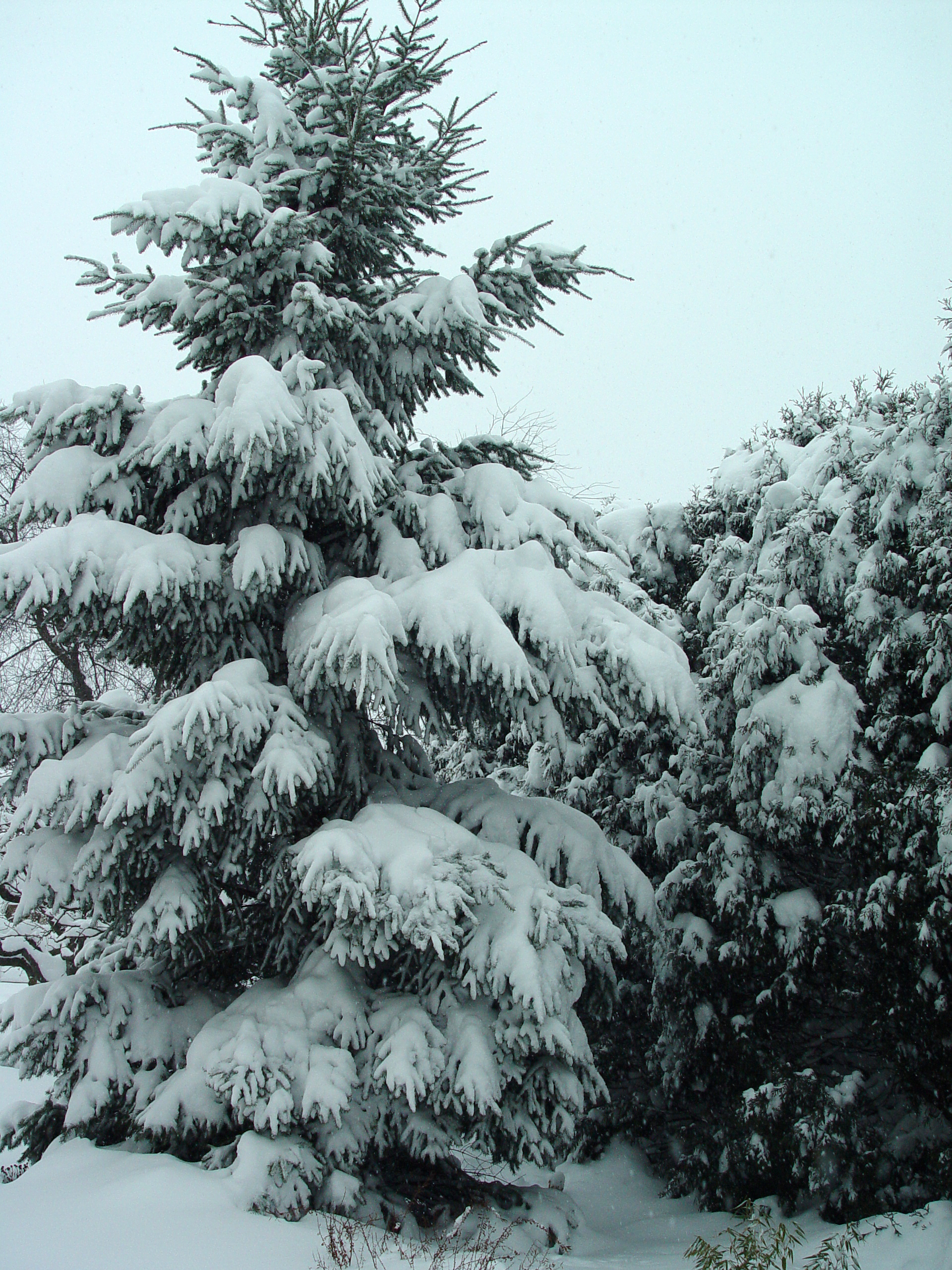
Don't worry too much... most landscape plants bounce back surprisingly well from snow and ice loads.

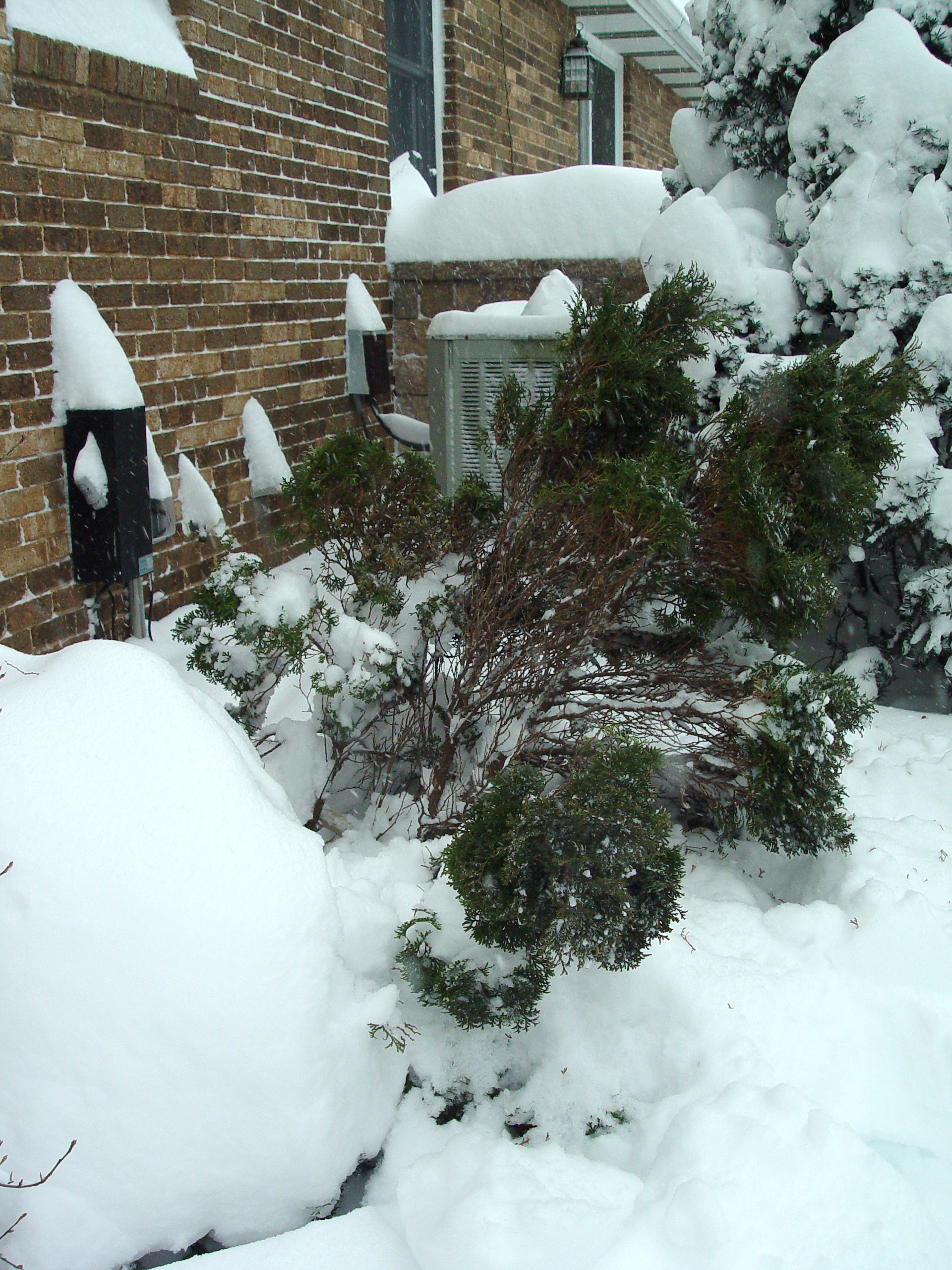
   Ice poses a particular problem for woody plants because it adds a lot of weight to already frozen, brittle branches. Given a half-inch or so coating, that’s enough to snap at least some of the weaker-wooded species (‘Bradford’ pears, white pines, Leyland cypress, arborvitae… you know who I’m talking about).

   Unfortunately, there’s not a lot we can do – practically, at least – when nature decides to dump winter on us.

   It’s possible to protect selected shrubs by tightly wrapping them in burlap “straitjackets” or by building small wooden lean-to’s over foundation plants that are in the way of ice and snow sliding off roofs. But you can’t go out and cover the whole landscape.

   Some of you might be tempted to try and whack snow and ice off the shrubs with a broom. Be careful if you try that! There’s a good chance you’ll break branches with your whack-actions. Ice that’s frozen onto wood isn’t coming off easily. Also forget blow torches.

   If you attempt anything, at least do it gently and with an upward motion that’s least likely to break branches. Don’t fall down and break a hip on the way out there either.

   Personally, I’m not taking any protective or corrective action – at least not yet. I’m always impressed at how well most woody plants bounce back from snow- and ice-sagging.

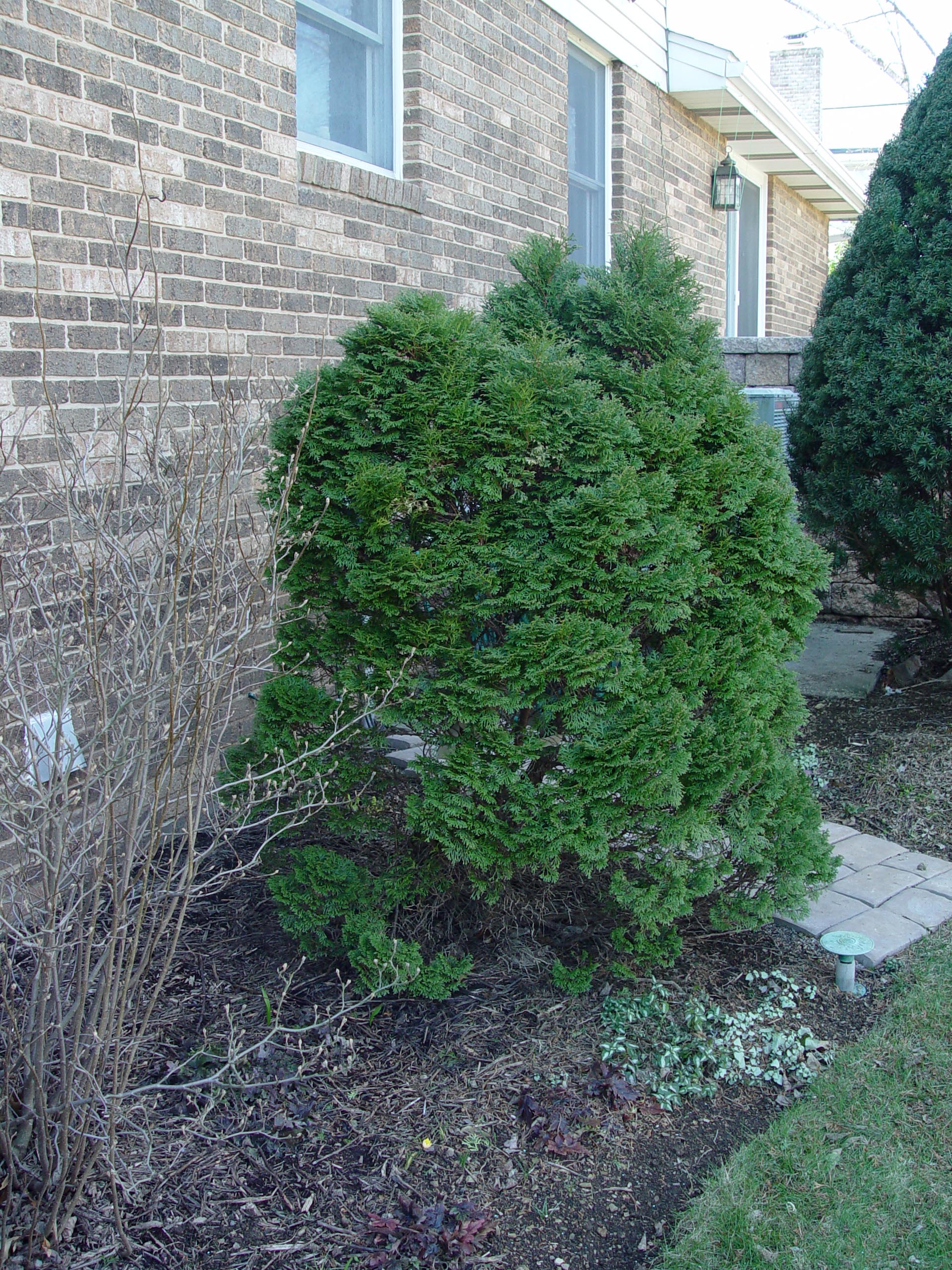
   Last year, a line of seven boxwoods I’ve got planted out front looked horrible after getting dumped on by the heavy snow and ice. They looked deformed forever. I tried clearing snow and despite being pretty darned careful, snapped off one fairly large branch. I quickly quit. Come spring, the boxwoods pulled themselves together and ended up looking just fine – like nothing horrendous had even happened in February. So I’m laying low this time despite the foreboding forecast.

A dwarf arborvitae right after getting dumped on last year.

The same plant come spring, with a single nylon tie inside to pull the branches together.

   I’ll deal with any lasting trouble at the end of winter. Broken branches will get cleanly pruned, then I’ll reshape the plants as best as I can. Any shrubs that still look like pancakes, I’ll use nylons to pull them back together and/or prune or shear them into respectability. Even if they don’t look as good as new right away, a year or two of growth will help.

   Anything that takes a more serious shellacking? I’ll write it off as a wimp that can’t deal with a central Pennsylvania winter and replace it with something braver and tougher. The loss gives me room for something new I want to try anyway.

    For more on ice damage and what you can do to minimize winter damage to trees, check out this past garden column I wrote here.

   As for melting ice on sidewalks and driveways, ordinary rock salt is cheap and effective, but it’s also the choice most likely to damage lawns and plants.

   The salty runoff can lead to excess sodium in nearby soil, and that can lead to browning around leaf margins that looks much like drought damage. Spring rains often leach the salt out of the root zones, but you can’t always count on that either.

   Products with calcium chloride are a bit easier on plant roots, but they’re more expensive.

   The plant-friendliest option is calcium magnesium acetate (CMA), a relatively new product made from dolomitic limestone and acetic acid.

    Urea-containing products (made from ammonia and carbon dioxide and used primarily as fertilizer) are less likely to burn plants than rock salt but still can cause injury at high levels.

   Then there’s the old-fashioned elbow-grease method of scraping ice off walks with a flat-bladed, long-handled ice scraper (which doubles nicely as a bed-edging tool, by the way).

   Or focus on traction by scattering icy pavements with a gritty material such as sand, wood ashes or cinders.

   If you’d rather look at something warm and nice than what’s coming down outside your window, I just posted a slide show on my trip to South Africa. Click here to see it or hit the “Photo Galleries” button along the left side.


Definitely Not Mechanicsburg

January 25th, 2011

   Well it’s not every day in Mechanicsburg you get woken at 4:30 a.m. by the deep, warbling “yahoo” hollers of a baboon.

   That kind of surprise has been the norm, though, for the two weeks I’ve been here in South Africa on a “garden safari” through Harrisburg Area Community College.

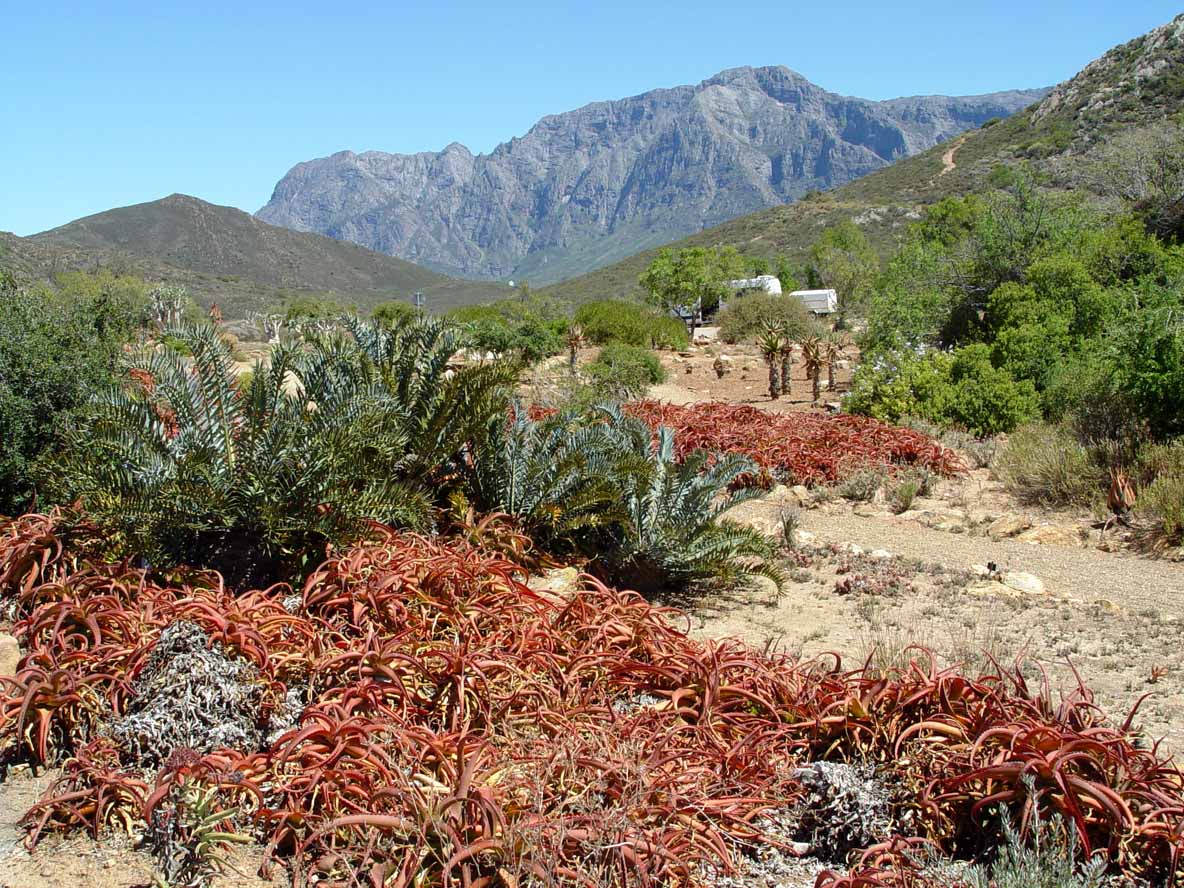
This scene from Karoo Botanical Garden makes it obvious I'm not in Mechanicsburg anymore.

   Bill Stoffel of Palmyra, who’s traveling in our group, said it best: “Everything is different here – the plants, the animals, the culture, the climate, the stars, even the shells and rocks.”

   It’s certainly the most unusual place I’ve ever been. And every new part of South Africa we visit, it’s vastly different from the last.

   The South Africa tourism industry likes to claim a visit here is like visiting a dozen different countries. That’s no hype.

   The western cape is hot and dry in summer (which is now for South Africa), and its native plant life runs largely to bushy, scrubby but highly colorful plants.

   Drive down the peninsula and you think you’re in Maine with its rocky coastlines and bands of sandy beaches.

One of the many nice scenes from South Africa wine country -- this one at the Jordan Winery near Stellenbosch.

   Drive inland an hour and you’re in California wine  country with vineyards growing in strips as far as you can see. Grapes do very well in this part of South Africa because of the plentiful sun, warm days and dry air that keeps rot diseases to a minimum. Curiously, a rose bush is planted at the end of every grape row – a throwback to the days when the thorny bushes kept plow horses from short-cutting.

   Keep going and the land suddenly turns bone dry and becomes a desert. You should see the amazing array of aloes that grow as tall as trees – sometimes in red – and even bloom on stalks somewhat akin to yucca.

   Aloe is a huge and diverse plant family that goes way beyond what we know as the little, foot-tall, fleshy, green windowsill plant that puts out a thick, clear sap when you snap a blade of it.

   Head down to the southern coast and the land changes drastically again – this time to a wooded forest that looks more like home than anything I’ve seen so far. Except, of course, almost every species is totally different, except for a few familiar patches of ferns and oxalis.

   As for the baboon, that was just one of thousands of animals, birds and bugs we’ve seen in Kruger National Park – a Yellowstone-sized game reserve in the northeastern part of the country next to Zimbabwe.

   Antelopes, zebras, warthogs, monkeys, buffalo and even elephants are roaming everywhere along the paths here. I’d love to get my hands on some of that manure for the compost pile.

   One evening, an elephant decided to charge one of our Land Cruisers. The guide headed off the 3-ton animal at the last second by spraying it with pepper spray. Scary.

   A male lion and another elephant came within a few yards of the Land Cruiser I was riding in, but those two were friendly – or at least non-charging – ones.

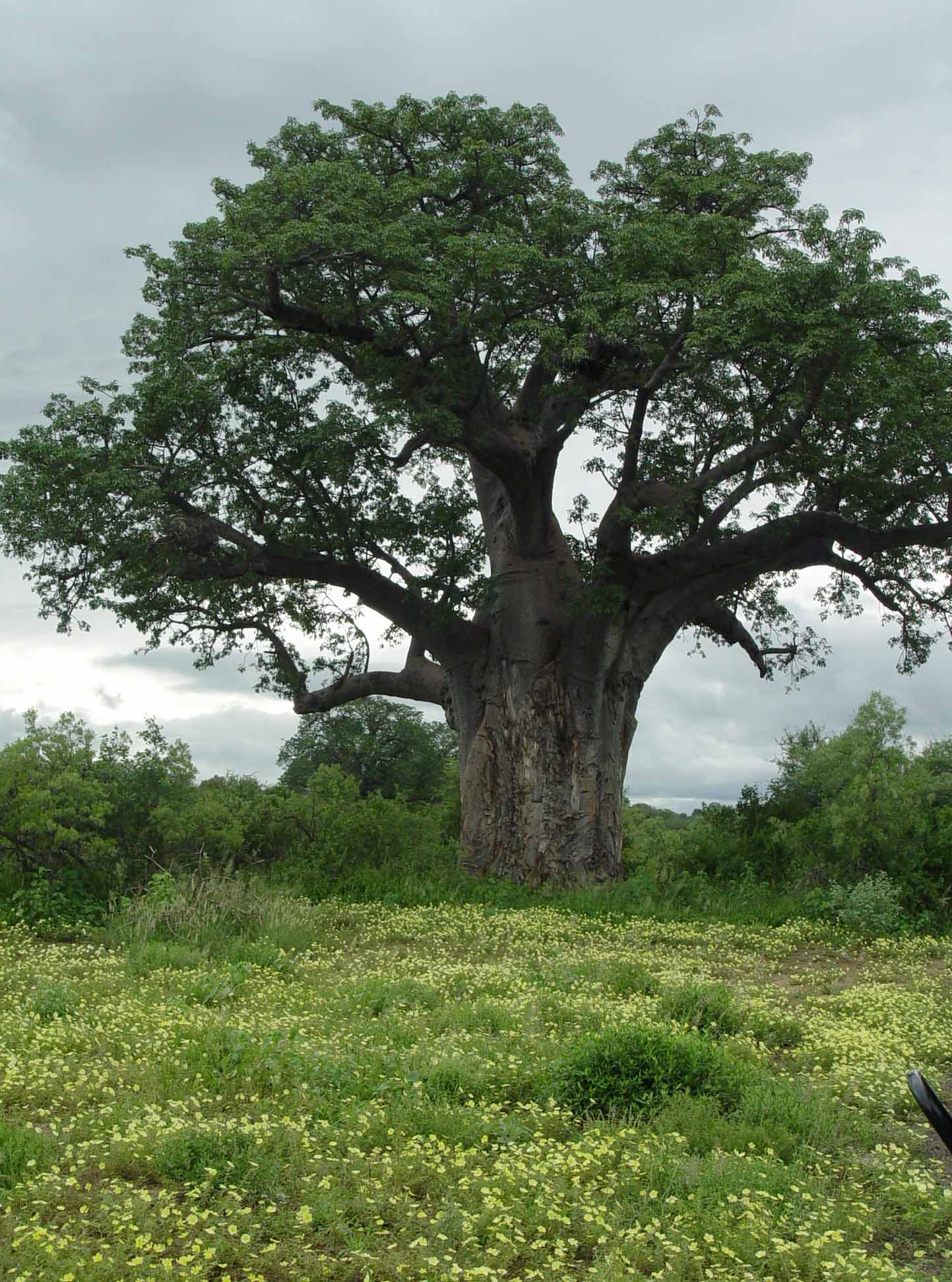
My favorite tree species ever... baobab.

   What I liked best at Kruger was the baobab trees. These oddities aren’t technically trees at all but giant succulents with tree-like trunks, leaves and a branch structure that resembles roots.

    Baobabs are nicknamed the upside-down tree because they look like the roots are sticking up instead of growing underneath. Inside the “trunk” is water – much like a barrel cactus.

   What’s really impressive is how each baobab commands its own space and seems to tower majestically and singularly above everything else.

   We had tea under a big, old baobab with a trunk diameter about the size of a 3-car garage. Our guide said it could be as old as 2,000 years.

    That deserves respect and reverence. Tree or not, it’s one amazing living thing. I was honored to meet it and touch it. Also relieved to see that no one had attempted to carve initials into it.


It’s Summer Already?

January 19th, 2011

   Greetings from South Africa, where the temperatures are in the 80s and the agapanthus, bougainvillea and blue plumbago are in glorious bloom.

   Sorry to rub it in, but gardening conditions are near perfect down here where the sun has fled (our winter, their summer).

   I’m on a “garden safari” with Dr. Don Koones and a merry band of adventuresome souls traveling through Harrisburg Area Community College.

   We’re here to see the most diverse collection of plant life on the planet, and South Africa has not disappointed.

   It’s staggering to see hundreds and hundreds of species I’ve not only never seen before but never even heard of.

   There is almost no overlap between what grows naturally in central Pennsylvania and what grows in South Africa. This might as well be another planet, judging from the plants.

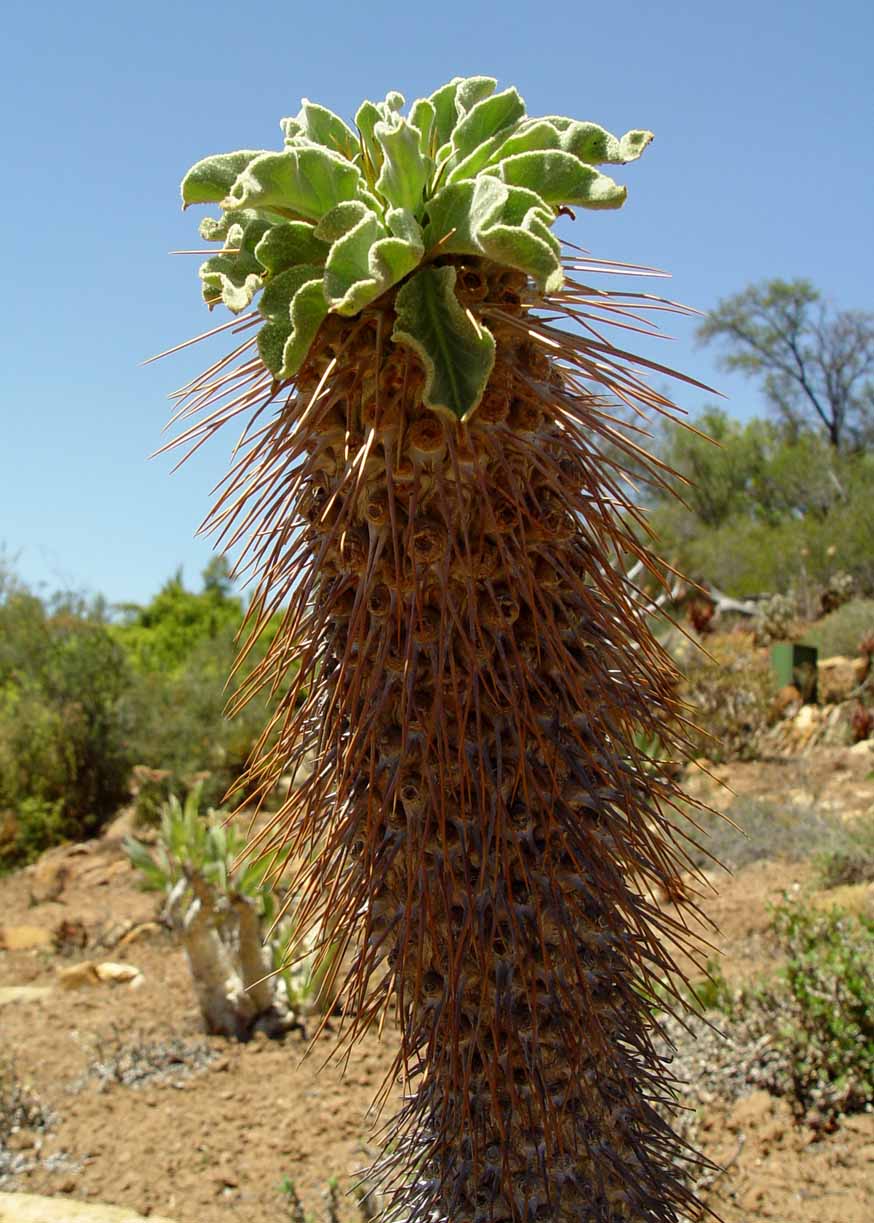
One of the oddest plants I've ever seen -- a "halfmens."

   One of my favorites so far has been an oddity called a “halfmens,” which looks like an upside-down gray baseball bat with thorns all along its body and a green toupee at the top. It’s actually a succulent we saw growing in the Karoo Desert Botanical Garden near the town of Worcester.

   The climate there is hot, dry and rocky, and the soil is acidy, making it perfect for all sorts of aloes and euphorbias that take on assorted shapes and sizes. Several species we’ve seen actually look like rocks.

   Down near Cape Town, the weather is warm and wet in winter and warm and dry in summer, which opens the door to many large and showy shrubs and perennials that we have no hope of growing.

   Best known there is the king protea, a broad shrub that puts out pineapple-shaped cones that open to hand-sized, sunflower-shaped flower of multiple colors. It’s one of the most striking flowers  you’ll ever see, if you’ve never encountered one in a cut-flower arrangement.

   Besides seeing the mostly native collections at the Kirstenbosch, Harold Porter, Stellenbosch and Karoo Desert gardens, we’ve walked through several totally untouched plant havens in the “fynbos.”

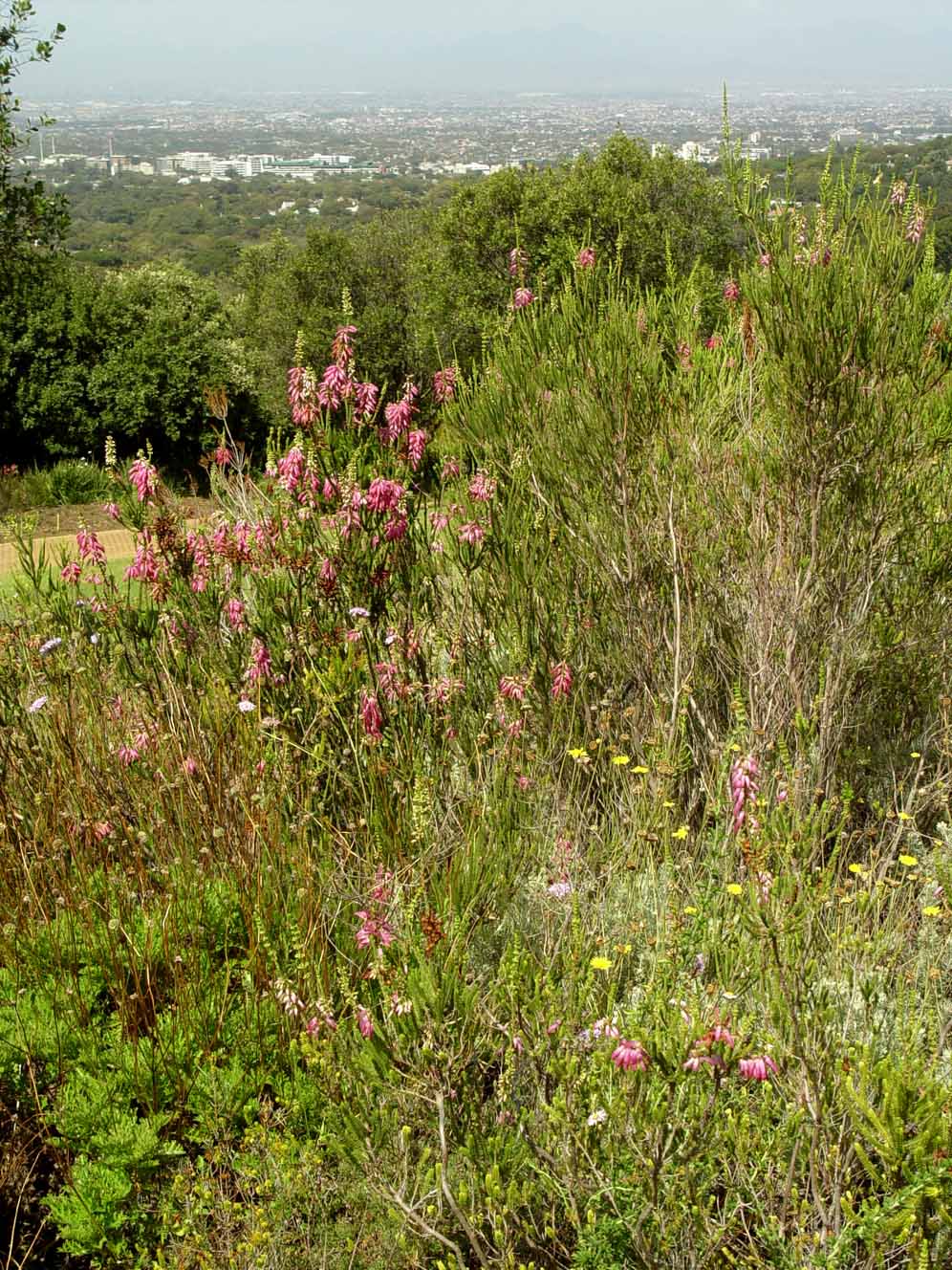
A "fynbos" snapshot, this one recreated at Kirstenbosch Botanical Garden.

   “Fynbos” means “fine bush,” and it’s primarily wild stands of heathers, proteas and restios, which are kind of a cross between a reed and an ornamental grass.

   But mixed in are all sorts of smaller succulents and tough-as-nails perennials, including pink-blooming hardy ice plants (Delosperma), silver fuzzy-leafed helichrysum and, believe it or not, the parent of our popular red-flowered geranium growing wild in rock and sand.

    The diversity is just incredible. Some 20,000 different plant species grow in this country, including  one of Earth’s six floral kingdoms and the only one that’s totally contained within one country (South Africa’s southwest cape region).

   Thousands of species are found nowhere else on the planet. Needless to say, it’s Plant Geek Heaven. God must’ve had His busiest and most creative day putting this place together.

   Incredibly, the scenery and wildlife are just as diverse as the plants. I’ve seen orange lichens growing on stones, mountain ranges that rival the Rockies, coastlines better than Maine, and baboons, bontebok, zebras and ostriches running around the roadsides.

   I’ll tell you more later both here and in the Patriot-News and also get some photos posted once I get back. Fascinating.


« Older Ramblings and Readlings Newer Ramblings and Readlings »

  • Home
  • Garden House-Calls
  • George's Talks & Trips
  • Disclosure

© 2026 George Weigel | Site designed and programmed by Pittsburgh Web Developer Andy Weigel using WordPress