






What’s On Your Mind
November 8th, 2011
Here’s what questions I’m getting lately, along with my Twitter-version answers in case the same issues are on your mind…
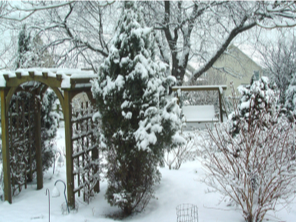
Q: My butterfly bush/lilac/oakleaf hydrangea/etc. lost a lot of branches in that Halloween snow. Am I going to lose it?
A: No. Prune broken branches back to the first uninjured branch (or back to the trunk if the whole thing snapped) and odds are excellent the plant will be fine next year. It might look a little disfigured for awhile, but even that will improve in time.
Q: I keep reading conflicting information about whether it’s good or bad to rake leaves out of the garden beds. What do you say?
A: I’m a leaf-hugger. That old advice about cleaning out the beds because “leaves will smother plants” is misguided. If that’s the case, then how do perennials and shrubs survive in the woods where nobody rakes those leaves?
The only raking that makes sense is when leaves blanket evergreens and evergreen groundcovers, such as vinca, pachysandra and turfgrass. Or if wind blows so many leaves into one spot that it piles up too high for winter-dormant plants to poke through in spring. (In that event, you can clear them out in spring.)
Otherwise, let leaves on the ground under shrubs. Let them cover the ground where you’ve pulled annuals, cut off perennials or planted bulbs. Let them alone in wooded areas and tree groves. At the very least, compost them if you can’t stand looking at them.
Q: Where are all the stink bugs? I’m not seeing anywhere near what I had last year.
A: I’m hearing that a lot. I saw them outside but I haven’t had a single one inside. And I’m hearing very little noise about this problem this fall, although I have heard of a few people getting inundated.
My guess is that all the rain might’ve had something to do with this. I’ll be checking into it. Don’t hold your breath, though, that the stink-bug problem is gone.
Q: I brought my pepper/mandevilla/coleus/etc. inside and want to keep it alive over winter to replant back out next spring. Is that possible?
A: Yes. Cut back most tender plants like these to about 6 inches, pot in good-quality potting mix and grow as houseplants next to a bright window. Don’t overwater.
They’ll get leggy, but come May, you can cut back again and then acclimate them gradually to the outside before planting.
Q: Can I plant bulbs in containers?
A: Yes. Just make sure the container is weather-resistant. Plant bulbs just as you would in the ground. You can even plant several layers, with larger bulbs deeper and smaller ones shallower.
Let the pot out so it gets winter rain and snow. Bulbs need moisture as they shift into flowering mode in late winter to early spring.
Plant in the ground when they’re done flowering. Or cut off the foliage after it browns out, then dig and store the bulbs in a cool, dry spot over summer.
Q: Should I prune my roses in the fall?
A: I use the two-step plan for my hybrid teas, grandifloras and floribundas. After the leaves drop, I cut back long and leggy branches to about waist high to keep them from snapping over in winter wind.
In spring, I finish the job by picking four pinky-diameter canes and cutting them back to 8 or 10 inches to just above an outward-facing bud. The remaining canes get cut to the ground.
I prune my shrub roses just once in early March by shearing everything off ankle high.


Hi George,
Regarding stink bugs, I had a garden experience this summer that I want to share with you. Whether from the many bags of topsoil that stank to high heaven, or some other origination, our garden was besieged by two insects this summer. I have never seen either one of them before. First all the instars of the green stinkbug, which is supposed to be from the south. They were everywhere and ravenous. I did a pretty good job squeezing them since I didn’t see as many adults later on. Then, partway through summer we were inundated with the striped cabbage worm. I’m used to the pudgy green cabbage butterfly worm, but this was something else again. I learned that from each small egg patch there could be dozens of caterpillars, and there were. Mostly on the cole crops, but sometimes on other plants. I could not keep up by hand-killing. The next couple of days there would be more, more, more. They eat the leaves down to the stem structure (can’t think what that’s called) so that there is nothing left. I don’t use chemical sprays, did try one or two “organic” products, mostly just tried to smash them. Anyway, I’d never seen these before. What’s your take?
Carol,
Most bugs run in cycles. Some years are worse than others, usually relating to weather or the status of their predators. In some cases, we’re seeing “southern” bugs more often and for longer periods because of the warming weather. There are actually dozens of kinds of stink bugs (some native and some not). Most people are now aware of the new troublemaker on the block, the brown marmorated stink bug. Sounds like you were seeing one of the native ones. Just because they were up in numbers this year doesn’t mean you’ll be inundated with them forever. A cold winter might knock them back, for example.
As for the cabbageworms, I’ve seen both of the ones you mention. The stripey one is a little less common. Cabbageworms are so common that I don’t even attempt to grow any cole crops without covering them with floating row cover. This is a light-weight polyester blanket that lets in sunlight and rain but keeps the moths from laying the eggs. It gives me perfectly clean plants with no spraying every time (unless the covers get holes in them). The only thing I don’t like is that I can’t see those beautiful cabbages maturing. It looks like they’re under the sheets hiding.
George