



Eight Products You Probably Don’t Need
September 2nd, 2014
Gardeners use a lot of stuff.

Tree paint and similar wound gunk can be counter-productive.
Tools, fertilizers, seeds, gloves, animal repellents, potting mix and sprays are a few of the “regulars” on the gardener shopping list.
On the other hand, some products keep selling that aren’t necessary or that flat-out don’t work or are in some way counter-productive.
Here are eight that I think most of us can do without. Divert the savings into a cool new plant or two…
1.) Tree paint. This is the tar or similar gunk that’s applied to tree wounds, supposedly to aid healing. People think of it as the tree equivalent of a bandage.
Here’s what the International Society of Arboriculture has to say: “Research has shown that dressings generally do not reduce decay or speed closure and rarely prevent insect or disease infestations. Most experts recommend that wound dressings not be used.”
There’s evidence that dressings sometimes trap moisture and therefore discourage healing.
A better idea: Just trim away any ragged bark and let a tree wound air-dry.
2.) Leaf shine. These are liquids that are sprayed or wiped on houseplant leaves to clean them and make them shiny.
Cleaning leaves makes good sense to get rid of dust, grime or even bugs that can harm a plant’s growth. But making them shiny is a cosmetic matter that comes with a potential down side, namely the potential to clog the leaf stomata (their “pores”) and inhibit transpiration (the way a plant “breathes”) by coating them with glossy materials.
You’re better off saving the money and cleaning your leaves with a soft, damp cloth or with a very dilute solution of vinegar or soap.
Ourhouseplants.com has a detailed explanation on leaf-cleaning if you want to read more.
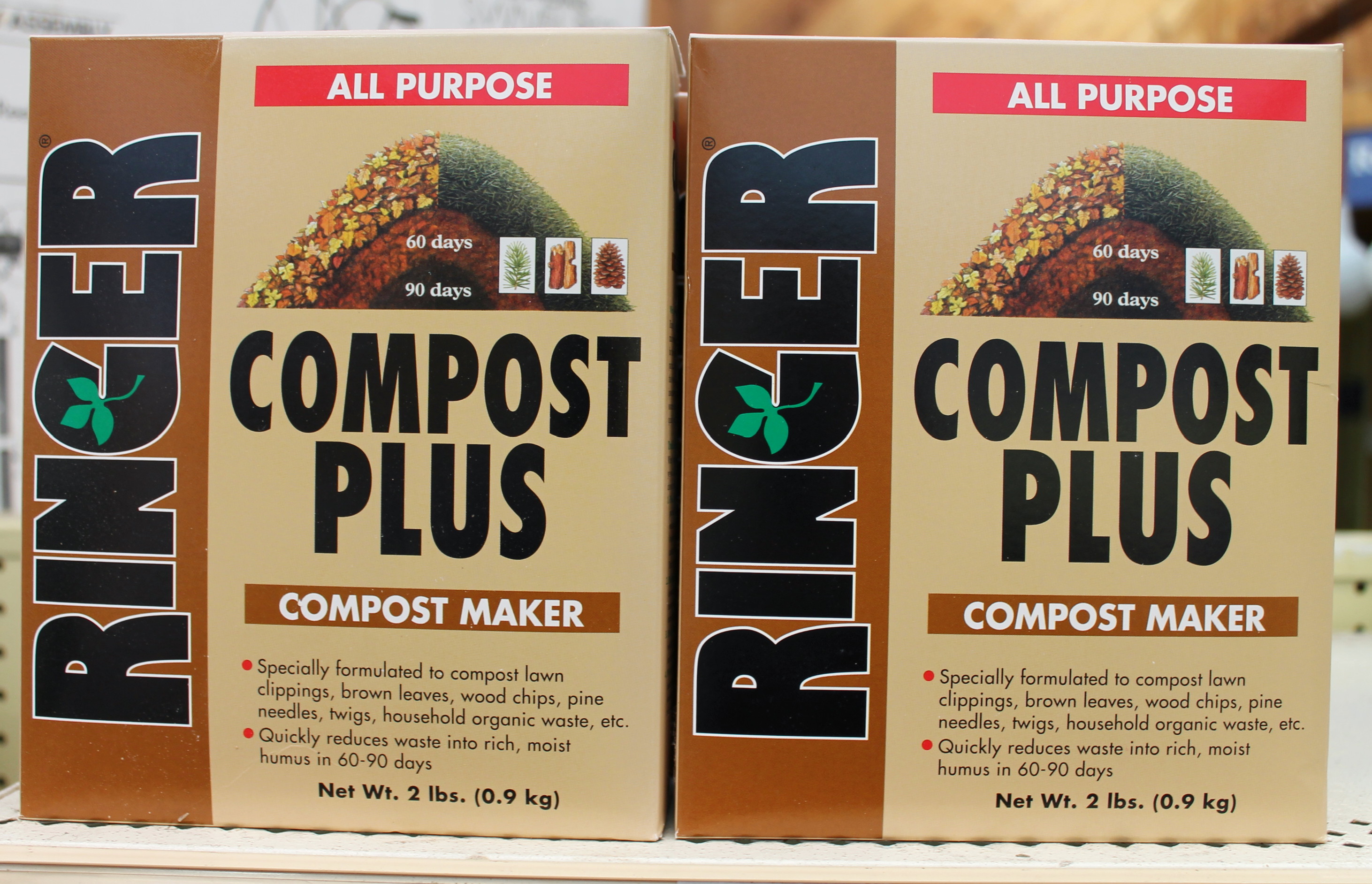
A shovelful of dirt will give you plenty of free composting microbes.
3.) Compost activator. These are granular products, usually containing nitrogen and live bacteria and enzymes, that are added to a compost pile to get it cooking.
The truth is that compost cooks just fine with the microbes that enter the pile on the vegetative material and its roots (assuming you’ve used a mix of green and brown materials). If you’re concerned, toss a few shovelfuls of soil or finished compost into the pile as you build it.
Here’s what the Harrisburg-written book “Basic Composting” (Stackpole Books, 2003) has to say about packaged activators: “Most experts agree that there is no need to use them at all because nature will provide the correct amount and types of microorganisms needed for decomposition.”
4.) Anvil pruners. This type of hand tool has a sharp blade on one side and a flat surface on the other. When branches are cut with anvil pruners, the tip is crushed as it’s being cut, leaving behind a ragged opening that’s more prone to infection, moisture loss and browning.
Bypass pruners make much cleaner cuts. These have blades on both sides and cut more like scissors as the two blades pass each other.
Other than cutting dead wood, I can’t think of any good use for anvil pruners.
5.) Anti-transpirants. Also called anti-desiccants and sold under such brand names as Wilt-Pruf, Wilt Stop and No Wilt Plant Shield, these are wax, oil or resin sprays mainly sold to keep broadleaf evergreen leaves from browning over winter.
Research has been mixed (at best) on how effective they are.
Here’s what horticulture professor Dr. Jeff Gillman has to say about them in his book “The Truth About Garden Remedies” (Timber Press, 2008): “Anti-transpirants may be useful in certain circumstances (mainly during transplanting), but they certainly aren’t a miracle cure. These are the wrong products for reducing the need to water. Anti-transpirants simply will not block the pores of a plant for a long-enough time to be effective. This inability also makes these products ineffective at reducing water loss over winter months.”
Dr. Linda Chalker-Scott, another horticulture professor and author of “The Informed Gardener” (University of Washington Press, 2008), also doesn’t recommend antitranspirants and says better ideas are to keep the soil damp until it freezes and maintain a layer of insulating mulch over the ground.
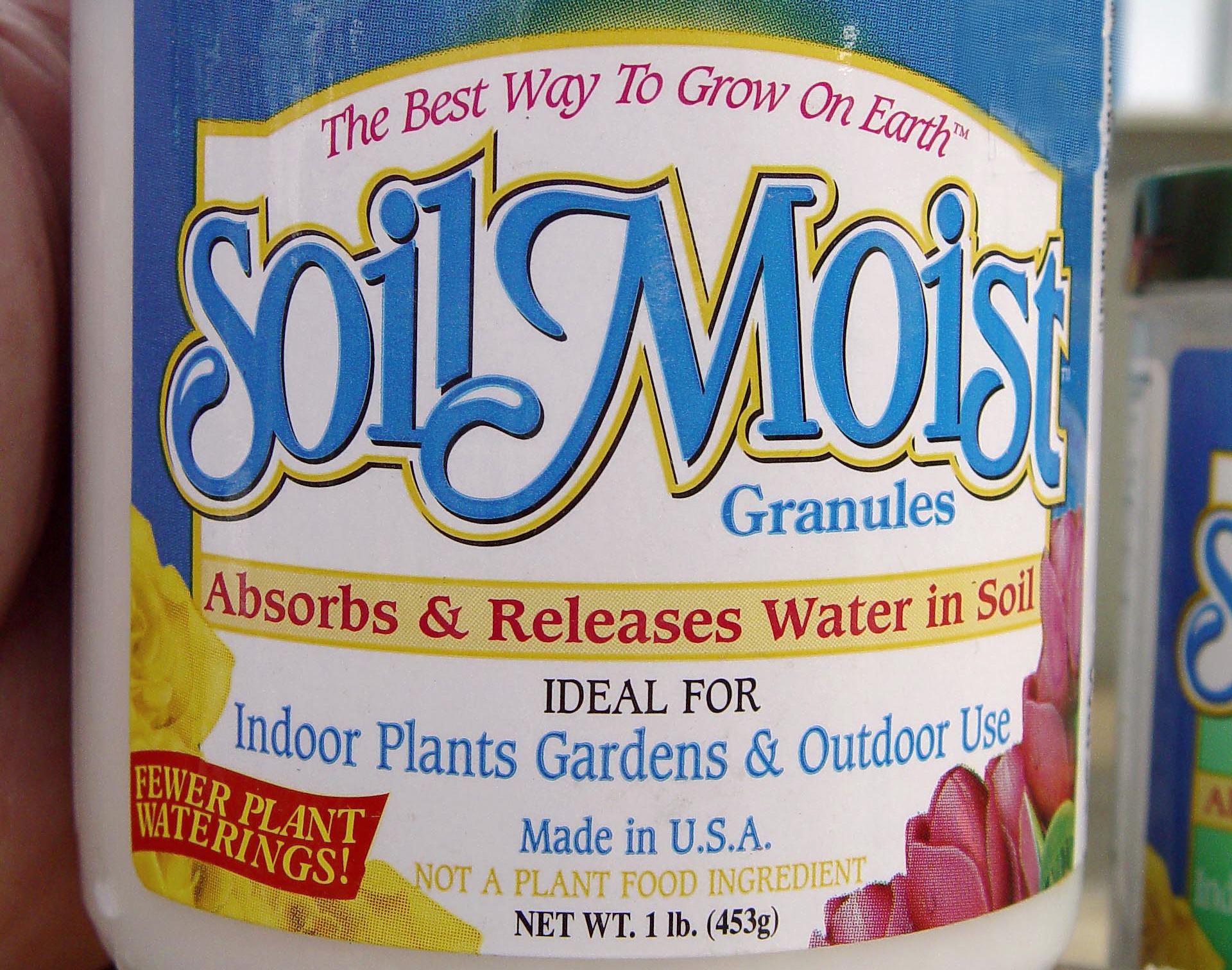
Hydrogels don’t cut water needs as much as you might think.
6.) Hydrogels. Also known as polymer crystals and sold under brands such as Soil Moist, Terra-Sorb and Miracle-Gro Water-Storing Crystals, hydrogels are clear or white dry crystals about the size of coarse salt grains. They get worked into potting mix before planting and absorb water, releasing it back into the soil when it goes dry.
They’re marketed as ideal for helping to get pots through a dry spell, such as when you go away and miss a day or two or three of watering.
Gillman tested five brands of hydrogels while working as a researcher at the University of Minnesota and concluded that none of them kept plants supplied with moisture any longer than soil without anything added. Other studies have found similar results or only marginal gains in water-aiding.
Chalker-Scott also has concerns about the safety of hydrogels, saying they break down into neurotoxic and cancer-causing acrylamides, at least briefly. Newer starch-based hydrogels eliminate that potential.
In any event, hydrogels are expensive in exchange for any limited water-saving benefit. Get more benefit at less cost by topping the soil with a little mulch and lining the inside (but not the bottom) of clay pots and moss baskets with a sheet of plastic.
7.) Landscape fabric. This plastic or woven fabric with small openings is sold in rolls and is used for stopping weeds.
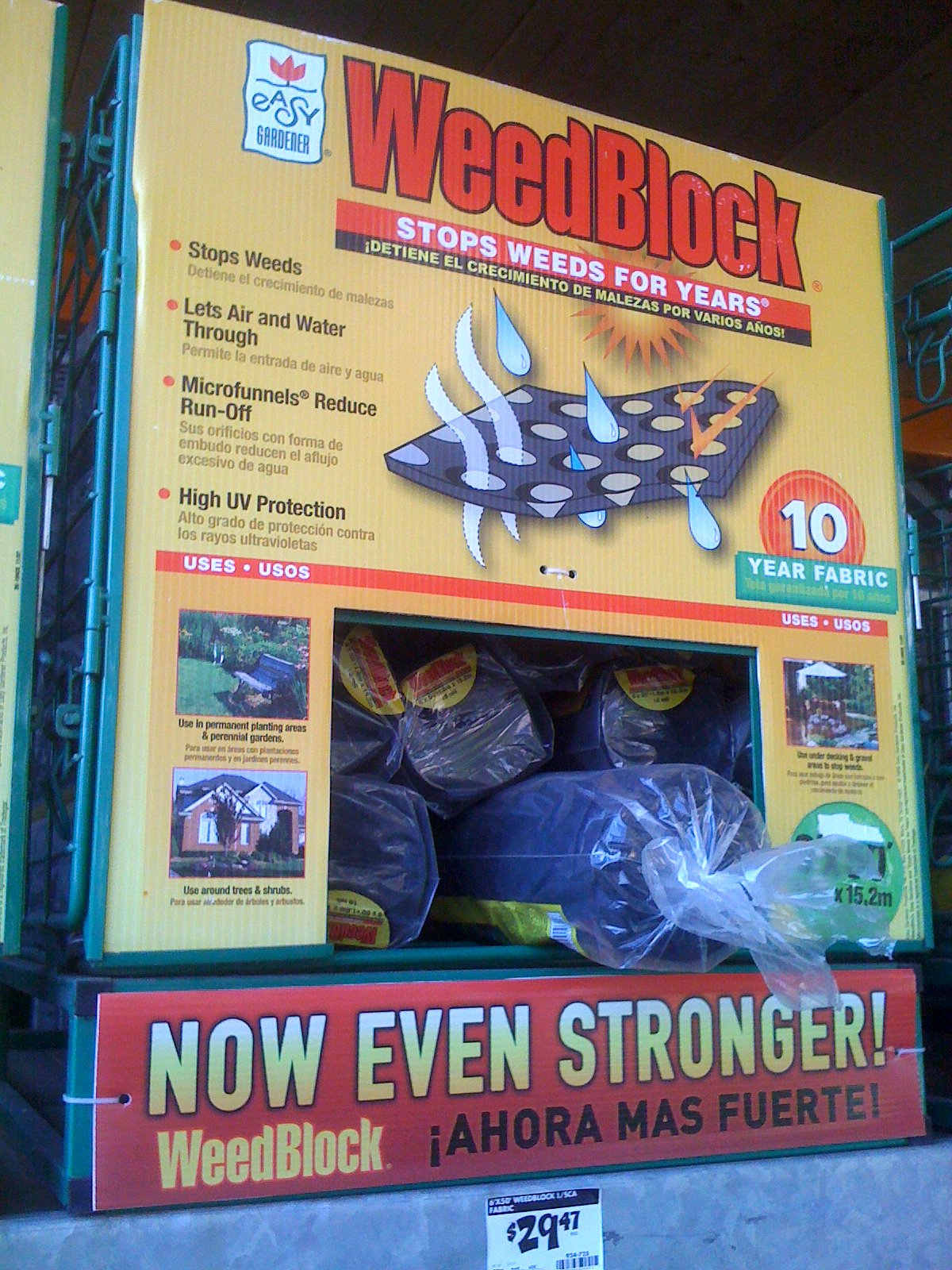
Weed fabrics have their use, but under mulch in landscaped beds isn’t a good one.
It has some good uses – such as under pavers, under stone paths or in vegetable gardens – but the most commonly used purpose is where it’s least useful. That would be in tree, shrub and house-foundation beds, where people think they can lay fabrics over the soil, top with an inch or two of mulch, and kiss their weed problems goodbye forever.
What happens is that the mulch breaks down and becomes a good germination medium for weeds, which send their roots down through the tiny fabric openings. Grassy weeds also manage to poke up through the openings.
Fabrics also inhibit the flow of oxygen into the soil, discourage water absorption during rains, and trap excess moisture in clay soil during rainy spells.
Here’s what Chalker-Scott says about them: “Landscape fabrics used in permanent landscape installations will eventually become a high maintenance issue in terms of appearance, weed control, and landscape plant health.”
8.) Tree spikes. These are solid chunks of fertilizer compressed into spike shapes. The idea is to fertilize your trees and shrubs by pounding the spikes into the ground around the root system.
For starters, your woody plants may not need any supplemental fertilizer, especially if you’re already fertilizing the lawn around them.
Second, this is an expensive and labor-wasting way to get nutrients to the roots even if they need what’s in the spikes. It’s much easier, cheaper and more effective to scatter granular fertilizer over the entire root zone. The nutrients are distributed more evenly that way as rain dissolves the granules than by hammering concentrated chunks several feet apart.
No matter what you buy, do a soil test first to determine whether your soil really is deficient in a particular nutrient, and if so, what’s deficient and by how much.




8 products you probably don’t need. I have only used 6 of the 8! Certainly shows the power of marketing. That’s why facts are always better. Thank you. Think I will go buy a plant, since I can save money in the future.
That might free enough cash to buy 3 or 4 plants. And gas to drive to the garden center to get them…
I have to say that I do use Wilt-pruf during the Christmas holidays for evergreens that have been cut for display and/or decorations. They hold up longer and I also spray my live wreaths and they last well in to the new year. Thanks for the info on the Tree spikes which I am guilty of using, but only once. As you said, way too labor intensive and I never considered the nutrients already in nearby grass.
Hi Carol,
Wilt-Pruf on cut greens is one of the better uses. The treatment lasts longer on greens out of the weather, plus the spray won’t have any detrimental effects on growth since you don’t have to consider transpiration from the needles/leaves on a cut branch. It’s still a good idea to test-spray on blue-tinted evergreens because oil- and resin-based sprays sometimes discolor those species.
No need to feel guilty about using the tree spikes. Most products seem like they SHOULD work, and when labels tell you what they supposedly do, people think they really need to use them. And a lot of products do have some limited uses, but gardeners over-estimate the benefit or use them outside the effective purposes.
I think the best way to go about it is to do your own little experiment. For example, try an anti-transpirant on one evergreen but not on the same one beside it and see if you notice any difference. Or use a hydrogel in one pot but not another and see if you notice any difference in watering need or plant performance.
I’ve done a lot of experimenting with all sorts of products over the years, and most of the time, I’m surprised at how little apparent difference most products make. I’ve found that good plants in compost-enriched soil with adequate water usually do just fine.