


Fig Fignomenal
* Common name: Fig Fignomenal
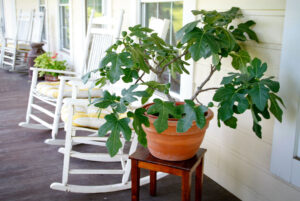
Dwarf fig Fignomenal growing in a pot.
Credit: Peace Tree Farm/Concept Plants
* Botanical name: Ficus carica ‘PT-DF-14’
* What it is: Fignomenal is a recently introduced dwarf fig tree that’s geared to growing in pots. It’s capable of delivering fresh figs for weeks to northern gardeners.
Discovered by Lloyd Traven at Peace Tree Farm near Philadelphia, Fignomenal plants grow only about three feet tall and wide but produce nearly full-sized figs with the same sweet flavor as standard varieties.
Fignomenal is winter-hardy to Zone 7, which means it can be planted in the ground to survive most winters in the Harrisburg area – especially if it’s protected with a winter cover or planted along a heated wall.
However, its compact size makes it ideal for growing in a large patio pot. The pot can then be stored in a garage or basement while plants are dormant until the following spring.
Plants are self-fertile (meaning you only need one to produce fruits), but the first good crop usually doesn’t happen until the second or maybe even third year. From then on, Fignomenal produces over weeks from late summer until frost.
* Size: Unlike standard fig trees that can grow 10 to 15 feet tall and almost as wide, Fignomenal is much slower growing to about three feet tall and wide. A 24-inch pot is a good size for a single Fignomenal.
* Where to use: Full sun yields the best and most fruit. Although plants are drought-tough, they’ll do best in well drained soil that stays evenly moist.
In a pot, a sunny patio or deck is ideal.
In the ground, plant along a south- or west-facing brick or stone wall or along a southern or western heated house wall. A sunny courtyard that’s wind-protected also works.
* Care: In a pot, fertilize with a balanced, granular, organic or timed-release fertilizer in early spring and midway through the season.
You’ll probably need to water daily, at least during hot, dry spells in summer.
In the ground, plants usually don’t need fertilizer, but a soil test before planting will tell you if any fertilizer or pH-adjusting amendments are needed.
Soak in-ground plants well weekly during hot, dry spells.
If pruning is needed, dead wood can be removed and branches can be thinned or shortened at the end of winter just as new growth is beginning.
In the fall when leaves drop, move potted plants into an unheated garage or basement. You don’t need light or fertilizer while plants are winter-dormant, but a very light watering might be needed once or twice during winter if the potting mix is very dry. Move pots back outside in late April to early May.
For in-ground plants, hammer stakes around the plant, wrap burlap or a tarp around the stakes, and stuff the resulting “cylinder” with fallen leaves to insulate the branches over winter. Remove the protection in late April.
Eight or 10 inches of mulch over the roots heading into winter also helps; remove all but two to three inches of it in spring.
* Great partner: Grow Fignomenal alone in its own pot. In the ground, avoid competition and just mulch around the base of the plant and two to three feet out from the trunk. Figs have vigorous roots that out-compete most would-be partners anyway.