
• Home
  • Contact
  • Site Map
George Weigel - Central PA Gardening
  • Landscape 1
  • Landscape 2
  • Landscape 3
  • Landscape 4
  • Garden Drawings
  • Talks & Trips
  • Patriot-News/Pennlive Posts
  • Buy Helpful Info

Navigation

  • Storage Shed (Useful Past Columns)
  • About George
  • Sign Up for George's Free E-Column
  • Plant Profiles
  • Timely Tips
  • George’s Handy Lists
  • George's Friends
  • Photo Galleries
  • Links and Resources
  • Support George’s Efforts


George’s new “50 American Public Gardens You Really Ought to See” e-book steers you to the top gardens to add to your bucket list.

Read More | Order Now


George’s “Survivor Plant List” is a 19-page booklet detailing hundreds of the toughest and highest-performing plants.

Click Here


Has the info here been useful? Support George’s efforts by clicking below.


Looking for other ways to support George?

Click Here

George's Current Ramblings and Readlings

Now Available… George’s What-to-Do-When Book

June 16th, 2015

When to do what around the yard? It’s a question that baffles many a homeowner, mainly because it’s not something that’s taught in school… and because few people paid attention when their parents tried to teach them the fine art of yard care.

My second book is "Month-by-Month Gardening in Pennsylvania."

My second book is “Month-by-Month Gardening in Pennsylvania.”

So most people wing it, hoping they’re not cutting the bushes at the wrong time or planting the petunias too early.

Well, wing it no more. My new book from Cool Springs Press is 240 pages worth of practical, hands-on, Pennsylvania-geared tips that help you know when to do what.

“Pennsylvania Month-by-Month Gardening” is an updated and revamped version of a book that Liz Ball did about a decade ago. I’d say about 90 percent of it is new.

The format is like a gardener’s monthly planner with each monthly chapter broken down into the different kinds of jobs (Plan, Plant, Problem-Solve, etc.) Then under each job, tips are laid out for each category of plants (Annuals, Perennials, Bulbs, Shrubs, Trees, etc.)

Think of it as a very big – and very specific – to-do list.

I think the book is going to be extremely helpful for any Pennsylvanian trying to keep a yard looking good, whether rookie or “senior.”

It’s also a good companion to my first Cool Springs book, 2014’s “Pennsylvania Getting Started Garden Guide.” That one lays out the best 170 plants for Pennsylvania landscapes, and this one gives you the know-how to keep it all looking good once it’s in the ground.

Maintenance is absolutely critical to yard care. Even the best designed landscapes quickly fall apart if the gardener doesn’t know what to do with the plants.

Pruning a big-leaf hydrangea in the fall, for example, will give you a flowerless June the next year. Applying crabgrass preventer too late will let crabgrass sprout and grow before the product has a chance to work. And setting out your tender annuals too soon could cause them to croak when a rogue frost comes along.

It’s all a lot to know and keep track of. Which is why I’m hoping this book turns out to be the dirtiest, most dog-eared book on your shelf – or better yet, in your garden tool bucket.

“Pennsylvania Month-by-Month Gardening” is available through all of the usual book-selling channels, but if you buy it here, I’ll pick up the sales tax AND autograph a copy for you.

To order, head to my Buy Helpful Info page. You can also order “Pennsylvania Getting Started Garden Guide” there or get both for a discount. Thanks for your support, and I hope the info helps!

Summer Care Secrets

June 9th, 2015

If you’ve ever gone away on a 2-week summer vacation, you know it doesn’t take long for a yard to go down the tubes.

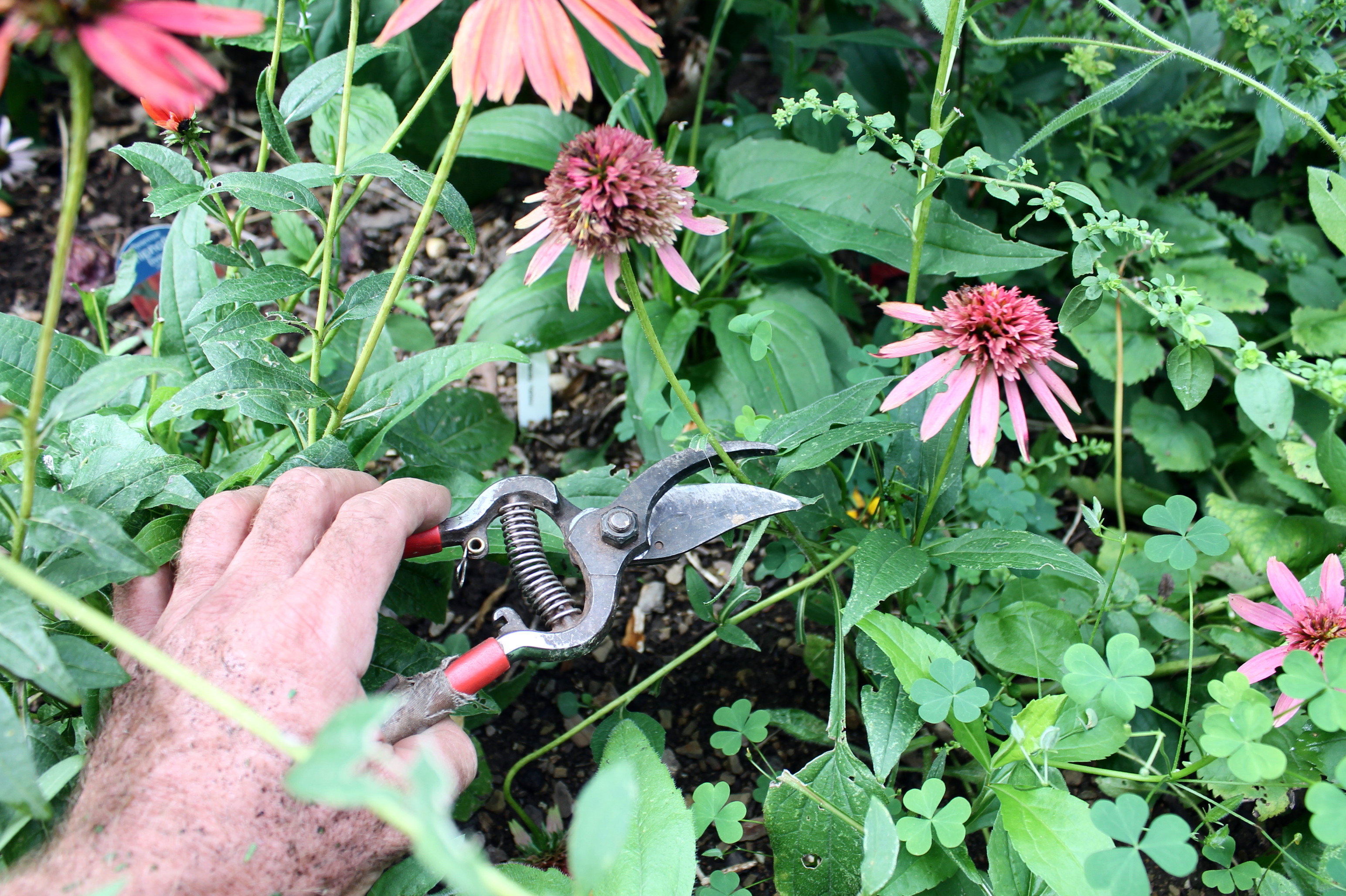
Regular "patrols" are the way to keep a garden looking good all season.

Regular “patrols” are the way to keep a garden looking good all season.

The grass gets overgrown, weeds seem to grow 2 feet tall overnight, and assorted plants cry out for trimming, de-flopping, deadheading and other “primping.”

Regular maintenance, in other words, is absolutely critical for keeping a yard looking good throughout the season. Even the best design quickly falls apart without good care.

I like to go on regular patrols in which I “inspect the troops.” That’s instead of the occasional major blowout cleanups that many people do.

I think it’s much easier to stay on top of a yard’s jungle tendencies by frequent, light policing rather than letting things get out of control and then struggling to recover.

Besides, little weeds come out much easier than big ones. And the patrols give me an excuse to sniff the posies and enjoy the season’s progress while I’m out there looking for trouble.

Knowing what to do – plus when and how to do it – is the key to good care. But since no one learns that in school and since not everyone had a gardening-savvy parent or grandparent to show them, I thought I’d share a few care tips that I employ in summer.

* Flop prevention. The time to get those plant supports in place is now, not later. Tall, bushy plants like peonies, rudbeckia, boltonia and irises often lean or flop without support.

It’s much easier to get supports in place and let the plants grow into or onto them as opposed to trying to corral a flopper later.

One of my favorite strategies is to jam three bamboo stakes around a plant and tie a couple of levels of green jute around them to create a sort of “plant girdle.”

* De-sizing trims. Another flop-preventer is trimming late-blooming perennials that tend to get too tall.

Best known is mums, but asters, sedum, goldenrod and boltonia are other late-season bloomers that often flop under the weight of flowers atop long stems.

Gardeners are usually told they can stop this by “pinching,” which they take to mean using their fingers to pinch back the tips of branches one by one.

Forget that. Just shear the whole plant back by one-half to one-third. You can actually do it two or three times… just knock it off by the end of June so flower buds have time to form.

Read More »


Winning the Weed War

June 2nd, 2015

Late spring is when the landscape looks better than just about any other time because plants are in peak growth mode and generally blooming their heads off.

The best way to stop this from happening is to prevent weeds in the first place... or get rid of them when they're young.

The best way to stop this from happening is to prevent weeds in the first place… or get rid of them when they’re young.

Unfortunately, weeds are plants, too. And they also kick into peak production in late spring.

Spring rains and warmth wake up gazillions of slumbering weed seeds deposited by prior year’s weed flowers, wind, birds and other weedy origins. (See more details on that in a post I did called “Weedfest.”)

Being ready for that is the key to winning the weed war. In other words, we have to get them before they get us.

Look around the yard, think like a weed, and figure out where you’d put down roots. If you’re like most weeds, you’ll head for bare dirt. Any little bit will do.

If you’re a plant geek like me, you’ll opt to beat weeds to the punch by putting plants in every last bare spot before weeds get there.

That means overseeding the lawn with grass seed to thicken it up; spacing garden plants so they touch when mature; tucking low-growing perennial or annual flowers under and around trees and shrubs, and filling in bigger bare spots with a groundcover planting.

This is also where mulch becomes your best ally.

Two to 3 inches of an organic mulch is plenty to snuff out most weeds while retaining moisture and feeding the soil at the same time. Just don’t overdo it.

I like pine bark mulch best for most settings. This is bark from evergreens that’s ground to a texture fine enough that it won’t blow away and porous enough that it doesn’t mat like shredded hardwood (ground-up wood and bark).

Most importantly, bark mulch is less likely to grow the dreaded artillery fungus that shoots those little tarry black dots on your house siding and new white car.

Fungus-friendly shredded hardwood (a.k.a. “tanbark”) is fine away from houses and white fences and is a good choice on banks, where the shredded pieces knit together and resist washing downhill in a storm.

Cedar or cypress mulch also is fungi-resistant (if you don’t mind paying more for it), and composted leaves from the municipal pile work fairly well, too (if you don’t mind hauling them and adding them more often since they break down quickly).

If you have plenty of mulch from prior years, just top if off. Don’t add 3 inches every year if some is intact from previous years.

I’m not a big fan of weed fabric or black plastic under mulch. Grassy weeds like nutsedge manage to poke up through the fabric’s tiny holes, and all sorts of other weeds germinate on top of fabrics and plastic as the mulch topping breaks down.

Read More »


Gardens That Make You Want to Applaud

May 26th, 2015

I didn’t think I liked Italian-style gardens as much as, say, a perennial border exploding with season-changing color or a mixed garden of cutting-edge shrubs.

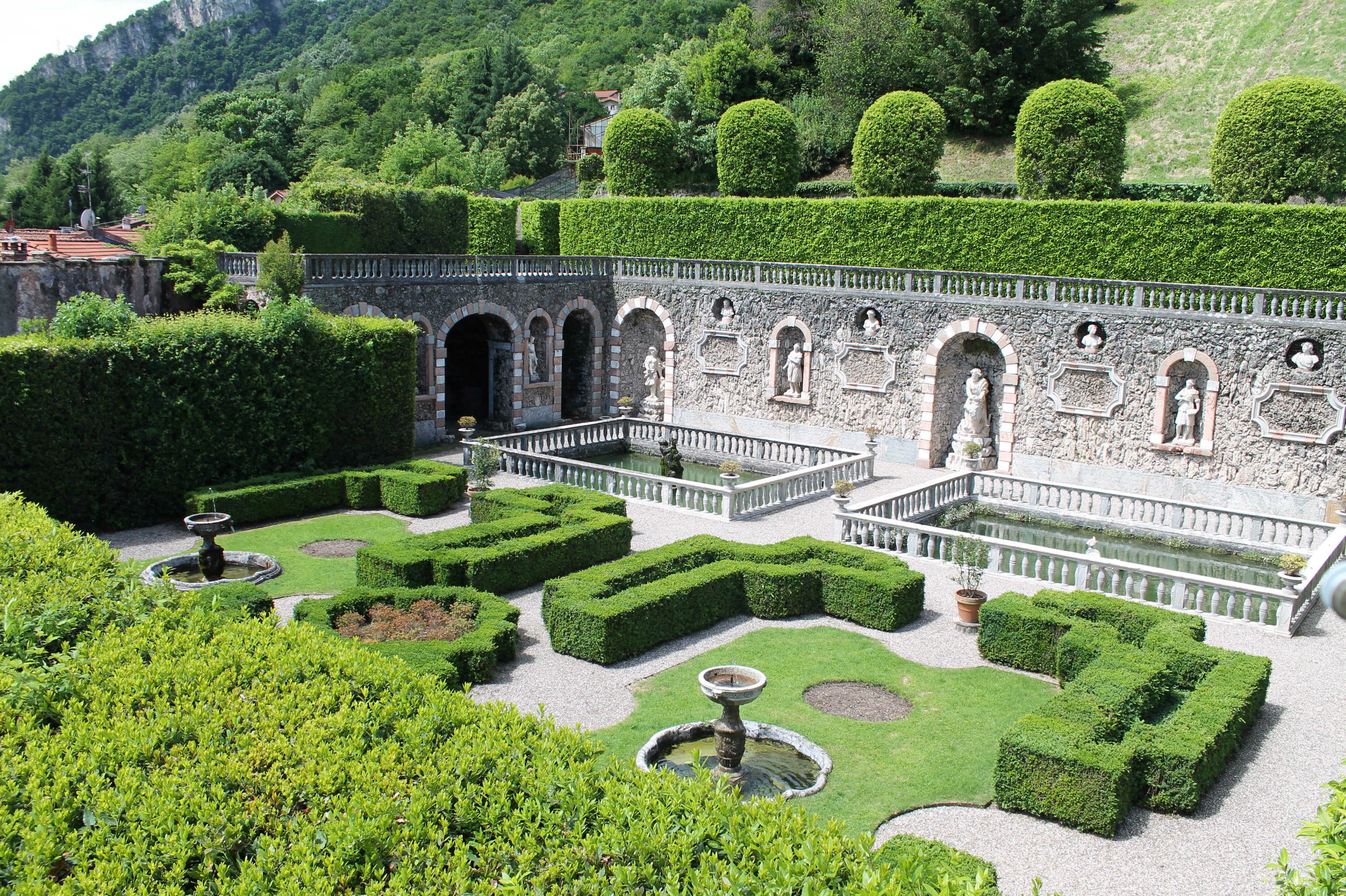
Villa Cicogna Mozzoni features a fine example of a classic Italian Renaissance garden.

Villa Cicogna Mozzoni features a fine example of a classic Italian Renaissance garden.

Italian gardens always seemed too formal, too green and too contrived to me, not to mention a heckuva lot of trimming work.

But after 8 days of picking my jaw off the stone paths of some of northern Italy’s best gardens, I’m an Italiano convert.

The classic Italian style may be formal, green and contrived, but it’s also more impressive than any other kind of garden – especially some of the villa gardens built by Italy’s richest citizens dating to the 1500s.

These folks weren’t interested in having visitors stroll through their landscapes, admiring the peonies, sniffing the jasmine, and concluding, “Nice garden.”

They wanted you to be awe-struck at first glance and immediately realize how much money they had to spare on imposing Goddess Diana statues and grand granite staircases.

Many of these Renaissance-era gardens still stand and still impress. (To see what some of them look like, check out my photo gallery of the Gardens and Villas of the Italian Lakes.)

Tall Italian cypresses line the main axis at the back of Giardino Giusti.

Tall Italian cypresses line the main axis at the back of Giardino Giusti.

One of the best examples our Lowee’s Tours/Collette Vacations group saw was Verona’s Giardino Giusti, a 16th-century villa (more like a mansion) that sits on a steep hillside.

Tall, skinny, pointy-topped Italian cypresses pierce the sky and line a long stepped path that takes you high up to a shaded belvedere. From there, you can overlook the whole geometric and sculpture-dotted network of clipped evergreens.

It’s all very precise and green… virtually no blooms other than a few sprays of roses and a scattering of potted annuals.

Yet this garden is as impressive as any for its sheer scope and form, just as imposing looking up from below as it is looking down from above.

The message it sends is that man is in charge here. Also, that the deer battle can be won if you have enough money to build 30-foot stone walls.

Impressive in a similar way were the 18-foot-tall boxwood walls at Valsanzibio Gardens near Padua, which like Giardino Giusti, is still in private family hands.

Read More »


The Verdict of Another Rough Winter

May 19th, 2015

I was expecting the cherry laurels and nandinas to brown out from the cold winter wind.

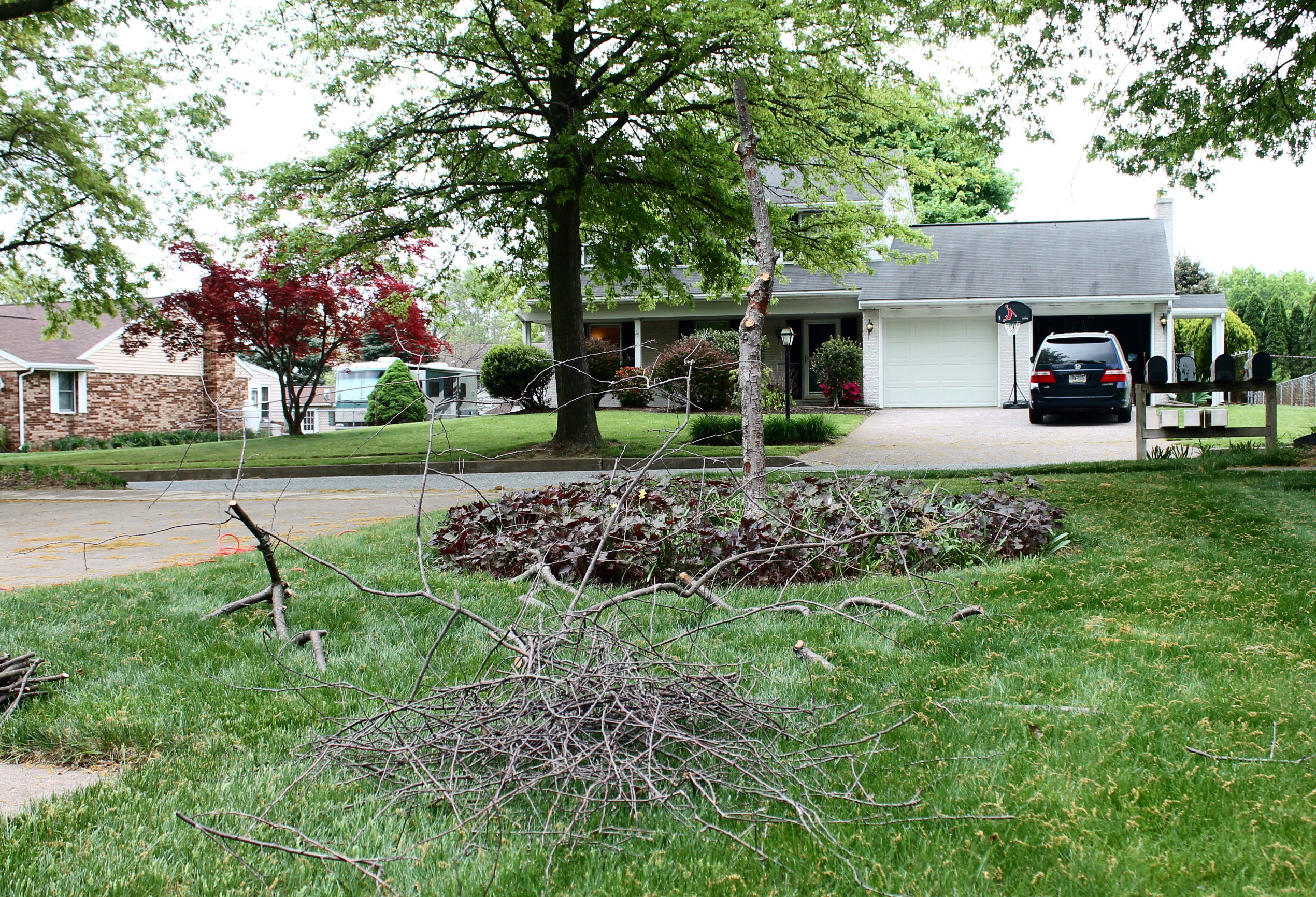
My dead 'Prairifire' crabapple on the way down and out.

My dead ‘Prairifire’ crabapple on the way down and out.

I was expecting the crape myrtles to die back to the ground and the hydrangea flower buds to take another beating.

What I wasn’t expecting was for my 20-year-old ‘Prairifire’ crabapple to die in the front yard.

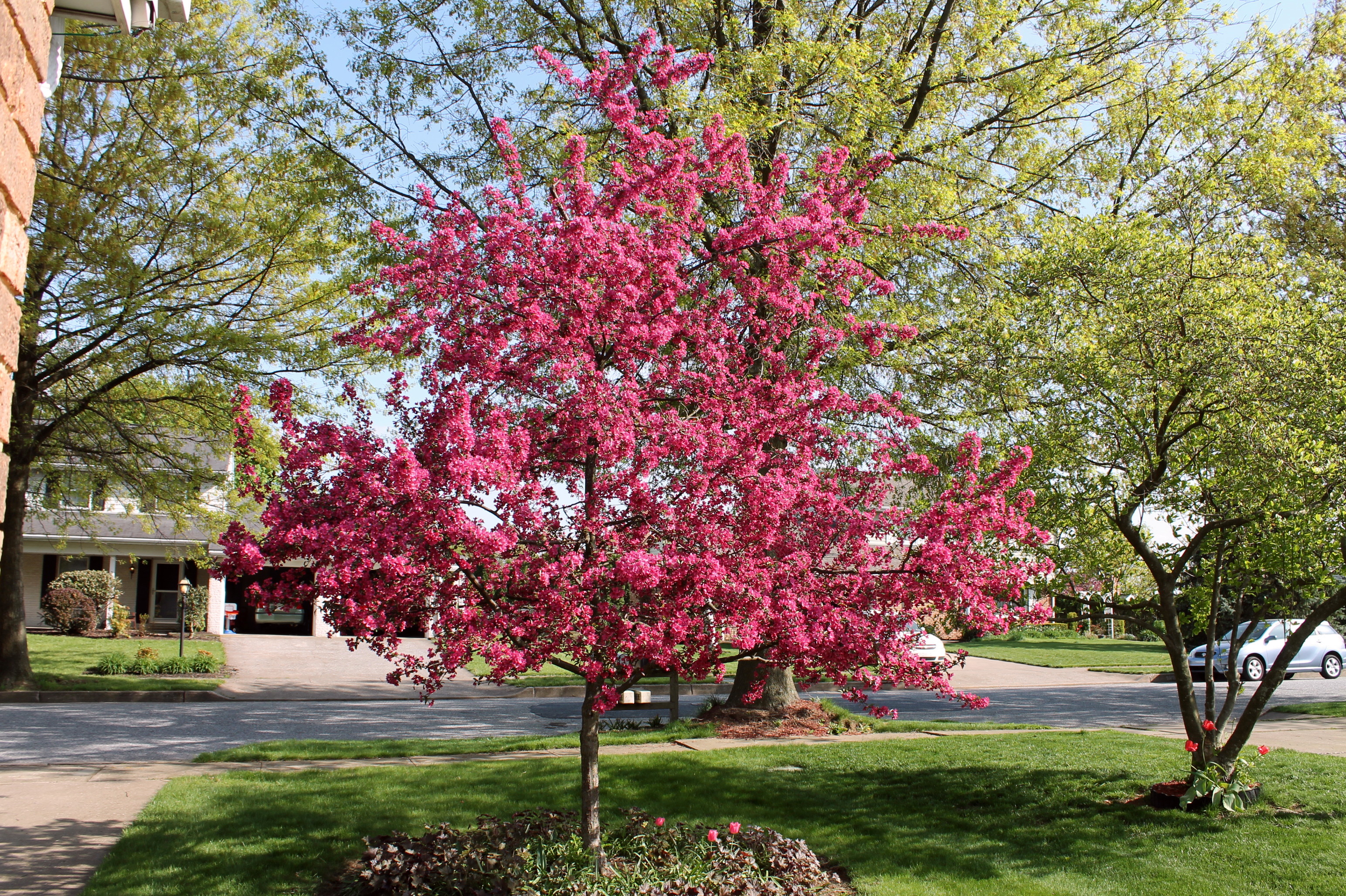
Crabapples are reliably hardy here, even in colder-than-usual winters. And this one was fully acclimated to the site and doing well enough that its blooming glory made the cut as the cover shot on my “Pennsylvania Getting Started Garden Guide.”

Now all I have is a skeleton of dead sticks, the book photo, and the memories of Mays past.

I’m far from alone in mopping up after another damaging winter.

My 'Prairifire' in happier times.

My ‘Prairifire’ in happier times.

From the reports I’m getting and the yards I’ve been seeing, our woody plants took varying degrees of hits.

By and large, perennials and groundcovers came through winter without incident, likely because of the insulating effect of the nearly winter-long snow cover.

But trees, shrubs and upright evergreens had no such protection, so the less winter-tough ones took the brunt of those many zero-degree nights and branch-numbing winds.

As you might guess, the borderline-hardy stuff generally took the worst beating.

All of my crape myrtles, for example, have nothing but brittle wood above ground. On the plus side, some are pushing new growth from the base, which means they’re alive but basically starting over.

Ditto for my hardy camellias, which weathered winters nicely for 15 years with only some minor leaf browning and windburned flower tips in some years. Then the winter before last killed everything except the trunks, and this past winter killed off last season’s twiggy growth that valiantly tried to resurrect the southern belles. I’m seeing just a few new green buds so far.

Broadleaf evergreens such as cherry laurel, nandina, leucothoe, boxwood, euonymus, sweetbox and even some hollies and azaleas came out of winter looking more like “everbrowns” in some yards. Ones out in the open fared worse than ones protected by house walls and courtyards.

While the broadleafs still might look pretty bad, most will recover. So long as just the leaves browned from the cold wind and the branches remain alive, the plants will slough off the brown foliage as new leaf buds push out and open.

I’m more surprised and less optimistic about some of the still-bare branches on species that usually don’t suffer much winter damage.

Two in particular are Japanese maples and cherries.

Read More »


« Older Ramblings and Readlings Newer Ramblings and Readlings »

  • Home
  • Garden House-Calls
  • George's Talks & Trips
  • Disclosure

© 2026 George Weigel | Site designed and programmed by Pittsburgh Web Developer Andy Weigel using WordPress