• Home
  • Contact
  • Site Map
George Weigel - Central PA Gardening
  • Landscape 1
  • Landscape 2
  • Landscape 3
  • Landscape 4
  • Garden Drawings
  • Talks & Trips
  • Patriot-News/Pennlive Posts
  • Buy Helpful Info

Navigation

  • Storage Shed (Useful Past Columns)
  • About George
  • Sign Up for George's Free E-Column
  • Plant Profiles
  • Timely Tips
  • George’s Handy Lists
  • George's Friends
  • Photo Galleries
  • Links and Resources
  • Support George’s Efforts


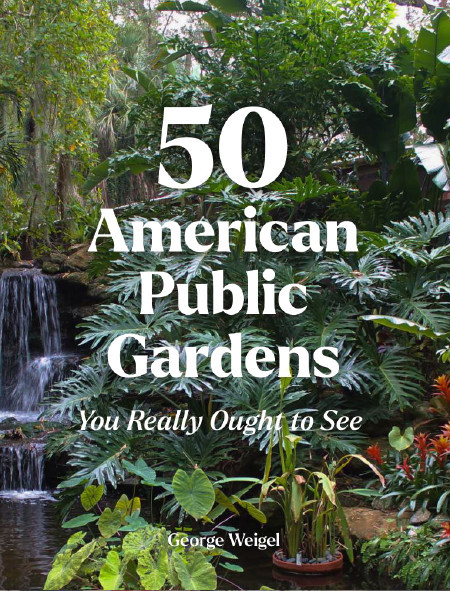
George’s new “50 American Public Gardens You Really Ought to See” e-book steers you to the top gardens to add to your bucket list.

Read More | Order Now


George’s “Survivor Plant List” is a 19-page booklet detailing hundreds of the toughest and highest-performing plants.

Click Here


Has the info here been useful? Support George’s efforts by clicking below.


Looking for other ways to support George?

Click Here

George's Current Ramblings and Readlings

Heng’s Tomato Tips

July 20th, 2015

I know a lot of you are struggling with rampant disease on your tomato plants.
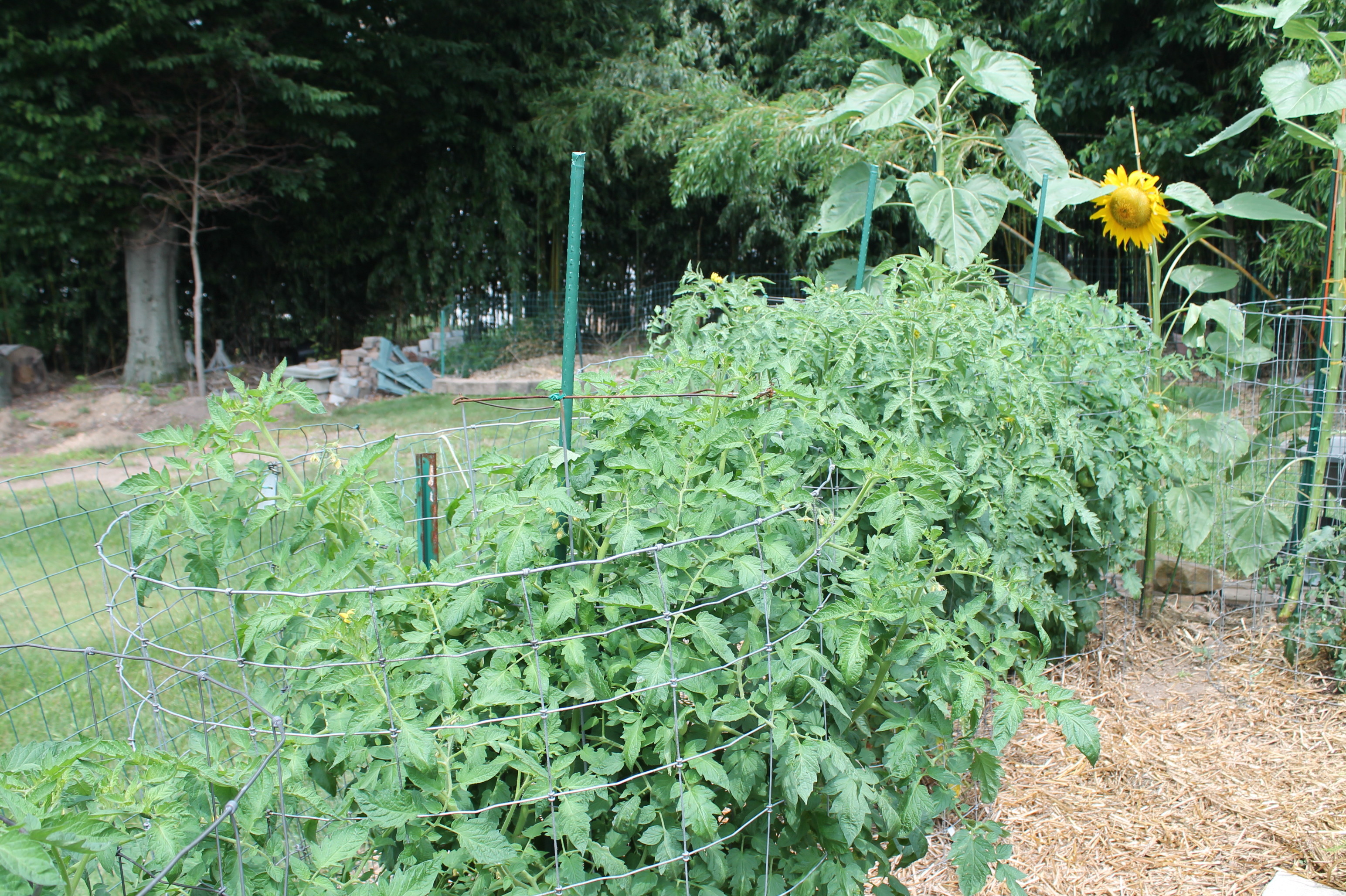
Heng Lim's tomatoes are looking pretty healthy despite the rain-fueled disease pressure.

Heng Lim’s tomatoes are looking pretty healthy despite the rain-fueled disease pressure.

This favorite of all back-yard edibles used to be fairly easy to grow, but a pair of fungal diseases (early blight and septoria leaf spot) have made growing a season-surviving tomato a real challenge.

This season’s plentiful rain and warm, humid air has been especially amenable for these diseases.

Those old-fashioned, good-tasting heirloom tomatoes that have come back into vogue lately have a particular rap of being disease-prone.

So how come Heng Lim’s heirloom tomatoes are looking so good?

Heng has been growing tomatoes for 40 years in his Derry Twp. garden, and he leans almost exclusively to heirlooms.

These days, he’s zeroed in on just a few all-time-favorite, best-tasting heirlooms – ‘Red Belgium,’ ‘Yellow Belgium’ and ‘German Yellow,’ to be exact.

Yet those supposed disease-prone heirlooms are looking extremely bushy and virile in his yard. There’s only the slightest trace of yellowing at the very bottom of the plants… not like so many tomatoes that are already yellowing halfway up.

Heng is convinced the difference is doing as much as possible culturally to keep tomatoes naturally healthy and vigorous. His theory is that happy tomatoes fight off and grow through trouble themselves without much in-season hand-holding from the gardener.

Heng doesn’t spray, and he doesn’t even fertilize several times throughout the season as most tomato experts advise.

The game plan must work because Heng’s dozen plants look much healthier than mine.

His approach is similar to what he preached during his career as a cardiologist… it’s a whole lot better to avoid trouble by eating healthy and getting exercise than to try and undo damage later.

Here’s what Heng does in his tomato garden…
Read More »


A Garden Better Than I Expected

July 14th, 2015

The New Jersey Grounds for Sculpture near Princeton isn’t that well known of a place.

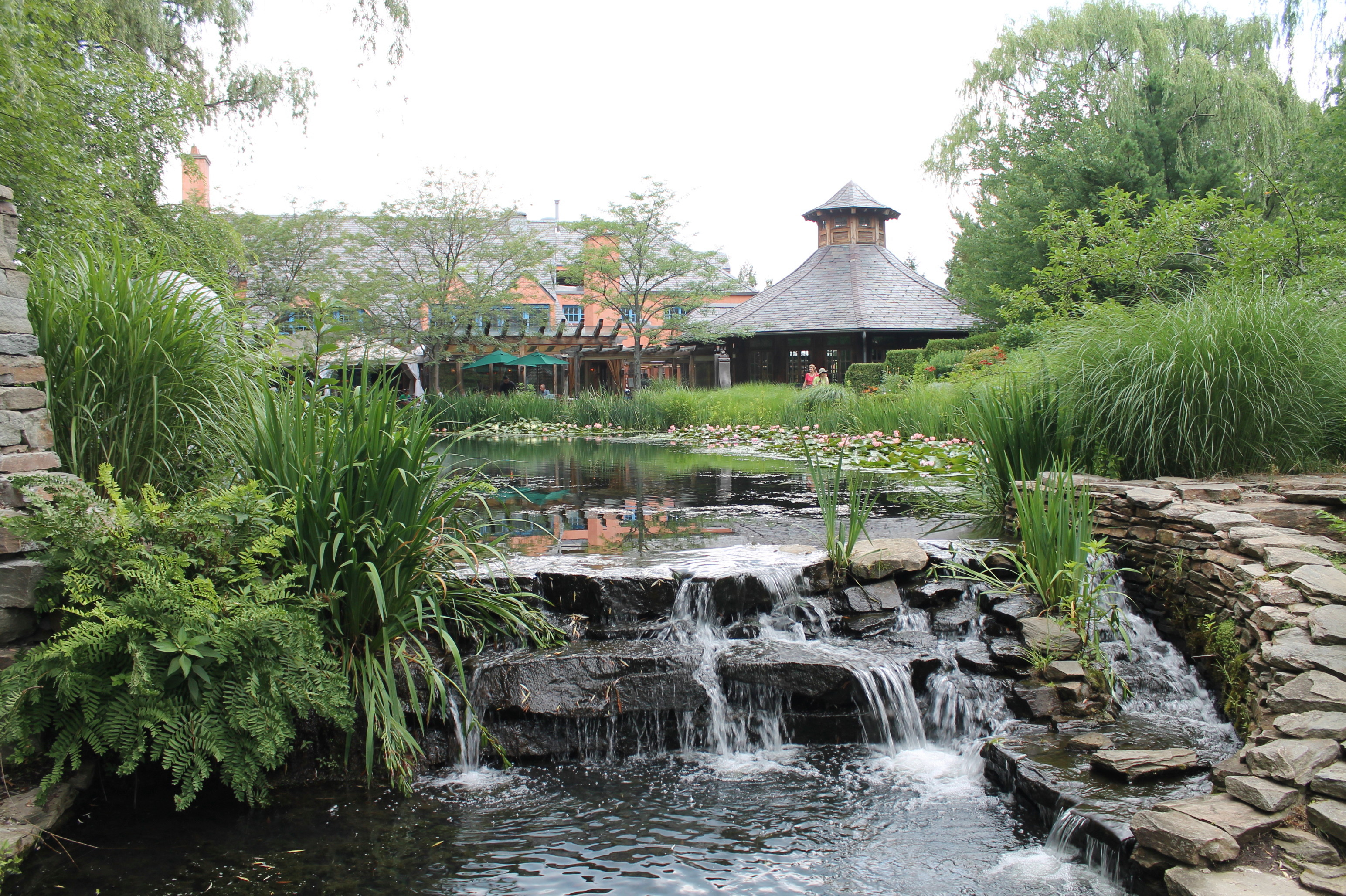
The waterfalls with Rats Restaurant in the background.

The waterfalls with Rats Restaurant in the background.

I had never heard of it until a few years ago when some of my garden-traveler friends mentioned it would be a good place to run a bus trip.

From the pictures I saw, it looked to be a nice setting – although primarily an “art place.”

I got to see it first-hand on a trip last month, and I was impressed. This is an attraction well worth a day’s visit both for gardeners and art-lovers.

(See a Photo Gallery of 20 pictures I took.)

The NJ Grounds for Sculpture is a sort of 42-acre landscaped park crafted as a beautiful surrounding for hundreds of sculptures – many of them by the Grounds’ founder, J. Seward Johnson II.

I kind of expected the sculptures to be the “stars” with the plants serving more as a backdrop. I expected your basic yews, arborvitae, maples, burning bushes, hollies and such.

What I found, though, was an interesting collection of varieties, including such cutting-edge choices as golden dawn redwoods, columnar Oriental spruces and one of the biggest, most elegant weeping blue atlas cedars I’ve seen.

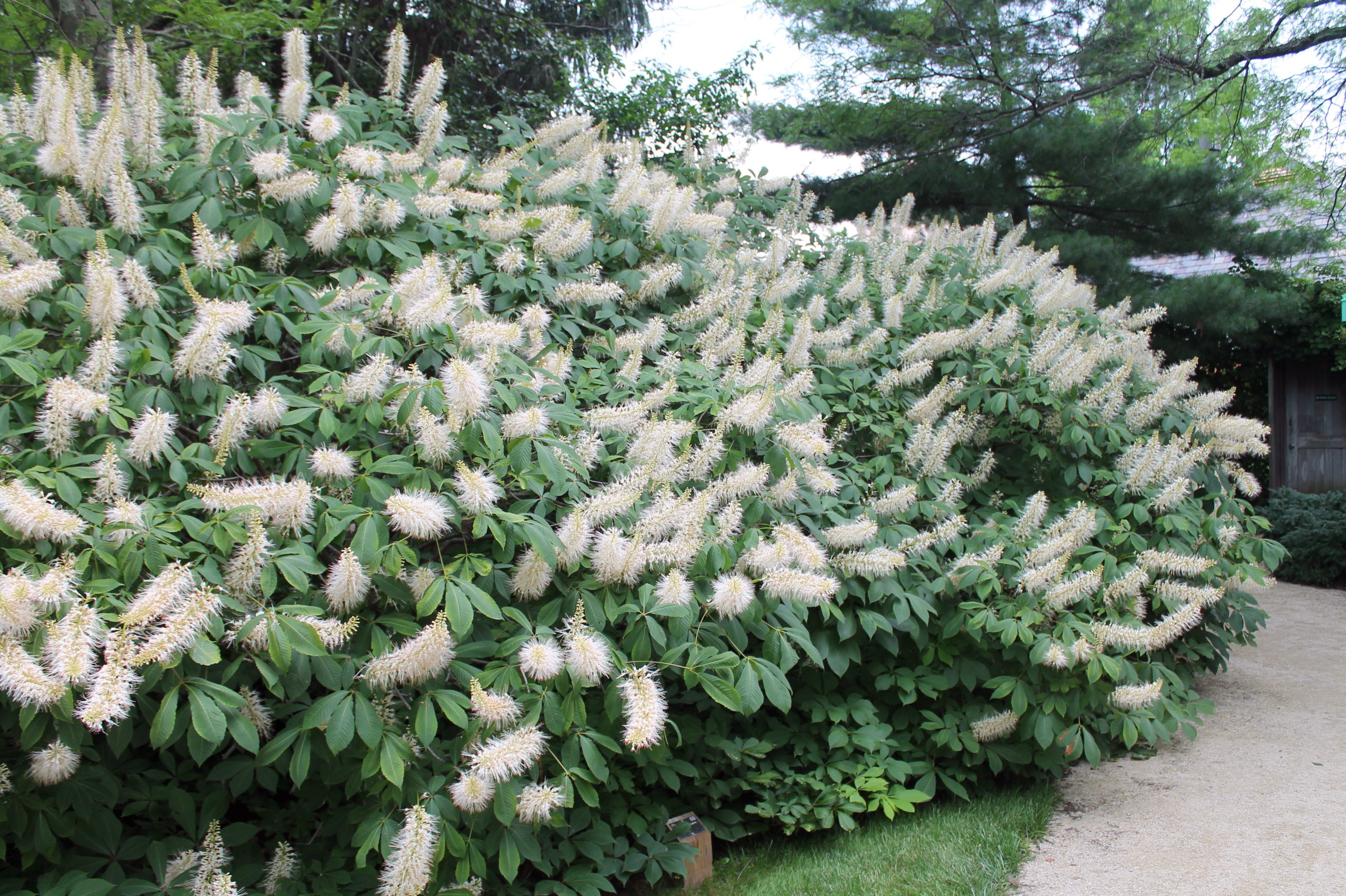
Here's the NJ Grounds' bottlebrush buckeyes in bloom.

Here’s the NJ Grounds’ bottlebrush buckeyes in bloom.

The day I was there, a mass of bottlebrush buckeyes was in a peak bloom. If you’ve never seen this hefty shrub, it throws out dense sprays of white bottle-brush flowers the size of ceiling-fan blades.

The designers purposely planted different garden settings to accommodate the different styles of sculpture.

A meadow of wildflowers, for example, is the setting for Johnson’s famous five-piece sculpture called “The Awakening” of a giant emerging from the ground.

A huge, 30-foot-tall pergola covered with wisteria is the backdrop for another of Johnson’s iconic pieces, “Unconditional Surrender,” a 30-foot metal casting of a sailor kissing a nurse to celebrate the end of World War II.

And the perfect setting for Johnson’s 25-foot-tall “God Bless America” (his take on Grant Wood’s “American Gothic” painting of the farmer with a pitchfork) is a field edged by giant reed grass – a plant that looks a lot like corn plants.

Sculptures are tucked into niches and around corners everywhere. You never know what you’re going to see until you get there.

Read More »


Top 10 Shade Trees

July 7th, 2015

Here’s the last installment of my three-part mini-series on favorite plants… this one on 10 shade trees worth giving a look.

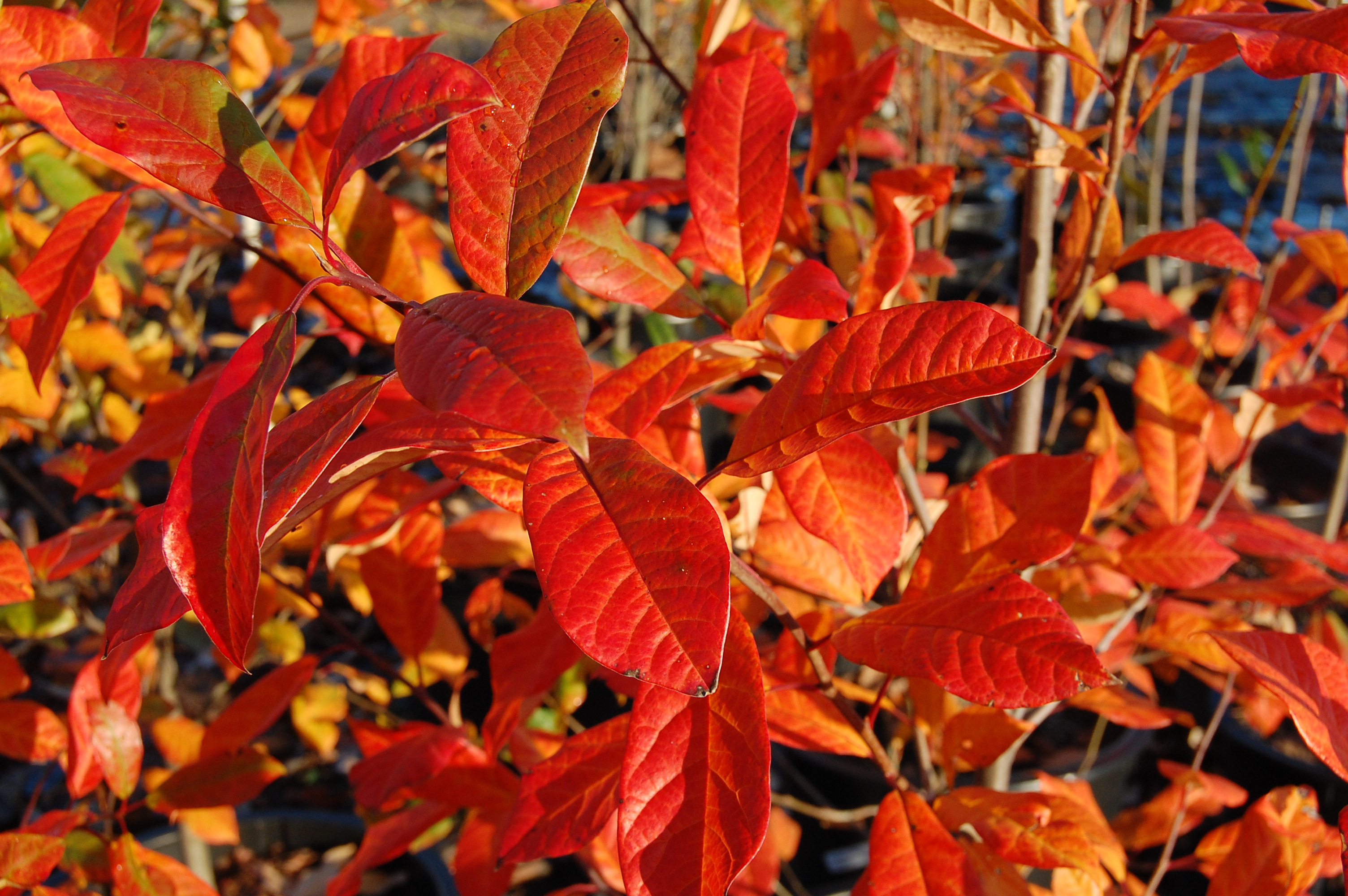
The fall leaf color of black gum 'Wildfire.'

The fall leaf color of black gum ‘Wildfire.’

Make sure you have the space because all of these grow 30 feet tall and up. If you’re gardening in a smaller space, you might want to check out my earlier post on Top 10 Small Trees.

Most of the following are grown for their shade, structure and fall-foliage interest, although a few also offer some blooming interest.

For more of my favorite (and not-so-favorite) plants, check out my George’s Favorite Stuff page.

1.) Black gum ‘Wildfire’ (Nyssa sylvatica). Also known as “tupelo” and “sour gum,” this is a native Pennsylvania shade tree that I think rivals maples for fall foliage.

‘Wildfire’ is a particularly nice variety of black gum because its new leaves come out reddish-purple in addition to its spectacularly brilliant scarlet fall foliage.

It’s a slow to moderate grower, going to 40-50 feet tall and 25-30 feet wide in 25 years.

Although the flowers aren’t noticeable, bees find them and like them. ‘Wildfire’ is a seedless selection, so it doesn’t get the small, bird-attracting fall fruits that the straight species does. Gardeners who don’t like “messy” will like this trait; wildlife fans won’t, so go with the straight species if you’re in that camp.

Black gum tolerates and even prefers damp soil, and it also needs at least mildly acid soil. Other than that, this is an easy-to-grow, long-lived shade specimen.

The canopy of a katsura in early fall.

The canopy of a katsura in early fall.

2.) Katsura (Cercidiphyllum japonicum). Few people know this species, which I think is one of the most elegant shade trees with its broad upright canopy, strong limbs and colorful leaves.

Katsura is a moderate grower, reaching 50-60 feet tall and 25-30 feet across in about 25 years.

The leaves are heart-shaped – similar to redbud – and emerge reddish before settling into a bluish-green shade for summer. Fall foliage is a bright, clear gold… very nice.

A bonus of the fall foliage is that if you crush the leaves, they smell like burnt sugar.

Keep young katsuras well watered for the first several years because the species’ only soft spot is that it’s not very drought-tolerant. Leaves will scorch around the edges as an early sign of lack of soil moisture. Otherwise, it hardly ever runs into bug or disease issues.

3.) Red maple (Acer rubrum). For my money, this species runs neck and neck with black gum as Pennsylvania’s best native shade tree.

Red maple is a fast-grower and is a good choice for occasionally wet sites since its roots can tolerate poor drainage and wet soil better than most species.

The leaves have three main lobes and emerge reddish. But the real show is fall when the leaves of the best varieties turn brilliant red. Three of the best for fall color are Redpointe, Red Sunset and October Glory.

Figure on a size of 50-60 feet tall and 30-35 feet wide in 25 years. Avoid salty sites.

Read More »


Top 10 Flowering Shrubs

June 30th, 2015

Continuing my mini-series on favorite plants, here’s my current list of top 10 flowering shrubs.

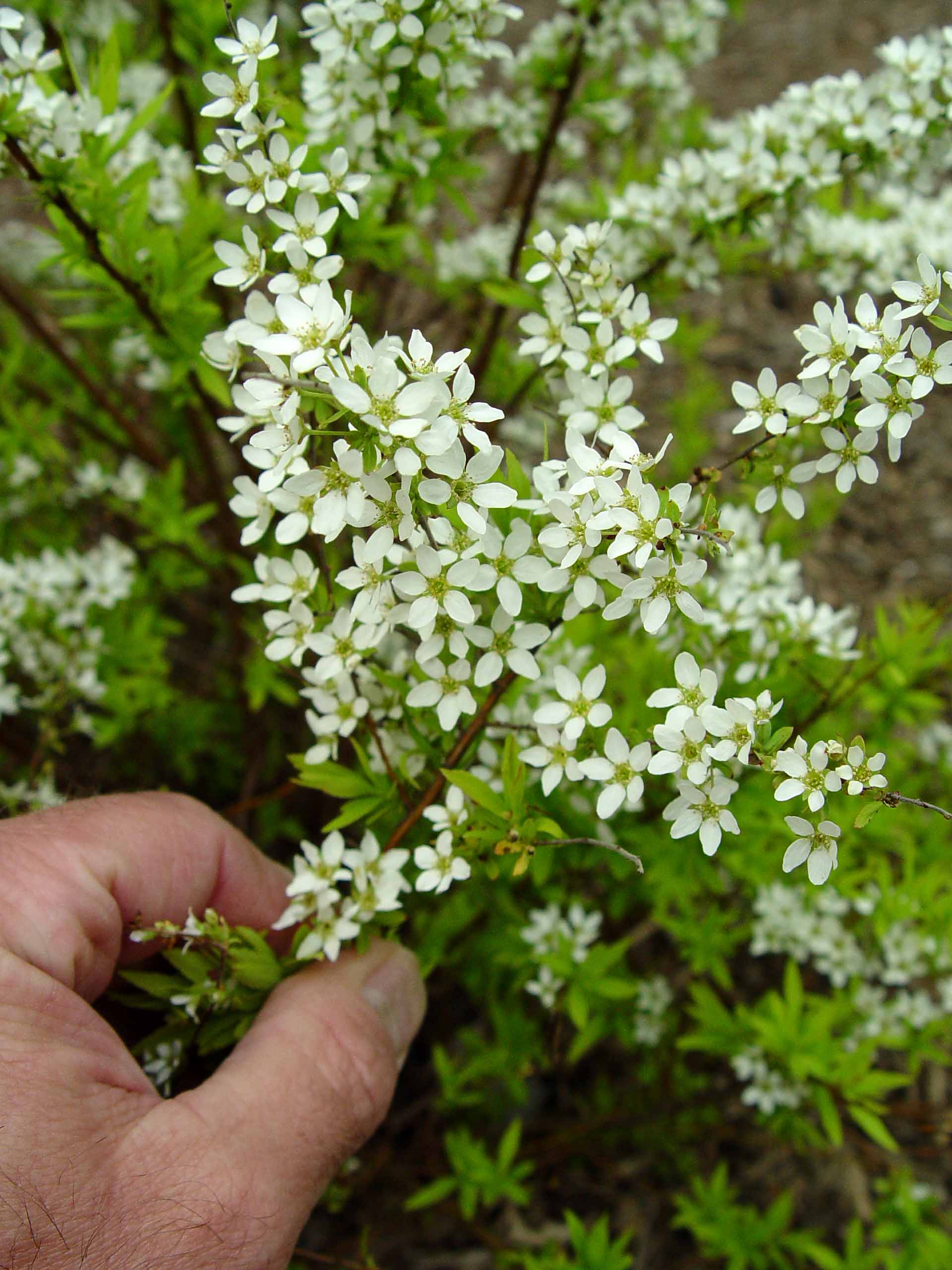
Spring flowers of spirea Mellow Yellow.

Spring flowers of spirea Mellow Yellow.

For more of my favorites (and not-so-favorites), check out my George’s Favorite Stuff page.

1.) Spirea Mellow Yellow (Spirea japonica ‘Ogon’). Texture, color, multi-season interest, low care, durability… this shrub has it all.

Mellow Yellow starts the season by nearly covering itself with dainty white flowers. It’s one of the earliest shrubs to bloom – typically end of March.

Then as the flowers fade, the narrow, willowy, golden foliage emerges to give the plant its showy season-long finely textured, golden look. The habit is loose and arching and about 5 to 6 feet tall and wide, unless you want to prune it to less.

In November and December, the foliage turns coppery to burnt orange-gold before finally going bare. It’s a great focal-point plant all season and has no bug, disease or animal issues. Best in full sun but also does fine in part shade.

2.) Panicle hydrangeas (Hydrangea paniculata). Also sometimes called “tree-type” or “PeeGee” hydrangeas, these are upright hydrangeas that flower on new wood from July into fall.

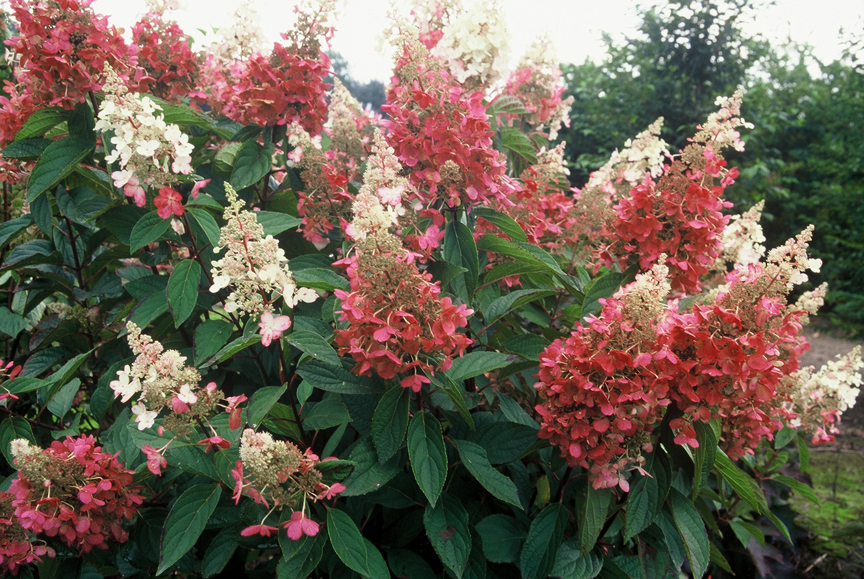
Hydrangea Pinky Winky in bloom.

Hydrangea Pinky Winky in bloom.

The flowers are more cone-shaped and generally white, pink, rose or bicolor instead of the rounded blue of the more familiar big-leafed hydrangeas (Hydrangea macrophylla).

Panicle hydrangeas not only have big and long-lasting flowers, they’re much more sun-tolerant than the big-leaf hydrangeas and bloom reliably each year (unlike the big-leaf types, which suffer from flower-bud dieback in cold winters).

My favorites are Limelight (white) and Pinky Winky and Quick Fire (white/rose bicolors). They’ll grow 7-by-6 feet, but if that’s too big, look for more compact varieties, such as Little Lime, Bobo and Little Quick Fire. Full sun to part shade.

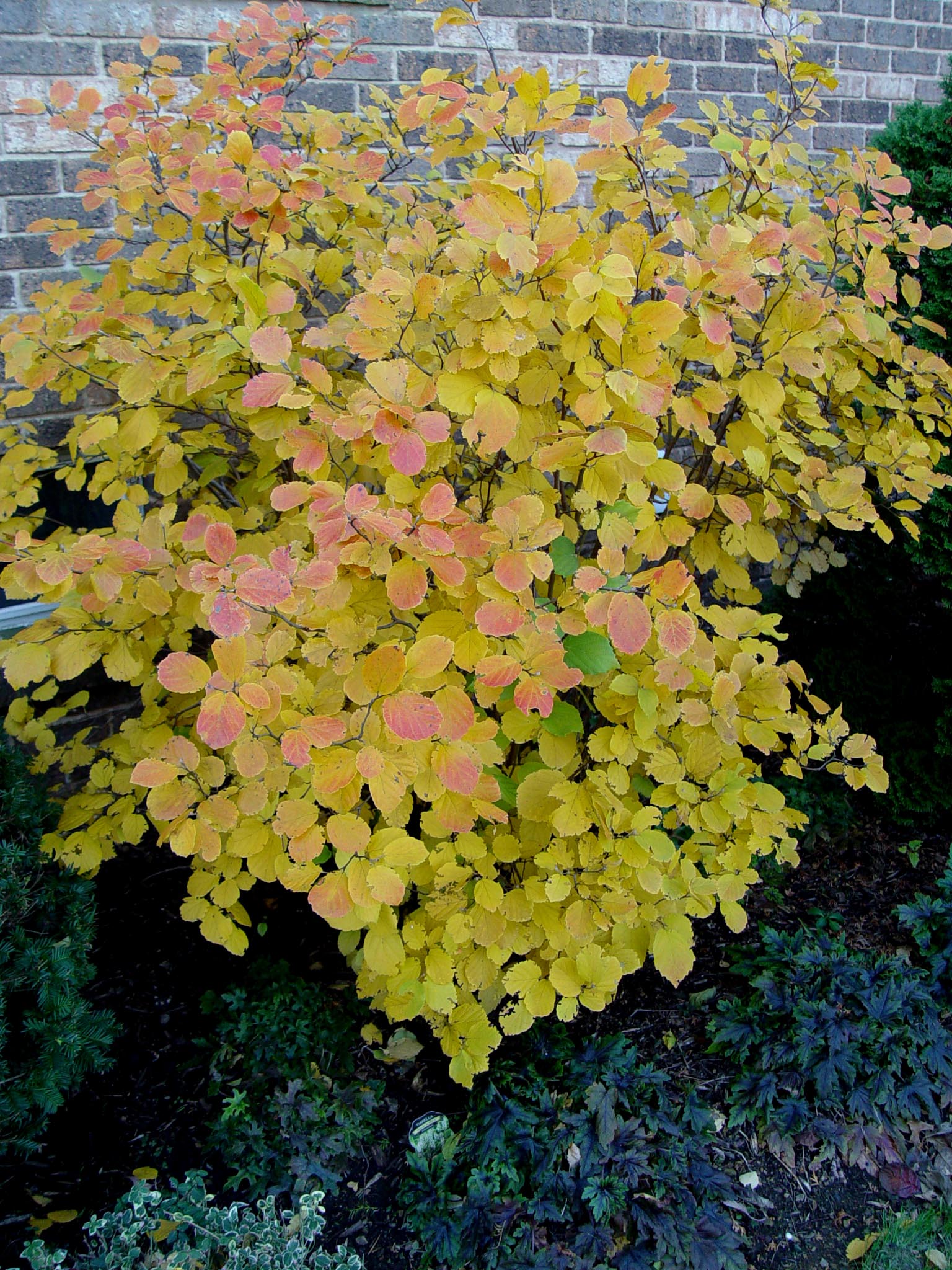
3.) Witch alder ‘Mt. Airy’ (Fothergilla x intermedia). I’m not sure why more people don’t plant this trouble-free U.S. native shade shrub.

Fall foliage of fothergilla 'Mt. Airy.'

Fall foliage of fothergilla ‘Mt. Airy.’

Witch alder grows 4 to 6 feet tall with a slightly narrower spread, although it can “fatten out” in time if you let its emerging root shoots walk.

White bottle-brush flowers emerge in early spring and smell like licorice. Some varieties have bluish foliage in summer. But I like ‘Mt. Airy’ best for its neon golden fall foliage.

All witch alders have nice fall foliage, though, ranging from scarlet to red/gold to burnt gold. They’re easy to grow and deserving of more use. Best in shade to part shade.

4.) Oakleaf hydrangea (Hydrangea quercifolia). Here’s another U.S. native shrub that’s not used in landscapes nearly as much as it should be.

Oakleaf hydrangeas have four-season interest – large, oak-shaped leaves; white cone-shaped flowers in early summer; burgundy fall foliage, and peeling cinnamon-colored bark for winter interest.

Snow Queen and Snowflake are two very good 6- to 8-footers. Check out ‘PeeWee’ and the new pink-blooming ‘Ruby Slippers’ if you prefer something more like 5 feet tall and around.

I’ve seen oakleaf hydrangea do well in all kinds of light, from full sun to nearly full shade.

Read More »


Top 10 Perennial Flowers

June 23rd, 2015

So many good plants and so little space to plant them all…

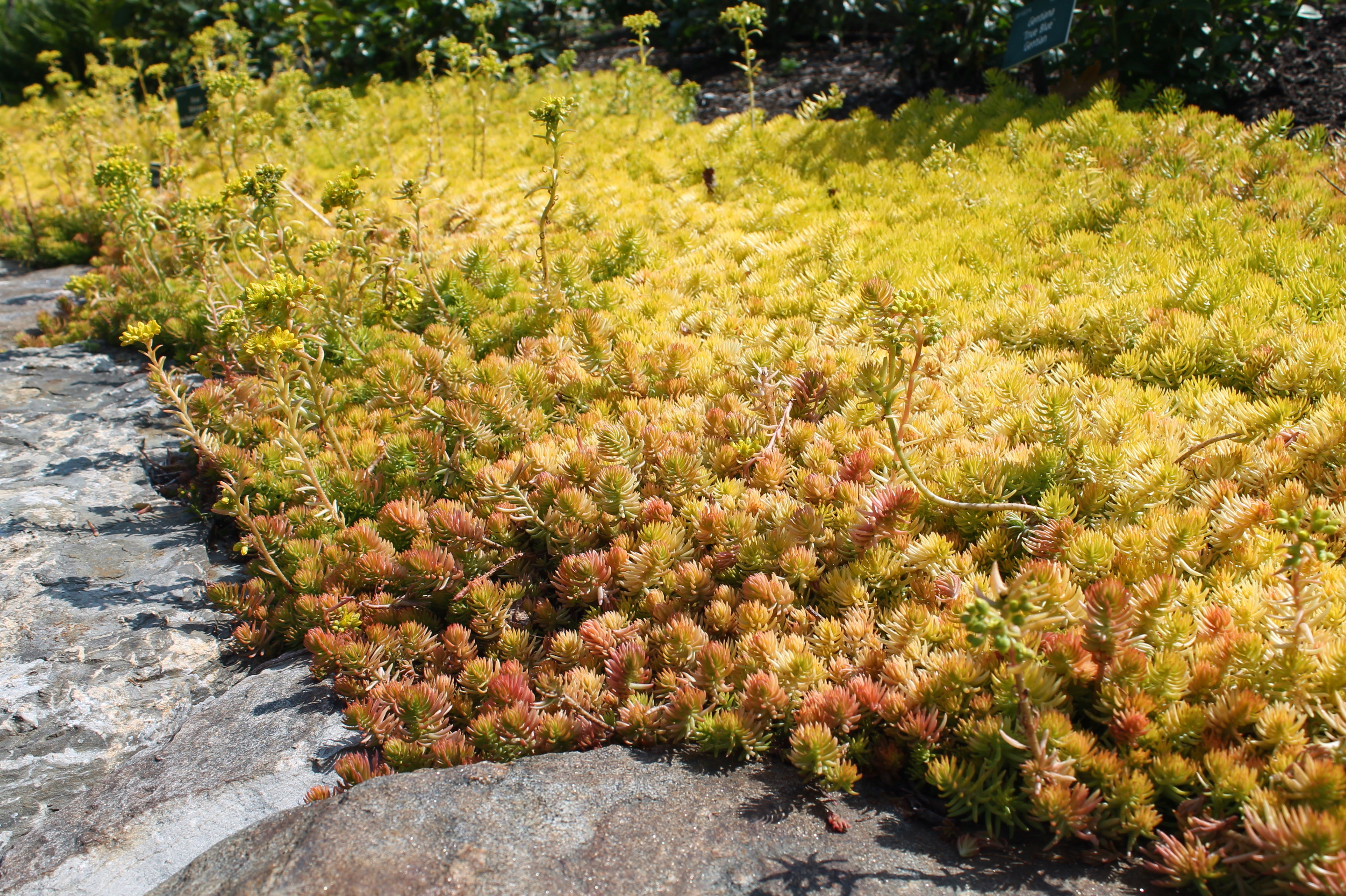
Creeping sedum 'Angelina.'

Creeping sedum ‘Angelina.’

Almost all of us are limited in what we can grow, so it helps to start with the best. That’s pretty subjective, but I have my short list of favorites.

For your plant-picking consideration, here are my picks of top 10 perennial flowers (at least as of this moment), followed next week by my top 10 flowering shrubs and then by my top 10 shade trees the week after that.

My top 10 annual flowers and top 10 small trees are already posted on my George’s Favorite Stuff page.

1.) Creeping sedum ‘Angelina’ (Sedum rupestre). I really like this little creeper as a colorful groundcover and alternative to mulch.

‘Angelina’ is a succulent that has golden foliage that looks like fat needles… very textural. It only grows 3 or 4 inches tall and spreads thoroughly but not aggressively.

The bright gold foliage turns burnt orange and stays that way all winter, making it an “evergreen perennial.” Then it golds back up again in spring.

It also gets yellow flowers in early summer that can be weed-whacked off after they fade. And it’s very heat- and drought-tough and not attractive to bugs or animals. Best in full sun.

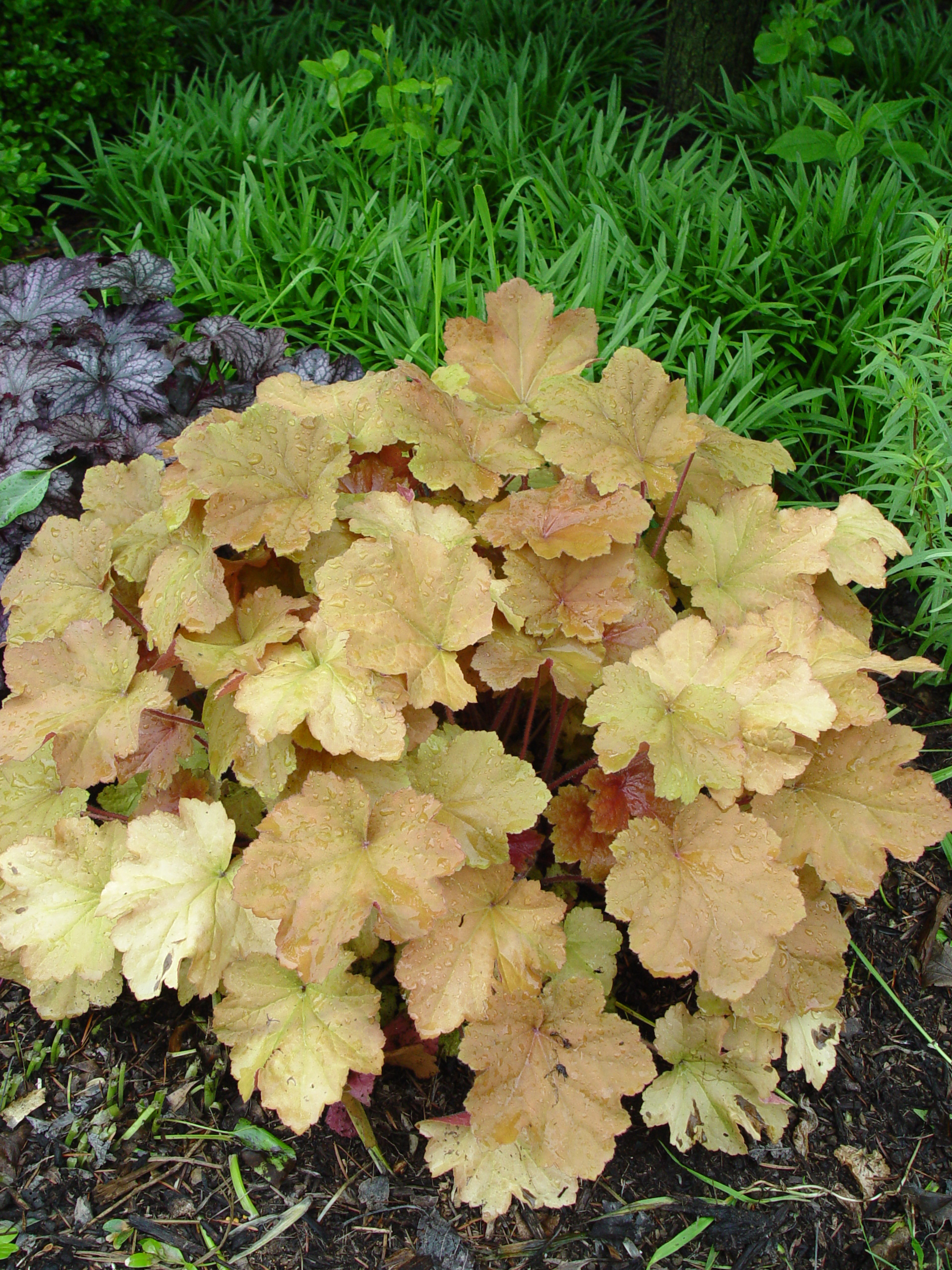
Coralbells 'Caramel.'

Coralbells ‘Caramel.’

2.) Coralbells ‘Caramel’ (Heuchera). You’ll find lots of great coralbells these days, but this one stands out from the crowd to me.

‘Caramel’ is a sturdy grower with nearly hand-sized leaves that change color throughout the year – mostly in shades of creamy gold and butterscotch. By mid-season, it’s almost 2 feet tall and slightly wider, so it really makes a statement in the garden.

This variety also gets a few white flower spikes in summer, but it’s the season-long colorful foliage that makes it such a winner. Best in morning sun and afternoon shade.

3.) Barrenwort (Epimedium). I’ve never seen a bad epimedium, but for some reason, this trouble-free perennial is little known and seldom used in home gardens.

The ones I like best grow about 1 foot tall, have heart-shaped leaves with burgundy tinges in spring and fall, and get hanging bell-shaped flowers of pink or yellow in April.

My favorite is epimedium ‘Rubrum’ (pink flowers), closely followed by the yellow-blooming ‘Frohnleiten’ and ‘Sulphureum.’ You might also see these nicknamed “bishop’s hat” or “fairy wings.”

They’re best in shade to part shade and also do well in the dry shade and root competition under trees.

Read More »


« Older Ramblings and Readlings Newer Ramblings and Readlings »

  • Home
  • Garden House-Calls
  • George's Talks & Trips
  • Disclosure

© 2026 George Weigel | Site designed and programmed by Pittsburgh Web Developer Andy Weigel using WordPress