
Ultra-Local Native Plants
May 5th, 2015
Gardeners trying to be gentler on the environment and kinder to wildlife have jumped on the native-plant bandwagon big-time the last few years.

Native plants are a hot trend lately. But how local do natives need to be?
The message heard is that natives don’t need to be sprayed, they’re low maintenance, hard to kill, best for pollinators and beneficial insects, and just way more all-around “moral” than growing “foreign” or “exotic” plants.
Let me say first thing that I like most native plants in the garden and think it’s a good trend that people are planting more of them.
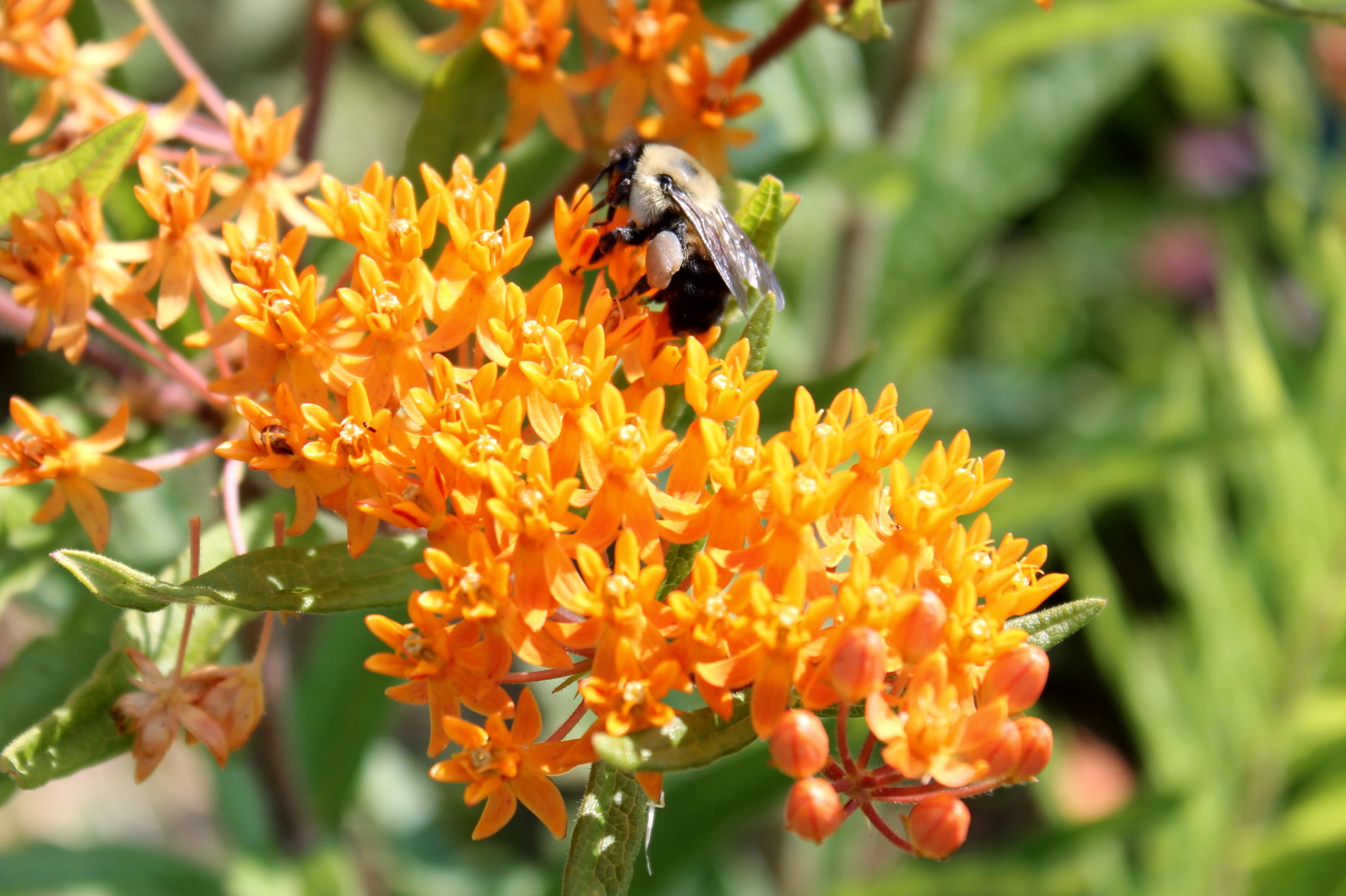
For feeding pollinators and beneficials, natives particularly shine (some more so than others, as Penn State’s research is showing).
But natives aren’t wonder plants.
They can – and often do – get bugs and disease. Don’t expect perfection.
They still take some care, even if it’s little more than cutting down spent foliage once a year and managing spread (or lack of it).
And yes, native plants can even die or become invasive. As with any plant, you can’t just plant any native anywhere you want and expect it to thrive, survive and perform perfectly.
Part of why it’s not so simple to just switch to natives and thereby solve ecology’s ailments is the matter of what’s a native in the first place.
A lot of lists for native plants label a species “native” if it’s known to grow naturally anywhere in the United States.
Right off the bat, that’s a problem because this country is so big and has so many differing growing conditions that the term “U.S. native” is almost meaningless.
Good luck growing an Alaska-native heartleaf arnica or a Florida-native palmetto palm in your back yard.
If your goal is a plant that’ll thrive under minimal care, you’d have better luck with plants native to, say, Germany, parts of Korea or China, and other regions with similar climates.
Part of the problem with assigning native status is that maps are artificial boundaries… changing with time and decided by people.
That always makes me wonder what we’d do if, for example, the French had never sold Jefferson the Louisiana Territory. Instead of purple coneflowers being considered a native perennial, would we consider this Midwest prairie species to be a French exotic?
Or what if the South had won the Civil War? Would our much-touted “native” oakleaf hydrangea be considered a foreign exotic?
That leads to the question of how local a plant has to be before it’s a meaningful native, one that’s truly adapted to our climate and soil and one useful to our local pollinators, birds, butterflies and such.