• Home
  • Contact
  • Site Map
George Weigel - Central PA Gardening
  • Landscape 1
  • Landscape 2
  • Landscape 3
  • Landscape 4
  • Garden Drawings
  • Talks & Trips
  • Patriot-News/Pennlive Posts
  • Buy Helpful Info

Navigation

  • Storage Shed (Useful Past Columns)
  • About George
  • Sign Up for George's Free E-Column
  • Plant Profiles
  • Timely Tips
  • George’s Handy Lists
  • George's Friends
  • Photo Galleries
  • Links and Resources
  • Support George’s Efforts


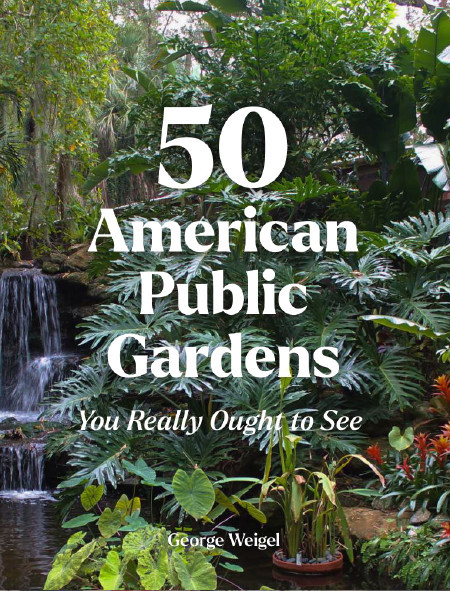
George’s new “50 American Public Gardens You Really Ought to See” e-book steers you to the top gardens to add to your bucket list.

Read More | Order Now


George’s “Survivor Plant List” is a 19-page booklet detailing hundreds of the toughest and highest-performing plants.

Click Here


Has the info here been useful? Support George’s efforts by clicking below.


Looking for other ways to support George?

Click Here

George's Current Ramblings and Readlings

Off to the Land of Oz

January 11th, 2011

   No place on Earth has more botanic diversity and more wild, intriguing and flat-out weird plants than South Africa.

Quiver trees in a South African arid mountain region.

   At least that’s what I’ve heard and read.

   I remember York College professor Marilyn Daly telling me once after coming back from a trip there that it was like being in the Land of Oz.

   I don’t know if I’ll see the Wizard or not, but I’m off today for a 17-day “garden safari” to South Africa. Harrisburg Area Community College and AAA put it together, and I’m leading a group to see if we can spot a baobab or see a king protea in its native habitat.

   A baobab is an oddball tree that looks like it’s been planted upside-down. The canopy drops its leaves in summer to show a bare structure that looks more like roots than branches.

   It also produces edible gourd-like fruits that monkeys love.
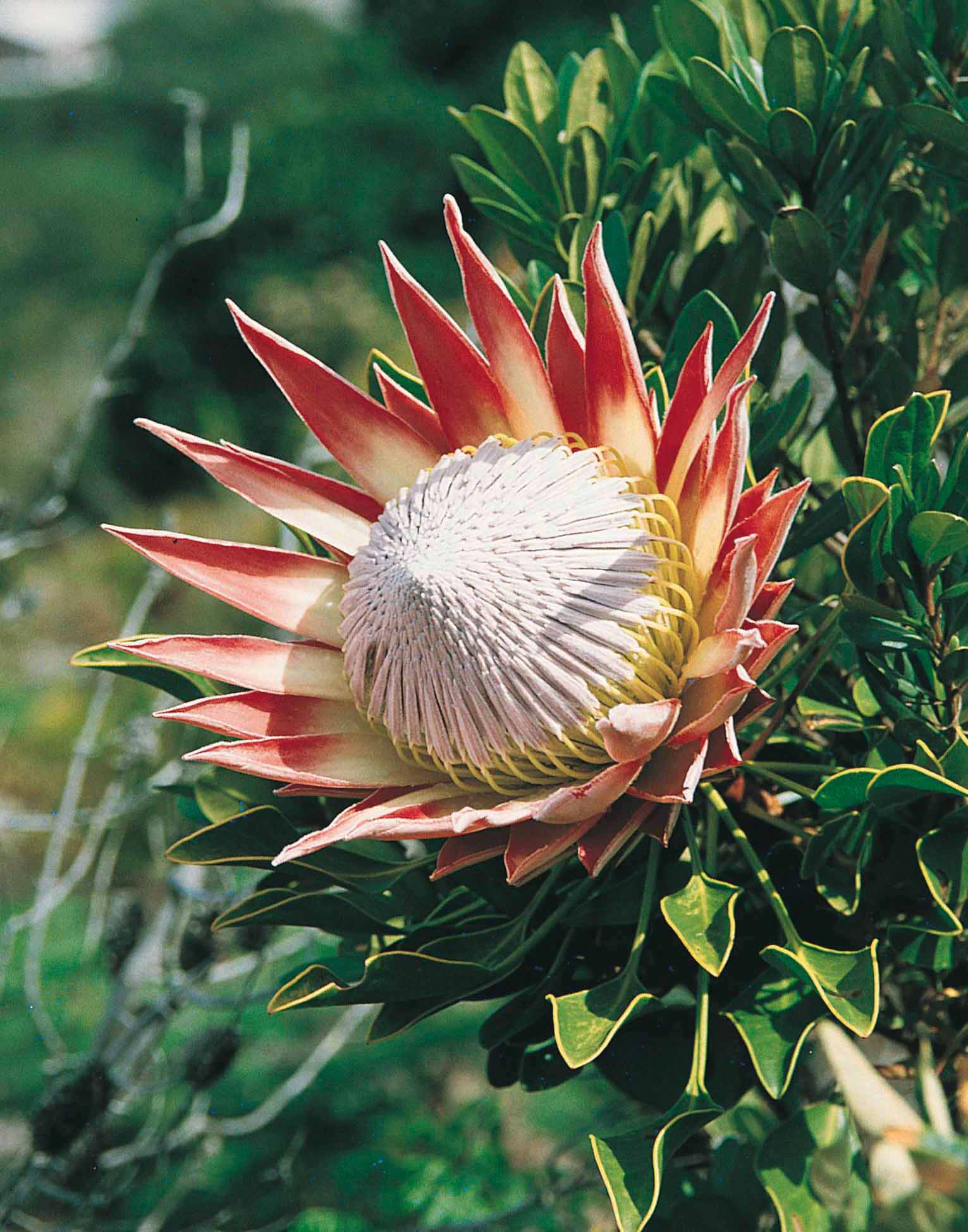
A king protea.

   King protea is South Africa’s national flower. These things are huge, colorful and look a little like upward-facing sunflowers, only more elegant and crown-like. Here’s a picture. It’s hard to describe.

   Proteas grow as shrubs and are prized as cut flowers, which is probably how you’ve seen them – if you ever have.

   I’m also really curious to see a halfmens. These are succulents that grow as tall as trees but look like giant baseball bats stuffed upside down into the ground with a mop of green hair growing at the top. Weird. Even Dr. Seuss didn’t come up with something this odd-looking.

   Not all the plants are that wild, though. South Africa is home to a ton of plants we routinely grow that we don’t even know are South African natives.

   Take the red geranium that just about all central Pennsylvanians have grown in a flower pot. Its purplish mother is from South Africa.

   Gazanias, red hot pokers, diascia, hardy ice plants, calla lilies, agapanthus, arum lilies, cape daisies, bacopa, nemesia, purple hyacinth beans, clivia, crocosmia, plectranthus, nerine and many aloes, gladiolus and gardenias are all just some of the annual and perennial flowers that we grow in the U.S. that hail from South Africa.

A halfmens.

   I suspect we’ll continue to see more, given that this horticultural wonderland is blessed with some 20,000 different plant species.

   One of the best parts about South Africa is that their seasons are opposite ours, which means it’s summer in January there. It’s pretty dry, though, although the summer highs typically run into the 80s and not the 100 or so that we hit this past summer.

   We’ll be visiting the world-renowned Kirstenbosch Botanic Garden the first day there, then hitting three more major public gardens in addition to seeing the fynbos (the cape’s native vegetation), the beautiful coastal Garden Route, a forested region along the southern cape and a game park in the northeastern part of the country (Kruger National Park). Last stop is a side trip to Victoria Falls in Zambia.

   It all sounds incredible to me. I’ve never been anywhere near any of that. I’m sure I’ll know I’m not in Mechanicsburg any more when I come face to face with a wildebeest.

   I’ll also check out which way the water swirls down the toilet (I hear it goes the other way in the Southern Hemisphere), and I’m hoping to run into the Cape Town baboon that supposedly walks into people’s unlocked homes, raids their refrigerators, then closes the door on the way back out.

   Like I say, interesting country. The only part I’m not looking forward to is the 24 hours on three different planes just to get there.

Christmas Colonial-style

December 21st, 2010

   One of my favorite spots on Earth is Colonial Williamsburg – that little Virginia town that’s been restored to its 18th-century roots.

   Our family took trips there almost every year when our kids were little. It was always fascinating to see just how people lived and thought back then – and you get immersed into it.

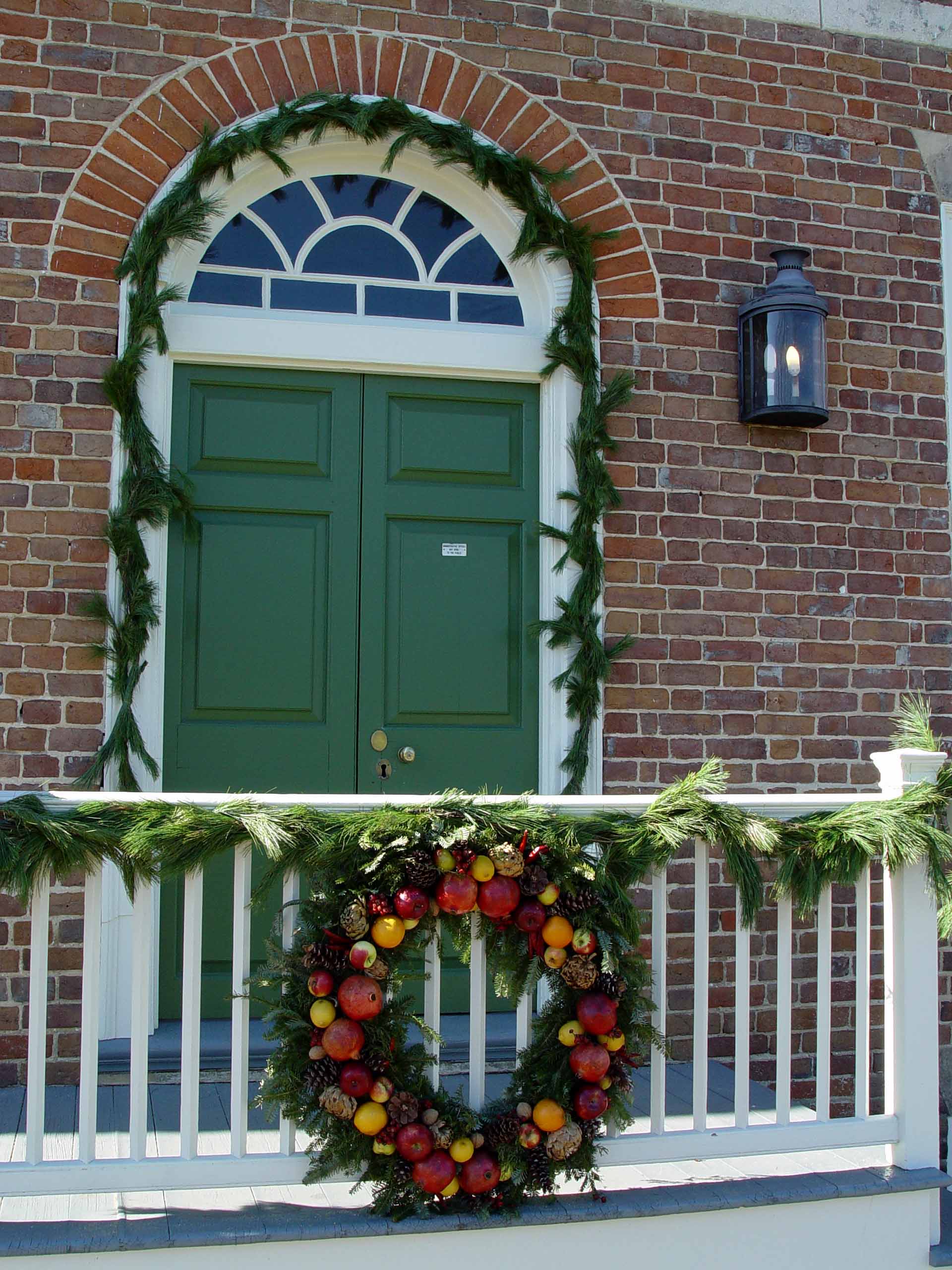
Williamsburg decorated au naturel.

   We’d always gone there in spring or fall, though. We’d never seen the place decorated for Christmas until this year.

   I can see why Christmas is such a big draw for Colonial Williamsburg. Besides the Grand Illumination kickoff weekend with fireworks, most Colonial buildings are decorated through New Year’s with boughs and wreaths made out of natural materials.

   Wood fires are lit on the open ground and in hanging baskets each night to help stay warm and to light your way.

   The wreaths were all different but all beautiful in their own way, from the simple pine rings with a single apple to truck-tire-sized wreaths adorned with a market basket’s worth of fruits.

   I liked the wreaths with apples and pomegranates best. Also clever were the ones with oranges and lemons that had slits removed to dry and shrink the fruits. They reminded me of colorful little Whiffle balls.

   Since Colonial decorators didn’t have department stores and Christmas shops, they used whatever they could get their hands on.

   Dried lotus pods were on many wreathes. So were winterberry sprigs, pine cones, dried yarrow, Chinese lantern pods, osage oranges, even bird feathers, leafless branches and playing cards. Click here to see more photos of some of my favorite wreaths.

   Interesting tidbit… Williamsburg’s decorators typically replace each door decoration two or three times during the season because of weather and animal damage. Seems that squirrels and birds in particular like all the fruits set out for the taking.

   Williamsburg’s gardens are also legendary. Although they’re significantly more bare in December than summer, many still had live cabbage, kale, broccoli, parsley, cardoon and assorted greens.

   The boxwoods and hollies that make up the structure of so many Williamsburg gardens also were looking just fine.

   Duke of Gloucester Street (the main street of the restored area) has a Colonial-style nursery with a display garden. This time of year it was showing off the cold frames, glass cloches and wax-cloth tents that Colonials used to stretch their growing season. The nursery also was selling many of the materials used in Colonial decorating.

Dean Shostak playing the glass armonica.

   I have to tell you that my favorite part of the visit had nothing to do with gardening. It was the Crystal Carols concert by Dean Shostak.

   Shostak is one of only 10 people in the world who play the glass armonica, a curious instrument invented by Benjamin Franklin. It fell out of favor in the early 1800s.

   The armonica looks like a long glass cone mounted on a small table. It’s attached to a fly wheel that’s operated by a foot pedal. The cone is actually a series of overlapping glass bowls. The player wets his fingers, makes the cone go around with the pedal, and then touches the spinning bowls to create the sound. Each size bowl makes a different sound. The principle is much like playing water-filled glasses, only in this case, the glass moves instead of the fingers.

   Shostak plays Christmas music on the armonica as well as on a rare glass violin (only two of them in the world), a set of glass bells and on a new winged contraption called a cristal bachet that makes music by stroking glass rods.

   The sound of all of these was unlike anything I’d ever heard. And Shostak is such a nice and humble man who played all of these unusual glass instruments so well while telling us the stories behind the instruments.

   For instance, the armonica never caught on because it’s expensive (each bowl costs over $600) and so fragile to move. But it mainly lost out because so many past armonica players seemed to end up with mental problems. Turns out they were breathing in lead from the lead dust used to lubricate the flywheel in addition to absorbing lead that was in the glass back then.

   For more on Colonial Williamsburg, check out www.history.org. And for more on Shostak, visit www.crystalconcert.com.


“If Only I’d Known…”

December 14th, 2010

   Penn State Extension’s Steve Bogash and I are almost done deciphering a 1,300-person online survey we conducted of new vegetable gardeners.

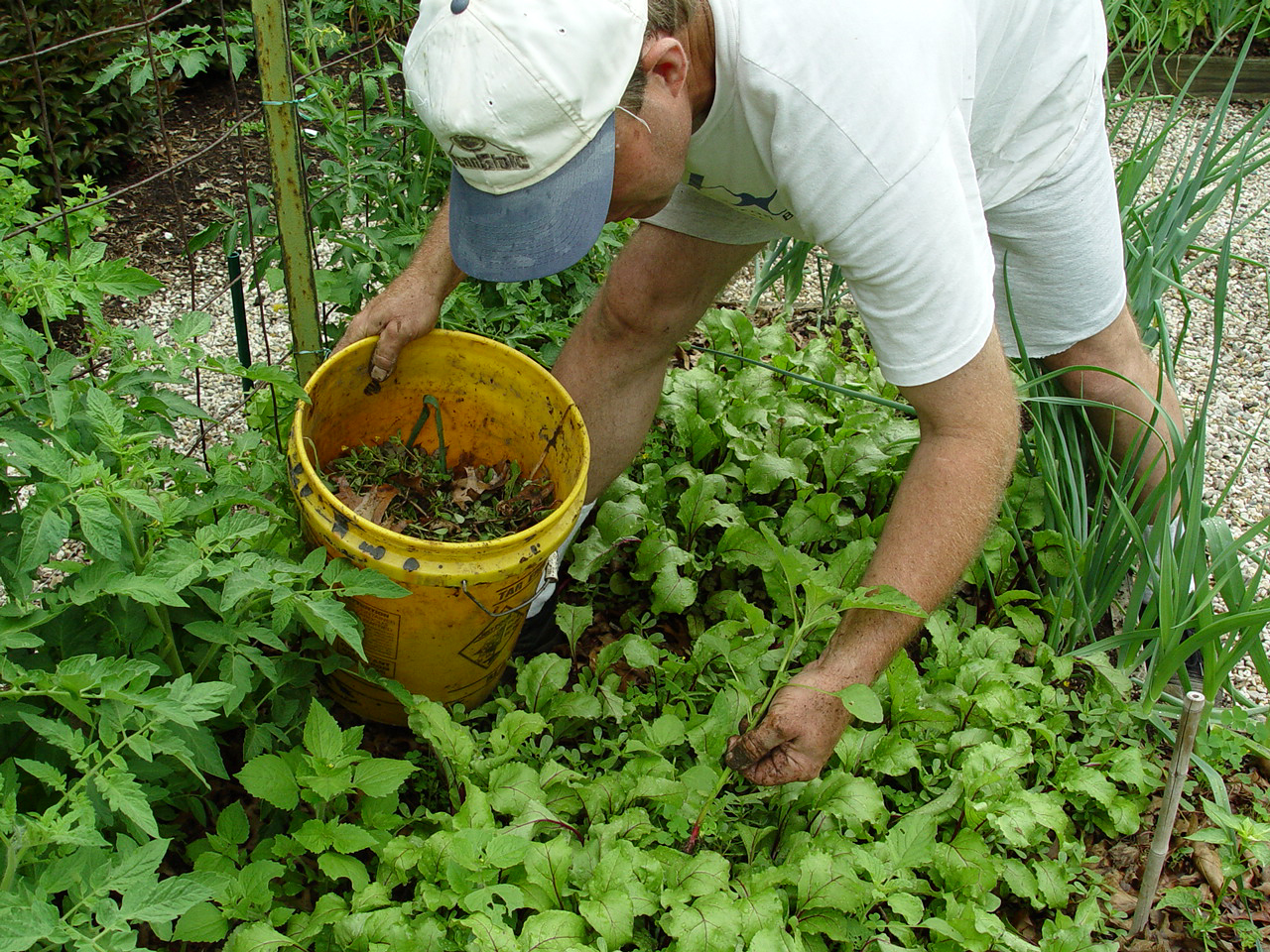
Weeds, weeds and more weeds.

   Tons of new folks have been giving home vegetable gardening a shot in the last two years. It’s been gardening’s hottest trend.

   Mainly, Steve and I were trying to find out 1.) How all of the newbie veggie gardeners are making out (especially after this summer’s brutal heat), and 2.) Whether they’re going to keep trying or throw in trowel.

   Basically, I was shocked at how many said they not only plan to keep growing but are actually going to expand their gardens. Forty-two percent of the people who took the survey say they’re expanding their garden size next year, while another 49 percent are keeping the same size. Only 8 percent are scaling back, and less than 1 percent is giving up.

   I’ll be writing in detail about the survey in my Patriot-News column the next two Thursdays (Dec. 16 and 23). If you don’t get the paper, check online at http://connect.pennlive.com/user/gweigel/posts.html.

   Meanwhile, one question that drew some particularly interesting comments was, “What do you wish you had known about vegetable gardening before you got started?”

   Here’s some newbie wisdom I found fascinating…

   “That it is not as easy as I remember from my parents.”

   “How much can go wrong!”

   “It is a lot of work but it is good for the soul!”

   “That the satisfaction I feel when I eat something I have grown myself would be so great. I would have started gardening long ago if I had known that.”

   “That plants grow no matter what you do. All the fancy techniques just help things along, but the seed, soil, rain and sun do most of the work. I was very intimidated at first, and this lesson helped me breathe deeply and take baby steps into gardening.”

   “I wish I had known I would like it so much. When I was growing up, watering plants and weeding was a chore, but those now seem like minor irritations in order to get really good-tasting vegetables.”

   “Shoot, if I had known what I was in for (re: labor and time and cash outlay — $100 tomato), I would never have started. Better to live in ignorance until seduced by the magic of the garden.”

   “How important getting the soil ready before planting is.”

   “How awful the critters are. They attack everything!”

   “What to do about pests. My single largest gardening problem has been waking up in the morning only to find that a seedling has vanished overnight.”

   “When to pick things! This year I kept thinking my lettuce/basil/spinach/beans would keep growing and then they went to seed or went brown.”

   “That I live in the land of SLUGS.”

   “That you can plant a second season in the fall.”

   “That vegetables will break your heart.”

   “That my kids wouldn’t help me when they said they would!”

   “That it was WAY more work than I ever thought it would be, that weeds will grow when nothing else seems to, and that heat is debilitating to both the gardener and her plants.”

   “Less is more. Concentrate on keeping fewer plants healthy.”

   “That raised beds take more water, bugs can devastate in a day, don’t ever wait until tomorrow for anything, you can have too many tomatoes, chipmunks are pests, birds eat tomatoes, bird netting is difficult to use and the birds sometimes still get to the food, sun can burn plants even when they are watered, and maybe I should learn to cook some of this stuff first!”

   “Where my neighbor was planning on planting her @*$%# willow tree!”

   “Start small and get comfortable with the amount of work it is, don’t get overambitious because the weeds and work are discouraging come August. You will lose some to blights and pests, that’s part of it, and if you’re committed to growing with fewer chemicals, just grow enough that the loss is acceptable for the effort.”

   “How awesome raised beds are. Years ago, when I first tried, I just planted in the ground. It worked OK, but nothing like the ease and success of raised beds. Also, I wish I’d known 2 years ago to put a rabbit fence around the garden right away. Darn rabbits.”

   “That it was so addicting!”


Harvest your decorations

November 28th, 2010

   One of the fringe benefits of being a plant nerd is that you no doubt have a whole yard full of fresh holiday decorations — free for the pruning.

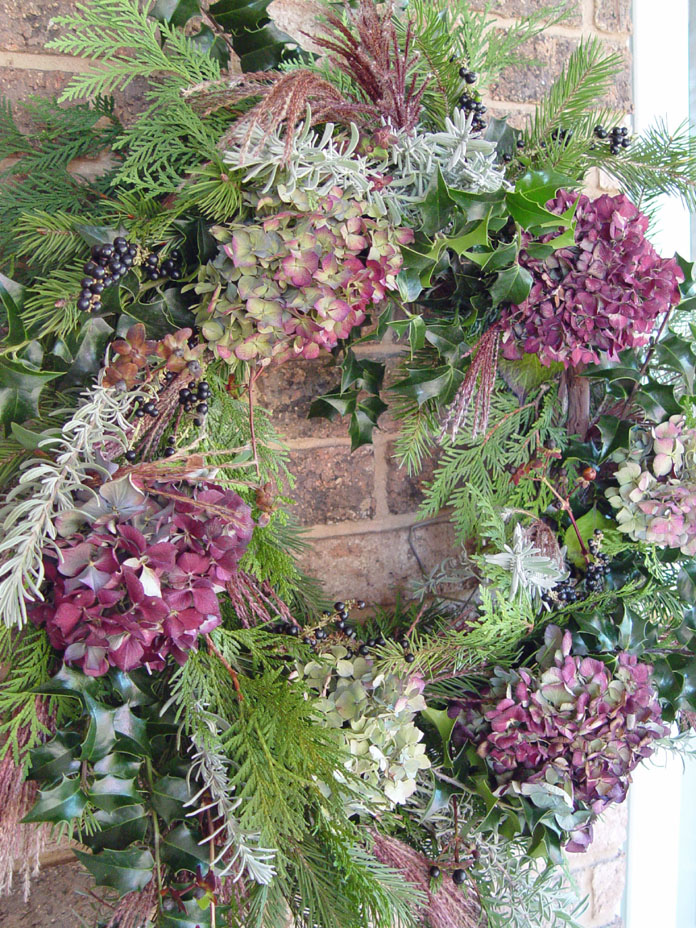
A homemade wreath of holly, falsecypress and dried hydrangea flowers.

   Take a walk around the yard and see how many plants you can “harvest” for both indoor and outdoor decorations.

   You won’t get goods any fresher. Plus the price is right, too.

   This is my wife’s department at our house. I’m much more familiar with growing the plants than figuring out how to do something HGTV-ish with them.

   Here are some plants we (and by “we” I mean “she”) often use from our decorating scavenger hunt:

   * Holly. Both evergreen hollies and the leaf-dropping winterberry types have red-berried sprigs that are perfect accents on any wreath. These also can be wired to Christmas trees. Other good berriers: nandina, bittersweet, cotoneaster, hawthorn and pyracantha.

   * Hydrangea. Cut, dried hydrangea flower heads make strikingly big “snowballs” on Christmas trees. Or wire them to large boughs and evergreen arrangements.

   * Douglas fir. Ideal source for evergreen cuttings. Use them for wreaths, boughs and swags. Other good evergreens for cuttings include concolor fir (most any fir, really), falsecypress, pine, arborvitae, boxwood and yew.

   * Pine cones. Don’t overlook interesting cones on any evergreen, but the pine family offers the biggest and best selection. Korean firs also produce large, blue-tinted cones. Spray paint them if you want mega-color. Or wire them to trees and boughs.

A basket of collected pine cones with a decorated bough of fresh evergreen cuttings.

   * Juniper. Some varieties of this evergreen offer clusters of waxy blue berries (actually mini-cones) in addition to the evergreen cuttings. If you like blue fruits, plant a couple of bayberries for future winter decorating.

   * Red-twig dogwood. This multi-stemmed, shrubby has bright red stems in winter. Cut some of them for use in holiday porch pots or wire them to wreath frames to make a red-wooded wreath.

   * Sweetgum. Yeah, those spiky seed balls might be annoying when you step on them, but they can be put to good use when spray-painted and used in much the same way as pine cones. Another other annoying fruit-dropper is osage orange, which look like warty, baseball-sized fruits but are interesting and unusual in arrangements.

   * Roses. Don’t overlook the berry-like fruit clusters on the tips of some roses. These “hips” make colorful, long-keeping accents on a par with holly berries. Most also have the good sense to be red – perfect for the season.


For Mom, with Love

November 16th, 2010


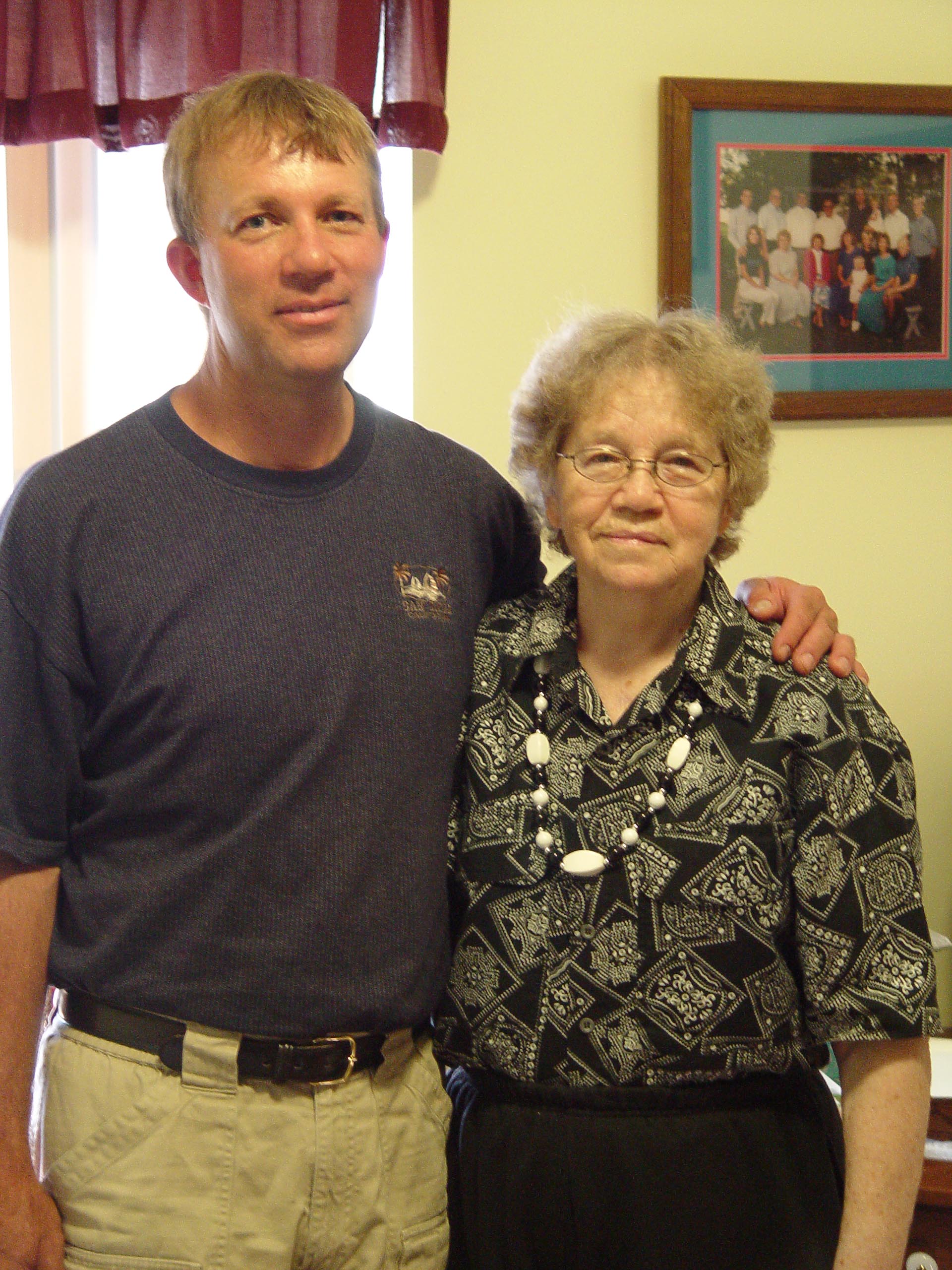
Me and my mom.

    I’m sad to say the world today lost one of its kindest, most loving and most generous souls — my mom, Leona, who everyone knew better as “Matty.”

   Mom was 85 and had been going downhill with dementia for years.

   What a sweetheart she was to everyone. You know how some people are supposedly so generous that they’d give you their last dollar?

   My mom not only would, but did. I saw her do it.

   When she was in an assisted-living facility in Lancaster, my daughter, Erin, one day went along to visit. Mom never had much money in her wallet and had even less as she got out less and less often.

   When Erin went to leave, Mom — as she always did — tried to give away something. Reaching into her wallet, she pulled out the only $1 she had. She insisted that Erin take it and “do something nice for yourself” with it.

   A dollar doesn’t go very far these days, but that one reached the whole way to Heaven. I’ve kept it ever since as a reminder of love unlimited.

   Mom also loved to garden. She and my dad were constantly out working in the yard. Dead patches in the lawn never had a chance. Rabbits ate their flowers every year, but they kept planting anyway. Their best success was the meaty, red tomatoes that came every August.

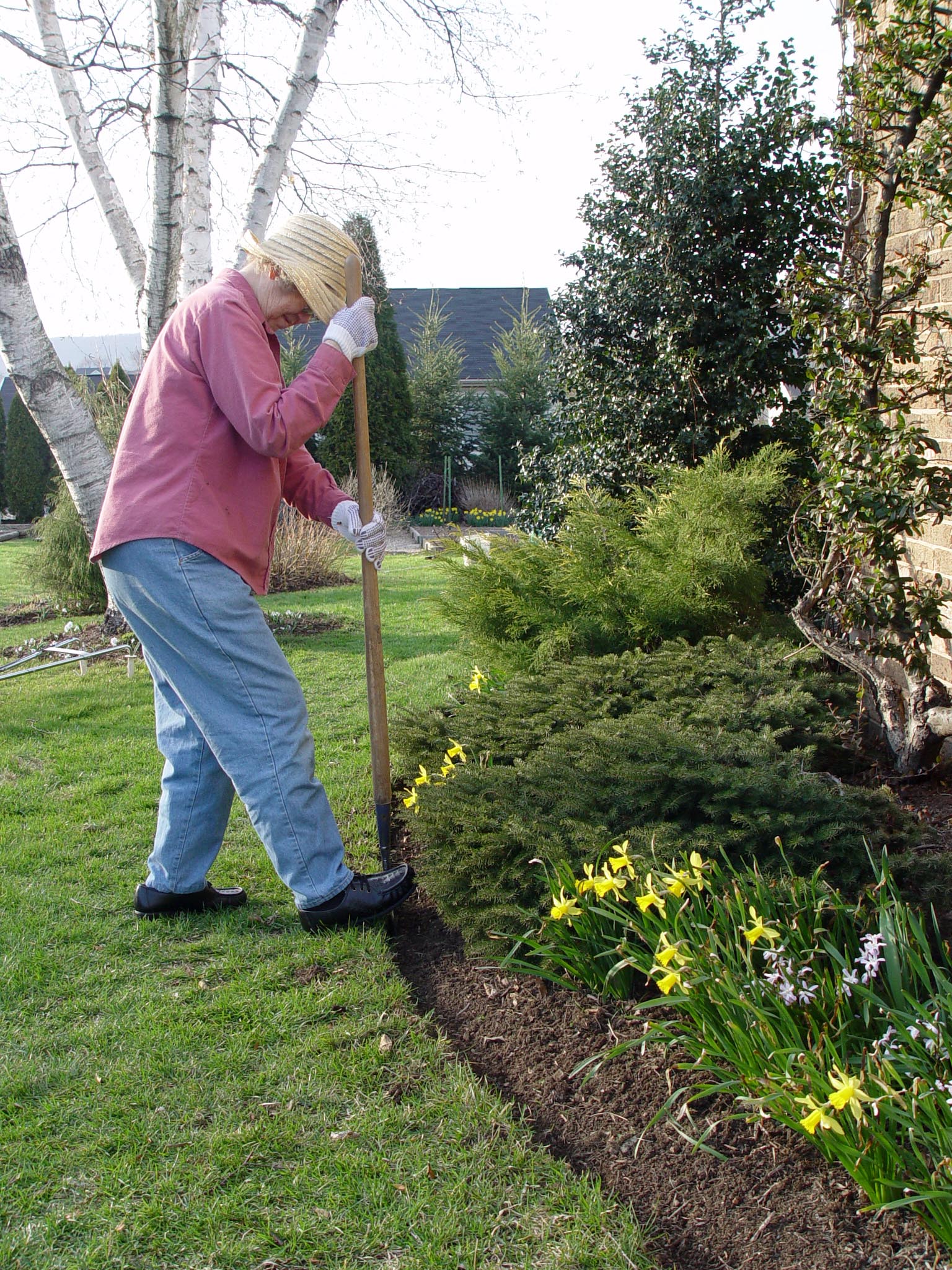
Mom edging.

   Oh, how Mom enjoyed fresh tomatoes. One of the last big smiles I saw on her face was biting into my last ripe tomato of the season that I had taken her at the nursing home.

   My dad mainly did vegetables, roses and the lawn. Mom was his tireless helper. She’d dig and trim and plant and rake till dark, but her absolute favorite job was weeding.

   When she came to live with Sue and me as her dementia worsened, nothing contented her more than heading out to the back yard with a long-handled weeding tool in one hand and an empty 5-gallon bucket in the other.

   If there are weeds in Heaven, I’ll bet there are already fewer of them now.

   Rest and enjoy your new Home, Mom. Thanks for your lessons and your love, and may God bless you with fresh Beefsteaks in every season.


« Older Ramblings and Readlings Newer Ramblings and Readlings »

  • Home
  • Garden House-Calls
  • George's Talks & Trips
  • Disclosure

© 2026 George Weigel | Site designed and programmed by Pittsburgh Web Developer Andy Weigel using WordPress