
• Home
  • Contact
  • Site Map
George Weigel - Central PA Gardening
  • Landscape 1
  • Landscape 2
  • Landscape 3
  • Landscape 4
  • Garden Drawings
  • Talks & Trips
  • Patriot-News/Pennlive Posts
  • Buy Helpful Info

Navigation

  • Storage Shed (Useful Past Columns)
  • About George
  • Sign Up for George's Free E-Column
  • Plant Profiles
  • Timely Tips
  • George’s Handy Lists
  • George's Friends
  • Photo Galleries
  • Links and Resources
  • Support George’s Efforts


George’s new “50 American Public Gardens You Really Ought to See” e-book steers you to the top gardens to add to your bucket list.

Read More | Order Now


George’s “Survivor Plant List” is a 19-page booklet detailing hundreds of the toughest and highest-performing plants.

Click Here


Has the info here been useful? Support George’s efforts by clicking below.


Looking for other ways to support George?

Click Here

George's Current Ramblings and Readlings

Water and Grass

August 2nd, 2011

   Yeah, that lush, green carpet of a lawn might look pretty good.

Lawns are "smart" enough to go dormant in a dry heat wave.

   But when the temperatures park themselves in the 90s day after day and rain shuts off, it’s time to back off of that expectation for awhile.

   Grass is smart enough to go dormant in a heat wave.

   By shutting down growth and going brown, grass is able to conserve enough moisture in the crowns (where grass grows from) that it can go 6 weeks in parched conditions.

   Then when rain returns, it greens back up again, and everyone’s happy.

   When nature’s game plan goes awry is when some folks decide they want those verdant springtime conditions even when the weather is no longer cooperating.

   It takes a whole lot of precious water to keep a lawn green in a bake-oven of a summer. That’s not only expensive but wasteful and counter-productive in at least three ways.

   How?

   1.) If you water often but too lightly, you encourage grass roots to stay high up in the soil surface, where grass becomes less drought-resistant, more at risk from heat injury and more likely to develop a thatch problem (that spongy layer mostly of dead roots between the growing grass and the soil).

   2.) Beetle grubs proliferate best when the soil is moist when the eggs hatch these next few weeks. One of the few advantages of hot, dry turf is that it’s not good for grub hatch. In other words, grubs will thank you for irrigating that lawn.

   3.) Shallow-rooted grass that’s kept consistently damp at the surface and on the grass blades is more prone to disease and bug attack.

You may be doing more long-term harm than good by sprinkling the lawn.

   If you’re dead set on watering the lawn, Penn State’s Turfgrass Center recommends at least waiting until you see the first signs of the grass wilting.

   Then put on enough to dampen the entire root zone — not just the top inch or so. The majority of grass roots go down 6 inches, so aim to add enough water to reach that depth.

   How much and how long that’ll take will depend on the composition of your soil and the rate at which you’re applying water.

   The exception is a new lawn.

   Grass you’ve seeded this spring or even last fall is still rooting. Young grass benefits from keeping the soil consistently damp at and near the surface.

   One other exception is grass under extreme stress. As we saw last summer, some grass crosses the line from dormant to dead when temperatures push 100 degrees.

   Some of our northern-climate “cool-season grasses” (perennial ryegrass, Kentucky bluegrass and fine fescue) call it quits when our summer seems more like Dallas.

   Usually it’s patches suffering from some other setback as well, such as compacted soil, excess soil salt, grass that’s scalped and proximity to asphalt roads or hot driveways.

   Grass is pretty good about taking one or two strikes, but three strikes and it’s out.

   The ideal solution is to correct the setbacks, but in the meantime, a root-cooling watering might be enough to get your grass out of the emergency room.

   About one-quarter of an inch of water is enough to accomplish cooling and refresh the grass crowns without triggering new growth. The idea is survival, not “wakening” dormant grass so its moisture needs go back up.

   This same kind of rescue watering is useful when a lawn goes more than 4 to 6 weeks in a brown, dormant state.

   Other than reach for the hose, there are three better things you can do to nurse a lawn through a heat wave. Actually, all three are things you shouldn’t do:

   1.) Don’t mow. Longer blades (even brown ones) help shade the soil, which conserves moisture and holds down the soil temperature. This is the same principle behind why it makes sense to routinely cut the grass high (at about 3 inches) rather than scalp it down to an inch.

   2.) Don’t walk on a dry lawn. You could crush brittle crowns, which will kill those blades. If you can see your footprints in the lawn after you walk on it, it’s dry enough that you should limit traffic as much as practical.

   3.) Don’t fertilize. Non-growing grass doesn’t need it anyway, plus most fertilizers contain salts that make grass less able to take up soil moisture. You might even burn dormant grass if you overdo it.
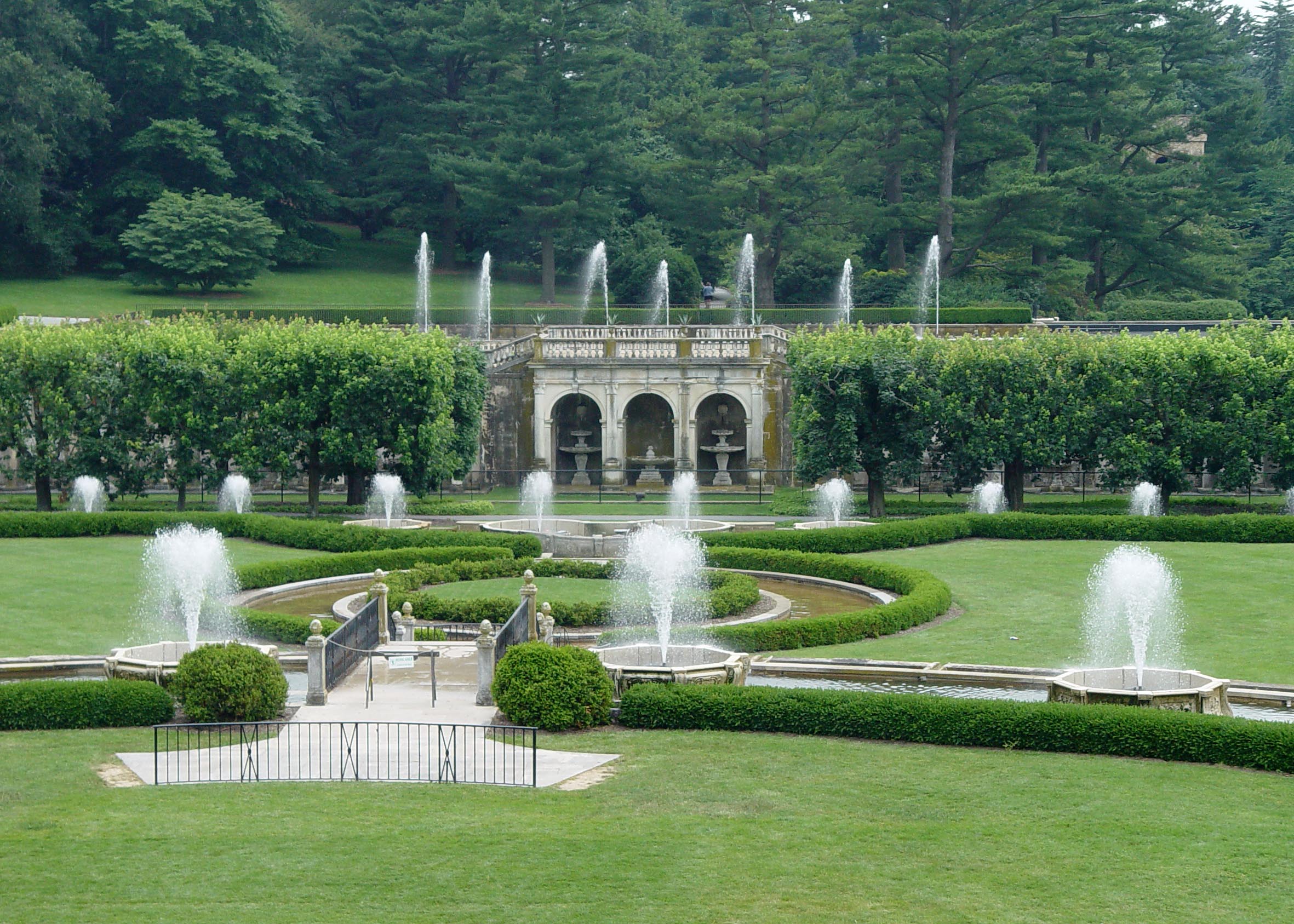
The main fountains at Longwood.

Last Call for Longwood  

   Next up on my garden-trip lineup for 2011 is a day trip behind the scenes at Longwood Gardens on Fri., Aug. 12.

   We’re going to spend a big chunk of the day with some of Longwood’s gardeners, who will show us things that “normal” tourists don’t get to see plus tell us how they prune those topiaries, keep the annuals looking so good, get mums to grow in big balls, etc. etc.

   We’re also scheduled for a cooking demo by Longwood’s chef and will have free time to explore on our own. That’s in addition to playing plant-giveaway games and doing gardening Q&A on the bus on the way down.

   Cost is $149, which includes admission, a nice lunch at Longwood’s restaurant and transportation from either the West Shore or East Shore.

   If you’re interested, call Lowee’s Group Tours at 717-657-9658 or email CKelly@lowees.com.
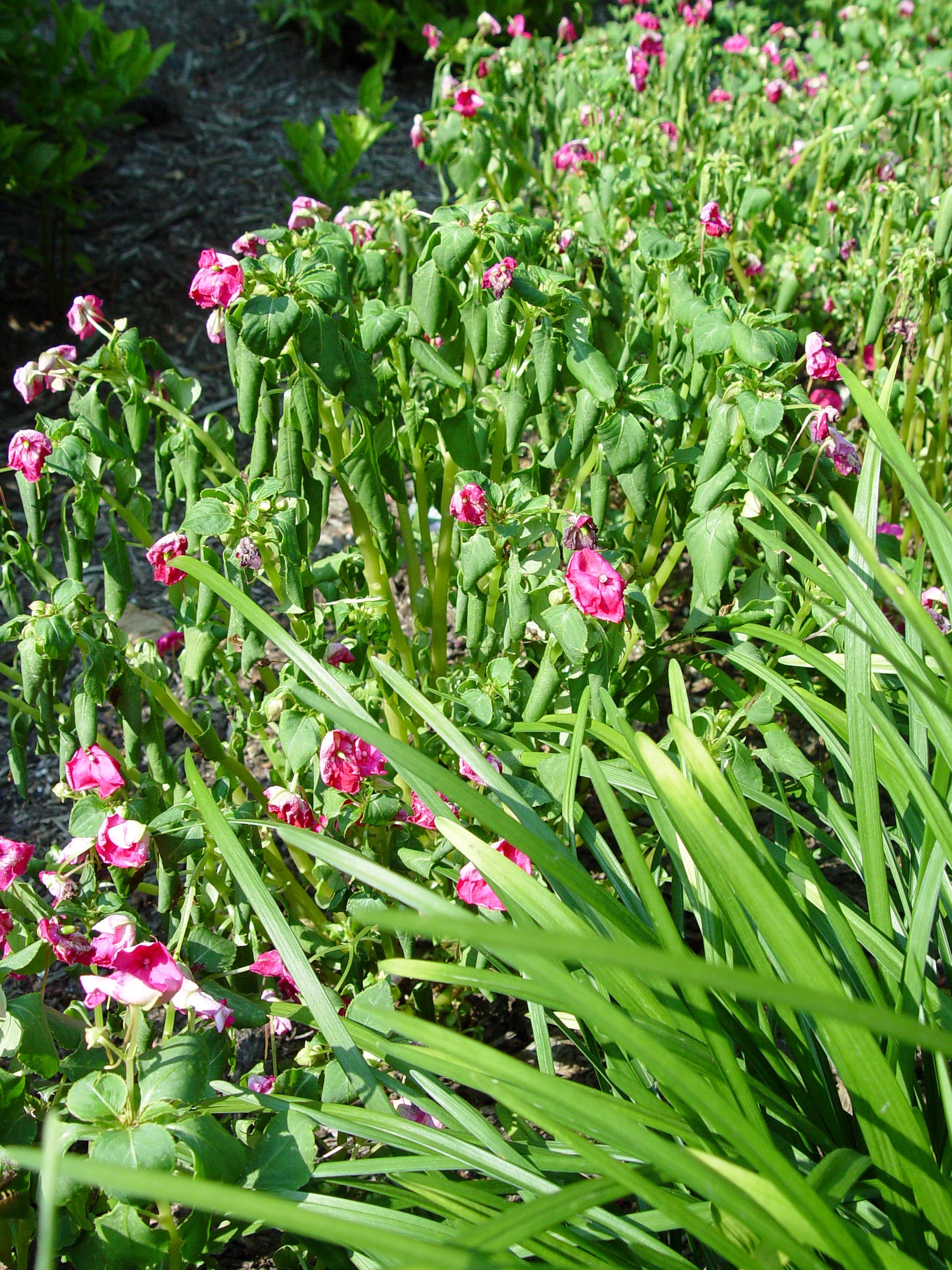

H2-Uh-Oh

July 26th, 2011

   First, too much. Now, not enough.

Plants need just the right amount of water at the right time.

   Water is a huge factor in the garden. It’s the magic potion that makes plants grow.

   Overdo it, though, as was the case this spring, and you’ve got one of the fastest ways to kill a plant.

   Underdo it, as has been the case lately, and plants die a slower death.

   Getting it right is tricky. Besides the more obvious problem of plants dying from no water in a heat wave, I see a lot of cases where people are wasting water, wasting time and sometimes making things worse.

   First is the matter of what to water when.

   Don’t over-estimate the value of spotty summer thunderstorms like some of us got on Monday. Even if you’re lucky enough to not get missed, quick dumpings often don’t penetrate into the root zones where the water will actually help.

   The first raindrops run off packed mulch and compacted soil, then the next 10 or 15 minutes worth gets sucked up by the mulch on top of the soil. That’s one of the down sides of over-mulching – it can take a soaking rain of at least a half-inch before anything is left to work its way into the soil.

   The same is true if you realize it’s bone-dry and try to take things into your own hands.

   Most people way under-estimate how much hose water it takes to wet the mulch and then the soil down into the root zone.

   Some people assume they’re staying on top of things by getting out there every evening and watering. Unfortunately, that often amounts to little more than cleaning the leaves and dampening the mulch.

   A better game plan is to spend enough time on each plant so that the soil at the root level is damp.

   Rather than watering everything lightly and regularly, break the beds into zones and water each zone deeply but less often. You might need to go over things several times while watering.

   Vegetables, annuals and newly planted perennials will do fine with a good soaking every third day (assuming a soaking rain doesn’t do the deed for you). That’s better than sprinklings every day.

   What I do is spend one evening watering the annuals and a few new shrubs out front. Then I water the vegetable garden the next day. Then I spot-water the annuals, the new perennials and drought-wimpy stuff throughout the rest of the yard on the third day. Then I start over.

   The exception is potted plants. You’ll probably have to water containers, hanging baskets and window boxes every day in hot, dry weather (assuming you want to keep them alive and can spare the water).

   Young trees and shrubs can go every 5 to 7 days between deep soakings.

   And most established perennials, trees and shrubs can go 2 weeks or more without any supplemental watering.

   You should be able to skip watering established, drought-tolerant perennials, trees and shrubs even in our worst summers. Some examples…

   Trees: crabapple, crape myrtle, ginkgo, beech, linden.

   Evergreens: falsecypress, juniper, arborvitae, yew, blue spruce, boxwood, cherry laurel, cotoneaster, Hinoki cypress, Leyland cypress, nandina, holly, euonymus, Russian cypress.

   Shrubs: abelia, barberry, beautyberry, burning bush, butterfly bush, caryopteris, lilac, sumac, forsythia, ninebark, oakleaf hydrangea, shrub rose (i.e. ‘Knock Out’ and such), spirea, St. Johnswort, viburnum, weigela.

   Perennials: most ornamental grasses, amsonia, agastache, aster, baptisia, barrenwort, black-eyed susan, purple coneflower, sedum, salvia, catmint, daylily, dianthus, euphorbia, gaillardia, gaura, goldenrod, most groundcovers, goats beard, hardy geranium, hardy hibiscus, iris, phlox, lamb’s ear, lavender, Lenten rose, liriope, lily, leadwort, Russian sage, Shasta daisy, stokesia, yarrow and yucca.

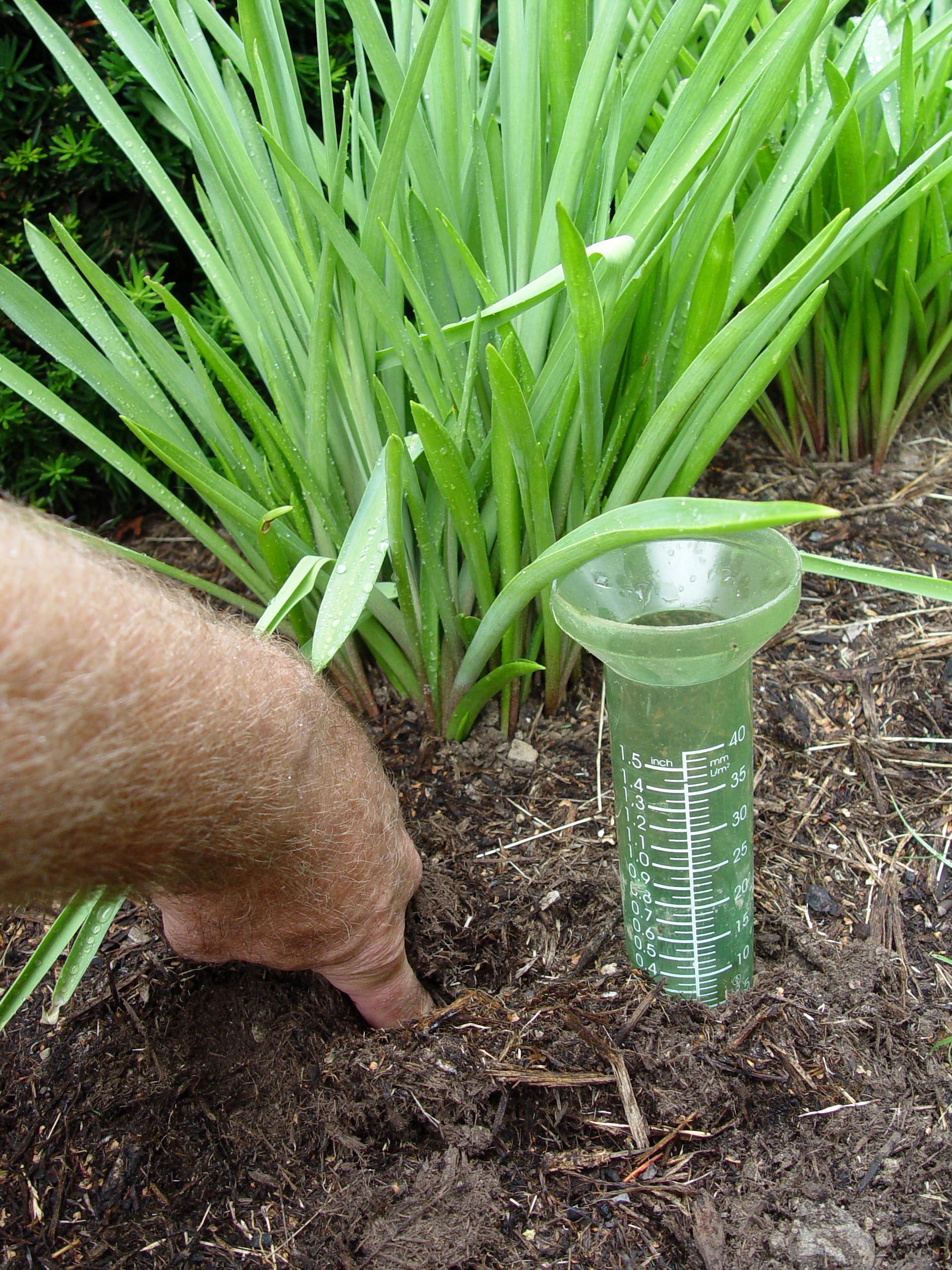
Your index finger makes a great water gauge.

   So how can you tell you’ve added enough water to do any good?

   The best gauge is your index finger. Give your watering 30 minutes or so to soak in, then stick your finger down into the ground next to the plant to see how deeply the moisture has penetrated.

   That’ll tell you if you’ve watered enough.

   Do that once or twice and you’ll know how long you’ve got to water based on your water pressure, the quality and drainage ability of your soil and the root depth of the plants you’re watering.

   If your finger isn’t long enough (or if you don’t like sticking your finger in dirt), use a ruler or a stick. If it makes you feel better, buy a soil-moisture gauge.

   The key is to get down in there and check. Otherwise, you’re just guessing.

   The two best times to water are early in the morning and early evening. Both are times when evaporation is fairly low but when plant leaves will quickly dry off.

   That brings me to another watering woe: disease.

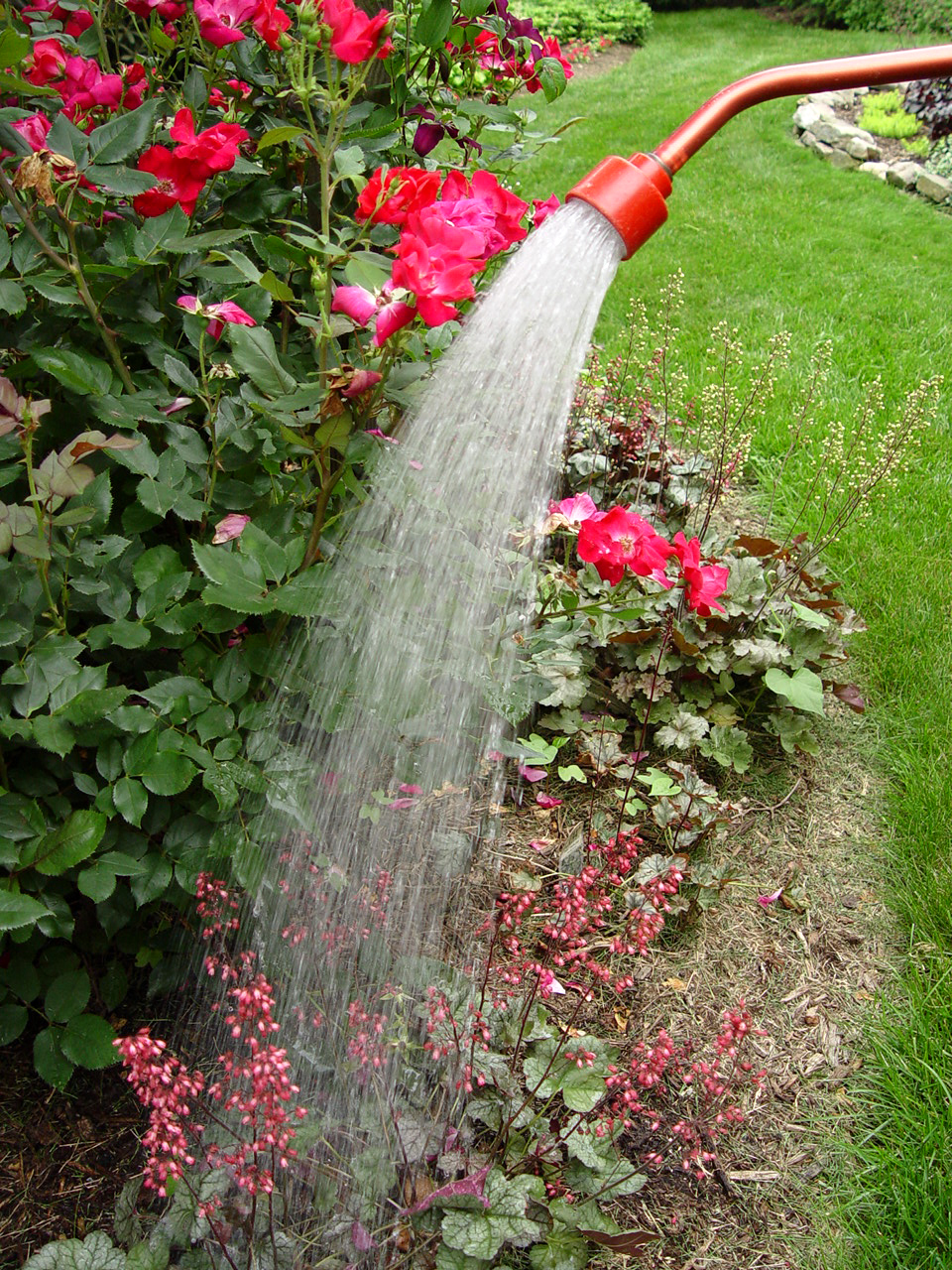
Watering over top of plants instead of directly into the ground can encouarge leaf disease.

   This already has been a worse-than-usual disease year because of all the rain we had back in spring. That’s prime time for infections that then plague us throughout the growing season.

   When you water over top of leaves, you’re creating the dampness that allows most fungal diseases to thrive.

   That’s why whenever you water, it’s best to water directly into the ground and not over the plants. It’s also why early-morning and early-evening waterings are the best timing.

   One of the worst things you can do to encourage leaf disease is to water after dark, when the leaves will remain damp for hours.

   Drip irrigation is one way to water directly into the ground. Another is using a long-handled watering device, such as a Watering Wand.

   Finally, if things are getting really dry and you’re getting concerned about the water bill, your shrinking well level or spending more time with the garden hose than your Sweetie Pie, then it’s time for triage.

   It hasn’t come to that yet in my yard, but it has in other years when dry weather degenerates into ungodly drought.

   That’s when you have to make the tough decision about what gets watered and what doesn’t.

   Personally, I give up on annuals first, figuring they’re going to die at the end of this season anyway.

   I also hardly ever water the lawn. (More on this next week.)

   And when the chips are really down, I give up on the potted plants, cut back on watering the vegetable garden and let the perennials fend for themselves.

   What stays at the top of my list are trees and shrubs planted within the last two or three years. Those are more permanent and more expensive plants that I really don’t want to lose.

   Second are any more established trees, shrubs and fruit bushes that are showing early signs of croaking, such as branch diebacks and scorching around the leaf margins.

   And third are perennials that just got planted this year.

   You might also put any sentimental favorites high on your list.

   One other thing… next time I start whining about too much rain, remind me that it beats trying to grow plants in hot dust.


The Case for More Plants

July 19th, 2011

   We can always use more reasons to plant more plants.

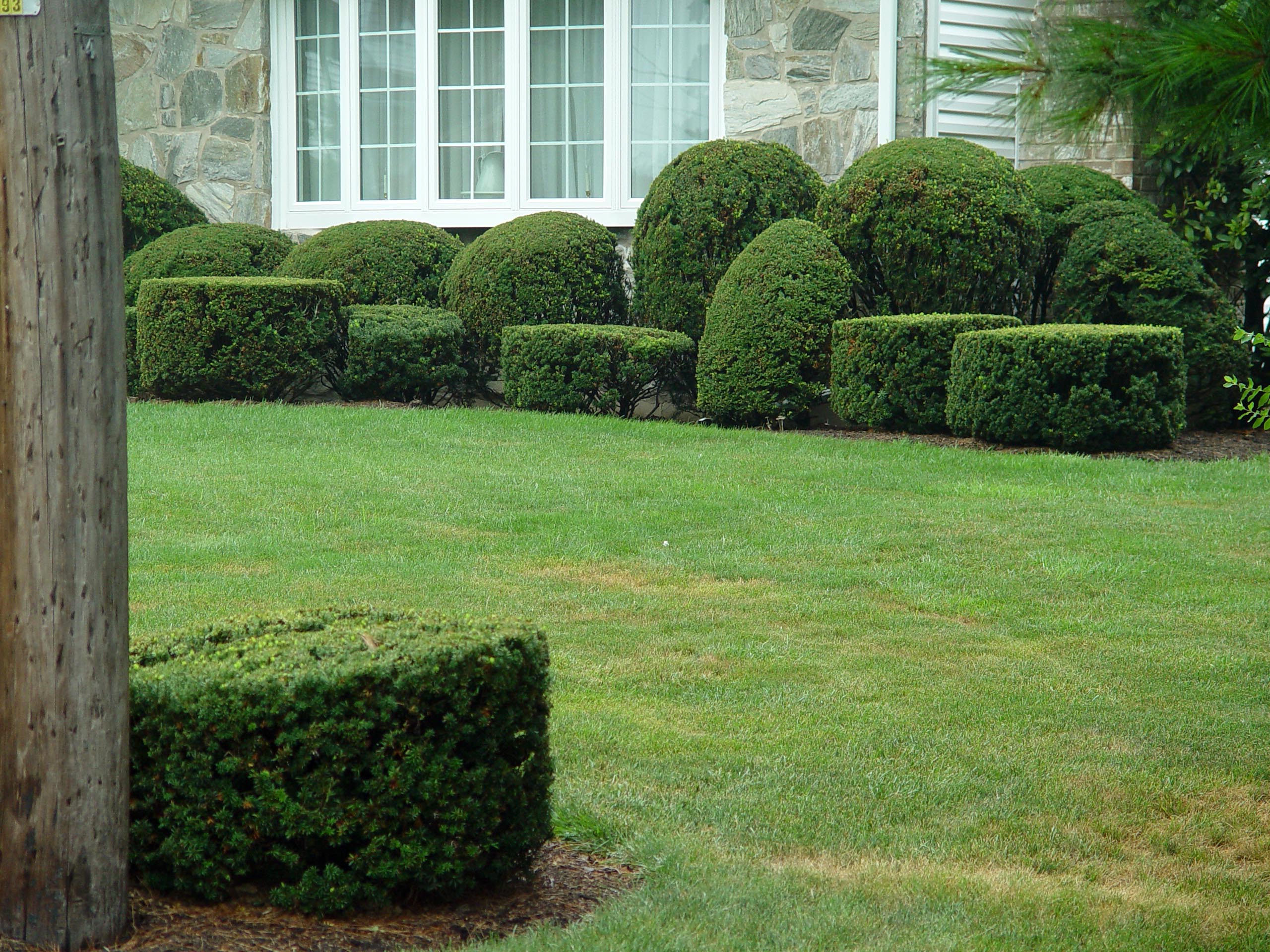
Not many predators are going to move into a non-diverse landscape like this one with nothing other than lawn and meatlballed yews.

   I ran into one of the best yet in a talk last Friday by Dr. Michael Raupp at the annual Woody Plant Conference at Scott Arboretum.

   He says that adding more plants is good for bug control in the yard.

   Raupp, a University of Maryland entomologist and bug consultant for the TV show “Bones,” has actually counted bugs in plant nuts’ yards vs. your typical lawn-and-yew barrenscape.

   He found that populations of predator bugs are way higher in diverse settings.

   What happens is that the predators are then able to do a much better job of keeping the pests under control without us even realizing it.

   That answers the question of how comes your azaleas and dwarf spruce seem to get picked on by lace bugs and mites while the gardening nut next door never seems to have to spray anything.

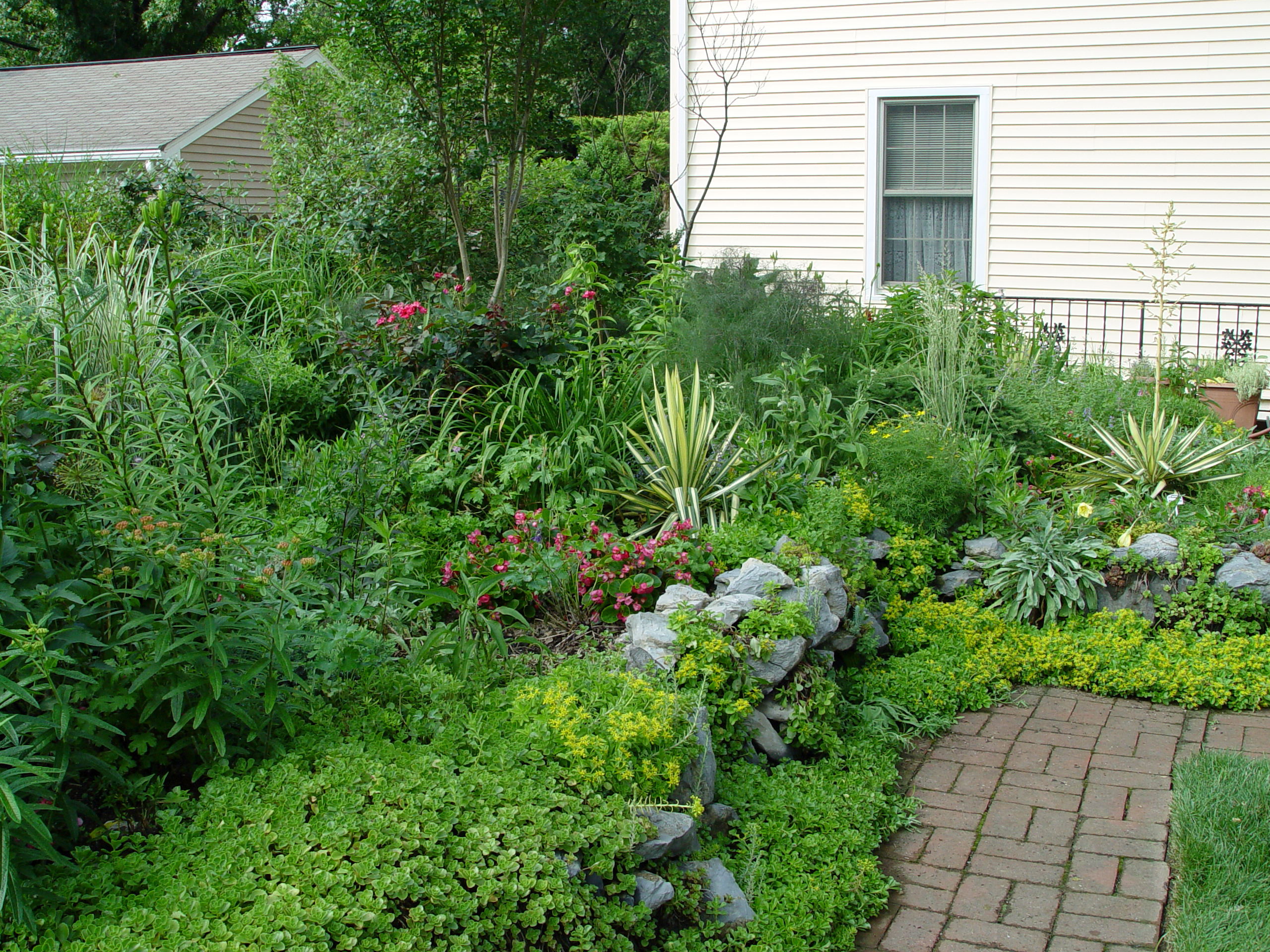
Diverse landscapes like this one, planted by Larry Lenig in Hampden Twp., are loaded with predators and unlikely to run into bug problems.

   Raupp says diverse landscapes “become reservoirs of beneficial insects. You often get three times more bang for your buck in a complex habitat that’s loaded with natural enemies.”

   So rather than bone up on the latest bug-killers, his recommendation is to get more plant variety in your yard.

   He’s a fan of native plants since those are the ones most familiar to and most useful to our natural predators. But he says an even bigger goal is to work on getting more of all kinds of flowering plants in the landscape – especially if you can rig it so that there’s always something in flower throughout the whole season.

   In cases where you really do need to control a pest bug that’s getting out of control or threatening to kill or maim a favorite plant, Raupp advises looking for one of the newest insecticides that have passed the U.S. Environmental Protection Agency’s reduced-risk registration program.

   These new products are much more focused and therefore less likely to harm non-target bees, butterflies, birds and us as well as cause much less environmental disruption.

   Raupp actually named some of his specific favorites. So if you’re looking to battle bugs and want do so as safely as possible, here’s his list:

  • Most any horticultural oil or insecticidal soap.
  • Acelepryn (chlorantraniliprole) for Japanese beetles, caterpillars, gypsy moths, bagworms, borers, leafminers and lace bugs. “This one is so safe it doesn’t even to carry a caution label,” Raupp says.
  • Floramite (bifenozate) and Shuttle (acequinocyl) for various mites.
  • Endeavor (pymetrozine) for aphids and whiteflies.
  • Entrust or Capt. Jack’s Deadbug Brew (Spinosad) for caterpillars and sawfly larvae.
  • Confirm (tebufenozide) for gypsy moths, bagworms, webworms, spruce budworms and pine tip moths.

   Most of these are so new that you won’t yet find them at the garden center. They’re becoming more available in catalogs and through online vendors, though.

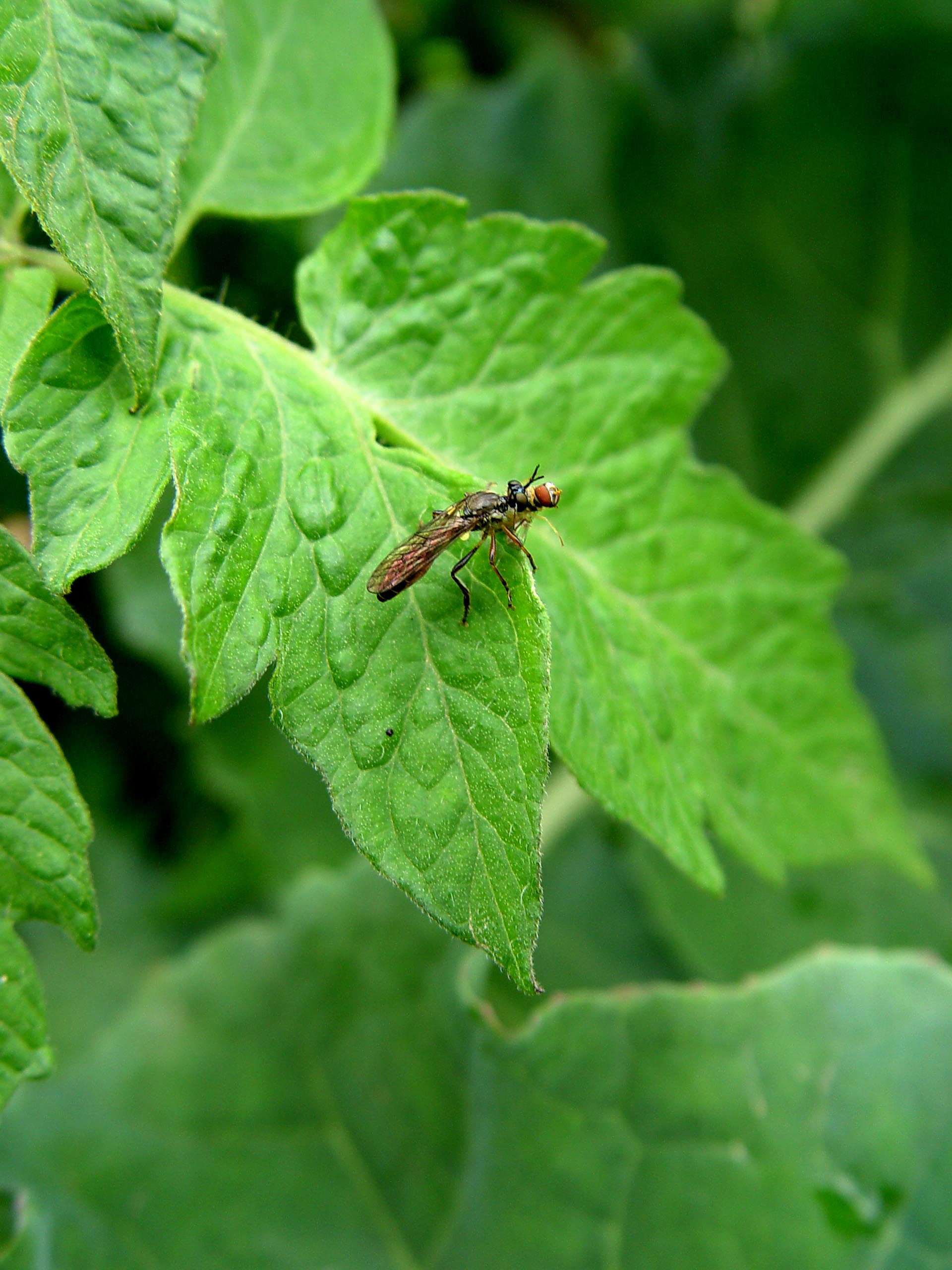
A predator wasp on patrol for pests in the garden.

   Raupp also likes microbials or biological controls – packaged living organisms that eat or infect pests.

   The best known older one is Bt (Bacillus thuringiensis), a bacterium that targets only caterpillars.

   Raupp says a newer strain of Bt (Bt tenebrionis) is effective at controlling the elm and viburnum leaf beetles.

   Naturalis-O (Beauvaria bassiana) is a “friendly fungus” that controls mites and a few other insects.

   And for controlling beetle grubs in the lawn, Raupp suggests a type of microscopic roundworm called a nematode that’s introduced into the lawn. The two main helpers: Heterorhabditis and Steinernema.

   Once these nematodes knock back their favorite pest, they usually move onto other soil-dwelling pests and control those as well. Raupp says some nematodes will feed on up to 200 different kinds of insects – rivaling the landscape-plant diet of Japanese beetles.

   Again, nematodes aren’t widely available in garden centers since they’re not well known and fairly perishable. But almost all organic mail-order companies carry them.

   Raupp has a fascinating web site, by the way, that’s a must if you’re at all interested in bugs in the landscape. Check it out at www.bugoftheweek.com.

   I’ll have more on what “The Bug Guy” had to say in my Patriot-News garden column coming up Aug. 4.


Beetle Time

July 12th, 2011

   We’re in the heart of Japanese-beetle season, and I don’t know about you, but I haven’t seen that bad of an infestation so far.

Japanese beetles feasting on pine needles, of all things.

   Some years this imported bug with the shiny coppery body swarms to Biblical proportions and shreds plants throughout the landscape. They’ll feast on 300 varieties – especially roses, grapes, cannas, cherry, crabapple and linden.

   Other years, not so much.

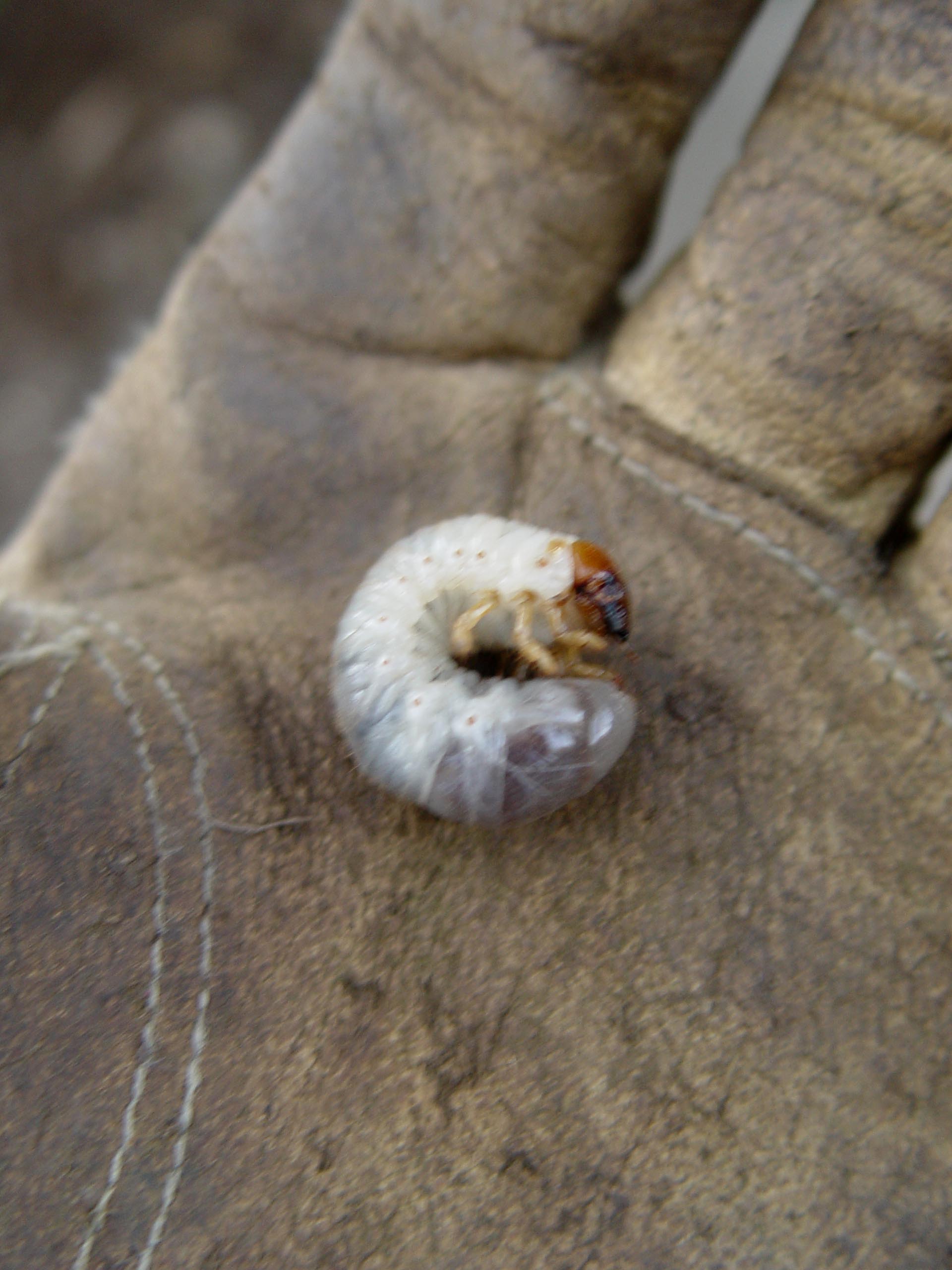
   Like most bugs, Japanese beetles run in cycles. One factor that limits them is dry soil when beetle eggs are trying to hatch into baby grubs in late summer. That’s right… in case you’re not aware, Japanese beetles start out as those fat, white, C-shaped grubs that kill off our lawns in early fall. They’re actually most damaging at that stage.

Japanese beetle grub.

   A second limiting factor is disease and predator activity. In the grub stage, populations are controlled by soil-borne disease, microscopic nematodes, birds, moles and skunks. In the adult stage, Japanese beetles are attacked by tiphia wasps, tachinid flies, birds (especially starlings), and of course, us.

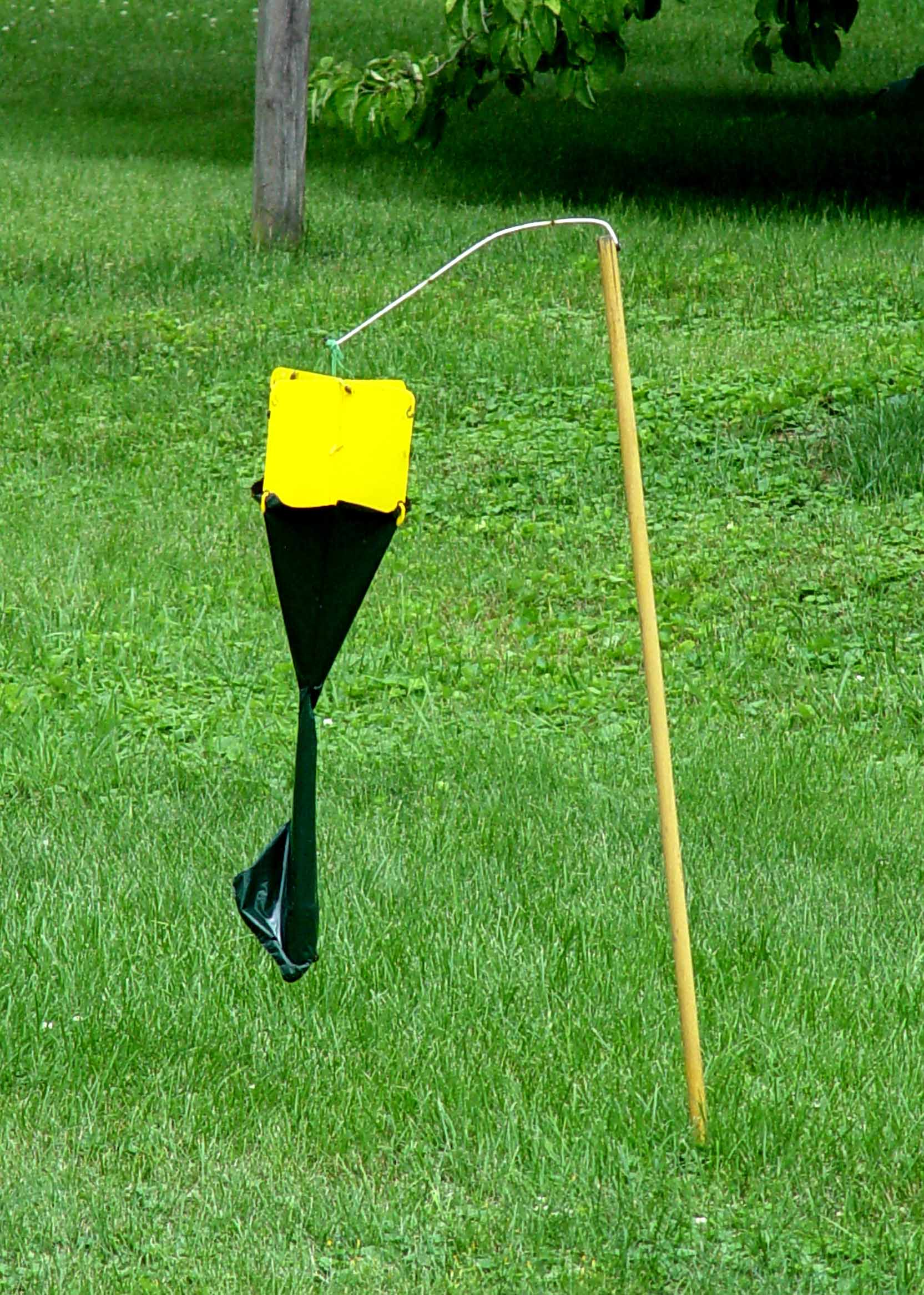
   One question I get a lot is whether it’s a good idea to use Japanese beetle traps. These are the hormone-scented hanging bags that draw beetles in and capture them.

   You might’ve heard the saying that it’s best to buy traps for your neighbors rather than using them yourself. That’s absolutely true.

Japanese beetle trap... best in your neighbor's yard.

   These traps do work, but if you’re the only one using them, you’ll be drawing in beetles from all over the neighborhood. You’ll find gazillions of them in the bag, but a gazillion more will be feeding on your roses – at least on the way to the trap.

   The ideal situation would be for everyone around you to be drawing beetles their way and out of your yard.

   The best “organic” way to control Japanese beetles is to pick them off your plants. Here’s a little-known secret: the best time to pick them is early in the morning when they don’t fly as well because of dew on their wings.

   If you’re not a squisher, just drop the beetles into a jar of hot, soapy water.

   Some people get rid of lots of beetles all at once by placing a sheet under infested plants and shaking the plants. Do it in the morning, and the beetles typically drop instead of flying away. Then you can stomp them or dump them.

   Spraying is the classic control if damage is getting out of hand.

   Neem oil is a natural spray that does a decent job of repelling beetles. VeggiePharm is a mint-oil spray that also works well.

   Chemicals approved for beetle control include pyrethroids (bifenthrin, cyfluthrin, permethrin), carbaryl (Sevin) and malathion. The botanical spray rotenone also works.

   The other control method is to go after the grub stage, which lots of homeowners do by applying imidacloprid (Merit) or halofenozide (Mach2) on their lawn early each summer. Those work very well, but I’m not a big fan of applying anything ahead of time that I may or may not need. Personally, if grubs wreck a section of my lawn, I put my money and effort into reseeding. Most years I see only little to no lawn damage from grubs.

   Milky spore disease is touted as an organic and long-lasting product that can control Japanese beetles for more than 10 years. Field tests have been iffy, though, plus milky spore isn’t effective on chafer beetles, June beetles and Oriental beetles – three other grubs that also damage our lawns.

   Usually a better organic control is nematodes, which are microscopic roundworms that feed on young grubs. You buy these live and apply around Labor Day to start feeding on the newly hatched grubs. A few garden centers sometimes carry them, or look for Heterorhabditis nematodes in catalogs and web sites (www.arbico-organics.com, www.buglogical.com, www.gardensalive.com).

 Worthy Event

   One of my favorite local gardening programs is the annual Summer Garden Experience that Penn State Extension runs the last Saturday of July at the Southeast Ag Research and Extension Center in Lancaster County.

   This year’s sixth annual event happens July 30, from 9 a.m. to 2 p.m.

   Author Ken Druse will be the keynote speaker, doing talks at 9 and 11 a.m. (“Secrets of the Garden Revealed” and “Plant Propagation”).

   Lots of other talks and mini-seminars are on tap, and the highlight for me is always the guided tour of the new-flower trials that Alan Michael gives.

   The place also will be crawling with Master Gardeners eager to answer your gardening questions, plus there will be wagon tours of the research farm and displays set up in the ever-growing Idea Gardens there.

   Admission is a $10 per car parking fee. The research farm is located at 1446 Auction Road, Manheim, not far off the Esbenshade Road exit of Route 283.

   Here’s a link for more details.


Disease, Books and a Disease Book

July 5th, 2011

   You’re not imagining things if it seems like your plants are more diseased than usual this year.

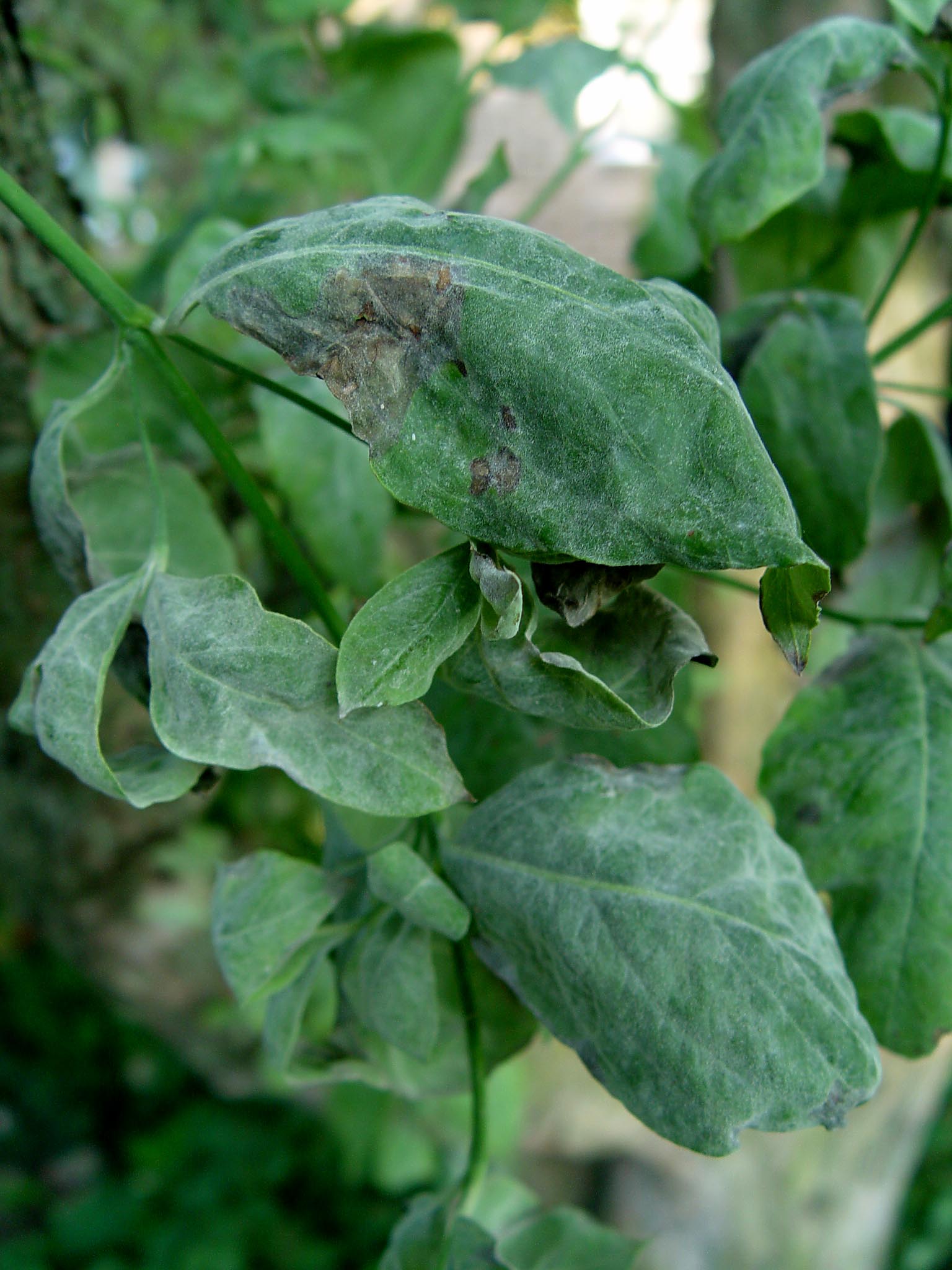
A dogwood suffering from both mildew (whitish leaf coating) and anthracnose (dying black patches).

   All of that spring rain, followed by a couple of warm and humid spells, is the perfect storm for all kinds of leaf disease.

   I’m seeing a ton of mildew (whitish powdery look) on such plants as dogwood, lilac, beebalm, cucumber and ninebark, not to mention rust on crabapples, leaf spot on iris, anthracnose on dogwood, black spot on roses and early blight and Septoria leaf spot on tomatoes (earlier infections than most years).

   Three factors are needed to fuel plant disease:

   * Plants that are susceptible hosts to disease.

   * The presence of a pathogen that affects the plants you’ve got.

   * Favorable conditions for the pathogen to thrive.

    If you hit that trifecta, the question now is what to do.

    The Catch 22 of treating plant disease is that fungicides work best as preventatives. Wait until you have a full-blown, raging disease, and they aren’t terribly effective.

    In other words, fungicides don’t cure disease so much as protect uninfected leaves from infection. Apply them too late and at best they just slow or prevent additional damage.  

   That means you have to apply fungicides before infection or at least as early in an outbreak as possible.

   That approach can be wasteful, expensive, time-consuming and polluting — especially if it turns out you really weren’t going to have that bad of a problem anyway.

   The good news is that most leaf diseases aren’t fatal to the plant.

   They can stunt growth and lead to plant death after repeated outbreaks, but few diseases kill plants outright or overnight.

   One of the best things you can do to combat disease is pick off infected leaves. That’s most helpful with soil-borne diseases like black spot and leaf spot that come from spores that splash up from the soil and work their way up the plant.

   Removing fallen, diseased leaves from around infected plants is another good cultural move.

   And so is applying a fresh coat of leaf and/or bark mulch each spring to prevent that splashing-up of soil-borne pathogens.

   Selecting disease-resistant varieties in the first place is the best idea of all.

   I’ll be writing more about plant disease in my Patriot-News garden column on July 21 (also usually posted online at http://connect.pennlive.com/user/gweigel/index.html the day after).

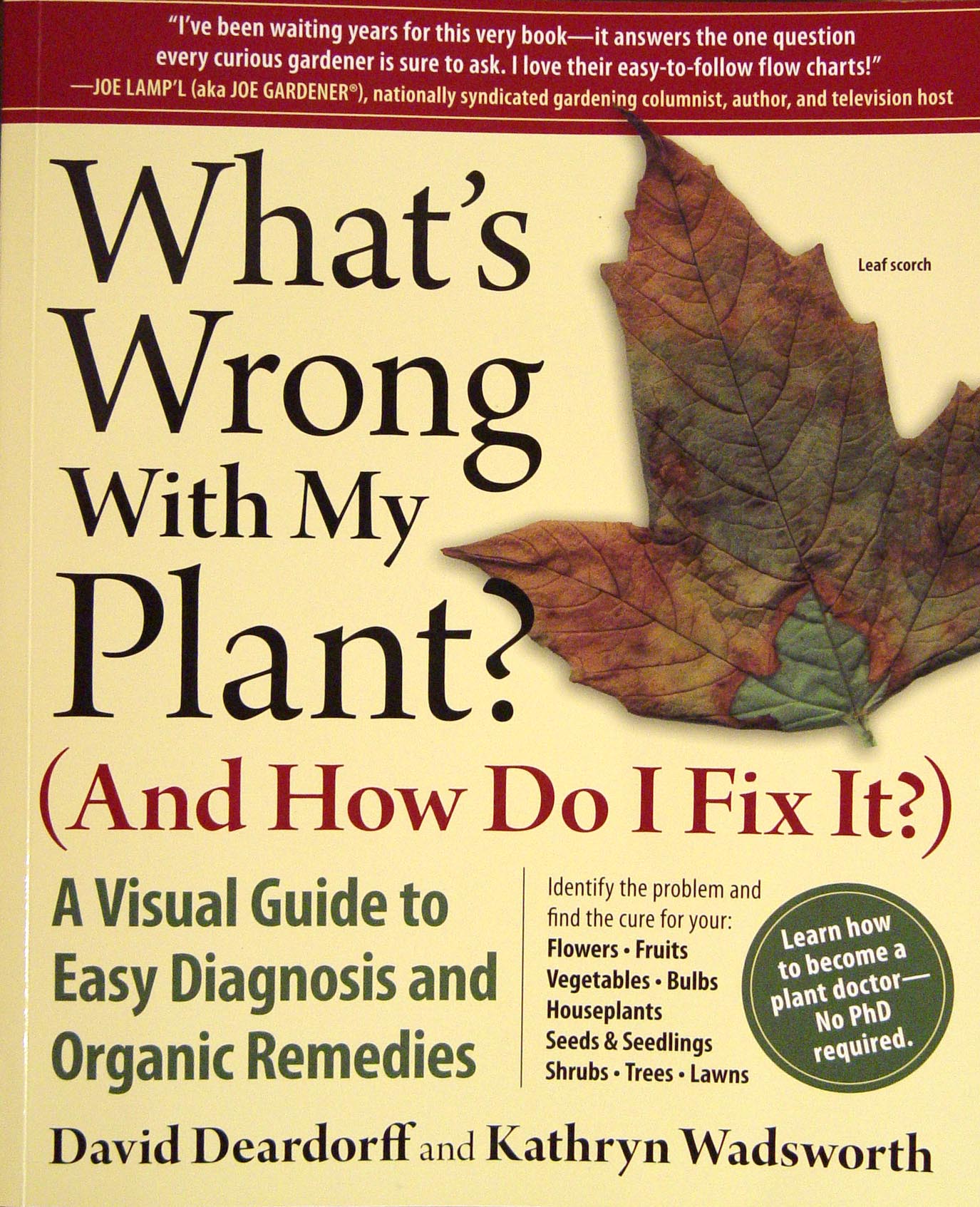
   In the meantime, check out the book “What’s Wrong With My Plant?” (Timber Press, 2009, $24.95 paperback). This is my absolute favorite aid for helping zero on in bug, disease and cultural troubles. It’s loaded with pictures to help gardeners match what’s ailing their own plants, and it offers detailed advice on how to deal with each problem.

   Although you can’t take your garden with you to the beach, “What’s Wrong With My Plant?” would be the next best thing. It’s one of my top 10 favorite gardening books. The whole list is at https://georgeweigel.net/georges-favorite-plants-etc/my-10-favorite-gardening-books.

   For other summer-reading ideas, here are a few of the more interesting new titles I’ve been perusing lately…

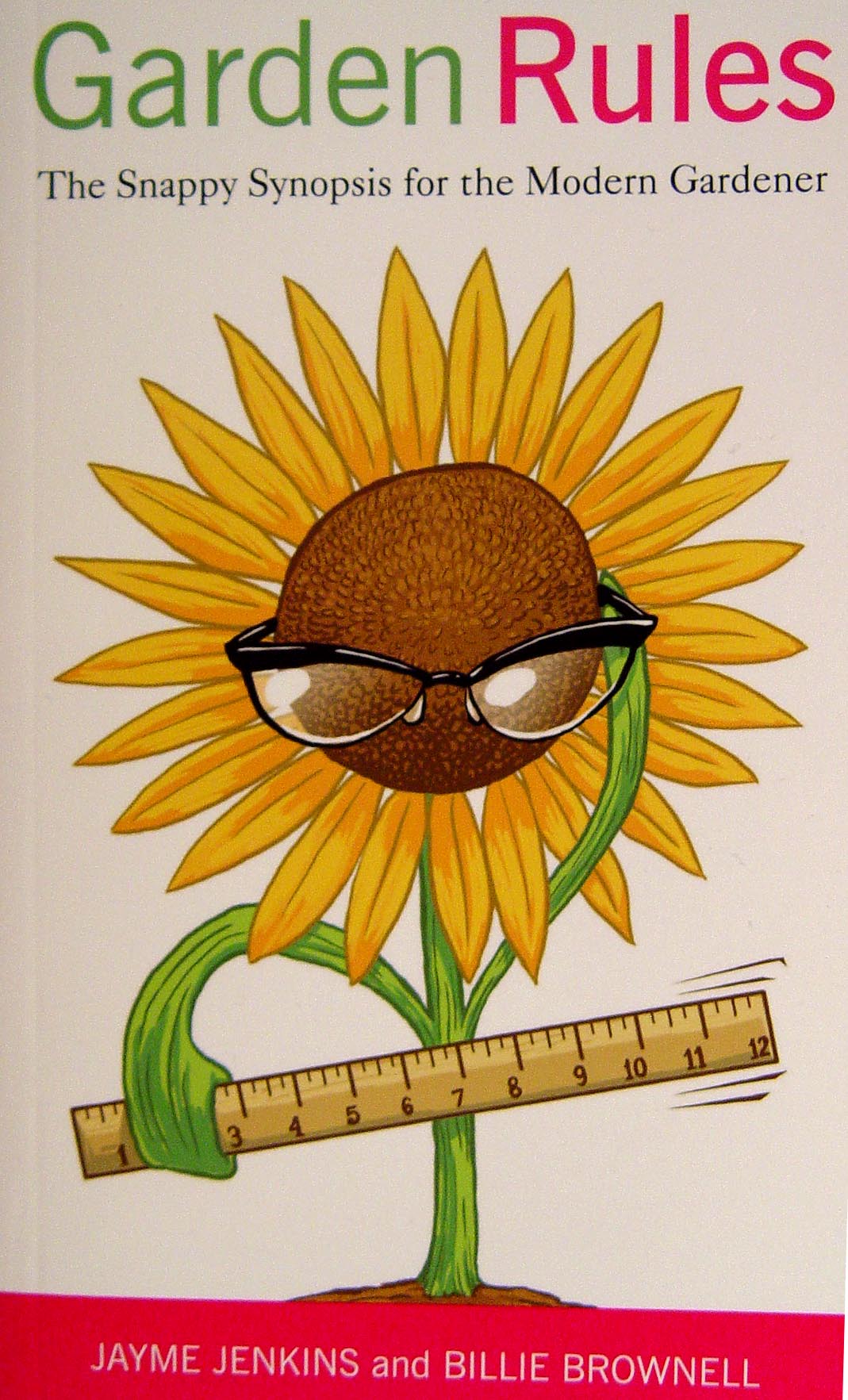
   * “Garden Rules” by Jayme Jenkins and Billie Brownell (Cool Springs Press, $9.95 paperback).

   This is a fun, pocket-sized, pithy and easy-to-read collection of tips, foibles and observations from a pair of gardeners who obviously get down and dirty.

   You’ll be smiling and shaking your head in understanding as Jayme and Billie muse about “zone denial,” deer woes, volcano-mulching, baking their potting soil to kill disease, and my favorite, “Free mulch falls from the sky.”

   “It amazes me to see people take and bag leaves, then leave them at the curb for the city to pick up,” writes Billie. “Then they go out and buy mulch.”

   Amen, sister.

   * “Weeds: In Defense of Nature’s Most Unloved Plants” by Richard Mabey (HarperCollins, $25.99 hardcover).

   When the subject of weeds comes up in a gardening book, it’s almost always about how to kill them.

   Maybe Mabey has too much time on his hands, but he’s devoted much thought and study to the deeper meaning of weeds in this Michael Pollan-esque work.

   Yeah, we might curse that bindweed that’s swallowing the specimen Hinoki cypress, but as Mabey says, “Weeds — even many intrusive aliens — give something back.”

   After all, weeds were our first food, medicine and dye.

   We really do need them to keep all of the unplanted soil from washing into the ocean.

   And no class of plants is better at healing abused land than weeds, such as the 126 species of them that quickly sprang up in London’s World War II rubble (including the “bombweed”) and the cogon grass that managed to thrive soon after Agent Orange obliterated whole Vietnamese forests.

   Though we may hate them, weeds deserve at least a little reverence, this book argues.

   That thought might come in handy when you get back from vacation to find a jungle where your garden used to be.

   * “Designing with Conifers” by Richard L. Bitner (Timber Press, $34.95 hardcover).

   Here’s one from a local… Dr. Richard Bitner, a Lancaster Countian who’s an anesthesiologist at Hershey Medical Center when he’s not writing about plants.

   This book makes the argument that no plants take more abuse than the evergreens we plant around the house.

   “Mulch and meatballs” is the look Bitner calls it, and he comes to the rescue with better ideas on how to use conifers (cone-bearing plants) instead of those butchered yew balls and boxes seen everywhere.

   A large part of the book takes a look at some of the specific, attractive conifers worth trying, such as a globe arborvitae called ‘Whipcord’ that looks like an exploding mound of shaggy goldish-green yarn and the gracefully weeping Alaska-cedar.

   “It’s time to use conifers in more creative ways,” Bitner says.

   Actually, it’s past time.

   “High-Impact, Low-Carbon Gardening” by Alice Bowe (Timber Press, $24.95 paperback).

   I wouldn’t call this a “light beach read,” but if you’re motivated to be a greener gardener, this book is the most thorough and detailed one I’ve seen yet.

   It delves into every angle I would’ve thought about and a lot more, from the pros and cons of compost-tea brewing to eco-friendly wood and stone to learning what your weeds are telling you about your soil and gardening practices.

   The only down side is that it’s written by a British designer, and so not all of the plants suggested are ideal ones for central Pennsylvania.

   Otherwise, the information is practical and the photography is both instructional and beautiful (except for the shot of the worms being dumped into a bin on page 43).


« Older Ramblings and Readlings Newer Ramblings and Readlings »

  • Home
  • Garden House-Calls
  • George's Talks & Trips
  • Disclosure

© 2026 George Weigel | Site designed and programmed by Pittsburgh Web Developer Andy Weigel using WordPress