
• Home
  • Contact
  • Site Map
George Weigel - Central PA Gardening
  • Landscape 1
  • Landscape 2
  • Landscape 3
  • Landscape 4
  • Garden Drawings
  • Talks & Trips
  • Patriot-News/Pennlive Posts
  • Buy Helpful Info

Navigation

  • Storage Shed (Useful Past Columns)
  • About George
  • Sign Up for George's Free E-Column
  • Plant Profiles
  • Timely Tips
  • George’s Handy Lists
  • George's Friends
  • Photo Galleries
  • Links and Resources
  • Support George’s Efforts


George’s new “50 American Public Gardens You Really Ought to See” e-book steers you to the top gardens to add to your bucket list.

Read More | Order Now


George’s “Survivor Plant List” is a 19-page booklet detailing hundreds of the toughest and highest-performing plants.

Click Here


Has the info here been useful? Support George’s efforts by clicking below.


Looking for other ways to support George?

Click Here

George's Current Ramblings and Readlings

Where Gardening’s Easy

June 28th, 2011

   I’m just back from leading a Harrigan Holidays garden tour to Ireland, the land where foxgloves grow wild in roadside ditches and Japanese beetles don’t exist.
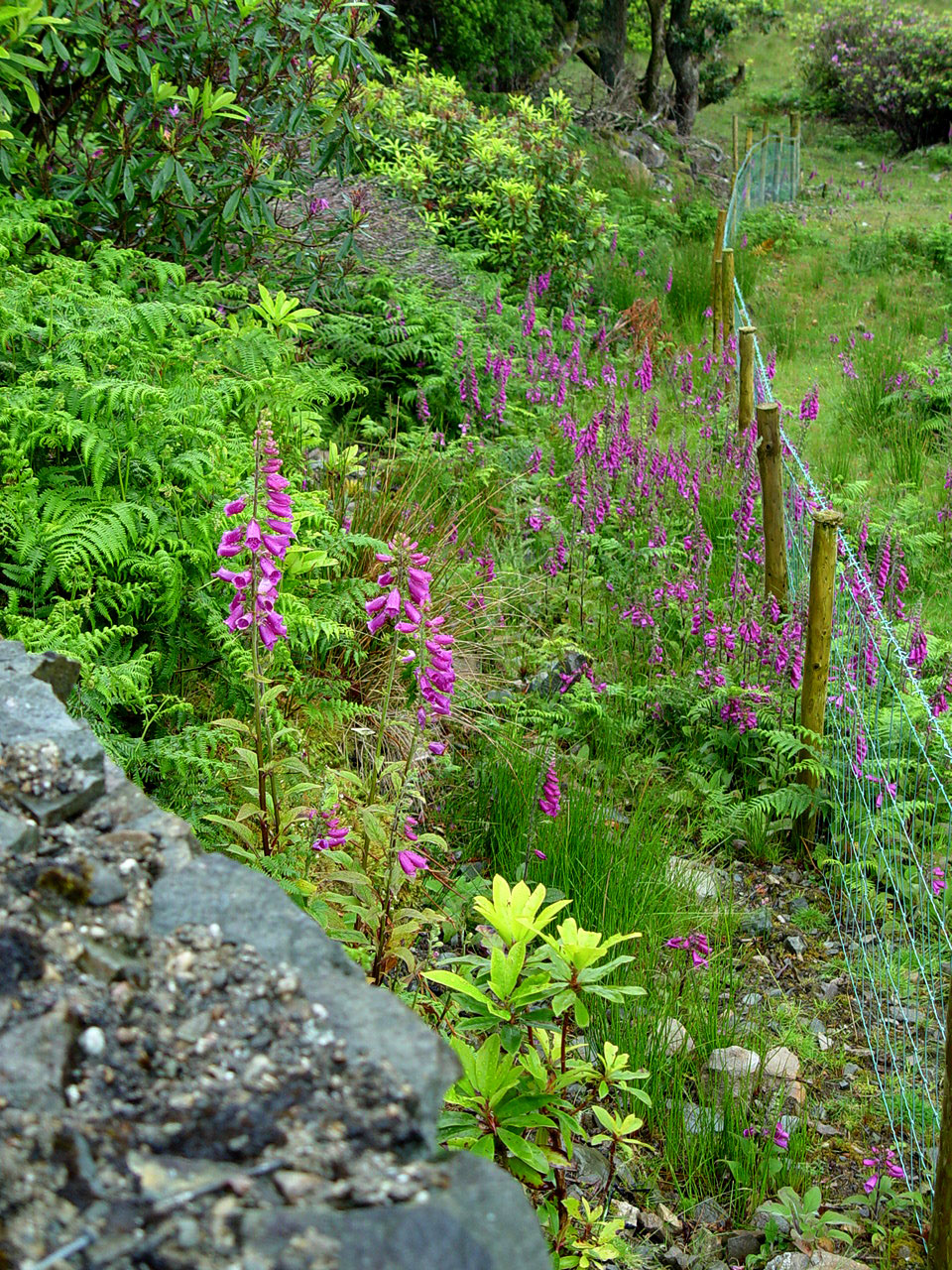
Foxgloves growing wild along an Irish roadside.

   Things are SO much easier on gardeners there.

   The soil’s good, the rain plentiful, the problems few, and the temperatures hover mainly in the 40-to-70-degree range all year.

   That allows the Irish to grow plants that we lose on both ends.

   Their lobelia, primrose and pansies, for example, don’t flame out like ours do in 100-degree summers. They can even grow the prized blue poppy (Meconopsis) that we can’t even baby through one of our heat waves.

   On the other hand, the Irish can grow palms, fuchsia and monkey puzzle trees (a Dr. Seuss-like conifer) that freeze out in our winters.

   Climate change is having a noticeable impact, though.

   Like us, the Irish have been getting more extreme weather.

   Last year, it was a rare drought. This spring, much of the island got hammered by 80-mph winds that toppled trees, scorched the edges of many tree leaves and blew all of the leaves off of others.

   Even worse was the past two Irish winters — some of the coldest in a century.

   Winter lows bottomed out at zero this past winter, which as unheard of. That froze back a lot of usually winter-hardy landscape shrubs and killer others.

   The damage is still evident as gardeners there wait to see whether their laurels, aucubas and English hollies bounce back.

Skeleton of a dead cordyline at Kylemore Abbey.

   The saddest example we saw was inside the walled garden at Kylemore Abbey near Galway on the West coast. A 25-foot dead skeleton of a tree now stands as the central feature of a large ornamental bed there.

   It turns out this tree was a cordyline — the biggest, oldest of its kind in all of Ireland.

   Cordyline is the same plant we use as 2-foot-tall spiky pot centerpieces — similar to dracaena spikes. That cordyline had survived more than a century’s worth of winters, but not this past one.

   Anja Gohlke, Kylemore’s head gardener, said the only hope is that this old cordyline will push enough new shoots to justify patience.

   But she says a bigger question is how much Kylemore and Irish gardeners in general will need to rethink what’s reliably hardy if this climate pattern continues.

   One other thing that struck me about Irish landscapes is how most homes have paving (concrete, asphalt or manufactured pavers) right up to their homes.
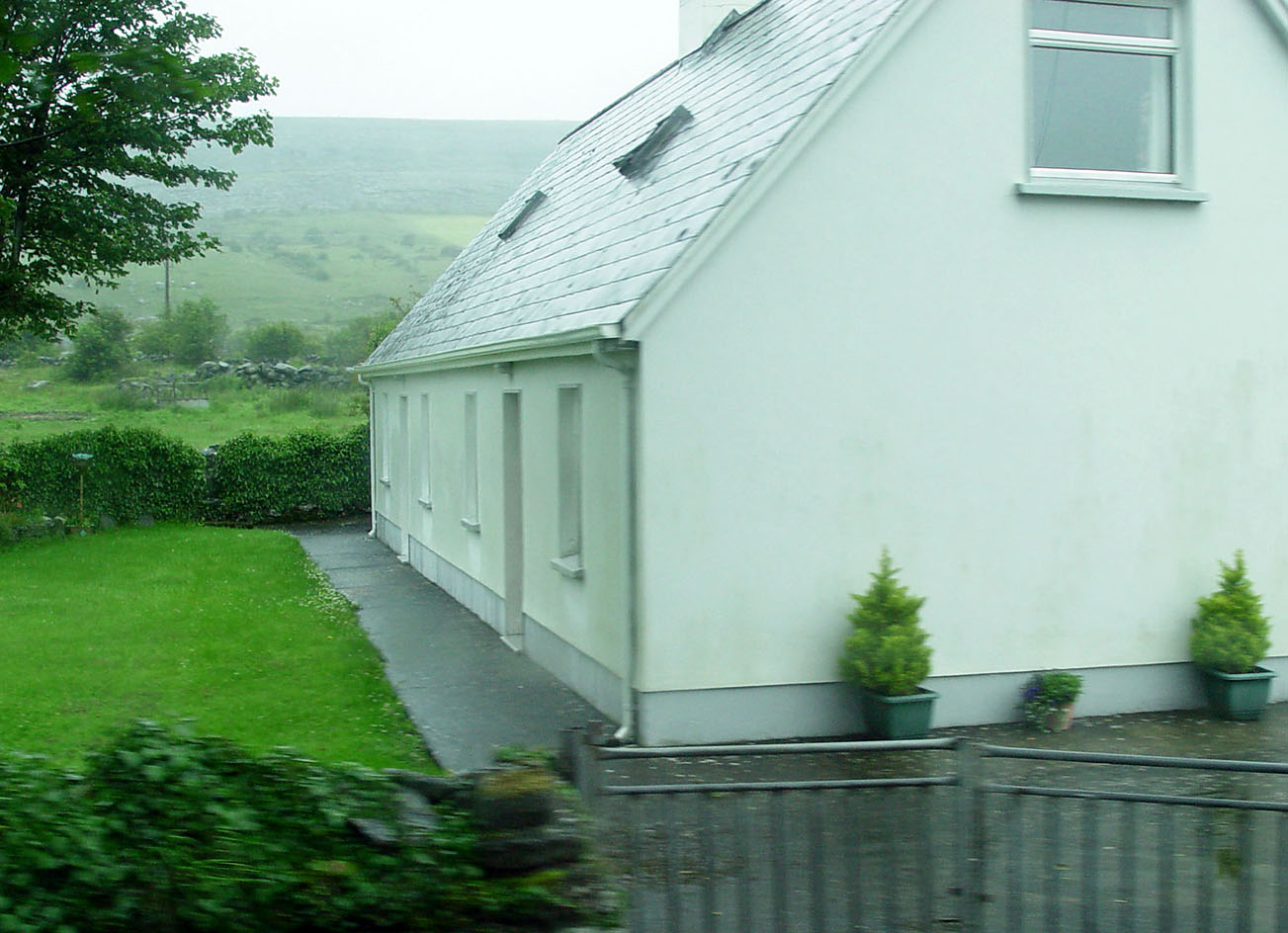
Concrete right up against an Irish home foundation.

   We tend to line our foundations with 3- to 4-foot foundation beds and run our walks along those.

   Paving along the house looks more barren (at least without gardens along the walks), but it makes practical sense for several reasons.

   A big one is avoiding the artillery-fungus problem that results when this mulch-borne fungus shoots its sticky black “dots” (technically, “gleba”) onto siding.

   It also lessens termite and ant infestations without wood mulch right against the wall, and it solves the issue of plants not getting rain due to roof overhangs.

   I still haven’t fully figured out why Ireland doesn’t have more pest bugs and plant diseases.

   The isolation of being an island nation helps, but if ash borers and Japanese beetles found their way to America, you’d think a few would’ve hitched a ride to Ireland by now.

   The cooler summers might have something to do with the surprisingly low rate of disease for such as wet country. It seems to shower every 10 minutes in Ireland — at least when I’m there and outside.
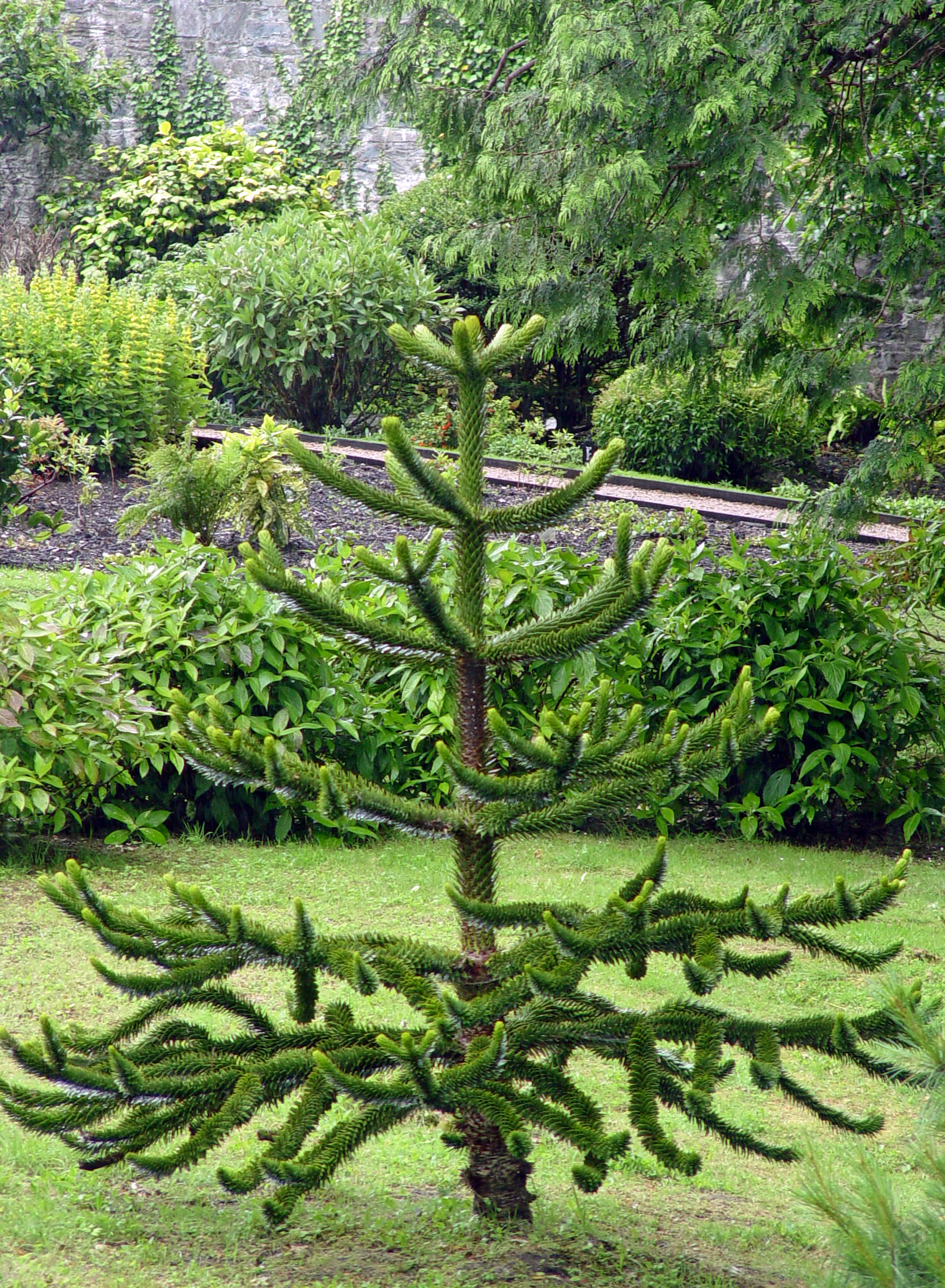
An Irish monkey puzzle tree.

   None of the Irish gardeners I talked to could give me any better explanations on why their rhododendrons don’t get the Phytopthora root-rot that plagues ours, why they can get away without spraying apple trees, and why slugs don’t shred their hostas.

   There are so few bugs in Ireland that the Irish don’t even bother to use window screens.

   Maybe it’s the famed luck of the Irish spilling over into gardening.

   Or maybe it’s the fairies that come out at night to keep watch over the plants.

   Whatever it is, my gardens could use a wee bit of it.

Bleeding mulch, sacrificial cabbage and hydrangea-whacking

June 21st, 2011

   Thinking about trying some of that dyed mulch?

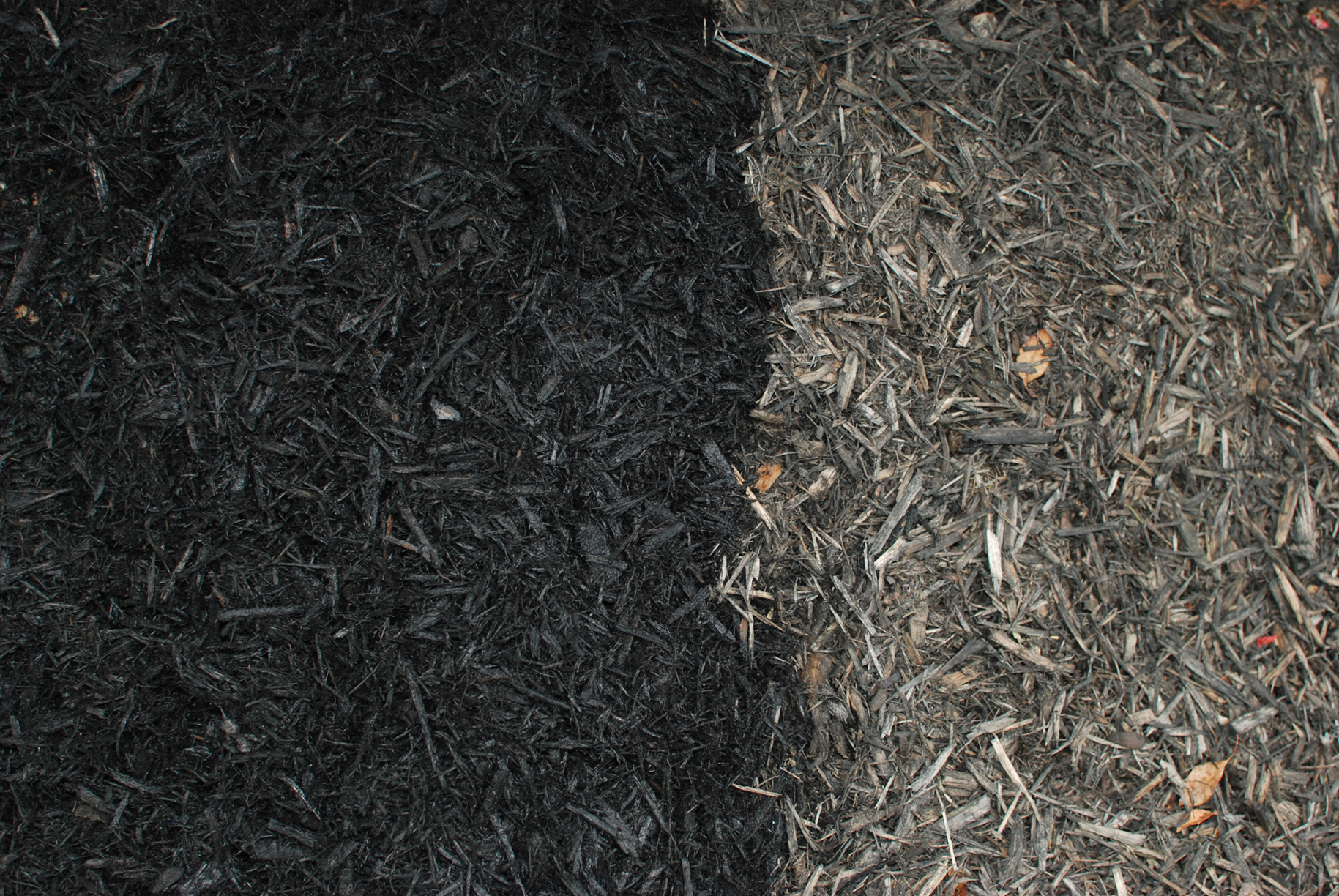
A reader's black dyed mulch as delivered (left) and what it looked like after a rain 12 hours after application (right).

   Don’t apply it right before a rain or you might find the color bleeds off and washes away.

   That’s what happened to at least one local gardener after a recent rain. See the before and after shot at right.

   “I had black mulch delivered and managed to spread it on our front beds,” the reader tells me. “That was the day we had quite a downpour at night. Well, lo and behold, the next morning my dark, black mulch was beige – the same color as natural mulch after it’s weathered for a year.

   “I called my mulch provider, and he informed me that dyed mulch should not be spread if rain is expected within 24 hours because the dye has to ‘set’ by drying in the sun.”

   This reader says he checked with a few other vendors and was told the same thing.

   That raises two questions in my mind — why aren’t gardeners routinely told that at purchase time and why would a vendor even deliver dyed mulch when rain is forecast?

   I’ve heard about dyed mulch bleeding onto people’s hands and onto driveways but never to that degree. To me, it’s just one more drawback to this kind of mulch.

   Other questions about it include what’s in the dye (i.e. black mulch is often made from “carbon black,” which typically comes from burnt coal tar or oil), where the wood came from (demolition wood with lead-based paint? packing crates with leached chemicals?), and the possibility of the wood mulch growing nuisance fungi (especially the dreaded artillery fungus that shoots tarry dots all over the siding).

   Click here to read a Pennlive Q&A I recently wrote about the pros and cons of dyed mulch.

Sacrificial cabbage

   Another reader wrote to tell me about how gardeners in the Canary Islands (off the coast of Africa) use cabbage as a sacrificial crop around the outside of their gardens.

   “Touring around, I kept seeing a plant around the perimeter of every garden,” Randi wrote. “On close inspection, I realized it was cabbage. I asked a local for the reason, and he looked at me kind of funny and said, ‘For the rabbits!’ Duh. Makes sense, no? Feed them to keep them out of the garden.”

   This same strategy is what makes it possible for me to eke out a display of tulips – another rabbit favorite. I plant a few hundred bulbs so that even after the rabbits fill up on a hundred or so, there are still plenty left to bloom.

Whacking those hydrangeas

   Few plants confuse people more than hydrangeas when it comes to pruning.

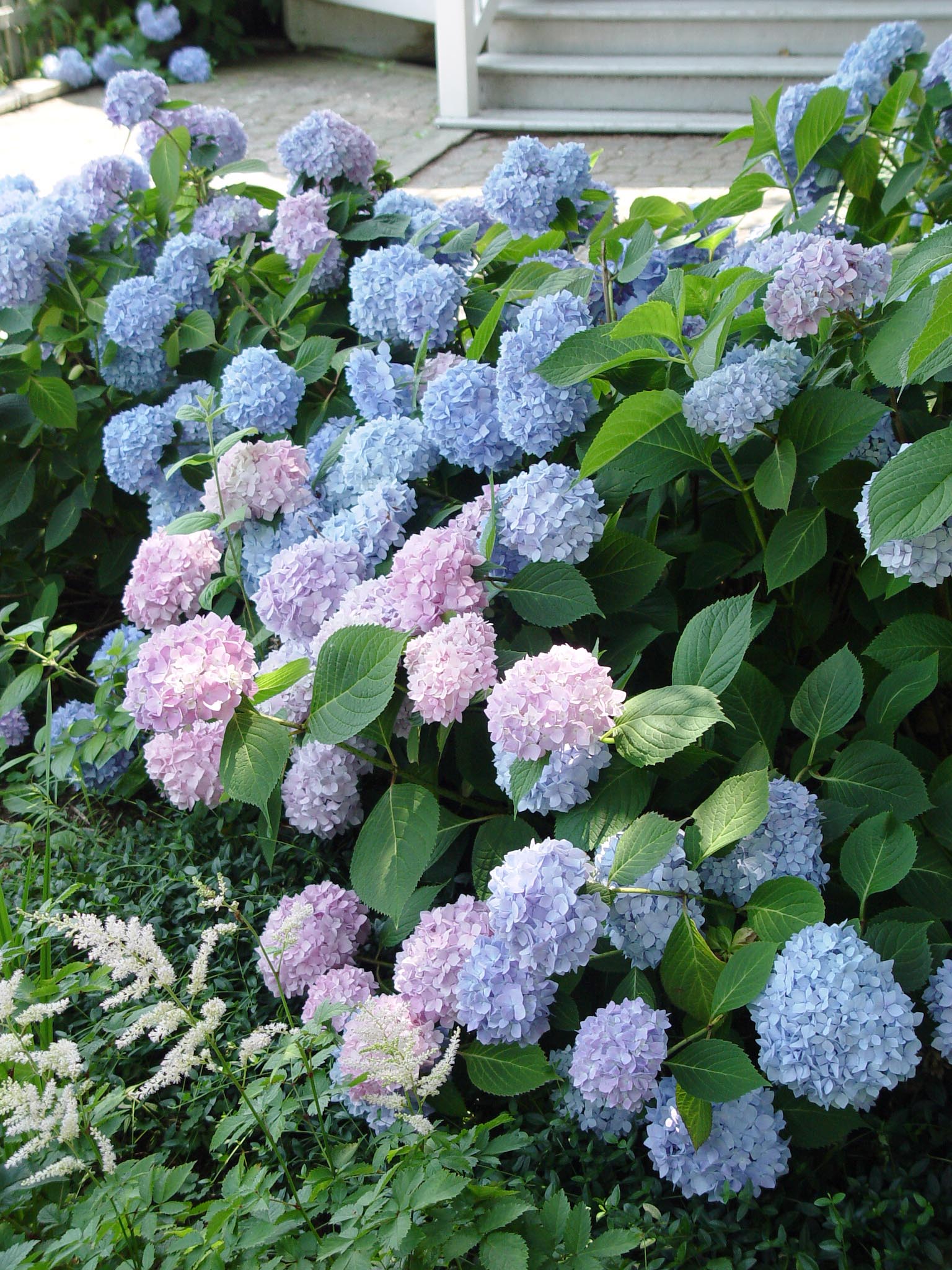
Mophead hydrangeas.

   That’s partly because the pruning time varies depending on what kind of hydrangeas you’ve got.

   The most common type is the big-leaf or Hydrangea macrophylla type, also known as “mophead” or “lacecap” hydrangeas. These usually bloom in balls of pink or blue, according to whether your soil is acidy or not (blue in acid soil, pink in neutral to alkaline soil).

   This type of hydrangea blooms on last year’s wood, meaning that this season’s flower buds formed on buds that formed last summer and fall. If you whack these hydrangeas in fall, winter or spring, you’ll cut off all or most of the buds that would’ve opened into flowers.

   The time to prune big-leaf hydrangeas is right after they’re done blooming, which is during the next few weeks.

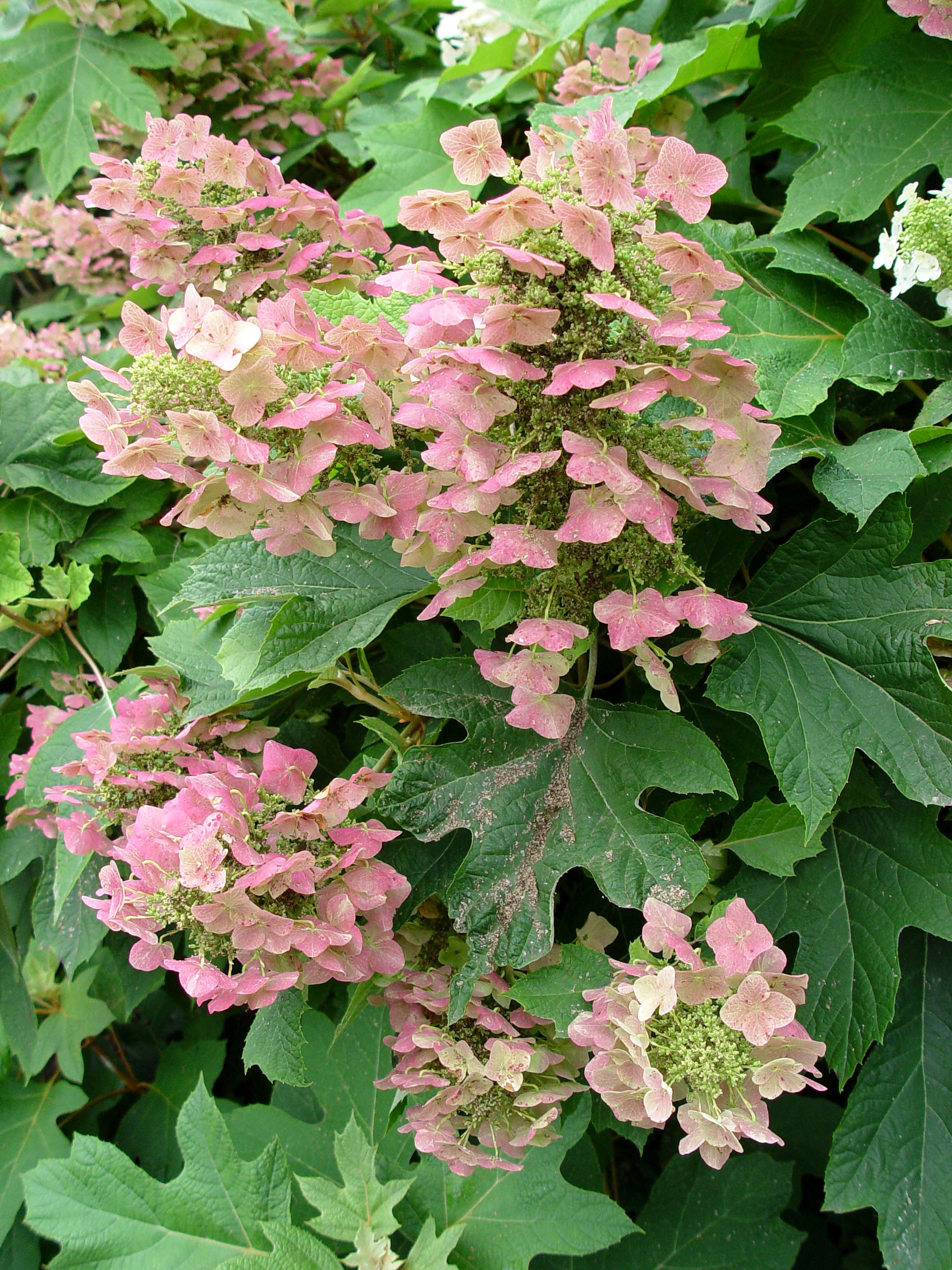
   Oakleaf hydrangeas also bloom on old wood and are best pruned in early summer after bloom.

   Two other beautiful and fairly common kinds of hydrangeas bloom on new wood – i.e. branches that grow in spring, then form buds that open into flowers in summer.

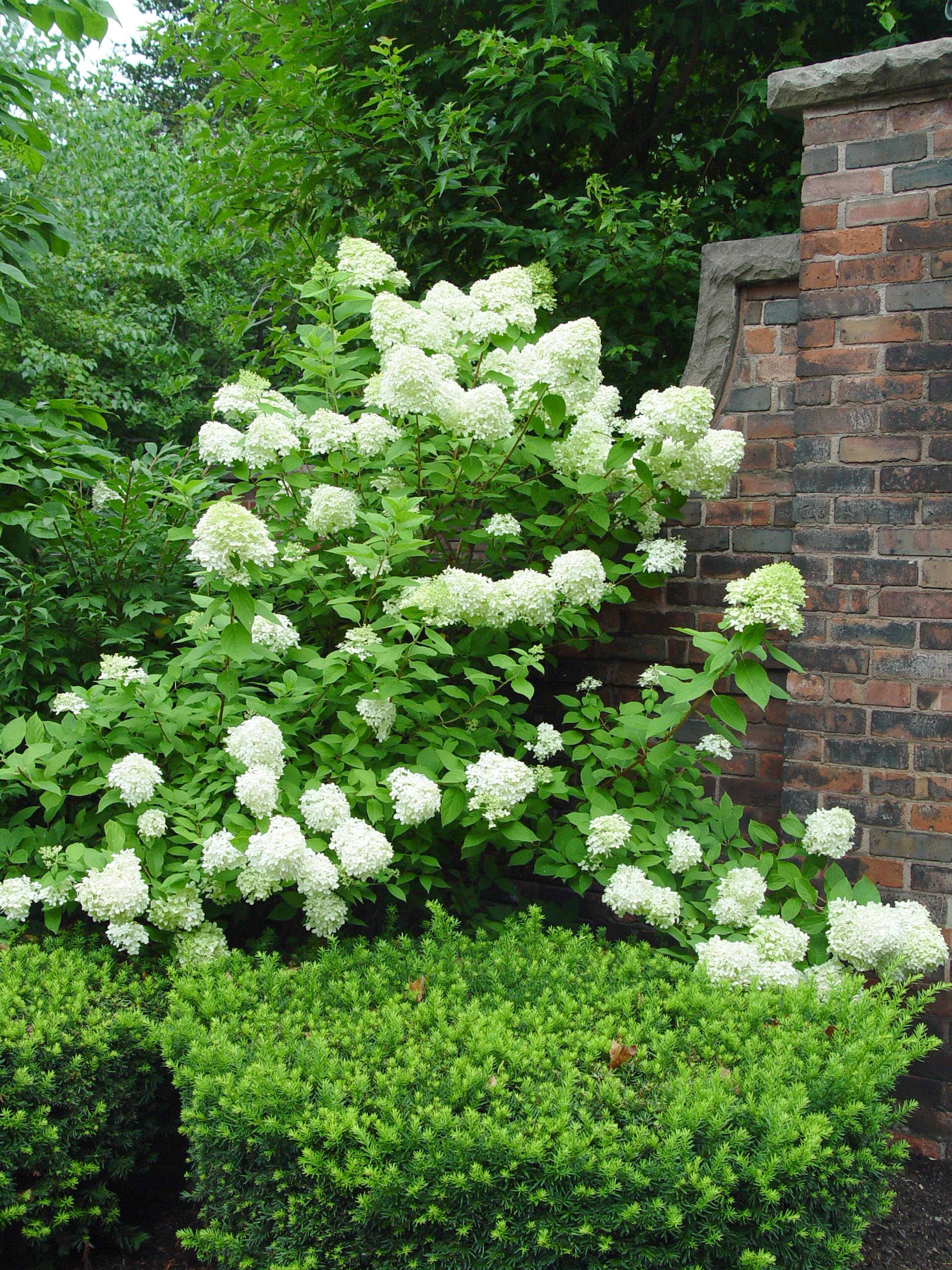
   These two are the native smooth hydrangeas (Hydrangea arborescens or the ‘Annabelle’ types) and the tree-type hydrangeas (Hydrangea paniculata or the ‘PeeGee’ types).

   The time to prune these hydrangeas is end of winter, ideally right before new growth starts. Go ahead and cut them back hard if you want to keep the size compact.

   Just to make it more confusing, some big-leaf hydrangeas (i.e. the ‘Endless Summer’ and ‘Forever and Ever’ lines) bloom on both old and new wood, which means you’ll get some flowers no matter when you prune.

   Hydrangeas don’t have to be pruned, though, if the size is OK and they’re not getting so dense that leaf diseases are happening. If all’s well on those fronts, put the pruners away and enjoy the show.

Oakleaf hydrangea.

Tree-type hydrangea 'Limelight.'


What Goes Where?

June 14th, 2011

   One thing that makes a Master Gardener a master gardener is knowing what plants will work where.

   That was pretty apparent from the Cumberland County Master Gardeners’ home gardens on this year’s third annual “At Home in the Garden” tour.

   I got to see five of the seven of them on Sunday, sandwiched around that inch-and-a-half dumping we got in a half-hour.

   A big hindrance for mere mortal gardeners is not knowing plants very well. And so a lot of people buy what they like and plant them wherever they look good.

   That works sometime. But most plants are at least a little picky about what kind of sun, drainage and space they’re given.

   Guess wrong and they’ll let you know by getting bugs, disease or no flowers. Or they’ll just croak.

   Garden-making is a lot trickier than home decorating.

Larry Lenig's layered back-yard garden.

   Penn State-trained Master Gardeners have figured that out. They pay close attention to each part of their yard and then go looking for the best plants suited to the conditions there. (Most of the time, anyway.)

   When they still guess wrong, they’re confident enough to move the plants until they find the perfect spot.

   Larry Lenig, a Master Gardener from Hampden Twp., says he suspects he’s moved every plant in his yard three or four times over the years.

   I especially liked Larry’s back yard. He left a rectangle of brick-edged lawn in the middle but turned all three back-yard borders into beautifully layered gardens of mixed shrubs, perennials and groundcovers.

   These stone-edged border beds come out close to 25 feet.

   That kind of bed width — which few people bite off — gives space for four to five layers of plants.

   That makes it possible to use enough plants so there’s always something in bloom and plenty of variation in forms and textures.

   “It’s kind of a cross between Williamsburg and an English cottage garden,” is how Larry describes it.

   The variety makes for a dynamic garden that never looks the same for long.

   “Every 3 weeks it changes,” Larry says.

   Few people pull off this kind of full, vibrant and consistently colorful look, mainly because their beds are small and their selection limited to a handful of varieties.

   Larry milks the most out of his beds by spotting varieties throughout (as opposed to massing all of each plant in one area) and by using perennials with colorful foliage.

   All five gardens I saw were exceptionally healthy — in large part because of right plants in right places.

   Mary Carson’s Creekside garden in Camp Hill was mostly wet and in full to part shade.

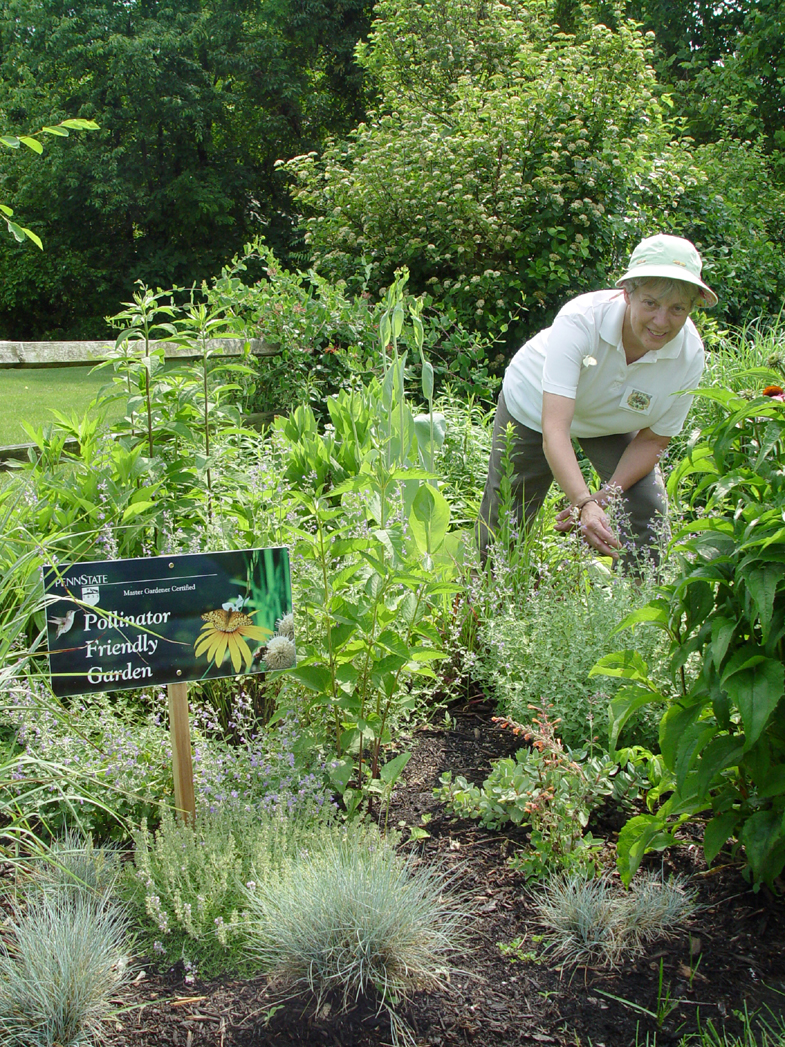
Maryann Skubecz in her Pollinator Friendly Garden.

   That’s a recipe of death for a lot of plants, but Mary sidestepped carnage by gravitating to damp shade plants such as great blue lobelia, sedges, turtlehead, yellow-flag iris, buttonbush and winterberry holly.

   On the other hand, Evan Jenkins’ front-yard garden in Hampden Twp. is bone dry from the roots of a big shade tree.

   Mary’s plants would struggle there, but Evan knew he’d have much better odds by going with Russian cypress, liriope and barrenwort.

   Both Evan and Maryann Skubecz of Hampden Twp. have yards that are certified under the new Master Gardener program “Pollinator Friendly Gardens.”

   These are gardens designed to be helpful instead of deadly to bee and pollinating insects (no insecticides, plenty of nectar and pollen plants, one or more water sources and effort to eliminate non-native invasive plants).

   If you’re interested in more about that program and protecting pollinators in general, my Patriot-News garden column coming up on June 30 will focus on this topic. In the meantime, visit online at http://ento.psu.edu/pollinators/public-outreach/cert.

   The last Master Gardener garden I saw was Henry Line’s yard near the West Shore Country Club.

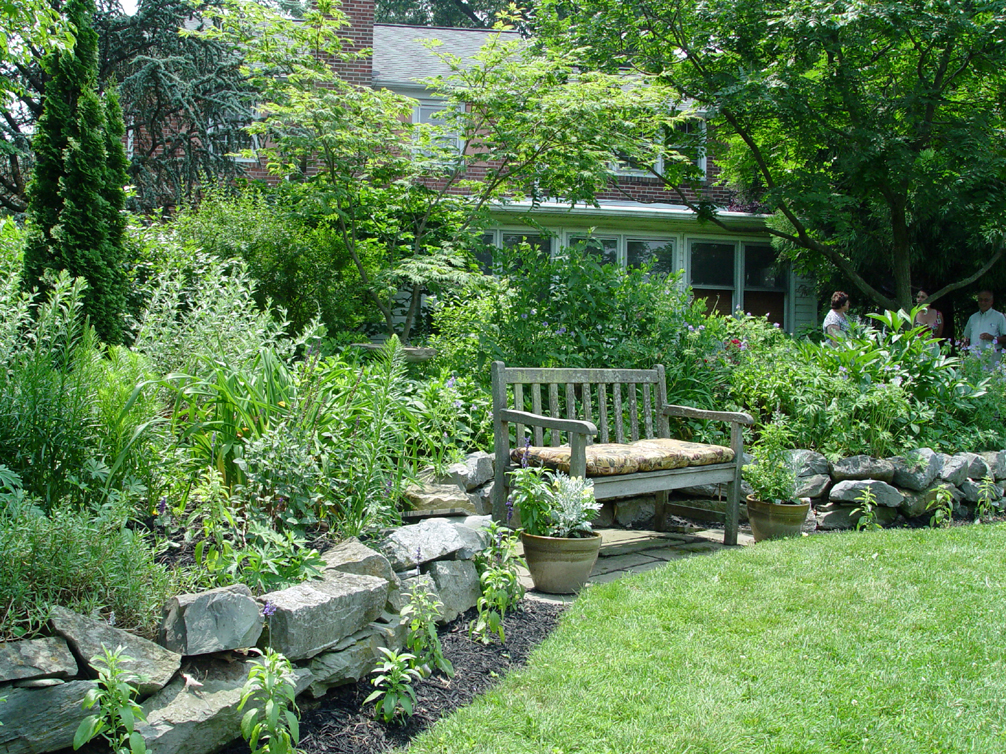
Henry Line's bench cutout.

   This yard reminded me most of my own yard — lawn paths through a network of curved garden beds filled with a gazillion or so different plants.

   I especially liked the cutout Henry made for a bench in the middle of the side yard by installing a stone wall and raising the beds behind it.

   Some cool stuff is growing in this garden — a dwarf cryptomeria, a katsura tree, a ‘Bracken’s Brown Beauty’ magnolia, an American fringe tree, a fruiting fig and much more.

   It was sure a lot more interesting than a half-acre of grass with five azaleas and a maple tree.

   Henry says he believes grass is good for getting from one place in the yard to another and that’s about it.

   “Grass is the biggest weed in central Pennsylvania,” he says.

   Now there’s a kindred spirit…


George’s Not-Favorites

June 7th, 2011

   I spend a lot of time telling people about all of the great plants worth trying – especially the new ones.

   What also might help in your own home-landscape plant-selecting is a list of plants I’m not too wild about.

   These are ones I’ve personally killed or know have significant drawbacks. They’re ones that other people tend to complain about when I’m out doing my Garden House-Calls home consults. Or they’re ones I just don’t like.

   Your crap list is no doubt different than mine, but for what it’s worth, here are 10 of my non-favorites (along with somewhat-similar and better alternatives):

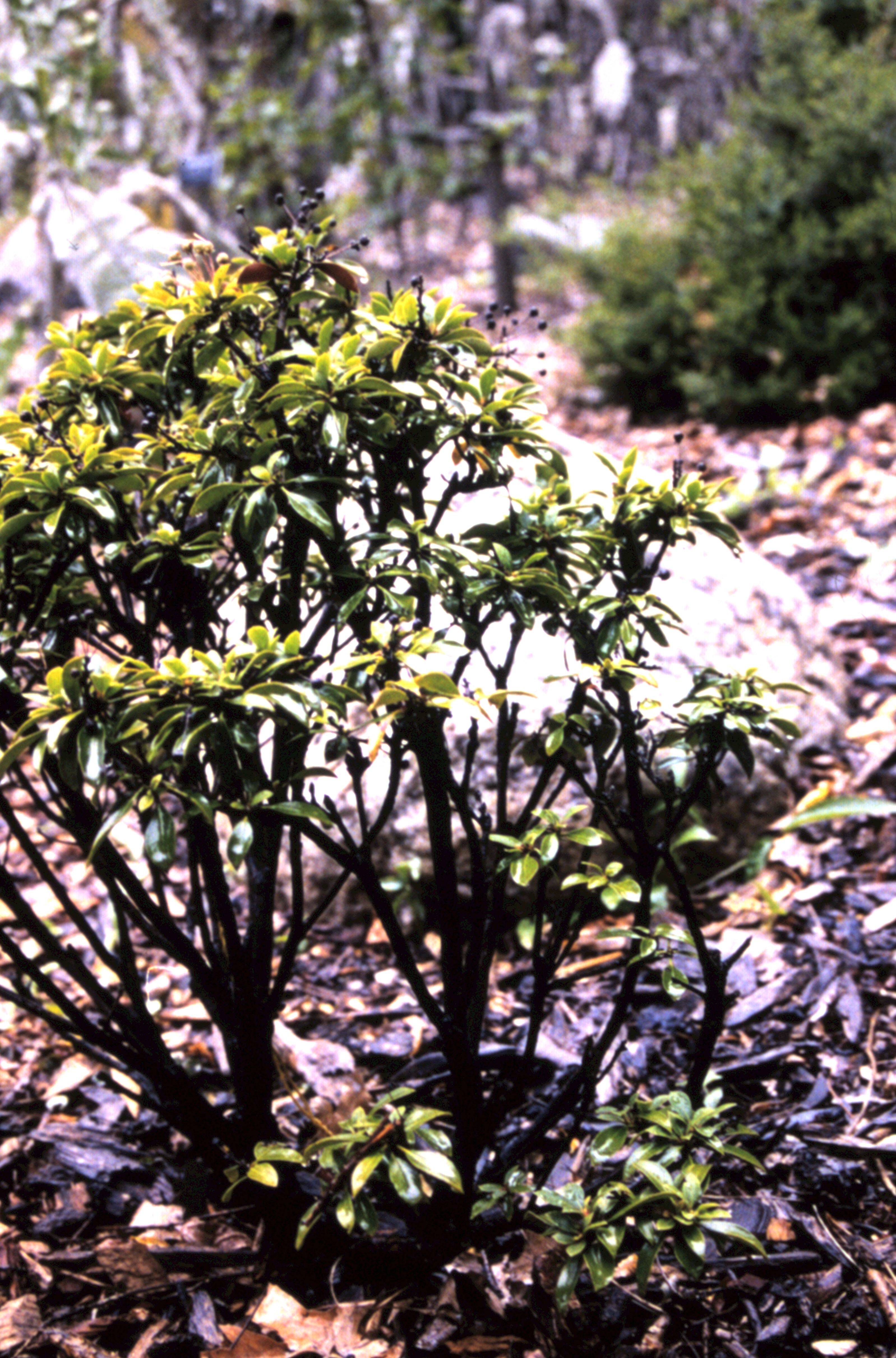
A landscape mountain laurel in a death spiral.

   Forsythia. A two-week wonder that looks like a big shrubby weed the rest of the year. It’s been on my enemy list since I hurt my back trying to dig one out. (Alternatives: fothergilla, witch hazel, winterhazel.)

   Mountain laurel. You’d think our state flower would do a better job of surviving. Hardly anyone around here has a healthy one in the landscape (doesn’t transplant well, hates clay, suffers root rot, resents heavy mulch). I’ve killed every one I’ve tried to grow. (Alternative: cherry laurel.)

   Morning glory. A beautiful annual vine, especially the blue ones. But then it drops seed and comes back everywhere forever, including the nearby lawn. (Alternative: purple hyacinth bean.)

   Yew. Way over-used. I’ve seen so many boxed-off or balled that I can’t erase the images of butchery. People with deer problems complain this is a top target. (Alternative: naturally pruned Japanese plum yew, Russian cypress.)

   Azalea. Another two-week wonder that also has a high death rate if not given good drainage. Some people manage to get these to live a long-time with little care, but I also see a ton of really bad ones that have been butchered, discolored by lacebug attack or barely hanging on to dear life in clay. (Alternative: boxwood as an evergreen, hydrangea as a shady flowering substitute.)

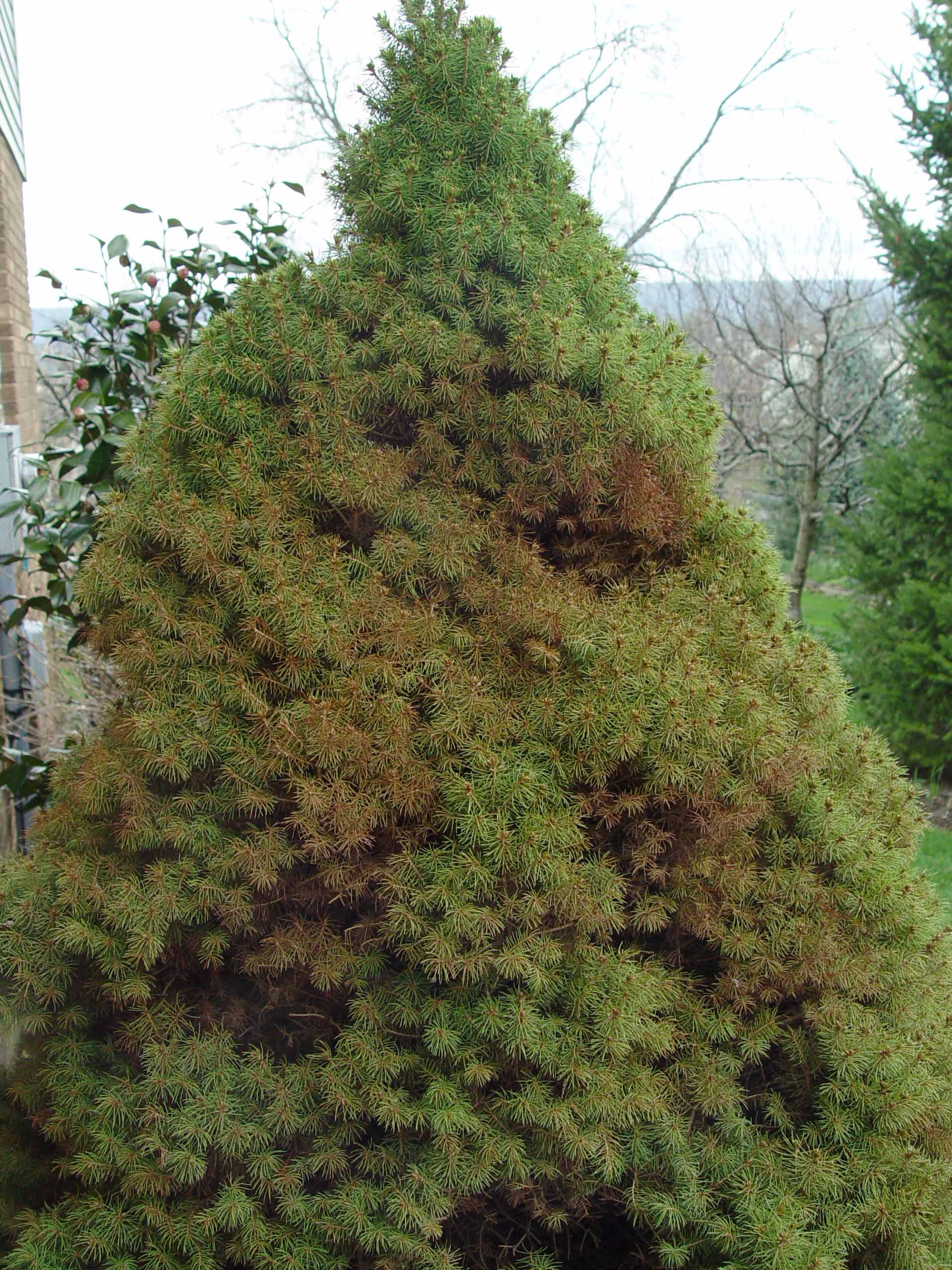
A dwarf Alberta spruce with typical spider-mite damage.

   Dwarf Alberta spruce. Handsome, slow-growing and neat at first, these almost always get attacked eventually by spider mites, which cause brown patchiness and often death. (Alternative: dwarf Hinoki cypress.)

   Barberry. Hard to kill (which is why you see so many in McDonald’s parking lots and in builder-installed landscapes), but many of them seed into the wild and choke out native vegetation. Their thorns are deadly at pruning time. (Alternative: ‘Knock Out’ roses if you don’t mind thorns, St. Johnswort if you do.)

   Rose-of-sharon. Also hard to kill, this summer-blooming shrub is showy but grows too big and too fast for most yards. Then it seeds to the point of being weedy in some yards. (Alternatives: viburnum, ninebark, tree-type hydrangeas.)

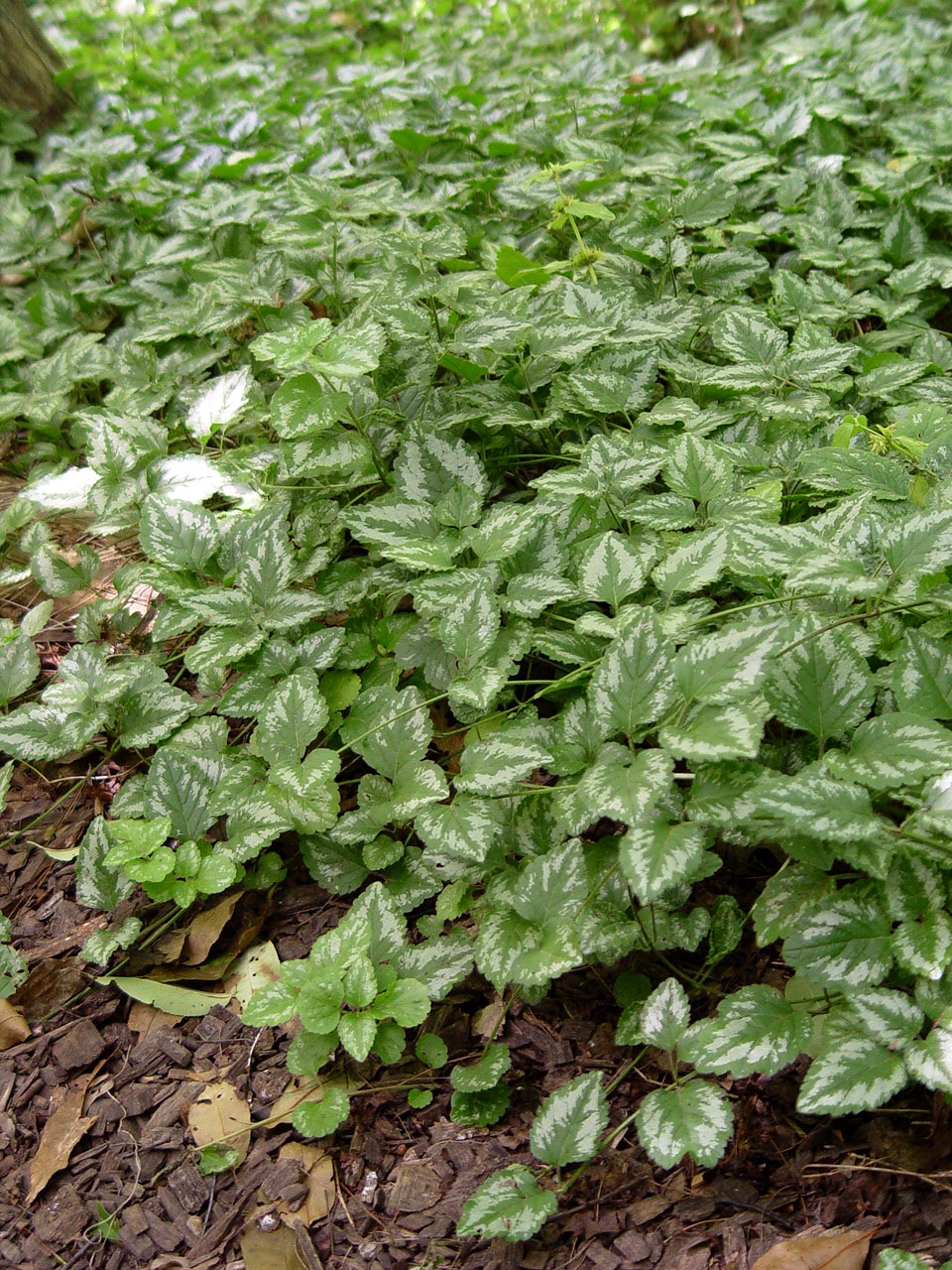
   Yellow archangel (Lamiastrum). Not to be confused with lamium, this variegated groundcover doesn’t play well with any neighbor. It’s useful all by itself to colonize a shady, rocky bank, but woe to the gardener who plants it in a perennial garden. (Alternative: lamium, foamflowers, foamybells.)

Yellow archangel... pretty by itself, invasive around neighbors.

   Burning bush. People love the red fall color, but the leaves often blow off 2 days after they finally turn. Otherwise, these create lots of pruning work, are bare or plain green 360 days of the year, and seed into the wild (and nearby). (Alternative: blueberries, Virginia sweetspire.)

   Bonus enemy: Ribbon grass. This variegated grass looks great in a pot or in that little clump the neighbor offers. But once in the ground, runners run everywhere and soon pop up where you don’t want it. Like yellow archangel, isolate it if you use it… and not in full sun. (Alternative: switchgrass, prairie dropseed, Pennsylvania sedgegrass.)


Wind-Battered Gardens

May 30th, 2011

   Extreme weather gave us another punch this past week – this time near-hurricane winds with a selection of tornado touchdowns.

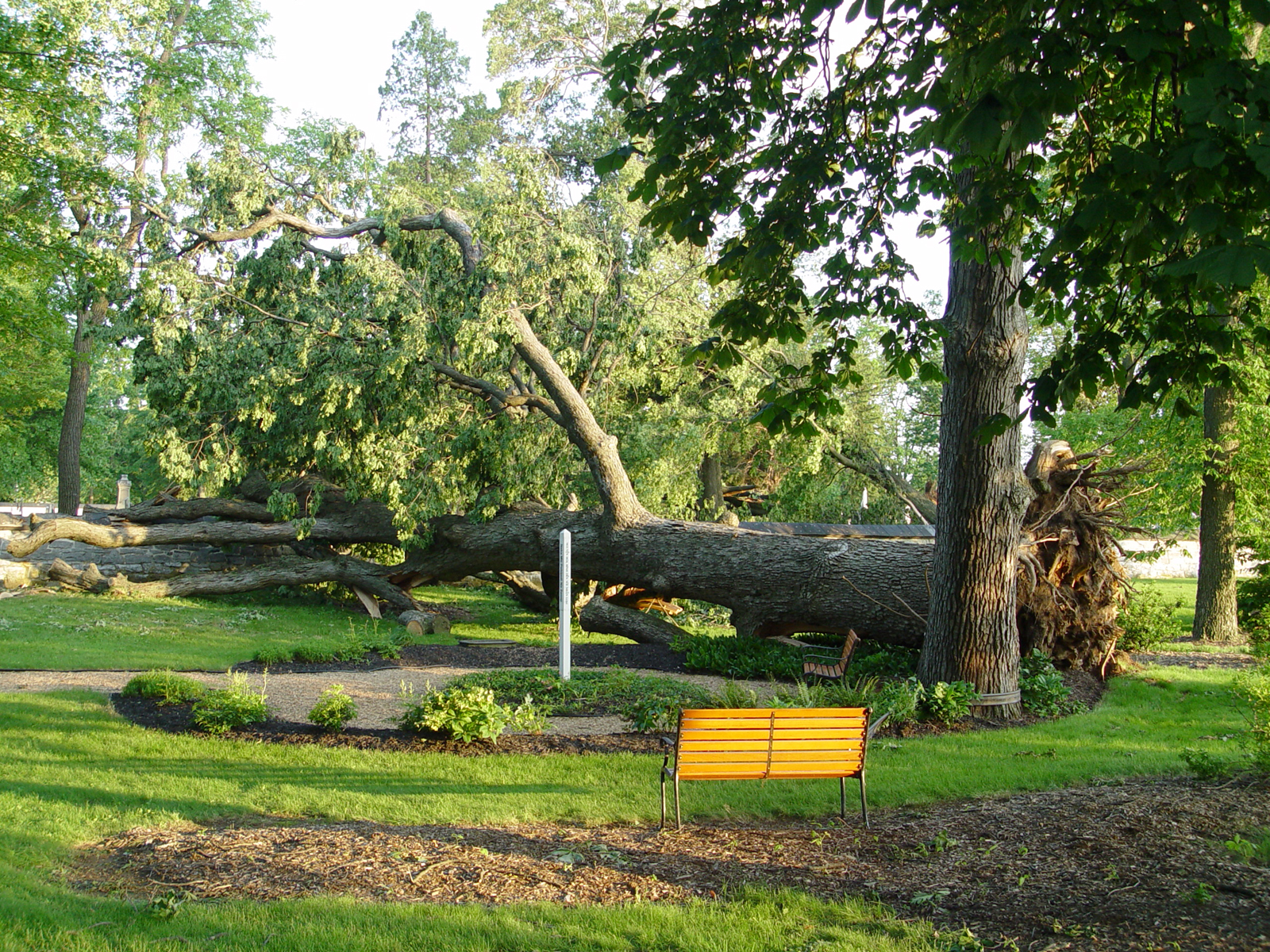
One of the many big trees that blew over at Silver Spring Presbyterian Church.

   Here’s hoping you’re not one of those who had cars flattened, roofs blown off or worse.

   This was the scariest storm I’ve ever seen.

   I live in Cumberland County, not far from where some of the worst damage happened. The skies got eerily dark, wind was blowing trees sideways, and updrafts were picking up objects and tossing them down streets. It looked tornado-ish.

   The Silver Spring Presbyterian Church grounds along Silver Spring Road took some of the most brutal beating when a tornado apparently did touch down.

   Towering, centuries-old oaks were knocked over like giant dominoes. One broke apart a section of cemetery wall as it fell, and a couple of others landed on a power line, snapping off the two poles on either end like mere toothpicks.

   Most of the time, when electricity goes out in a storm like this (which it did over a wide area), it’s because trees topple onto power lines.

   The trend toward buried lines cuts down on this problem. But in areas where lines are above ground, it’s so important to avoid planting trees under or near them.

   This is why utility companies spend much time and money going around pruning (butchering is often a better description) street trees that pose blow-down and limb-drop threats to power lines.

   In the landscape, this storm was bad enough to cause lots of plant damage.

   Broken tree limbs were a big one. Make clean cuts back to joints (i.e. no stubs) where branches got ripped off.

   Don’t go up on a ladder with a chainsaw. If you can’t reach limbs from the ground, hire a pro.

   That’s what I’m going to do to clean up a few oak limbs that are broken high up. Tree companies have younger folks who have the training and safety equipment.

   I was able to prune off several lower limbs, including a wrist-sized dogwood branch that was twisted and mangled as if the swirling wind gave it a wrestler’s full nelson. Never saw that kind of break…

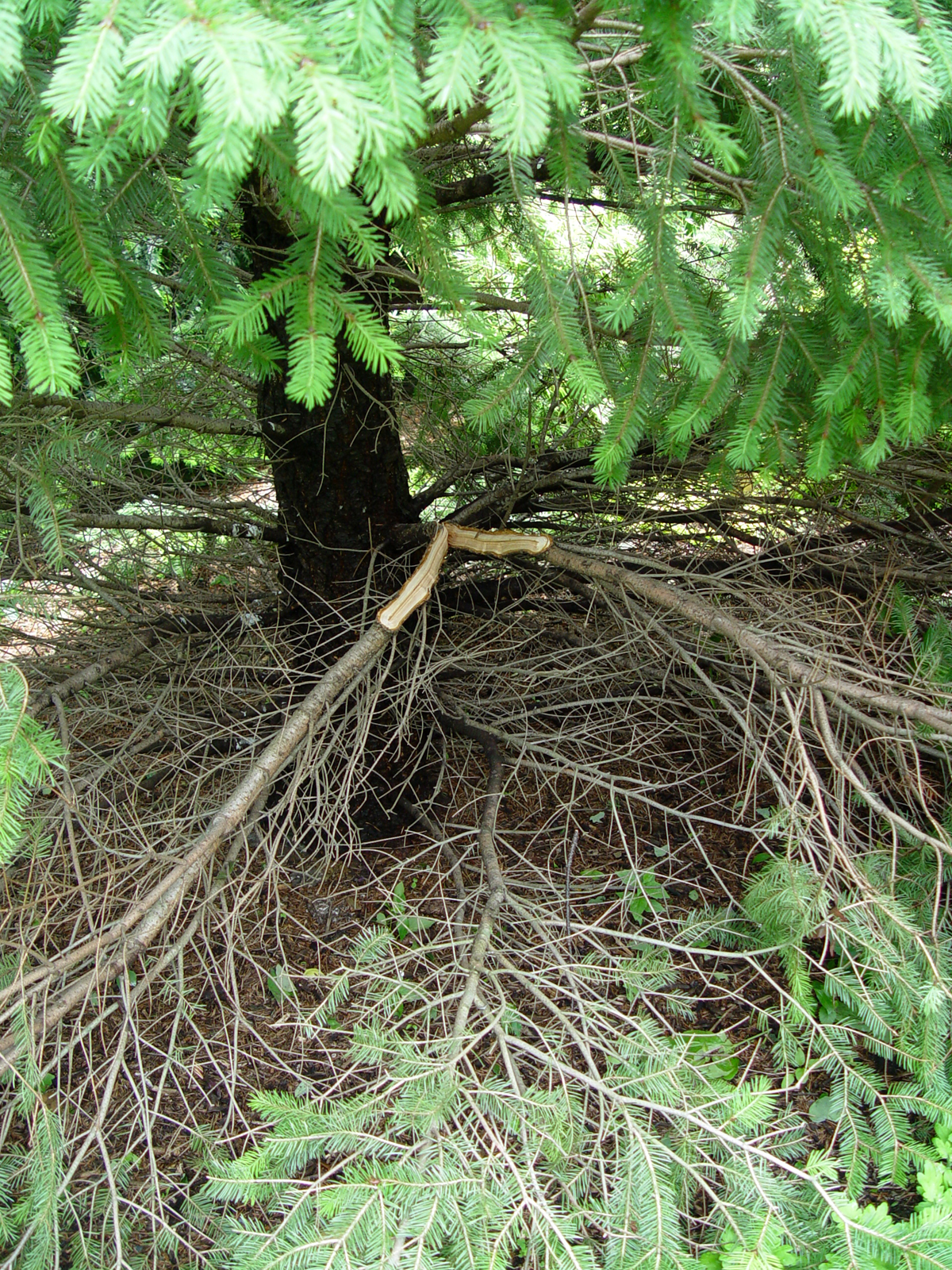
A split like this may be salvageable by bolting the pieces back together.

   Branches that are split apart might be able to be salvaged.

   On my Douglas fir, the wind took a branch 2 feet high and split it at a joint. If I pruned it off back to the trunk, it would’ve left a pretty noticeable gaping hole in this 20-foot beauty.

   So I drilled holes and bolted the split parts back together. With any luck, the wood will fuse together, and the branch will be saved.

   The key to this kind of repair is getting to it as soon as possible. Once wood starts to dry and callous, it’s much less likely to grow back together.

   The violent winds gusted enough to snap even a lot of shrub branches. That hardly ever happens because shrub branches are generally shorter, more compact and have smaller leaves than most trees (less of a “sail effect”). They’re also lower to the ground.

   In my yard, I had snapped branches on roses, elderberry and hydrangea.

   Tall perennials such as lilies, yarrow and centaurea got blown over, and vines such as clematis and honeysuckle got blown off of trellises. Even my ‘Moonlight’ Japanese hydrangea vine – with its tightly grabbing tentacles – got torn off a brick wall.

   If you’ve got any of that damage, here’s what to do:

  • Gently straighten and tamp leaning plants so they’re upright and re-secured. You may need to add stakes to some of them.
  • For bent and snapped shrub branches, there’s not much you can do to salvage them. You’ll just have to prune off the damage back to the next intact joint and wait for new growth to improve mangled looks.
  • For vines, carefully secure them back to trellises. If you can’t wrap them without doing damage, it’s better to use a soft tie to pull them back up. For sucking vines, either prune off any “hangers” or use twisty ties to pull them up and give them a chance to re-sucker. You may need to drill holes to add wall support for the ties, which is why I just decided to prune off the sections of my hydrangea vine that got blown off.
  • And above all, call a tree company immediately if you’ve got leaning trees or have large hanging branches that could still fall on people, pets, cars or structures. Branches left dangling are going to fall off at some point.


« Older Ramblings and Readlings Newer Ramblings and Readlings »

  • Home
  • Garden House-Calls
  • George's Talks & Trips
  • Disclosure

© 2026 George Weigel | Site designed and programmed by Pittsburgh Web Developer Andy Weigel using WordPress