
• Home
  • Contact
  • Site Map
George Weigel - Central PA Gardening
  • Landscape 1
  • Landscape 2
  • Landscape 3
  • Landscape 4
  • Garden Drawings
  • Talks & Trips
  • Patriot-News/Pennlive Posts
  • Buy Helpful Info

Navigation

  • Storage Shed (Useful Past Columns)
  • About George
  • Sign Up for George's Free E-Column
  • Plant Profiles
  • Timely Tips
  • George’s Handy Lists
  • George's Friends
  • Photo Galleries
  • Links and Resources
  • Support George’s Efforts


George’s new “50 American Public Gardens You Really Ought to See” e-book steers you to the top gardens to add to your bucket list.

Read More | Order Now


George’s “Survivor Plant List” is a 19-page booklet detailing hundreds of the toughest and highest-performing plants.

Click Here


Has the info here been useful? Support George’s efforts by clicking below.


Looking for other ways to support George?

Click Here

George's Current Ramblings and Readlings

Next Year’s Plants

September 6th, 2011

   Growers gave us garden writers a sneak peek at some of the new plants coming out next year at the recent annual Garden Writers Association conference.

   Five in particular caught my eye…

   ‘Mighty ‘Mato.’You’re going to hear a lot about grafted tomatoes and probably this brand of them next spring.
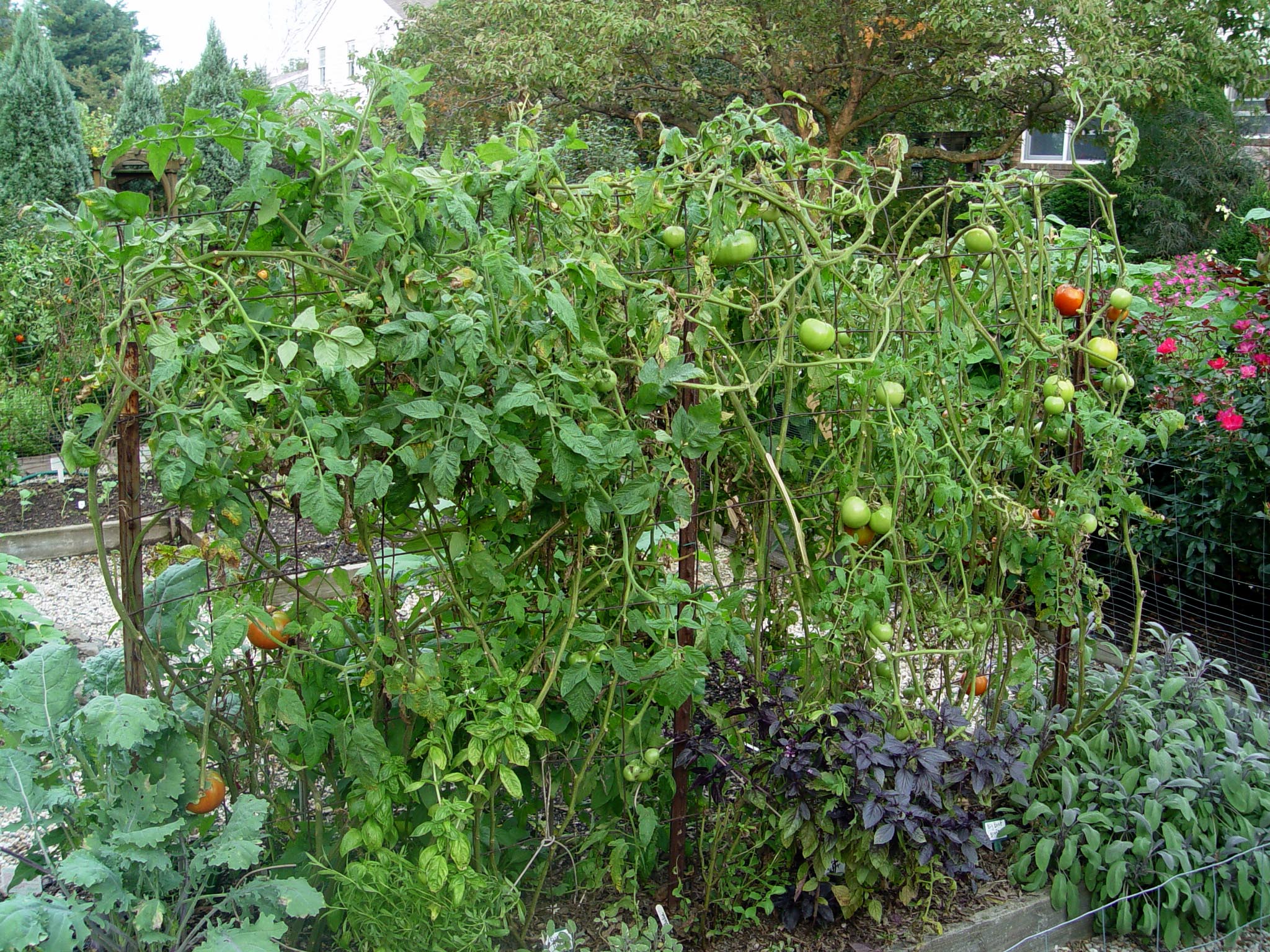
Two of these tomatoes are grafted, two are not. Can you tell the difference?

   Grafted tomatoes are similar to grafted fruits in that a durable root is attached to a tasty top. The result is supposed to be a plant that’s more resistant to disease and with higher yields.

   The first few came out this year, primarily in catalogs and on-line. I’m trying two varieties in comparison to the same non-grafted varieties in my garden, and while the results aren’t quite miraculous, the improvement is noticeable.

   Local garden centers are likely to start carrying grafted tomatoes next spring. Oregon-based Territorial Seed (www.territorialseed.com), where I got my test grafted tomatoes, plans to sell 15 varieties of them next year.

   I talked to John Bagnasco, host of the California radio show Garden Life, about ‘Mighty ‘Matos,’ and he’s so sold on the concept that he joined with an Oregon grower to sell a new line of “Super Naturals Grafted Vegetables” (including ‘Mighty ‘Mato.’)

   Grafting not only works for tomatoes but also for eggplants, peppers and others. So if interest goes as well as I think it will for ‘Mighty ‘Mato,’ get ready for all sorts of grafted offerings in the coming years.

   “People are saying they could never grow tomatoes, and now they’re getting a good crop,” Bagnasco says. “We’re hearing people say they’re getting double and triple the yield.”

   I also like Mighty ‘Mato’s promo line: “Leaps tall cages in a single season!”

   Hardy colocasia. This is the plant with the huge leaves that most people call “elephant ears” and sometimes “taro” when it’s grown as a water-garden plant.

   Either way, colocasia has always been a tender plant that we either have to take inside to overwinter or buy new each spring. Until now.

   Plants Nouveau is introducing three new colocasias next year that are cold-hardy down to Zone 6, which is us.

   Colocasia ‘Bikini-tini’ is a 5- to 6-foot-tall, green/blue-leaf type with nearly black stems and leaf veins. The leaves face upward and cup, so they catch water in rain. Kids will like dumping them.

   Colocasia ‘Madeira’ is a more compact variety at about 3 feet tall with velvety and nearly black leaves.

   And colocasia ‘Sangria’ is a 4- to 6-footer with green leaves and pinkish-red stems.

   It’ll be interesting to see if we can grow these tropical-looking plants year after year with no more care than hostas.

   Rudbeckia ‘Little Goldstar.’ Almost everybody who grows black-eyed susans is using the ‘Goldsturm’ variety, but I’ve seen a fair amount of two problems. One is that it gets a leaf-spot disease. The other is that it flops whenever a strong wind comes along.

   ‘Little Goldstar’ is a new, dwarf black-eyed susan. It grows to only 14 inches tall – about half the size of ‘Goldsturm.’

   I don’t know yet about the disease-resistance, but this compact size and heavy bloom is a nice improvement. If you can’t find it at your favorite garden center, it’ll sell online at www.greatgardenplants.com.
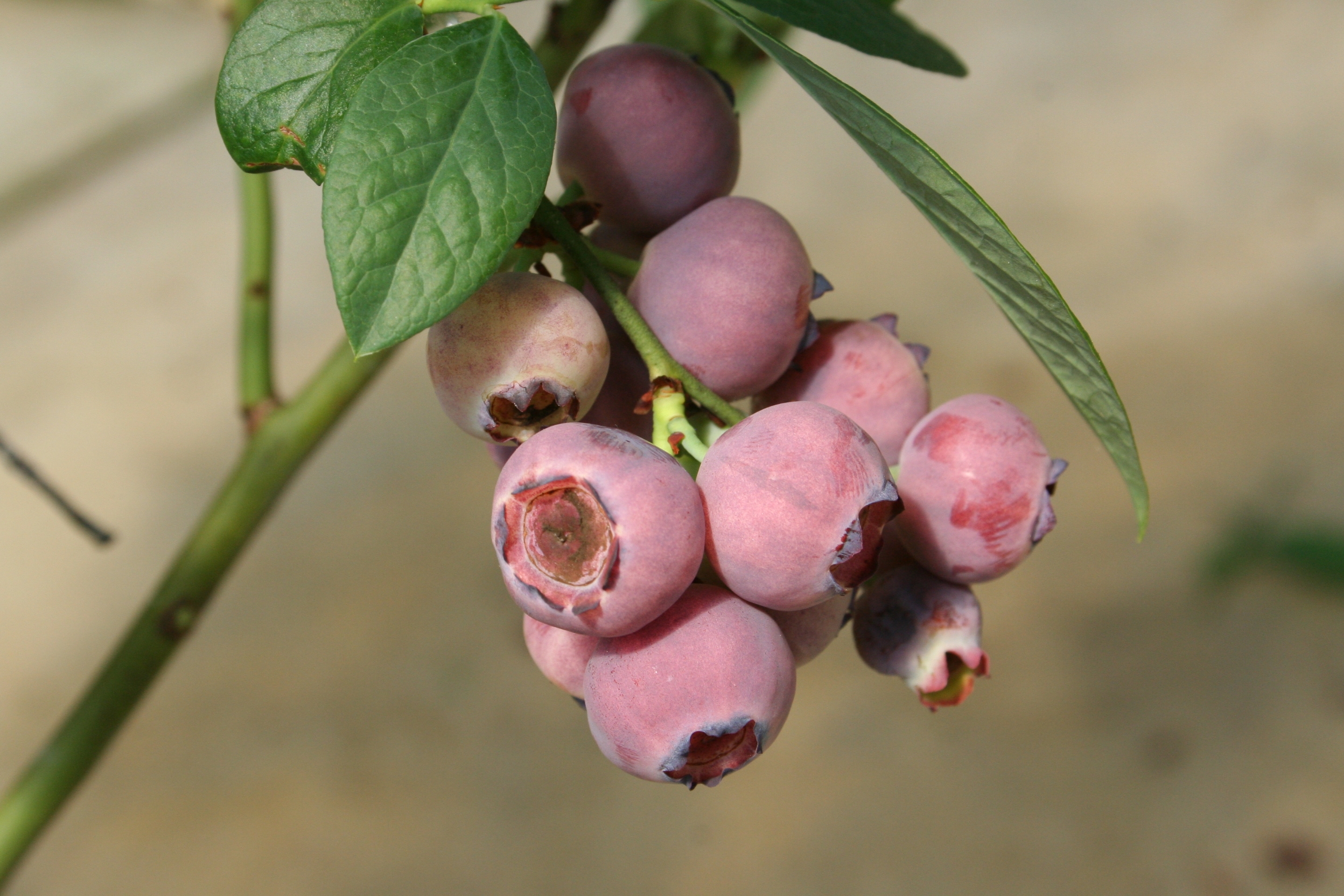
Blueberry 'Pink Champagne' from Briggs Nursery.

   A frosted pink blueberry. This spring brought us the debut of the pink blueberry in ‘Pink Lemonade’ and ‘Pink-a-Blu.’ Now comes a plant that fruits in a beautiful (and tasty) frosty pink.

   ‘Pink Champagne’ is Briggs Nursery’s new intro for 2012, and it’s similar to ‘Pink Lemonade’ in size and ripening, only the color is a soft, silvery-tinged pink.

   It’s also a zone hardier than ‘Pink Lemonade,’ although both are well within in our growing range.

   ‘Storybook’ roses. The fifth cool new plant that impressed me was this new series of compact roses. It’s actually a new category of roses – somewhere between a ‘Knock-Out’ type shrub rose and a miniature.

   The plants are almost half the size of ‘Knock Outs’ (about 2 feet), and they have a shrubby habit and long bloom time.

   Each of the varieties is named after a book.

   ‘Moby Dick’ is white with a yellow center. ‘Showboat’ has double petals of coral-orange. ‘Little Women’ is pale pink, and ‘Sundance Kid’ has coral buds that open to yellow flowers.
Stink bugs, killer iron and fertilizing with food

August 30th, 2011

    I’m just back from the annual Garden Writers Association conference in Indianapolis, where we plant-communicating geeks got a sneak peek at some of the new gardening stuff just hitting the market.

Three interesting new products and five cool new plants particularly caught my eye. Let’s do the products this week and the plants in next week’s post…

Stink bug traps

Now that stink bugs are ballooning into both an indoor and outdoor problem of plague proportions, everyone’s racing to come up with solutions.

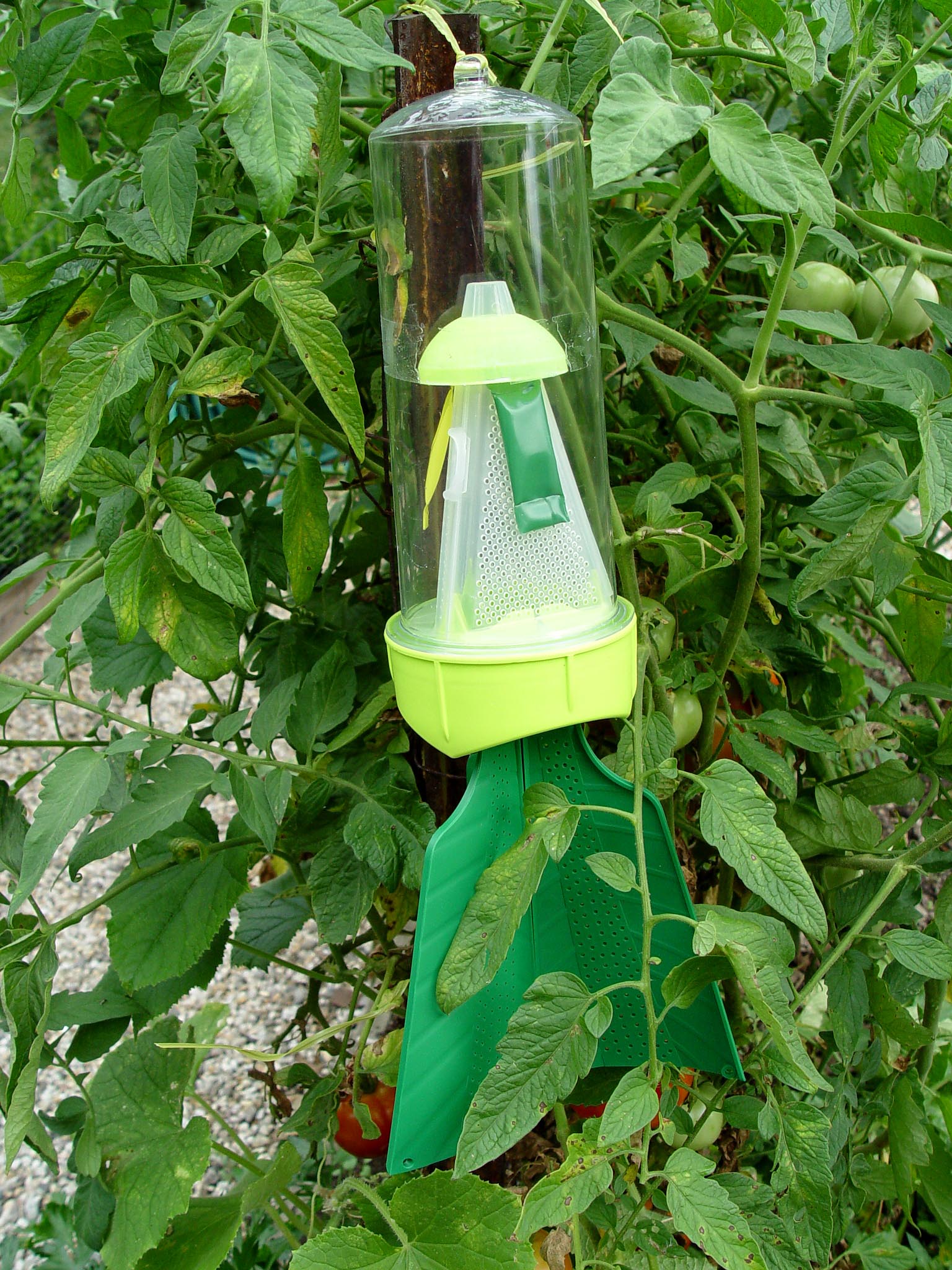
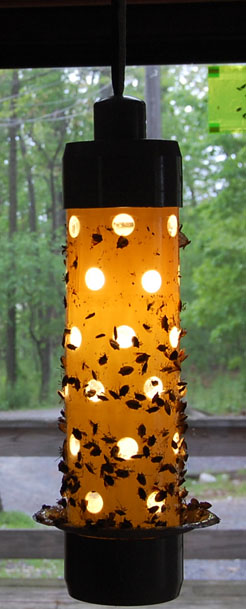
Rescue Stink Bug Trap hanging in my garden.

First out of the gate is Sterling International’s Rescue-brand Stink Bug Trap, which you already may have seen selling for $20 at garden centers and box stores.

This elongated plastic dome with fins uses hormones to attract stink bugs outside, then has a light attachment (sold separately for another $18) that converts the trap into an indoor one.

They’re apparently flying out of stores but getting mixed reviews.

Sterling’s Stephanie Cates said they’re best placed near stink-bug-favorite plants outside (tomatoes, beans and fruits especially) and then moved to about 10 or 15 away from the house in mid to late September when the stinky armored pests try to find warm shelter for winter.

“Then you want to intercept them,” she said.

To catch stink bugs that get inside anyway, attach the light and move the trap inside.

“Definitely use one in the attic,” said Cates. “What you see in the living space is only a fraction of what you have in the attic.”

The other new stink-bug product I saw in Indy was St. Gabriel Organics new Stink Bug Killer. This is a liquid that you spray on stink bugs, and it’s kind of a “killer perfume.”

The ingredients are all natural – wintergreen, rosemary, thyme and cinnamon oils. It actually smells fairly nice.

St. Gabriel’s Alex Reuter says this mix of oils not only kills a doused stink bug in about a minute, it covers up their stinky smell.

The product just started showing up at some Agways and Ace and True Value Hardwares for around $16 for a 24-ounce, ready-to-spray bottle.

The Strube Stink Bug Trap.

I’ll be writing lots more about stink bugs, but in the meantime, below are three more stink-bug weapons I’ve run across. I’d be interested in hearing how any of these are working for you. Email me at george@georgeweigel.net. The others:

  • Andy Strube of Columbia, Lancaster County, invented an indoor trap with scent attractants, a light and “gooey glue.” It’s $55 online (replacement cartridges extra). Check it out at www.stinkbugtrapsonline.com.
  • The nth Solution, based in Exton, Pa., is introducing a different design using a light and a “secret sauce” as attractants. It’s also intended for inside use and will sell for $35. More info: www.indoorstinkbugtrap.com.
  • And a fellow named Julian Smith from western Pa. is sharing his design of an indoor stink-bug trap made from a cut-up soda bottle and a cheap battery-operated light from the home center. See his how-to video at www.youtube.com/watch?v=VwUuHhWYvDA.

An iron-clad weed-killer

If this product works, it’ll solve the dilemma of how to kill lawn weeds without poisoning your pets and kids.

A German-based company named Neudorff USA is introducing a liquid form of chelated iron that apparently has the ability to kill at least 20 kinds of common broad-leaf lawn weeds (dandelions, plantain, oxalis, chickweed, creeping speedwell, etc.) without harming the grass.

The claim is that it overloads broad-leaf plants with iron, blackens them within hours from lack of oxygen, and kills the roots. Grass is less iron-sensitive and actually greens up a bit in most cases.

“Grass blades are able to slough it off,” says Neudorff’s Jeremy Van Oort.

It must work well enough because both the Scotts Co. and Bayer are introducing lines of this new, mineral-based way to kill weeds.

The label says it’s OK for people and pets to walk on as soon as the spray dries.

Scotts is producing ready-to-spray versions under its Ortho Elementals and Whitney Farms labels, while Bayer’s product is concentrated and being sold under the Natria Lawn Weed Control label.

Food as fertilizer

A Pompano Beach, Fla., company is debuting a new liquid fertilizer called Soil Gourmet.

What I liked about this one is that Organic Dynamics is making the product out of food waste from the surrounding area.

Rather than things people didn’t eat, it’s fresh food that otherwise gets landfilled in the food-making process. This includes things like carrot peelings and lettuce stems cut off in making bagged salad mixes and the boxes of imperfect strawberries that get rejected at the supermarket loading dock.

The Soil Gourmet folks say their plant has the capacity to redirect 60 million pounds of this kind of food waste per year away from landfills and into bottles that people can use to fertilize plants.

Six different variations are to start showing up in stores by next summer at $8 to $10 per quart concentrate (enough for 8 gallons of finished fertilizer). Or you can order directly at www.soilgourmet.com.


Longwood Backstage

August 23rd, 2011

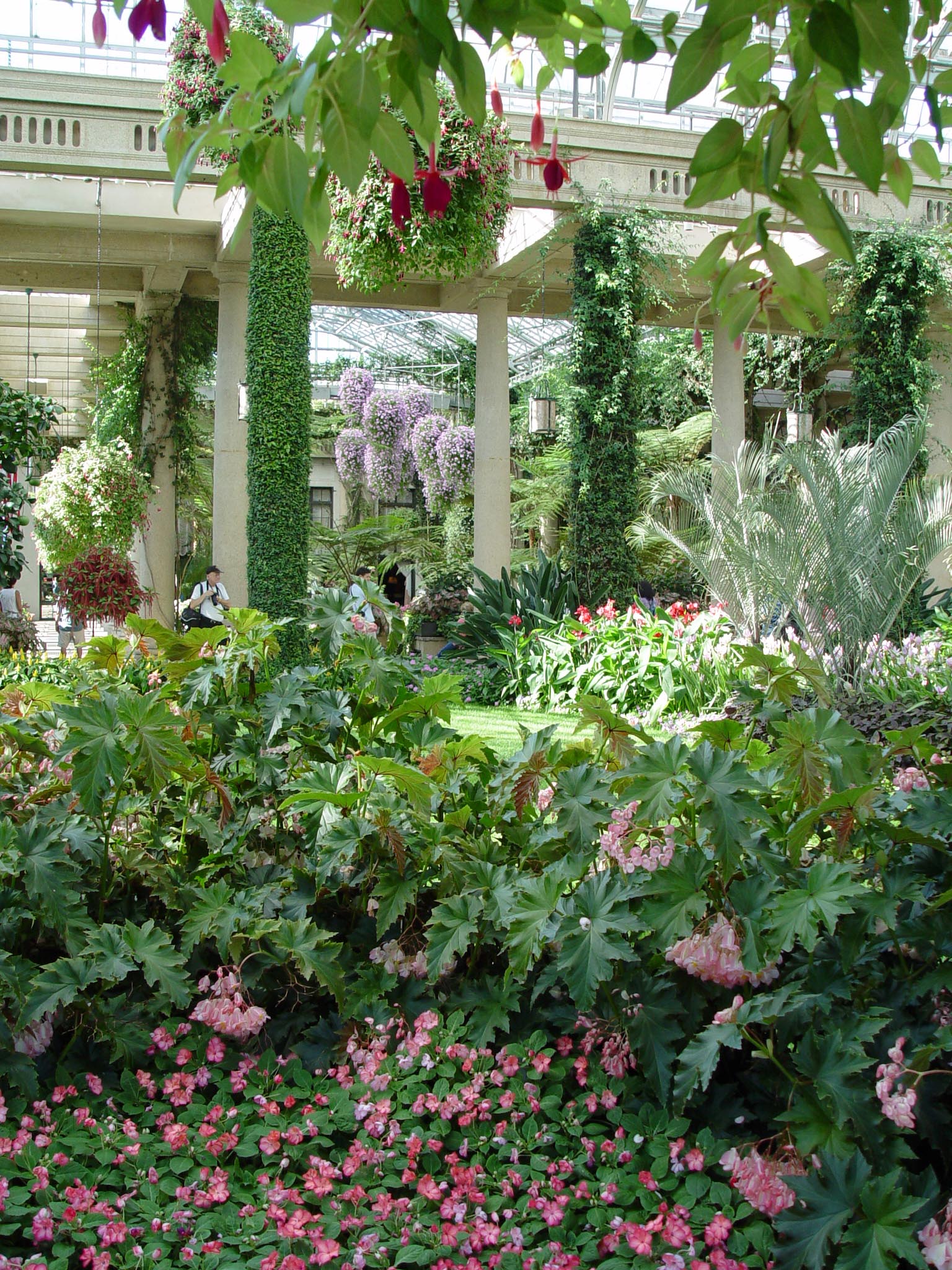
Plants seem to grow beautifully, effortlessly and trouble-free all throughout Longwood Gardens’ 1,077 acres in Chester County.

This is NOT easy, even for Longwood Gardens staff.

Don’t be fooled.

Plenty of behind-the-scenes, basic, down-and-dirty manpower goes into the jaw-dropping show we all see.

Longwood staff gave a sneak peak at some of it during my latest trip in this year’s Lowee’s Group Tours garden series.

The most fascinating part to me was how Longwood grows and readies the more than 11,000 different types of plants it displays.

About 65 percent of the plants you see in the gardens are grown on site. That amounts to a staggering 80,000 pots per year.

Unlike a grower for the retail market, Longwood grows relatively small quantities of a whole lot of species.

Many of these are unusual species that you won’t even find on the market. Some are ones Longwood explorers (and others) brought back from plant-hunting expeditions.

Others are common species that Longwood grows in crazy ways – like lantanas grown as mini-trees and trailing mums formed into giant hanging balls or trained up conservatory columns.

Longwood's back-stage production greenhouses.

Most of these horticultural gymnastics happen either in one of Longwood’s nine state-of-the-art production greenhouses or in its nearby back-stage nursery.

“Sometimes plants spend more time in the greenhouse than on display,” our guide, John, told us. “Sometimes it takes a few years to get them the size and shape we want.”

Once ready, some of the plants end up as long-term specimens, going for years on display. But a majority is rotated in and out of display with most of those ending up in Longwood’s rather hefty compost yard.

Lilies, for example, peak for only about 2 weeks, so they’re yanked and replaced about as fast as anything.

The thousands and thousands of annuals grown every summer in Longwood’s 600-foot-long Flower Garden Walk all get yanked and composted at season’s end. That’s when the following year’s spring bulbs go in, which, in turn, all get composted, too, when they’re done blooming to make way for the next display of annuals.

I was surprised to learn that Longwood generally doesn’t give away yanked plants or even prunings, for that matter, to staff, volunteers or anyone else.

For one thing, the gardens can use all of the compost material they can get because it all goes back on the acres and acres of garden beds.

For another, previous give-aways apparently got to be a headache with assorted people jockeying to get the same things. I can just imagine.

Longwood’s growers generally grow more of everything than they think they’re going to need because they know – like all gardeners – that a lot of unexpected things go wrong.

And even at Longwood, plant failures happen; bugs and diseases show up, and specimens get stomped or destroyed by one of its most troublesome animal pests, a smart-phone-toting species known as Visitorius longwoodii.

That’s not that big of a deal when a few salvias get smashed. But what happens when a storm rips the branches off of a specimen conifer or a sudden disease takes out a topiary?

John and some of Longwood's backup specimens.

“We pretty much have a backup for all the specimens,” John told us.

The only other place I’ve seen that was at Walt Disney World, where the back-stage nursery held a mirror collection of all the major plants throughout the theme parks.

Longwood’s production greenhouses are a pretty cool place. They’re equipped with all sorts of tricks of the trade and high-tech gizmos:

* Computers custom-mist and water each group of plants based on light and temperature readings.

* Growers can dial up any blend of seven different potting-mix ingredients for an on-demand product that’s perfect for every plant’s needs.

* A large cooling room chills bulbs and is used to slow flowers that are getting along faster than intended.

* Rubber tubing under the growing benches can be heated to give each plant the optimal soil temperature its roots prefer.

* Black shade cloths automatically roll out over the poinsettia house to make sure the plants get the 14 hours of uninterrupted darkness they need to color up.

* Even the plant labels are pretty impressive. They not only list the exact genus, species and cultivar of each plant, they tell where the plant is to be displayed, when it was started, when it needs to be ready and how many of them are needed.

One last thing I found interesting… how all of the work in a 1,077-acre garden gets done.

Longwood has about 400 paid staff, but that includes administration, gift shop, restaurant, maintenance and research in addition to the growers and gardeners.

The only way the plants manage to look as good as they do is because of the supplemental staff of some 800 volunteers. What usually happens is that a gardener gets a volunteer or two or three to form a lot of mini-teams that focus on whatever jobs need to be done that day in each area.

Now not all of those 800 put in a lot of time, but when you add it all up, Longwood estimates its volunteer workforce accounts for 30,000 hours of manpower per year.

I could use a little of that in my garden…

p.s. Longwood’s web site has a neat feature that lets you search out any of the plants in its ridiculously humongous collection. You can search for specific plants by name, characteristic or location, you can search out a particular statue, fountain or feature, and you can see what’s in bloom when.

To play around with that feature, go to http://plantexplorer.longwoodgardens.org/ecmweb/ECM_Home.html.

p.p.s. If you want to go on my next garden trip, it’s a day-tripper on Fri., Sept. 16, to see three of New Jersey’s best public gardens – the New Jersey Botanical Garden in Ringwood (a.k.a. “Skylands”), the 127-acre Frelinghuysen Arboretum near Morristown, and the 50 acres of trial gardens and specimen plants at Rutgers University in New Brunswick.

The cost is $129, including lunch and admissions. To sign up, call Lowee’s at 717-657-9658 or email CKelly@lowees.com.


Criminal-Catching Landscape

August 16th, 2011

Here’s one more reason to invest in a plant-filled landscape – catching crooks.

Entrance to the rat's maze if you're a drunken burglar.

That’s what my well-endowed back yard did last week.

While we were in Pittsburgh (visiting our son, daughter-in-law and four granddogs), a drunken miscreant tried to break into one of our neighbor’s houses.

Another neighbor was walking her dog around 2 a.m. and saw this guy trying to force open the front door of the house three doors down.

She called the police, and when they got there, the guy bolted into our back yard in an attempt to get away.

Bad choice.

For one thing, a combination of neighbor’s fences and evergreen screen plantings pretty much enclose the back borders.

For another, my back yard is a network of winding paths and garden beds instead of the more familiar sea of grass with a few burning bushes around the edges.

Apparently, the drunken fellow got in there and got disoriented.

He was trapped like a rat in a maze.

Or if you don’t like rat analogies, he was like a sitting duck helplessly surrounded by our garden-path-nimble Hampden Twp. police.

The take-away lesson is that if you’re going to break into houses and use a gardener’s yard as your get-away route, you shouldn’t get drunk first.

This little episode was ironic because sometimes landscaping gets a bad rap as being a hiding place for criminals.

Once in awhile people say they purposely keep their foundation plantings low and/or sparse to discourage lurking crooks.

I heard Messiah College was even removing foundation plants a few years ago after an incident in which some deranged pervert jumped a student.

Other people discourage hoodlums by planting thorny stuff. They figure if someone wants to lurk among their barberries, pyracantha, roses, raspberries and hardy cactuses, at least they’re going to pay for it.

That strategy actually seemed to work in stopping delinquents from spray-painting a big white wall at my former church. After we planted a hedge of barberries in front, it never got graffiti-ed again.

In thorn-protected home landscapes, though, the odds are much greater that you’ll be the one shedding blood instead of any burglar.

Overgrown bushes certainly can be used as a criminal asset, but someone who’s intent on breaking into your house or jumping you has a gazillion other options even if you stick with 6-inch petunias.

Back in my consumer-reporter days with the Patriot-News, I did an article on the most effective ways to burglar-proof your home.

I figured the best source for that would be veteran burglars, so I lined up some interviews at the State Correctional Institute at Camp Hill.

What an enlightening experience that was.

Anti-burglar device.

These experienced house-breakers said one thing that discouraged them more than anything was a dog in the house. Especially a big one that barked and probably bit.

“I avoided houses that had a dog,” said one guy who had committed hundreds of burglaries before getting finally getting caught.

The second thing the convicts told me was that they usually didn’t mess with houses protected by alarms. Fake alarms (i.e. a mounted old school bell) and signs for alarm companies that don’t really exist usually didn’t work because serious burglars know the difference.

But the third and most surprising thing to me was the method of operation.

I always assumed that burglars lurk around at night, breaking windows or picking locks to get into dark houses in which the owners aren’t home.

Rookie crooks and addicts doing spur-of-the-moment break-ins to steal drug money might go that route. But “professional” burglars who steal the most on a more regular basis apparently do most of their work during daylight by blending in.

One convict told me he dressed in a suit, drove a Cadillac and went into neighborhoods acting like he was some kind of insurance agent or contractor calling on a client.

He’d look for signs of an unoccupied house (easier these days because of so many two-income couples) and maybe even do some homework by scouting out a neighborhood a few days in advance.

Then he’d just go knock on the front door.

If someone answered, he’d act like he mistakenly got the wrong house. When no one answered, he’d try opening the front door. If that was locked, he’d go around to the side and back doors.

“You’d be surprised how many people let at least one of their doors open,” he told me. “Most of the time, I just walked right in.”

So there are your anti-burglar tips of the day: 1.) Lock your doors, 2.) Get a dog, 3.) Get an alarm system.

To that you can add, 4.) Build a winding network of garden beds.

At least that’s effective against burglars of the drunken-stupor kind.


Gardening Small

August 9th, 2011

   Building a great garden in a tiny yard is a whole lot different than landscaping a typical quarter-acre or more suburban yard.

Some of the best gardens come in small packages, like this Buffalo Garden Walk garden built by Arlan Peters and Dom DeFillippo.

   No place that I’ve seen gives a better example of how to do it small than Buffalo, N.Y.

   I’m just back from my second visit to the annual Garden Walk Buffalo, which stages the nation’s largest walking garden tour. This year, 370+ homes were on the tour. And almost all of them were very small city lots. (To see photos from last year’s tour, click here.)

   You won’t get very far before you realize that lack of space is no excuse for not having a great garden.

   Some of these folks don’t have any soil at all, and their gardens are still amazing.

   Many of them lay out whole pot gardens on top of their side-yard asphalt driveways and concrete back-yard pads.

   One fellow made a series of raised beds by boxing off his asphalt, racquetball-court-sized back yard. It had been totally paved for parking. He brought in about 8 inches of soil that went right on top of the asphalt. You’d never know it. The plants were thriving.

   Three lessons came to my mind that we all can learn from Buffalo’s small-space gardeners.

Here's a cozy little garden space or "vignette" that makes the most out of small Buffalo back yard.

   1.) Make cozy spaces. Even in yards no bigger than kitchens, what really looked great was having dedicated little spaces.

   One of the nicest examples is carving out a corner for a little water feature. That could be a simple waterfall dropping water into a small pond, it could be a waterfall dropping into a buried container with a pump at the bottom, or it could be a plug-in fountain. The sound and motion really adds a lot.

   The most common cozy-space example is a sitting nook. Almost all the Buffalo yards had a spot to sit.

   Some of the best ideas I saw were a bench underneath a vine-covered pergola; a couple of painted Adirondack chairs under a small tree on a postage-stamp plot of grass, and a wicker living-room set on a paver patio with potted plants all around.

   Some gardeners took advantage of little spaces behind small sheds to build “secret gardens” or get-away sitting areas. With fencing (which most Buffalo city yards have), the canopies of small trees and the use of vines on trellises, it’s amazing how private a space can be when neighbors are a sunflower-seed-spit away.

   Arbors are great ways to separate spaces, and paved walks are a big plus for giving a nice flow to a small yard.

   Few gardeners in bigger spaces achieve these kind of cozy yards because they don’t break their open yard into smaller bits. They tend to plant around the perimeter with a patio off the back door and one, big, open grassy yard in the middle. Really, the idea is much like how we break the inside of our houses into small parts (rooms) through the use of walls and doorways.

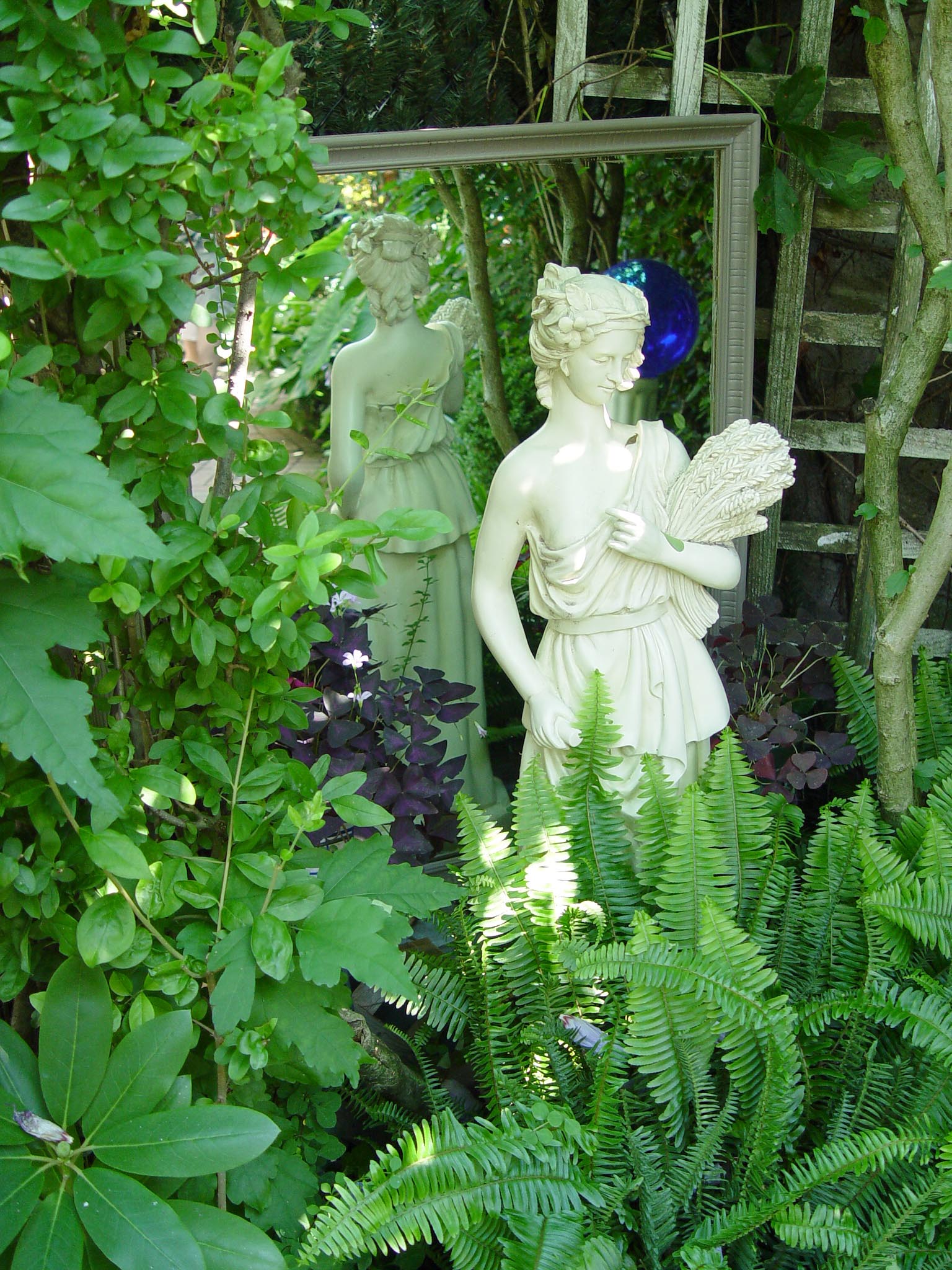
This statue at the Guercio residence in Buffalo is a good example of an eye-grabbing focal point. The mirror behind the statue gives the illusion of more space than the garden really has.

   2.) Focal points. Here’s something else most people overlook: little eye-grabbers that add a ton of interest and personality to a garden.

   These are things like statues, fountains, birdbaths, decorative urns, antiques, found objects, signs, bee skeps, gazing globes – basically any accessory that you like.

   Focal points work especially well at the end of a path or down the middle of a view when you turn a corner or head into a new area. They also look natural as a separator between two groups of plants.

   I’ve seen time and again what a huge difference a focal point makes as a finishing touch to a garden. Your plants might look great, but they usually look so much better when you add just one well-placed accessory.

   Give it a try if your yard is focal-pointless. It might be that one little subtle thing that you’re missing.

   3.) More onesies and twosies. In bigger gardens, you run the risk of having a jumbled mess if you don’t work in bigger masses. However, “masses” of one or two are fine when you don’t have a lot of space to work with.

   So long as you mix and match your colors and textures, lots of variety is the way to go. A small yard with a few masses of a few plants won’t have nearly the interest or seasonal change.

   The Buffalo gardens also show the value of opting for plants with colorful leaves. These give color all season and not just when the flowers are out.

   Good examples are coleus, sweet potato vines, coralbells, hosta and pretty much anything that’s variegated.

   It’s much harder to describe how to build a small garden than to actually see them. It’s a long way to Buffalo, but the ideas you’ll get are worth it.

   Garden Walk Buffalo is the last Saturday and Sunday of July. Mark July 28 and 29, 2012, on your calendar now if you want to see it.

   Lowee’s Group Tours and I ran a bus trip up to see it this year, and given the interest we had this year, we’ll probably do another one next year. Check my Talks and Trips page for details when the 2012 trip lineup is ready.


« Older Ramblings and Readlings Newer Ramblings and Readlings »

  • Home
  • Garden House-Calls
  • George's Talks & Trips
  • Disclosure

© 2026 George Weigel | Site designed and programmed by Pittsburgh Web Developer Andy Weigel using WordPress