
• Home
  • Contact
  • Site Map
George Weigel - Central PA Gardening
  • Landscape 1
  • Landscape 2
  • Landscape 3
  • Landscape 4
  • Garden Drawings
  • Talks & Trips
  • Patriot-News/Pennlive Posts
  • Buy Helpful Info

Navigation

  • Storage Shed (Useful Past Columns)
  • About George
  • Sign Up for George's Free E-Column
  • Plant Profiles
  • Timely Tips
  • George’s Handy Lists
  • George's Friends
  • Photo Galleries
  • Links and Resources
  • Support George’s Efforts


George’s new “50 American Public Gardens You Really Ought to See” e-book steers you to the top gardens to add to your bucket list.

Read More | Order Now


George’s “Survivor Plant List” is a 19-page booklet detailing hundreds of the toughest and highest-performing plants.

Click Here


Has the info here been useful? Support George’s efforts by clicking below.


Looking for other ways to support George?

Click Here

George's Current Ramblings and Readlings

Summer Reading

June 19th, 2012

   Heading off soon for some well deserved vacation time?

Michelle Obama's new garden book.

    You can’t pull weeds or fertilize the pots while you’re at the beach, but you can read about gardening — whether it’s on a Kindle or old-fashioned paper.

   I thought I’d share some new titles I’ve run across that are intriguing. See if any of these four catch your eye:

   1.) “American Grown” by Michelle Obama (Crown, $30). This one just came out and is attracting the most attention, mainly because the rookie garden writer happens to be First Lady of United States.

   The book is mostly about the White House vegetable garden, which is the first one since Eleanor Roosevelt’s Victory Garden.

   Mrs. O. is serious about this and thinks growing our own veggies is a great way to combat the nation’s obesity problem. Her book isn’t really a how-to as much as an inside look at the First Vegetable Garden, which incidentally has no beets since neither she nor the president is a beet fan.

   2.) “Vegetable Gardening the Colonial Williamsburg Way” by Wesley Greene (Rodale, $30). I’ve always been fascinated by how people gardened in Colonial days and by Colonial Williamsburg in particular. (We took our kids there most every year when they were little.)

   Greene has been a staff gardener at Williamsburg for 30 years and knows all the tips and tricks you’ll see on display in the Colonial Garden on Duke of Gloucester Street.

   The book is mostly about the nine most important Colonial crops but also about the tools gardeners used, the season-extending tricks they knew (ones we think are “cutting-edge” today) and curiously, how many ways cut branches are useful in a vegetable garden.

Read More »


A Garden of Light

June 12th, 2012

   It takes a lot to astound me these days, but Longwood Gardens’ new “Light” exhibit that opened over the weekend did the trick.

One of the light displays in Longwood Gardens' new attraction.

    I’ve never seen anything like it.

   The sheer volume of lights spread in eight displays over 23 acres is mind-boggling enough. But the artful arrangement and the life-like way the fiber-optic-lit glass globes change color makes this whole show unlike anything done anywhere.

   It’s the first show of its kind in the U.S., and it’ll only be at Longwood through Sept. 29. Then it comes down.

   I’d highly recommend blocking out an evening to see it. Given that the main attraction is colorful lighting, this is one garden show that really needs to be seen at night.

   Longwood is staying open until 11 p.m. Wednesdays through Saturdays until Sept. 1 so people can linger well after the skies darken.

   The staff is anticipating large crowds, so timed tickets are required. Order them online at www.longwoodgardens.org or call ahead to 610-388-1000. Adult admission is $18.

   The light show is the work of innovative British artist Bruce Munro. Longwood staff saw one of his light fields in England and recruited him to do his biggest project ever — eight different displays — in Longwood’s 1,077-acre venue.

  I’ll attempt to describe it briefly, but you’ll get a better flavor by seeing pictures. I posted a photo gallery of 16 of them here: https://georgeweigel.net/photo-galleries?album=6&gallery=17.

Read More »


Microbursts, Ticks, Etc.

June 5th, 2012

   Here’s hoping you didn’t lose any trees or big branches in those stormy “microbursts” the area has seen in the last week and a half.

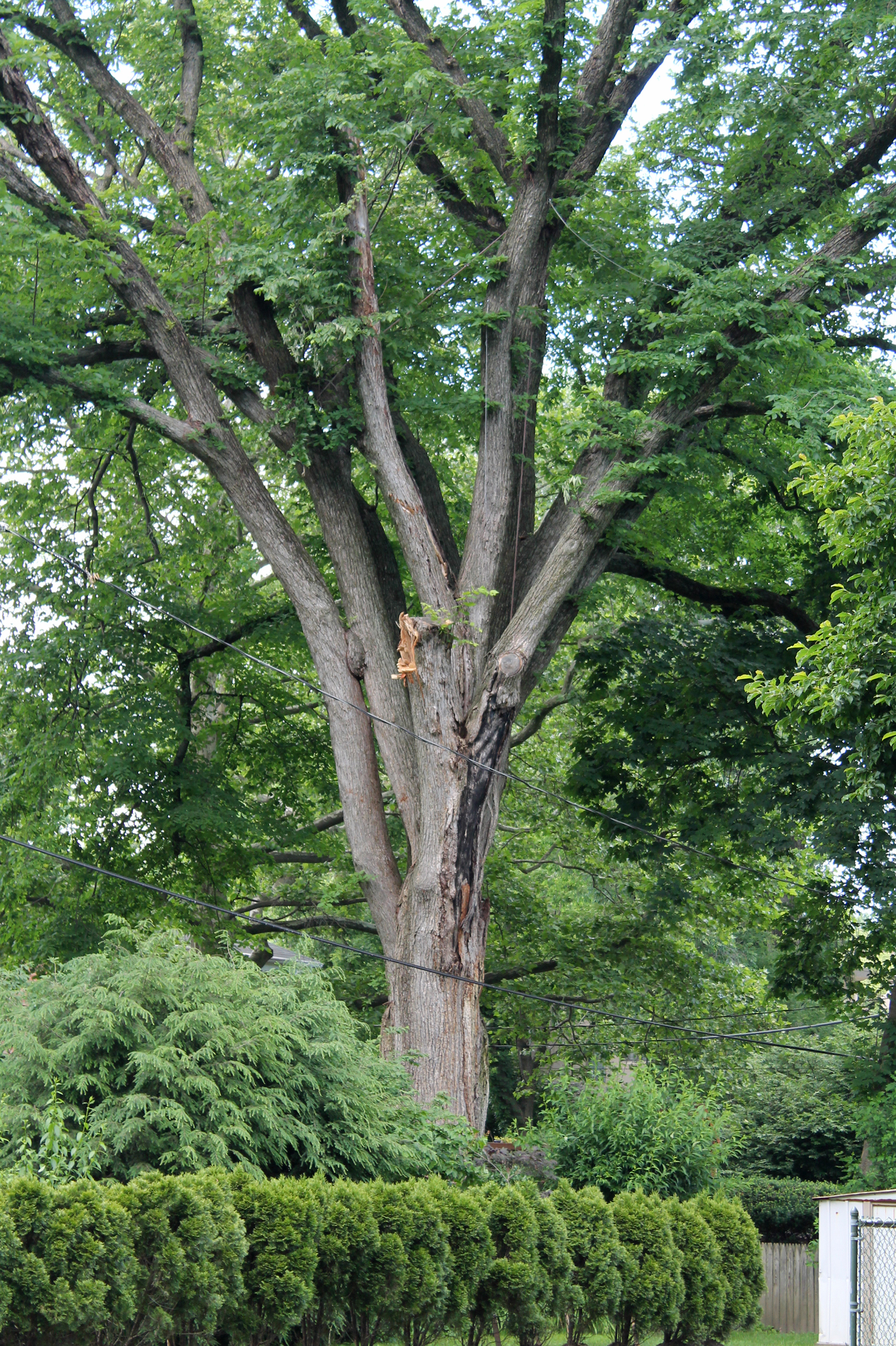
Joel Burcat's mortally wounded elm.

    Joel Burcat’s nearly century-old American elm — one of the few in the Harrisburg area to survive Dutch elm disease — didn’t fare too well in one of them.

   Already compromised and hurting from a lightning strike a couple of years ago, the tree lost one of its last remaining big limbs in a storm last week. The limb brought down power lines and smashed a swath of Joel’s landscaping in the process.

   Three more branches are injured, and the tree company says the old survivor elm is beyond salvaging now.

   It’s actually amazing that more of our landscapes aren’t flattened when these powerful storms blow through.

   I was watching a 30-year-old dogwood in my back yard get whipped around violently earlier this evening in a storm that was packing 60 mph winds. The branches were flying around like bull whips, yet it came out unscathed — except for a couple of little bits of dead wood that fell out.

   That’s a good lesson in why it’s important to thin out some of the excess branches in growing trees (at least the ones you’d like to keep into old age). More open trees let the wind blow through instead of create what amounts to a big sail made out of a lot of leaves.

   Other than the quick-hit storms, the weekend was one of the nicest we could ask for this time of year. Sunny. Pleasant. Low humidity. I didn’t even see many black flies.

   Ticks, yes. Black flies, no.

   This has been by far the worst spring I’ve seen for ticks. My wife works in a medical clinic, and she says they’ve been getting a lot of people coming in to have embedded ticks removed.

   Part of it is the warm winter we had. Ticks not only weren’t snowed under, they were active for much of winter. That’s very unusual.

    In my case, I’m bordered on two sides by untended yards — a favorite habitat for tick breeding. The worst is the yard beside me, where the couple split up and ended up just walking away. 

Read More »


A Gardener Gone

May 29th, 2012

   We lost one of our own last week at way too young of an age.

Christi Konopski

    Fairview Twp. gardener extraordinaire Christi Konopski died last Thursday morning at age 46 after battling breast cancer for more than 5 years.

   Christi’s backyard gardens were a retreat and a sanctuary as she went through agonizing surgeries and energy-sapping chemotherapy. Her favorite spot was sitting on a swing under a vine-covered pergola, looking into her water garden.

   She and husband, Ken, had come to peace with her fate as the cancer spread into her spine and lungs. The treatments just weren’t working.

   The two of them got to go outside to the swing one last time the evening before Christi died.

   Christi was one of those positive, smiling people who was a natural fit for the nurturing that is gardening.

Read More »


Mow the Lawn or Go to the Dentist?

May 22nd, 2012

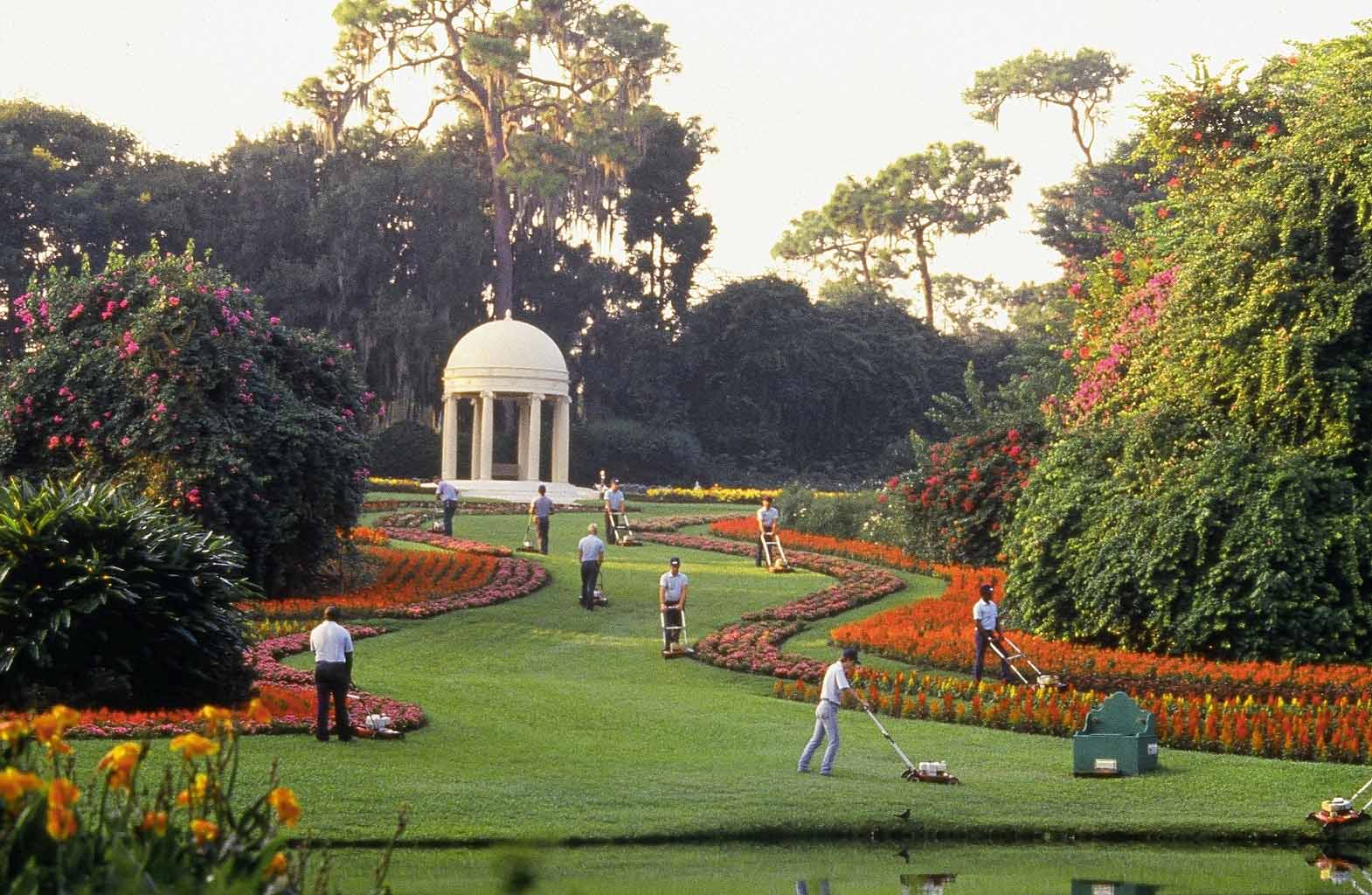
   One of the few yard-care jobs I really don’t like is mowing the lawn.

You really like doing this?

    It’s boring, wasteful and unproductive.

   Apparently, I’m not alone.

   Consumer Reports magazine surveyed 1,000 adults about lawn care for its May 2012 edition, and it turns out that only 7 percent said they’d pick lawn work as their preferred household chore.

   It seems a lot of people would rather do a lot of other stuff than cut the grass one more time.

   Almost half of the respondents said they’d rather shop for groceries than work on the lawn. Forty-one percent said they’d rather do the laundry, 38 percent said they’d rather clean the house, and 17 percent said they’d even rather go to the dentist.

   If that’s the case, then what I don’t understand is why we devote so much space to grass.

   If we’re going to have go out there moaning and whining, we might as well at least get something productive out of it, like vegetables or cut flowers.

   CR’s survey paired nicely with an article on “The Slacker’s Guide to a Great Lawn.” It’s an interesting piece on how you can save 60 hours a year on yard care without sacrificing lawn quality. (Subscribe online at www.consumerreports.org.)

   The article got me thinking about the myths and misfires that cause us to waste so much time and money on the lawn. Now that the lawn is in peak-growth mode, it’s a good time to realize the bad things we’re doing that we shouldn’t and the good things we should be doing that we’re not.

   I can think of three prime examples in each camp:

Read More »


« Older Ramblings and Readlings Newer Ramblings and Readlings »

  • Home
  • Garden House-Calls
  • George's Talks & Trips
  • Disclosure

© 2026 George Weigel | Site designed and programmed by Pittsburgh Web Developer Andy Weigel using WordPress