
• Home
  • Contact
  • Site Map
George Weigel - Central PA Gardening
  • Landscape 1
  • Landscape 2
  • Landscape 3
  • Landscape 4
  • Garden Drawings
  • Talks & Trips
  • Patriot-News/Pennlive Posts
  • Buy Helpful Info

Navigation

  • Storage Shed (Useful Past Columns)
  • About George
  • Sign Up for George's Free E-Column
  • Plant Profiles
  • Timely Tips
  • George’s Handy Lists
  • George's Friends
  • Photo Galleries
  • Links and Resources
  • Support George’s Efforts


George’s new “50 American Public Gardens You Really Ought to See” e-book steers you to the top gardens to add to your bucket list.

Read More | Order Now


George’s “Survivor Plant List” is a 19-page booklet detailing hundreds of the toughest and highest-performing plants.

Click Here


Has the info here been useful? Support George’s efforts by clicking below.


Looking for other ways to support George?

Click Here

George's Current Ramblings and Readlings

Back in Business

July 24th, 2012

   That soaking rain we got Friday and Saturday came at a good time. I got 1.6 inches — enough to do some actual good for plant roots and lawns.
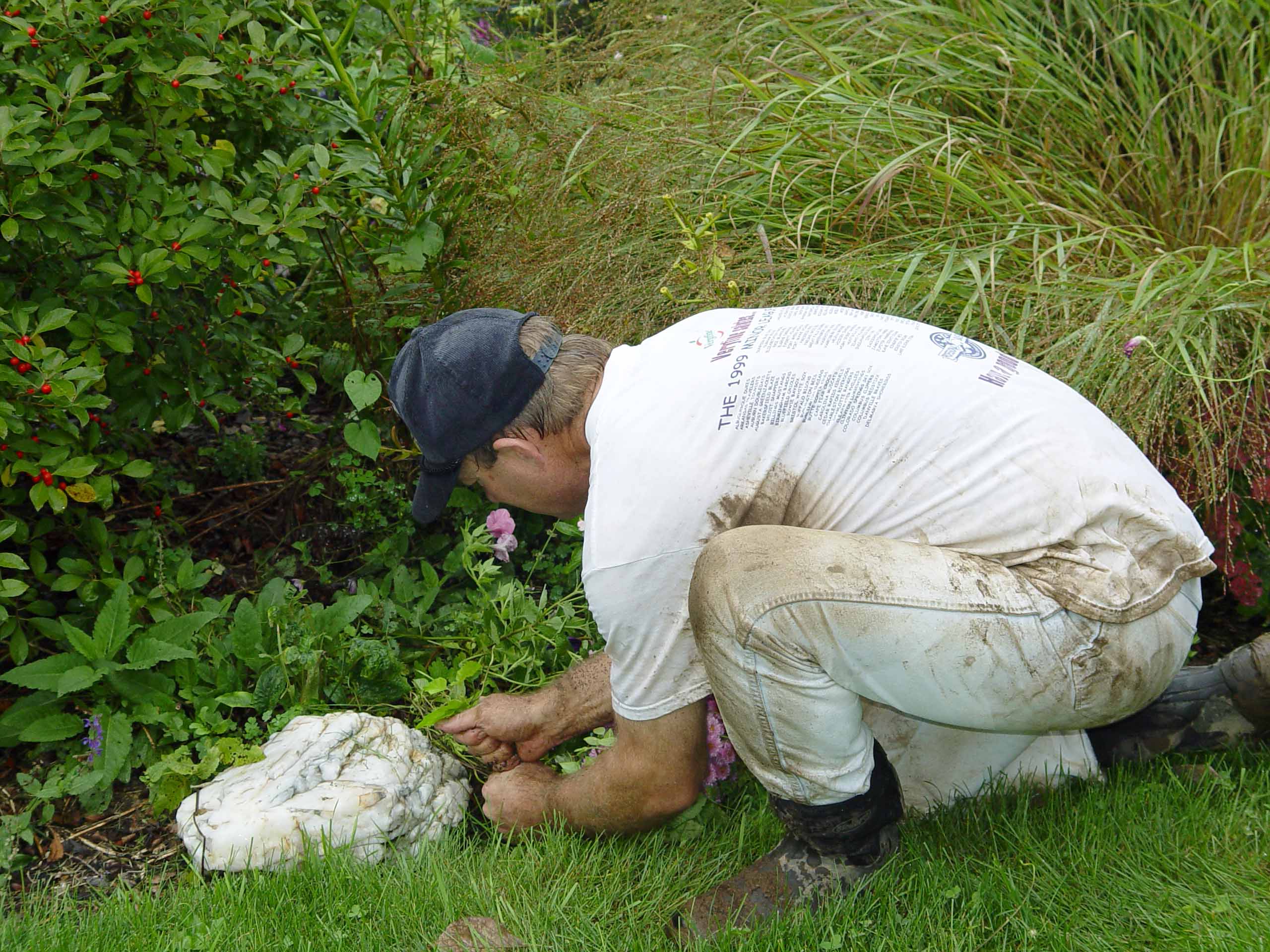
Gardeners are back in business after the rain switched plants back into growth mode.

    The rain not only wetted parched roots and broke the high-90 heat wave, it was enough to switch most plants back into growth mode from survival mode.

   And that’s opened the door to a lot of jobs you should’ve been putting off while our landscape was just trying to survive.

   Tops on the list is mowing the lawn. I cut mine over the weekend for the first time in 6 weeks. The grass is greening nicely again and growing. Go ahead and cut yours if you haven’t already.

   Another big job I’ve been tackling is cleaning up the perennials.

   If you’ve dived headlong into perennials thinking they were low-care plants, you know now that most of them need assorted care to look good. One of the main mid-summer jobs is deadheading spent flowers and cutting back foliage that’s flopping, diseased or beat up from the heat and dry weather.

   Daylilies have been getting most of my attention. The flower scapes really detract from the plant once the flowers are done. The bare stems stick up like sore thumbs and then turn brown. I pulled off brown ones and cut back the bare greens ones, one by one by one.

   Most of my daylilies suffer from leaf streak disease this time of year. It starts with little rust-colored streaks that expand, coalesce and quickly turn whole blades brown.

   About half of my plants needed de-leafed… all by hand-picking. Not much is left of some plants already. When this disease gets bad enough, I just cut the entire plants off to near ground level. The good news is that fresh foliage soon appears, and the plants go on to look fairly decent later in the season. They also come back fine the next year. But this does create extra work.

   I also gave my catmint its annual mid-summer cutback to a few inches. Ditto for several yarrow plants, which are done flowering and were flopping. Like a lot of perennials, these will grow fresh foliage that’ll be more compact and better looking than if I just let the early-season growth alone.
Read More »


Plant Sunburn

July 17th, 2012

   Somebody ought to invent sunscreen lotion for plants.

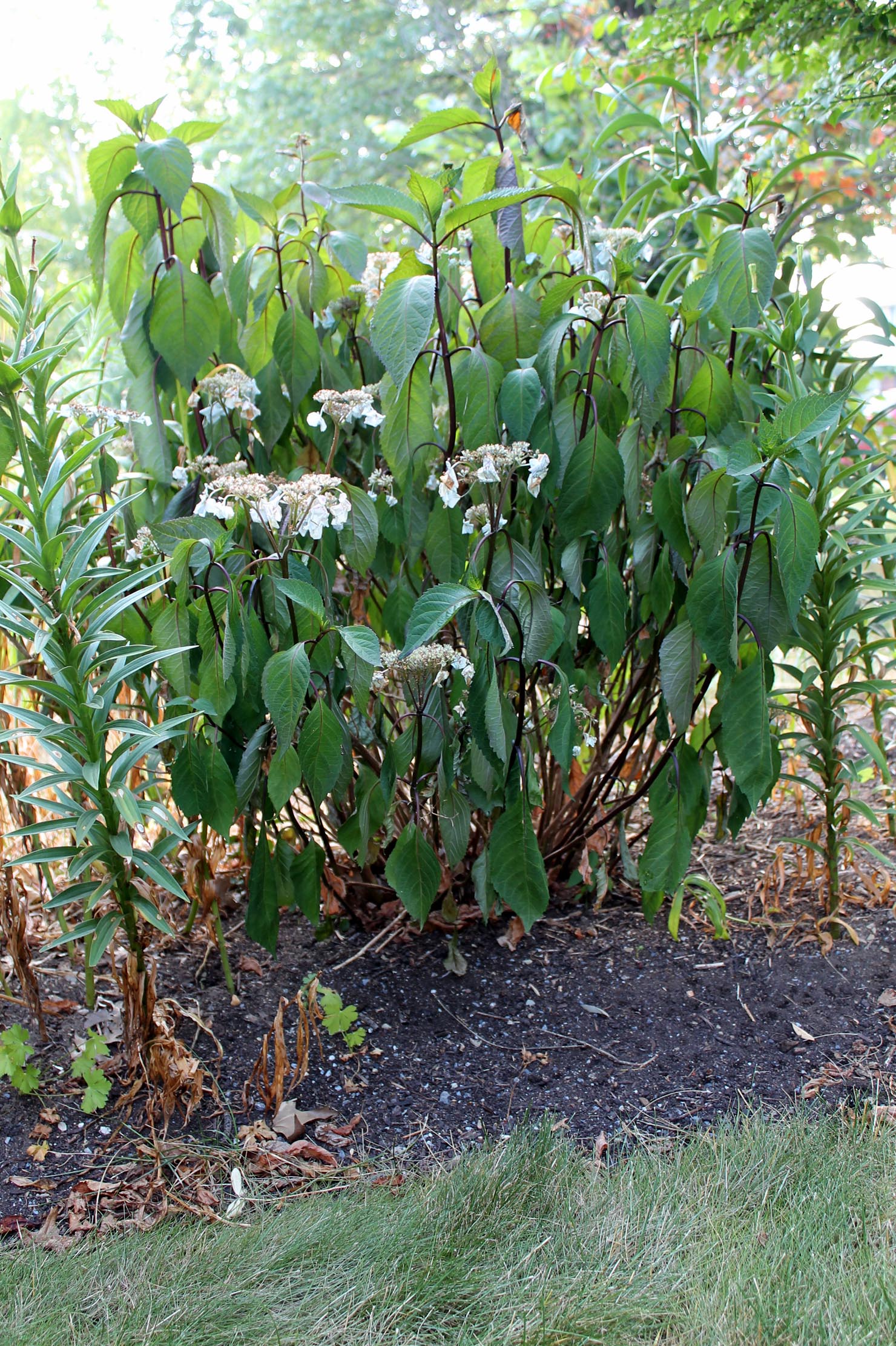
Heat alone can cause hydrangeas to do this.

    These bouts of glaring sun and near-triple-digit heat are punishing to plants, particularly ones native to climates that don’t act like this. Plants that prefer a bit of shade but that you’ve got out in full sun aren’t faring any better.

   As you might’ve noticed in the last few weeks, it’s not just dry conditions that can take a summertime toll on plants.

   Flat-out heat and broiling sun can cause botanical suffering even when soil moisture is good.

   This is usually the answer to the forlorn gardening question/apology, “But I don’t understand why my shrub (or tree) is turning brown. I’ve been keeping it watered.”

   It also answers why your hydrangeas have been wilting even though you’ve been watering them. If they’re perked up in the morning, it’s not the dry soil causing them to wilt. It’s the heat.

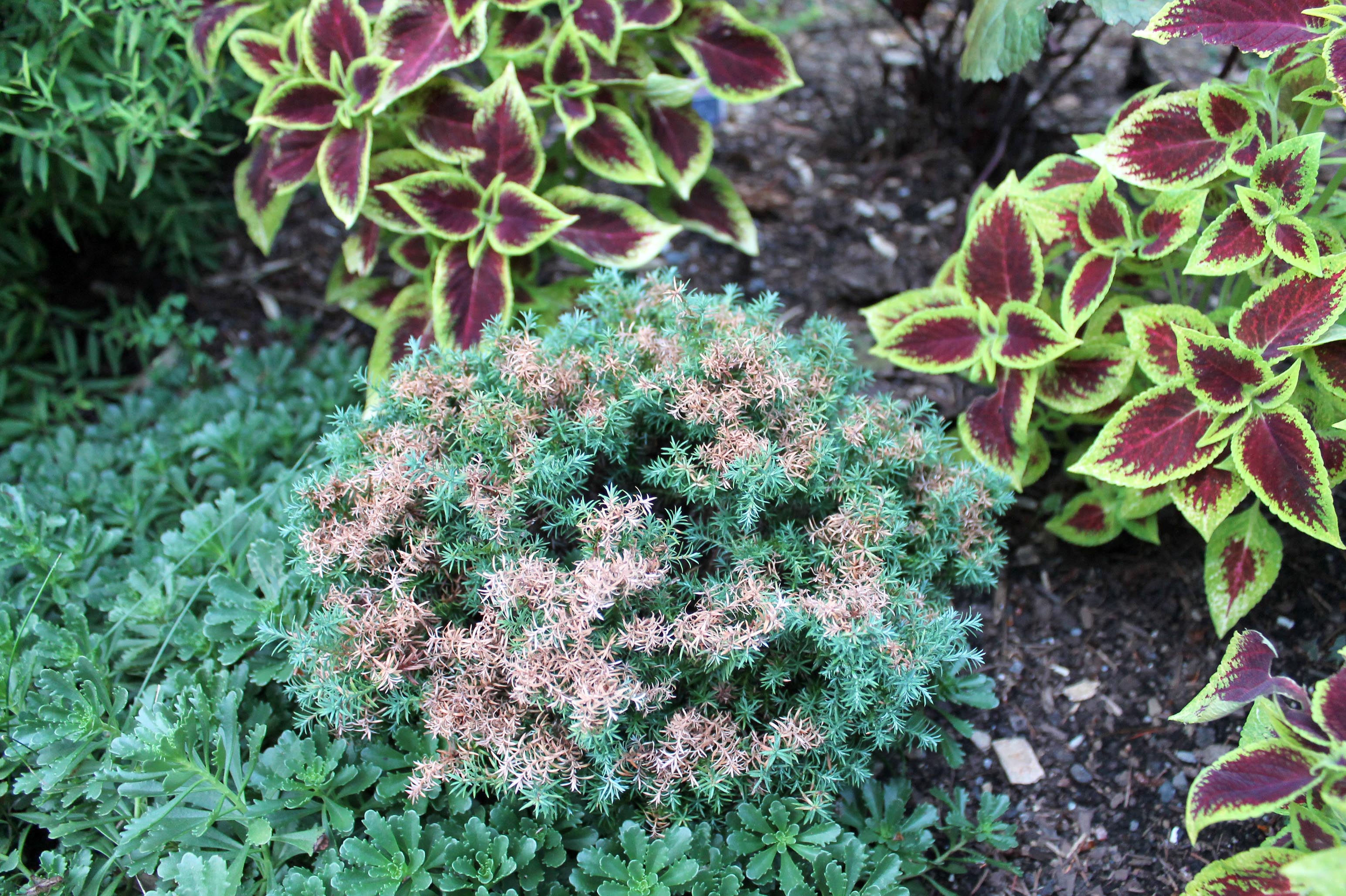
   In my own garden, I’ve got a couple of dwarf conifers that have been partly browning over the top. One is the dwarf Korean fir ‘Cis,’ and the other is a fine-needled dwarf sawara cypress ‘Cumulus.’

   I’ve seen similar symptoms on bird’s nest spruce — a low form of Norway spruce.

My new "brown-variegated" Chamaecyparis pisifera 'Cumulus.'

    The common denominator is that none of those like super-hot summers. They’re happy in the Pacific Northwest or New England or Norway — not Dallas, which is more like we’ve been having lately.

   Water helps a little in these heat-related brown-outs. It not only sidesteps the double-trouble of dry soil and high heat, but water also cools the soil and by extension, the plant roots.

   A couple of inches of mulch over the soil also helps, as does erecting a burlap, screen or shade-cloth protector to block the afternoon sun. I’ve employed a couple of patio chairs to give this kind of afternoon help to a recently transplanted crape myrtle in my yard that’s been wilting. But the real answer here is for the temperature to return to saner levels.

   Our bake-oven conditions also have fried shade plants that are out in too much sun.

Read More »


Heat Aid

July 10th, 2012

   That was brutal. We hit 101 degrees Saturday, and unless you’ve been watering, the soil moisture is becoming threateningly dry.

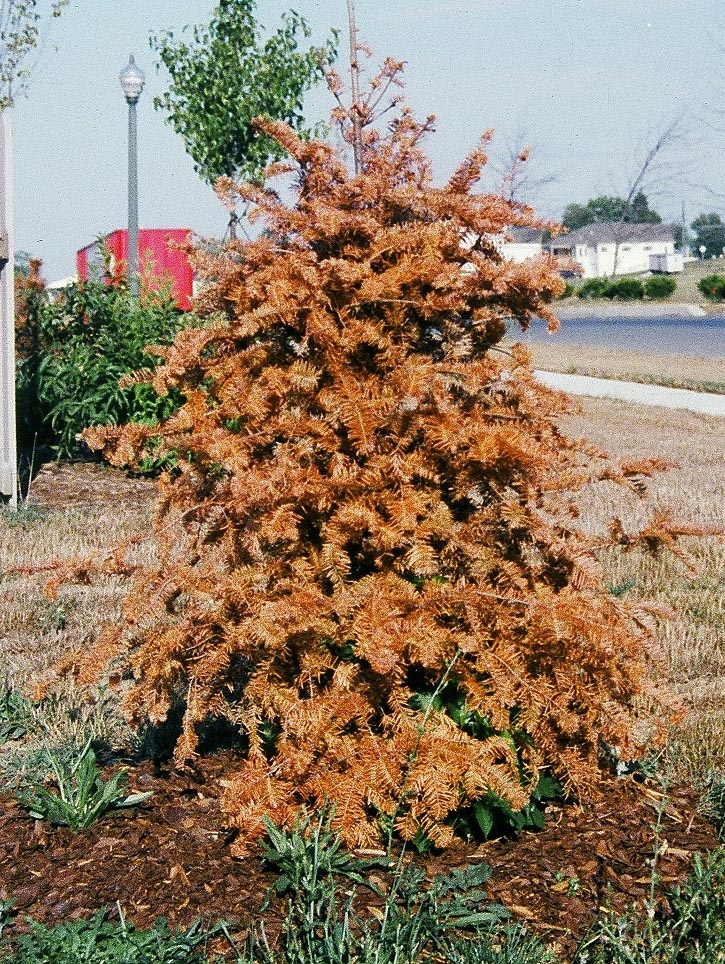
An evergreen that's become an everbrown.

    I’m already getting questions about evergreens turning into everbrowns and how to stop those hydrangeas from wilting. (Answers: When a conifer turns brown, it’s already dead. And hydrangeas often wilt from heat alone, even if you’re watering the dickens out of them. The way to tell the difference is that heat-wilted hydrangeas will perk up in the morning.)

   Anyway, it’s been getting sneaky dry lately after a very nice late spring. Even though ground-water levels and stream flows say we’re not in drought danger, the soil moisture at root level is a different story.

   Dig down a little, and you’ll probably find the soil in the root zone is nearly dust. That’s the area that matters most to plants — especially newly planted ones or other ones with shallow roots.

   I’ve been spot-watering some of my more vulnerable plants.

   That includes my new crop of trial shrubs and perennials that I just planted in spring as well as a crape myrtle I recently transplanted and a couple of last year’s new shrubs that were showing signs of stress (i.e. a young ‘Little Lime’ hydrangea with browning leaves, a pink-fruited blueberry scorching around the edges and a ‘Forever and Ever Fantasia’ hydrangea that’s been badly wilting).

   I’ve also been watering all of my pots and baskets daily (sometimes twice a day) and have hose-watered a few beds of in-ground annuals every 3 or 4 days to keep them from wilting.

   If this keeps up, I’ll knock off watering the annuals planted in the ground. They’ll have to fend for themselves at some point. I’ve got a well, and as much as I like Supertunias and angelonias, I like water coming out of the tap even better.

   When the water supply gets tight, the lawn is the first thing I don’t water. Actually, I seldom water a lawn anyway (mainly just new grass or enough to keep a patch from dying when a drought drags on long enough). But the second-most planting I don’t water in drought is annuals. These are going to die at the end of the season anyway, so I focus my precious water on the more permanent — and expensive — trees, shrubs, evergreens and perennials.

   For more on nursing your landscape through a heat wave, check out this page (https://georgeweigel.net/favorite-past-garden-columns/heat-busting-in-the-landscape).

Read More »


Two Great Gardens

July 3rd, 2012

   I’m still marveling at the layout of two of the finest home gardens I’ve ever seen – Jenny Rose Carey’s 4½-acre property near Ambler and Michael Colibraro’s small backyard getaway in suburban Willow Grove.

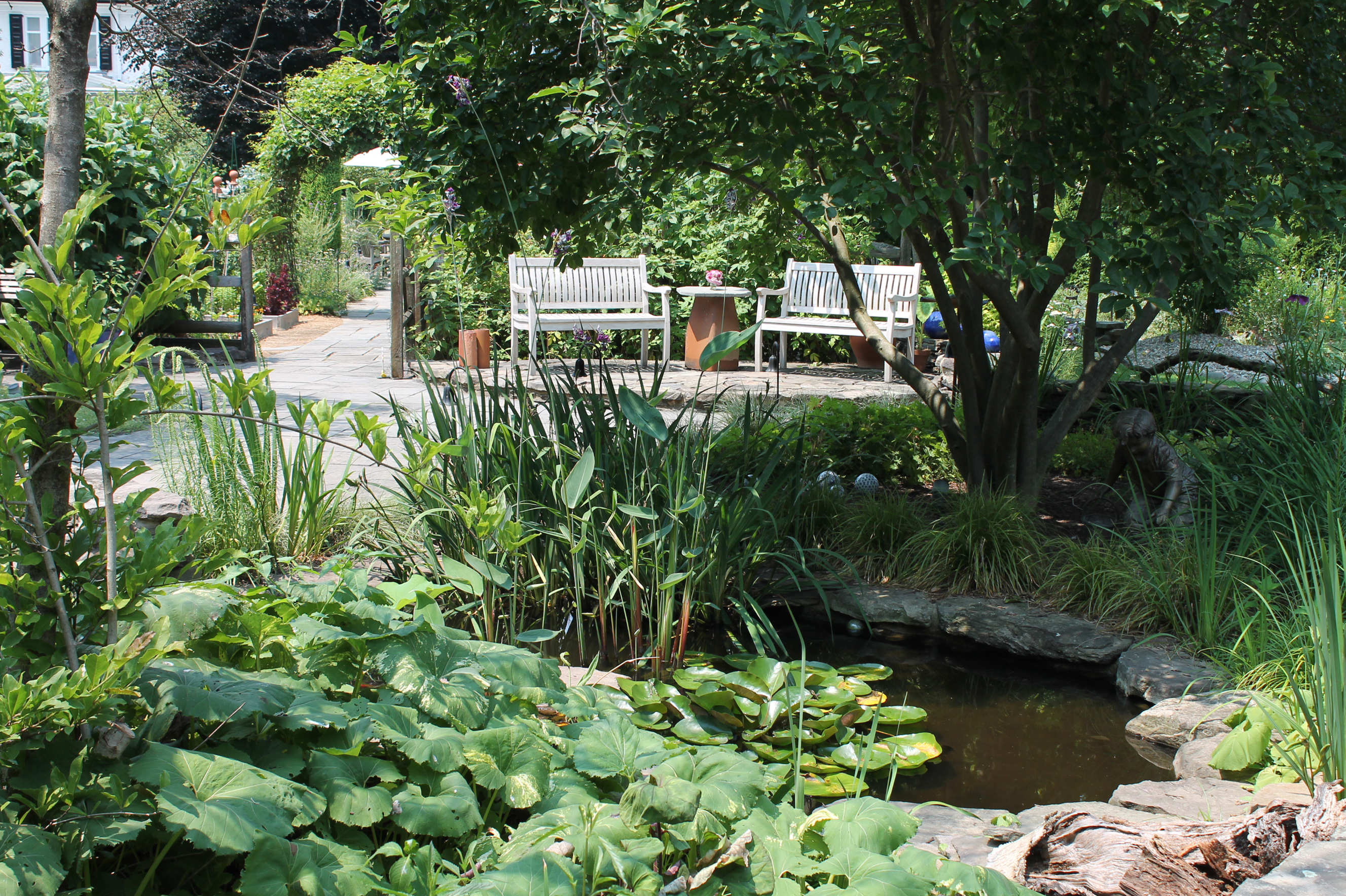
One of the peaceful "rooms" in Jenny Rose Carey's landscape.

   A full bus load of us got to see both in the same afternoon last week in our latest Lowee’s Garden Series trip, which also included a morning stop at Temple’s Ambler Arboretum, where Jenny is the director. (For the rest of this year’s tours, click here.)

   What amazes me most about both places is the vision both of these gardeners had in turning otherwise blank or boring space into garden showpieces.

   I’m sure neither of them see it that way. They’re just doing what they love and having great fun while at it.

   I hate to use the overworked term “garden rooms,” but that’s really a good description here.

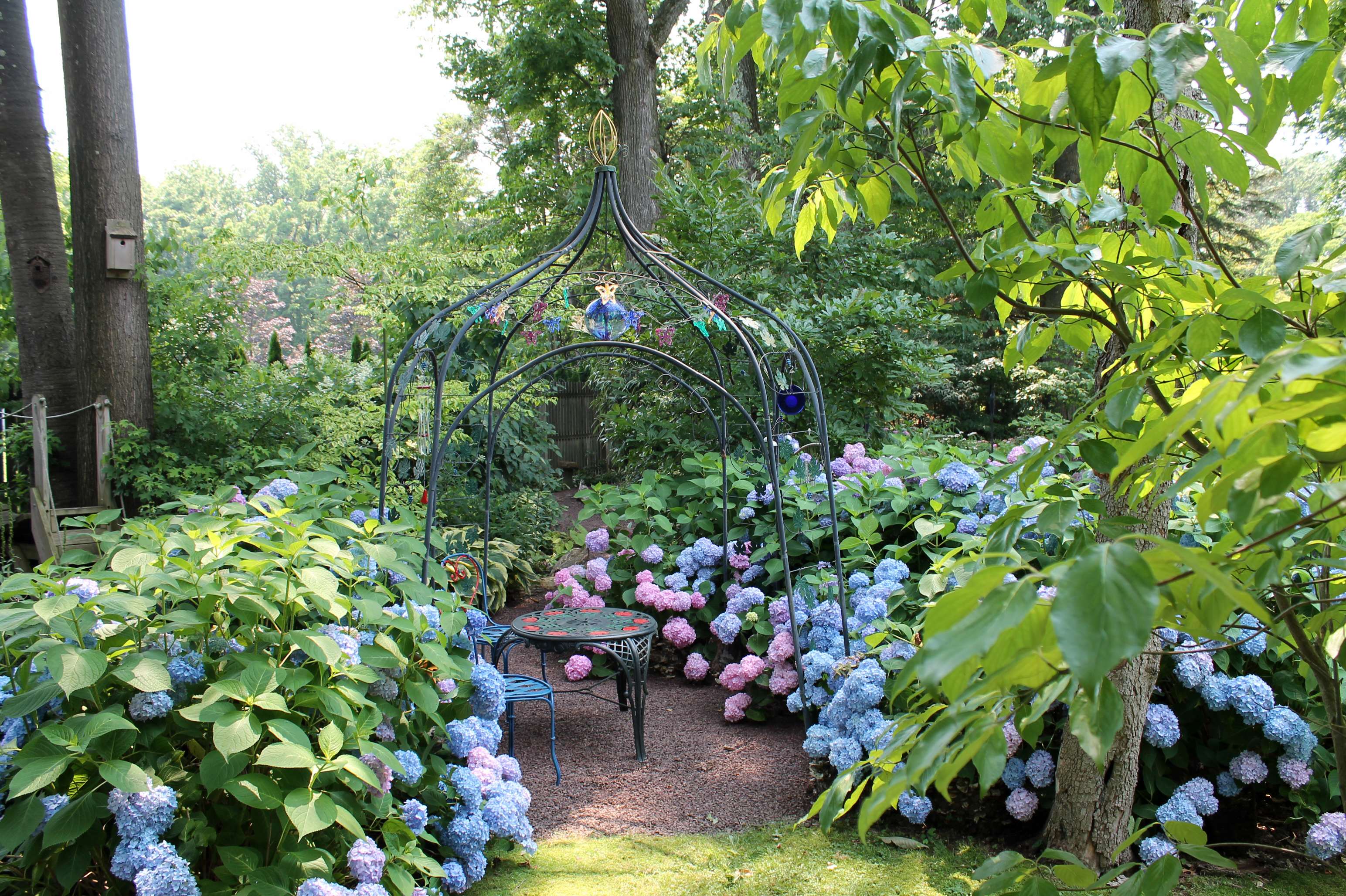
   Jenny’s is by far the bigger of the two places, but Michael’s yard shows that even a small back yard sandwiched in a typical suburban-development street can be superbly interesting – and surprisingly serene.

   Jenny started out about a dozen years ago with a mostly flat lot of grass.

   Most people plant around the house, get some screening arborvitae in place along the property line and call it a day.

   What’s unusual about Jenny is that she had no fear about digging up a majority of grass to create a series of theme gardens smack in the middle of the yard – somewhat Longwoodish in feel.

The entrance to Jenny's shade garden.

   Each garden flows into a neighboring garden through the use of arbors, gates and paths – some of them bluestone, some gravel, some mulch, some grass. Assorted hedging, fences and tall shrubs, evergreens and even tall perennials are the “walls” that separate one room from the other.

   This is a garden you explore as opposed to see. People loved wandering in and out of the different areas.

   There’s a large “dry garden” of meadow perennials and rock-garden plants that Jenny hasn’t watered in 7 years, thanks to sharp soil and gravel mulch. A pergola-shaded stone patio with a table gives a place to sit in the middle of it. (For more on how Jenny grows a garden she never waters, click here.)

   Exit the back of the dry garden and you run into one of the nicest potting sheds you’ll ever see. Jenny calls it the “Rose Cottage,” and it’s a garage-sized gardening playhouse where I could live (assuming it were air-conditioned).

Read More »


Beetles and Grub Butts

June 26th, 2012

   We’re at the end of June already, and for gardeners, that means one thing — it’s Japanese beetle time.

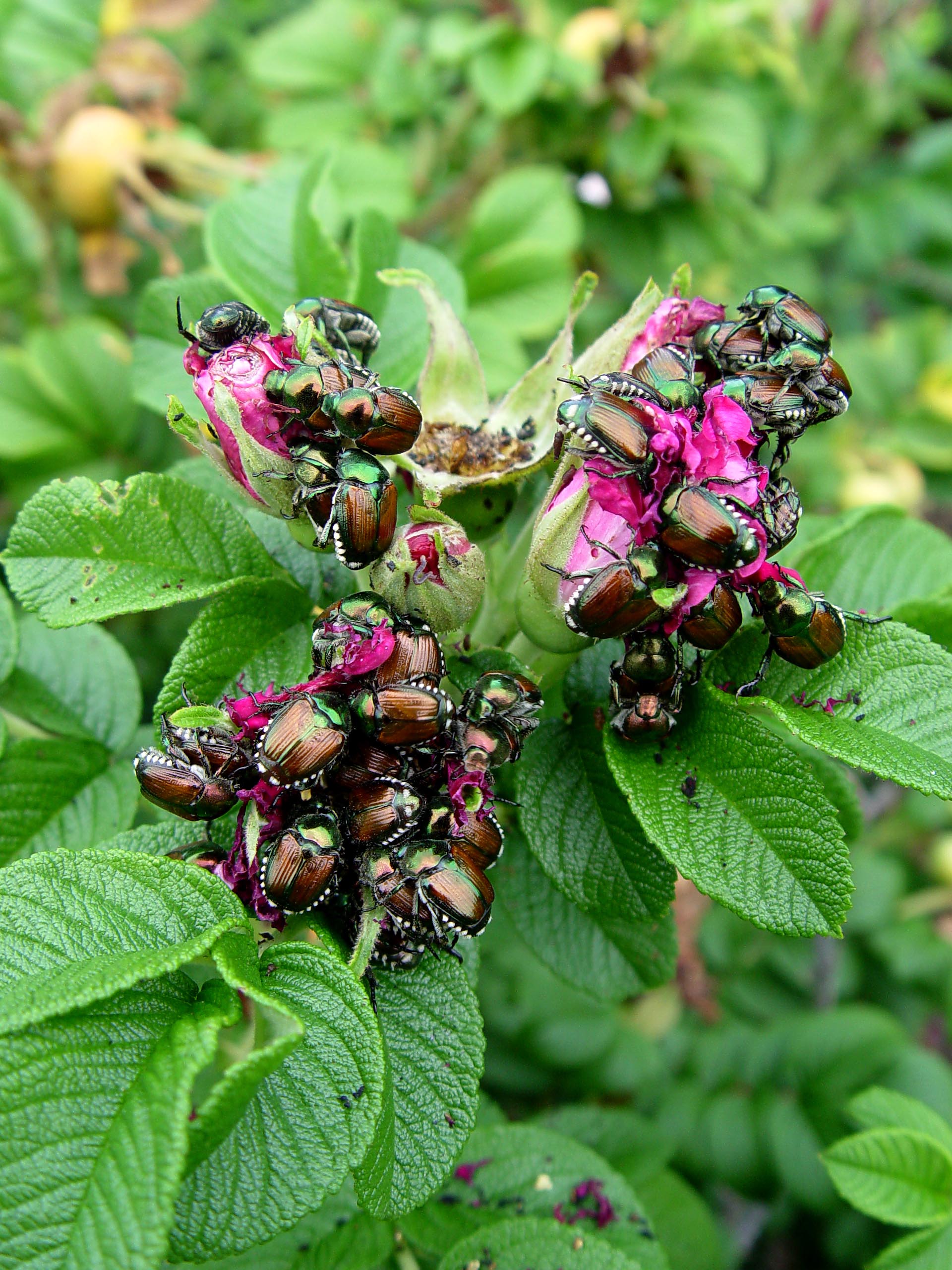
Japanese beetles swarming on a rose -- their favorite.

   This shiny, copper-colored, leaf-eating pest usually shows up around now and feasts on upwards of 300 different plant species for about 6 weeks.

   Japanese beetles are particularly annoying because they’re a double-duty yard pest. They’re actually more destructive in the larval stage, when the grubs eat the roots out from underneath the lawn.

   I get a lot of questions about what to do to head off beetle/grub damage. Lately, people have been asking about whether an organic approach — using milky spore powder — really works.

   From what I’ve seen and read, milky spore has had spotty results. It seems to work fairly well sometimes in some areas but hardly at all in other cases. One little-known problem that can explain why it doesn’t work is having the wrong kind of grub to start with.

   Milky spore is a disease that’s effective only against the Japanese beetle grub. If your lawn damage is due to the grub of the masked chafer beetle — also fairly common around here — that would explain why your treatment has been ineffective.

   Masked chafers are brown beetles with a little shield over the back of their heads – kind of like mini Darth Vaders. They come out at night for about two weeks in July and don’t feed on plants, so people seldom notice them as adults.

   Japanese beetles have shiny coppery shells and feed heavily on landscape plants in broad daylight. So they’re VERY noticeable. Some years they aren’t as bad as others. Last year, for example, I didn’t hear of too much trouble.

   At the grub stage, masked chafers and Japanese beetles look alike and do similar damage to lawns. They’re both fat, white, C-shaped wormy-like things. The only way to tell the difference is by looking at the hairy projections on the grub’s “raster” (grub-speak for “butt”). Japanese beetle grubs have V-shaped hair patterns while masked chafers have no pattern. So to be sure which you’ve got, you’ll have to capture one, get out a magnifying glass and have a closeup look at the butt hairs.

Read More »


« Older Ramblings and Readlings Newer Ramblings and Readlings »

  • Home
  • Garden House-Calls
  • George's Talks & Trips
  • Disclosure

© 2026 George Weigel | Site designed and programmed by Pittsburgh Web Developer Andy Weigel using WordPress