
• Home
  • Contact
  • Site Map
George Weigel - Central PA Gardening
  • Landscape 1
  • Landscape 2
  • Landscape 3
  • Landscape 4
  • Garden Drawings
  • Talks & Trips
  • Patriot-News/Pennlive Posts
  • Buy Helpful Info

Navigation

  • Storage Shed (Useful Past Columns)
  • About George
  • Sign Up for George's Free E-Column
  • Plant Profiles
  • Timely Tips
  • George’s Handy Lists
  • George's Friends
  • Photo Galleries
  • Links and Resources
  • Support George’s Efforts


George’s new “50 American Public Gardens You Really Ought to See” e-book steers you to the top gardens to add to your bucket list.

Read More | Order Now


George’s “Survivor Plant List” is a 19-page booklet detailing hundreds of the toughest and highest-performing plants.

Click Here


Has the info here been useful? Support George’s efforts by clicking below.


Looking for other ways to support George?

Click Here

George's Current Ramblings and Readlings

Super Flowers

May 15th, 2012

   Now’s prime time for annual flowers. Are you choosing wisely?
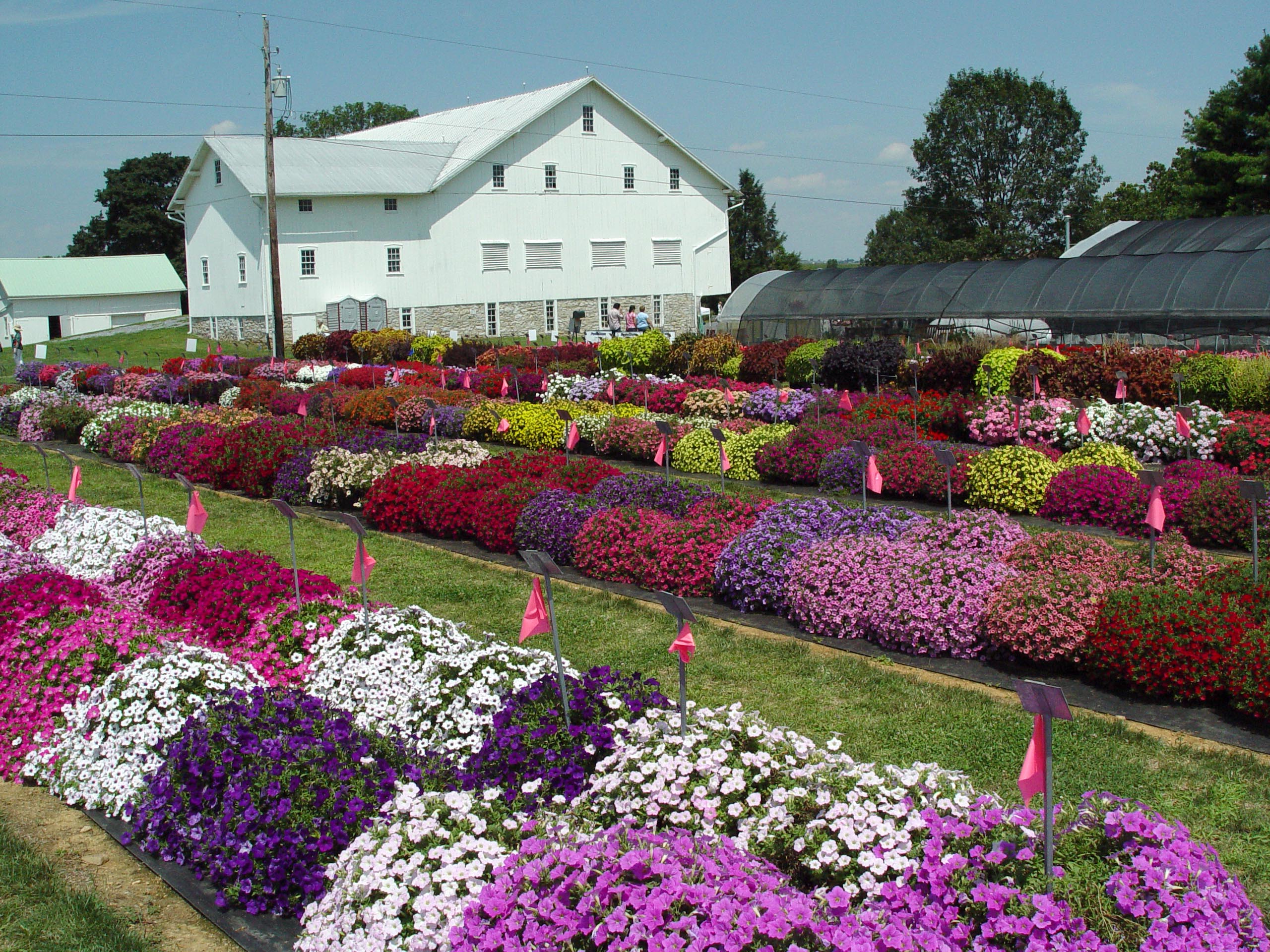
Penn State's flower trial garden in Lancaster County.

    I’m all for saving money, but this is one area where you really do get what you pay for.

   A few of those cheapo 99-cent packs of flowers might do halfway decent in a pot, but most of the time they just don’t perform nearly as well as the named and more expensive flower varieties sold at greenhouses and garden centers.

   The difference is genetics. The cheapie plants tend to be older varieties grown from inexpensive seed. The high-performers (generally) are carefully bred, selected and tested varieties that are started from cuttings from mother plants.

   In my own gardens, the difference has been striking enough that I no longer buy those box-store “bargains.” I admit, I cringe at paying some of the prices these superior varieties cost, but I also know how much better they’re going to look come summer.

   If you’re not convinced, take a trip down to Penn State’s trial gardens near Landisville, Lancaster County.

   Every year, Penn State test-grows hundreds of new and newish varieties and rates them to help guide the market toward the best quality.

   You can see the trials yourself at no charge. It’s an excellent place to take notes on what flowers you’d like to try in your own yard.

   What’s more, Penn State posts photos and ratings of past trials online so you can research varieties before shelling out your hard-earned money.

   For ratings and directions, check out this site: http://www.trialgardenspsu.com.

   A few specific annuals that I think are some of the best on the market:

   Petunias. So many of the new ones are light years ahead of Grandma’s straggly varieties. My favorite is ‘Supertunia Vista Bubble Gum,’ a neon rosy-pink bloomer. But you’ll do fine with any of these series: ‘Supertunia,’ ‘Surfinia,’ ‘Sanguna,’ ‘Wave,’ ‘Famous’ and ‘Suncatcher.’

Read More »


Hedge Edge

May 8th, 2012

   We’re hitting the time of year now when a lot of chainsaw-toting guys head out to “prune” the landscape.

Shear a juniper back into bare wood and it'll stay bare, as has happened to the bottom of this poor juniper.

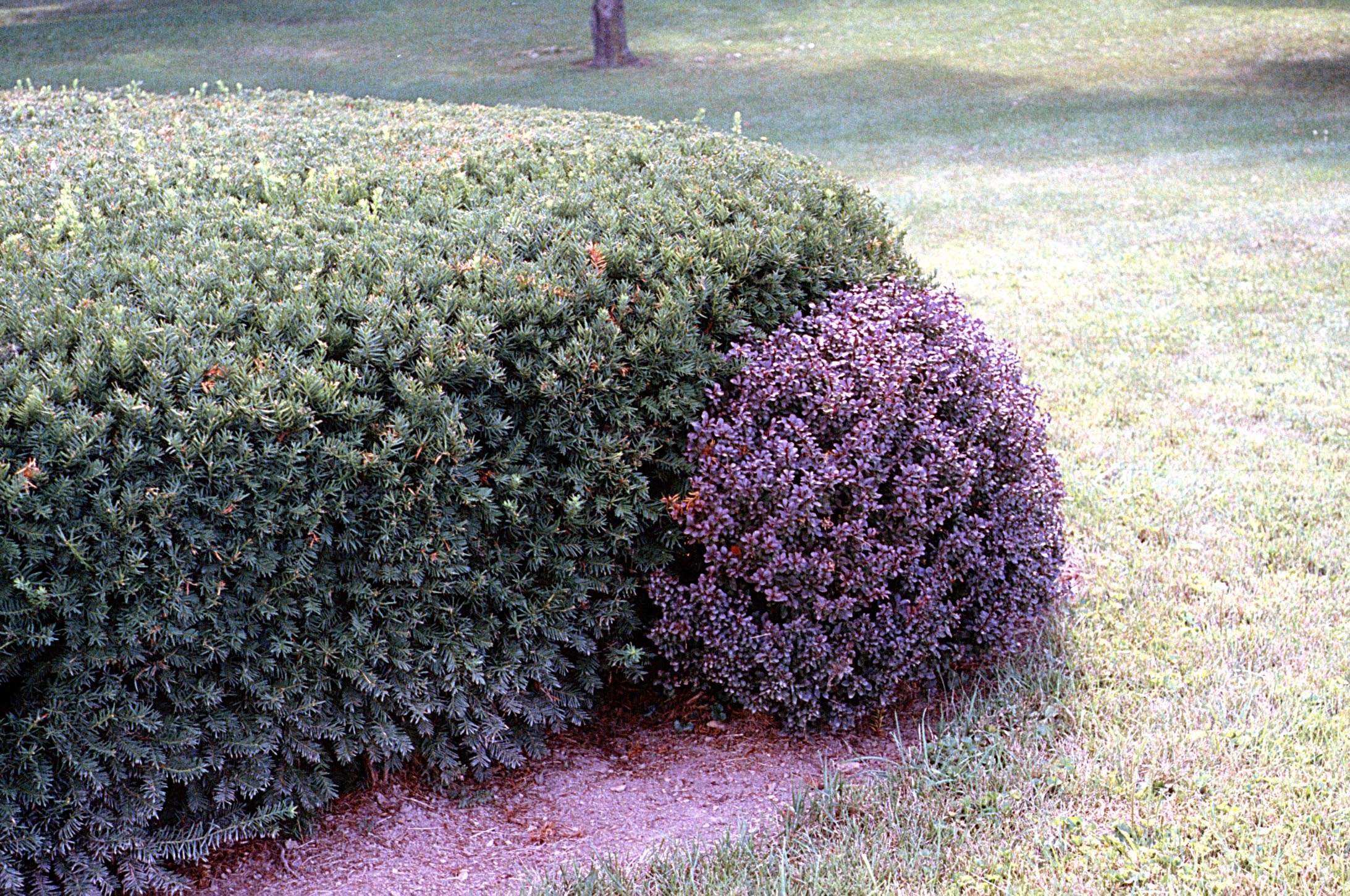
    Despite what you may see even at the hands of pros, not all plants take kindly to shearing. This kind of cutting can destroy the natural form of archers and weepers and cause weak, stubby growth on others.

   But even for chop-amenable species, there’s a right way and a wrong way to hedge.

   I sat in on a program on this by Roger Davis at last year’s Woody Plant Conference at Scott Arboretum. Davis prunes the amazing topiary yews at Longwood Gardens.

   His top bit of advice is to start young and keep at it regularly.

   “Hedge maintenance begins on Day 1,” says Davis. “It’s a training process, not something you do 20 years down the road. Don’t wait until the hedge is halfway over the walkway to start pruning. Hedges are like children. You have to start early.”

   If you whack back into bare wood, some species (like yew, hemlocks, hollies, privet and boxwoods) will push out new growth — although they’ll look butchered for awhile.

   Do that to others (fir, juniper, spruce and arborvitae, for example), and you’ll permanently deform them — or worse.

   Davis advises cutting back only enough to remove the new growth, or nearly so.

Read More »


A So-So Dutch Floriade

May 2nd, 2012

   I’m just back from leading a group of central-Pennsylvania gardeners to the Netherlands and its Floriade garden show, held only once every 10 years.

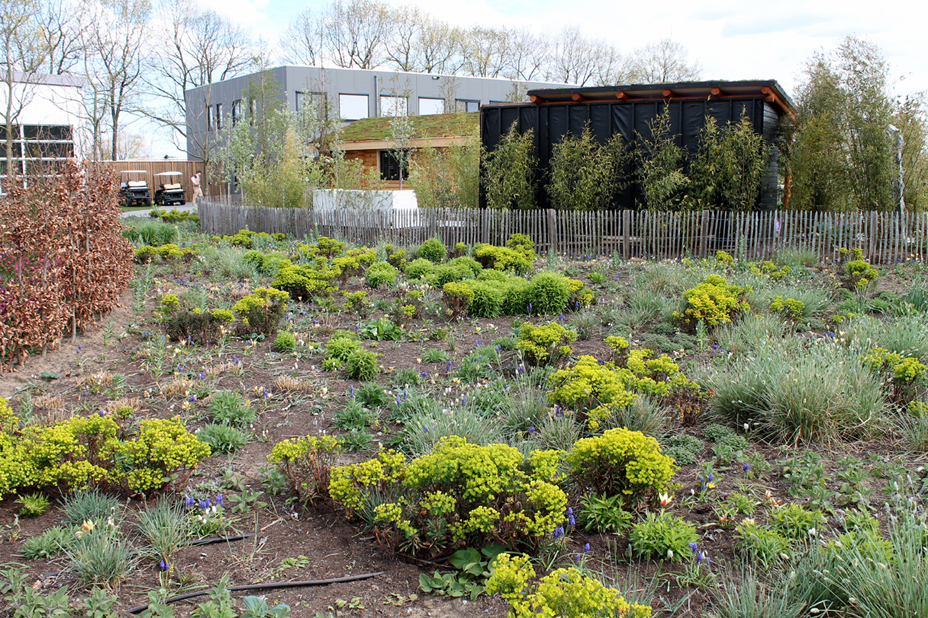
One of the disappointly sparse flower beds at Floriade 2012.

    Floriade 2012 was worth a look, but to be honest, I didn’t think it was nearly as impressive as the last one in 2002.

   This show had a distinctly more commercial flavor. Maybe I’m biased because I see through rose-colored lenses rather than dollar-bill-green ones, but in my mind, this Floriade doesn’t quite measure up with other world-class garden-tourism events such as the U.K.’s Chelsea Flower Show or our own Philadelphia International Flower Show.

   Most of our hardy band of 37 travelers thought the same thing. Everyone’s jaws dropped when we visited the 79-acre Keukenhof bulb garden near Lisse, but I got mostly lukewarm feedback when I asked their opinions on Floriade.

   Most of us were expecting to see more gardens, more plant variety and a lot less selling of Asian jewelry, wooden bowls and packs of Dutch clog-shaped slippers.

   The previous 2002 Floriade, held near the Dutch Schiphol Airport, struck me as a sort of Olympics of gardening with countries around the world building gardens to give visitors a flavor of horticulture in their homelands.

   Back then, the Dutch themselves folded numerous Keukenhof-caliber beds throughout the site, spelling out whole words in bulbs in one memorable football-field-sized display.

   For this Floriade, taking place in the southeastern Venlo region near the German border, only a few of the participating countries built gardens. Other than China, Indonesia and Turkey, most set up what amounted to sales booths.

   The U.S. didn’t take part at all.

   Plant-wise, what struck me first was underplanted display gardens, too much bare soil, exposed soaker hoses and even some weeds.

Read More »


About Those Plant Sizes

April 24th, 2012

   One question I get all the time that I can never answer very well is, “How big is this plant going to get?”

Accurate size planning heads off this kind of problem.

    Usually it’s a case of people trying to figure out if they have enough space for something. Or they’re trying to avoid house-eating monstrosities.

   But I also get it from frustrated plant-shoppers who have done some homework and found that different growers list different sizes for the exact same plant.

   How can that be? Why can’t everyone agree? And if they can’t, then whom do you believe?

   What it boils down to foremost is how far out you’re using as your guide to estimate size.

   Plants never really stop growing… that is, until the deer eat them or a drought kills them. So you’ll see a different size if one grower or garden center figures on a 5-year size but another uses 10-year (or beyond) sizes.

   I’ve seen a 100-year-old yew bush at Longwood Gardens, for example, that’s easily 25 feet tall and wide. But most people hack yews into 4-by-4 boxes, and most plant tags list them as somewhere close to that range.

   A second complicator is that plants grow at different rates in different settings. I’ve seen the same variety of plant grow to drastically different sizes in different yards.

   Things like soil quality, soil nutrition, soil moisture, light and the temperatures in different microclimates can all make a big difference.

   That explains why one gardener might complain about having to whack back an azalea every year while another gardener says the same azalea in his yard hasn’t gone above 4 feet in 20 years.

   This creates a problem when you’re the one responsible for putting numbers on the plant tags next to “Height” and “Width.”

Read More »


Weedfest

April 17th, 2012

   No, you’re not imagining things if it seems like weeds are worse than ever this year.

Thanks to the warm weather, weeds are off to a fast start this spring.

   Part of it can be traced to the weather, which was great for germinating winter annuals like creeping veronica (the blue-blooming creeper), chickweed (the white-blooming creeper), purple dead nettle (the lavender-blooming upright with the square stem) and a relative newcomer, hairy bittercress (wiry stems with little flowers emerging from clusters of little leaves).

   These not only got off to an early start but flourished in the warm soil. (For more on this, click here to see my latest weedy Patriot-News column.)

   You might as well get used to this, though, because weed populations are up throughout the United States for a variety of reasons, according to the Weed Science Society of America.

   Here’s a look at what’s been fueling this not-so-welcome trend:

   Extreme Weather

   The erratic floods and droughts that much of the country have been experiencing both can lead to worsening weed problems.

   Flood water is one way weed seeds can move from one location to another, while wet soil is good for both weed-seed germination and subsequent growth.

   On the other hand, drought can kill off planted lawns and gardens, opening the door to bare soil that’s often quickly re-colonized by opportunistic weeds.

   Warmer Weather

   Most noticeable to gardeners is the northward creep of weeds that previously died out in colder winters. Kudzu, for example, has now worked its way as far north as the Canadian shore of Lake Erie. And it even now flowers and sets seed in Pennsylvania, says Penn State weed scientist Dr. Bill Curran.

   Harvard University scientists recently studied the plant life and temperature changes at Massachusetts’ Walden Pond, where Henry David Thoreau meticulously catalogued plants in the 1850s.

   The scientists found that average annual temperatures are now 4.3 degrees warmer, a change that benefited species with the most adaptable germination habits and flowering schedules. Those species are primarily non-native and invasive ones that were not even present in Thoreau’s day, while 27 of the species that Thoreau saw were extinct.

Read More »


« Older Ramblings and Readlings Newer Ramblings and Readlings »

  • Home
  • Garden House-Calls
  • George's Talks & Trips
  • Disclosure

© 2026 George Weigel | Site designed and programmed by Pittsburgh Web Developer Andy Weigel using WordPress