
• Home
  • Contact
  • Site Map
George Weigel - Central PA Gardening
  • Landscape 1
  • Landscape 2
  • Landscape 3
  • Landscape 4
  • Garden Drawings
  • Talks & Trips
  • Patriot-News/Pennlive Posts
  • Buy Helpful Info

Navigation

  • Storage Shed (Useful Past Columns)
  • About George
  • Sign Up for George's Free E-Column
  • Plant Profiles
  • Timely Tips
  • George’s Handy Lists
  • George's Friends
  • Photo Galleries
  • Links and Resources
  • Support George’s Efforts


George’s new “50 American Public Gardens You Really Ought to See” e-book steers you to the top gardens to add to your bucket list.

Read More | Order Now


George’s “Survivor Plant List” is a 19-page booklet detailing hundreds of the toughest and highest-performing plants.

Click Here


Has the info here been useful? Support George’s efforts by clicking below.


Looking for other ways to support George?

Click Here

George's Current Ramblings and Readlings

“Y’ins Are Making Our Yard Look Stupid”

August 29th, 2012

   Sometimes it’s easiest to start from scratch.
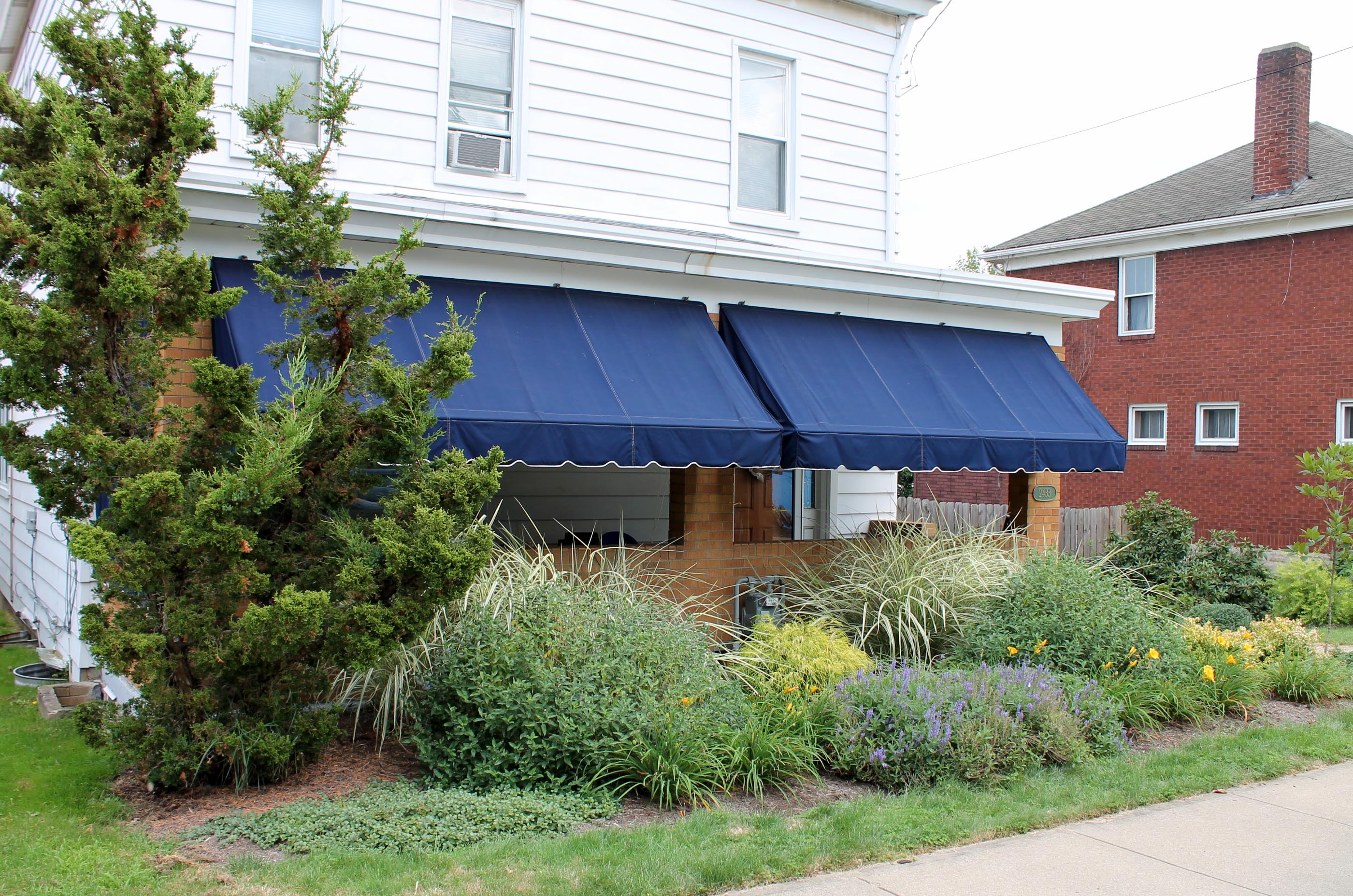
The Munhall makeover out front -- after.

   Once landscapes (like people) wear out or grow bigger than they ought to, it sometimes makes more sense to yank and start over than to try and fine-tune your way back into business.

   That’s the approach we’re taking at my son and daughter-in-law’s place in the small Pittsburgh-area borough of Munhall.

   Andy and Julie moved into an older home two springs ago that had two half-dead trees in the back yard, a skinny house-front bed of overgrown grasses and golden falsecypresses, and mostly grass and weeds everywhere else.

   But the hilly lot has a ton of landscape potential (the only part of home-ownership that I know much about). So for the last two summers, we’ve been working on a Munhall makeover. I just got back from phase two last week – installing a water garden on a back-yard slope.
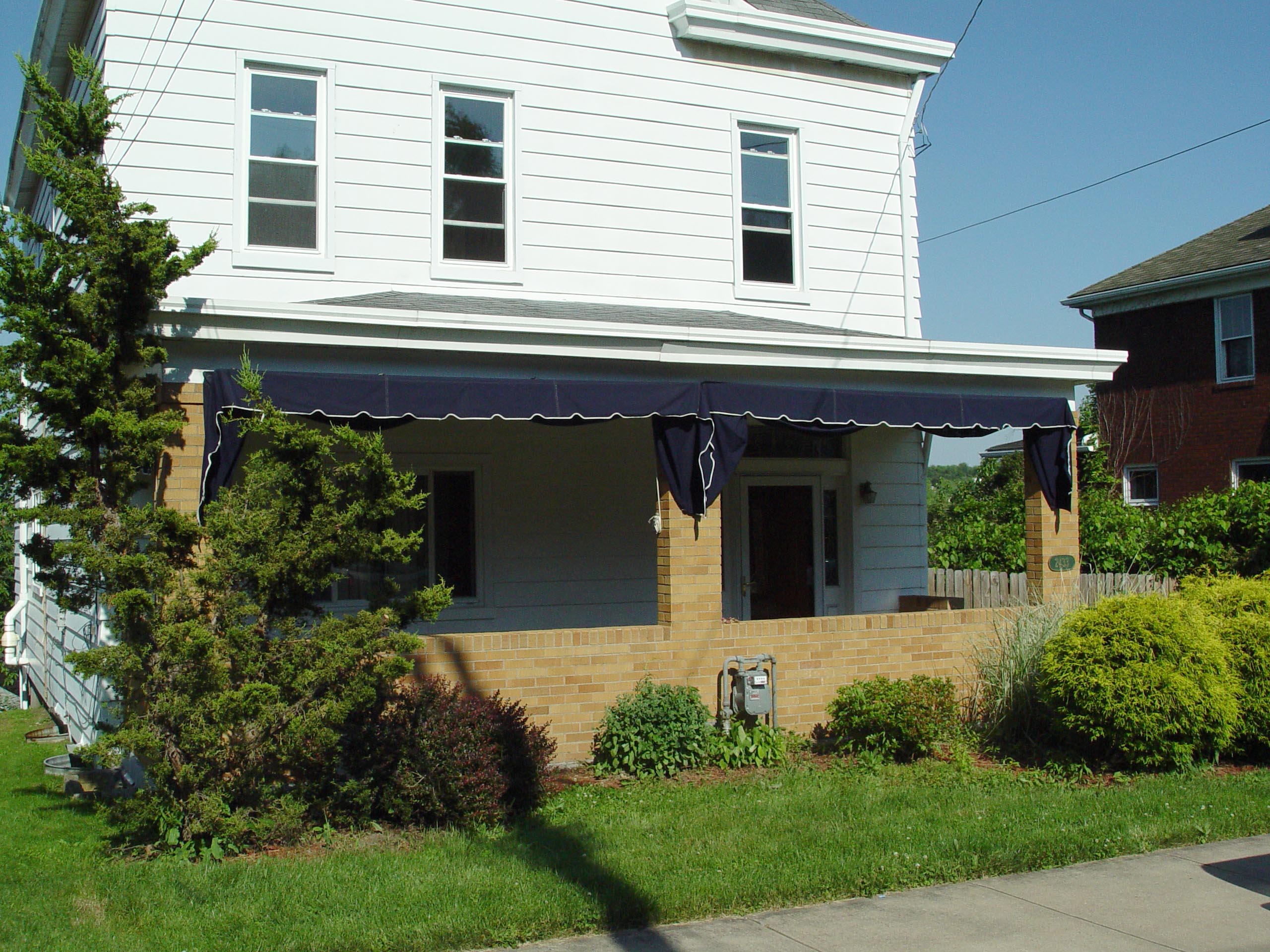
Munhall front landscape -- before.

   This area runs down a slope from the back covered patio. It’s a nice place to sit and look out over the valley.

   It wasn’t looking so good, though, with a rotted old cherry tree that had only one living limb. My son and a friend cut it down before it blew over like the other half-dead tree – a crabapple – that went down in a storm the day they moved in.

   We got a pre-formed pond for the hill and situated it near the top of the slope so A.) it’d be easily visible from the patio, and B.) the dropping water would muffle the sound of a nearby A/C unit.

   Leveling was the tricky part. We didn’t have to dig much (an advantage of building a pond on a slope), but we did have to wheelbarrow in 4 yards of topsoil to bring up the slope and create the new taper. We’ll add a retaining wall farther down and finish off the surrounding garden later.
Read More »


Doom for impatiens?

August 21st, 2012

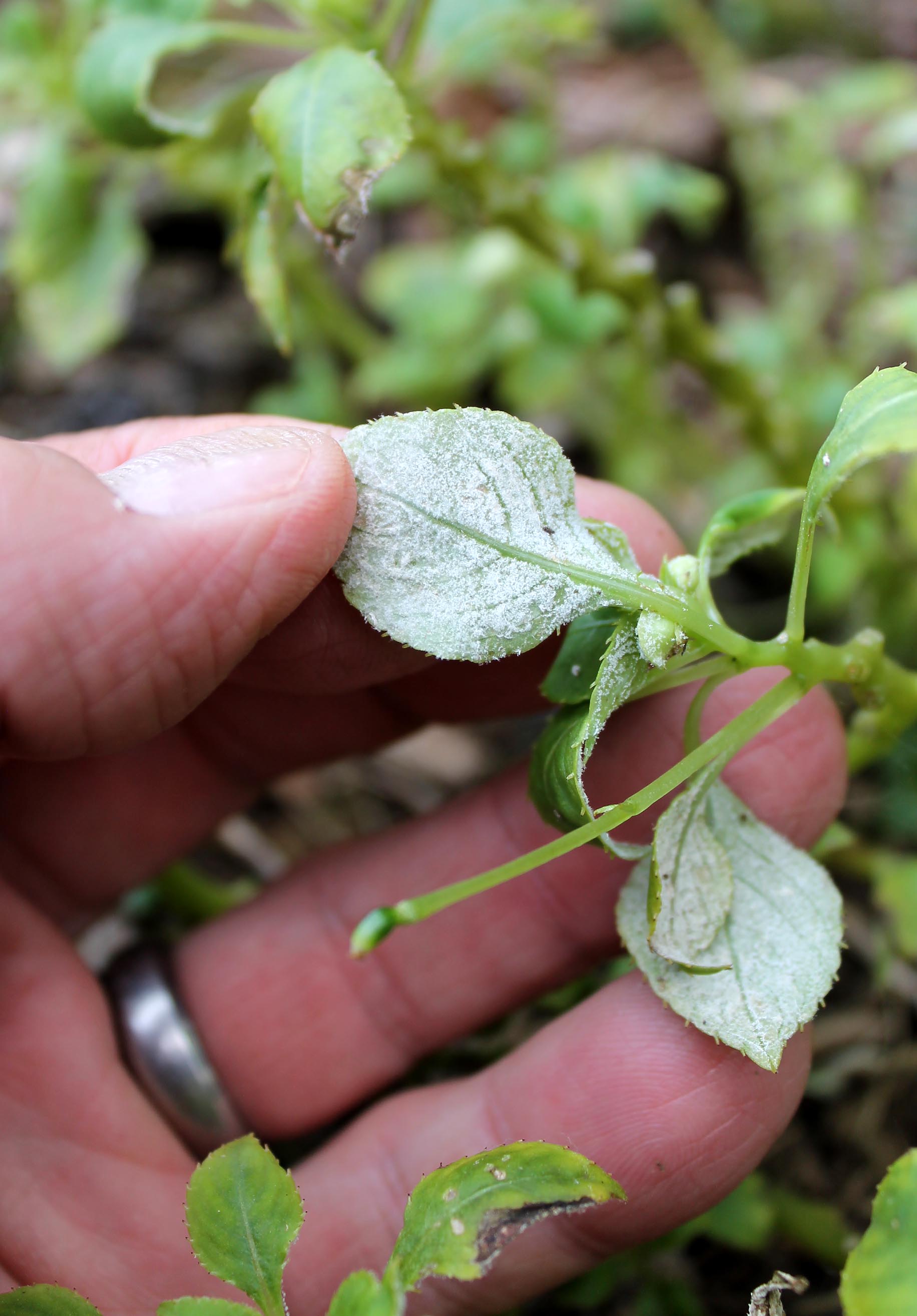
   Could this be the end of impatiens as we know them?

This downy mildew disease threatens to wipe impatiens off our gardening map.

   You’ve probably grown this popular flower. It’s America’s top-selling annual and our no-brainer, go-to choice for the shade.

   But now a virulent new disease strain of downy mildew is threatening to wipe impatiens off the gardening map.

   That’s already pretty much been the case in Europe, where some garden centers have stopped selling impatiens because the disease threat is so likely. It’s not known whether downy mildew will take a similar toll here, but some garden centers and growers already are advising gardeners to think twice about planting impatiens next year.

   I first heard about the problem two weeks ago when Deb Shearer at Ashcombe’s in Monroe Twp. said she’s been getting a lot of reports about it from gardeners.

   Then I did a talk at the Ames True Temper Community Garden, and a lady brought along a bag of dead impatiens to ask if I knew what caused the destruction. She said she had bought five different kinds at five different places, and all of them were melting away.

   The problem is caused by a fungi-like water mold that’s deadly to almost all impatiens. There is no cure. The disease spores overwinter and can survive in infected soil for at least a year — maybe several years.

   Commercial greenhouses have chemicals that can keep a lid on the problem, but once out in the real world, airborne spores can quickly infect plants.

   Even if you try to spray, no fungicides that a homeowner can buy are very effective. Even then, you’d have to spray weekly. And that would get very expensive very quickly.

Read More »


Gardening Guesswork

August 14th, 2012

Gardening is not easy, if you haven’t figured that out yet.

The Penn's Woods garden at the Governor's Residence.

It’s especially frustrating when you plant something that’s supposed to work in what you think is a good spot, only to see it struggle. Or croak.

The more you know about plants and their little intricacies, the better your odds of sidestepping those trying surprises.

But even for experienced plant geeks, it’s still a guessing game. You never really know how a plant is going to perform in a given spot until you plant it and see.

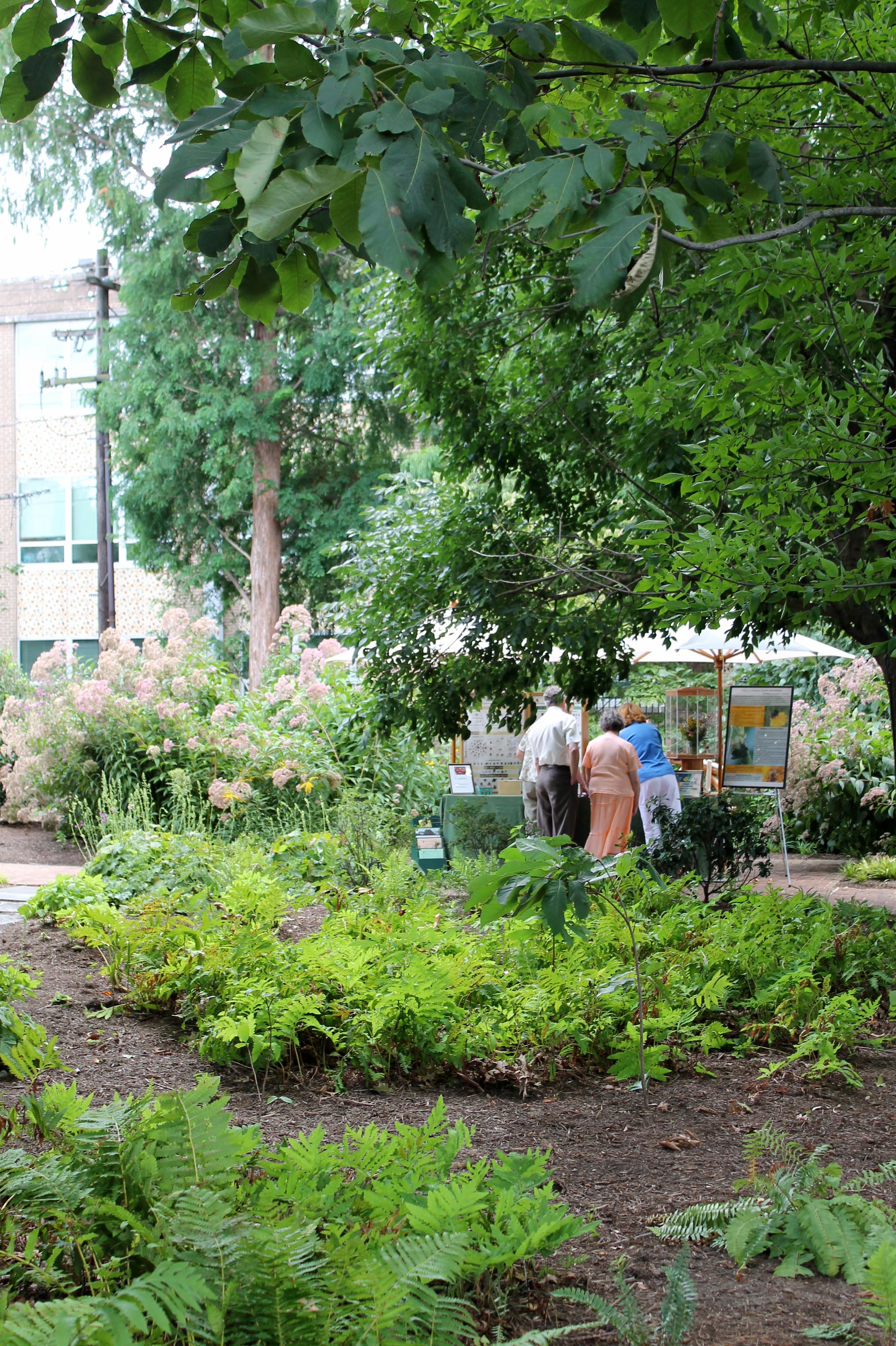
That’s what I’ve always found, so it was kind of comforting and reassuring to talk to Dennis Rydberg over at the Governor’s Residence on Sunday.

Dennis is a horticulturist who spent most of his career working for the state, including the Governor’s Residence at Front and MacClay streets since the 1990s. He’s now semi-retired.

What I found interesting is the difficulty the staff there has had getting the decade-old Penn’s Woods shade garden to thrive.

The idea of this garden – about the size of two tennis courts side by side – is to show off plants native to Pennsylvania. You’d think that would be easier than, say, growing masses of annuals or a garden full of supposedly finickier imported species.

But despite using “easy-to-grow” natives, this garden still has a lot of bare space.

Some plants have done well, but Rydberg says many others have “just sat there” or fizzled altogether.

Read More »


On the Fence

August 7th, 2012

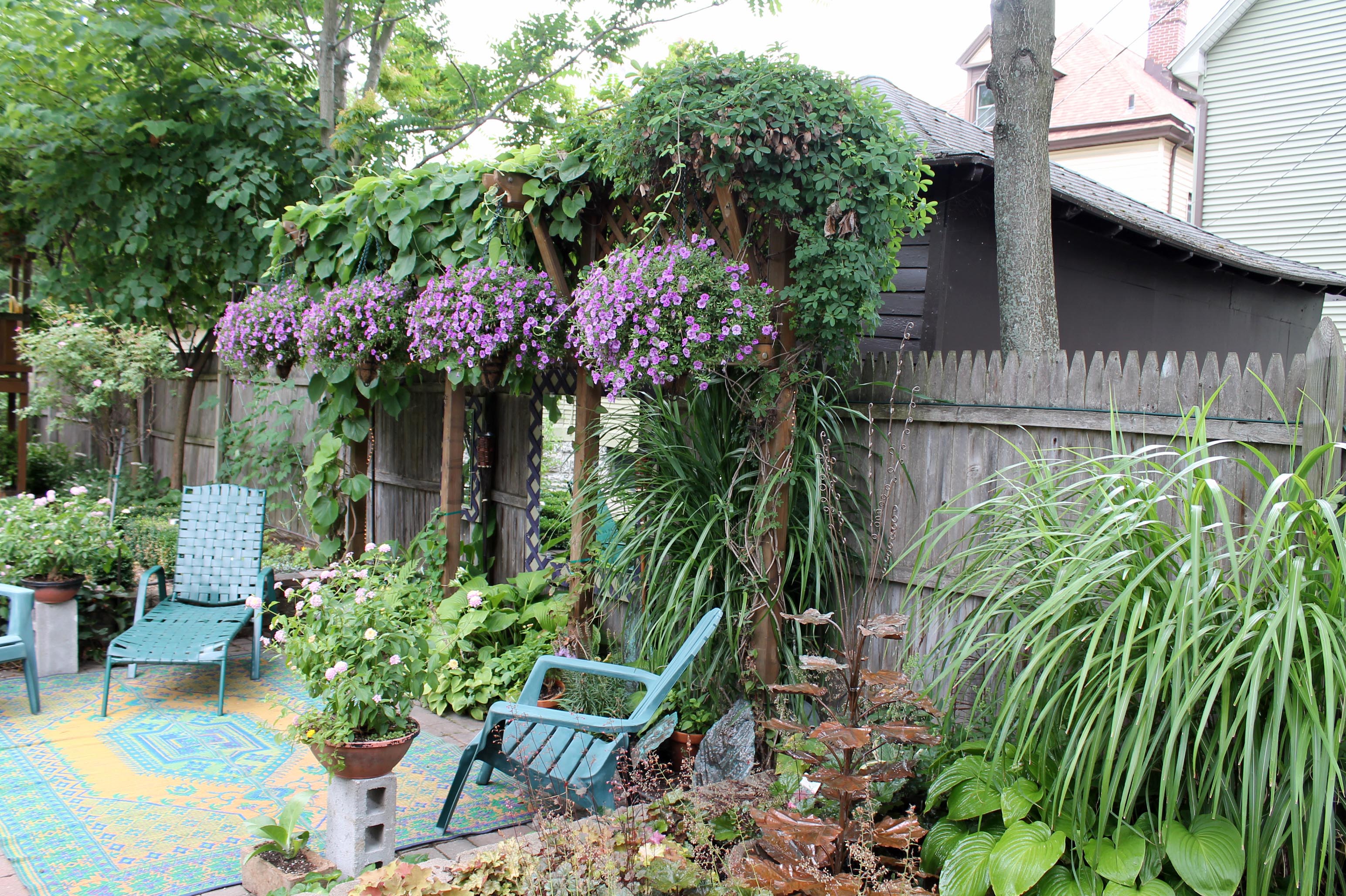
   Fences sometimes are a necessity when fast privacy is in order, especially in small yards and packed-in developments where bare decks seem like stages.

Dressing up a fence, Buffalo-style.

   While fences get the job done, they can act more as prison walls if you don’t dress them up.

   Nobody does this better than the city gardeners on Buffalo’s west side.

   Buffalo is the unlikely home of America’s biggest garden tour. One thing common among the 384 gardens that were on display this year was the many creative ways Buffalonians are dealing with their fences.

   I’m just back from leading a 3-day Lowee’s bus tour to see the 17th annual Garden Walk Buffalo and thought I’d share some of this northern creativity with you and your fences.

   The most obvious fence-dresser was vines, which give eye-level color and screening while taking up hardly any garden space.

   Some folks were growing self-climbers like English ivy, Boston ivy and climbing hydrangea right up fences and walls, but most have erected trellises or similar supports for twiners (clematis and climbing roses being the most common).

Fence-decorating a la inside wall.

   One gardener was growing a trumpet creeper up a dead tree. Another was growing climbing roses up lattice panels that were inserted in place of solid panels at strategic points along the fence. And another was using what looked like a mounted metal bed frame.

   Lots of gardeners were decorating their fences much as people do their inside walls.

   I saw faux window frames, stained-glass plaques, colorful dishes, butterfly boxes, assorted “found” objects, mirrors and even pictures and paintings – although I’m not sure if they stay mounted out there all season.

   Flat-backed hanging baskets and pots were other common fence-mounts. They hug fences nicely and allow for billowing flowers of all sorts to give color to otherwise barren space.

Read More »


Perennial Favorites

July 31st, 2012

   My Patriot-News garden column this Thursday will be about the new perennial trial garden opening at Delaware’s Mt. Cuba Center (http://connect.pennlive.com/user/gweigel/posts.html).

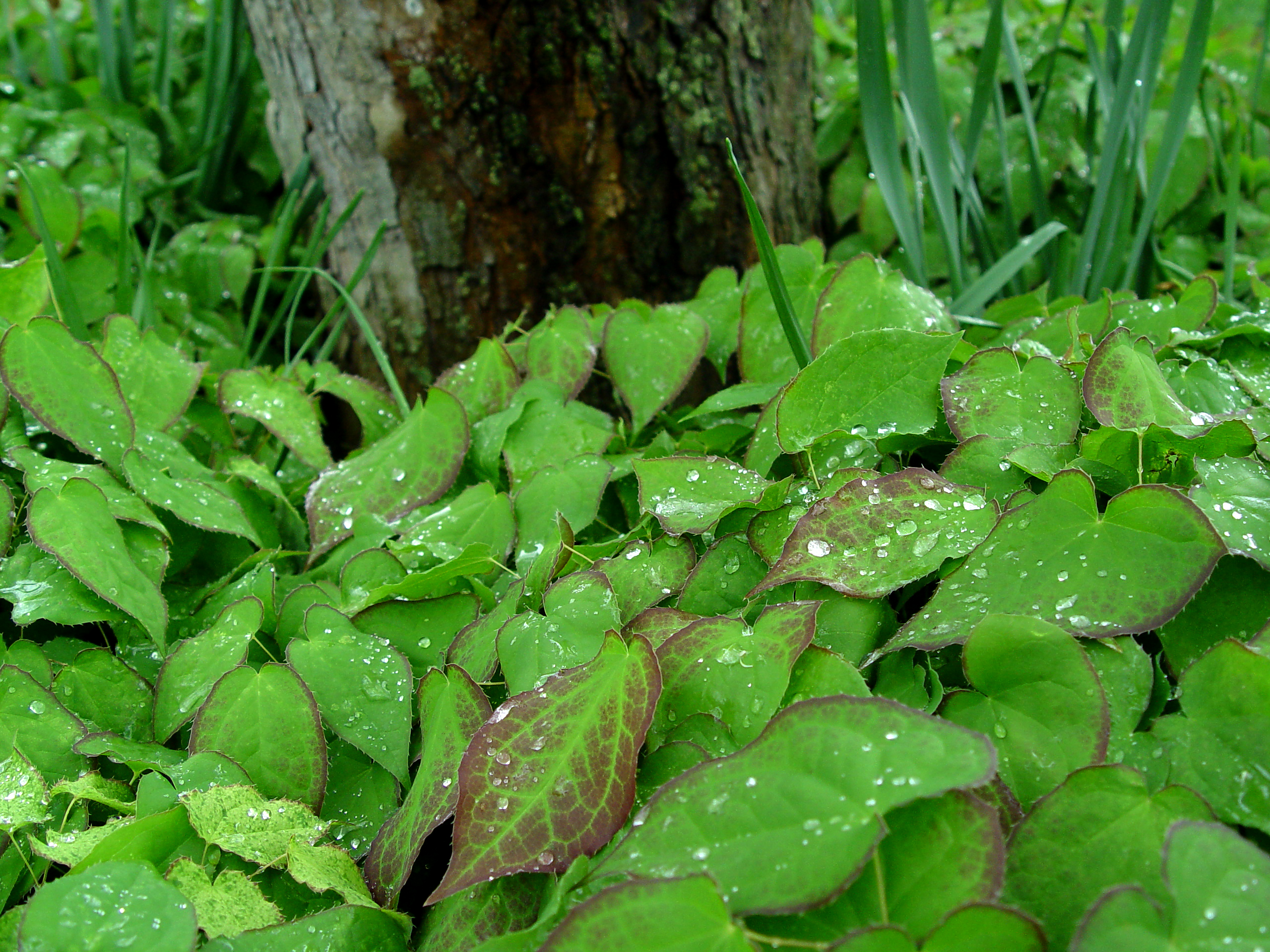
Barrenwort 'Rubrum' after a rain.

    This native-focused public garden is test-growing hundreds of different varieties of coreopsis, coralbells, baptisia and more in what will be an ongoing trial ground that all can see. You can even vote for your favorites.

   It got me to thinking about some of the perennials that I’ve found to be the best — at least in my garden. I thought I’d share a few of them with you…

   * Astilbe ‘Visions.’ This is one of the few series of astilbes that don’t fry out at the first sign of heat and dry weather in summer. I also like ‘Pumila’ for the same reason.

   * Aster ‘Bluebird.’ This fall-blooming native (violet) outscored all competition in a past Mt. Cuba trial, and it may well be the best tall aster out there.

   * Barrenwort ‘Rubrum.’ The whole Epimedium family is way under-used, but ‘Rubrum’ has always done spectacularly well for me in dry shade under a dogwood tree. Love the heart-shaped leaves that are edged in burgundy in spring and fall.

   * Beebalm ‘Jacob Kline.’ One of the few beebalms that don’t get rampant powdery mildew. Tall and red and native.

   * Catmint ‘Walker’s Low.’ Blooms about as long as anything, and is an excellent bee-attractor as well as totally bullet-proof in drought. Just cut it back in mid-summer or try the dwarf ‘Kit Cat’ or ‘Blue Ice’ varieties.

   * Coneflower ‘Pixie Meadowbrite.’ Big flowers on a short plant. This one also scored very high in a past Mt. Cuba Center trial of dozens of coneflowers.

Read More »


« Older Ramblings and Readlings Newer Ramblings and Readlings »

  • Home
  • Garden House-Calls
  • George's Talks & Trips
  • Disclosure

© 2026 George Weigel | Site designed and programmed by Pittsburgh Web Developer Andy Weigel using WordPress