



Transplantaphobia
September 2nd, 2015
One difference between veteran gardeners and rookies is that vets aren’t afraid to move plants.
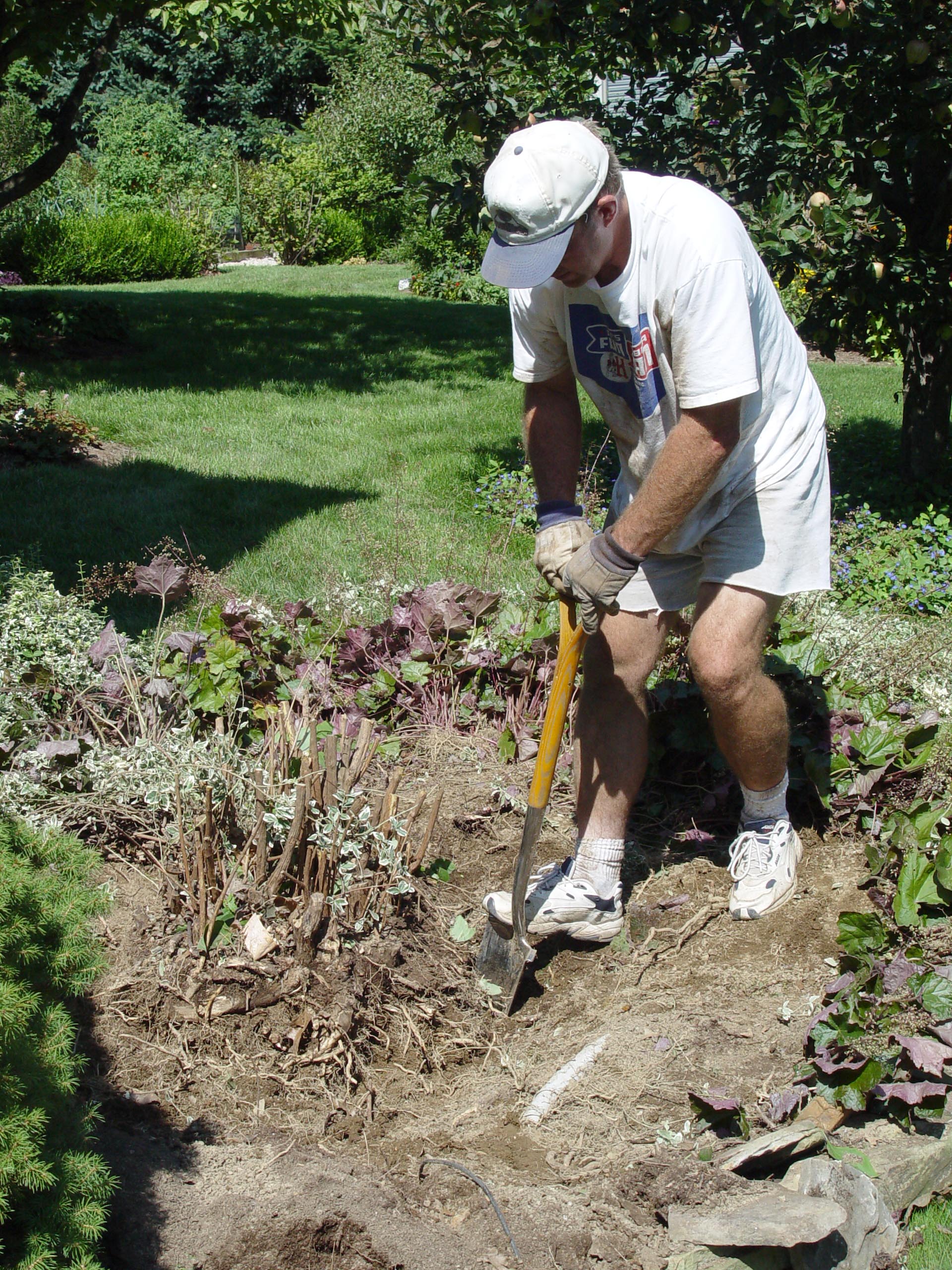
Veteran gardeners have moved every plant in their yard a minimum of three times.
Beginners tend to be gun-shy. Enough bad stuff happens in gardening that when a beginner manages to get a plant to live, the last thing he/she wants to do is risk killing it by messing with it in any way.
A veteran gardener, on the other hand, has moved every plant in the yard a minimum of three times.
Sometimes it’s a case of moving for better effect or because you’ve shifted gears and want a new look.
But other times, you’re doing plants a favor by moving them from a struggling situation to one where they’ll be happier.
You can almost hear azaleas moaning in clay-infested, west-facing, sun-blasted foundations or see burgundy Japanese maple leaves turn to toast right before your eyes in the wind-whipped front yard.
The sooner you make amends to siting miscues, the better.
Transplant success is highest when you recognize a problem early and try again within the first year or two.
It’s possible to move even a big and mature plant, but it’s much iffier. The main reason: you’ll be doing more root damage when digging up a plant with an established root system.
With younger plants, you’ll be able to dig up most of the root system intact.
Timing is another factor. Early fall is one of the year’s two best times for “editing” the landscape.
September and October are months when temperatures are cooling, moisture loss through the leaves is slowing, and rain becomes more plentiful (we hope).
It’s also a time when the soil is still warm enough to promote good root growth – highly important early on for any new or moved plant.
As with all things gardening, there are exceptions.
Plants are best not moved when they’re in the midst of blooming. That means it’s best to wait until that other good transplant window – end of March through April – to move fare such as mums, asters, sedum, caryopteris, roses and butterfly bush.
Borderline-hardy plants also survive moves better in spring when their first challenge isn’t a sudden October deep freeze. This would include crape myrtle, nandina, hardy camellia, Arizona cypress and cherry laurel.
Veteran plant-movers know a few other tricks to jack up the odds.
One is making sure the plants are well hydrated before and after any transplant.
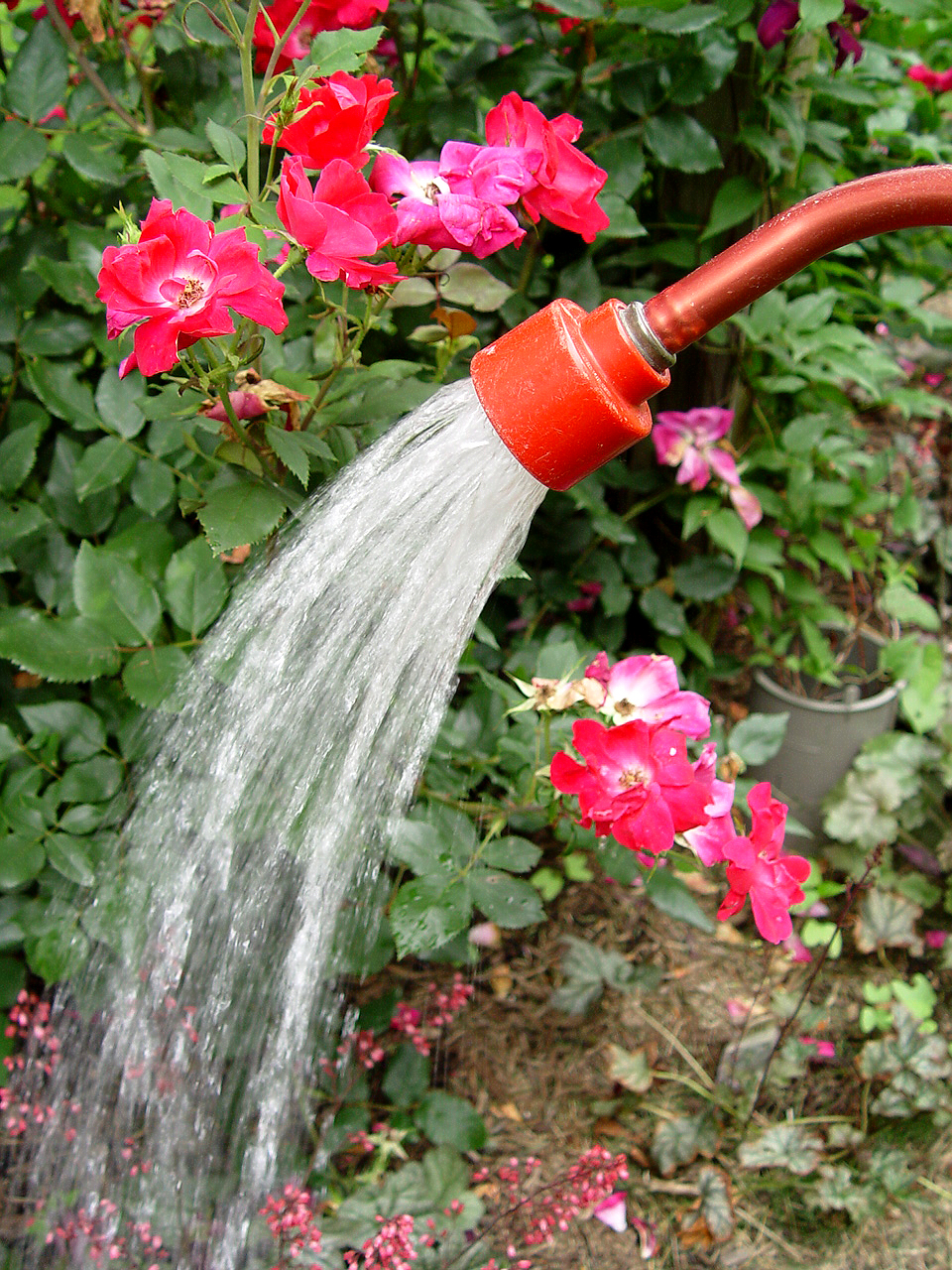
Your best friend in transplanting — water.
If it’s been dry, soak the soil well a few days before transplanting. Then once the plants are in their new home, figure on watering well about twice a week for the first six weeks (less if rain cooperates) and then once a week for the first full year.
Basically, treat a moved plant as a new plant water-wise.
Some studies have shown there’s a marginal benefit of spraying leaves before a move with an anti-transpirant such as Wilt-Pruf or No-Wilt Plant Shield. Others, however, have shown no benefit. I generally skip them and focus more on getting as much of the rootball as I can and keeping soil around the transplanted plant consistently damp.
Some people also suggest using root-encouraging products, but most research has found they’re also of negligible help, including the mycorrhizal products that have come along lately in addition to the vitamin and hormone mixes.
Moving a plant not only helps correct sun or wind woes, it gives you a chance to undo the stunting effects of crummy clay subsoil or too-deep plantings.
A soil test of the intended new site isn’t a bad idea. This will tell you if you need to acidify the soil (sulfur), make it more alkaline (lime) or add a particular nutrient you’re lacking.
Do-it-yourself Penn State mail-in soil-test kits are available for $9-$10 at county Extension offices and most garden centers.
Otherwise, just work in an inch or two of compost and keep the transplanted plant watered.
A few successes and your transplantaphobia will be cured.



Is September 24 too late to plant a climbing hydrangia? (sp.?) Is there a shade loving, damp ground climbing hydrangia? Thank you.
Mary
Late September through the end of October is fine for planting a climbing hydrangea, as well as most everything else that’s winter-hardy. The same climbing hydrangea that most people grow up walls and pergolas can be used as a shady groundcover. Without something to grab onto, this plant will ramble along the ground.
George
Great article - I have a number of plants that ought to be moved, but fear, time, and physical problems keep waylaying my intent. Since confirmed gardeners are supposed to move every plant three times - I had better get busy digging!
Margaret
Hi George, thanks for the great info on your website & newsletter! I wanted to transplant some obedient plant this week that is in bloom. Can’t I just cut off the flowers so that it forces the plant to put their energy into new roots when I transplant? Thanks!
George - I use Bio-tone Starter Plus when transplanting. Am I wasting my money?
Ronda
Hi Ronda,
That might offer a slight benefit at best, but you don’t need to use it. People have been transplanting plants for centuries before that and other transplant aids came along.
It does help to bring along a little soil from the previous site, which contains beneficial fungi that has colonized. Most important is keeping the new site consistently damp.
Theresa,
It’s best to transplant when plants aren’t in bloom, but that doesn’t mean a plant (especially a vigorous one like obedient plant) will die if do it then. Now is a fairly good time of year to transplant most things as the weather cools, the day length shortens and plants in general store energy in the roots.
I think that if you cut off the flowers, do the move during a cloudy spell and especially keep it well watered until the ground freezes, you’ll have excellent survival odds.