


Cherokee sedge
* Common name: Cherokee sedge
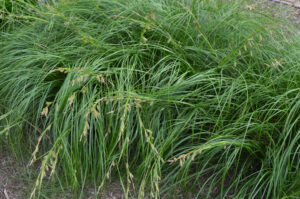
Cherokee sedge
Credit: Mt. Cuba Center
* Botanical name: Carex cherokeensis
* What it is: Cherokee sedge is a foot-tall, gently arching, grass-like perennial that’s especially well suited for damp, shady spots.
Native to the southern United States, it produces tan, wheat-like seedheads in mid-spring, and the dark-green blades keep their color throughout most winters.
Cherokee sedge is also adaptable enough that it’ll grow in sunnier sites (especially if kept damp), and it has the added benefit of hardly ever being eaten by deer.
This particular sedge tests out as one of the strongest performers of the large sedge family as it tied for the best variety in the shade out of 70 sedges trialed at Mt. Cuba Center in Delaware. It also was good enough to earn a 2025 Gold Medal Award from the Pennsylvania Horticultural Society as a plant deserving greater use in home landscapes.
* Size: Plants grow 12 to 18 inches tall. Clumps expand slowly to about 18 to 24 inches.
* Where to use: Because sedges prefer damp shade, they work best mixed in a shade garden, edging a woodland path, or along the east or north house foundation. They also look good edging or as specimens around a water garden or a bog garden, and they can be massed to make a shady, spiky-textured groundcover as an alternative to lawn.
Cherokee sedge’s sun tolerance makes it a good choice in a sunny or shaded rain garden.
* Care: Foliage is evergreen through most Pennsylvania winters, so wait until early spring to give plants a light haircut, removing only the brown tips or ratty foliage. Don’t cut completely back to the ground.
Fertilizer usually isn’t needed. Clumps can be dug, divided, and transplanted in early spring.
Although plants are good at surviving in even dry shade locations, watering in dry weather aids growth.
* Great partner: Sedges’ grassy look plays best with broad-leafed foliage. In shade gardens, good partners are hosta, ligularia, and coralbells. Ferns are also good shady perennial partners. Shade-preferring, white-blooming annuals make good summer partners, such as impatiens, torenia, or begonias. Smooth hydrangeas and fothergilla are two white-blooming shrubs that like the same damp, shaded locations as Cherokee sedge.