• Home
  • Contact
  • Site Map
George Weigel - Central PA Gardening
  • Landscape 1
  • Landscape 2
  • Landscape 3
  • Landscape 4
  • Garden House-Calls
  • George's Talks & Trips
  • PennLive Q&A Blog
  • Patriot News Garden Column
  • Buy Helpful Info

Navigation

  • Ramblings and Readlings Home
  • George's Garden Videos
  • Storage Shed (Useful Past Columns)
  • About George
  • Sign Up for George's FREE E-Column
  • Plant Profiles
  • Timely Tips
  • George's Favorite Stuff
  • Photo Galleries
  • Public Gardens Worth Seeing
  • Links and Resources
  • Plant a Row for the Hungry
  • Browse by Date


Want George to help improve
your landscape?

Click Here


Need help in the yard?

Click Here


Has the info here been useful? Help pay for George’s plant bill by clicking below.

George's Current Ramblings and Readlings

A Nip of Frost

May 21st, 2013

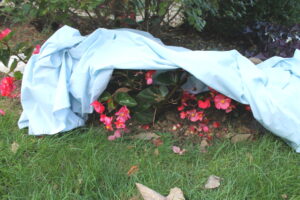
   Those couple of cold mid-May nights last week nipped the tips of some of my tender young peppers, tomatoes and basil.

This baby pepper got nipped by frost.

This baby pepper got nipped by frost.

   That was only the second time that’s happened to me in nearly 30 years of gardening in the suburbs of Hampden Twp.

   It’s rare around here to get frost damage beyond Mother’s Day. Most years, it’s safe sailing by the end of April.

   What I usually do is hold off on planting the tender stuff (i.e. annual flowers and warm-weather veggies) until early May, then look at the 7-day forecasted lows.

   When the overnight lows aren’t supposed to dip below 40, I plant – figuring that by the time we then get to mid-May, we’ll be at the all-time record late frost date for Harrisburg.

   According to the area’s “official” weather records from Harrisburg International Airport, our all-time latest killing frost is May 11. The average last killing frost is April 20.

   It’s not unusual for frosts to happen later than that to the north of here and in outlying areas, which is why Halifaxers and Newporters often wait until close to Memorial Day to plant their tomatoes and petunias.

   What happened last week was a freak return to the freezing point after a string of normal above-freezing weather.

Read More »


What Blooms When in Central Pennsylvania

May 14th, 2013

   One way to have a succession of landscape color throughout the growing season is to pick bulbs, perennials and flowering shrubs that bloom at different points in the season.

It takes some blooming knowledge and planning to have the garden look good all season.

It takes some blooming knowledge and planning to have the garden look good all season.

   As the flowers of one fades, another picks up the slack and keeps the symphony going even beyond fall frost.

    The key to making it work is knowing what peaks when.

    Although each season’s weather can make a couple of weeks’ difference one way or the other, here’s a list of what typically peaks during which months in south-central Pennsylvania to help you with your spring-planting plans:

March

   * Bulbs: Crocuses, early daffodils, Iris reticulata, snowdrops, winter aconite. 

   * Perennials: Lenten rose (Helleborus).

   * Trees/Shrubs: Cornelian cherry dogwood, forsythia, Oregon grape holly, spicebush, star magnolia, sweetbox, witch hazel.

April

   * Bulbs: Crocuses, daffodils, Dutch hyacinths, early tulips, glory-of-the-snow, grape hyacinths, Grecian windflowers (Anemone), fritillaria, Siberian squill, spring snowflakes (Leucojum), striped squill (Puschkinia).

   * Perennials:  Barrenwort, bergenia, bleeding heart, bloodroot, brunnera, columbine, creeping phlox, euphorbia, foamflowers, lamium, Lenten rose, myrtle (Vinca minor), primrose, pulmonaria, rock cress,Virginia bluebells. 

Read More »


Mulch Thought Went into This

May 7th, 2013


A sign of spring.

A sign of spring.

   Now’s the time of year when driveways all across suburbia start sprouting large brown mounds.

   That’s right, it’s prime time for mulching. And this is one gardening job that most people time correctly.

   Mulch is our front-line weed defense, and it makes sense to get it down before most weeds germinate, yet not so early that you’re keeping the soil from warming up at the end of a cold, wet spring.

   The dilemma I always run into is cramming mulch work into that narrow window between when the spring bulbs are ready to come down and new annuals are ready to go in.

   If you don’t do much in the way of daffs and tulips and hyacinths, it’s much easier. Just get your new mulch layer down before the perennials get going and before you plant your annuals. You’ve got weeks from early April to mid-May in that case.

   Some people mulch first and then plant their annuals.

   Either way is fine. Just go easy on any mulch around annuals. One inch is plenty… and keep it back from touching the tender, young stems.

   What gets me as an obsessive bulb-planter is that my bulb foliage usually isn’t “ripe” enough to cut yet when I’d like to get my summer annuals planted in that space (right around Mother’s Day).

   You’ll weaken the bulbs and their future bloomability if you cut the foliage while it’s still green and making nutrition.

   So what I do is mulch around the bulb foliage, then plant the annuals as soon as I cut the bulb foliage in a few weeks. It’s not an ideal arrangement, but at least the mulching is done before the bulb/annual switchover.

   If I had the time, I’d do it all in one shot in this order: A.) Cut the bulb foliage when it’s yellowing, B.) Lay down a fresh 1-inch layer of mulch where the annuals will go (assuming there’s not already an inch left over), and C.) Plant the new annuals into it.

   Since that’s not going to happen any time this side of retirement, I do what I can when I can. Lately, I’ve been shifting about half of my mulching to fall after the annuals are out and many of the perennials are cut back.

   While an inch is plenty around annuals, 1 to 2 inches is good for around perennials and 2 to 3 inches is good for around trees and shrubs. That’s total, by the way. If you’re shooting for a 2-inch layer, for example, and you already have an inch left from last year, then just add a 1-inch topping.

   Don’t keep dumping more and more on top so you end up with a thick crust that can interfere with the soil’s oxygen intake and its ability to take on water in dry weather and give it up after a heavy rain.

   That brings us to the big question of what kind of mulch to use. For what it’s worth, here’s my Twitterish opinions on various types:

Read More »


Brent and Becky

April 30th, 2013

   Southeastern Virginia doesn’t strike me as a likely hot spot (irony intended) for spring bulbs.

Brent and Becky's Chesapeake Bay Friendly Gardens.

Brent and Becky’s Chesapeake Bay Friendly Gardens.

   Crape myrtles and camellias seem a lot more fitting for the steamy summers near Williamsburg than tulips and daffodils.

   Holland it’s not.

   Yet Gloucester  County is known as the “daffodil capital of America.” It stages a popular Daffodil Festival early each April and is home to America’s premier bulb company – Brent and Becky’s Bulbs.

   I’ve known Brent and Becky Heath for years through the Garden Writers Association. I’ve ordered from their catalog (one of Dave’s Garden Watchdog’s top five bulb companies), grown their bulbs and read their books (“Tulips for North American Gardens” and “Daffodils for North American Gardens”).

   But up until 2 weeks ago, I’d never been to their place.

   It’s actually good I waited because the Heaths’ latest adventure is a Bulb Shoppe and Gardens – a new springtime destination that’s a sort of living bulb catalog.

   The Shoppe part is a bulbster’s garden center, filled this time of year with a wall full of summer bulbs, corms and tubers as well as benches full of spring-blooming, potted tulips, daffodils, hyacinths, etc. for those who didn’t/couldn’t plant last fall. (Watch my video on how and when to plant spring bulbs.)

Read More »


Lessons of Our Foregardeners

April 23rd, 2013

   I’m just back from a garden trip to Virginia, where the season is a good 2 weeks ahead of ours.

Wesley Greene watering with a Williamsburg visitor.

Wesley Greene watering with a Williamsburg visitor.

   They’re in our May mode already with azaleas and viburnums in full bloom, tree pollen coating cars yellow, and even the first few ‘Knock Out’ rose flowers poking out.

   One of my stops took me to Colonial Williamsburg, where I got to meet garden historian Wesley Greene, author of one of my favorite gardening books of 2012 – “Vegetable Gardening the Colonial Williamsburg Way” (Rodale Books, $30).  

   Greene founded Williamsburg’s Colonial Nursery on Duke of Gloucester Street and still works there, spending most days showing visitors how our foregardeners grew their food.

   The place is a cross between an 18th-century vegetable demo garden and a garden center with Colonial-era plants, seeds and gardening paraphernalia.

   I ran into Greene next to the purple Roman broccoli, a multi-shoot type that he says isn’t plagued by annoying cabbageworms nearly so much as our modern green-headed broccoli hybrids. It’s a good-looking plant in the garden, too.

   Greene gardens here like it’s 1760 – using rotted manure to build the soil and hand-carried water from a barrel (no hoses in those days).

   I’m always fascinated by this place and by how people grew their food 250 years ago.

   They were actually very clever.

Read More »


« Older Ramblings and Readlings

George's Certifications
  • Home
  • Garden House-Calls
  • George's Talks & Trips
  • Disclosure

© 2013 George Weigel | Site designed and programmed by Pittsburgh Web Developer Andy Weigel using WordPress