
• Home
  • Contact
  • Site Map
George Weigel - Central PA Gardening
  • Landscape 1
  • Landscape 2
  • Landscape 3
  • Landscape 4
  • Garden Drawings
  • Talks & Trips
  • Patriot-News/Pennlive Posts
  • Buy Helpful Info

Navigation

  • Storage Shed (Useful Past Columns)
  • About George
  • Sign Up for George's Free E-Column
  • Plant Profiles
  • Timely Tips
  • George’s Handy Lists
  • George's Friends
  • Photo Galleries
  • Links and Resources
  • Support George’s Efforts


George’s new “50 American Public Gardens You Really Ought to See” e-book steers you to the top gardens to add to your bucket list.

Read More | Order Now


George’s “Survivor Plant List” is a 19-page booklet detailing hundreds of the toughest and highest-performing plants.

Click Here


Has the info here been useful? Support George’s efforts by clicking below.


Looking for other ways to support George?

Click Here

George's Current Ramblings and Readlings

The Steel City Garden

November 19th, 2013

   When my son and daughter-in-law moved into a century-old house in a small town near Pittsburgh, one of the first things we did (as you might guess) was fix the atrocious landscaping.

Andy and Leona in their Steel City Garden. By Doug Oster

Andy and Leona in their Steel City Garden.
By Doug Oster

   In case you’re not terribly familiar with Pittsburgh, everything in that part of the state is rabid black and gold. Those colors have their roots deep in the city’s history, and all three of the city’s beloved sports teams (Steelers, Pirates, Penguins) proudly bear the black and gold.

   So it seemed a natural to me that at least part of Andy and Julie’s front yard should have a Steel City garden of black and gold plants.

   I figured every garden center out there would be pushing those colors since, as one garden-center staffer confirmed, Yinzers (the slang term for Pittsburghers) buy ANYTHING if it’s got black and gold or a Steelers logo on it.

   Not so. None of the places we looked had any kind of Steel City garden display or any hint of a black-and-gold plant theme.

   We jerry-rigged our own little corner garden, though, featuring a ‘Black Lace’ elderberry, a couple of gold-leafed ‘Mellow Yellow’ spireas, a few clumps of black mondo grass, and black-eyed susans and gold mums for seasonal color.

   This may not be one of the apparent few Steel City gardens for much longer.

   A new book by award-winning Pittsburgh garden writer Doug Oster hit the market this week, and it’s all about designing a distinctly Pittsburghish garden.

   “The Steel City Garden: Creating a One-of-a-Kind Garden in Black and Gold” (St. Lynn’s Press, $17.95 hardcover) encourages planting Pittsburgh pride in the landscape and offers profiles on scores of gold plants, black plants and some that hit the Yinzer jackpot – both black and gold.
Read More »


Weirdo Vegetable Report

November 12th, 2013

   One of the best parts about home veggie gardening is that you get to try all sorts of things that don’t show up at the grocery store.

Door knobs soaked in hot-pepper sauce.

Door knobs soaked in hot-pepper sauce.

   Usually, the no-shows are no-shows because they don’t ship well, keep well or look good on the shelves.

   Sometimes it’s because a particular edible isn’t well known or just never caught on, so demand is too low to make it worth carrying.

   And sometimes it’s because the plant just plain tastes crappy.

   Gardeners with inquiring minds want to know which it is. So as we gardeners morph from beginner to experienced to lunatic, we try most anything and everything – just to see what it’s all about.

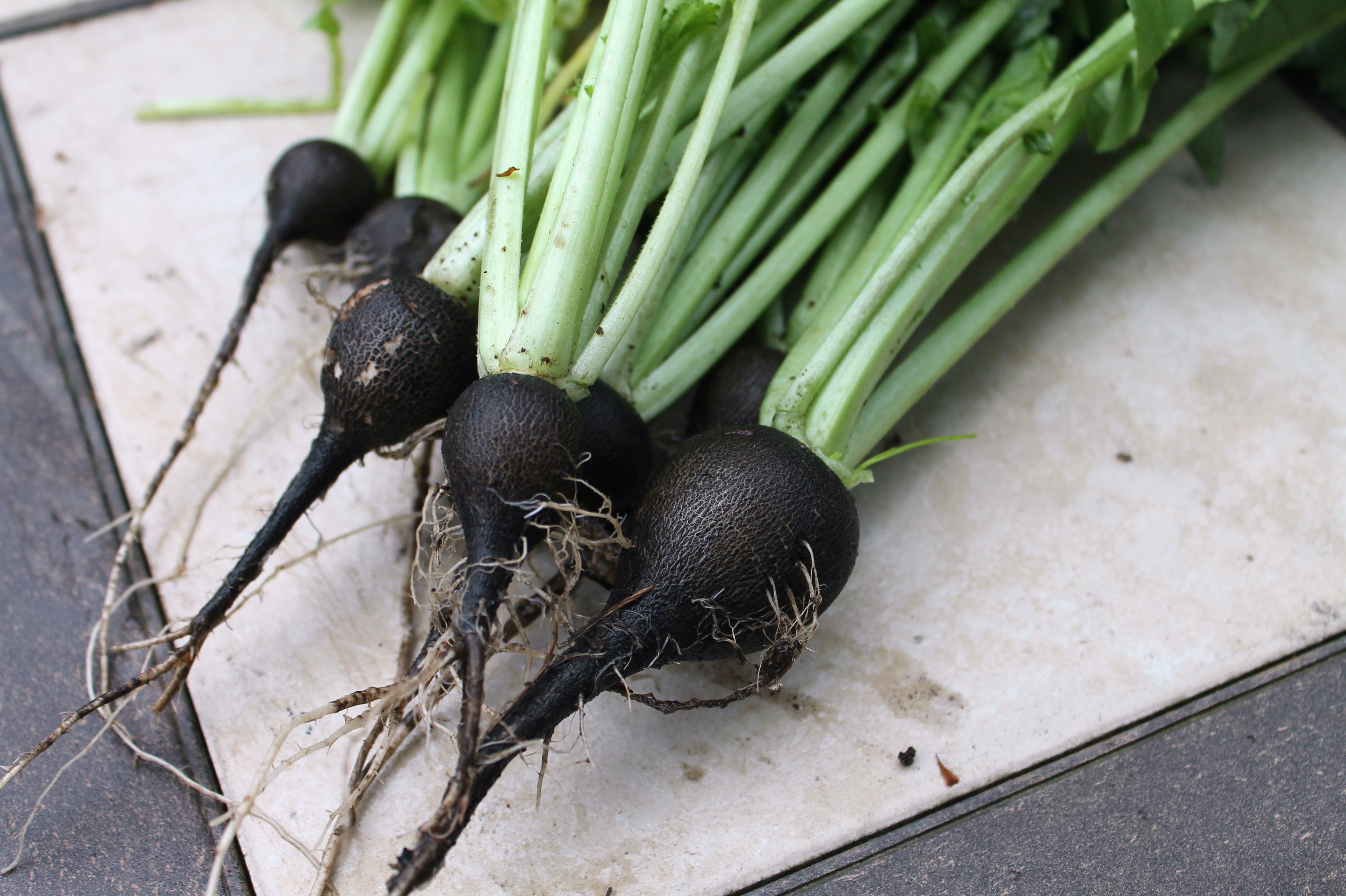
   For me, this year meant trying white beets, black radishes, artichokes, an improved duo of kohlrabi, a new variety of striped zucchini and Malabar spinach. The results…

   The white ‘Blankoma’ beets sounded like an interesting alternative to traditional red ones. Maybe they’d have a vanilla flavor?

   Actually, they didn’t grow well at all. The leaves bulked up nicely, but the roots were uneven in size and tasted more like dirt than beets to me. Scratch that one.

   ‘Nero Tondo’ is a black Spanish type of radish with white flesh and black skin. I grew a pack next to my usual red ‘Early Scarlet Globe’ and ‘Pink Beauty.’

   ‘Nero Tondo’ took a couple of weeks longer to size up. I sampled a few and found them to be hard, woody and hotter than many hot peppers. It was like eating a wooden door knob soaked in hot-pepper sauce.

Read More »


Cleanup or Sanitize?

November 5th, 2013

   Now that frost has ended another growing season (at least for the most part), lots of gardeners and yardeners are turning their attention to so-called “fall cleanup.”

There's a difference between cleaning up the landscape and sanitizing it.

There’s a difference between cleaning up the landscape and sanitizing it.

   This is where tradition has it that we’re to go out and rake every last leaf off the property, pull or cut those browned-out flowers, and basically do the outdoor equivalent of a spring house-cleaning.

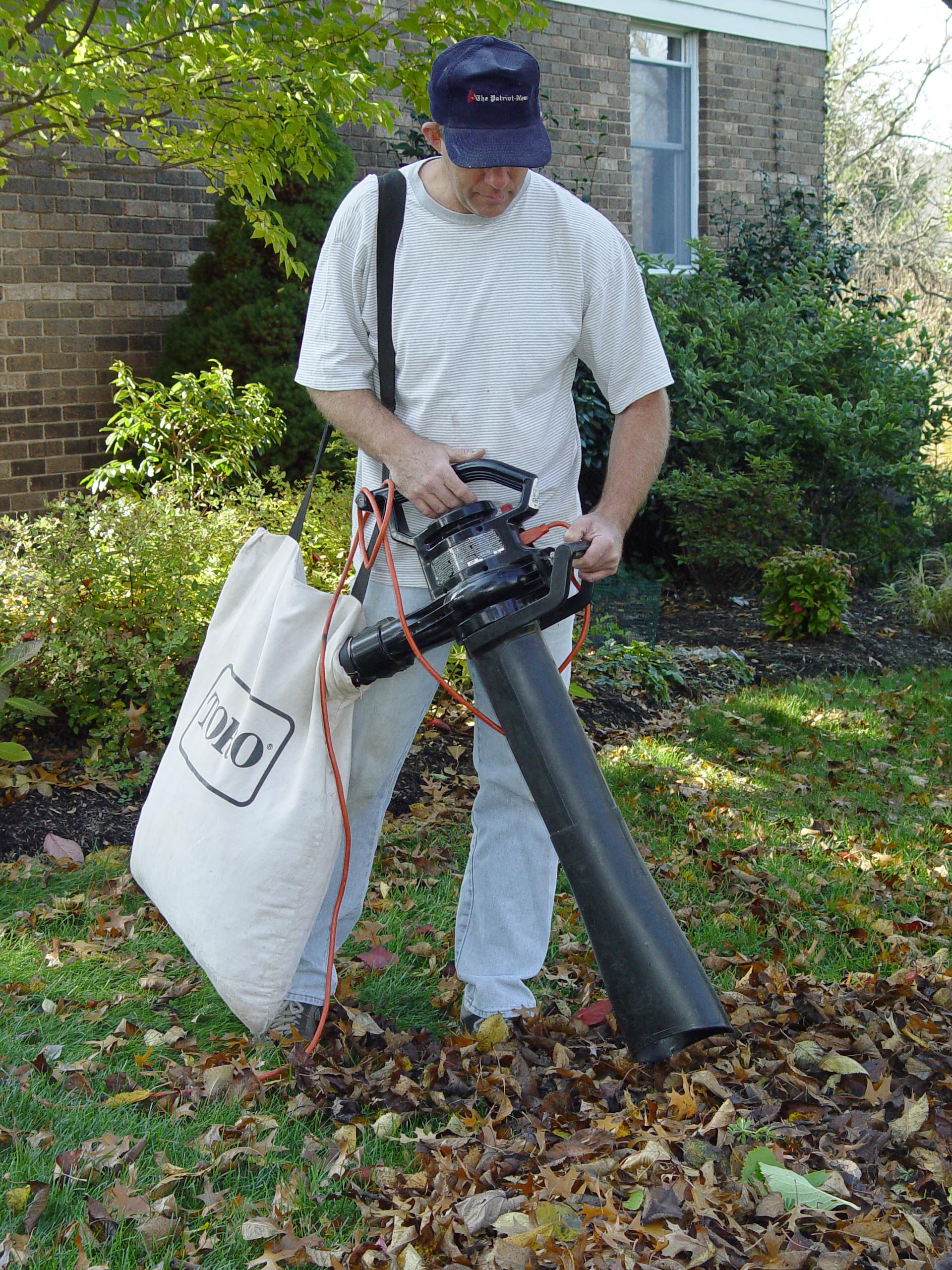
   Out come the leaf blowers, rakes, pruners, power shears, plastic bags and yes, even lawn vacs to cleanse the yard of anything that’s seen better days.

   At least it’s good exercise. But it’s also overkill and, in some cases, counter-productive.

   While some of this work makes good sense and is well timed, there’s a big difference between “putting the landscape to bed” and sanitizing the entire outside.

   Here’s a rundown to help you separate your fall “honey-do list” from the “honey-don’t list:”

 Lawn Leaves

   Honey-Don’t: Don’t automatically rake or blow lawn leaves out to the curb, or worse yet, stuff them in plastic bags for the landfill.

   Honey-Do: Run over light leaf coverings with your mower and let the fragments lie. They’ll decay and add nutrition and organic matter to the soil.

   Too many? Add them to your compost pile or use them as mulch in shrub beds and vegetable gardens (preferably chopped first). Move them to the curb as a last resort, not a first.

   At least municipalities now recycle the leaves back into compost, but you’re paying a fair chunk of tax dollars for the service.

Read More »


Garden Sitting Places

October 29th, 2013

   Gardeners tend not to sit a lot.

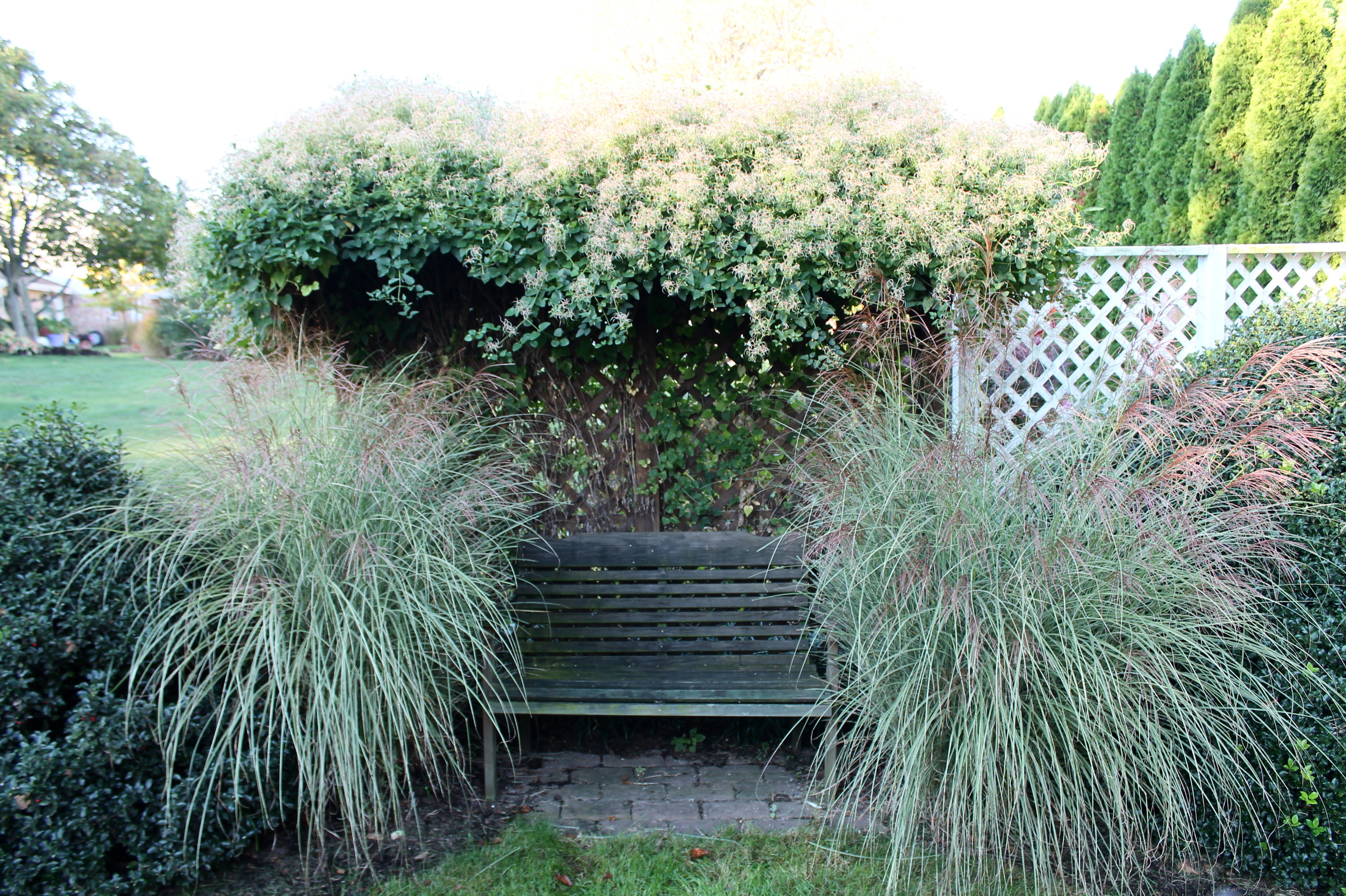
The sitting nook overlooking George's vegetable garden.

The sitting nook overlooking George’s vegetable garden.

   Maybe you’ve heard the line, “Garden benches are for purely ornamental purpose because gardeners never actually sit.”

   How true. There’s always one more weed to pull or one more daylily to deadhead. Gardens don’t weed and deadhead themselves, you know.

   I’ve been learning the value of sitting lately. Aging bones make a good teacher.

   And I’ve learned there’s no better place to sit than in a garden – or at least somewhere in the vicinity of plants.

   My favorite sitting spot is on a bench that looks into my back-yard, four-square vegetable garden – which happens to be my favorite garden.

   Years ago, my wife and I built a clematis-covered lattice wall with a 2-foot overhang that makes a little nook for this bench. Ornamental grasses flank both sides.

   The effect is a shady hiding place that oversees a corner of the world where all is peaceful and well and right – except when blight starts on the tomato plants or groundhogs show up.

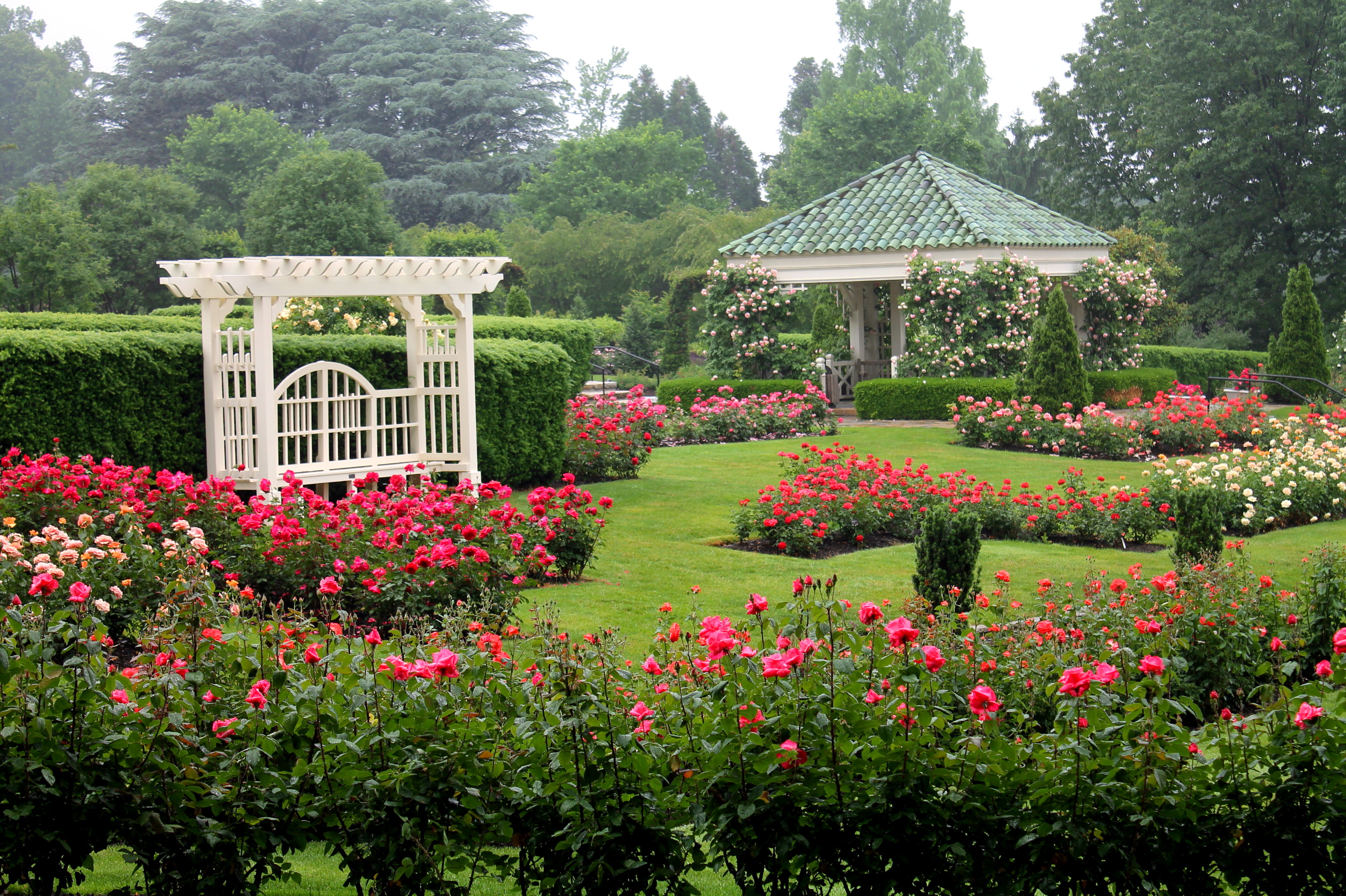
The arbor-bench at Hershey Gardens.

The arbor-bench at Hershey Gardens.

   But that’s for later. For now, I’ll enjoy the cheerful red peppers, the green, gray and burgundy leaves of the mesclun patch, and the last of the season’s green beans.

   This got me thinking about some other excellent garden settings where my butt has been parked – ones you also might want to check out sometime, such as:

Read More »


It’s Not Over Yet at Hershey Gardens

October 22nd, 2013

   Like all of our gardens and yards these days, Hershey Gardens is sliding into cold-weather hibernation.

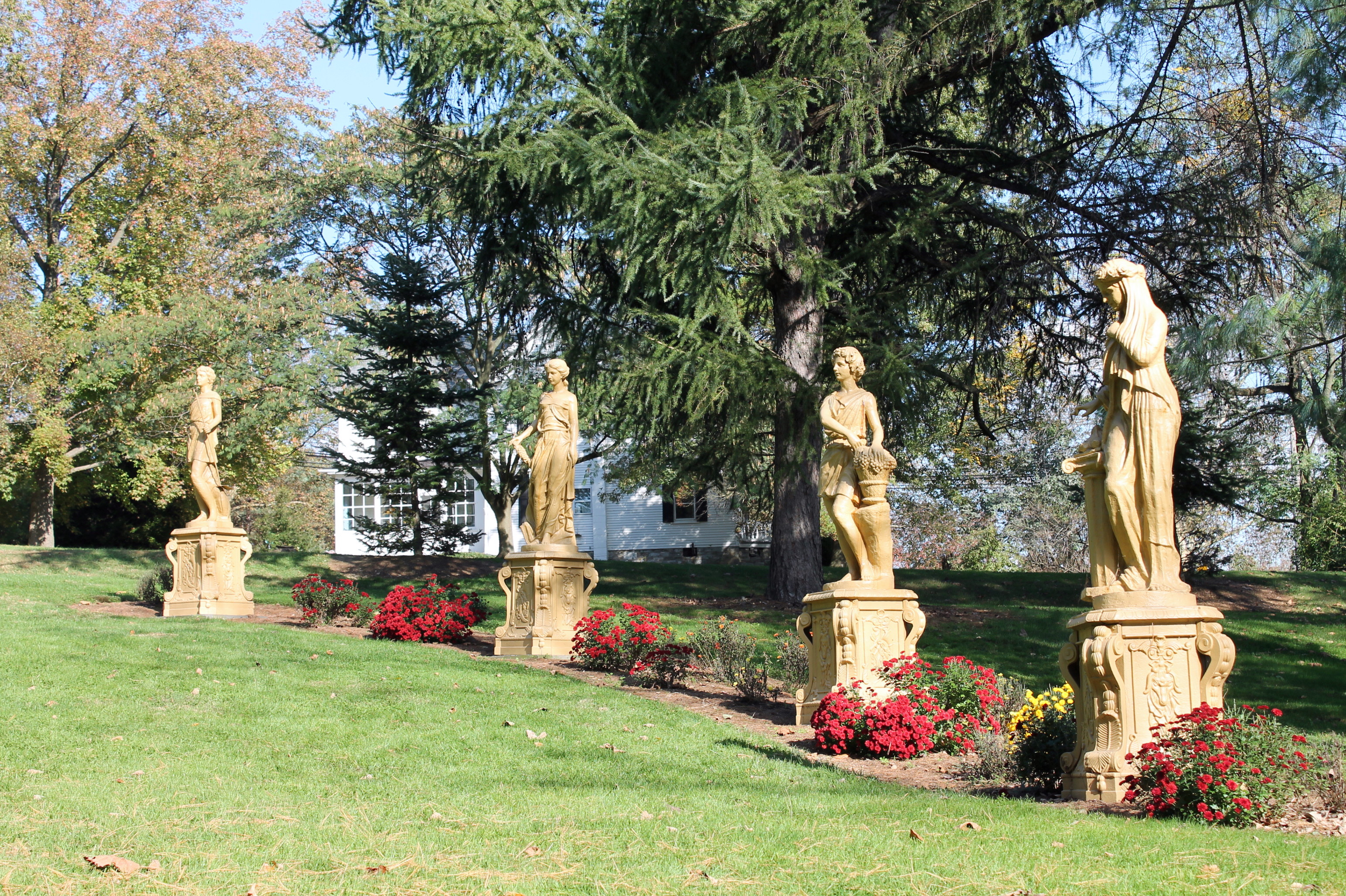
The Four Seasons Statues at Hershey Gardens.

The Four Seasons Statues at Hershey Gardens.

   But for all that’s done and dwindling, it’s amazing how much can be going on still in a mid-autumn garden.

   My wife and I spent the mildly crisp afternoon this past Sunday wandering Milton Hershey’s 23 acres just below Hotel Hershey.

   This was a “pleasure visit.” Usually when I’m over at Hershey Gardens, I’m covering an event or focusing on a particular something for a column.

   Not that those aren’t pleasurable… it’s just that this kind of visit gave me a chance to poke around the corners and peek under the hood.

   Have you ever seen the Four Seasons Statues at the far right end of the Gardens?

   I never did before Sunday. They’re at the edge of a peaceful, grassy plot near where Milton Hershey used to sit and read his newspaper in the evenings.

The Susquehanna Bonsai Club display in Hershey Gardens' Butterfly House. Notice the shadow of the "real" trees outside through the mesh covering.

The Susquehanna Bonsai Club display in Hershey Gardens’ Butterfly House. Notice the shadow of the “real” trees outside through the mesh covering.

   Did you know that a bonsai display is now in the Gardens’ Butterfly House? The Butterfly House closes in mid-September every year, and for the past couple of years, the Susquehanna Bonsai Club has set up about two dozen bonsai specimens in that previously unused fall space.

   The temporary bonsai display stays up until Nov. 10.

   There’s even some talk about someday building a permanent bonsai exhibit at the Gardens. Also a conservatory, if you’ve never heard that proposal.

   You might also be surprised to see how many roses are still blooming in the main Rose Garden.

   I’d estimate the show is still about 25 percent of peak June level – pretty good considering the Rose Garden has more than 5,000 rose bushes.

Read More »


« Older Ramblings and Readlings Newer Ramblings and Readlings »

  • Home
  • Garden House-Calls
  • George's Talks & Trips
  • Disclosure

© 2026 George Weigel | Site designed and programmed by Pittsburgh Web Developer Andy Weigel using WordPress