
• Home
  • Contact
  • Site Map
George Weigel - Central PA Gardening
  • Landscape 1
  • Landscape 2
  • Landscape 3
  • Landscape 4
  • Garden Drawings
  • Talks & Trips
  • Patriot-News/Pennlive Posts
  • Buy Helpful Info

Navigation

  • Storage Shed (Useful Past Columns)
  • About George
  • Sign Up for George's Free E-Column
  • Plant Profiles
  • Timely Tips
  • George’s Handy Lists
  • George's Friends
  • Photo Galleries
  • Links and Resources
  • Support George’s Efforts


George’s new “50 American Public Gardens You Really Ought to See” e-book steers you to the top gardens to add to your bucket list.

Read More | Order Now


George’s “Survivor Plant List” is a 19-page booklet detailing hundreds of the toughest and highest-performing plants.

Click Here


Has the info here been useful? Support George’s efforts by clicking below.


Looking for other ways to support George?

Click Here

George's Current Ramblings and Readlings

The Perfect Plant

July 1st, 2014

I thought I’d let you in on a secret this week – about the perfect plant.
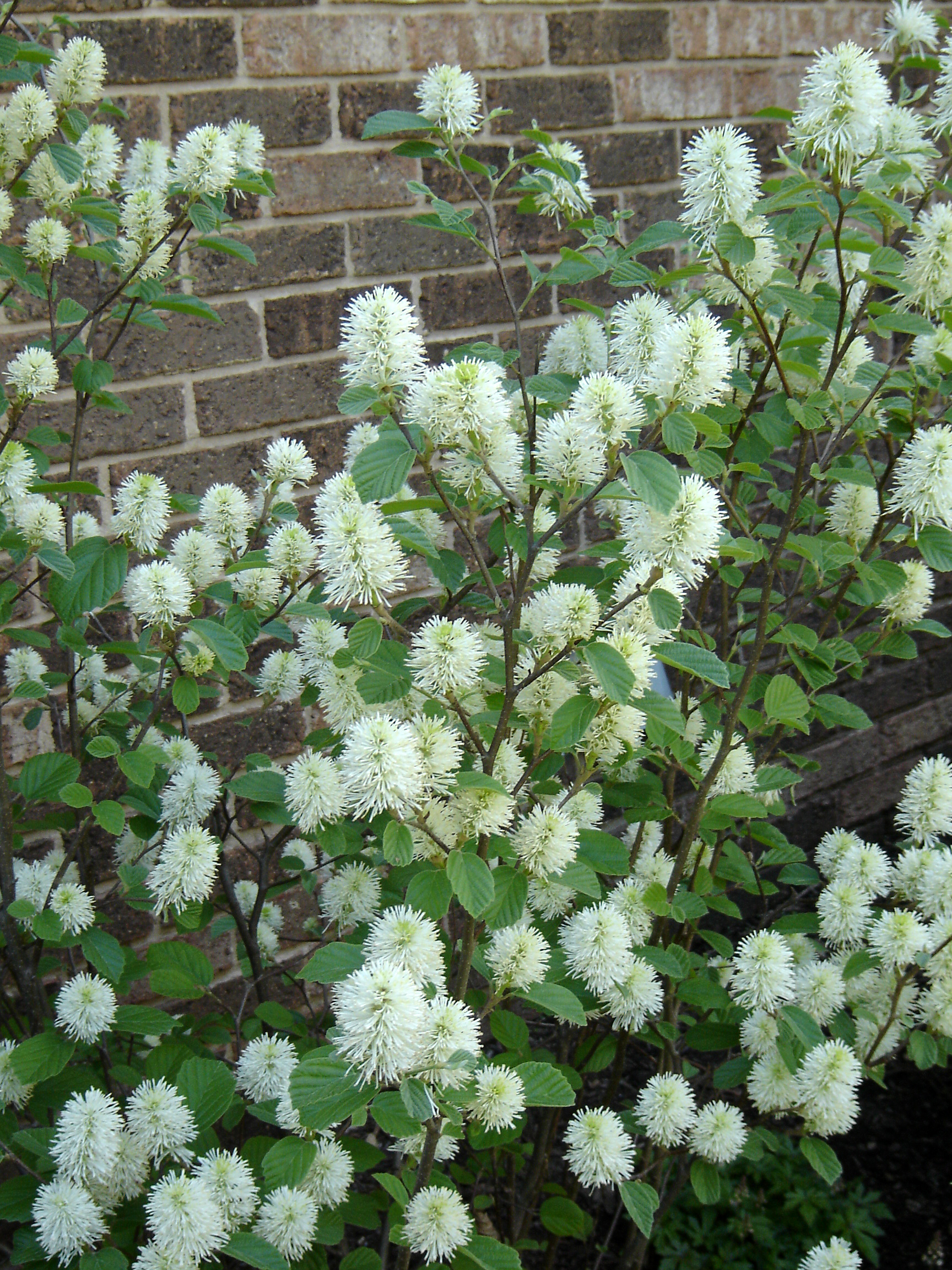
Is fothergilla a perfect plant? No, but it's very good...

Is fothergilla a perfect plant? No, but it’s very good…

Ready?

There is none.    So if you’re waiting to pull the plant-buying trigger until you find perfection, you’re in for a long wait. Either that or you’re going to end up disappointed.

One thing I spend a lot of time doing this time of year is helping people pick out good plants for their yard.

When I do Garden House-Calls, my goal is always to figure out what the gardener of the place will like, not just foist off on everyone the plants I happen to like. (Except for people who check the questionnaire box that reads, “I’ll take whatever you think is nice.” Those are the easy jobs.)

Plants are a very subjective thing, after all.

Some people absolutely adore forsythia and can’t imagine spring without its golden locks. Others consider it a 2-week wonder and a 50-week hulking weed.

That kind of subjectivity alone makes suggesting a “perfect plant” more like a crapshoot. But when you factor in the many other traits a plant can have – or not – nothing aces the perfection test.

What often happens is something like this. The gardener in question says he/she wants something that blooms (preferably a long time and fragrantly), doesn’t get bugs, takes shade, is native, and, of course, takes little to no care.

I’ll say something like, “How about a fothergilla? It’s native, fragrant in bloom, doesn’t get bugs or disease, has great fall color, does fine in shade, isn’t a deer favorite and stays compact enough that it’ll never need heavy pruning. Now it does put out some ‘suckers’ that you might want to dig out if you don’t want it to spread.”

Darned if that last line isn’t enough to kill the idea for some people. Or they’ll see a picture of fothergilla and say, “Well, that all sounds good, but I just don’t like the look of it.”

Put enough parameters on your choices, and you’ll eventually wipe out everything. If you’ve ever used one of those online plant-selection tools, you know what I mean.

Read More »


What Now Brown Evergreen?

June 24th, 2014

A few weeks ago, tons of gardeners were fretting about whether their butterfly bushes, crape myrtles, hydrangeas and such would bounce back from their winter de-leafing and diebacks.

Browning of evergreens like on this weeping Alaska cedar is more pronounced this year... but usually not a sign of impending doom.

Browning of evergreens like on this weeping Alaska cedar is more pronounced this year… but usually not a sign of impending doom.

For the most part, they have.

It took forever because of the cool start to the season, but by and large, winter-damaged plants have either re-leafed or pushed new growth from the base to replace dead shoots.

What’s more on people’s minds now is the sad state of some needled evergreens.

Like broadleaf evergreens such as holly, boxwood and cherry laurel, needled evergreens (spruce, fir, pine, etc.) continue to lose moisture all winter. When the ground freezes for a long period of time, plants can’t replace the lost moisture. At some point, the “account gets overdrawn,” and the needles brown, starting with the tips first.

Leyland cypress is at the top of this year’s browning list.

This super-fast-growing screening evergreen took variable hits, ranging from ones that totally browned all over to ones that browned only the wind side to ones that came out of winter looking fairly normal.

Cryptomeria (Japanese red cedar) is another species that’s had browning issues. And surprisingly, even many comfortably cold-hardy weeping Alaska cedars are looking haggard.

The question everyone wants answered is whether these browned and brownish evergreens are going to be OK.

Like most issues in gardening, the answer is, “It depends.”

Read More »


The Garden Idea Place

June 15th, 2014

Looking for ideas to improve your plain old yard?

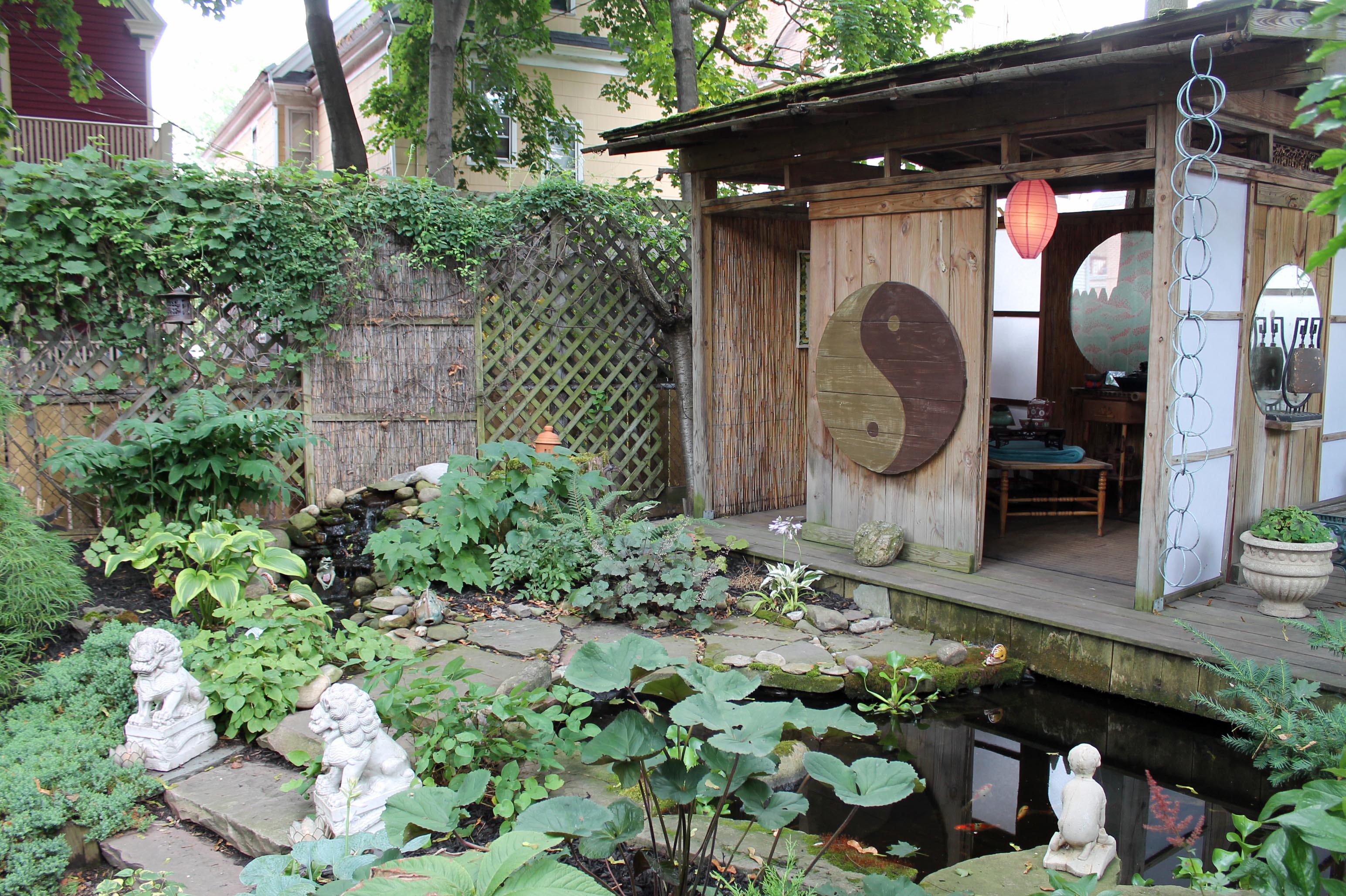
A Garden Walk Buffalo home garden with a Japanese flavor.

A Garden Walk Buffalo home garden with a Japanese flavor.

I can think of no better place than Buffalo.

That’s Buffalo as in the cold New York city next to Lake Erie, the one better known for its snow than its snowbells.

What few people realize is that Buffalo is home to America’s biggest garden tour. It’s called  Garden Walk Buffalo, and each last weekend of July, nearly 400 city residents open their gardens for all to ogle.

Visitors can walk from one place to the next for two days, soaking up ideas and interesting plant combinations all the while. Check out some of the gardens in a pair of Photo Galleries I’ve posted from Garden Walk 2011 and 2012.

I’ve been to this amazing event three times now, and I’m impressed every time. I still haven’t seen all of the gardens.

Most of the gardens are on small lots, so space is at a premium.

That’s why you’ll see plenty of flower pots, hanging baskets, vine-covered trellises, window boxes and even vegetable gardens on top of garage roofs. You won’t see a lot of lawn.

Most of the gardeners also have learned about plant varieties that give a lot of bang for the buck throughout the season instead of the bulky and over-used two-week wonders like forsythia and burning bush that so many suburban gardeners use.

Buffalo gardeners also like to decorate their gardens with antiques, statues and assorted found objects.

It gives personality to each of the gardens and adds an overall fun flavor to Garden Walk.

Some people have even begun giving these gardens their own name – “Buffalo-style gardens.”

Read More »


George’s Plant Safari

June 10th, 2014

Where do you take a plant geek for his birthday?

Inside Black Creek Greenhouse in East Earl... one of the stops on George's Plant Safari.

Inside Black Creek Greenhouse in East Earl… one of the stops on George’s Plant Safari.

Well, if you’re this plant geek, it’s on a plant-hunting expedition.

I’m not a shopping fan, but the one product line (other than food) that gets me into a retail environment is a cutting-edge shrub or a cool, new flower. And if the prices are bargains – like $4 perennials and four-packs of annuals for $1.19 – that’s double delight (which, by the way, happens to be the name of a very fragrant hybrid tea rose).

For my birthday this year, my lovely wife, Sue, took me on a daylong adventure into one of the biggest concentrations of bargain plant places in the eastern United States – our own Lancaster County.

The southern and eastern sections of Lancaster County (i.e. Pa. Dutch country) are crawling with greenhouses, plant farms, nurseries and small garden centers.

Most people know nothing about them because they’re A.) small, B.) often open only seasonally, and C.) run mainly by Amish and Mennonites who aren’t into billboards, websites, Facebooking and similar marketing methods.

It’s pretty much word of mouth.

That’s how plant geeks sniff them out, and it’s how Sue and I ended up going on my “birthday plant safari” there.

I have to admit that despite growing up in Lancaster County and being a reasonably informed plant geek, I had no idea what a plant treasure is a mere hour drive from Harrisburg.

Every now and then, gardeners would tell me about Groff’s Plant Farm or some “Lancaster County Amish greenhouse” that they couldn’t even remember the name of.

But what really piqued my curiosity was an article that fellow garden columnist Ginny Smith wrote last spring for the Philadelphia Inquirer. She followed this group of Maple Glen Garden Club ladies on their annual trek to Dutch country to suck up incredible plant bargains at a string of hidden-gem plant haunts.

I did some research and found another helpful list – the Lancaster County Garden Club’s member-favorite plant places.

Using those two resources, I mapped out a route that took us to five places – plus lunch at a Pa. Dutch restaurant.

Read More »


Glorious 2-Acre Gardens

June 3rd, 2014

One of Stephanie Cohen's perennial gardens.

One of Stephanie Cohen’s perennial gardens.

You think it’s tough getting a basic quarter-acre yard looking good?

Try planting 2 acres.

I’m just back from leading a trip to see three extraordinary examples of what can be done with 2 acres – given ample gardening gumption.

The first was Stephanie Cohen’s yard in suburban Collegeville, Montgomery County.

You might recognize Stephanie as the “perennial diva,” the well known speaker and author of three garden books (“The Perennial Gardener’s Design Primer,” “Fallscaping” and “The Non-Stop Garden.”)

She moved to her 2-acre lot 16 years ago and promptly removed all of the common green-meatball shrubs and the property’s only tree – an invasive Norway maple.

Stephanie talking plants.

Stephanie talking plants.

Then she set to work building her own private paradise – perennial borders along the entire front, a four-square herb garden, a native-plant meadow, and multiple outdoor garden rooms criss-crossed by pea-gravel paths and picket fencing.

Perennial-lovers will especially love this place. You’ll find some of the latest, greatest varieties as well as species few people grow, such as the yellow-flowering phlomis, a tiered bloomer that looks like something out of a Dr. Seuss book.

The lesson I took away is that there’s a huge array of perennials that do well in our climate. So why do we stick with the same daylilies, mums and hostas that everybody plants when we could just as easily grow silver-leafed brunnera or wispy, arching, gold-leafed Japanese forest grass?

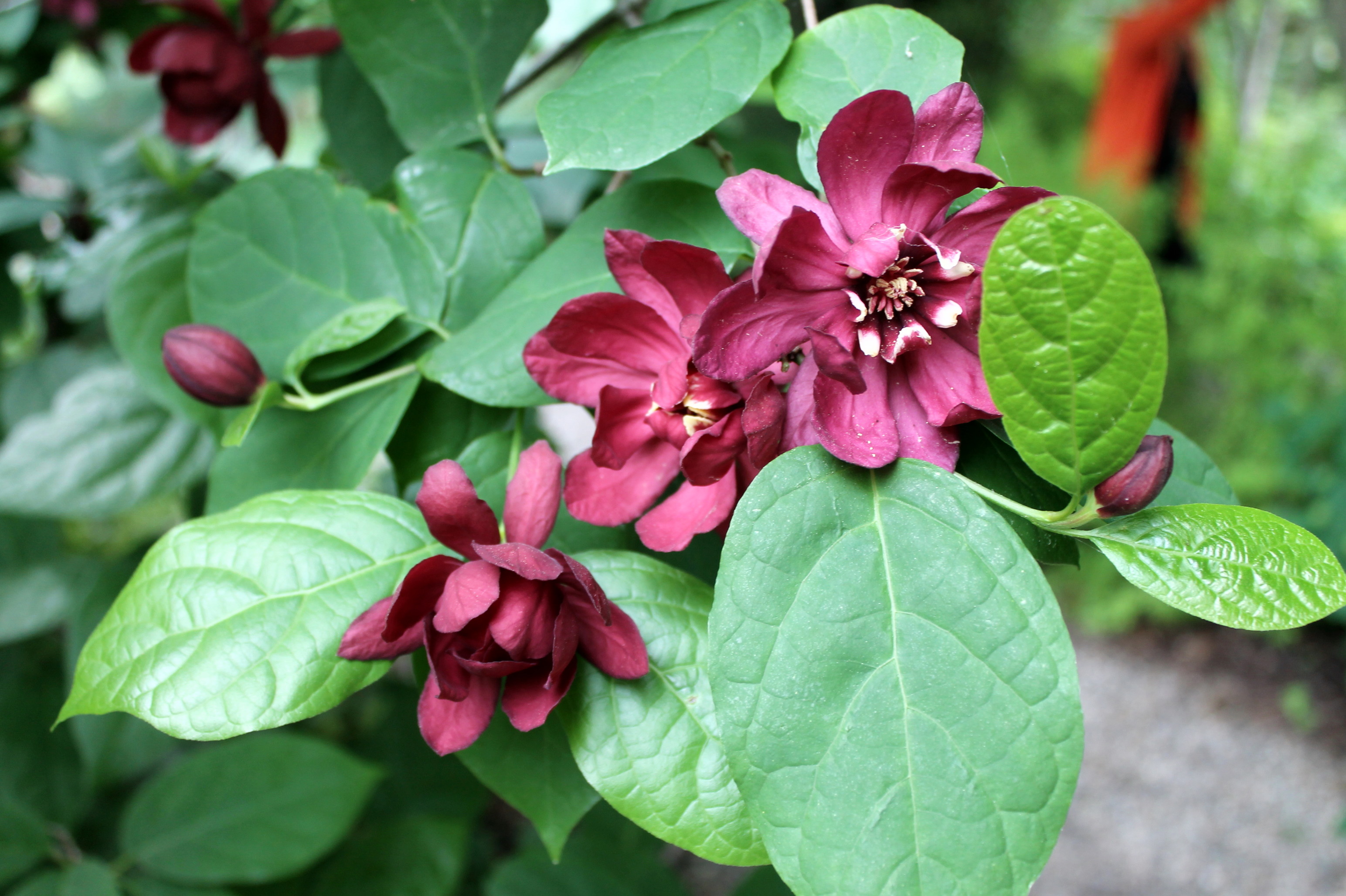
Stephanie also has a fine collection of trees and shrubs (although I suspect she grows them mainly as company for the perennials). The one that was catching the most attention from our tour group was a showy version of sweetshrub called ‘Hartlage Wine.’

Sweetshrub 'Hartlage Wine.'

Sweetshrub ‘Hartlage Wine.’

This 6-foot spring bloomer has especially large flowers of deep rose – way more impressive than the old-fashioned straight species of sweetshrub, although not quite as strawberryish-fragrant.

Stephanie calls her garden “Shortwood.” She says she went with that name because “Longwood” already was taken.

You know you’ve made it as a gardener when your yard has its own name.

The second amazing 2-acre garden was that of Charles Cresson. His Swarthmore yard also has a name – Hedgleigh Spring, for the stream of that name that originates on the property.

Read More »


« Older Ramblings and Readlings Newer Ramblings and Readlings »

  • Home
  • Garden House-Calls
  • George's Talks & Trips
  • Disclosure

© 2026 George Weigel | Site designed and programmed by Pittsburgh Web Developer Andy Weigel using WordPress