
• Home
  • Contact
  • Site Map
George Weigel - Central PA Gardening
  • Landscape 1
  • Landscape 2
  • Landscape 3
  • Landscape 4
  • Garden Drawings
  • Talks & Trips
  • Patriot-News/Pennlive Posts
  • Buy Helpful Info

Navigation

  • Storage Shed (Useful Past Columns)
  • About George
  • Sign Up for George's Free E-Column
  • Plant Profiles
  • Timely Tips
  • George’s Handy Lists
  • George's Friends
  • Photo Galleries
  • Links and Resources
  • Support George’s Efforts


George’s new “50 American Public Gardens You Really Ought to See” e-book steers you to the top gardens to add to your bucket list.

Read More | Order Now


George’s “Survivor Plant List” is a 19-page booklet detailing hundreds of the toughest and highest-performing plants.

Click Here


Has the info here been useful? Support George’s efforts by clicking below.


Looking for other ways to support George?

Click Here

George's Current Ramblings and Readlings

Brown Trees and Red Tomatoes

August 5th, 2014

Lots of short stuff to share this week…
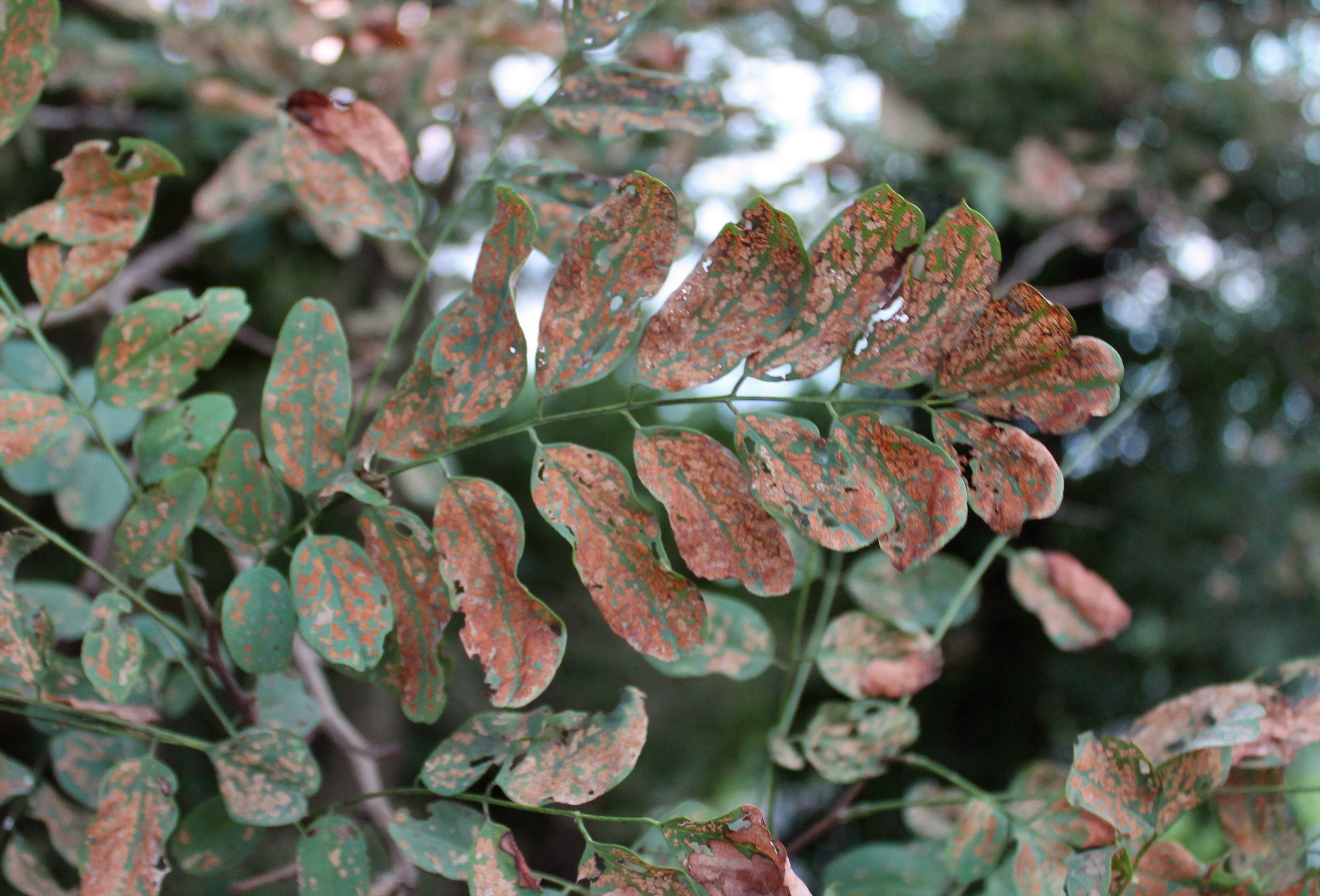
Leafminers have browned out these black locust leaves.

Leafminers have browned out these black locust leaves.

* Brown Trees

Are you noticing all of the browned trees along the roadsides these days?

That would be leafminer damage to the black locust trees.

Locusts are very common “wild” trees, but they’re prone to feasting from locust leafminer bugs, which apparently are having a banner year this year.

Look closely, and you’ll see the leaves aren’t brown all over but have a lot of smaller brown blotches from the feeding damage.

Leafminers won’t kill the trees, but they sometimes cause widespread damage and early leaf dropping.

The hapless locust trees usually grow a second set of leaves, only to have that set eaten again in September.

* Japanese Beetles

We’re on the last leg of Japanese beetle season, and I really haven’t seen many of them this year. Others told me they have, so this must be a spotty year instead of a dreadful one.

We’ll see how this plays out with grub damage in the fall, because even a few beetle adults can lay a lot of eggs that turn into those lawn-root-eating larvae this month and next.

The blackfly population seems to be a little better lately, too. I heard the state finally started spraying for them. These are what most people call “gnats” – the tiny swarming bugs that fly into your eyes and bite your ears.
Read More »


Breaking the Rules

July 29th, 2014

Buffalo, N.Y., which I dare say is the best city of gardeners in the U.S., held its 20th annual Garden Walk this past weekend with nearly 400 gardens open to gawkers.

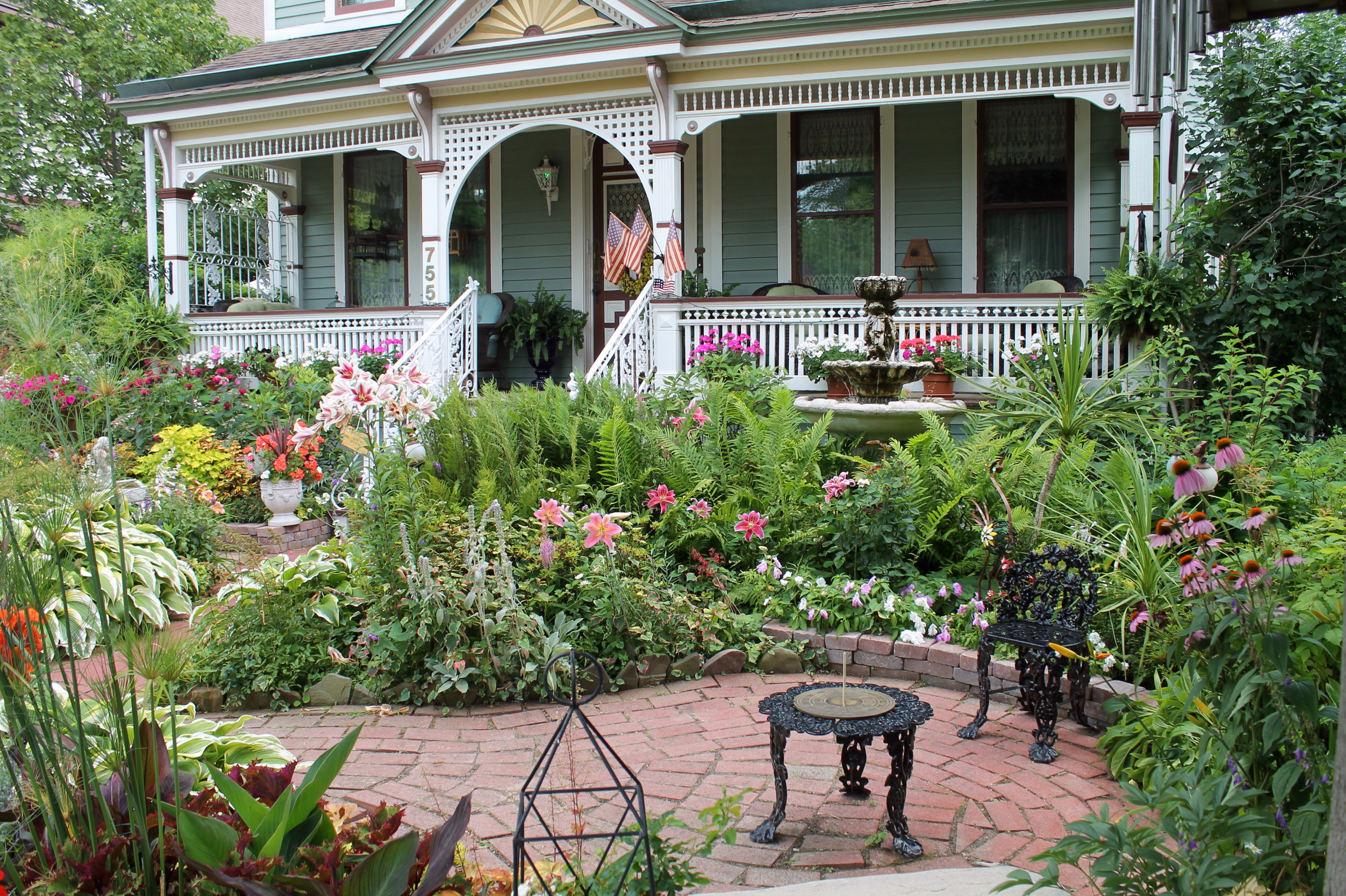
Who says you can't put a patio smack in the middle of the front yard?

Who says you can’t put a patio smack in the middle of the front yard?

The colorful, free-form, creative nature of America’s biggest garden tour has spawned what’s becoming known as “Buffalo-style gardening.”

These are gardens that feature lots of color, lots of pots, lots of plants, and not a lot of grass – especially in front yards.

Buffalo gardens also tend to have fun surprises around the corners and under the bushes, especially art of the found, funky, and homemade kind.

In other words, Buffalo gardeners are good at packing a lot of garden into a little space – and having great fun doing it.

They’re also almost proud of breaking the many unwritten rules of landscaping, those things you’re just not supposed to do.

Rule-breaking doesn’t always work. Sometimes you see in a hurry why a rule is a rule in the first place.

But most of the Buffalo rule-breaking I saw on my fourth visit there was OK to my eye. Six examples:

1.) “You don’t grow vegetables on a wall. Or a roof.” I guess you do if your south-facing house wall is the only place in the yard where you’ve got sun, or if your yard is so small that your garage roof is the only space available.

Read More »


Recovery and Bugs in the Eye

July 22nd, 2014

I keep hearing about apparently dead plants that are still, somehow, coming back to life.

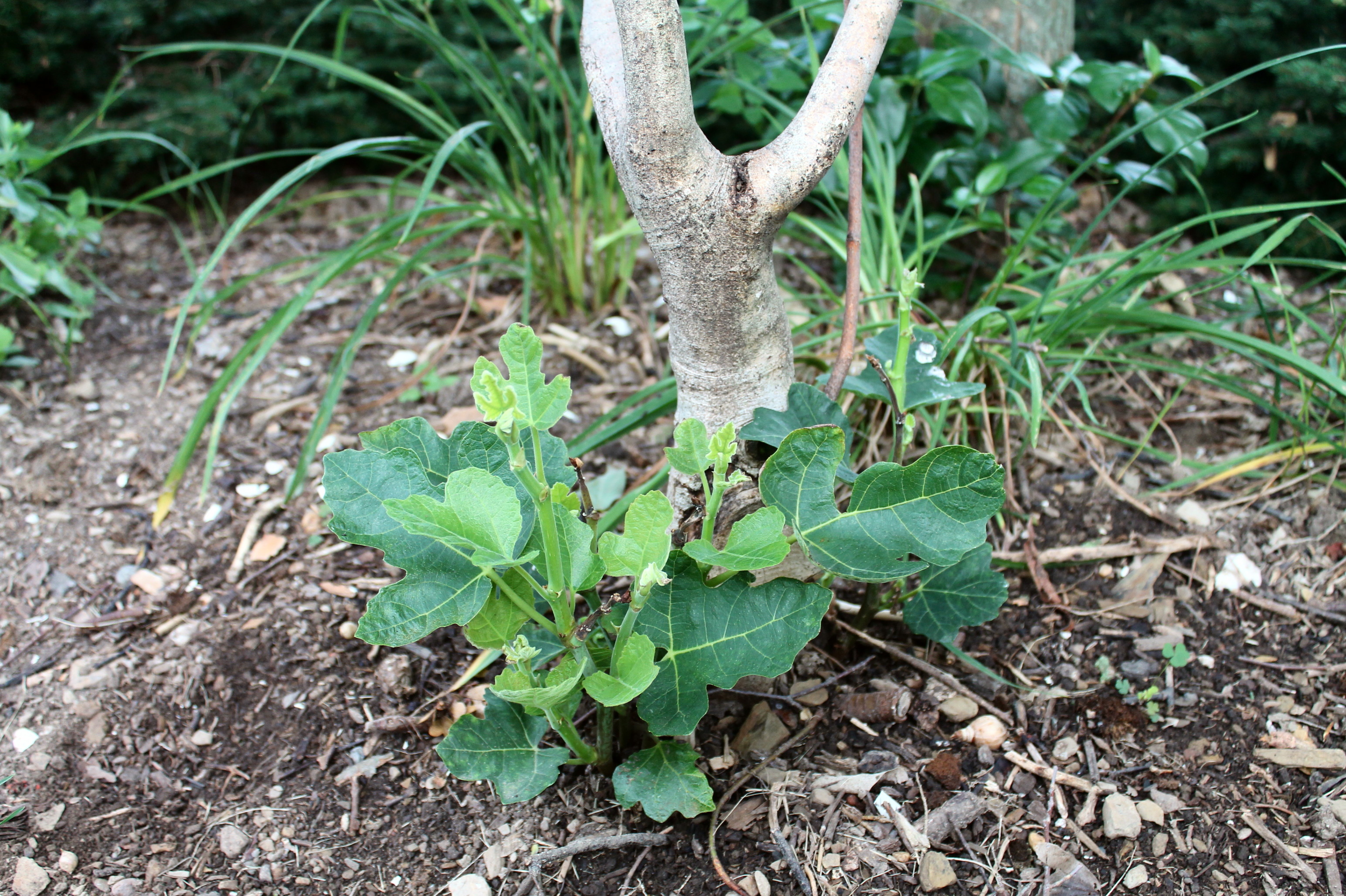
A "miracle" fig, finally coming back to life.

A “miracle” fig, finally coming back to life.

Usually, end of May or maybe early June is the drop-dead date around here. If things aren’t leafing out or pushing up by then, you can figure it’s a winter casualty.

But this year, bared-out crape myrtles and hydrangeas were budding out for the first time the second and third week of June.

My ‘Brown Turkey’ fig that I gave up for dead started sending up shoots in early July, a week after I dug it, replaced it with a new ‘Chicago Hardy,’ and set it aside in a pot. Good thing I kept it, “just in case.”  It’s back in the ground in a new spot and still growing.

Just a week ago, a reader from the East Shore said he was about to cut down some leafless hollies when he noticed new shoots poking up from around the base.

And then over the weekend, my friend and fellow gardener Cindy Rudisill from up in Lykens told me that her apparent cadaver passion vine finally decided to send up a shoot – in mid-July.

When will miracles cease?

Read More »


The People’s Garden

July 15th, 2014

When I heard that TripAdvisor visitor/reviewers were rating the upstart Coastal Maine Botanical Gardens higher than any other American public garden – including Pennsylvania’s own Longwood Gardens – I thought, “C’mon, there’s some social-media manipulating going on there.”

Coastal Maine Botanical Gardens' Lerner Garden of the Five Senses.

Coastal Maine Botanical Gardens’ Lerner Garden of the Five Senses.

But after seeing this young 248-acre garden in the small coastal town of Boothbay, Maine, two weeks ago, I can see why. (Judge for yourself in a Photo Gallery I’ve posted on CMBG.)

This place is one of the top 10 public gardens I’ve ever seen. Maybe even in the top 5.

The 1-acre Lerner Garden of the Five Senses alone is worth the 9-hour drive from Harrisburg. See Boston, have some Maine lobster and keep going to Bar Harbor while you’re up there.

Only about 18 acres of the 248-acre tract is in cultivated gardens far. If the quality of those is any indication, CMBG could end up being considered in the same breath as Canada’s Butchart Gardens, England’s Royal Botanical Gardens at Kew, and, of course, Longwood (which TripAdvisor visitors rate as No. 2 on their satisfaction list).

World-class quality was the incredibly brash idea right from the start of this unlikely project.

CMBG’s genesis is a mostly joking comment that Boothbay businessman, the late Rollie Hale, got from a friend back in 1991.

Hale, an avid gardener, was talking with the friend about public gardens when the friend said, “You should start a botanical garden.”

That got Hale thinking. He talked to some gardening friends, and they realized that Maine was one of only three U.S. states without a botanical garden.

They considered that an affront and began exploring the idea of bringing a botanical garden to mid-coast Maine.

Read More »


Yankee (and Red Suspenders) Garden Wisdom

July 8th, 2014

There’s no better place to learn about plants than public gardens… except if you go to the home garden of someone who really knows what he’s talking about.

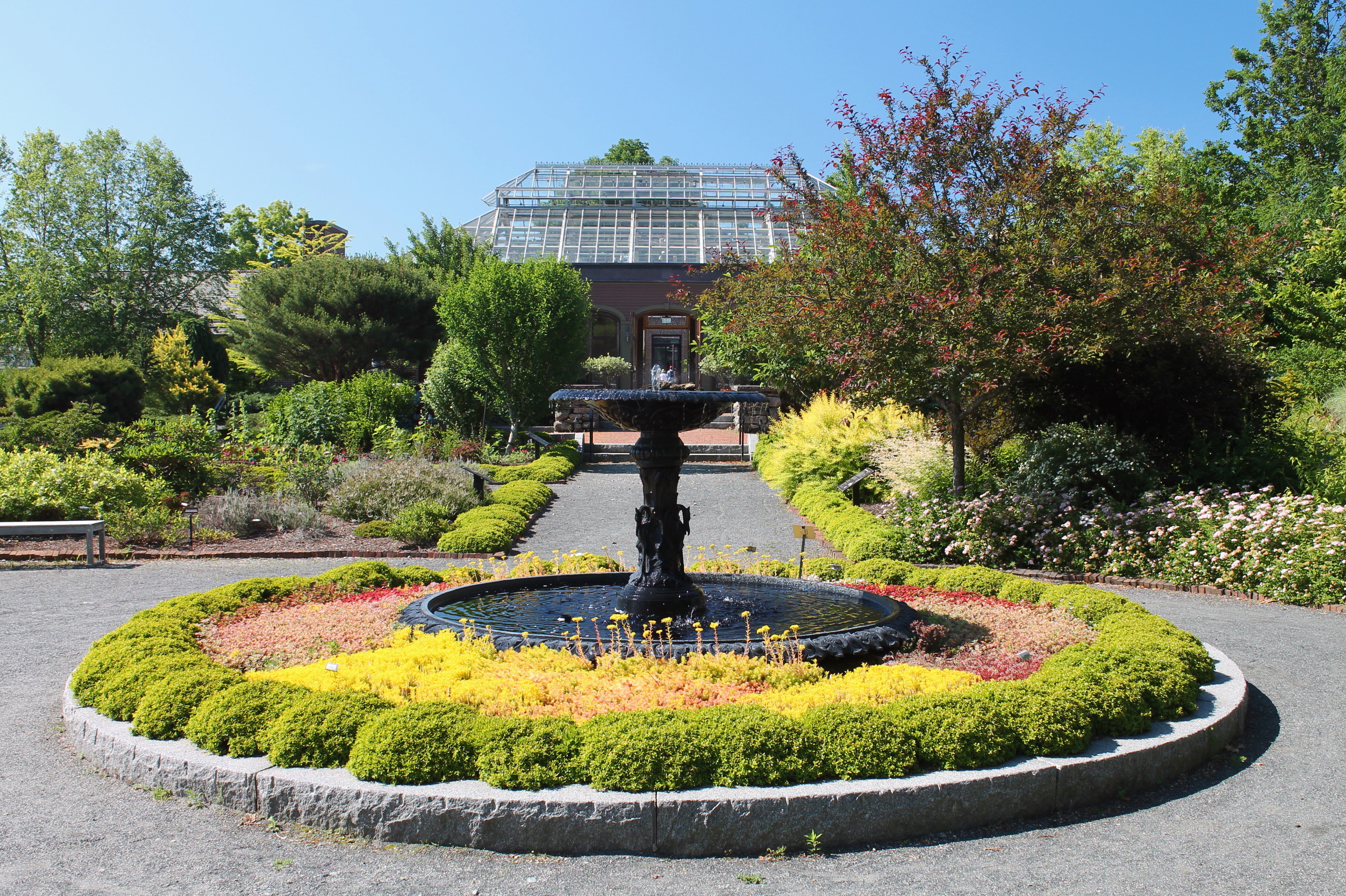
A fountain surrounded by creeping sedums makes a beautiful focal point at Tower Hill Botanical Garden.

A fountain surrounded by creeping sedums makes a beautiful focal point at Tower Hill Botanical Garden.

I’m just back from taking a busload of Harrisburg-area gardeners to see both – a selection of great public gardens of New England and the home garden of long-time Victory Garden TV host Roger Swain, he of red-suspenders fame.

One of the public-garden stops was the Coastal Maine Botanical Gardens in Boothbay, Maine. That one immediately jumped onto my list of top 10 all-time gardens and is so impressive that I have to devote an entire post to it. See a Photo Gallery of pictures from CMBG to judge for yourself.

Two other public gardens we saw are well worth singling out this week as well as adding to your must-visit list if you ever get up to the Boston area.

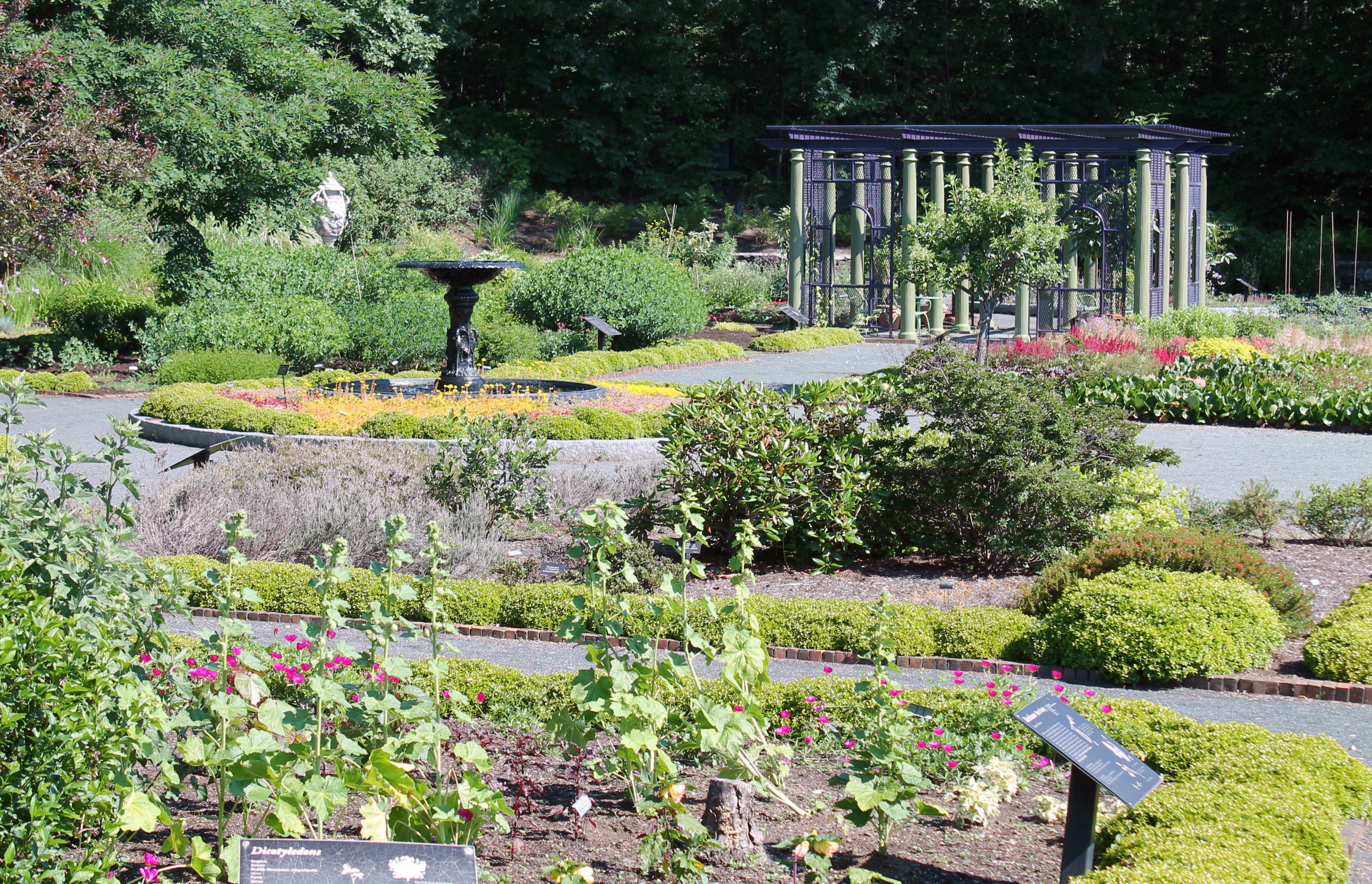
Tower Hill Botanical Garden Tower Hill Botanical Garden is a young public garden, opened in 1986 by the Worcester, Mass., County Historical Society. Its 132 acres are still being planted. What grabbed me most there was the “Systematic Garden.” Rather than lay out plants in beds by their use or by how they pair with one another, this one groups plants by their botanical families and when those families came along in the evolution of plants.

Tower Hill Botanical Garden's Systematic Garden.

Tower Hill Botanical Garden’s Systematic Garden.

Did you know that cherry trees, hawthorns and cotoneasters are members of the same 2,800-species rose family? Or that ferns are some of the planet’s oldest plants? Want to guess the most highly evolved family at the opposite end of the fern spectrum? Asters.

Tower Hill has a nice mix of formal and natural areas, including a large event lawn surrounded by 1,000 trees and shrubs, a mid-1700s New England woodland with trails, and a beautiful cottage garden of perennials and flowering shrubs. It’s also got an ornamentally planted vegetable garden and a collection of more than 200 heirloom apple varieties.

The gardens are still working through their first 50-year master plan, which was designed by Pittsburgh-based Environmental Planning and Design, the same firm that designed Pittsburgh’s waterfronts and the plaza around the Capitol fountain in Harrisburg.

Read More »


« Older Ramblings and Readlings Newer Ramblings and Readlings »

  • Home
  • Garden House-Calls
  • George's Talks & Trips
  • Disclosure

© 2026 George Weigel | Site designed and programmed by Pittsburgh Web Developer Andy Weigel using WordPress