• Home
  • Contact
  • Site Map
George Weigel - Central PA Gardening
  • Landscape 1
  • Landscape 2
  • Landscape 3
  • Landscape 4
  • Garden Drawings
  • Talks & Trips
  • Patriot-News/Pennlive Posts
  • Buy Helpful Info

Navigation

  • Storage Shed (Useful Past Columns)
  • About George
  • Sign Up for George's Free E-Column
  • Plant Profiles
  • Timely Tips
  • George’s Handy Lists
  • George's Friends
  • Photo Galleries
  • Links and Resources
  • Support George’s Efforts


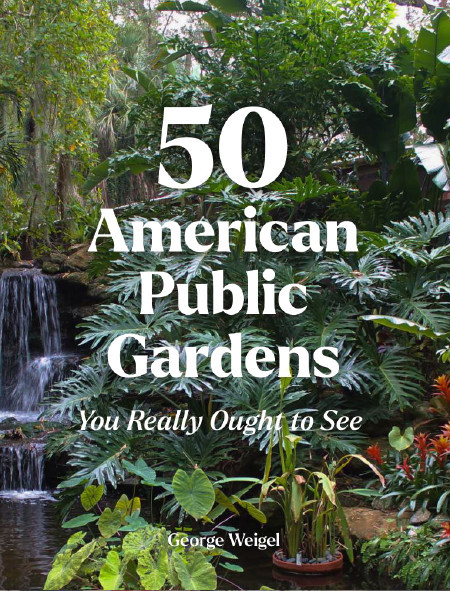
George’s new “50 American Public Gardens You Really Ought to See” e-book steers you to the top gardens to add to your bucket list.

Read More | Order Now


George’s “Survivor Plant List” is a 19-page booklet detailing hundreds of the toughest and highest-performing plants.

Click Here


Has the info here been useful? Support George’s efforts by clicking below.


Looking for other ways to support George?

Click Here

George's Current Ramblings and Readlings

The Last Tomato

October 28th, 2014

Groundhog invasion notwithstanding, the saddest downer of the gardening season is the last tomato.
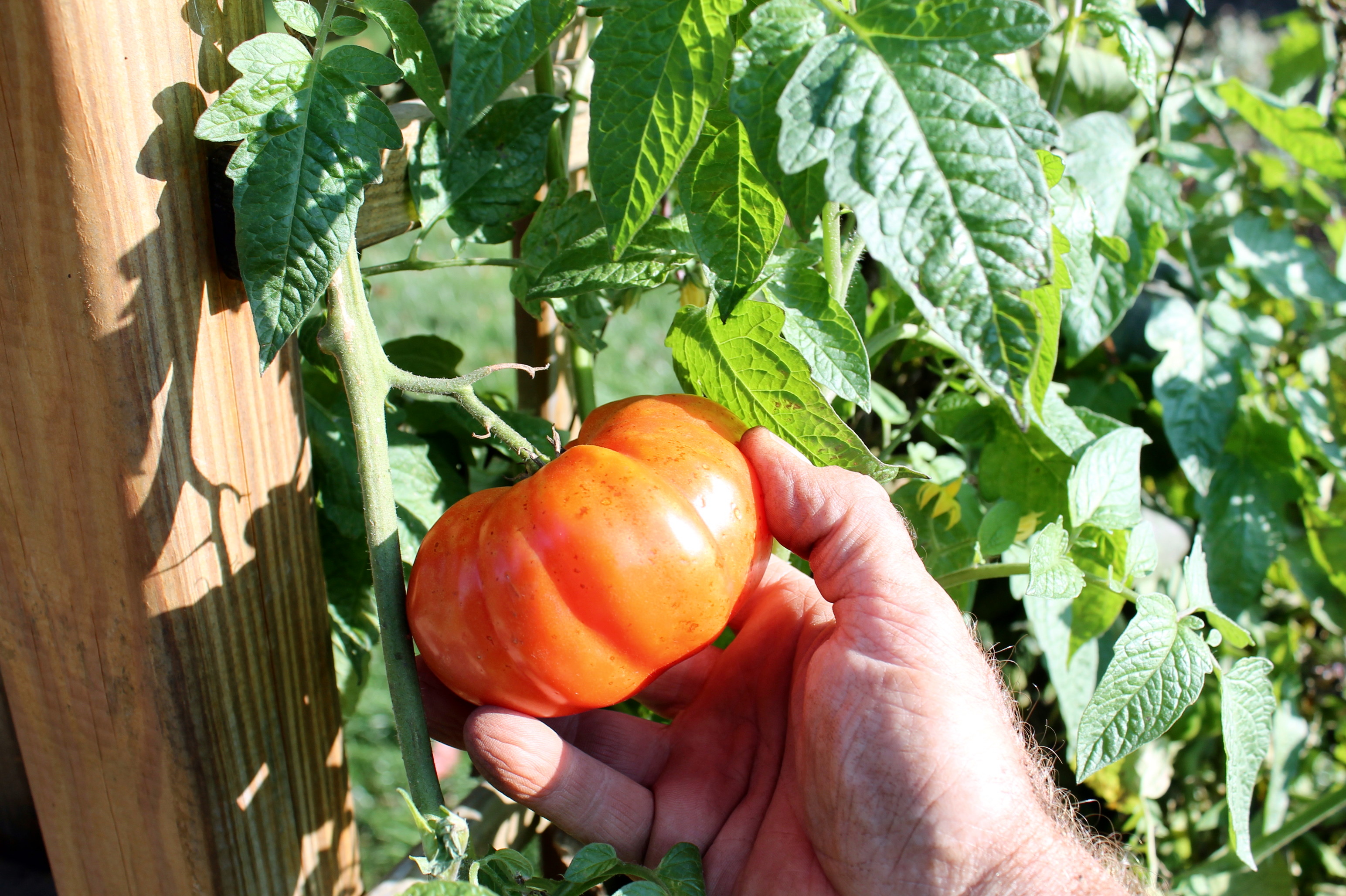
George's last tomato of 2014, about ready to be picked.

George’s last tomato of 2014, about ready to be picked.

I picked my final one of 2014 over the weekend.

It was a wimpy vestige of August’s sweet, meaty, red heirlooms – soft, a washed-out red in color, and showing a few spots that make ripening doubtful.

I’ll eat it anyway because I know it’ll be 8 long months – at least – until the next jackpot pays out.

I can’t imagine a summer without fresh tomatoes from the backyard garden. At the moment, I can’t imagine going 8 months before slicing a ‘Big Beef’ or a ‘Brandywine’ on a plate with some mayonnaise.

Of all of the edible crops, the tomato is the one that makes our gardening effort more worth it than any.

If evil aliens came along and demanded that I give them every plant in my yard except for one, my tomato plant would be my solo keeper.

Even though supermarket varieties are better than they used to be (packaged grape ones aren’t half bad), they’re still a far cry from superior varieties ripened fully in the mid-summer sun.

This year I had the privilege of growing some of the finest tomatoes I’ve ever eaten.

They came from saved seed sent to me by Bill Mende, a tomato-loving reader who said these were the best he’d ever tasted.

The variety was a large, heart-shaped, pinkish-red heirloom whose heritage is cloudy, other than that it apparently originated in Yugoslavia. Bill called it ‘Yugo.’
Read More »


By George! A New Book

October 14th, 2014

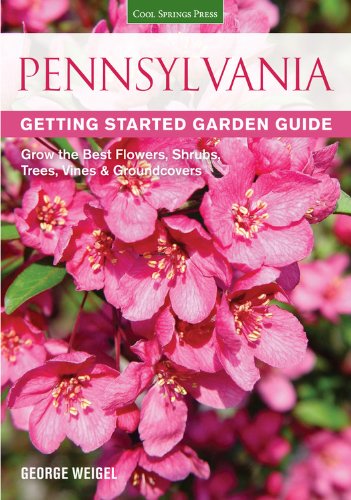
My decades-old effort to keep you from wasting money on killed plants has led this week to a new resource – a book filled with the 170 top plants I’d recommend for Pennsylvania landscapes.

My first gardening book -- on the 170 best plants for Pennsylvania yards -- is hot off presses.

My first gardening book — on the 170 best plants for Pennsylvania yards — is hot off presses.

That’s right. My first gardening book is just off the press, and it’s called the “Pennsylvania Getting Started Garden Guide.”

The 240-page paperback is our region’s version of a nationwide series that Cool Springs Press does to help gardeners zero in on the best choices for their particular area.

(Get an autographed copy directly from George at his Buy Helpful Info page.)

Locally targeted advice is hugely important, I think, which is what attracted me to saying yes when Cool Springs’ editor Billie Brownell asked me to write the Pennsylvania edition.

What works in New England or Florida or even Baltimore may not work very well in our shale, clay and erratic weather. The more local the plant selection, the better. And when you stack the odds in your favor by knowing and buying the plants most likely to be happy in your yard, you save yourself a lot of work, money and aggravation.

Philadelphia garden writer Liz Ball did the original version of what was then called the “Pennsylvania Gardener’s Guide” back in 2002. She updated it in 2007 and since then has mostly retired from garden-writing.

So when Cool Springs decided it was time for another fresh look, Liz passed along my name. Isn’t she nice? (Answer: Yes, and her husband, Rick Ray, is a retired Barnes Foundation Arboretum School hort instructor with an encyclopedic knowledge of anything containing chlorophyll.)

Tons of great new plants and varieties have come along these past 5 to 10 years, so not only did I get to pick my tried-and-true favorites, I could incorporate the latest-and-greatest.

The bulk of the book consists of one-page profiles of the 170 best-for-Pennsylvania plants, arranged in chapters by plant type (annuals, perennials, shrubs, trees, etc.)

The profiles include specific tips on when, where and how to plant each plant; advice on caring for them afterward; how best to use each selection in the landscape, and probably the most overlooked tidbit, which varieties are the best of the best. Knowing the highest-performing varieties is a key bit of information that separates the average gardener from the skilled plant geek.

Read More »


It’s a Garden, Not a Stage

September 30th, 2014

Most people like a little privacy in the yard, which is why arborvitae and fences are such popular landscape décor.

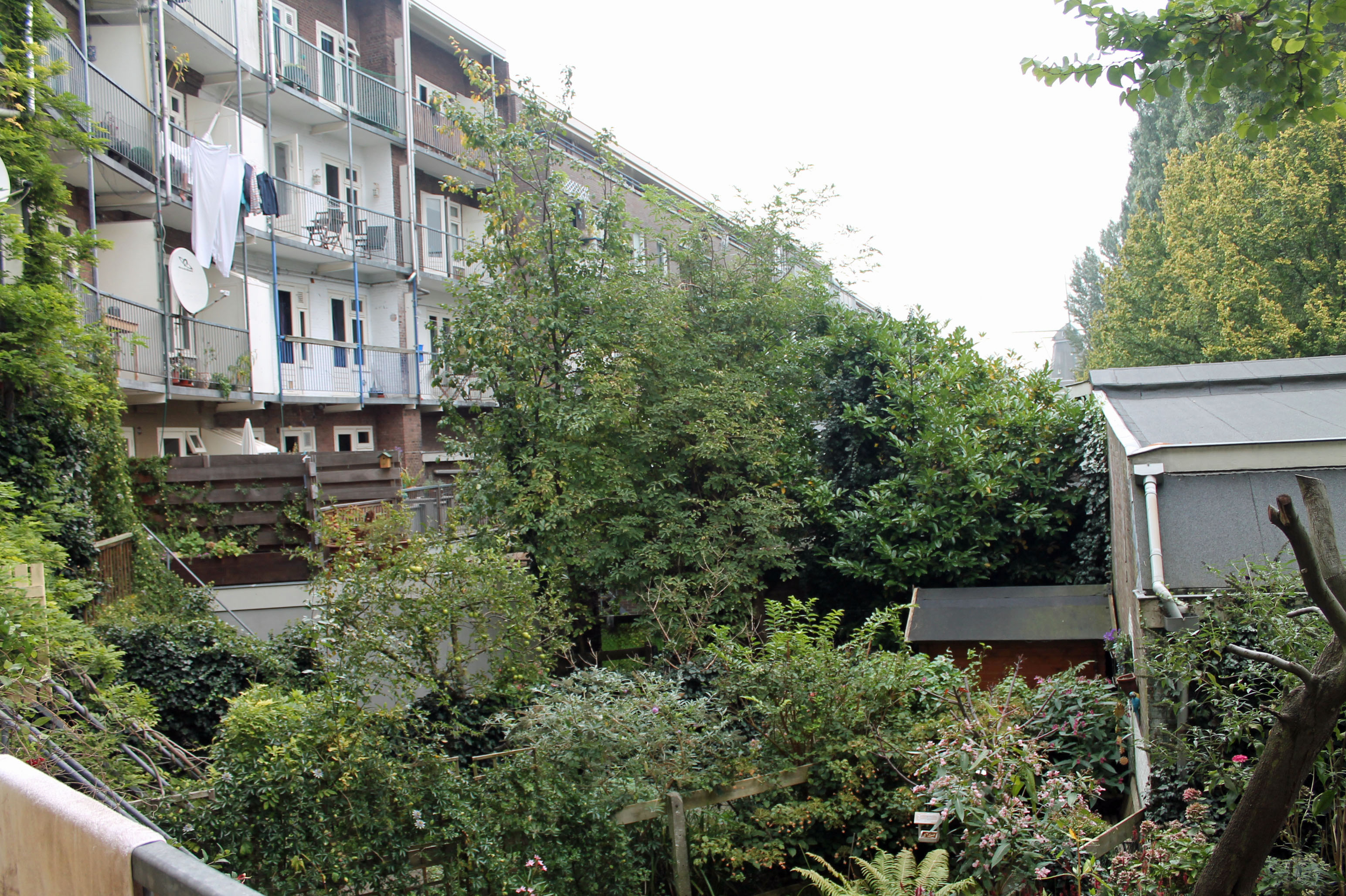
These gardens feel like they're on a stage of an amphitheater.

These gardens feel like they’re on a stage of an amphitheater.

But even that wasn’t going to solve the challenge at my daughter’s second-floor “flat” in the Netherlands.

Erin got a job in Amsterdam and just moved into a 5-story complex that curves around a city block. The back has a courtyard with the lots divided into small, pie-shaped spaces.

Erin is fortunate enough to own one of these prized outdoor spaces.

The problem is that anybody can look out their back door and watch what’s going on below.

It’s more like an amphitheater than a series of courtyard spaces.

My job, as the imported garden guy/dad, was to re-do Erin’s space into something more usable and less stage-like.

The inherited “garden” was no Dutch treat. It was a Dutch mess.

Ivy and weeds had overgrown a good bit of the space.

A spindly butterfly bush was growing out of the middle of a back raised patio where a concrete slab had been removed.

A 4-foot-tall version of persicaria – a popular Dutch groundcover – was flopping all over through about a quarter of the space.

Another tall, pink-blooming 4-footer – a type of reseeding impatiens on steroids – was poking up randomly.

And a half-dead redbud tree was growing up about 20 feet near the middle of the space.

The first order of business in any inherited re-do is to figure out what you don’t like about the current situation and then to think about how you’d rather use it. Form follows function, in other words.

In this case, Erin wanted the lot de-cluttered so she could just walk the path to the back patio. She also wanted something nice to look at from above as well as in the garden, preferably with bright colors of red, gold, orange, yellow and burgundy (no frou-frou pink, baby blue or lavender).

She wanted some space for her rather hefty dog, Boon, to dig and “do business,” a few tea herbs, and ideally, a hammock.

Above all, she wanted as much privacy as possible while living in an Amsterdam fishbowl.

What would you do? I’ll wait while you mull.

OK, here’s what I came up with…

Read More »


A Community of Gardens

September 23rd, 2014

Picture a 20-acre neighborhood where everybody’s a gardener and all of the yards are filled with flowers, shrubs and veggies.

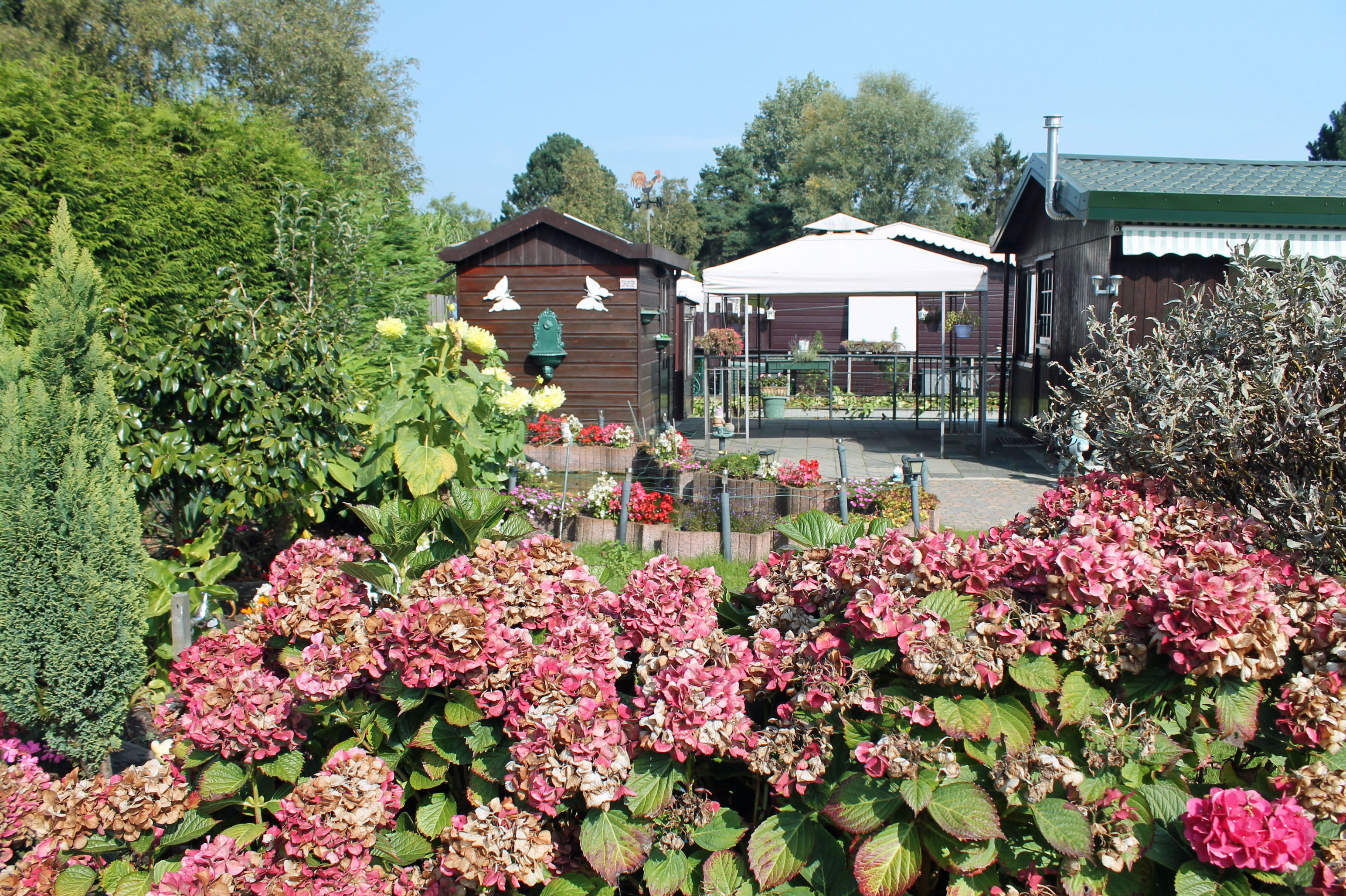
One of the lots in Amsterdam's Tuinpark Nut and Genoegen garden park.

One of the lots in Amsterdam’s Tuinpark Nut and Genoegen garden park.

Then add small cottages, shady gravel lanes and a green community square in the center, and you have what’s called a “garden park.”

I’d never seen this concept until I ran across one last week in the Netherlands while visiting my daughter, who got a job there last year.

The plant-loving Dutch have garden parks like these all over their urban areas. Amsterdam alone has 29 of them in and around the city.

The one I saw is called Tuinpark Nut and Genoegen, and it’s got 375 garden lots spread over 20 acres in Amsterdam’s public Westerpark.

It’s somewhat like what we know as a community garden in which people with small or no yards can rent a section of carved-up common land, usually to grow vegetables.

That’s how most of the Dutch garden parks sprang up in the 1920s – as a way for land-starved urban residents to grow some of their own food.

But after World War 2, the parks started morphing into blends of edibles and ornamentals, including trees, shrubs and evergreen screen plantings.

Typical lot sizes are only about 1/10th of an acre or less – tiny by our standards but heavenly to a compacted Amsterdammer accustomed to yardless apartments and wall-to-wall bikers on skinny streets.

Read More »


Don’t Pack Away the Shovels Yet

September 16th, 2014

We’re heading down the gardening home stretch now, that time of year when we’re tempted to dig in a few mums and call it a season.

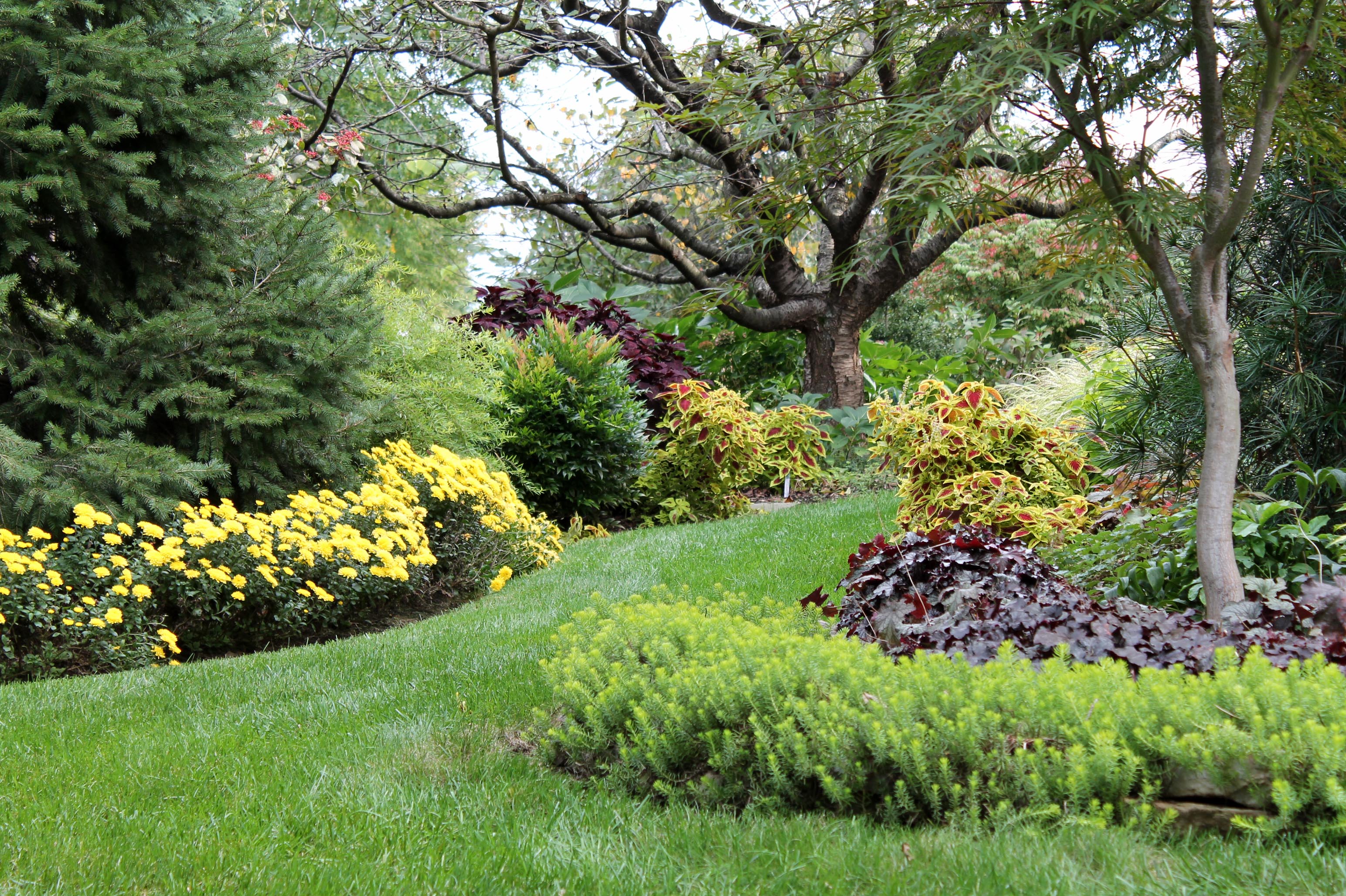
Fall is an excellent time to plant and improve the landscape.

Fall is an excellent time to plant and improve the landscape.

Not so fast. We should have another 6 to 8 weeks of decent gardening conditions – weeks that happen to be some of the year’s best for planting.

“Fall is for planting” isn’t just garden-center hype to get rid of plants the stores don’t want to overwinter. Fall really is a good time to plant most things. Here’s why:

* The soil temperatures are warm enough to support good root growth at least through the end of October.

* The shorter days, less intense sunlight and cooler temperatures of early fall mean less stress (i.e. “transplant shock”) for plants being evicted from their cozy pots into the untamed ground.

* Newly planted plants lose less moisture through their leaves in fall than summer, which lowers water demands.

* We usually get more rain in fall than summer, which further reduces the hose duty that new plantings require.

* Fall-planted plants will have two growing seasons under their belts instead of one (now and next spring) before having to face the grueling challenge of a summer in central-Pennsylvania clay.

* The bugs are mostly gone.

* A lot of plants go on sale from here on out.

* And, last but not least, it’s a heckuva lot more pleasant to be out there digging in late September than in an August furnace.

When plant-shopping this time of year, you’ll run into both fresh fall stock from the growers as well as spring leftovers that may not have had immaculate care over the summer.

Check the leaves and branches for bug damage, leaf spotting, leaf streaking and other signs of trouble. I’d pass on those.

If the leaves are just tired and browning, or if the spent flower stems just haven’t been snipped, or if the plant is a bit gangly or ratty from spending the summer in a small pot, don’t worry about that… especially if the price tag says 40 or 50 percent off.

Read More »


« Older Ramblings and Readlings Newer Ramblings and Readlings »

  • Home
  • Garden House-Calls
  • George's Talks & Trips
  • Disclosure

© 2026 George Weigel | Site designed and programmed by Pittsburgh Web Developer Andy Weigel using WordPress