• Home
  • Contact
  • Site Map
George Weigel - Central PA Gardening
  • Landscape 1
  • Landscape 2
  • Landscape 3
  • Landscape 4
  • Garden Drawings
  • Talks & Trips
  • Patriot-News/Pennlive Posts
  • Buy Helpful Info

Navigation

  • Storage Shed (Useful Past Columns)
  • About George
  • Sign Up for George's Free E-Column
  • Plant Profiles
  • Timely Tips
  • George’s Handy Lists
  • George's Friends
  • Photo Galleries
  • Links and Resources
  • Support George’s Efforts


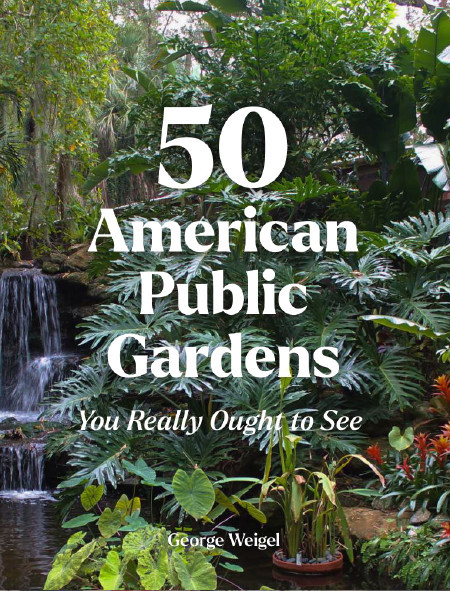
George’s new “50 American Public Gardens You Really Ought to See” e-book steers you to the top gardens to add to your bucket list.

Read More | Order Now


George’s “Survivor Plant List” is a 19-page booklet detailing hundreds of the toughest and highest-performing plants.

Click Here


Has the info here been useful? Support George’s efforts by clicking below.


Looking for other ways to support George?

Click Here

George's Current Ramblings and Readlings

10 Tips for Four-Season Gardens

February 17th, 2015

When I help home gardeners plan improvements to their landscape and ask them about their most important goals, one that almost always rates at the top of the wish list is four-season interest.
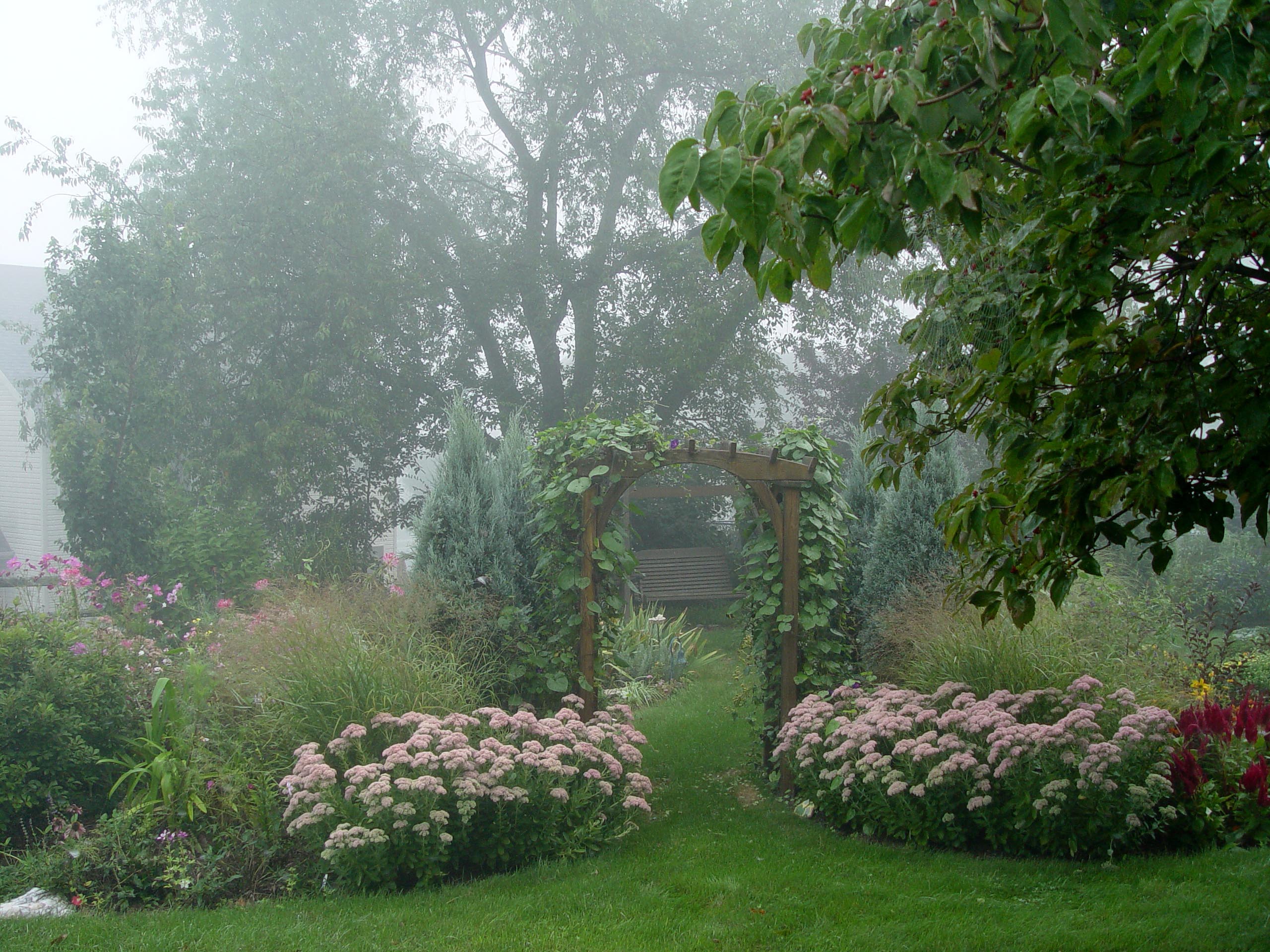
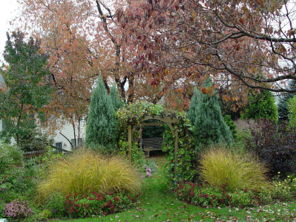
Most people these days are looking for landscapes that change with the seasons and look good in all.

Most people these days are looking for landscapes that change with the seasons and look good in all.

Most people really want a yard these days that changes with the seasons and looks good in all of them.

Maybe it’s because we’ve had milder winters lately or are just more interested in better gardens in general. But whatever the reason, four-season interest is a solid trend.

It’s also something a lot of people aren’t sure how to tackle. So many yards tend to look nice in spring, then go downhill from there.

I think a big reason for that is that our yards are full of “one-season wonders” – primarily May-peakers because that’s what looks the best (and is on sale) when the huge bulk of gardeners do their plant-shopping, which is the second Saturday of every May.

Converting to a four-season look isn’t terribly difficult, but it takes some rethinking and some homework.

Here are 10 tips to help you do that:

1.) Add more variety. Plant more plants and different kinds of them. You’ll get multi-season change and interest just by dumb luck. Even when planting a particular species, choose several different varieties for their varying bloom times and diversity.

2.) Make a conscious effort to plan for all four seasons. If you prefer something more planned than the above “buck-shot” approach, think what each part of the yard will look like in each season and seek out plants that will add interest to those boring gaps. Or make notes during the course of this season to help with upgrades the following one.

3.) Move beyond 2-week wonders. Many of our over-used favorites are one-dimensional plants that peak only for a few weeks out of the whole year (azaleas, rhododendrons, lilacs, peonies, forsythia, burning bush, for example). If your yard is too heavy with those…

4) Look for hard-workers – plants that do more than one thing in one season. Example: oakleaf hydrangea, which blooms white in late spring, gets burgundy foliage in fall and then shows off peeling bark when the leaves drop for winter.
Read More »


Trees in Trouble?

January 27th, 2015

Winter is a good time to check your now-leafless trees to figure out if there’s anything you could – or should – be doing to head off brewing trouble.

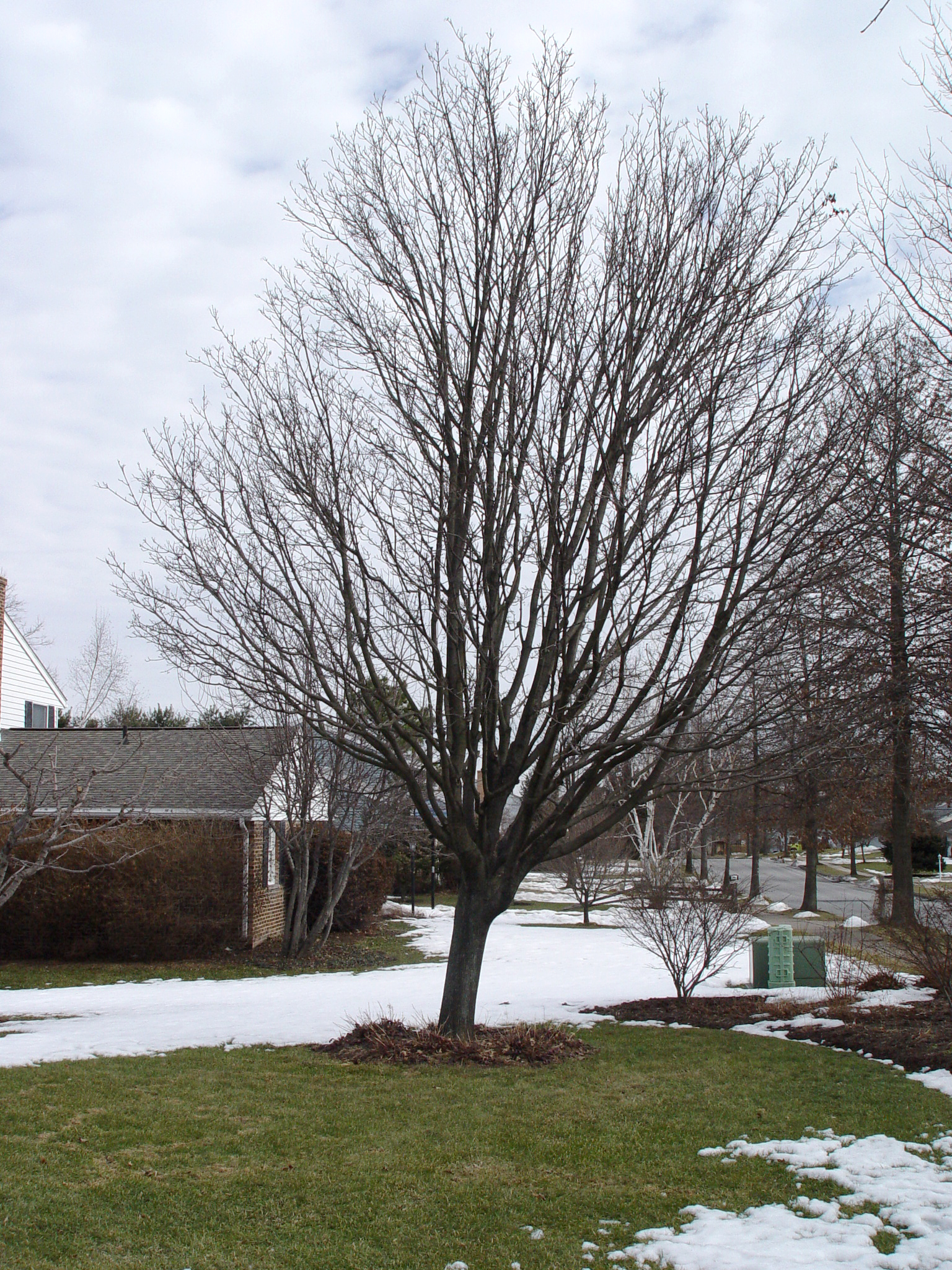
Winter is a good time to check for brewing tree trouble, such as this maple that has begun to lean.

Winter is a good time to check for brewing tree trouble, such as this maple that has begun to lean.

Sometimes there’s not much you can do when a tree falls or cracks apart in a storm. A strong enough wind or nasty enough icing can cause even a completely healthy tree to fail.

But nature is less random than you might think. A combination of factors and weaknesses usually add up to put some trees more at risk of failing than others.

Winds, you might say, are merely the final blow.

These are some of the failure factors:

* Weak species. Some trees just have naturally weak branch or root systems.

‘Bradford’ and other flowering pears, willows, black locusts, tulip poplars, white pines and silver maples are among the “weaker-wooded” species. See a column I wrote on “Muscle Trees” for some of the strongest growers.

* Girdling roots. This is a problem in the making before you ever even buy the tree. Roots begin circling when they’re left in pots too long or when grown poorly in the field.

If these roots are not frayed out at planting, they may continue to circle and never reach out into the surrounding ground. That leads to poor support and possibly to roots that grow to strangle the base of the tree, leading to a snap-off in a wind storm.

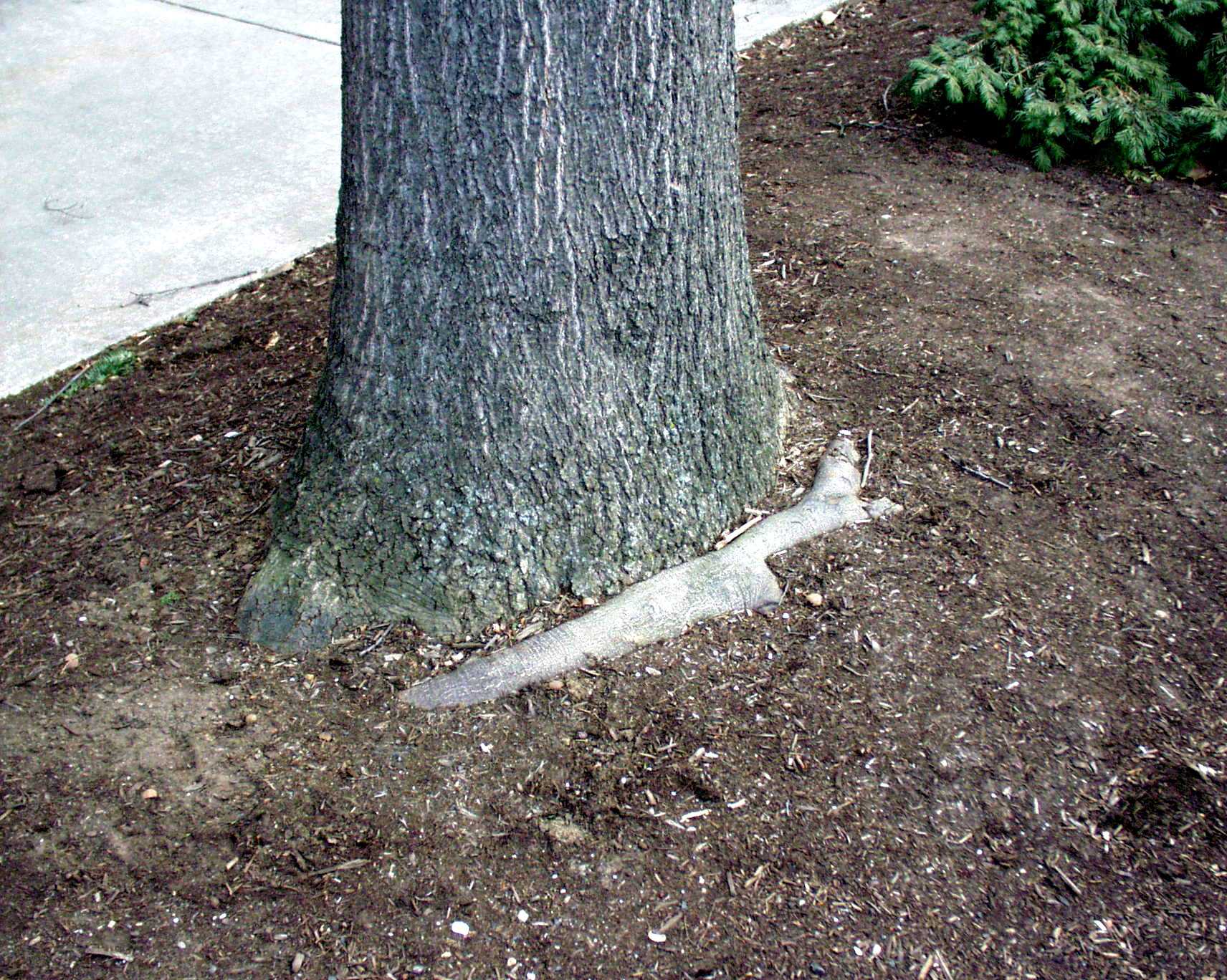
A girdling root can be seen near the surface of this struggling pin oak.

A girdling root can be seen near the surface of this struggling pin oak.

* Bad place for a tree. Most trees don’t like low-lying spots, depressions and other spots where the soil is soggy. The roots rot, and the tree loses support.

A small island bed in the middle of an asphalt parking lot is not a good spot either. Nor is a skinny bed between a road and sidewalk.

Planting sun-loving species in the shade or shade-preferring species in full sun are also stresses that make trees more prone to bug and disease damage.

* Lousy soil. This is a biggie. Roots don’t penetrate clay very well, and they don’t grow deeply when 6 inches of topsoil is piled on top of compacted subsoil or solid rock (common practice in new development).

Limited roots can support a small tree, but the blow-over risk increases as the tree grows.

Just when the tree starts to reach a good size, it suddenly blows over.

Read More »


Small and Smaller

January 20th, 2015

Gardening’s first big event of the year kicked off last week in Baltimore at the 45th annual Mid-Atlantic Nursery Trade Show – the place where most of our region’s landscapers, garden centers and garden-related retailers go to figure out what we gardeners might want to buy.

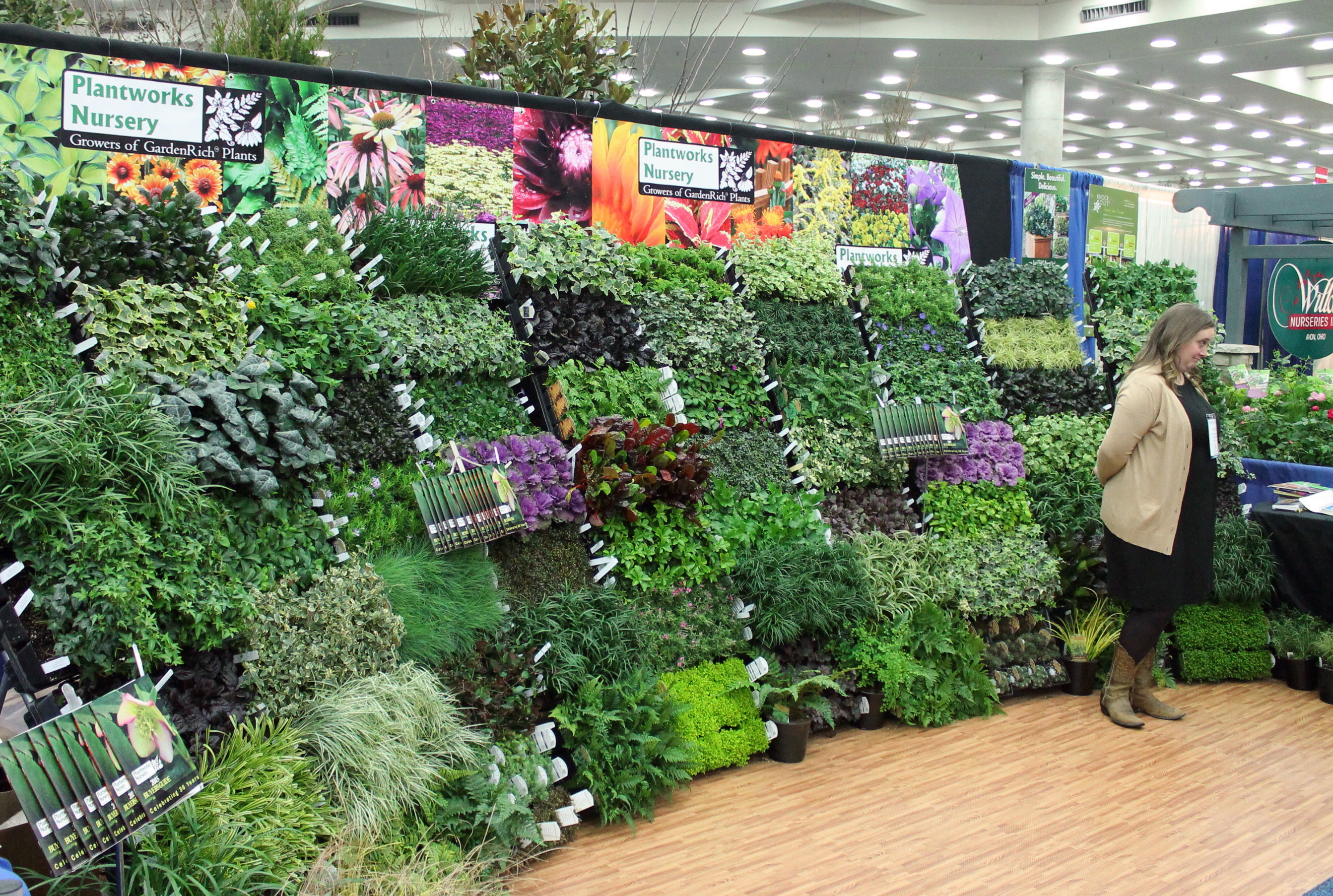
The MANTS show is where garden centers go to nail down their plant and product lineup for the coming year.

The MANTS show is where garden centers go to nail down their plant and product lineup for the coming year.

It’s a huge, not-open-to-the-public show that attracts 10,000 professionals and nearly 1,000 companies that sell everything from the latest, greatest new plants to the little plastic labels that get stuck in their pots.

I got an inside look at the 3-day, 2015 version of MANTS (as it’s called in the trade), and came away with one theme I heard over and over again – compact. Compact as in “shrink those plant sizes.”

“Dwarf plants are popular, but people want them even smaller,” said Shannon Downey, who was manning the Proven Winners ColorChoice booth.

She says yards are shrinking, and more people are looking for options for patios and balconies.

“Plus, people are so afraid of pruning things the wrong way that it’s just less work and less to worry about if everything stays small,” she adds.

Maybe you’ve seen the Proven Winners’ butterfly bush called Lo and Behold ‘Blue Chip’ that stays under 3 feet tall.

This year you’ll see ‘Blue Chip Jr.,’ which is a few inches smaller and less brittle in the branching.

But even that one isn’t the line’s smallest. The new Lo and Behold ‘Pink Micro Chip’ is a lavender/pink-blooming butterfly bush that stays under 2 feet tall – a far cry from the hulking 10-foot butterfly bushes most people grew a decade ago.

Read More »


George Books No. 2 and 3

January 13th, 2015

Looking for a very big to-do list to help you keep track of what to do when in the yard this year?

The "galley" or proof-reading version of "Pennsylvania Month-by-Month Gardening."

The “galley” or proof-reading version of “Pennsylvania Month-by-Month Gardening.”

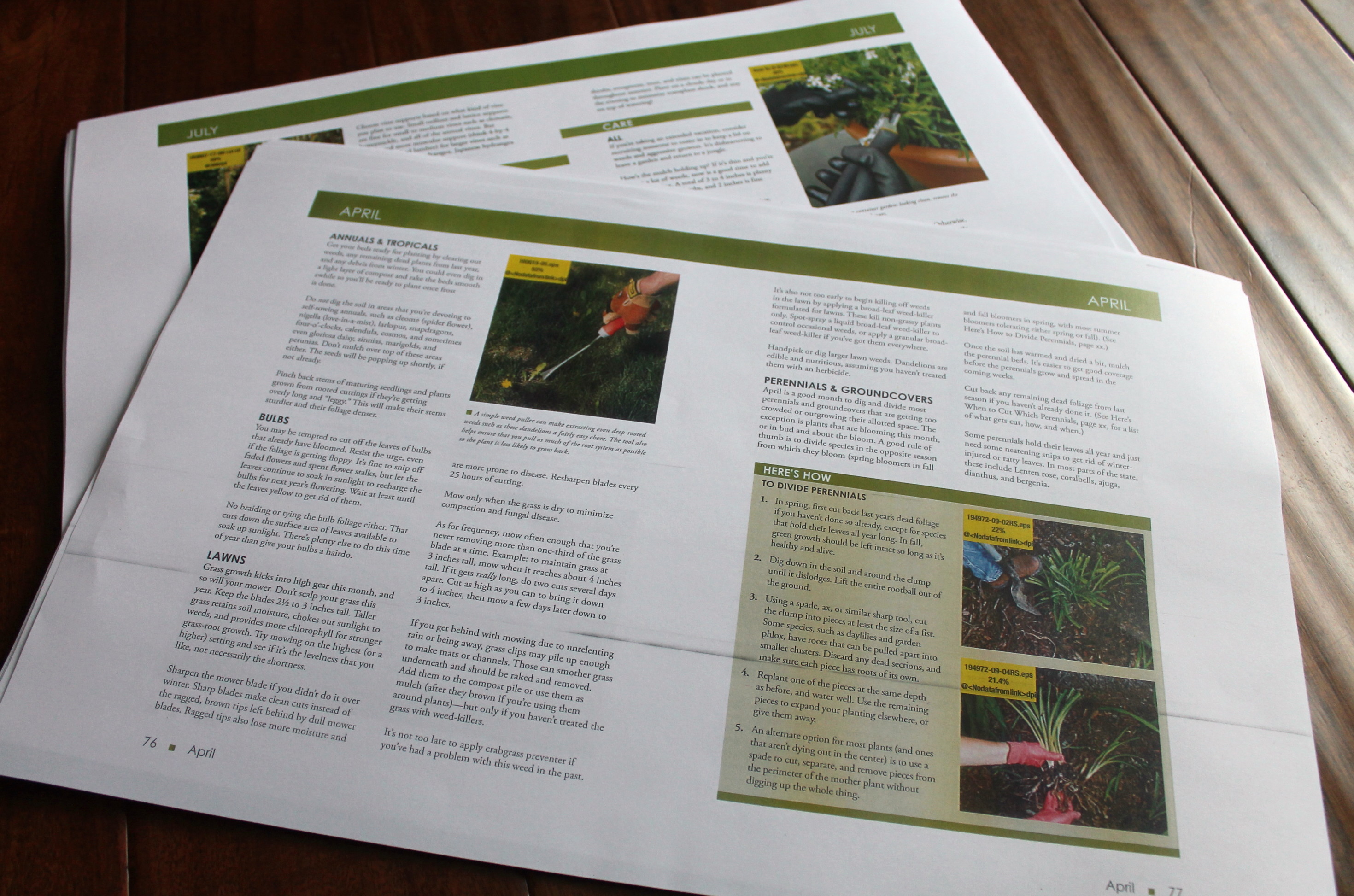
I just finished the writing part of my second garden book for Cool Springs Press – called “Pennsylvania Month-by-Month Gardening” – and it’s 242 pages on all the various jobs you might need to do to keep the landscape looking good (or to get it back into shape if it’s looking lousy).

It still has to go through final editing and printing and is due out in May.

“Pennsylvania Month-by-Month Gardening” is a companion to my “Pennsylvania Getting Started Garden Guide” that came out in October. That one focuses mainly on the 170 best plants for Pennsylvania landscapes.

The format of the new book is like a calendar, taking you through each month with a look at what jobs are best done at which times in Pennsylvania’s climate.

Each month is broken down by six main job headings – Plan, Plant, Care, Water, Fertilize and Problem-Solve.

Then under each of those, I go through nine main plant categories with the specifics of what needs to be done to each. These include Annuals and Tropicals, Bulbs, Lawns, Perennials and Groundcovers, Roses, Shrubs, Trees, Vines and an “All” category, which covers overall or general jobs.

Cool Springs Press does these regional guides all around the country, using local writers like me so the information can laser-focus on the plants and techniques peculiar to each area.

I like the concept because gardening is such a local venture. What works in one part of the country usually doesn’t in another. That’s why the more local you can make the information, the more useful it is.

Read More »


Gardening Meets Hollywood

January 5th, 2015

I just saw a sneak-peek video graphic of this year’s Philadelphia Flower Show entrance, and it looks like it’s going to be impressive.

"Lights, Camera, BLOOM!" is the theme of the 2015 Philadelphia Flower Show. (Pa. Horticultural Society)

“Lights, Camera, BLOOM!” is the theme of the 2015 Philadelphia Flower Show.
(Pa. Horticultural Society)

If you haven’t heard, the 2015 show theme is “Lights, Camera, BLOOM!” The entry gardens, main display gardens, and most of the exhibits will revolve around the movies.

The main entrance is to be set up as an oversized theater marquee, giving visitors the impression that they’re entering a movie theater.

The iconic Hollywood sign on the hill will be the first thing you see once inside.

Palm trees will be the main landscape feature to give the feel of sunny California.

I haven’t heard any of the garden specifics yet, but this theme is one that should give the landscapers a ton of creative license.

Pick any film, and you have the makings of a garden to interpret it.

This should add up to a lot of diversity since the door is so wide open to possibilities – much more so than when a theme limits you to, say, French gardens or the tropics.

If you’ve never seen the Philadelphia Flower Show, it’s the world’s biggest and oldest indoor flower show. This year is No. 186. Even non-gardeners are impressed by it, and many people go every year.

I’m one of them. I’ve seen about two dozen shows now, and I never get tired of it.

Some years are better than others (last year’s ARTiculture theme got very good reviews), but I can’t say I’ve ever seen a bad one.

Just the timing of it is a huge plus – near the end of winter when we all can use the scent of some flowers and some reassurance that green and warmth are just around the corner.

The only thing that people sometimes grouse about is the crowds. Despite running 9 days and covering 10 acres of the Pennsylvania Convention Center, it can feel like a cattle herd sometimes.

It’s also not a fun drive down the Schuylkill Expressway, followed by city traffic and $20 parking fees even before you get in the door.

That’s why I think the best way to see the flower show is by tour bus.

As we’ve done for the past 10 years, Lowee’s Group Tours and I have put together a lineup of motor-coach day trips to see “Lights, Camera, BLOOM!”

Read More »


« Older Ramblings and Readlings Newer Ramblings and Readlings »

  • Home
  • Garden House-Calls
  • George's Talks & Trips
  • Disclosure

© 2026 George Weigel | Site designed and programmed by Pittsburgh Web Developer Andy Weigel using WordPress