
8 Landscaping Ideas Worth “Borrowing”
March 31st, 2015
No sense reinventing the wheel if you’re thinking about sprucing up the ol’ landscape this year.
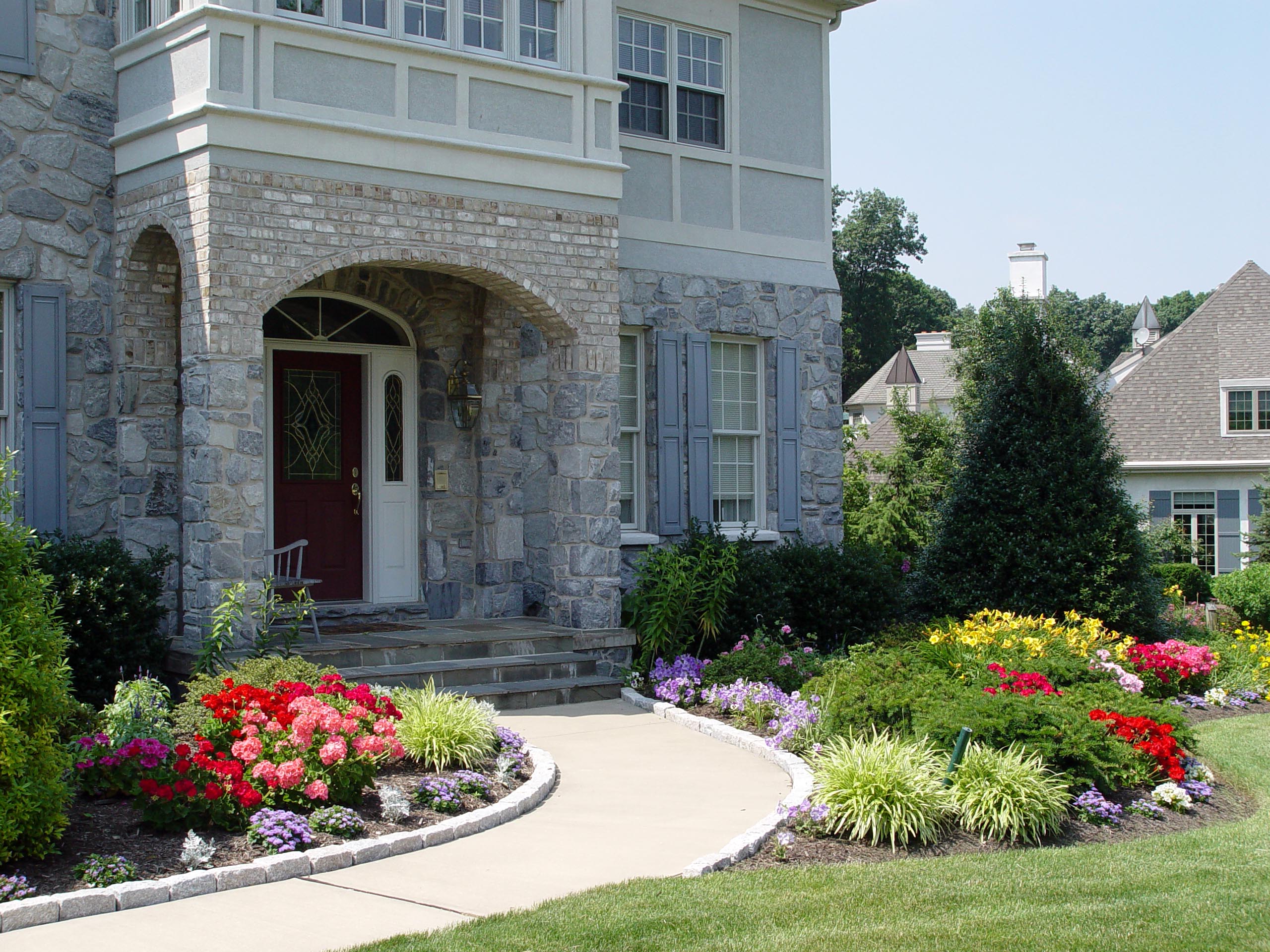
Wider foundation beds mean more plants and more variety, as the Coopers display here in their Hershey front yard.
Enough gardeners already have come up with enough excellent ideas that it’s easier to just “borrow” (OK, steal) a few of the ones that also might look good in your yard.
Here are eight ideas from uber-gardeners…
1.) Boost Those Bed Sizes
It’s hard to radiate much impact with those tightwad 3- or 4-foot beds most people have skirting the house. Landscapes that turn heads have foundation beds of 6, 8 or even 10 feet or more of width.
That gives you more plants to work with, and that means more color, more texture and more chance for seasonal change. It also opens the door to creative pairings of plants that look good with one another.
Lean toward low-care, hard-working plants that do more than one thing in one season, and layer them back to front, tallest to shortest.
2.) No Fear Out Front
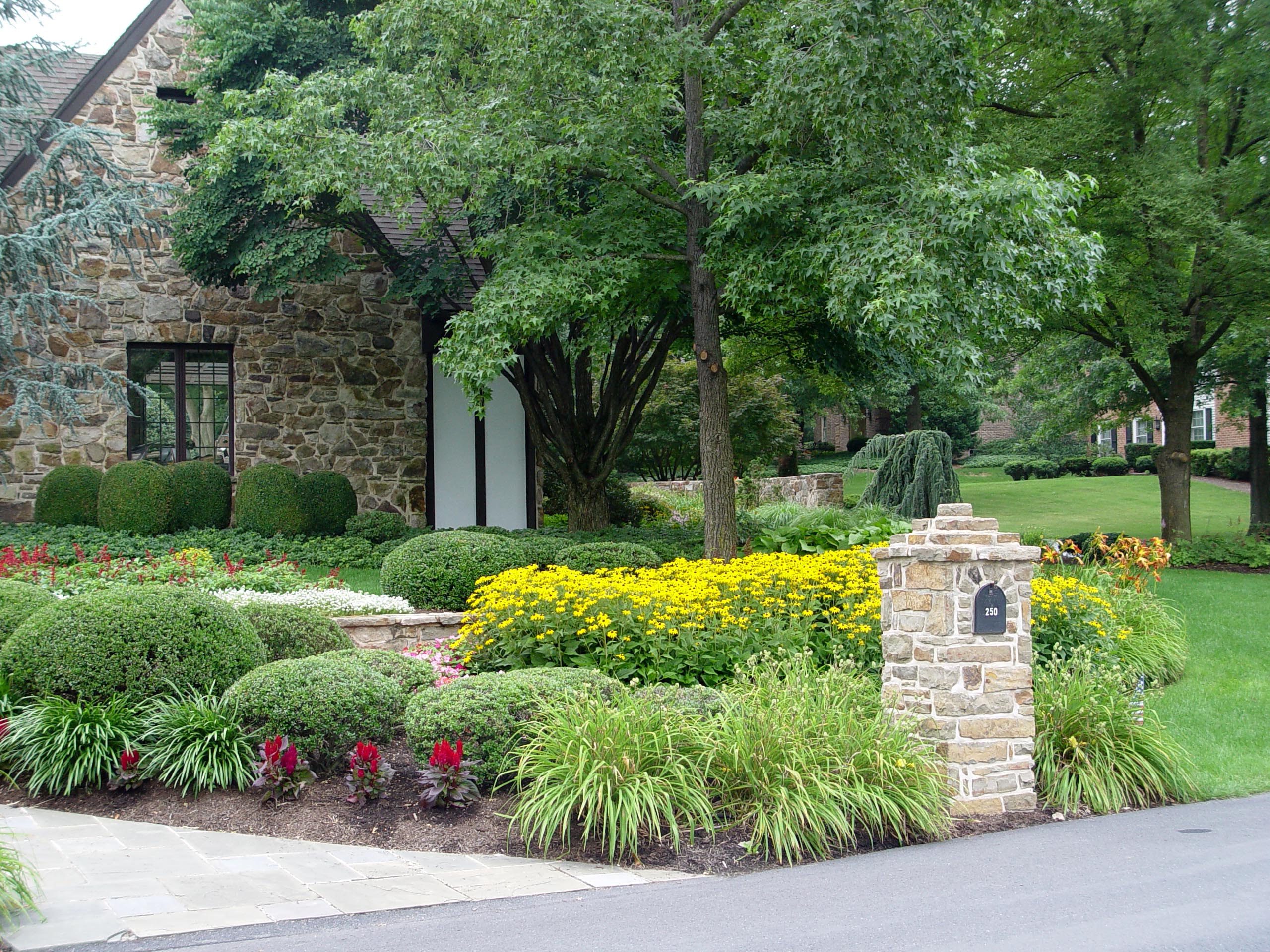
The whole front yard is a garden in this Hampden Twp. yard.
Veteran gardeners have no qualms about planting gardens in the front yard. Under-confident or time-strapped yardeners, on the other hand, tend to be timid about biting off a front-and-center garden where everyone will see their failures and maintenance lapses.
So they stick with the typical, boring, grass-heavy front landscape – maybe with a tree or two and a conservative island bed at most.
Yeah, the pressure’s on when you convert some of that familiar lawn into gardens. The key is good plant selection. Pick compact plants that don’t need much pruning and that are unlikely to run into bug or disease problems.
Also take baby steps. You don’t have to replace all of the grass in one fell swoop. Try expanding the foundation bed first. Then build a garden along the front walk or driveway. Then carve out an island bed or two.
3.) Building Privacy
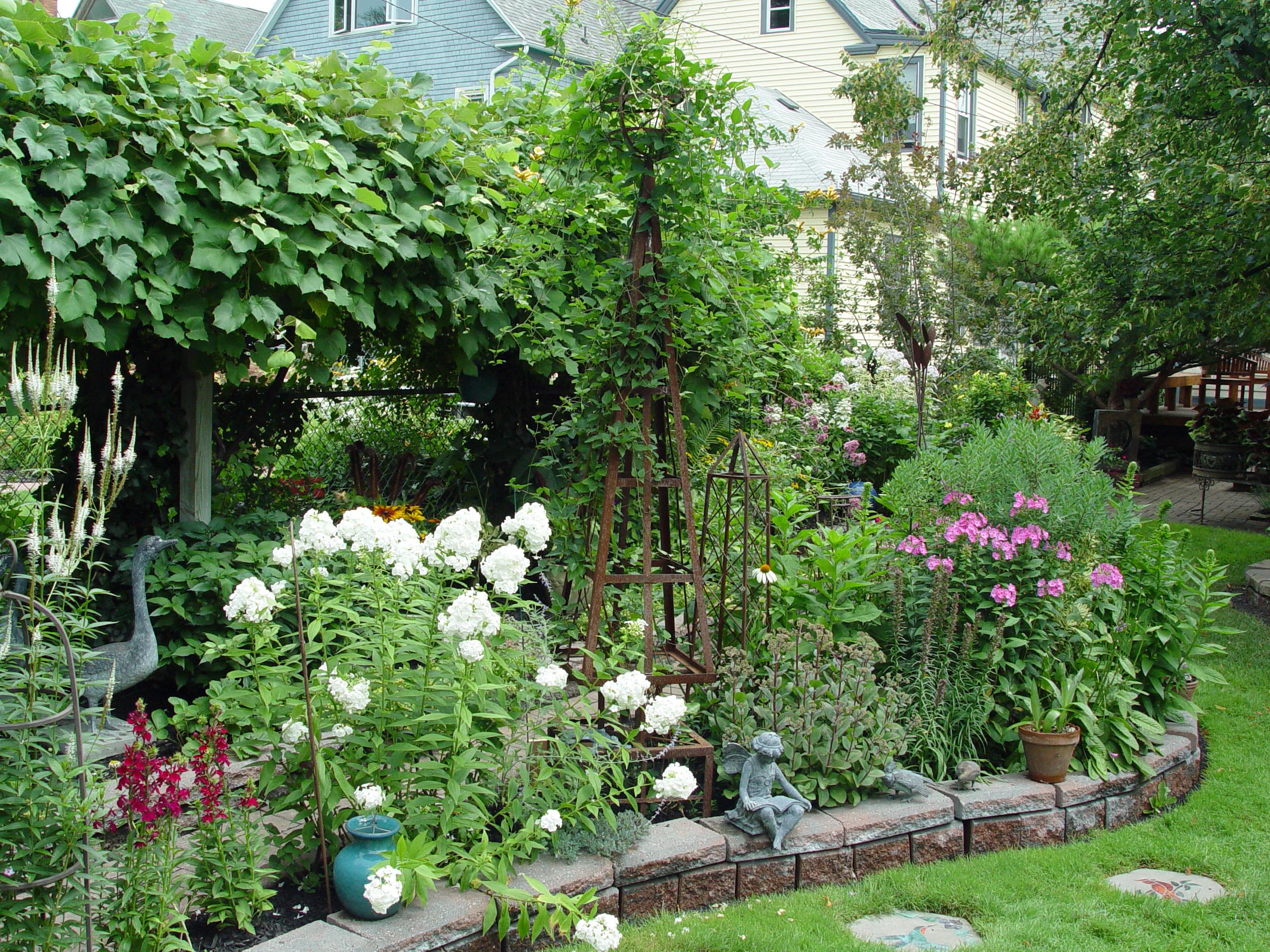
This Buffalo, N.Y., back yard uses a mixed garden to screen out the neighbor’s yard.
Most people like a little privacy in their back and side yards. The obvious choice is either a fence or a planting of those upright, evergreen arborvitae that line so many suburban borders.
A more “gardeny” way is to plant a mixed border around the boundaries. Instead of planting 37 arborvitae in a straight line, use several different kinds of evergreens, small trees and tall shrubs.
If you have the space, dig enough lawn to allow for two or three layers of these plants – similar to the foundation-bed approach above.
If space is limited, go with a fence. But don’t let it bare. Plant a garden in front of it, using a combination of upright shrubs and evergreens, vines trained up trellises, ornamental grasses and assorted perennial flowers.