

• Home
  • Contact
  • Site Map
George Weigel - Central PA Gardening
  • Landscape 1
  • Landscape 2
  • Landscape 3
  • Landscape 4
  • Garden Drawings
  • Talks & Trips
  • Patriot-News/Pennlive Posts
  • Buy Helpful Info

Navigation

  • Storage Shed (Useful Past Columns)
  • About George
  • Sign Up for George's Free E-Column
  • Plant Profiles
  • Timely Tips
  • George’s Handy Lists
  • George's Friends
  • Photo Galleries
  • Links and Resources
  • Support George’s Efforts


George’s new “50 American Public Gardens You Really Ought to See” e-book steers you to the top gardens to add to your bucket list.

Read More | Order Now


George’s “Survivor Plant List” is a 19-page booklet detailing hundreds of the toughest and highest-performing plants.

Click Here


Has the info here been useful? Support George’s efforts by clicking below.


Looking for other ways to support George?

Click Here

George's Current Ramblings and Readlings

How To Safely Store Your Gardening Tools

January 20th, 2016

How would you rate your current gardening tools? Would you say they are effective enough for you to keep using them in the near future? Or are you thinking about paying a visit to a home convenience store soon? Gardening tools that give you excellent results are the primary goal of every gardener who wishes to turn his garden or yard into genuine eye candy for passers-by and visitors. Sometimes, improper storage of your tools leads to poor performances. Plus, incorrect storage of your gardening tools could lead to someone stealing them from you. If you wish to elarn what to do to safely store your gardening tools, read on.

Protect Your Investment Behind Locked Doors

Gardening is a time and money consuming hobby embraced by millions of people all over the world for a variety of reasons. The time, passion, work, and tools you Garden Shed Securityput into your garden are all part of a n important you should struggle to protect. Since you are most likely devoting countless hours perfecting every species of plant in your garden on a daily basis, you should take proper protection measures. All of the seeds, plants, and tools you need to buy periodically are definitely making you stick your hand into your pocket. Wouldn’t it be a shame to have someone break into an improperly secured garden shed or garage and steal everything from you in the blink of an eye?

If you have chosen the simplest route to gardening (for example, buying saplings instead of seeds, flowers instead of beginning anew, and costly, high quality tools), you have definitely made a serious investment. And, just like any investment, you will want to keep it shielded from criminal minds and hands. A local door lockout service that offers the entire range of residential locksmith services will have not problem assessing the locks on your shed, garage, or home, install new locks, re-key old ones, and advise you on additional security measures. Services like 24/7 Los Angeles Locksmiths can help you figure out what are the best security solutions for your custom needs. They offer free estimates and charge some of the most affordable rates and service fees on the market. So they are worth looking into, especially since they also specialize in nonstop emergency lockouts. Once you have fitted the right kind of locks to your garden shed or garage, make a habit out of always keeping the doors locked – and your gardening tools protected behind them.

Use The Tool Cases

If you have a few power tools you use periodically, use their cases – if you still have them – for storing purposes. If you can use hard and impact resistant cases, you will significantly reduce the levels of humidity attacking the tools. You will also prevent accidental damage from affecting your tools. Cases are also convenient means of transportation, if you need to travel along with your tools, or relocate to a new home.

Keep in mind dampness will eventually destroy your tools, especially those made of steel. Focus on finding the best dry storage solutions to keep rust at bay. Buy a dehumidifier and place it inside the shed or garage if you live in a hot and humid climate.
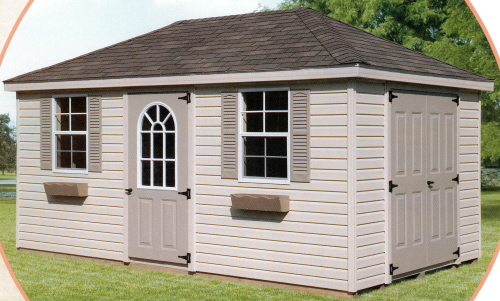

Top 3 Security Tips For Your Storage Shed

January 10th, 2016

Garden sheds are amazingly versatile. They can offer that precious storage space for tools and garden furniture in the outdoors. They make for the perfect shelterGarden Sheds for Storage when working on a DIY project outside, such as planting pots. Not to mention they make for the perfect relaxation spot where you can unwind, listen to the quiet, or focus on the soothing nature sounds. They therefore need to be sturdy and secure enough to support your storage needs on the long term.


Tip #1: Shop Wisely!

Garden sheds come in a large variety of shapes, sizes, and materials. Wooden, metal, plastic, or bike sheds – no matter what your choice might be, you will most likely find an extensive range of garden sheds both online and offline. Figure out your exact needs, compare a few models, and shop accordingly. Keep in mind that shed foundation and security features are equally important when comparing sheds. Since you will be using your shed to store valuable gardening items and other expensive tools, you will of course need to focus on finding a shed that comes with top security options. You can also add more security to your shed by following a few simple steps and tips.

Tip #2: Use A Close Circuit Television System

As long as you remain aware of the palpable threats around you, and stay prepared, you do not need to turn into another victim of crime. One excellent solution you might have been avoiding for a while is a CCTV system. Most people tend to have a more difficult time shopping for closed circuit television systems. The good news is that there are many companies that sell these systems and that are more than happy to assist you every step of the shopping process. Let them know what your specific needs are so you can select the most effective systems. Often times, you will be recommended to use a single external camera connected to a TV monitor with the help of a video recorder. You can usually set the TV monitor to a timer connected to an infrared light so it can come on at a time when you feel most vulnerable.

Ask a local security company or a residential locksmith for house to assist you with picking the best CCTV system for your needs. Add motion detectors that will only turn your system on when triggered by a movement in your garden or garden shed. You can opt for a system that features a special “masking” option that can effectively shield the screen from those movements you do not wish to detect (for example, trees moving in the wind). CCTV systems are not only excellent burglar deterrents, but they can also give you more peace of mind and improve your odds of recovering your stolen goods, if your home or shed do get broken into.

Tip #3: Use Heavy Duty Padlocks

Fit your garage shed with a hasp and staple, and add heavy duty external use padlock to it. If your shed has windows, fit them with casement locks or rely on a steel mesh you can place over the windows.

Use locks on your bikes and mowers if you plan on storing them inside the shed. Have a professional locksmith for homes assess your exact needs and recommend/install the best types of locks and alarms.


Christmas Gardens

December 22nd, 2015

Who would’ve thought that the most-visited time for America’s most-visited garden would be December?

Some of Longwood Gardens' half a million outdoor lights.

Some of Longwood Gardens’ half a million outdoor lights.

But it’s true. The busiest time at Longwood Gardens is not around Mother’s Day or in summer but the weeks between Thanksgiving and New Year’s.

If you’ve ever seen the Christmas display Longwood puts on with its half a million lights and over-the-top beautiful conservatory trees and tropical plants, you’ll understand why many people make it a Christmas tradition to go there every December.

The conservatory is the highlight with its masses of poinsettias, white lilies and conifers adorned with natural decorations.

Every year, staff does something extraordinary on the ballroom floor, which is typically flooded with an inch or so of water.

One year it was a royal table setting with turf underneath as carpet. Another year it was thousands of golden and red apples laid out in a paisley pattern across the floor. Another year it was a floral carpet leading up to a 15-foot Christmas tree.

This is what the conservatory's ballroom floor looks like this year.

This is what the conservatory’s ballroom floor looks like this year.

This year’s ballroom eye-popper is a series of lighted fountains, flanked by decorated conifers and leading to one glorious white-lit tree at the end.

An outdoor train display running through a miniature landscape is another nice touch (this year near the Terrace Café), and multi-colored lights strung all over landscape trees give the whole place a festive feel at night.

Even with the main fountain garden out of action until 2017, there’s plenty to enjoy. Smaller lighted fountain shows set to music run continuously after dark in the Outdoor Theatre.

The Longwood Christmas Display runs until Jan. 10 if you want to catch it yet this year.

If you like gardens at Christmas, I should mention four others worth adding to your bucket list…

Read More »


To Till or Not to Till?

December 15th, 2015

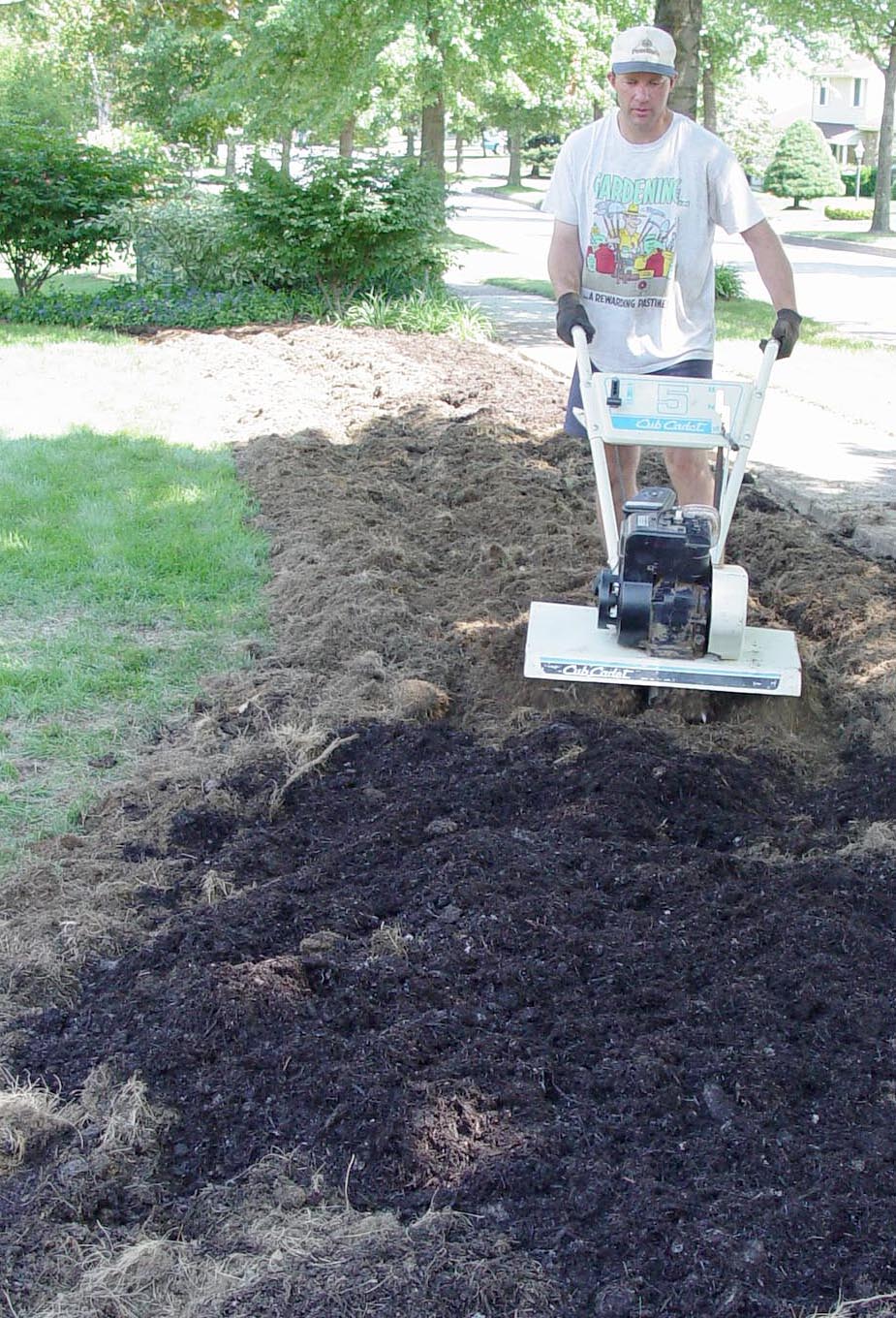
Veggie-garden “old-timers” will tell you that the vegetable garden should be rototilled at the end of every season to “put it to bed for winter.”

Tilling, especially in fall, is a good way to waste nitrogen in the soil.

Tilling, especially in fall, is a good way to waste nitrogen in the soil.

That’s the time to work in manure, get rid of weeds and left-over plant parts, and generally have the soil smooth and ready to go for spring. Right?

Maybe not because research indicates that this traditional season-ending practice is a bad idea.

The latest study to cast doubt on fall tilling comes from Penn State’s College of Agricultural Sciences where Dr. Denise Finney led a 5-year farming study into the relationship between tilling and that most important of plant nutrients, nitrogen.

Finney found that when you till in the fall and let the ground bare, you not only waste some nitrogen to the air, but you also increase the amount of nitrogen leaching into and polluting groundwater.

Her findings translate into the home garden.

She says if you’re going to till, it makes much more nitrogen-sense to do it in spring when you immediately follow it with a planting that will use the nitrogen that tilling stirs into action.

If you must till in fall, she says, nitrogen loss can be counteracted by either planting a winter cover crop or at least covering the ground with an organic material, such as chopped leaves or left-behind dead plants from this year’s crop.

“To me, if you know you have diseased plants or pest materials, it makes sense to remove that,” Finney says. “But in my home garden, I leave the healthy material in the garden. That’s organic matter. There’s no need to remove that unless it poses a health threat.”

Read More »


George Book No. 3

December 1st, 2015

My third gardening book from Cool Springs Press just published, and it’s very similar to “Month-by-Month Gardening in Pennsylvania,” except geared to gardeners in Delaware, Maryland, Virginia, West Virginia and Washington, D.C.Mid-Atlantic cover

This one’s called “Mid-Atlantic Month-by-Month Gardening,” and it’s set up in month-by-month format to produce a 192-page to-do list for what to do when around the garden.

The main difference between this one and the Pennsylvania version is that the timing of some of the jobs differs, plus a few techniques are a bit different since some parts of the broader Mid-Atlantic region are coastal and have sandy soil.

The climates over those four states and the District of Columbia vary even more than Pennsylvania’s span from Philadelphia to Bradford and Erie. This book had to cover conditions from Zone 5b in the mountains of West Virginia to the balmy Zone 8a in the Norfolk/Virginia Beach area of coastal southeastern Virginia.

One other curveball: Maryland has passed some restrictive rules on what fertilizers people can apply and when, so I had to incorporate those into the lawn sections.

For example, Marylanders can’t use lawn fertilizer that has phosphorus unless they get a soil test verifying that that potentially bay-polluting nutrient is needed. They also have limits on nitrogen amounts, they can’t apply any lawn fertilizer within 15 feet of a waterway or anywhere between Nov. 15 and March 1 (to head off frozen-ground applications), and they’re required to sweep spilled fertilizer off of sidewalks and other hard surfaces.

Like “Pennsylvania Month-by-Month Gardening,” the format of “Mid-Atlantic Month-by-Month Gardening” has 12 monthly chapters with each chapter broken down into the different kinds of jobs (Plan, Plant, Problem-Solve, etc.) Then under each job, tips are laid out for each category of plants (Annuals, Perennials, Bulbs, Shrubs, Trees, etc.)

This is a new format for this whole series of Month-by-Month Gardening books, which Cool Springs Press publishes throughout the country. I like that localized approach because it’s very difficult to give much meaningful advice when you’re trying to write for the whole country. It’s hard enough zeroing in on just a single state.

If you’d like a copy of “Mid-Atlantic Month-by-Month Gardening,” I’ll be happy to send you a signed copy for $25, plus shipping. Order details are on my Buy Helpful Info page.

Read More »


« Older Ramblings and Readlings Newer Ramblings and Readlings »

  • Home
  • Garden House-Calls
  • George's Talks & Trips
  • Disclosure

© 2026 George Weigel | Site designed and programmed by Pittsburgh Web Developer Andy Weigel using WordPress