• Home
  • Contact
  • Site Map
George Weigel - Central PA Gardening
  • Landscape 1
  • Landscape 2
  • Landscape 3
  • Landscape 4
  • Garden Drawings
  • Talks & Trips
  • Patriot-News/Pennlive Posts
  • Buy Helpful Info

Navigation

  • Storage Shed (Useful Past Columns)
  • About George
  • Sign Up for George's Free E-Column
  • Plant Profiles
  • Timely Tips
  • George’s Handy Lists
  • George's Friends
  • Photo Galleries
  • Links and Resources
  • Support George’s Efforts


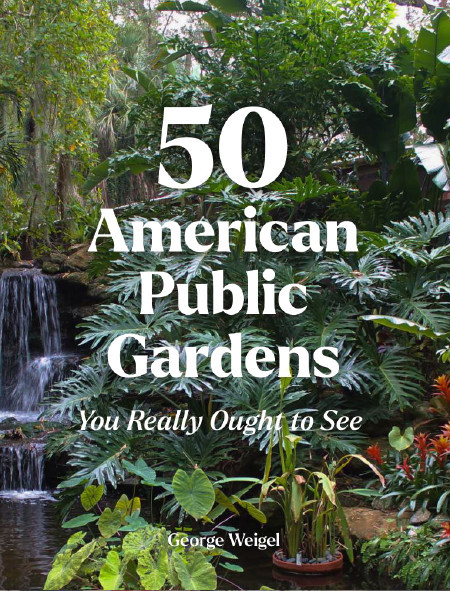
George’s new “50 American Public Gardens You Really Ought to See” e-book steers you to the top gardens to add to your bucket list.

Read More | Order Now


George’s “Survivor Plant List” is a 19-page booklet detailing hundreds of the toughest and highest-performing plants.

Click Here


Has the info here been useful? Support George’s efforts by clicking below.


Looking for other ways to support George?

Click Here

George's Current Ramblings and Readlings

Winter, Here We Come

November 24th, 2015

We’re in iffy territory now weather-wise with ice storms, freezes and, yes, even a plowable snow possible at any time.
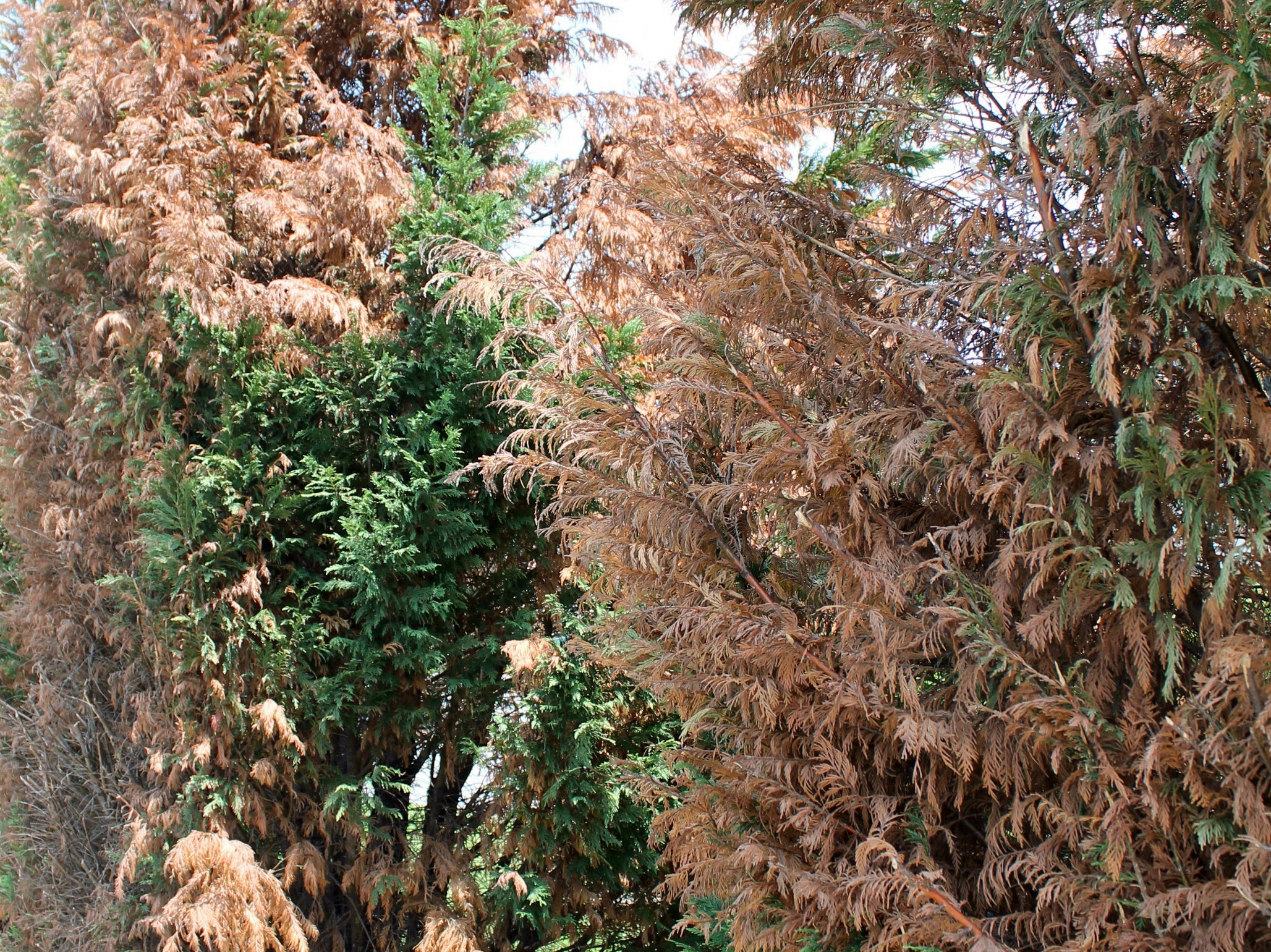
Windburn damage to conifers and broad-leafed evergreens is the most common winter damage.

Windburn damage to conifers and broad-leafed evergreens is the most common winter damage.

The big question here at winter’s doorstep is just how bad things will get this time around.

The past two winters have been cold ones – enough to cause a fair amount of plant mayhem, likely made worse by the fact that our landscapes had adapted to a long string of warm winters.

Farmer’s Almanac-believers aside, who knows what we’re going to get?

If you’re an optimist or gambler or someone with only solidly winter-hardy plants in ideal locations, you’re probably doing nothing to “winterize” the landscape. And most of the time, our landscapes really do come out on the other side in reasonably good shape.

But if you’re pushing the envelope with borderline-hardy plants or one who goes into every winter fully expecting a vortex-laced snowmageddon, you’re more likely to feel like you ought to do something.

The two best somethings are burlap barriers and mulch.

Temporary walls of burlap stapled to stakes does a good job of deflecting cold winter winds, especially winds coming from the northwest and blasting broad-leafed evergreens such as cherry laurel, holly, nandina, osmanthus, boxwood and rhododendrons.

A few inches of leaves, bark or wood mulch over the ground helps insulate plant roots. West Shore fig grower Tim Clymer says he’s found that 6 to 12 inches of wood mulch (pulled back in spring) protects figs in winter as well as wrapping them.

Mulching and doing burlap barriers both is about as well as you can do, short of building a retractable roof over the yard.

Actually, there’s a third precaution that’s sometimes overlooked, says Annette MaCoy, the Master Gardener coordinator at Penn State Extension’s Cumberland County office.
Read More »


Gardeners and Non-Gardeners Don’t See Things the Same Way

November 10th, 2015

I’m always flummoxed (I’ve been waiting years for the perfect place to use this fun word) at how two different people can look at the exact same thing and come up with two totally opposite conclusions.

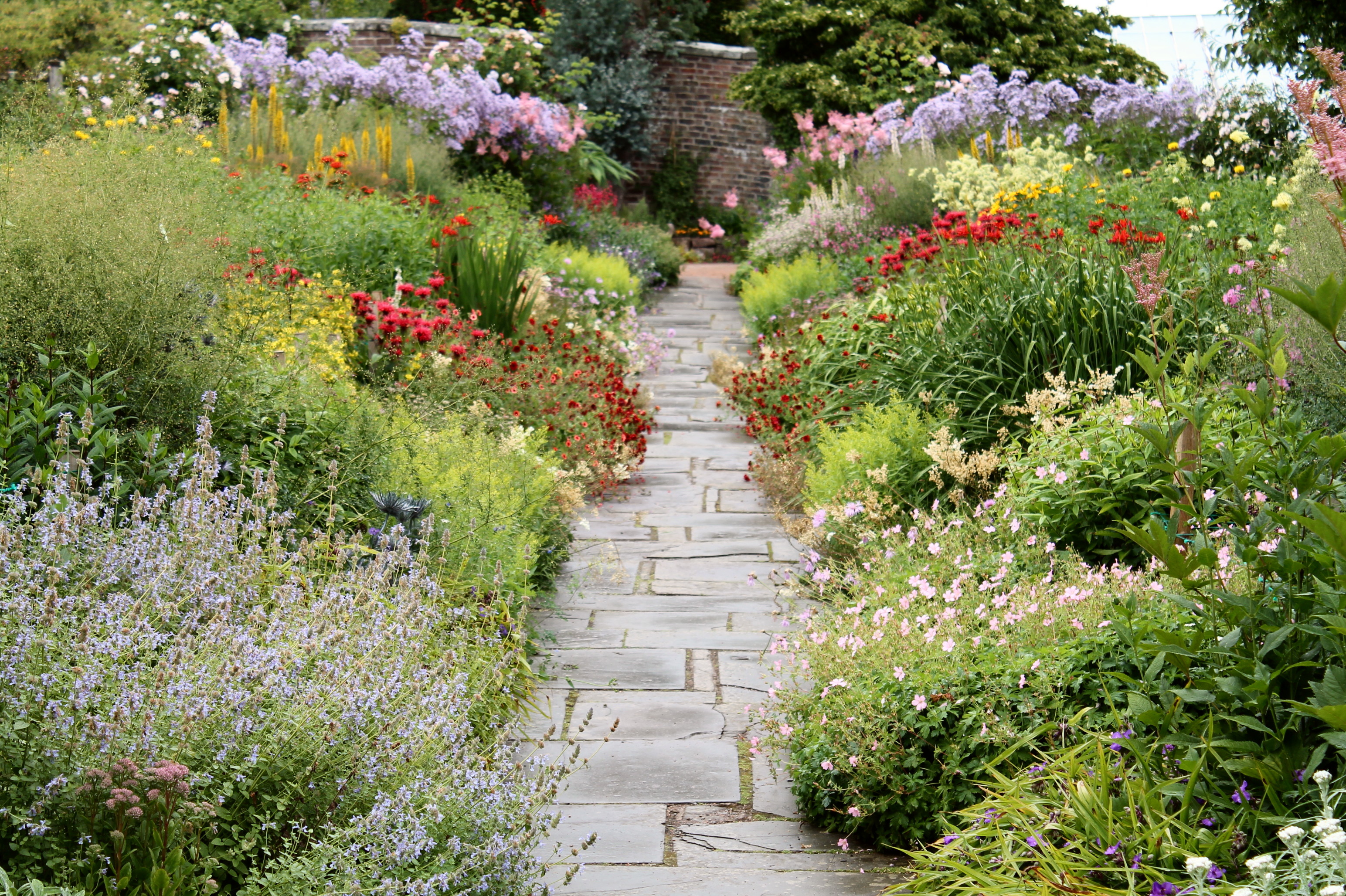
Do you see beauty here? Or a lot of work?

Do you see beauty here? Or a lot of work?

Our yards – and the plants in them – are no exception.

I noticed this while doing a few season-ending garden consults, some with plant-geek gardeners and some with “regular” people who mainly wanted me to tell them how to have a decent landscape without a lot of work.

It made me realize how easy it is to separate people into distinct gardener vs. non-gardener categories, just by how they fill out their pre-consult questionnaires and comment as we walk around the yard.

Not that either viewpoint is “right” or “wrong,” but here’s how the divergent outlooks shake out:

   On Trees

Gardener: I can’t imagine this yard without the peace, shade and privacy from the trees. Any good spots to add another one?

Non-Gardener: I’m thinking of cutting that big one over there down. It’s killing the grass, and I’m afraid it’s going to fall over on my house one of these days.

   On Leaves from the Trees

Gardener: Free mulch! Free compost! Sometimes I scoop them out of my neighbor’s curb.

Non-Gardener: It’s a pain raking and blowing all of them around. It gets worse every year, too. Aren’t there trees that aren’t messy?

   On Fruits from Trees

Gardener: I like watching the birds clean off the fruits.

Non-Gardener: I’m about to cut down that messy tree. I’ve had enough of the birds pooping on my patio furniture.

   On the Lawn

Gardener: I’m thinking of digging up more grass next year and putting in a pollinator garden.

Non-Gardener: How do I get my lawn to thicken up? Is now the right time to fertilize? And what’s the best way to get rid of those weeds?

   On Bees

Gardener: I put in a lot of new plants, and I’m finally starting to see more bees again. I was getting worried.

Non-Gardener: I ripped out those purple things that were attracting all of the bees. Now they’re gone. I was getting worried.

Read More »


When to Get Rid of a Tree?

November 3rd, 2015

This may be an inhospitable thing to ask after trees have given us such a colorful, season-ending sendoff, but how can you tell when it’s time to ax a tree?

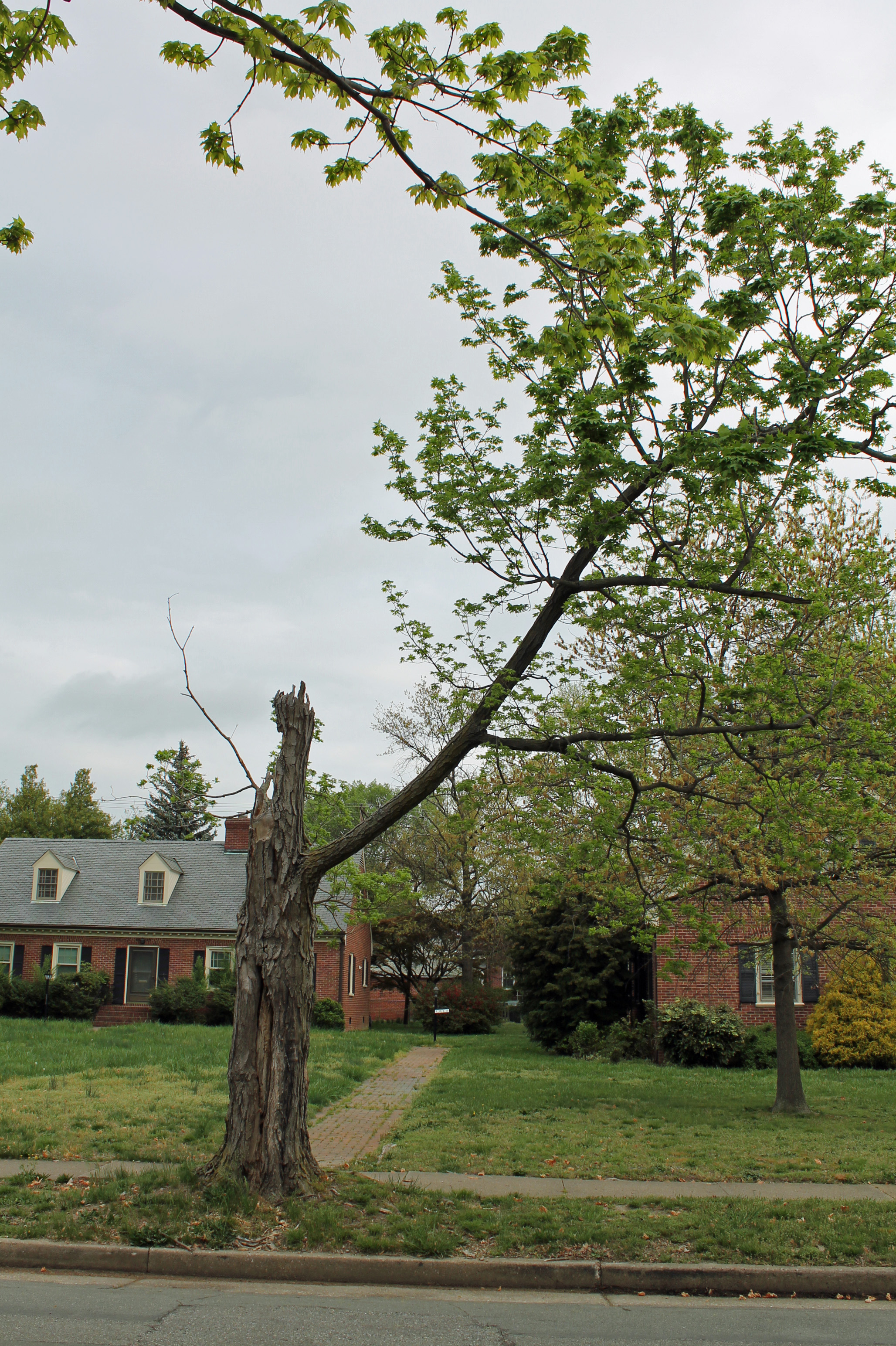
It's probably time to give up on this tree...

It’s probably time to give up on this tree…

It’s a tough call for a lot of people, and it’s something I get asked a lot during my Garden House-Calls travels.

For some people, losing an old tree is like losing an old friend. It’s a particularly hard decision when the tree has sentimental value, such as one the kids brought home when they were little or one that dear old dad planted as a house-warming present decades ago.

No wonder those are hard to remove until every last leaf and branch is dead.

Yet like people, the time comes in every tree’s life when it slips into twilight and beyond – assuming it doesn’t meet an abrupt demise during a storm or at the end of a rabbit’s bark-girdling teeth.

Sometimes a tree gives warning that the end is approaching, like my one-time ‘Prairifire’ crabapple that began showing smaller leaves and dying branches for two years before failing to leaf out.

Some trees limp along for many years in a hang-on state.

Others look reasonably good on the outside while hiding troubles inside or beneath, only to seemingly die “overnight.”

Evergreens are particular fakeouts because they can be functionally root-dead for weeks before suddenly turning brown. Think about how a cut Christmas tree looks green and alive for weeks even after it has been totally disconnected from its roots.

Read More »


Pruners Don’t Compost Well

October 27th, 2015

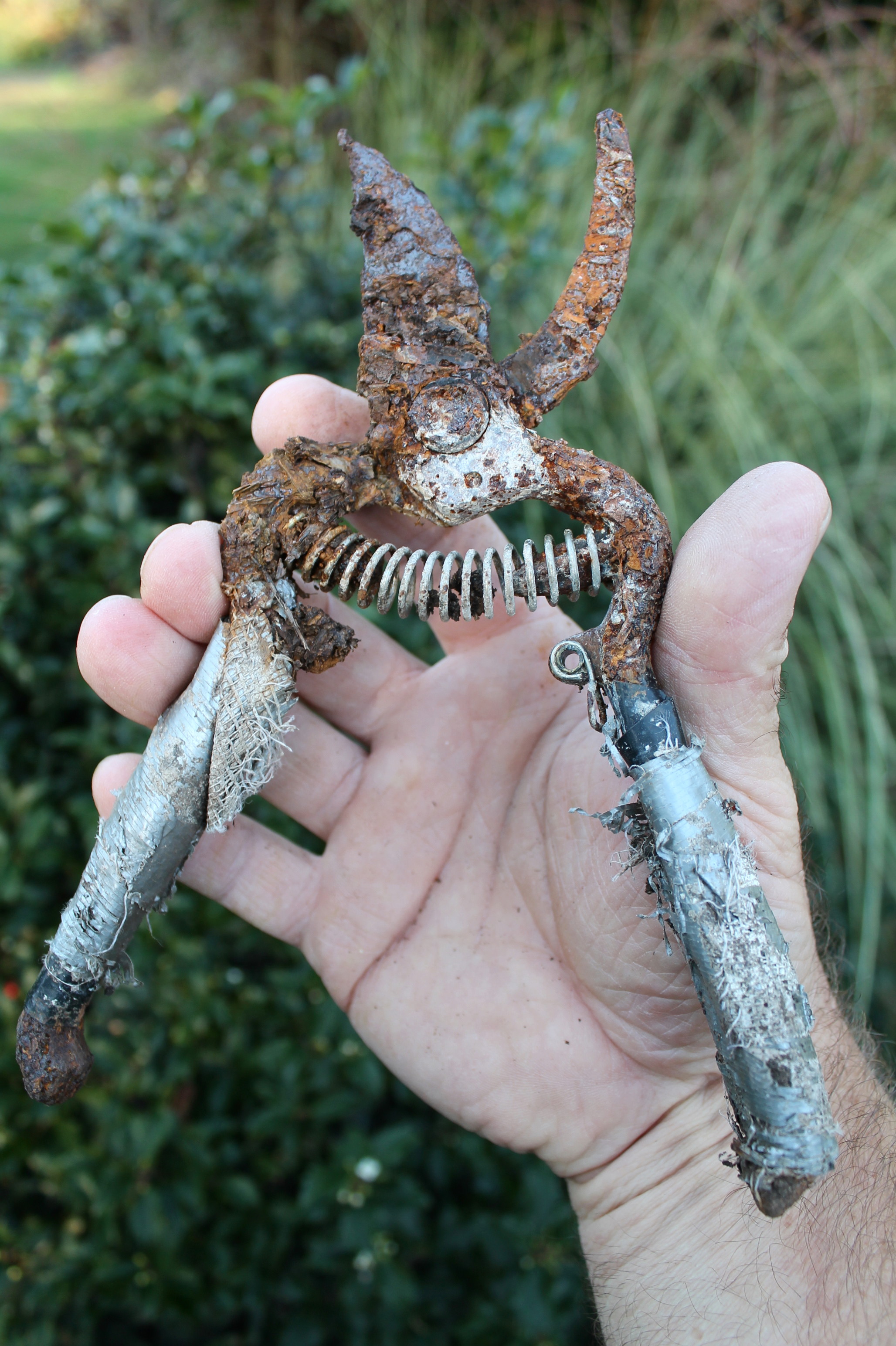
One tidbit of gardening information that I can now verify – pruners don’t compost very well.

Here's what pruners look like after a year in the compost bin.

Here’s what pruners look like after a year in the compost bin.

They rust nicely and become unusable after a year in a compost bin, but they don’t break down nearly as quickly as, say, spent bean leaves or grass clippings.

Why would I attempt to compost pruners, you might ask?

It was unintentional. My well-worn pair of Coronas were merely the latest garden paraphernalia to somehow turn up in my compost.

Emptying the compost to make way for the latest leaf-droppings and frost-yankings is an annual October ritual for me.

It’s a hard and not-so-favorite gardening chore, but it’s an important one. Composting recycles a yard full of organic waste that otherwise would end up in the trash stream, and it pays off with the absolute best soil amendment and plant fuel.

I look at my compost bins as an on-site “power plant” to keep my whole little botanical empire churning along.

But every year as I’m screening the compost to sift the fine “black gold” from the semi-composted rough stuff that becomes mulch, I find all sorts of surprises.

Usually it’s plant tags, pieces of jute or twisty-tie, and stray bottle caps. One year I found a spoon – probably one that got scooped up with apple peelings and inadvertently tossed in the stainless steel compost pail under the sink.

The pruners win the prize for the biggest stray item… so far. As my rapidly aging brain becomes more forgetful, I wouldn’t be surprised if the patio table ends up in there some year.

Read More »


Pollinators and Native Plants

October 13th, 2015

Now I know why that kindly older woman asked me after a recent talk whether I thought it was OK if she didn’t rip out the non-native plants in her yard and replace them with natives.

Plant this and save the pollinators? It's not that easy...

Plant this and save the pollinators? It’s not that easy…

She was asking me for forgiveness for her “sin.”

That became clear as I was researching a Patriot-News/Pennlive.com garden column about new research from England claiming that many non-native plants are useful to pollinators, too, and that our best course is to plant a diverse, continuously blooming mix of all kinds of plants.

That’s what I already thought. But apparently not everyone does.

I’ve noticed a definite increased interest in natives lately. Many gardeners have been telling me they want to add more natives to their landscapes.

But I’m also hearing some people say they don’t want any non-native plants in their yard.

When I ask why, they almost always say they heard that “the pollinators are in trouble” and that the way to save them is to plant native plants.

At first I thought they were exaggerating the message because I’ve heard and read a lot about the benefits of native plants, too, and what I hear is that we should plant more of them, not that non-natives are useless, evil and best eradicated from our landscapes.

As I researched my column, it didn’t take long to find online chats, articles and websites that do, in fact, vilify any plant that wasn’t here when Columbus landed.

I ran into pleas to “GO NATIVE!” (all caps, bold-faced, exclamation point), many pollinator plant lists that include only natives, and even an author who says that “calling non-native plants beneficial to wildlife is ludicrous.”

No wonder people are feeling guilty for wanting to have a peony or a crape myrtle in their yard.

One of the people I interviewed for my column was Dr. Doug Tallamy, the University of Delaware entomology professor who’s author of “Bringing Nature Home,” the de facto manifesto for the native plant/help-the-pollinators movement.

I’ve heard him speak, read his book and chatted with him for about an hour on this whole issue. At no time have I heard him advocate nothing but natives or to call for the eradication of non-natives (except the invasive ones).

Read More »


« Older Ramblings and Readlings Newer Ramblings and Readlings »

  • Home
  • Garden House-Calls
  • George's Talks & Trips
  • Disclosure

© 2026 George Weigel | Site designed and programmed by Pittsburgh Web Developer Andy Weigel using WordPress