
• Home
  • Contact
  • Site Map
George Weigel - Central PA Gardening
  • Landscape 1
  • Landscape 2
  • Landscape 3
  • Landscape 4
  • Garden Drawings
  • Talks & Trips
  • Patriot-News/Pennlive Posts
  • Buy Helpful Info

Navigation

  • Storage Shed (Useful Past Columns)
  • About George
  • Sign Up for George's Free E-Column
  • Plant Profiles
  • Timely Tips
  • George’s Handy Lists
  • George's Friends
  • Photo Galleries
  • Links and Resources
  • Support George’s Efforts


George’s new “50 American Public Gardens You Really Ought to See” e-book steers you to the top gardens to add to your bucket list.

Read More | Order Now


George’s “Survivor Plant List” is a 19-page booklet detailing hundreds of the toughest and highest-performing plants.

Click Here


Has the info here been useful? Support George’s efforts by clicking below.


Looking for other ways to support George?

Click Here

George's Current Ramblings and Readlings

Name That Plant

September 27th, 2016

One of the hardest questions I get is, “What is this plant?”
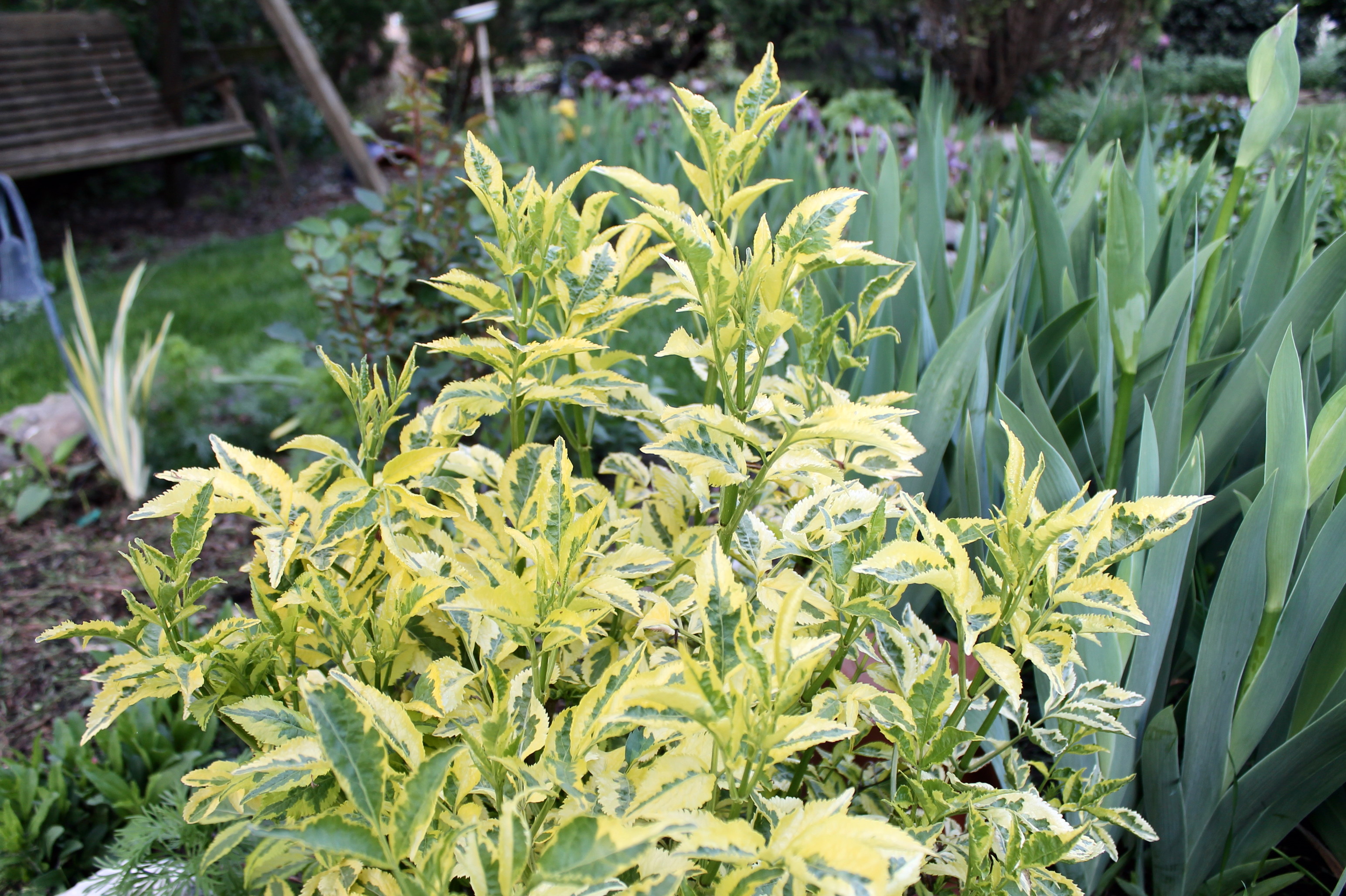
Is this a variegated dogwood, a variegated elderberry, or a viburnum with a virus? The correct answer is, B, variegated elderberry.

Is this a variegated dogwood, a variegated elderberry, or a viburnum with a virus? The correct answer is, B, variegated elderberry.

People will bring me a dried-up blossom, email me a blurred leaf photo, or show me a tiny photo on a smart phone, hoping I’ll be able to tell them what they have or what they saw.

Sometimes I can tell, mainly when it’s something common or distinctive. But most of the time, I take the “no-clue” route or guess, “Variegated dogwood? How about a variegated elderberry? Would you believe a viburnum with a virus?”

That’s why I was keen to try a new smart-phone app called Leafsnap that came out a few years ago from a team comprising folks from Columbia University, the University of Maryland and the Smithsonian Institution.

I downloaded the app, snapped a few pictures of trees in a state park, and waited for the software to tell me beech or birch?

Ha! The performance was so dismal that after a few more days and tries, I scrapped the app altogether.

Half the time, Leafsnap rejected photos outright, telling me they weren’t good enough or couldn’t be read.

When the app examined a photo and actually gave me feedback, the list was so long and varied (two dozen possibilities in one case) that a second-grader’s leaf-collection homework project would’ve been more useful.

Maybe Leafsnap has improved since my trial. Or maybe you’ve had a better experience. But to me, it was another case where injecting technology into gardening came up short – similar to my experience with the Flower Power Plant Sensor (a gizmo designed to wirelessly feed info on soil moisture and fertilizer needs) or that digital sprinkler timer that did everything except change its own batteries – and work without leaking.

The world of app developers isn’t giving up on the idea of digital plant-identifying. In fact, several new ones have come along – admittedly, none of which I’ve been eager to try.
Read More »


Why We Shouldn’t All Plant the Same Thing

September 20th, 2016

I guess it’s human nature to surround ourselves with what we know and to shy away from the different and especially the unknown.

This is happening to ash trees all over the eastern and central United States, thanks to the emerald ash borer. Credit: www.emeraldashborer.info

This is happening to ash trees all over the eastern and central United States, thanks to the emerald ash borer.
Credit: www.emeraldashborer.info

That’s obviously true in our yards, where we fill the space with the same few plants over and over again – even though we have so much more we could pick from.

No, I’m not whining out of horticultural snootiness. We can – and often do – pay a big price both in dollars and environmental impact for this sameness.

Look no farther than the Forest Hills neighborhood near Linglestown to see a textbook example.

Forest Hills is one of the many ash-tree-laden areas that’s been found by the deadly emerald ash borer. One by one, ash trees there are being chainsawed down as this wood-tunneling bug feasts up and down the streets.

“I can drive down the streets and keenly point out ash trees that are just a season or two away from meeting the tree-trimming-service fate similar to what my neighbor is currently going through,” says Dan Berman, a home-owner there.

This bug has been killing millions of ash trees across the central and eastern United States. It’s bad enough that any bug is that deadly to any species, but when your landscapes and parks are loaded with an attacked species, it’s disastrous.

The city of St. Louis, for example, is now faced with losing almost all of its ash trees. Many of them are already dead, but most of the rest are showing signs of ash-borer infestation. That usually means death in 2 to 3 years.

Trees can be saved, but it involves expensive insecticide injections every 2 years – at least.

Since ash trees make up 17 percent of St. Louis’s public tree canopy, treating them is out of the question. And so the city has decided the best course of action is to simply cut them down.

Losing 17 percent of your trees is a big deal, not only cosmetically but in terms of lost shade, lost filtering of urban air, lost oxygen, and lost food and shelter to wildlife.

Even residents who don’t care about any of that probably do care that some of their tax dollars are going to chainsaw expenses. Even more money could go to tree replacement.

Read More »


Go with the Good Stuff

September 6th, 2016

As we head into the season’s second superb planting window between now and the end of October, we’ll have some decisions to make.

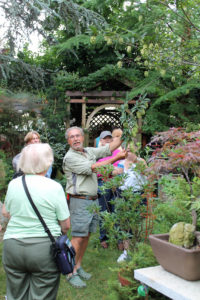
PHS Gold Medal Plant committee member Michael Colibraro shows visitors around his home garden near Philadelphia.

PHS Gold Medal Plant committee member Michael Colibraro shows visitors around his home garden near Philadelphia.

The toughest, in my mind, is which plant is likely to do well in which site.

That takes a lot of experience and intricate plant knowledge, which is why so many people wing it and end up with crappy plants that get bugs, look sickly or flat-out croak.

Most people who live actual lives don’t have the time or inclination to learn whether hosta is a good idea on that hot, sunny bank or whether shrub roses might work out better. (For the record, go with the roses.)

So how can we keep from guessing wrong?

One of the best resources Pennsylvania gardeners have is the Gold Medal Plant program, an arm of the Pennsylvania Horticultural Society – the Philadelphia-based non-profit that runs the world-famous Philadelphia Flower Show.

A panel of about 15 plant experts meets twice a year to talk about superb plants that deserve more use in Pennsylvania yards. I’ve been part of it for 6 years now. We’ll end up giving Gold Medal awards to some four trees and shrubs and four perennial flowers each year.

Since nurseryman Dr. Franklin Styer conceived the idea in 1979, PHS has accumulated what amounts to a 150+-plant all-star team for the mid-Atlantic region.

Winners are listed on the PHS website, and I also have them posted on my site, broken down by trees, shrubs, evergreens, vines and perennials.

Read More »


Gardens vs. Landscapes

August 30th, 2016

I finally figured out what’s wrong with my yard… I like plants way too much to have a nice landscape.

Is this part of my back yard a garden or "landscaping?"

Is this part of my back yard a garden or “landscaping?”

That might sound contradictory, but actually, it makes sense. Hear me out.

The basic issue is that I’m a plantaholic – basically a sucker for any new, interesting, different, and/or alluring plant variety. If I haven’t grown it before, I want to see what it does.

Part of the reasoning is homework and research – something that’s important to my garden-writing, horticulturaling career. Local, first-hand experience is the best way to figure out what works around here (and what doesn’t) so I can share the information with you.

In other words, I’m a garden guinea pig.

But the other explanation is that I’m flat-out fascinated with plants. The first time I grew an 8-foot-tall, luscious-fruit-laden tomato plant from a little seed, I was hooked.

Whenever I hear about a new creation, a new growth habit, a new color of an old favorite, or especially a quirky new characteristic, that plant is earmarked for my yard.

That’s a big problem when it comes to good design, not to mention limited space. As I once heard North Carolina nurseryman Tony Avent say, it’s not easy “landscaping in drifts of one.”

Yet that’s pretty much what I’ve been doing over the years. I have a single dwarf trial coreopsis here, a baby schimlinia tree there, a couple of newly created interspecific mukgenias there, and so on and so on.

My yard is more of a test lab than a landscape.

When people see it, I wonder whether they’re surprised and disappointed that my yard isn’t more organized, better planned, or more, well, wow!!!

Read More »


Chain Reaction Time

August 16th, 2016

One of the hazards of gardening in general – and being a plant-trialing garden writer in particular – is the fact that plants always need to be moved around.

George finding an opening to cram in one more trial plant.

George finding an opening to cram in one more trial plant.

Some plants croak, some grow out of control, some get eaten by voles/deer/groundhogs/rabbits, and some just end up in a wrong place due to operator error or bad plant information.

This is why I make to-be-moved notes during summer so I’m ready for my next game of “musical plants.”

Plant-moving improves markedly right after Labor Day when temperatures cool and rain happens a little more often.

With list in hand, I know exactly where everything needs to go. Or at least kind of.

Apparently I’m not the only one who does this every spring and every fall.

Gardener extraordinaire and plant nut Kevin Kelly, who has at least one of every worthy plant in his nearly half-acre Lower Paxton Twp. garden, also admits to this never-ending garden editing.

He describes it as a “chain reaction” kind of thing, where, say, something dies to open up a space, which gets filled by a moved plant, which then vacates that space, which then leads to another move, and so on.

Before you know it, you’ve transplanted 14 plants to new places.

The down side of that is you’re constantly turning your garden into one with a lot of “new” plants, so far as watering goes. Any plant that moves to a new home – whether in a nursery pot from the garden center or one that you’ve dug up from the back yard – needs to be kept consistently damp for about a year until the roots recover and re-establish.

The plus side, though, is that your garden gets better and better (allegedly) as you learn the little intricacies of each microclimate and improve on your pairings.

Read More »


« Older Ramblings and Readlings Newer Ramblings and Readlings »

  • Home
  • Garden House-Calls
  • George's Talks & Trips
  • Disclosure

© 2026 George Weigel | Site designed and programmed by Pittsburgh Web Developer Andy Weigel using WordPress