

Why We Shouldn’t All Plant the Same Thing
September 20th, 2016
I guess it’s human nature to surround ourselves with what we know and to shy away from the different and especially the unknown.
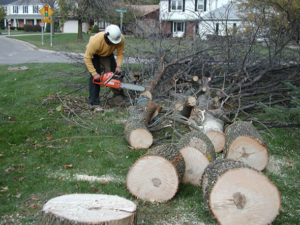
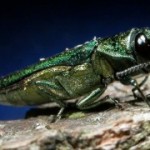
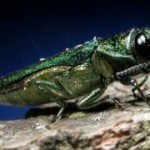
This is happening to ash trees all over the eastern and central United States, thanks to the emerald ash borer.
Credit: www.emeraldashborer.info
That’s obviously true in our yards, where we fill the space with the same few plants over and over again – even though we have so much more we could pick from.
No, I’m not whining out of horticultural snootiness. We can – and often do – pay a big price both in dollars and environmental impact for this sameness.
Look no farther than the Forest Hills neighborhood near Linglestown to see a textbook example.
Forest Hills is one of the many ash-tree-laden areas that’s been found by the deadly emerald ash borer. One by one, ash trees there are being chainsawed down as this wood-tunneling bug feasts up and down the streets.
“I can drive down the streets and keenly point out ash trees that are just a season or two away from meeting the tree-trimming-service fate similar to what my neighbor is currently going through,” says Dan Berman, a home-owner there.
This bug has been killing millions of ash trees across the central and eastern United States. It’s bad enough that any bug is that deadly to any species, but when your landscapes and parks are loaded with an attacked species, it’s disastrous.
The city of St. Louis, for example, is now faced with losing almost all of its ash trees. Many of them are already dead, but most of the rest are showing signs of ash-borer infestation. That usually means death in 2 to 3 years.
Trees can be saved, but it involves expensive insecticide injections every 2 years – at least.
Since ash trees make up 17 percent of St. Louis’s public tree canopy, treating them is out of the question. And so the city has decided the best course of action is to simply cut them down.
Losing 17 percent of your trees is a big deal, not only cosmetically but in terms of lost shade, lost filtering of urban air, lost oxygen, and lost food and shelter to wildlife.
Even residents who don’t care about any of that probably do care that some of their tax dollars are going to chainsaw expenses. Even more money could go to tree replacement.
This isn’t the first time we’ve faced wipeouts like this. The two most famous earlier examples are disease devastations of the American elm and the American chestnut.
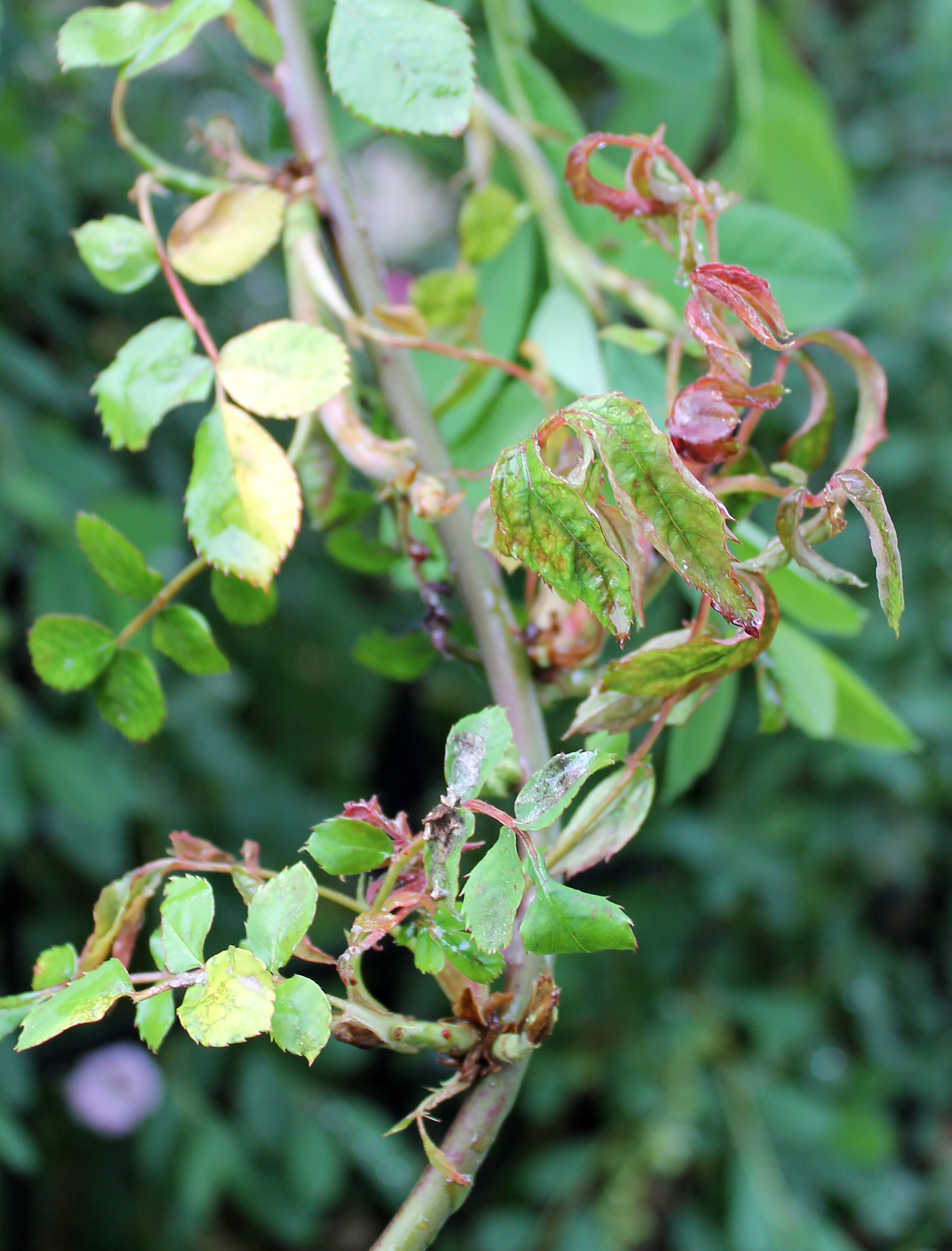
This rose is suffering from rose rosette disease.
But every year seems to bring new threats… downy mildew on impatiens, needlecast on Douglas firs, rose rosette disease on roses, boxwood blight on boxwoods, the spotted lanternfly on 70 species of fruit trees and hardwoods, and on and on.
It’s almost impossible keeping out new threats and just as hard to keep a lid on new pests when they show up here without natural predators. Controls are expensive if not futile.
To me, the most practical solution is diversity. If we don’t all load up on the same few things, at least we’re limiting our exposure.
Most pests target relative few species – sometimes just one. Not many have a wide diet, and nothing that I know of will go after anything and everything (except maybe a very hungry deer).
It’s like a buffet to a pest when yard after yard has their favorite foods. It must be easy being a bagworm with so many arborvitae around, or fat city for a lace bug when every house front has a line of azaleas.
Spreading out our choices is especially important when it comes to trees – the biggest, most expensive and longest-lived (hopefully) plant in our landscapes.
Most people might know and love dogwoods, redbuds, maples, flowering pears and cherry trees, but if that’s where we all stop, we’re not hedging our bets very well.
Just because a plant isn’t well known doesn’t mean it’s not a good choice. Lots of under-used trees and shrubs perform very well in our climate and soils – often times better than the common stuff.
On the other hand, just because a plant is well known and commonly used doesn’t mean it’s a good choice.
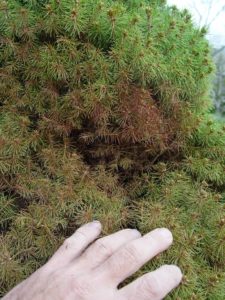
Another dwarf Alberta spruce under attack from spider mites.
A prime example is the dwarf Alberta spruce, which so many homes have planted at house corners or flanking their doorways. Yeah, it’s a good-looking, compact evergreen, but it’s also so prone to spider mites that it’s more of a question on when it’ll get them instead of whether.
Besides limiting our exposure to future pests, diversity benefits the birds, butterflies, bees and other wildlife that have been going downhill due to habitat loss, spraying and such.
In other words, take a chance and plant something new and different.
One place to start is with the 300+ plants I’ve suggested on my Plant Profiles pages. It’s free and includes pictures and care tips for each one.
There’s also my book, “Pennsylvania Getting Started Garden Guide,” which is mainly a rundown of my 170 best plants for Pennsylvania landscapes. I’ll be happy to sign a copy for you if you order it here.
Homework helps get you to the good stuff. But even if you wing it, I’ll bet most everything does just as well as what you’re already trying to grow.

George: I really appreciate all the great articles you write. I suspect you are an underused resource for gardeners. Biodiversity in planting and creating an environment friendly for the natural defense systems, not only those we see ( birds, wasps, beetles, etc), but many microscopic organisms that keep our environment healthy. This means limiting the use of herbicides and insecticides, as well as soil testing to only use fertilizers when needed. Off my soapbox. Thanks again.
Hi George, Have any of your readers had trouble with newly planted Rhododendrons this year? I established a large new area at woods edge this year and mixed Rhodos with Oak Leaf Hydrangea and Hosta. The Hydrangeas are flourishing and the Rhodos wither and die. I replaced the Rhodos from another nursery and those died as well. I have planted enough around my property to know how to do it properly…right depth, right size hole, proper watering etc. I even have one that I planted in early Spring that is now shriveling up. Any advice would be appreciated. PS I like your new book…don’t stop writing them.
Hi John,
Rhodies are one of the pickiest plants about soil and transplanting. I haven’t heard of anything worse than usual about this year. Rhodies have a high death rate every year, especially when people don’t know and do the babying.
We had a hot and dry summer, so that was an extra strike against newly planted rhodies this year. It takes a ton of water to keep the ground damp with big mature tree roots around.
If heat/watering wasn’t the culprit, the second possibility is phytophthora root rot. This is a common soil-borne fungal disease, and the rhododendron family is particularly prone to it. Since the spores stay in the soil, the disease can infect new plantings even when you do everything else right.
The best way to nail that down for sure is by sending a sample of dead roots, stems and leaves to Penn State’s disease lab. Here’s a link with instructions on how to do it: http://plantpath.psu.edu/facilities/plant-disease-clinic
It’s a free service for Pa. residents.