• Home
  • Contact
  • Site Map
George Weigel - Central PA Gardening
  • Landscape 1
  • Landscape 2
  • Landscape 3
  • Landscape 4
  • Garden Drawings
  • Talks & Trips
  • Patriot-News/Pennlive Posts
  • Buy Helpful Info

Navigation

  • Storage Shed (Useful Past Columns)
  • About George
  • Sign Up for George's Free E-Column
  • Plant Profiles
  • Timely Tips
  • George’s Handy Lists
  • George's Friends
  • Photo Galleries
  • Links and Resources
  • Support George’s Efforts


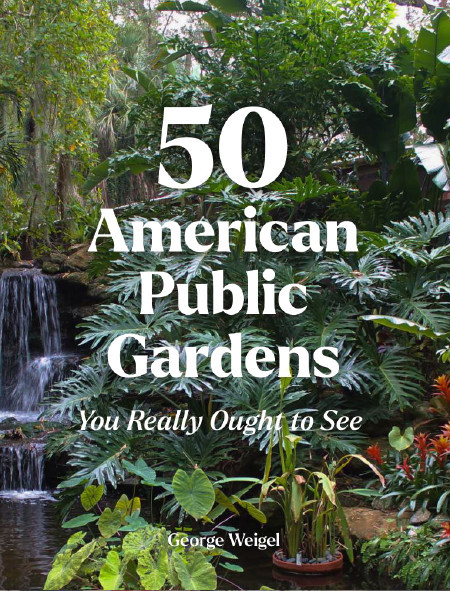
George’s new “50 American Public Gardens You Really Ought to See” e-book steers you to the top gardens to add to your bucket list.

Read More | Order Now


George’s “Survivor Plant List” is a 19-page booklet detailing hundreds of the toughest and highest-performing plants.

Click Here


Has the info here been useful? Support George’s efforts by clicking below.


Looking for other ways to support George?

Click Here

George's Current Ramblings and Readlings

Confessions of a Rapidly Aging Gardener

October 31st, 2017

   I’ll admit it. This is the first year that I’m a tad bit glad the growing season is winding to a close.

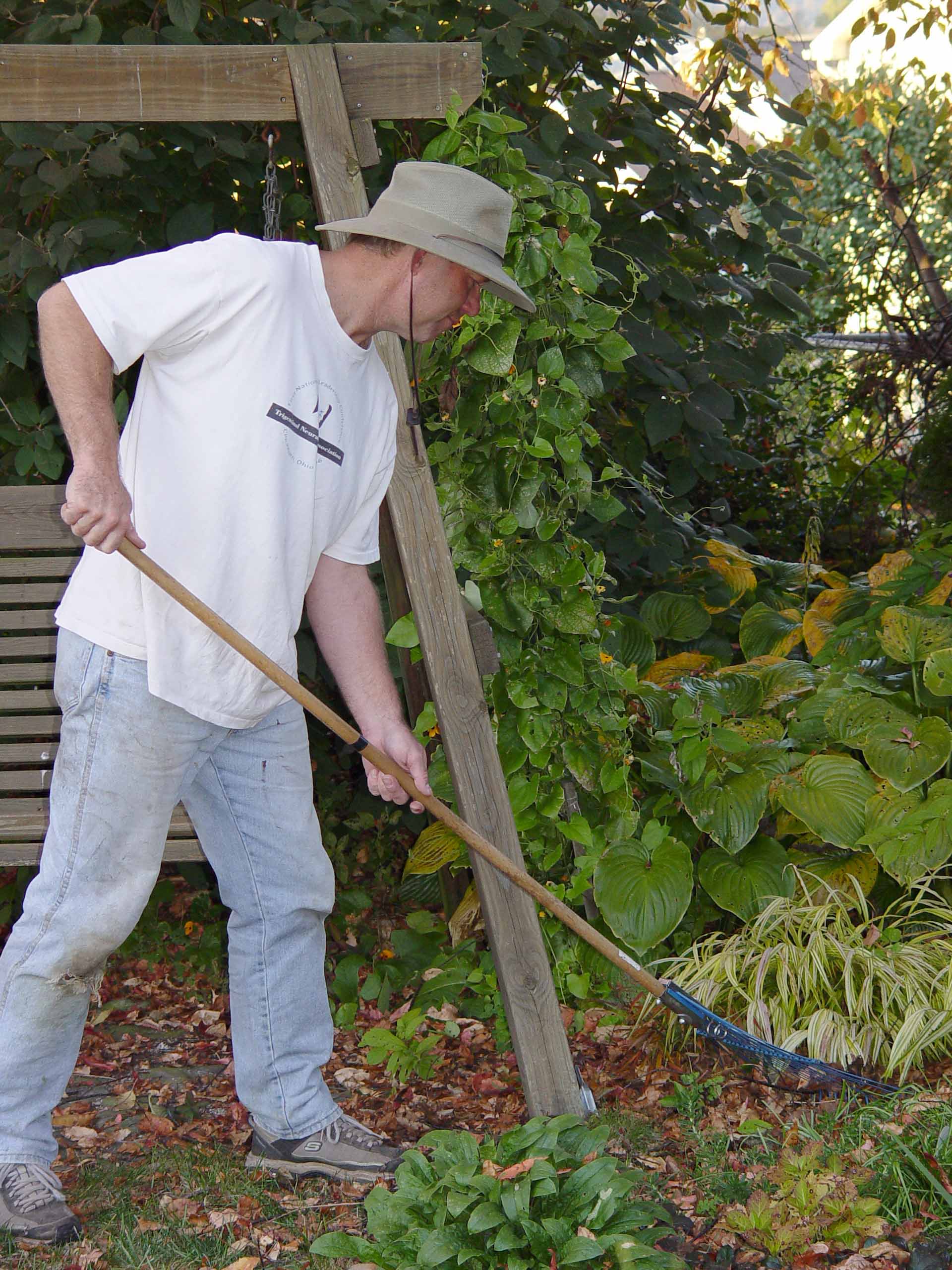
George after two hours in the garden.

   It’s not that I’m looking forward to winter. I still really don’t like cold, snow and ice.

   And it’s not that I’m tired of gardening or my plants or even the so-called “work” that goes into caring for my yard.

   Rather, it’s just that I’m tired. Period.

   I used to be able to garden all day on one of those too-few, no-appointment/no-work Saturdays. I had the energy and motivation to go non-stop while overlooking minor distractions such as going to the bathroom or stopping for lunch… and end the day ready for more.

   Not anymore.

   After two hours, I’m thinking about what jobs I can put off until tomorrow. After four hours, I’m ready to call it a day and wondering whether I should’ve quit 15 minutes earlier to save energy for a shower.

George after four hours in the garden.

   My benches, garden swing and patio chairs are no longer mere yard ornaments. They now call me by name as I walk by with my compost bucket of yanked weeds in tow.

   These days, my back and knees are stiff and sore even when I didn’t do anything yet.

   These days, I think about whether I can take care of two or three things before deciding whether it’s worth bending over.

   These days, afternoon snoozing sounds like a better idea than afternoon snipping.

Read More »


New Book on Hershey Gardens

October 24th, 2017

   Did you know that Hershey Gardens grew to more than just a rose garden because Milton Hershey was told the land there wasn’t good enough for either farming or housing?

The new Hershey Gardens book is available for $9.95 at Hershey Gardens and The Hershey Story museum.

   How about that Hershey Gardens has some of the biggest, oldest tree species in Pennsylvania and the biggest nut-tree collection of any public garden in the United States?

   Or that Hershey Gardens’ staff and volunteers yank the massive display of 20,000 tulips each spring, then replant new ones every fall?

   All of that and more is laid out in a new, photo-filled, 50-page book about Hershey Gardens.

   Written by Pamela Whitenack, director of the Hershey Community Archives, and yours truly, the book, “Hershey Gardens,” is now on sale for $9.95 in the Hershey Gardens gift shop and The Hershey Story museum. (Members get a 15 percent discount.)

   Pam wrote the fascinating history about how this garden got started in 1936 and how it quickly grew into a world-famous rose garden.

   It turns out that Mr. Hershey had been pondering a public garden for years when Harrisburg publisher and rosarian Horace McFarland broached the idea about Hershey funding a national rose garden in Washington.

   Hershey replied, “Before we give that amount of money for the politicians to play with, we better spend some of it at our own place and see what interest people take in it.”

Read More »


The Great Fall Leaf (Leaf Fall?) Debate

October 10th, 2017

   Falling leaves drive some people crazy.

I don’t mind raking leaves. They’re free mulch, fertilizer and soil-improvers.

   Some grouse about all of the raking work they create every year around this time, while a few cut down or purposely don’t plant trees because they hate that job so much.

   Me? I don’t mind. First, I can use the calorie-burning exercise. Second, I don’t consider leaf-dropping to be nature’s trash. I look at fallen leaves as nothing short of a gardening gift from God.

   I’ve never been able to figure out why so many people spend so much time in fall trying to get every last leaf out of their yard, only to turn around in spring and pay for products such as fertilizer, mulch and soil amendments.

   Leaves give us all three of those. And they’re free.

   In the short term, leaves make a wonderful natural blanket to insulate our gardens over winter (i.e. free mulch).

   Assuming you compost (one of the best things you can do as a gardener), leaves are an ideal ingredient in the compost pile when mixed with year-end grass clips and frost-killed plants (i.e. free soil).

   Instead of letting leaves leach unwanted nutrition in streams by raking them to the curb, that nutrition is much better redirected onto our lawns and gardens (i.e. free fertilizer).

   And worked into the soil, leaves are one of the best materials to break up our lousy clay and shale (i.e. free soil amendment).

   Rather than rake or blow my leaves away, I gather them or use them in place. Most years, I’ll even go out to my curb to retrieve leaves that have fallen there.

Read More »


Are You Under-Bulbed?

October 3rd, 2017

   As a category, I’d have to vote spring-blooming bulbs as the most under-used plant in a typical central-Pa. landscape.

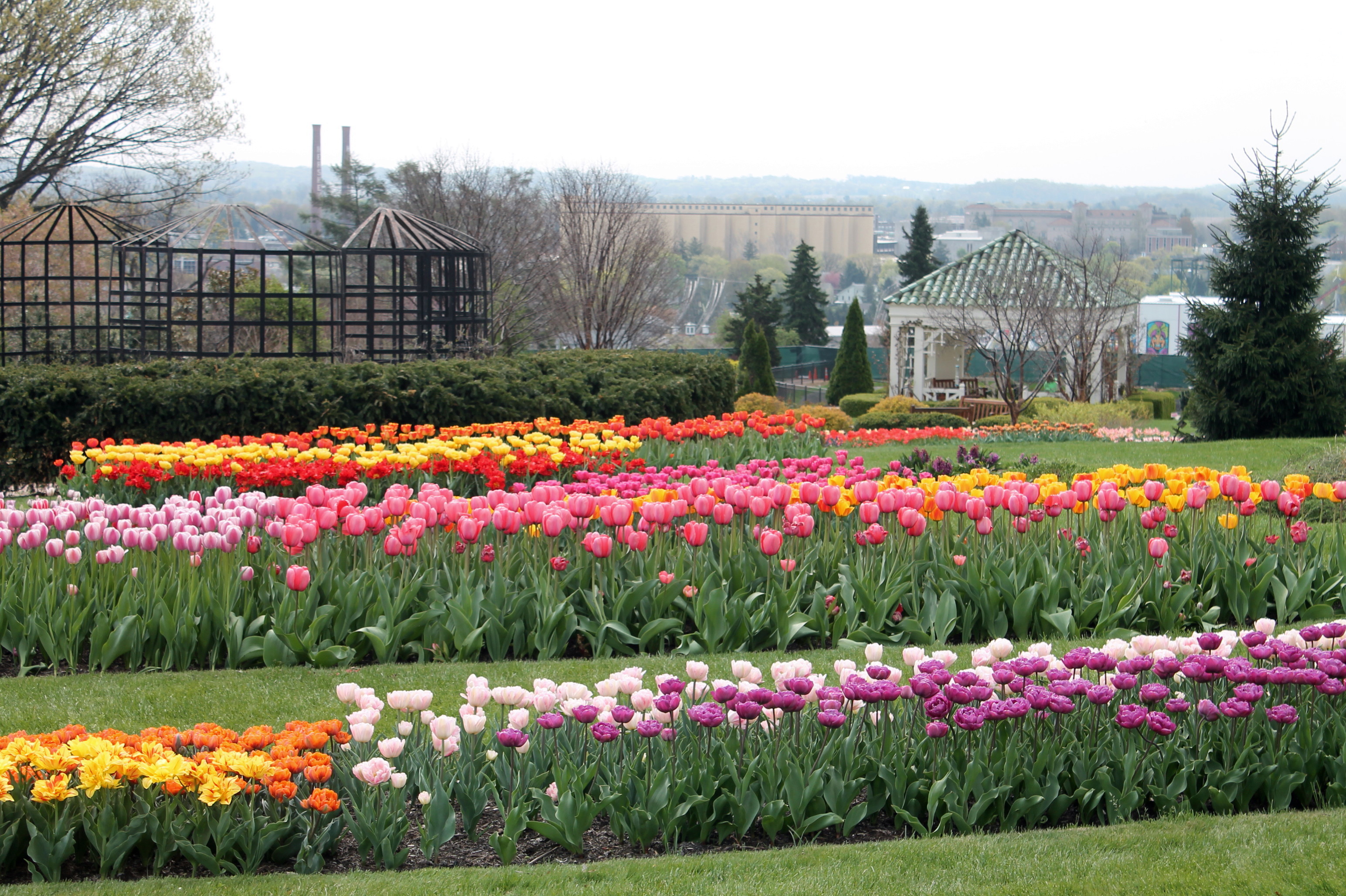
The spring tulip display at Hershey Gardens.

   Bulbs can make a glorious spring display – especially when massed as you can see in such public gardens as Hershey and Longwood.

   They also have the good-sense timing to bloom when we can appreciate them the most, i.e. after the end of a long, cold, bare winter.

   The one problem is that spring bulbs lack the good “marketing sense” to do something interesting right away. You have to plan ahead, plant them in fall, then tolerate nothingness for months until you get your reward.

   None of those are strong traits of impatient Americans. We much prefer instant return.

   So even though daffodils, hyacinths, Siberian squill and such are colorful, easy to grow and relatively cheap, bulbs aren’t nearly as deployed as they should be.

   If you can get past the patience issue, October is the prime month of the year to add bulbs to the landscape.

   You’ll have lots of options because bulbs also are very versatile plants. Here are 10 specific bulb-planting possibilities:

   If you have shade: Most of the small-flowered, early-emerging bulbs do fine with even with a few hours of sunlight.

   Two of the best are Siberian squill (Scilla siberica), early-April bloomers with hanging, blue, bell-shaped flowers on 4-inch plants, and striped squill (Puschkinia scilloides var. libanotica), late-April bloomers with blue-streaked white flowers on 8- to 10-inch plants.

Read More »


My Useless Fake Owl

September 26th, 2017

   I generally like birds. Sure, they poop on the patio table and sometimes crash into windows, but they eat enough bugs and look and sing pretty enough to make up for it.

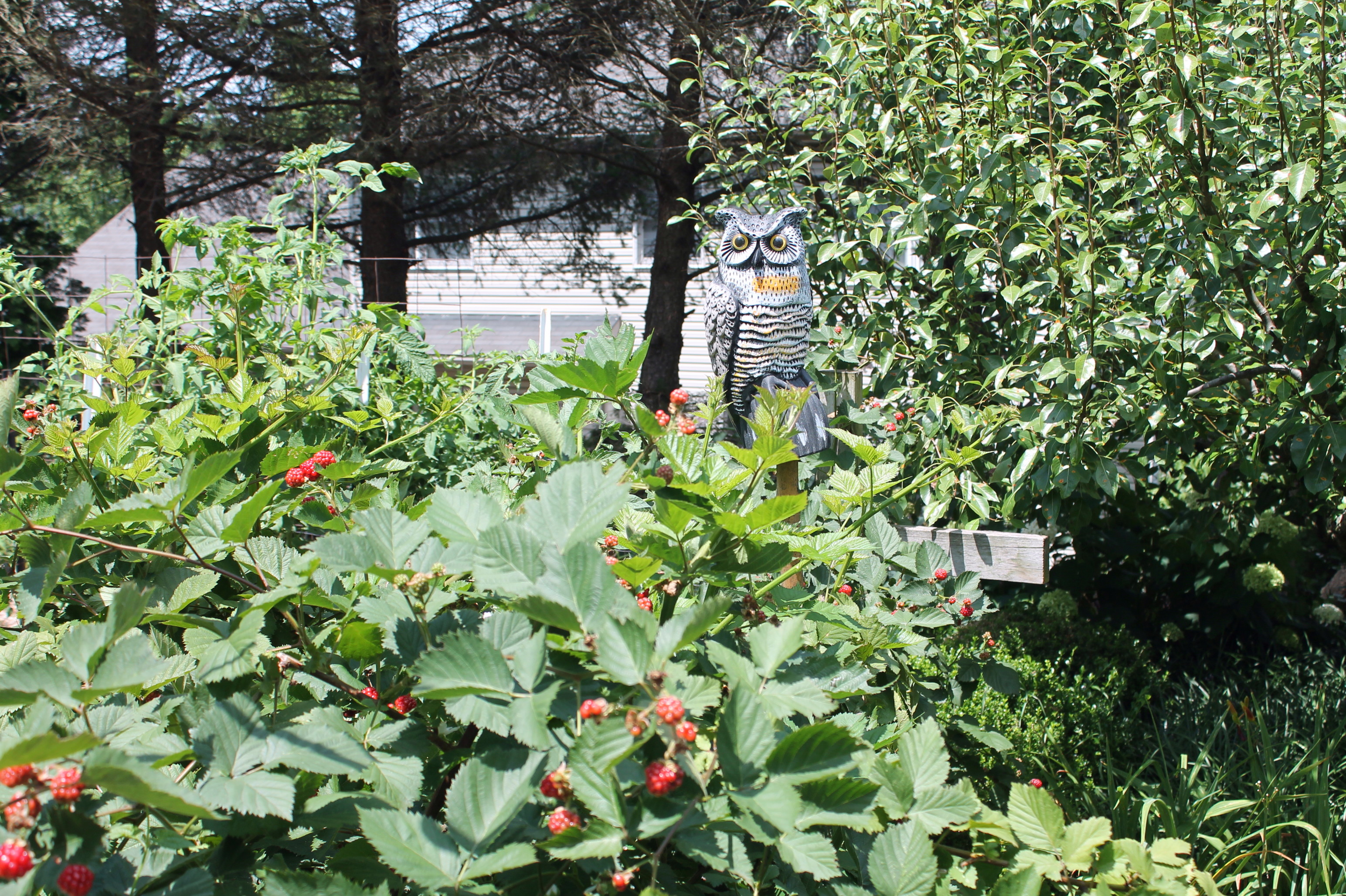
This fake owl didn’t scare birds away from eating my blackberries.

   Where I draw the line, though, is at the berry bushes. I like fresh blueberries, raspberries, strawberries, and blackberries even more than bird songs, so I get a little perturbed when the birds beat me to the harvest.

   I wouldn’t mind if they ate a few. I can share. But if I don’t protect my bushes, I wouldn’t get a single ripe fruit.

   I know that because I experimented one year. I didn’t cover my blueberry bushes with netting, and the birds ate every last berry off of my seven bushes. Every one.

   The next year I tried hanging old CDs all around the bushes. The motion and reflection scared them off, I read.

   That also failed. My wife got a picture of a fearless feathered friend sitting atop a CD-adorned pole, as if it appreciated the decoration for dinner.

   So I went back to netting with its usual troubles of birds pecking holes in it and sneaking underneath.

   This year I had one of my best blueberry harvests ever, thanks to a pack of Premium Bird Netting I bought through the Gurney’s Nursery and Seed Co.

   It was expensive – $70 for a 28-by-28-foot pack – but it should last for years. I figure I got at least $70 worth of blueberries this summer alone.

   Which brings me to the fake owl. I heard and read that plastic decoy owls act as scarecrows for birds. Mount one and birds supposedly fear that an owl is policing the area. So they go somewhere else.

Read More »


« Older Ramblings and Readlings Newer Ramblings and Readlings »

  • Home
  • Garden House-Calls
  • George's Talks & Trips
  • Disclosure

© 2026 George Weigel | Site designed and programmed by Pittsburgh Web Developer Andy Weigel using WordPress