
• Home
  • Contact
  • Site Map
George Weigel - Central PA Gardening
  • Landscape 1
  • Landscape 2
  • Landscape 3
  • Landscape 4
  • Garden Drawings
  • Talks & Trips
  • Patriot-News/Pennlive Posts
  • Buy Helpful Info

Navigation

  • Storage Shed (Useful Past Columns)
  • About George
  • Sign Up for George's Free E-Column
  • Plant Profiles
  • Timely Tips
  • George’s Handy Lists
  • George's Friends
  • Photo Galleries
  • Links and Resources
  • Support George’s Efforts


George’s new “50 American Public Gardens You Really Ought to See” e-book steers you to the top gardens to add to your bucket list.

Read More | Order Now


George’s “Survivor Plant List” is a 19-page booklet detailing hundreds of the toughest and highest-performing plants.

Click Here


Has the info here been useful? Support George’s efforts by clicking below.


Looking for other ways to support George?

Click Here

George's Current Ramblings and Readlings

The Tricks to a Full-Blooming Perennial Garden

September 12th, 2017

   If you’ve ever planted a perennial garden, you probably noticed that it never seems to fire on all cylinders.
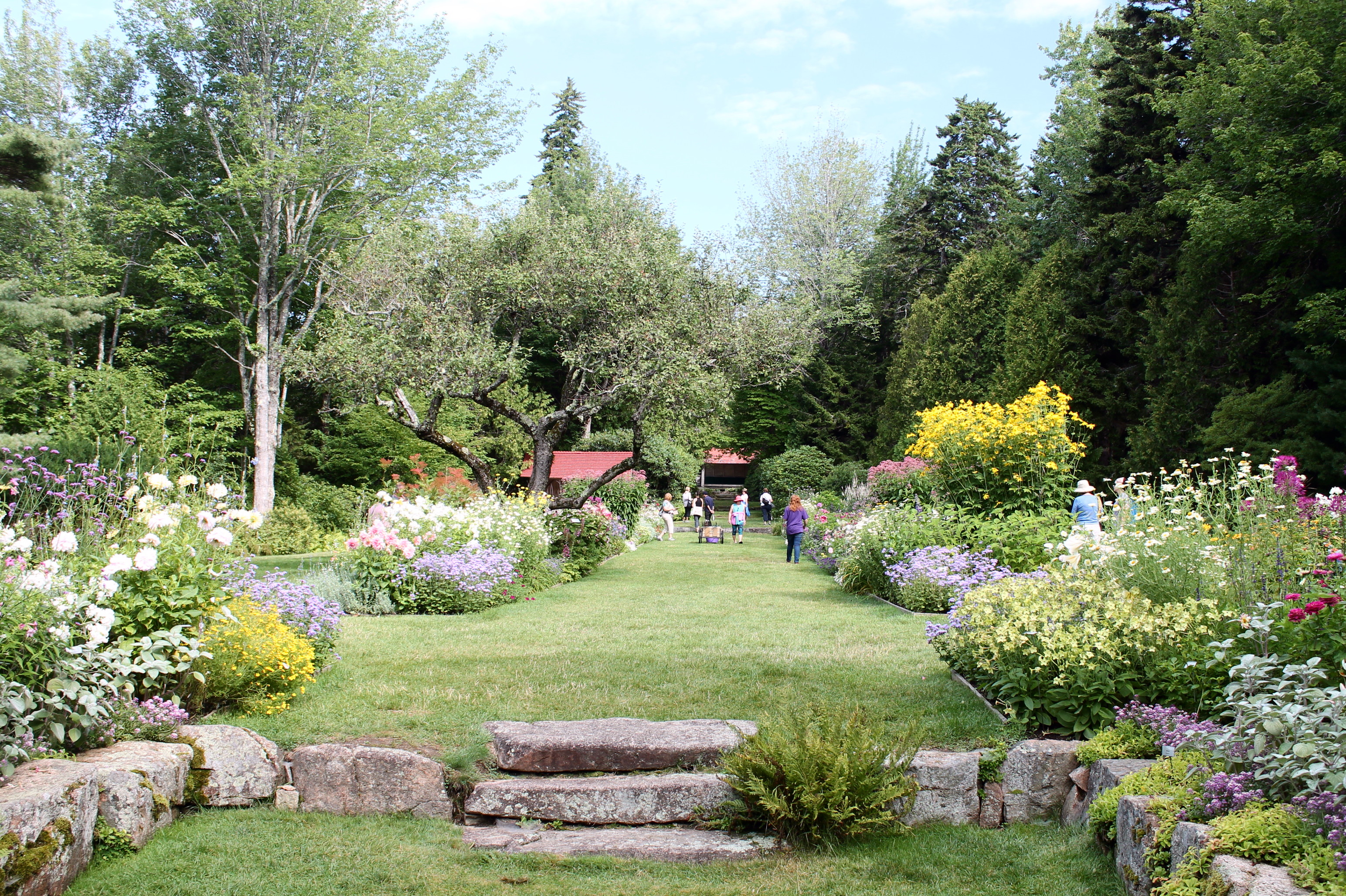
Thuya Gardens’ double flower border is firing on all cylinders in August.

   Rather than a full mass of color, you usually end up with more of a “symphony” as the different species go in and out of bloom. That’s because most perennials bloom for only four to six weeks of the season, and the spots of color change with the makeup of what you planted.

   So how comes the perennial beds at Thuya Gardens near Bar Harbor, Maine, bloom wall to wall?

   When our tour group saw this English-style double perennial border at this hilltop garden in mid-August, it appeared that just about everything was in color all at once.

   Look closer, though, and you’ll unearth some “tricks” that you might copy at home.

Read More »


See the Gardens and Scenery of Scandinavia

September 5th, 2017

   Denmark. Sweden. Norway.

A beautiful slice of Norway.

   They’re all cold and dark in winter, but come summer, they’re three of the most scenic countries on the planet.

   Here’s your chance to see all three in one shot – with a gardening bent, too.

   Collette Vacations, Lowee’s Group Tours and I have put together a 14-day trip next Aug. 16-29 to Denmark, Sweden and Norway called “Spectacular Scandinavia.”

   We’ll fly from Philadelphia and spend time railroading, cruising, and coaching our way through mountains, fjords, villages, and scenic valleys as well as Scandinavia’s three big cities of Copenhagen, Stockholm, and Oslo.

   If you’re interested, come to a free, no-obligation information meeting on Tue., Sept. 12, at 6 p.m. at the West Hanover Recreation Center, 628 Walnut Ave., near Central Dauphin High School.

   Refreshments will be served. The trip show-and-tell is open to the public, but give Lowee’s a call in advance at 717-657-9658 to reserve your seat.

   See the full tour itinerary on a brochure posted on Collette’s website.

   The Scandinavia trip will feature key public gardens in that region – the Copenhagen Botanical Gardens, the Stockholm Botanical Garden, Stockholm’s Djurgarden, the Oslo Botanical Garden, the sculpture garden at Oslo’s Vigeland Park, and Norway’s Bergen Arboretum and Milde Botanical Garden. There’s also an option to see the gardens at Denmark’s Frederiksborg Castle.

   And we’ll see lots of natural beauty in addition to the planted kind, including a train ride through the Swedish/Norwegian countryside, a visit to a Norwegian glacier, a cruise through the fjords and waterfalls in Norway’s Geiranger region, and a day in the harbor town of Bergen, Norway.

Read More »


Too Hot for These Plants

August 29th, 2017

   We do a lot of fretting – and rightfully so – about whether plants are cold-tough enough to withstand our winters.

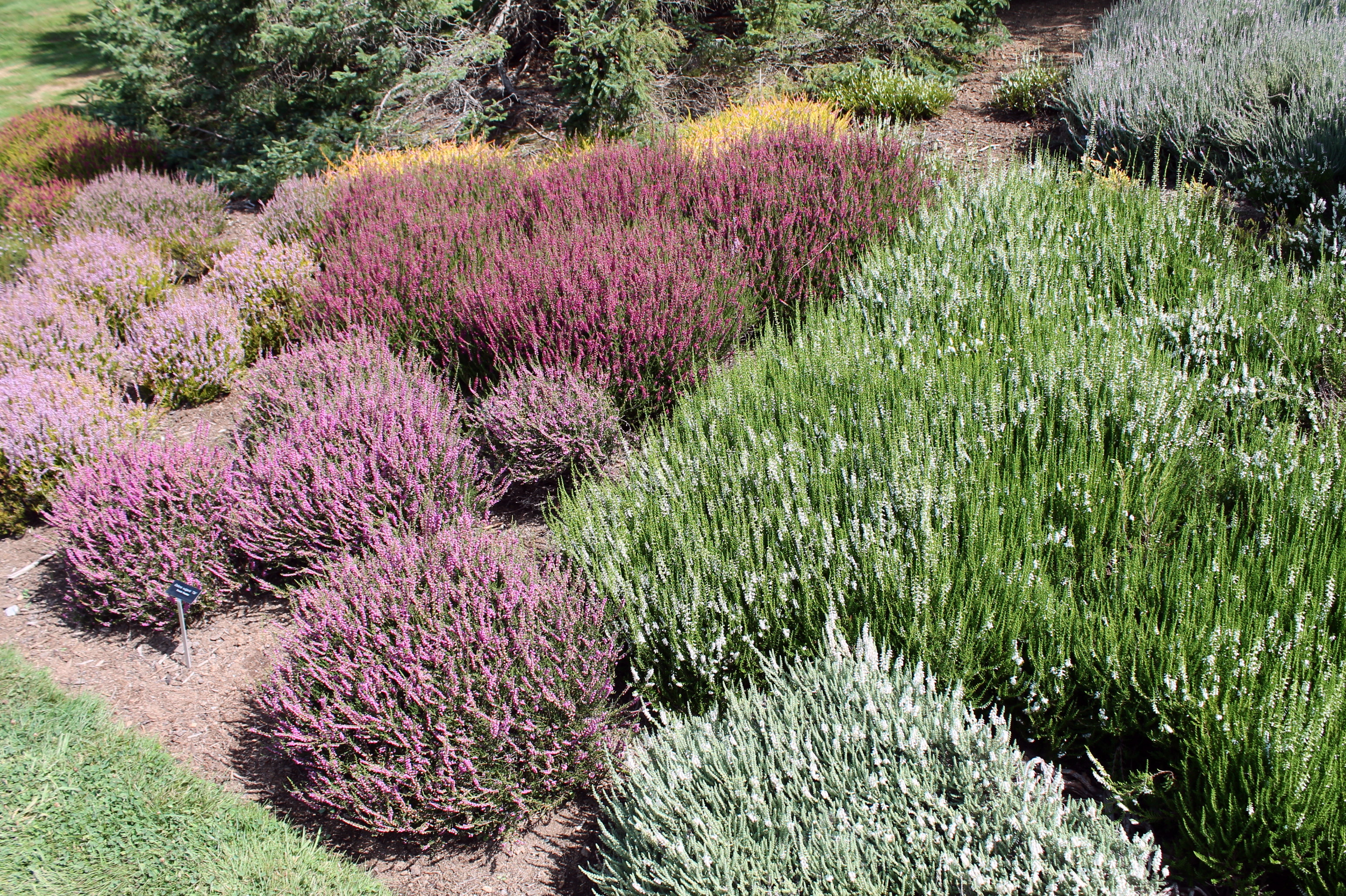
You’re unlikely to see heather growing like this in a south-central Pennsylvania garden. This mass of them is growing in Nova Scotia’s Royal Annapolis Garden.

   Less attention gets paid to plants that are likely to croak in our yards because our climate is too hot for their liking.

   You’ve probably run into this if you’ve killed lupines or heather. It wasn’t you or your lousy soil. It just gets too hot in summer around here for these cool-climate natives to thrive and survive.

   You’ll notice this if you ever venture north, say, to Maine or the Canadian Maritimes where I led a group tour earlier this month.

   See a collection of pictures from that trip on my Photo Gallery pages.

   Up there, you won’t see crape myrtles, cherry laurels, nandinas or other Zone 6/7 borderline-hardy plants that we’ve been growing here quite well lately. But lupines grow like weeds on Canada’s Prince Edward Island, and hillsides of heathers grow as bullet-proof for New Brunswickers as barberries and ornamental grasses do for us.

   The difference is in the genes. While some plants have evolved to deal with a wide range of temperatures, others are good at handling either heat or cold – but not both.

   Longwood Gardens struggled for years trying to grow a hillside of heaths and heathers, but even those prestigious growers got tired of the death rate and converted the area to a blend of mostly native trees, shrubs and perennials.

   That was a pretty good clue to me… if Longwood can’t overcome a growing challenge, I doubt I’m going to have much luck either.

Read More »


Go Ahead, Push That Shade Envelope

August 22nd, 2017

   If you’re dealing with a mostly shaded yard, you might be inclined to write off the many plants with “full sun” on the label.

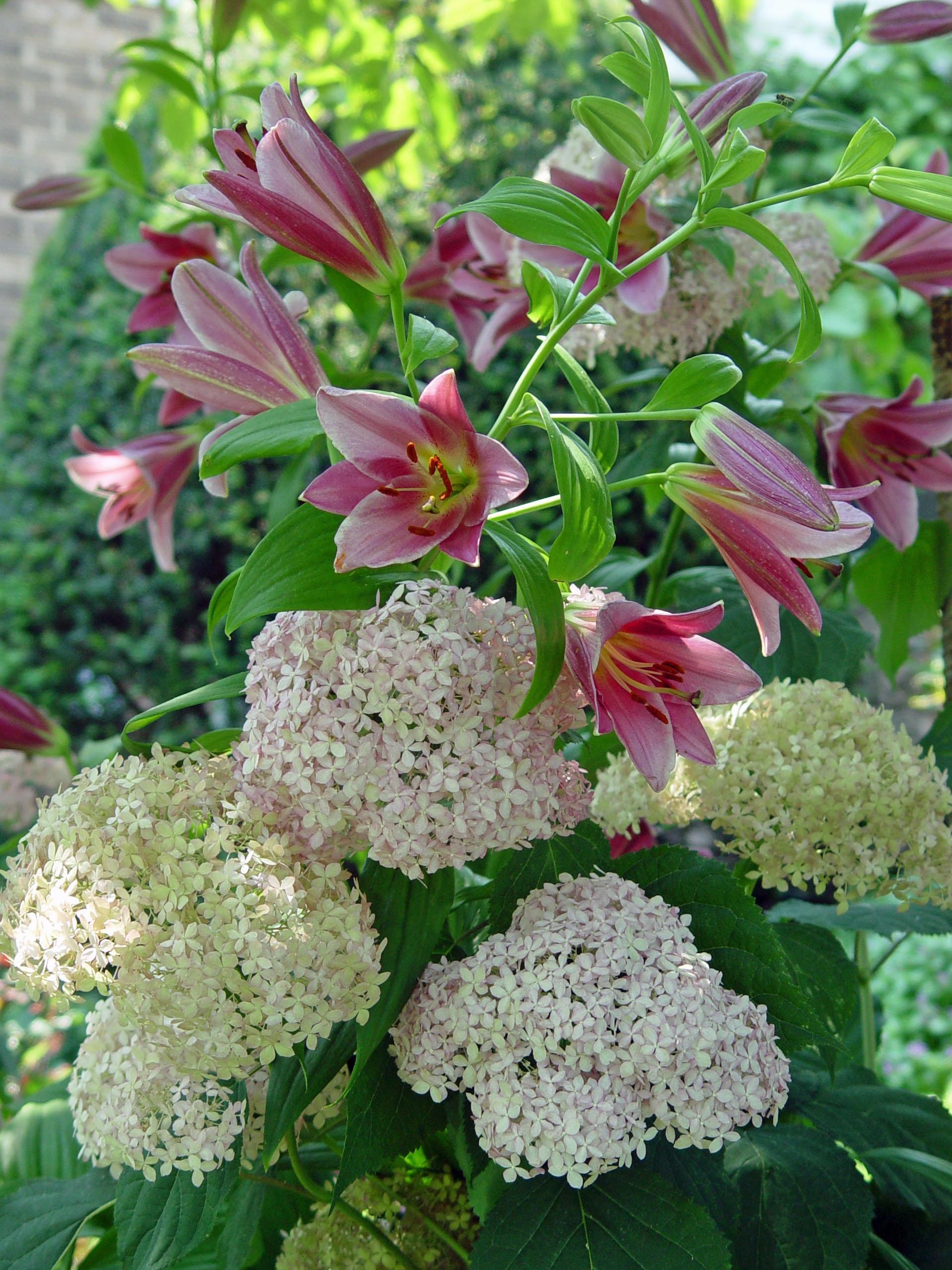
Check out these sun-loving lilies doing quite well in the shade of a tree alongside smooth hydrangeas.

   Don’t back off completely, though. Even some of the most sun-loving plants will do reasonably well in some shade.

   They might not bloom as fully, and they might get “leggy” or lean to the light, but they’ll probably perform better than you think.

   I stumbled into this realization years ago when I transplanted a couple of then-new Knock Out roses from my mom’s yard before she went into assisted living.

   The only place I had to go with them was under a dogwood tree. It was pretty much shade all day.

   I figured they’d live but not amount to much in the bloom department.

   Surprise!

   The roses actually filled out reasonably well and even bloomed at half the rate of a full-sun Knock Out – which, if you’ve grown Knock Outs, know that’s still good.

   A few years later, I got a trial packet of pink Oriental lilies from Brent and Becky’s Bulbs (my favorite bulb company). Again, with nowhere else to go (this happens a lot in my yard), I crammed them under a tree in an opening in the middle of three smooth hydrangeas.

   I held out little hope of high performance. But at least the lily bulbs were in the ground.

   The next June, those lilies poked above the hydrangeas and bloomed beautifully in concert with the showy light-pink hydrangea orbs.

   It was a brilliant combination, conceived in ignorance. The surrounding hydrangeas even propped up the 3½ -foot-tall lilies.

   As I found out in these cases, a benefit of pushing the shade envelope is that you open a whole new world of strange bedfellows.

Read More »


So, What Plant Problem Do You Want?

August 15th, 2017

   Not counting plastic ones, no plant is immune from trouble.

Lily of the valley very often ends up looking like this by mid-summer.

   Bad stuff can happen to any plant —  yes, even natives and ones on the low-care, “trouble-free” lists.

   Once you accept that, what makes the most sense is leaning toward ones with the best track records, in real-life gardens, in our area.

   Fortunately, that’s predictable. Watch plants well enough here for long enough, and it’s clear that some of them are way more likely to run into trouble than others.

   Read George’s Bottom 10 Annual Flowers, George’s Bottom 10 Perennial Flowers, George’s Bottom 10 Shrubs, George’s Bottom 10 Trees, and George’s 10 Landscape Plants You’ll Probably Kill.

   Then Read George’s Top 10 Annual Flowers, George’s Top 10 Perennial Flowers, George’s Top 10 Flowering Shrubs, George’s Top 10 Small Trees, and George’s Top 10 Shade Trees.

   The problem is that gardeners often don’t know which is which. Not everyone concludes the same thing either. New information and missing or misinformation gums up the plant selection further.

  A case in point is one of the newest threats to a common landscape plant – boxwood blight.

   This fungal disease came to the United States around 2011 and has been detected on a small number of boxwoods in nine Pennsylvania counties.

   The state Department of Agriculture began a disease-control, quarantine program in 2016, and experts have been advising “caution” about planting boxwoods. Some garden centers even stopped carrying them – or started steering gardeners toward alternatives.

   The reality, though, is that this isn’t nearly as virile and fast-spreading of a disease as, for example, the downy mildew disease that wiped out almost everyone’s impatiens five summers ago.

   It also isn’t shaping up as sure-fire species doom like the emerald ash borer that’s killing most every ash tree in its wake.

   So far, boxwood blight hasn’t translated into much trouble in Pennsylvania.

Read More »


« Older Ramblings and Readlings Newer Ramblings and Readlings »

  • Home
  • Garden House-Calls
  • George's Talks & Trips
  • Disclosure

© 2026 George Weigel | Site designed and programmed by Pittsburgh Web Developer Andy Weigel using WordPress