
• Home
  • Contact
  • Site Map
George Weigel - Central PA Gardening
  • Landscape 1
  • Landscape 2
  • Landscape 3
  • Landscape 4
  • Garden Drawings
  • Talks & Trips
  • Patriot-News/Pennlive Posts
  • Buy Helpful Info

Navigation

  • Storage Shed (Useful Past Columns)
  • About George
  • Sign Up for George's Free E-Column
  • Plant Profiles
  • Timely Tips
  • George’s Handy Lists
  • George's Friends
  • Photo Galleries
  • Links and Resources
  • Support George’s Efforts


George’s new “50 American Public Gardens You Really Ought to See” e-book steers you to the top gardens to add to your bucket list.

Read More | Order Now


George’s “Survivor Plant List” is a 19-page booklet detailing hundreds of the toughest and highest-performing plants.

Click Here


Has the info here been useful? Support George’s efforts by clicking below.


Looking for other ways to support George?

Click Here

George's Current Ramblings and Readlings

Top 10 Native Trees for Home Landscapes

May 26th, 2020

   A lot of gardeners are trying to lean native in the landscape these days.
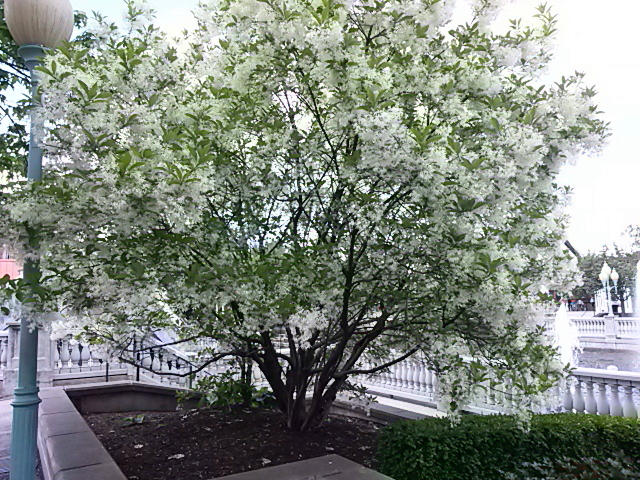
A multi-trunk American fringe tree in bloom.

   Trees are one of the easiest ways to do that because, fortunately, many native Pennsylvania and U.S. tree species are as functional survival-wise and wildlife-friendly-wise as they are beautiful and “well behaved.”

   If you’re planning to add a tree or three to the yard, here are my top 10 favorite native trees.

American fringe tree

(Chionanthus virginicus)

   The unusual late-spring, shaggy white flowers of American fringe tree make this small native tree a prime candidate for the question, “What tree is that?” when people see it in bloom.

   Nicknamed “old man’s beard,” the tree can be pruned to a single trunk or left to grow as a more irregular multi-stemmed tree.

   Grows slowly to 15 to 18 feet tall and wide in full sun or as an under-story tree partly shaded by taller surrounding trees. Leaves turn yellow in fall.

River birch

(Betula nigra)

   This fast-grower is typically found growing along river banks or similar damp areas in nature, so it’s a good choice for damp areas in the yard (although it’ll also tolerate drier soil).

   River birch is best loved for its cinnamon-colored peeling bark and the arching habit of its multiple stems (three or four trunks are ideal).

   Grows 35 to 40 feet tall, 20 to 25 feet around in full sun or part shade. Leaves turn yellow in fall.
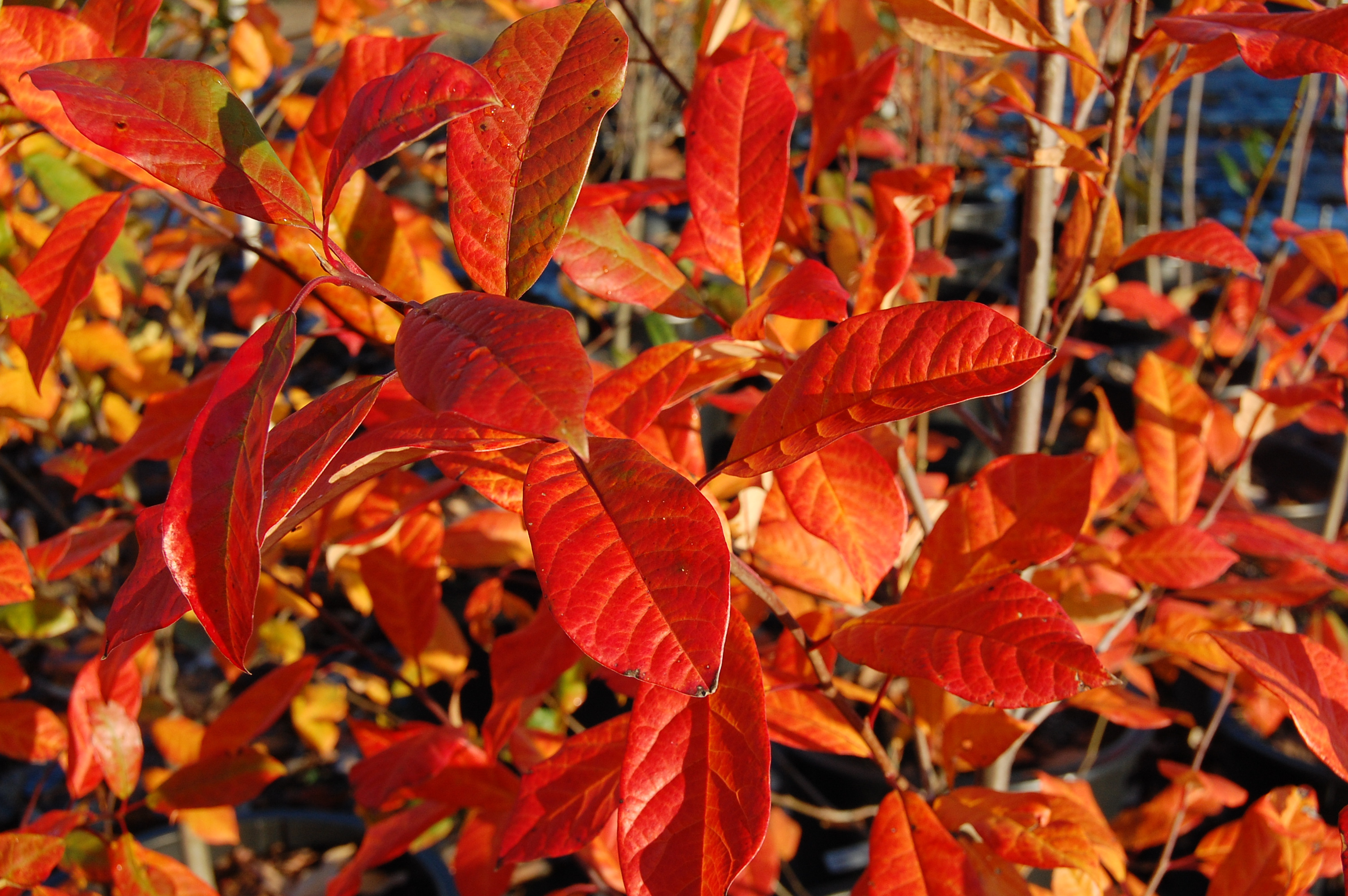
‘Wildfire’s’ fall foliage.
Credit: Pa. Horticultural Society

Blackgum ‘Wildfire’

(Nyssa sylvatica ‘Wildfire’)

   The straight species of blackgum (also called “tupelo”) is especially spectacular in its flaming scarlet fall foliage, but the variety ‘Wildfire’ adds the feature of red new foliage in spring.

   Birds love the small black fruits. Makes a nice back-yard shade tree.

   Grows 50 to 60 feet tall and 20 to 25 feet wide in full sun.
Read More »


Is a Decent, Chemical-Free Lawn Really Possible?

May 19th, 2020

   I got an email from Cathy in Camp Hill wondering what to do about her 70-by-70-foot lawn that’s so overrun with weeds that there’s barely any grass left.

When a lawn has more weeds than grass, it’s probably time to start over.

   “I’m die-hard eco-friendly,” she says, “and I really don’t want to use anything toxic to the birds I feed or the insects they eat.”

   She also says she has “dogs who like to eat soil for fun,” and she’s allergic to corn gluten meal, the main non-chemical way to prevent new weeds from germinating.

   “I really don’t want to resort to Chemlawn and injure wildlife, but I plan to sell the house in six years and need to have the lawn under control by then,” she says.

   With her current “lawn” consisting mostly of nutsedge, plantain, creeping charlie, crabgrass, smartweed, and a dozen other common lawn weeds, Cathy’s trying to figure out where to even begin.

   “I’ve tried hand-pulling weeds and failed,” she says. “At this point, it’s 99 percent weeds and 1 percent grass and clover. So there’s no catching up by hand in an area of this size.”

   She’s thinking about tarping the lawn in quadrants from June to August, hoping to smother the weeds. That would clear the way to rototill and plant grass seed in September.

   “Is September enough time for the new lawn to get established before winter?” she asked. “Any way I can just seed over the killed plants when the tarp is removed without rototilling?”

   This is a tough one… but one I thought I’d share because I think an increasing number of people are trying to reduce or avoid chemicals in pursuit of the long-esteemed green-carpet lawn.

   The short answer is that it’s possible to grow a so-called “organic” lawn, but the reality is that 1.) it’s not going to be a weed-free carpet, and 2.) it might require some compromises to keep things from spiraling back out of control.

Read More »


Lanternflies and Learning from Your Sofa

May 12th, 2020

   Be on the lookout for some new little bugs crawling around that you might never have seen before.

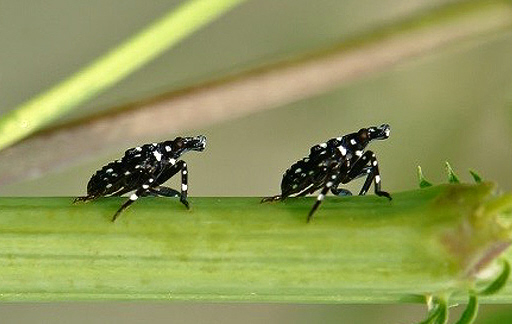
This is what a spotted lanternfly young nymph looks like.
(Credit: USDA/Stephen Ausmus)

   The spotted lanternfly – that voracious new bug from Asia that was discovered in Berks County in 2014 – has officially spread into Cumberland, York, and Perry counties in addition to Dauphin, Lancaster, Lebanon. It’s now pretty much in all of southcentral and southeastern Pennsylvania.

   The state Department of Agriculture has extended the lanternfly quarantine to 26 Pennsylvania counties, including as far west as Beaver and Allegheny counties.

   Most of this year’s spotted lanternflies will be hatched and out crawling this month, looking for tender young plant growth on which to feed.

   The bug’s early stages don’t look anything like the inch-long adults with the distinctive set of orange-red spotted wings that can be seen when the wings are fully open. (The wings are gray with black spots when closed.)

   In the first three stages of a lanternfly’s life, the bug is about the size of a crawling tick and is black with white and sometimes hard-to-see spots. That’s what to look for now.

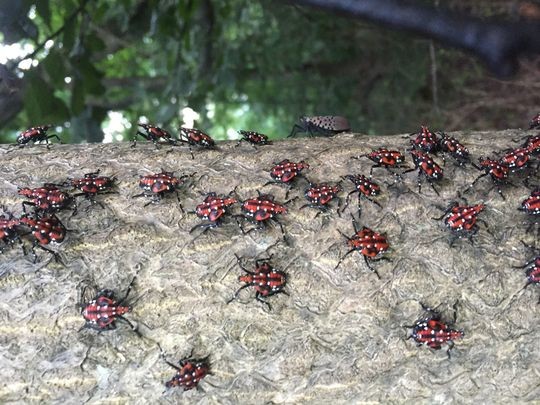
The nymphs turn red and look like this by June.
(Credit: Penn State Extension)

   By June, the lanternfly “toddlers” are slightly larger and turn a more noticeable red with white spots. They then morph into flying adults in July before dying in fall after the females lay eggs for the next year.

See Penn State Extension’s web page on identifying spotted lanternflies

   One thing you can do to help Penn State University and the state Ag Department track (and hopefully contain) the spread of lanternflies is to “band” a tree or two. This involves wrapping three-inch-wide bands of sticky flypaper (available at hardware and farm-supply stores or online) around trees about four feet from the ground.

   The flypaper captures the young lanternflies as they attempt to climb upwards in search of a leafy snack. (Penn State has a video on tree banding on its lanternfly web pages.)

   To keep birds, butterflies, and beneficial flying insects from getting caught, add a wrap of chicken wire or screening a few inches out from the bands – ideally covered with cheesecloth or garden fabric.

Read More »


About that Bulb Foliage…

May 4th, 2020

   You’re probably tempted about now to cut down the now-bloomless daffodils, hyacinths, and other spring bulbs in your yard that have finished their show for the year.

Forget about braiding bulb foliage, left, but removing the bloomed-out flower stalks is fine.

   Don’t.

   Also don’t twist them, braid them, or otherwise mess with the foliage. These few weeks are the most important of the year for your bulbous health (or at least the flowering part of it).

   Those leaves – plain green though they are – are now taking in sunlight to fuel the chlorophyll-charged photosynthesis process, which stores energy in the underground bulbs to grow next year’s flowers.

   By cutting the leaves early, you short-circuit the recharge and weaken future flower shows – possibly to the point where you get no flowers at all. It’s one of the leading answers to the question, “Why didn’t my bulbs bloom this year?”

   I understand why gardeners are often in a hurry to get rid of bulb foliage.

   It can detract from the plants coming up around them, and the leaves often splay apart, flop, or start to discolor.

   That’s why someone years ago invented the practice of twisting the foliage and tying or rubber-banding it into little green straitjackets. The idea, I think, is to make the foliage look  neater until it’s time to cut it down.

   No. 1, this seems like a lot of tedious, unnecessary work to me.

   And No. 2, it’s counter-productive to the plants. Bundling the leaves cuts down so much of the leafy surface area exposed to the sunlight that it’s barely any better than getting rid of the leaves altogether.

Read More »


More Trees, Please

April 21st, 2020

   I’m running a deficit right now. Money and energy, too, but the one I’m talking about has to do with trees.

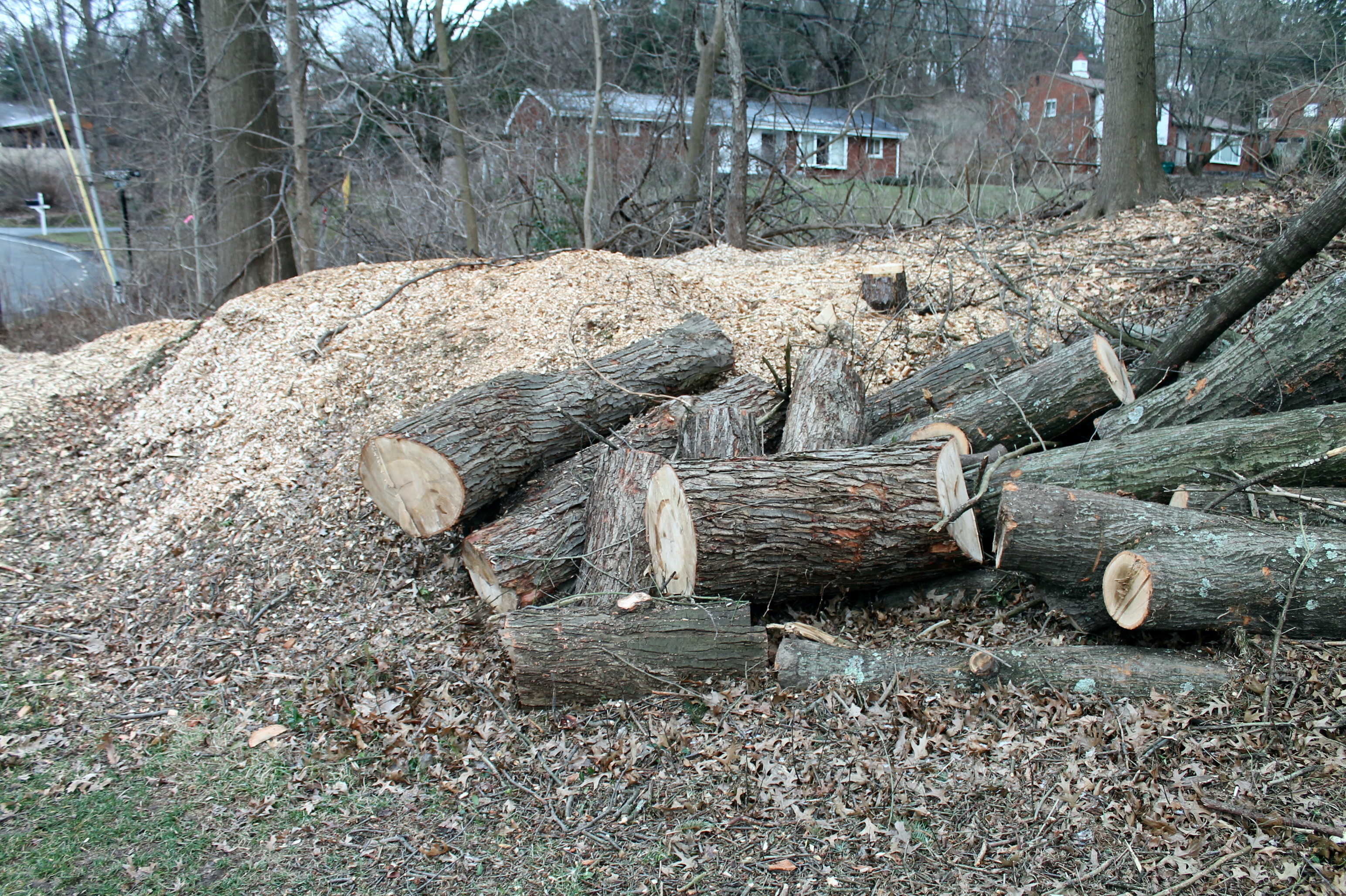
What was left of the hazard pin oak after the tree company got done.

   When my wife, Sue, and I moved to Pittsburgh last year, we inherited a long-unkempt lot that had a variety of dead, dying, and hazard trees.

   A huge, struggling pin oak was easily within striking range of the house, and an even bigger silver maple had grown a branch the size of a municipal sewer line over our shed.

   A 40-foot-tall Colorado blue spruce dying from needlecast disease was our front-yard “specimen,” and six smaller to mid-sized blue spruces were already totally needle-less on the side and back banks.

   I cut down the smaller ones and hired a tree company to handle the big ones, forking out $7,000 in the process.

   I hate to be a tree-killer, but sometimes the deed has to be done. Trees are nice in the landscape for lots of reasons, but they’re not so good on top of our power lines or through our attics.

   Dead trees are going to eventually fall, and when there’s a target in range, it’s better that we get them down ASAP in a controlled way.

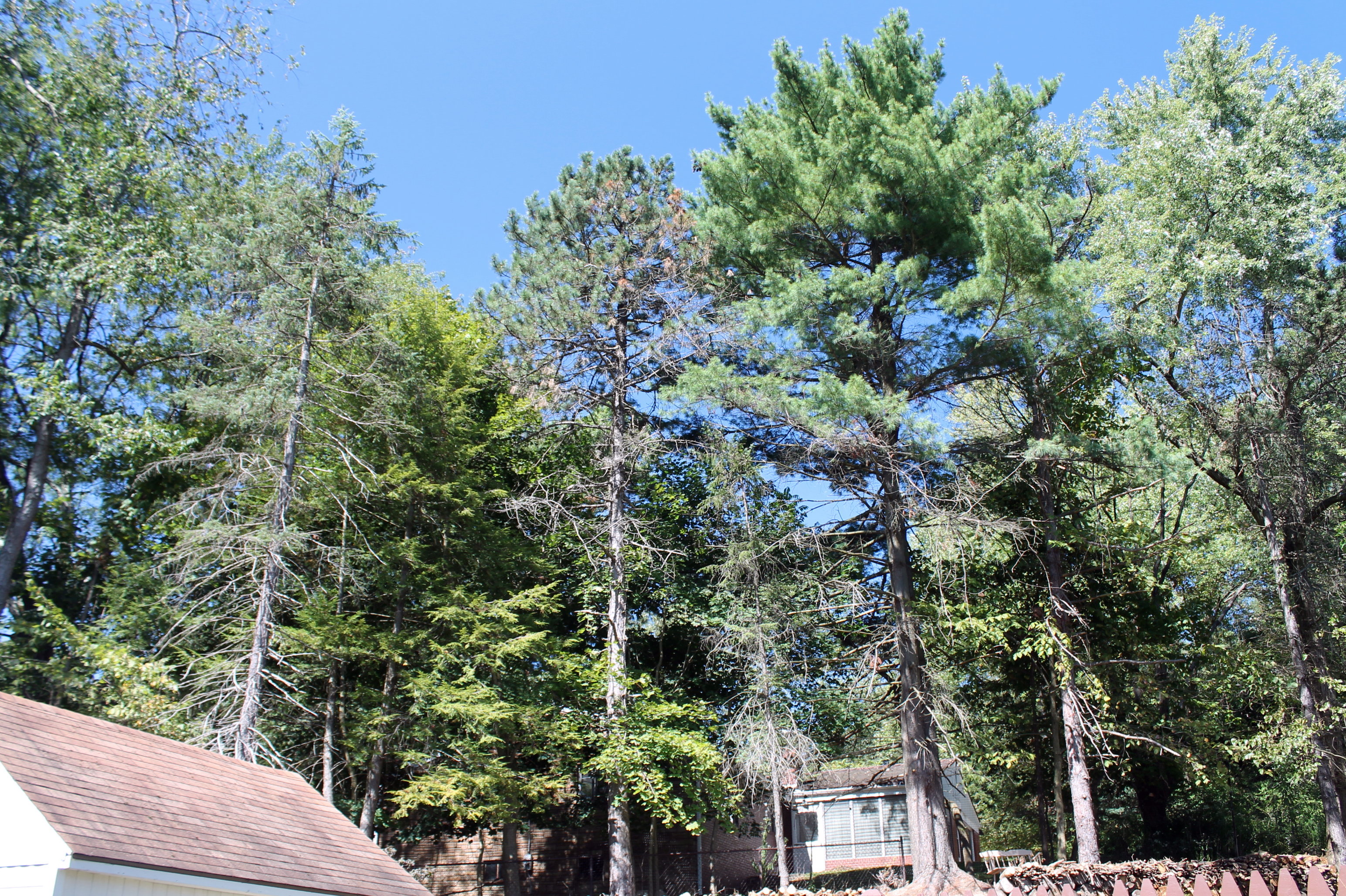
Lots of blue spruce are “baring out” from the bottom up due to needlecast disease.

   Besides flat-out failing old trees, we’re losing lots of Douglas firs and Colorado blue spruces lately to needlecast, and emerald ash borers have been wiping out virtually our whole covering of ash trees.

   Many communities – ours included – have been reporting alarming losses of tree canopies when compared to just a decade or two ago. (The Pa. Department of Conservation and Natural Resources has an interactive Community Tree Map if you want to see tree-coverage data from around the state.)

   The way I look at it, tree-removal can be a good thing in the long run if we’re all replacing older, failing, inferior, and/or hazard trees with newer ones that are better suited to the sites.

   That’s what I’m working on now. And April is an ideal time to plant.

Read George’s article on “So You Think You Know How to Plant a Tree?”

   My goal is to not only replace all of the cut-down trees but to end up with twice as many – and with a much more diverse selection than this little half-acre had before.

   A half of an acre is bigger than a lot of lots, which means I could get away with some bigger species than small yards, which should generally stick with small trees.

   Nevertheless, I’m leaning heavily on small and mid-sized species for several reasons.

   One is that I can plant more of them. Diversity is so important, both for “hedging bets” when the latest species-specific plague comes along but also for feeding and sheltering wildlife. Plus, I like having lots of different trees to look at as they all change throughout the season.

   Second, big trees tend to throw out big roots, which limits what else I can plant around the yard.

   And third, I want some selected shade but not dense shade everywhere. Besides being more likely fall-down-on-the-house targets, gigundo trees slow the ability of a property to dry after rains. My lot already has drainage issues, and the now-defunct oak and maple were keeping it soggy longer.

   So what does a plant geek like me plant when there’s a blank slate, you might wonder?

Read More »


« Older Ramblings and Readlings Newer Ramblings and Readlings »

  • Home
  • Garden House-Calls
  • George's Talks & Trips
  • Disclosure

© 2026 George Weigel | Site designed and programmed by Pittsburgh Web Developer Andy Weigel using WordPress