
• Home
  • Contact
  • Site Map
George Weigel - Central PA Gardening
  • Landscape 1
  • Landscape 2
  • Landscape 3
  • Landscape 4
  • Garden Drawings
  • Talks & Trips
  • Patriot-News/Pennlive Posts
  • Buy Helpful Info

Navigation

  • Storage Shed (Useful Past Columns)
  • About George
  • Sign Up for George's Free E-Column
  • Plant Profiles
  • Timely Tips
  • George’s Handy Lists
  • George's Friends
  • Photo Galleries
  • Links and Resources
  • Support George’s Efforts


George’s new “50 American Public Gardens You Really Ought to See” e-book steers you to the top gardens to add to your bucket list.

Read More | Order Now


George’s “Survivor Plant List” is a 19-page booklet detailing hundreds of the toughest and highest-performing plants.

Click Here


Has the info here been useful? Support George’s efforts by clicking below.


Looking for other ways to support George?

Click Here

George's Current Ramblings and Readlings

10 Trees with Peeling or Flaking Bark

September 8th, 2020

   Flowers and fall foliage are the two big traits that drive most tree-selection decisions.
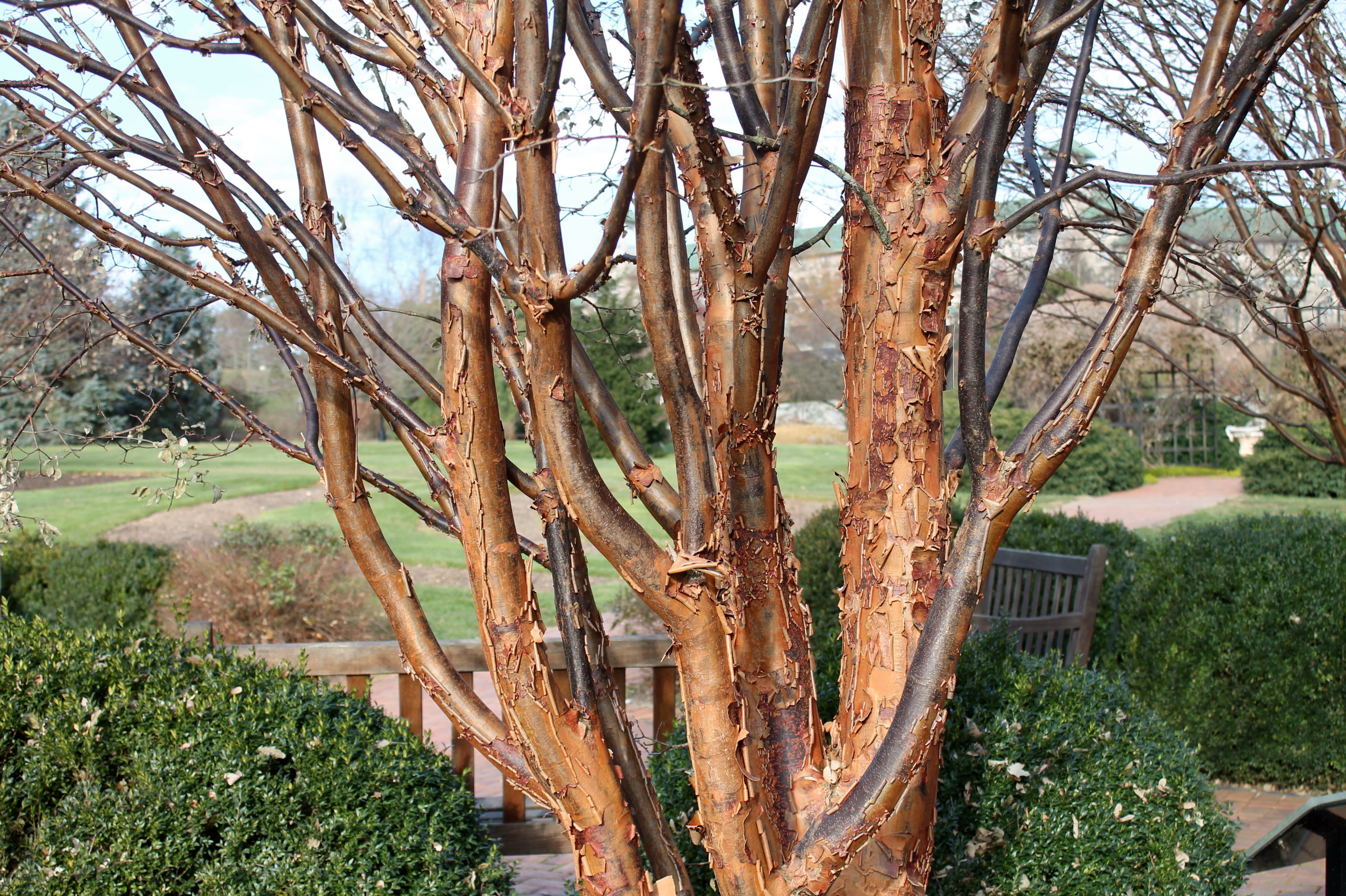
The showy bark of the paperbark maple tree.

   Interesting bark is an overlooked feature that most people don’t pay much attention to until winter – if even then.

   In some tree species, though, the bark is arguably the most attractive trait.

   If you’re looking to add a tree or two to the landscape this fall, here are 10 good choices that have outstanding peeling or flaking bark.

   1.) Paperbark maple (Acer griseum). One of the smaller and slowest-growing maples, paperbark maple is best known for its peeling cinnamon-colored bark. It’s as nice in winter when bare as any time. Fall foliage isn’t as brilliant as red and sugar maples but still pretty good. Grows 25’ x 20’ in full sun to light shade.

   2.) Kousa dogwood (Cornus kousa). More clay-, sun-, heat-, bug- and disease-tolerant than the American dogwood, this popular Chinese species has flaking bark that eventually gives the trunk a Dalmatian-like appearance. It blooms white in June and gets warty, marble-sized red fruits in fall. 25’ x 18’. Sun or part shade.
Read More »


I Wasn’t Going to Bulb Up the Yard, but…

September 1st, 2020

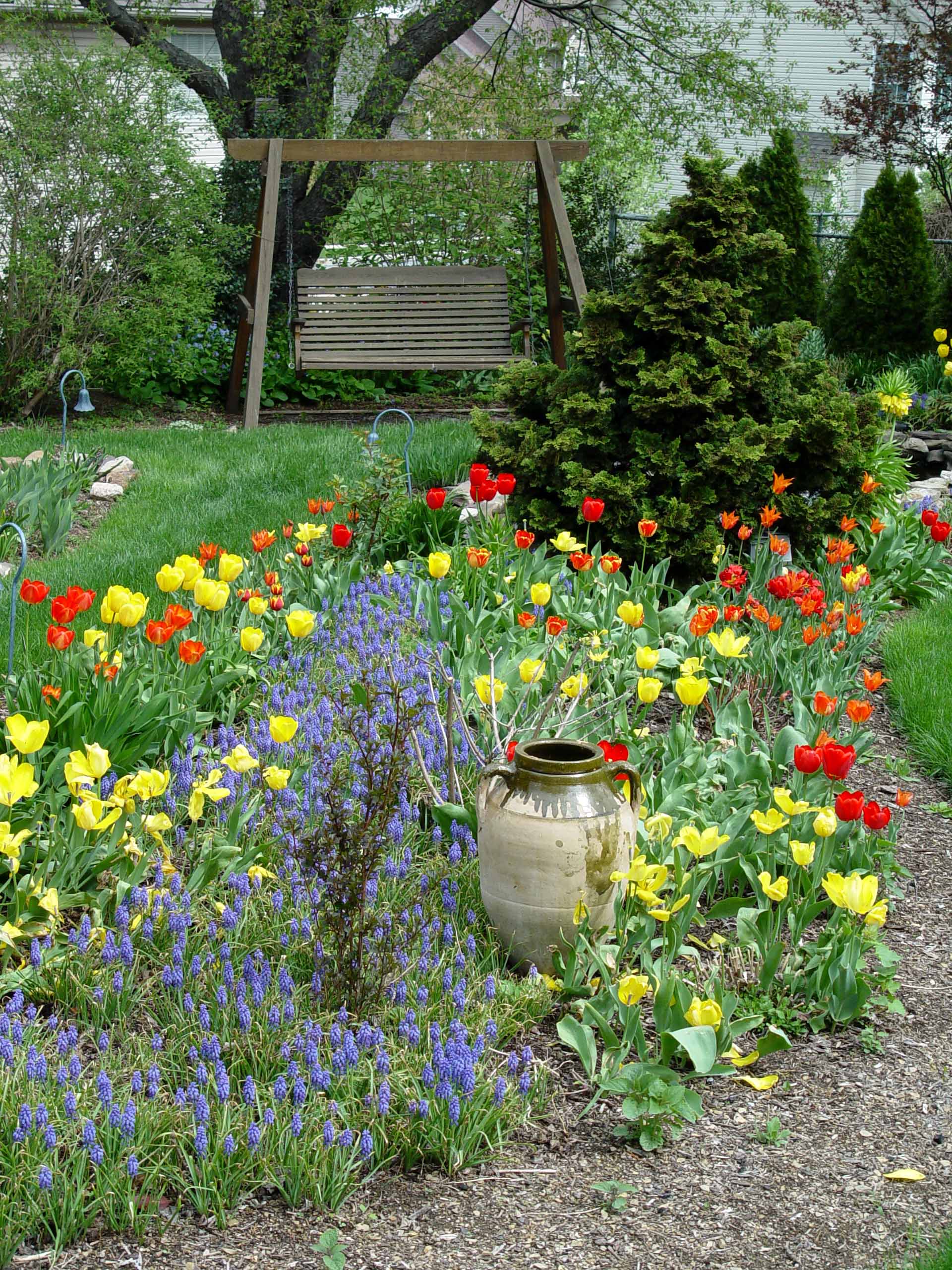
   Now that I’m into the run-out-of-gas years, I wasn’t planning to plant a lot of spring-flowering bulbs in my new Pittsburgh-area yard.

I used to have whole beds full of bulbs at my Cumberland County house.

   It’s a lot of work, the bulbs cost money that I already spent on brick repairs and a roof, and then there are those dreaded deer that turn beauty into dinner.

   It turns out that I can’t do without them. The bulbs, that is, not the deer.

   My order is in with two of my favorite bulb companies for 300 bulbs. They’ll be here in October. The bulbs, that is, not the companies.

   I had bulbs everywhere in my Cumberland County yard.

   I planted thousands of them over the years. Except for the tulips and some of the hyacinths, most came back to flower year after year.

   It got to the point where the whole yard was full of color early each spring, even before the “real” landscape of trees, flowering shrubs, perennials, and annuals got started.

   I missed that this spring. Yeah, I planted 150 yellow daffodils out front last fall, but other than that, not much was happening in the yard until late May.

   That made me realize just how much bulbs contribute to the spring landscape. No other group of plants gives that much color and variety that early in the season.

   Rather than go hog-wild all at once, my game plan is to add spots of bulb color a little at a time.

Read More »


The Mystery of Morphing Plants

August 25th, 2020

   One question I get a lot is about plants that seem to be turning into something else (i.e. some other version of plant, not a lizard or monster or something).

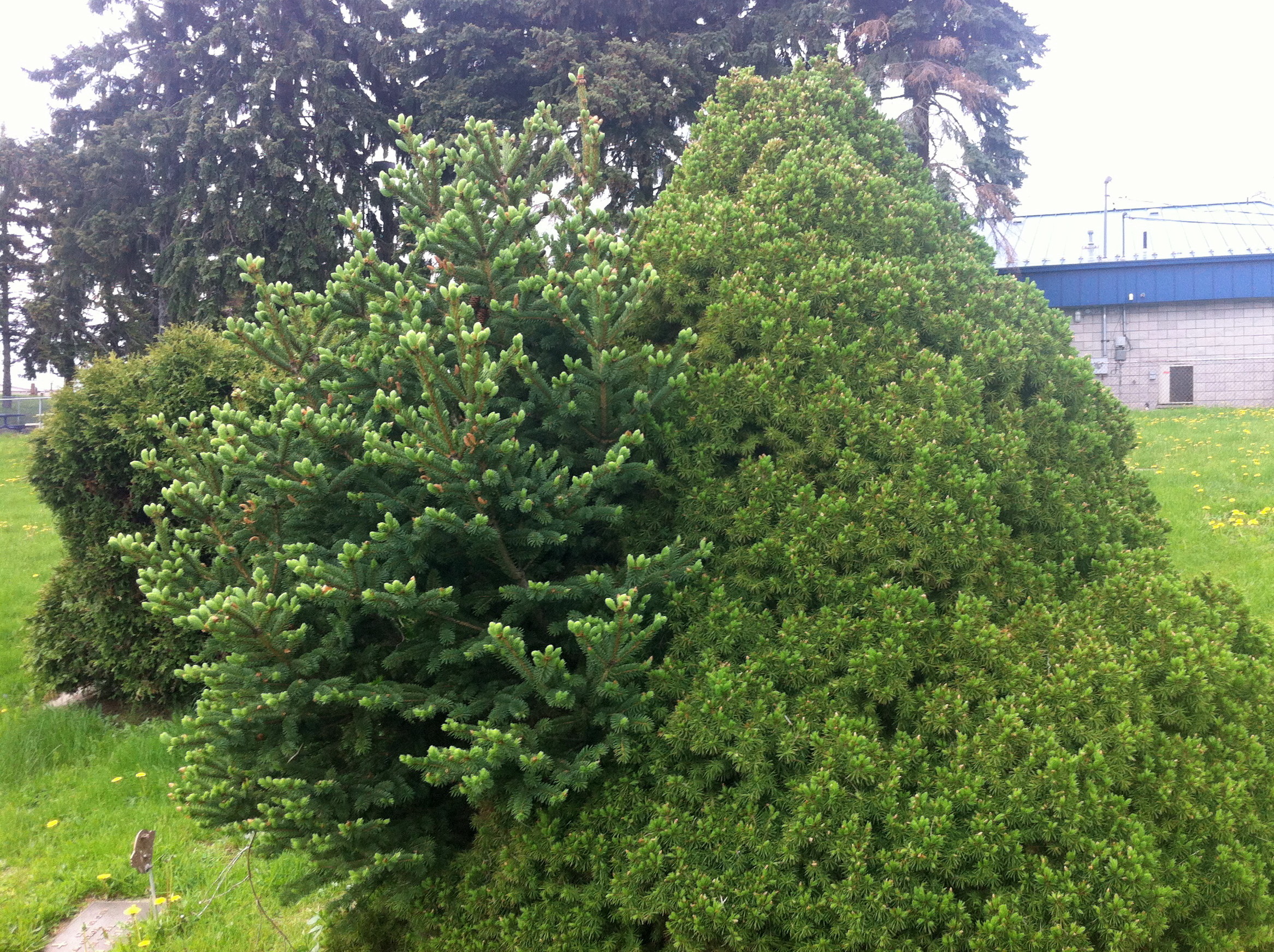
A bigger-branched “reversion” is growing out of this dwarf Alberta spruce.

   A common one is the popular landscape evergreen dwarf Alberta spruce, that dense little pyramidal upright that flanks so many front doors.

   Often times, dwarf Alberta spruce will start growing a branch that looks like it came from a much bigger evergreen – one with longer needles, larger branches, and a much faster growth rate.

   Given a few years to grow, the oddball branch can dominate the bush and almost look like it’s a new tree growing out of the one you planted.

   People mention all kinds of possible explanations. In the 1970s, it would’ve been blamed on TMI. But in reality, this shape-shifting is a case of “reversion.”

   Reversion is an oddity of the plant world that involves genetic plant mutations that are sort of “undoing” themselves and going back to the growth habit of an ancestor.

   In the landscape, it typically happens to plants that came to us from breeders who capitalized on a chance mutation of a plant.

   Dwarf Alberta spruce, for example, is a type of native white spruce that was developed decades ago from a plant that put out unusually small and narrow needles and had a very slow, tight, conical growth habit.

   Mutated branches like this – called “witch’s brooms on conifers – can be removed from parent plants and grafted onto the roots or wood of other plants of the species to create a new plant with the mutated traits. Or a mutated cutting can be stuck in a potting medium and rooted to produce a new baby plant of its own.

   The gardening public sometimes prefers the mutated traits to the original ones. That’s why dwarf Alberta spruce, with its compact, slow-growing habit, became a huge hit despite being highly prone to attack from spider mites.

Read More »


My Lawn Strangled Itself

August 18th, 2020

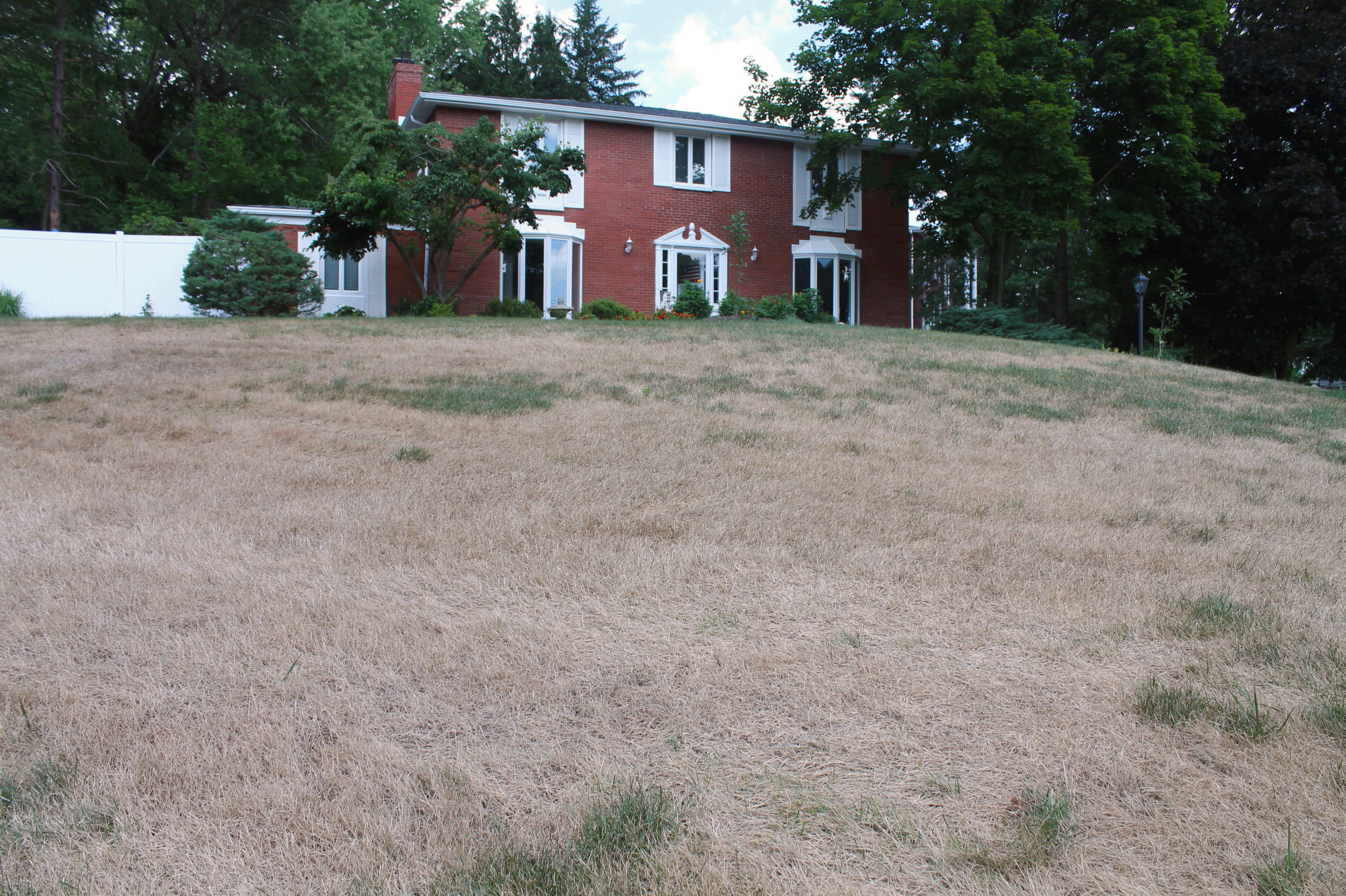
   A lot of lawns went brown during the weeks-long hot, dry spell in July.

This whole section of my front yard isn’t coming back.

   That’s normal and is a lawn’s way of “hiding out” in survival mode until conditions improve.

   A good rain or two typically brings a lawn out of summer dormancy, and it goes on to green up and start growing again.

   Not my lawn.

   About a third of it is dead, and I know what happened.

   Thatch.

   Thatch is a spongy layer of mostly dead grass stems and roots at the top of the soil. It’s normally a quarter- to half-inch thick and is useful for insulating the soil from temperature extremes and cushioning impact when we walk or play on a lawn.

   But when this thatch layer builds up faster than it’s breaking down, it can grow to levels that impede oxygen and rain from reaching the soil underneath.

   Anything more than an inch thick is trouble.

   I wasn’t too worried when big sections of my full-sun, sloped front yard starting going brown in June. It got browner quicker than a lot of other lawns, including my own lawn in the back yard.

   However, I’d seen lawns stay brown for four weeks or more, then bounce back completely after a single soaking rain.

   When we finally got a soaker toward the end of July, some of my front lawn showed green. Another rain that dropped nearly an inch a week later caused about two-thirds of the lawn to start growing again.

   Yet two huge swaths and a few other smaller patches stayed brown as straw at Halloween.

Read More »


What Plants Won’t Deer Eat?

August 11th, 2020

   So here’s what I’ve learned after a year and a half of trying to garden up close and personal with deer.

Don’t you wish they’d just eat the grass?

   1.) Deer are picky. That’s right. You might’ve heard (and seen) that deer will eat just about anything when they’re hungry enough. And that’s right, too.

   However, deer have definite preferences for some plants over others. They start with their favorites (hosta, daylilies, tulips, eastern arborvitae, azaleas, young yews, roses, and rhododendrons, to mention a few) and then go down the list until they’re full.

   On one hand, that means that nothing you plant is safe from one day becoming deer dessert. But on the other, the lower you stay on their preference list, the better shot you have at them filling up in someone else’s yard.

   2.) Not all deer like the same thing. I suspect that like people, different deer have different food preferences at different times. That might explain why some people claim that deer never eat, say, panicle hydrangeas, while others say that’s the first thing they picked out in their yard.

   It might also help explain why deer-resistant plant lists don’t always agree.

   Different varieties or species of the same plant also seem to have enough taste or smell differences to either elevate them or lower them on the deer menu.

   Rutgers University’s venerable deer-resistant plant list (which I highly recommend) bears that out in its finding that deer seldom mess with Geranium macrorrhizum, occasionally dine on Geranium sanguineum and Geranium cantabrigiense, but frequently eat Geranium endressii.

   I’ve seen that in my own yard, where deer ate some varieties of my coleus but not others (at least yet).

   They also ate about half of all three of my arrowwood viburnums, but they haven’t touched any of my four Korean spice viburnums (yet).

   And I’ve seen deer walk by a plant for months and never touch it, only to gnaw it nearly to ground on a given night.

   Maybe they just happened to be more hungry than usual when they walked by the plant that time. Or maybe the eater in question just got done thinking, “I’m sure in the mood for a good spirea tonight!”

Read More »


« Older Ramblings and Readlings Newer Ramblings and Readlings »

  • Home
  • Garden House-Calls
  • George's Talks & Trips
  • Disclosure

© 2026 George Weigel | Site designed and programmed by Pittsburgh Web Developer Andy Weigel using WordPress