
• Home
  • Contact
  • Site Map
George Weigel - Central PA Gardening
  • Landscape 1
  • Landscape 2
  • Landscape 3
  • Landscape 4
  • Garden Drawings
  • Talks & Trips
  • Patriot-News/Pennlive Posts
  • Buy Helpful Info

Navigation

  • Storage Shed (Useful Past Columns)
  • About George
  • Sign Up for George's Free E-Column
  • Plant Profiles
  • Timely Tips
  • George’s Handy Lists
  • George's Friends
  • Photo Galleries
  • Links and Resources
  • Support George’s Efforts


George’s new “50 American Public Gardens You Really Ought to See” e-book steers you to the top gardens to add to your bucket list.

Read More | Order Now


George’s “Survivor Plant List” is a 19-page booklet detailing hundreds of the toughest and highest-performing plants.

Click Here


Has the info here been useful? Support George’s efforts by clicking below.


Looking for other ways to support George?

Click Here

George's Current Ramblings and Readlings

Pull Wet, Hoe Dry… and Poison Ivy

June 7th, 2010
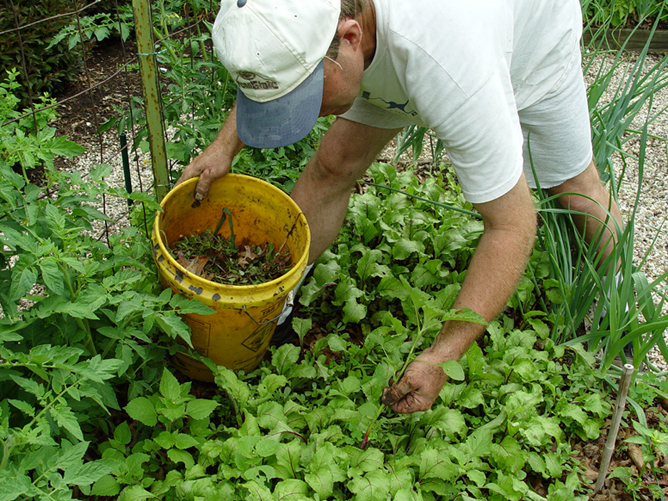
Weeding beets with my trusty "compost harvester" (i.e. 5-gallon bucket).

   Add a little rain to warm soil and that’s a perfect recipe for June weeds. You’re not imagining things – they did spring up almost overnight.

   Have you ever heard the old weed saying, “Pull when wet, hoe when dry?”

   There’s truth to that. Weeds come out much easier when the soil is damp and loose after a rain. That’s a good time to yank them. Hoeing isn’t as effective then because some of those weeds that you uproot but don’t remove will re-root in damp soil. In a dry spell, dropped weeds will lay there and wilt.

   Most of the time, I’m a yanker, not a sprayer. I spent a couple of hours over the weekend pulling weeds out of the vegetable patch, out of pathways and out of a few areas that I didn’t mulch this spring.

   I look at it as “harvesting compost.” I go on regular weed patrols, carrying a trusty 5-gallon bucket around to make deposits. Young weeds not only come out easier, but they haven’t gone to seed. That makes them great candidates for fueling the compost bin.

   Pulling young is a key strategy of weed defense. Let a dandelion or thistle go to seed and you’ll have hundreds (if not thousands) of seeds per plant blowing around. Those can haunt you for years.

   Here’s another weed saying: “One year weeds, seven years seed.” That one’s true, too.

   The good news is that weed sprouting typically tapers off around the end of June. So if you stay ahead of things in the next few weeks, it’ll get easier from then on.

   One weed I’ve seen a lot in my travels lately has been the dreaded poison ivy. It’s thriving right now, and if you’re not sure what it looks like, this is one plant to really get to know.
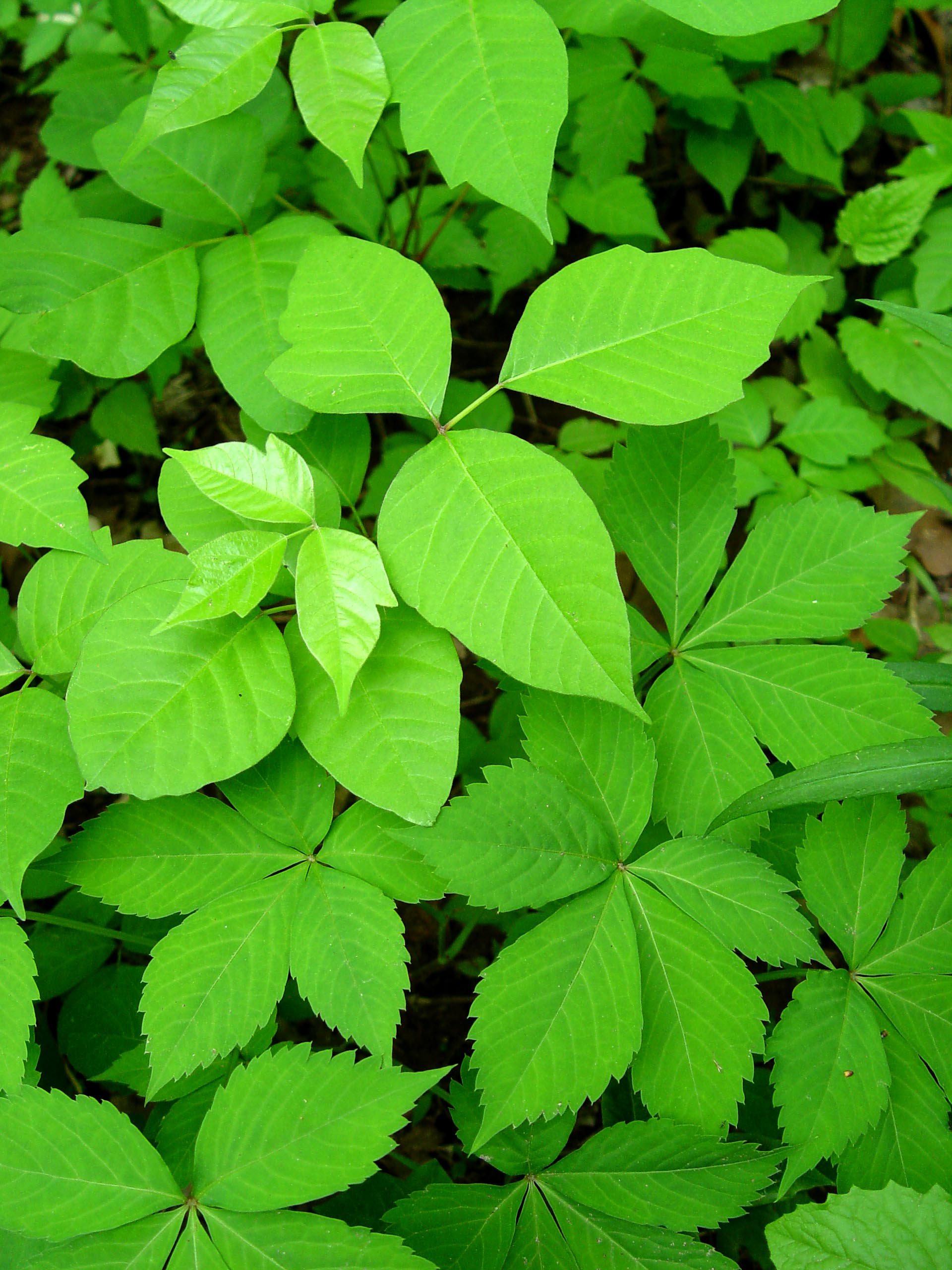
Poison ivy (leaves of 3) and Virginia creeper (leaves of 5).

   Here’s a photo showing poison ivy (leaves of three) growing among non-poisonous Virginia creeper (leaves of five). These are often confused. A third weed saying that’s worth following: “When in doubt, stay out.”

   Even if you know poison ivy, it’s easy to accidentally grab it while you’re yanking mixed bouquets of weeds. Wearing gloves helps, but not everyone keeps them on (me included). Or maybe your gloves are like mine – holes in the finger tips.

   You can usually head off a skin irritation if you wash with soap and cold water within 15 minutes of getting poison ivy’s urishiol oil on your skin. There’s also a variety of protectants and other poison-fighting strategies in a column I did on this, which is posted here. 

   Whatever you do, avoid weed-whacking beds where you suspect there’s poison ivy. I ran into a guy who admitted doing that last week, and he learned that power tools are great for throwing urushiol all over the place. Plus the poison ivy just grows back anyway.

   Also don’t burn poison ivy. The oil gets in the smoke and can seriously irritate your lung lining. And don’t think, like one of my buddies did, that you won’t get poison if you pull it down when the leaves aren’t out in winter. That oil is still very effective in winter.
Master Gardens

June 1st, 2010

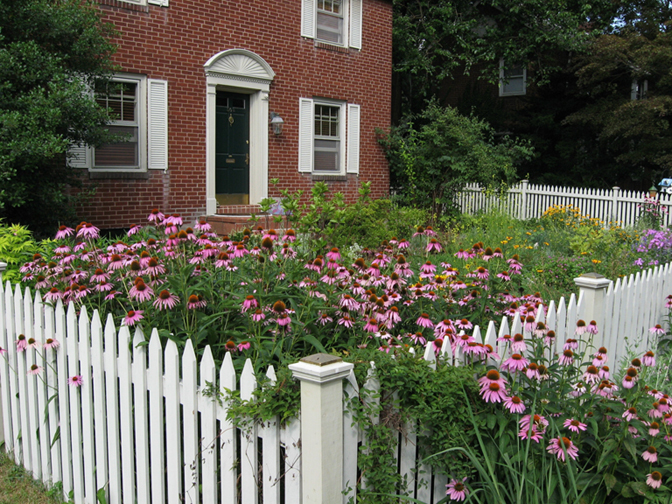
Shirley Stark's Lemoyne front yard... one of the homes on the June 13 MG garden tour.

   What’s a Master Gardener’s yard look like?

   We’ll all get a chance to see on Sun., June 13, when eight Cumberland County Master Gardeners open their landscapes as part of the 2nd annual “At Home in the Garden” garden tour.

   The way it works is you buy a tour booklet for $8, then make your way through as many of the gardens as you like. They’re all on the West Shore — Lemoyne, Camp Hill and Mechanicsburg.

   They’re all different gardens, too… a perennial and native-plant garden; a cottage garden with no grass; a wildlife habitat; a four-season landscape; a farmhouse with a formal pool and veggie garden; a shady “faerie garden,” and a “wet and wild” garden with a pond, tropicals and a topiary rabbit.

   Also on the tour are three other gardens that Cumberland’s MGs helped create: the new rain gardens along Lemoyne’s Market Street, the Trails and Trees nature center at Mechanicsburg Middle School and the Williamsburg-style garden at Upper Allen Elementary School.

   If borrowing ideas from Master Gardeners isn’t enough of a lure, stop by Dippin Dairy at 324 Market St., Lemoyne, to get a free soft-serve ice-cream cone. Your ticket qualifies you for one of those on tour day.

   And the ticket will get you a free quart-sized perennial and shopping discount at Highland Gardens, 423 S. 18th St., Lower Allen Twp.

   The tour starts at noon on the 13th and ends at 6 p.m. Get your tickets in advance because the price goes up to $10 on the day of.

   Advance sales are through Cumberland County Extension (call 240-6500 to charge or stop by at 310 Allen St., Carlisle) or at Bedford Street Antiques in Carlisle, Mountz Jewelers in Camp Hill, the Rosemary House in Mechanicsburg, or at Dippin Dairy or Highland Gardens.

   On the 13th, ticket sales will be only at Dippin Dairy, Highland Gardens or Trails and Trees Center, 1731 S. York St., Mechanicsburg.

   An online brochure with more details is at http://cumberland.extension.psu.edu/horticulture/gardentour2010brochure.pdf.

   Master Gardeners are avid, veteran gardeners who volunteer their time helping the gardening public in exchange for training they receive from Penn State Extension. They do things like man phone lines, give seminars, help with public plantings and in Cumberland’s case, offer weekly plant-diagnostic clinics at the Fredricksen Library in Camp Hill and maintain the informative demo gardens at the county’s Claremont Nursing and Rehab Center.

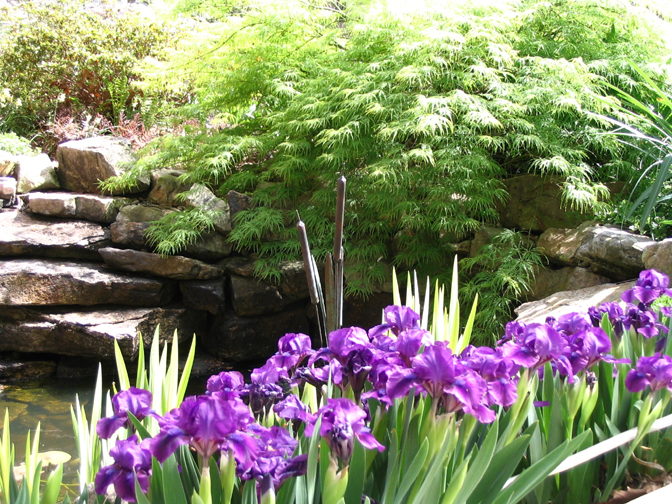
Joan Kolka's iris-edged water garden... also on the tour.

   They’re a great resource, and most of them have very nice home gardens. I’ve seen and written about several of them over the years.

   Master Gardeners might know what they’re doing, but I can tell you they deal with the same “challenges” we all do.

   You know what the main difference is between Master Gardeners and ordinary home gardeners?

   Master Gardeners can tell you the correct name of the disease that killed their dogwoods and know the difference between whether it was a rabbit or a groundhog that devoured their bean patch.


Garden Ogling

May 25th, 2010

   We’re blessed in central Pennsylvania to be within driving range of so many wonderful public gardens – New York Botanical and Brooklyn Botanic in New York, the National Arboretum and U.S. Botanic Garden in D.C., Phipps Conservatory in Pittsburgh and the nation’s biggest hot-spot of two dozen public gardens in the Philadelphia area alone.

   Put a few on your calendar to see this summer.

   I’ve been to a couple of hundred gardens in the U.S. and Canada in the last 20 years, and at least for now, here’s my top 10:

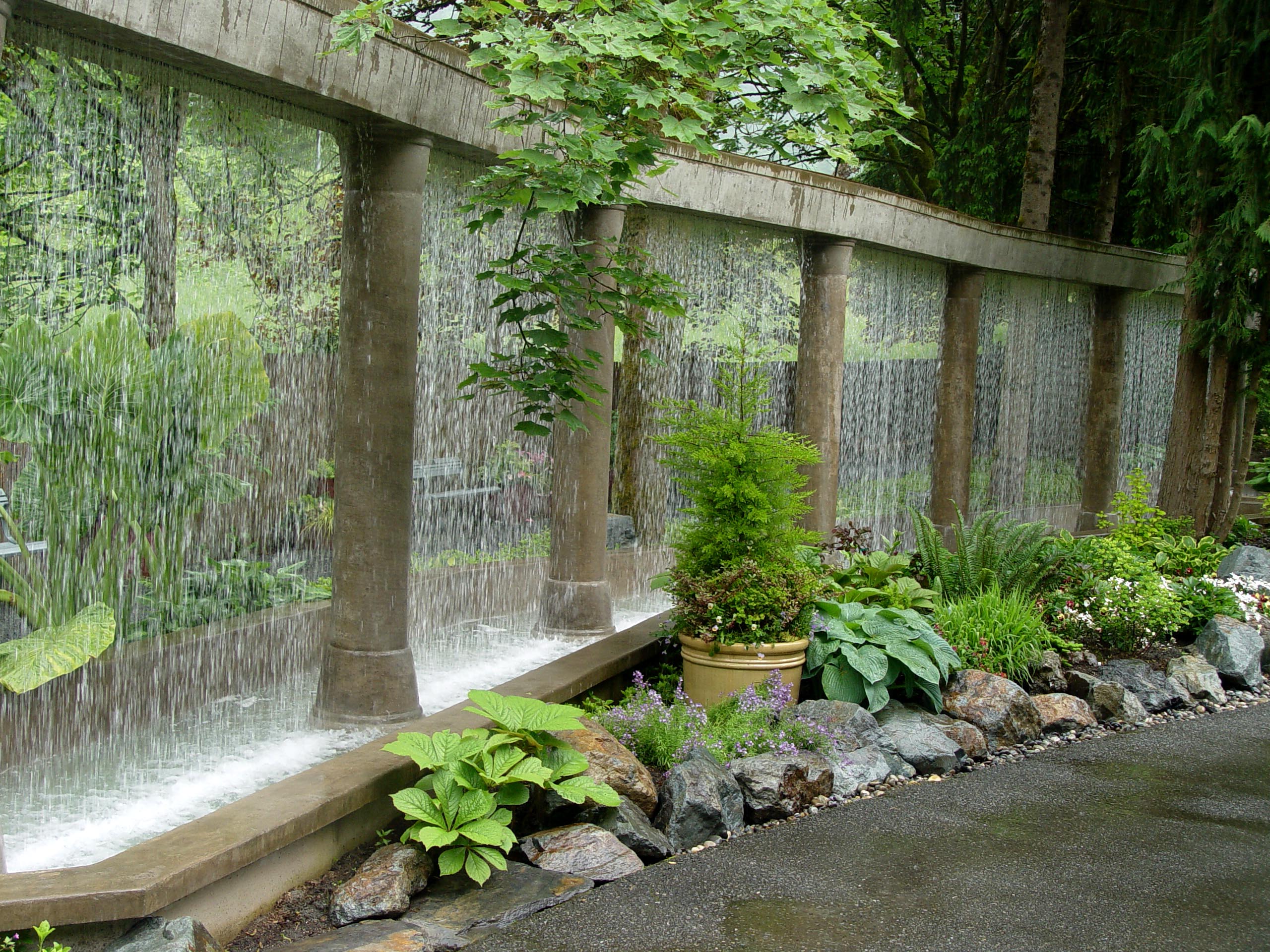
It's not exactly in driving range of Harrisburg, but this sheet of water at Canada's Minter Gardens is one of my favorite public-garden features.

   1.) Longwood Gardens, Kennett Square, Pa.

   2.) Missouri Botanical Garden, St. Louis, Mo.

   3.) Minter Gardens, British Columbia, Canada.

   4.) New York Botanical Garden, Bronx, N.Y.

   5.) Butchart Gardens, Vancouver Island, Canada.

   6.) Portland Classical Chinese Garden, Portland, Ore.

   7.) Chicago Botanic Garden, Glencoe, Ill.

   8.) Chanticleer, Wayne, Pa.

   9.) Hershey Gardens, Hershey, Pa. (OK, call me a homer, but I like the place.)

   10.) Lewis Ginter Botanical Garden, Richmond, Va.

   I’m sure you’ll disagree. I’ll no doubt disagree with myself by next year. Over the winter, my wife and I saw a little known but superb place just south of Myrtle Beach, S.C., called Brookgreen Gardens. Even out of season, the sculptures, statuary and evergreen plants had me trying to figure out how to cram it into the top 10.

   I’d be curious to hear about your favorites, which I’ll share with others so we all don’t miss a gem you’ve seen. Email me your favorites at george@georgeweigel.net.

   I’ve got profiles, photos, contact info and “George’s Take” on a few dozen gardens at https://georgeweigel.net/public-garden-roundup.

   For five years now, Lowee’s Tours of Harrisburg has sponsored a “Garden Series” of trips to some of these great gardens. I do traveling seminars on board, play quiz games with prizes (usually new trial plants, divisions from my garden or garden books), answer garden questions, give timely tips and talk about the places we’re going to see.

   We usually see one garden in the morning, have a nice lunch at midday, see a second garden in the afternoon, then stop at an interesting garden center on the way home.

   Most are day trips, but some are over-nighters.

   Earlier this month, for instance, we went on a “Plant Nerd Excursion” to three garden centers in Bucks County – two of which also have excellent display gardens (Hortulus Farm and Linden Hill).

   On June 11, we’re running a trip to see gardens in Annapolis (William Paca House, Helen Avalynne Tawes Garden, Historic London Town), on Sept. 24-25 we’re heading to Long Island to see Old Westbury and Planting Fields, and Dec. 6-9 we’re doing a “Green Christmas” garden-themed trip to Williamsburg, Va., and my No. 10 garden, Lewis Ginter.

   My favorite trip of the year, though, is going to be the July 21-25 trip to Niagara Falls, which includes a tour, lunch and wine tasting at Sonnenberg Gardens in New York’s beautiful Finger Lakes region, lots of gardens in Niagara, a day at America’s largest home and garden tour (300 plus open gardens at Garden Walk Buffalo) and a tour of the Buffalo Botanical Gardens. Also some “touristy” things at Niagara.

   The full schedule and details are at https://georgeweigel.net/georges-talks-and-trips or go to Lowee’s posting of the schedule at http://www.lowees.com/tours.htm.

   These are all really fun, not counting the track record that it usually rains wherever I go. If only I had that power during a drought…


Fungus News

May 19th, 2010


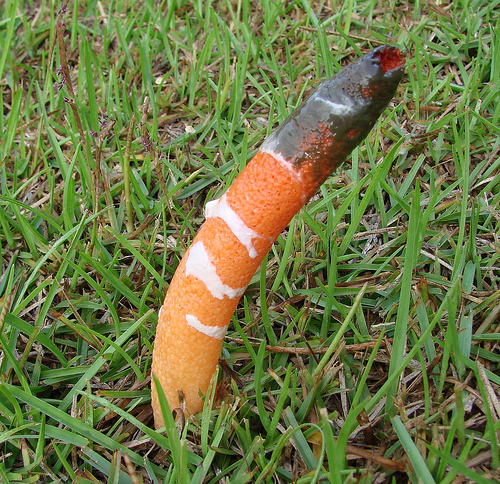
Stinkhorn fungus.

   On the fungal front this week, I’m getting questions already about growths emerging from lawns and mulched beds.

   Most of these are harmless mushroom-like fungi that feed on decaying (and sometimes live) wood. A few look more like something the dog did (i.e. the slime mold or “dog-vomit” fungus we’ll be seeing soon) or like something from another planet (i.e. the pointy upright stinkhorn fungus).

   The most annoying is the artillery fungus that shoots those little black tarry dots on siding and fences (see https://georgeweigel.net/category/favorite-past-garden-columns/mayhem-in-the-garden for two articles I’ve done on this one). Artillery fungus will be firing away shortly. The “dots” are the reproductive spores (actually called “gleba”) that are almost impossible to remove once they dry.

   No need to spray any of these. Just kick them over, cultivate them before they mature into the reproductive stage or bag them and toss if you’ve got young kids or pets around. A few are toxic when eaten, so better safe than sorry in the latter instance.

   For those of you eager to beef up your fungal knowledge, Gary Emberger, a biology professor at Messiah College, has an excellent web site that shows and describes all sorts of wood-decaying fungi that pops up in the northeastern United States.

   The address is http://www.messiah.edu/Oakes/fungi_on_wood.


My “Secret” Plant Haunt

May 11th, 2010

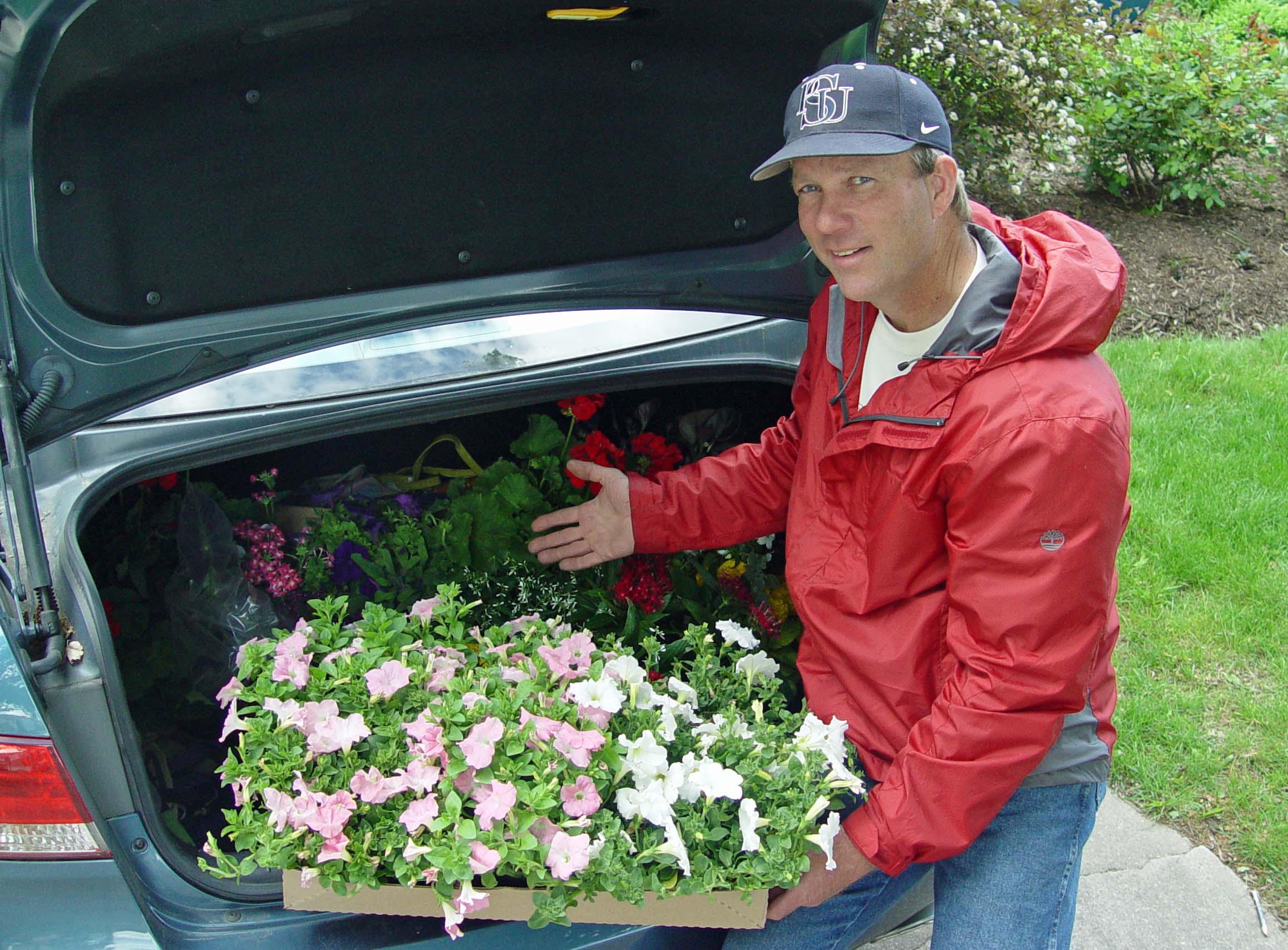
My haul from Lurgan’s…


Pssssst… do you know about Lurgan Greenhouse? People kept telling me about this old-fashioned family-run garden center in the boonies between Shippensburg and Chambersburg – almost like it was some kind of secret only to be shared with nutso fellow gardeners.

Last May I finally got there. I took my wife for her birthday-present date (hey, at least it’s more romantic than a trip to the township compost facility), and we both fell in love with the place.

For starters, they were serving the absolute best chicken barbecue ever, made on an open charcoal grill with oil, vinegar and powdered seasoning. They do barbecues several weekends every spring as well offer baked goodies like rhubarb pie, strawberry angel food cake, whoopie pies and sticky buns. That all scored big points right off the bat.

Once we started looking at plants, it was obvious these prices were way better than what I was used to seeing. Trees, shrubs and evergreens were $5 to $10 less per plant than most garden centers. Perennials were about $1 less, and most of the bedding annuals were $1.19 for four-packs.

It adds up if you’re buying a lot of stuff. Definitely worth the gas.

Lurgan’s container prices are even less than at box stores. And the selection is very good, too. Ditto especially for the woody plants. They’ve got a nice selection of new and cutting-edge varieties, not just the basic ‘Blue Rug’ junipers, burning bushes and barberries that are still so widespread at mass merchants.

They’ve also got water-garden plants and fish, garden supplies, houseplants, mulch, boulders, outdoor furniture – pretty much everything a full-service garden center sells. It was a lot more than I expected, which was pretty much a few small greenhouses selling annuals and perennials.

Lurgan is the name of the village the place is near, not the name of the owners (that’s Fisher). It’s about an hour’s drive and decades back in time from Harrisburg.

As an Amish-run business, Lurgan Greenhouses don’t do electricity, computers, credit cards, Sunday hours or modern busyness-fueled nastiness. You’ll find helpful, hard-working staff in straw hats and bonnets who are genuinely nice to everyone because that’s just the way people should be.

At our first visit, some lady knocked over a very nice pot with her shopping cart and broke it. Within seconds, one of the staff came over to assure the woman it was OK and that they’d clean it up. No problem. Accidents happen. Have a wonderful day and thanks for coming. That spoke volumes to me. The message I heard was that it’s people above profits at Lurgan. You’ll see no signs that say, “You break it, you bought it.”

The setting is also beautiful. The best way to get there is take the Pa. Turnpike to the Blue Mountain exit, then turn right on Rt. 997, right on Rt. 641, then left again 2 more miles on Rt. 997 until a sharp left on a small back road called Oakdale Road. You’ll wind back less than a half mile to the farm on the right. There you’ll see silos, mountains and greenhouses instead of housing developments and billboards. If you’ve got a GPS, type in 8126 Oakdale Road, Orrstown, Pa.

It’s so peaceful there and such a pleasant visit into unspoiled countryside that it’s no wonder people somehow hear about Lurgan in Maryland, New Jersey, Virginia and beyond. My wife and I liked the visit so much that we went back last week. We came away with a trunk load of annuals (under $100), a cherry pie, two barbecue dinners for $12 and reduced blood pressure.

We’ll probably make this an annual date.

If you go, take your checkbook or lots of cash. They don’t take credit cards.

Also, don’t bother trying to go on a Sunday. They’re closed. Go weekdays 8 a.m. to 6 p.m. (until 8 p.m. from mid-April to mid-June) or Saturday 8 a.m. to 5 p.m. Stay home with your family on Sunday.

Phone: none. Email: none. Web site: none.

You know, I like the sound of that…


« Older Ramblings and Readlings Newer Ramblings and Readlings »

  • Home
  • Garden House-Calls
  • George's Talks & Trips
  • Disclosure

© 2026 George Weigel | Site designed and programmed by Pittsburgh Web Developer Andy Weigel using WordPress