
• Home
  • Contact
  • Site Map
George Weigel - Central PA Gardening
  • Landscape 1
  • Landscape 2
  • Landscape 3
  • Landscape 4
  • Garden Drawings
  • Talks & Trips
  • Patriot-News/Pennlive Posts
  • Buy Helpful Info

Navigation

  • Storage Shed (Useful Past Columns)
  • About George
  • Sign Up for George's Free E-Column
  • Plant Profiles
  • Timely Tips
  • George’s Handy Lists
  • George's Friends
  • Photo Galleries
  • Links and Resources
  • Support George’s Efforts


George’s new “50 American Public Gardens You Really Ought to See” e-book steers you to the top gardens to add to your bucket list.

Read More | Order Now


George’s “Survivor Plant List” is a 19-page booklet detailing hundreds of the toughest and highest-performing plants.

Click Here


Has the info here been useful? Support George’s efforts by clicking below.


Looking for other ways to support George?

Click Here

George's Current Ramblings and Readlings

Blooming Neighbors

July 27th, 2010

   We can learn a lot from Buffalo. You’d think gardeners in this Lake Erie city would be a pretty discouraged bunch with all of the snow dumpings, late freezes and Canadian cold they get.

   Quite the contrary. I just got back from my first visit to the 2-day Garden Walk Buffalo — the nation’s biggest walking garden tour — and I can tell you it’s an awesome, inspiring place for plant geeks.
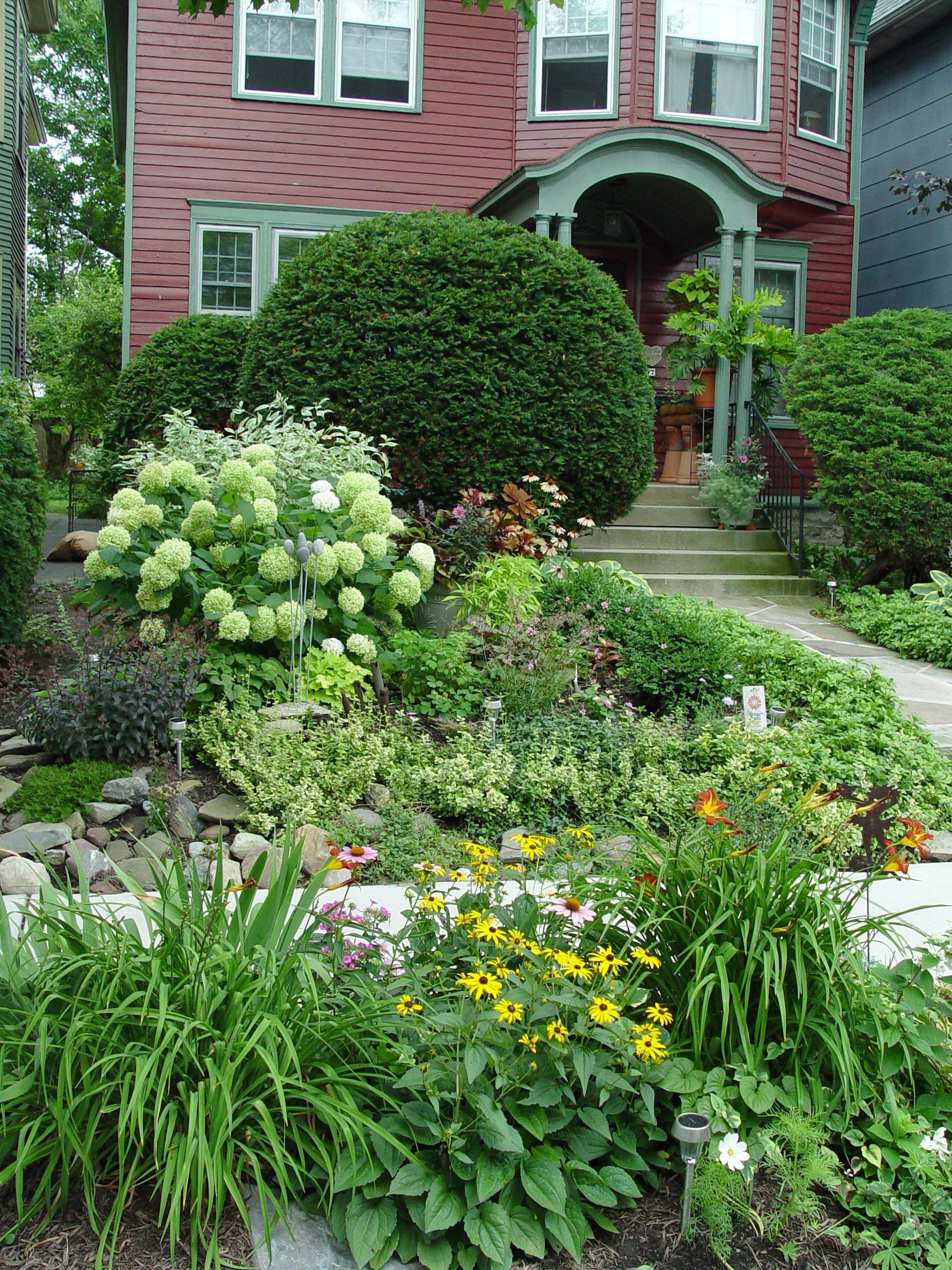
Phoebe McKay's Putnam Street front yard... one of many with no lawns out front at all.

   More than 350 residents opened their gardens for free tours to anyone who wanted to have a look. I plowed through about 100 of them. Most of the yards are small city lots, but these folks are making the most of what they have.

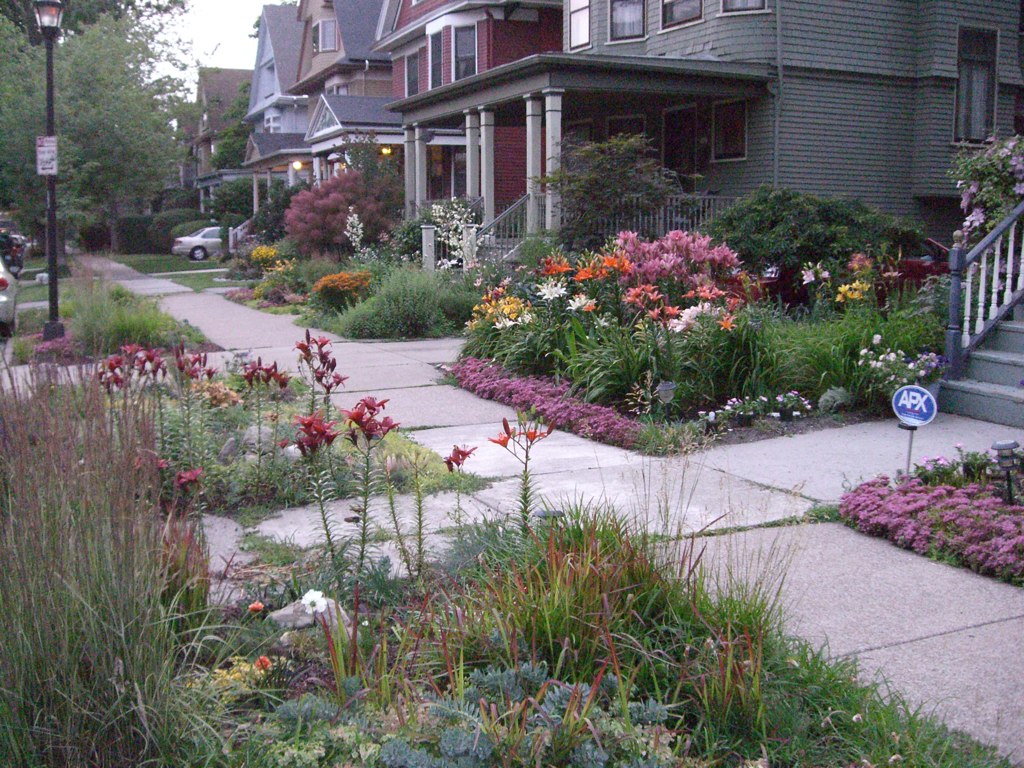
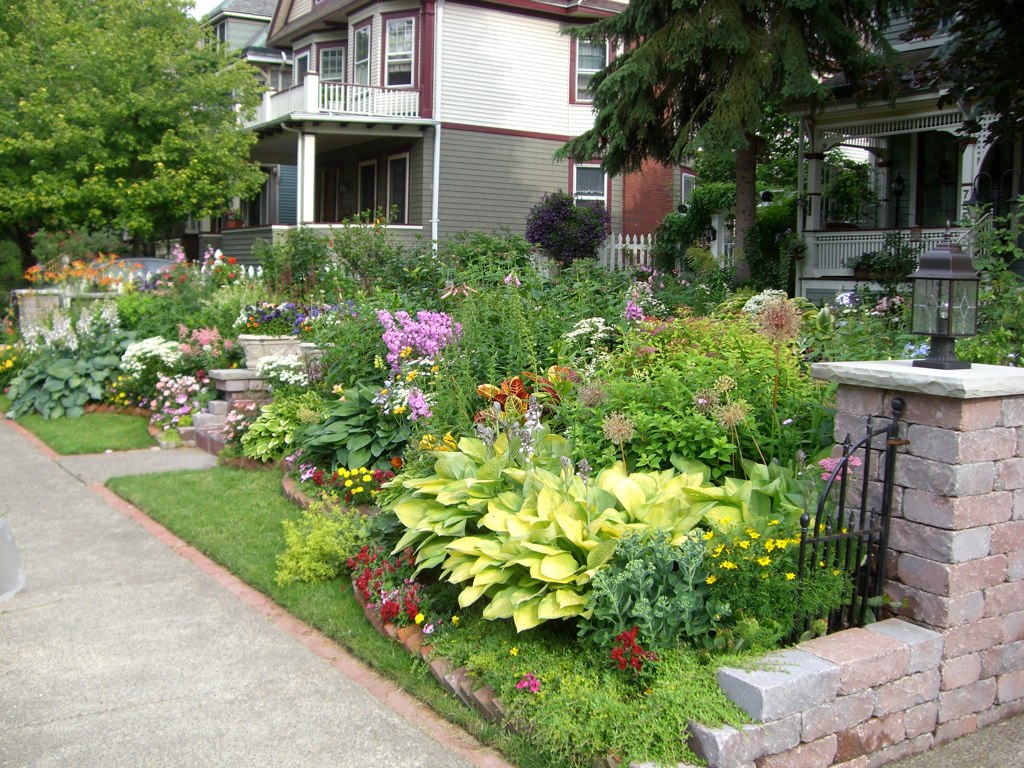
   Plenty of homes have no lawn out front at all. Weedy grass and meatball yews are replaced by layers of mixed perennials, hanging baskets, window boxes, flower pots on front stoops, spots of colorful annuals and eye-grabbing specimen shrubs, such as the Japanese-maple-like ‘Black Lace’ elderberry, the golden cut-leaf ‘Tiger Eye’ sumac and lots and lots of hydrangeas.

   Some of the gardens are absolutely incredible — among the best home gardens I’ve seen anywhere. My two favorites: James Locke and Annabelle Irey’s Victorian-style home at 75 Lancaster Ave. and Martin Lemke’s serene back yard at 378 Little Summer St.

   The first has a 20-foot-wide side-yard garden surrounded by a white picket fence with a mulched path leading past a pergola sitting area. Then the path leads into an island perennial garden, then a water garden and then a back colorful back border that finally dumps you out into a flower pot garden (once a driveway) that has a landscaped doghouse. Yes, hopelessly addicted gardeners even landscape their doghouses.
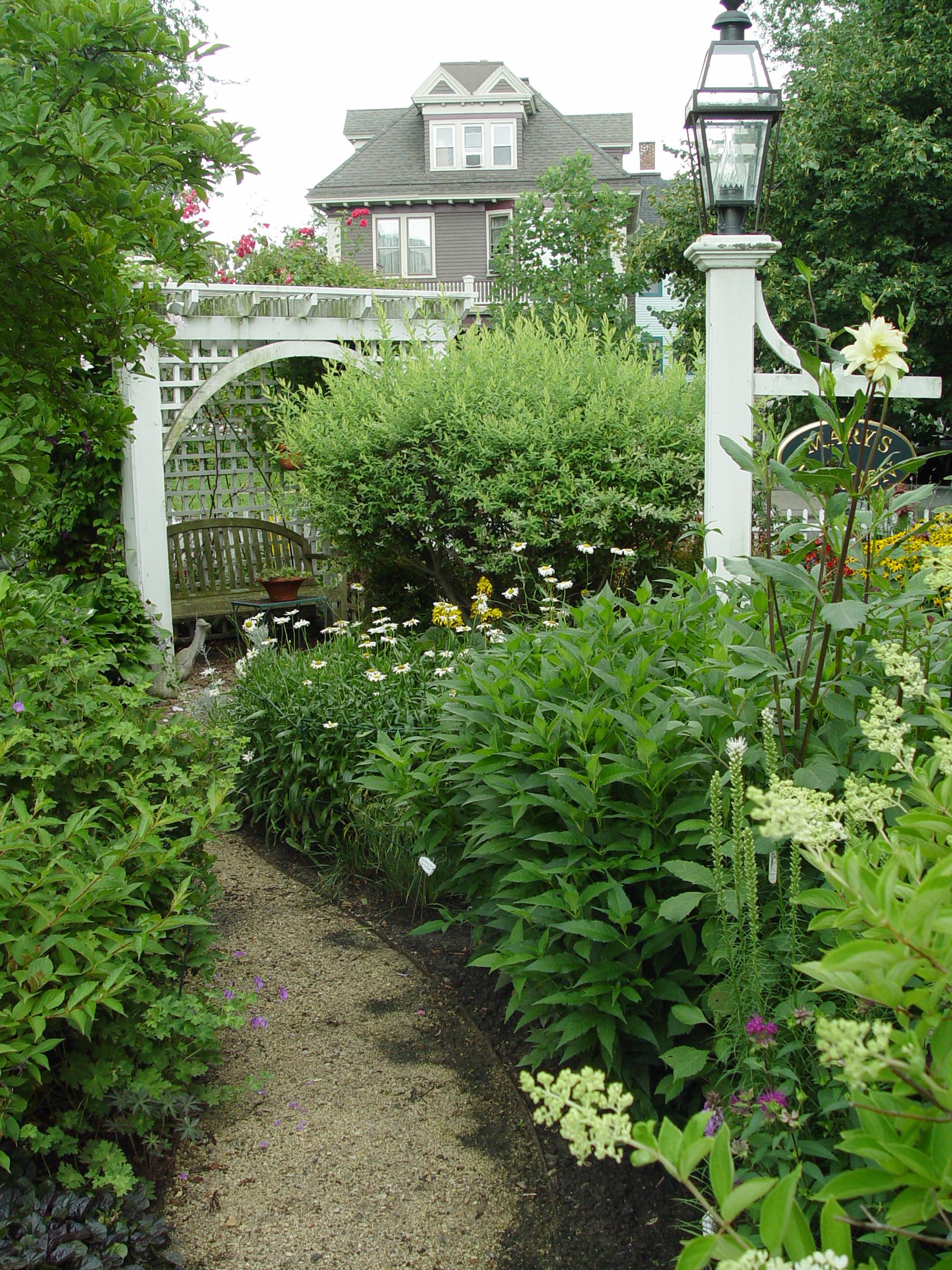
A sitting area that's just one part of James Locke's and Annabelle Irey's Lancaster Avenue side yard.

   The Little Summer house has virtually no front yard, but when you walk through the skinny side concrete walk, the back opens up into a Better Homes and Garden centerfold. The space is only about the size of half a basketball court, but it reads much bigger as lawn paths lead around wide garden beds filled with shade plants and statuary placed perfectly as focal points along the way.

   Not everyone on the tour is a Martha-caliber designer. You’ll find color clashes, spacing conflicts and a few invasive species if you want to be a critic. But the cool thing is that most of these people are ordinary, non-Master-Gardener homeowners doing something extraordinary.

   And what a difference it makes. Imperfections and all, the neighborhoods look so much more alive and inviting than the cookie-cutter landscapes and 4-foot-wide foundation beds that are so common to our developments.

   But more important than that is what the simple act of planting has done for Buffalo’s neighborhoods.

   I got to talk to a lot of these Buffalo city gardeners about how this all happened, and it turns out that gardening builds communities.
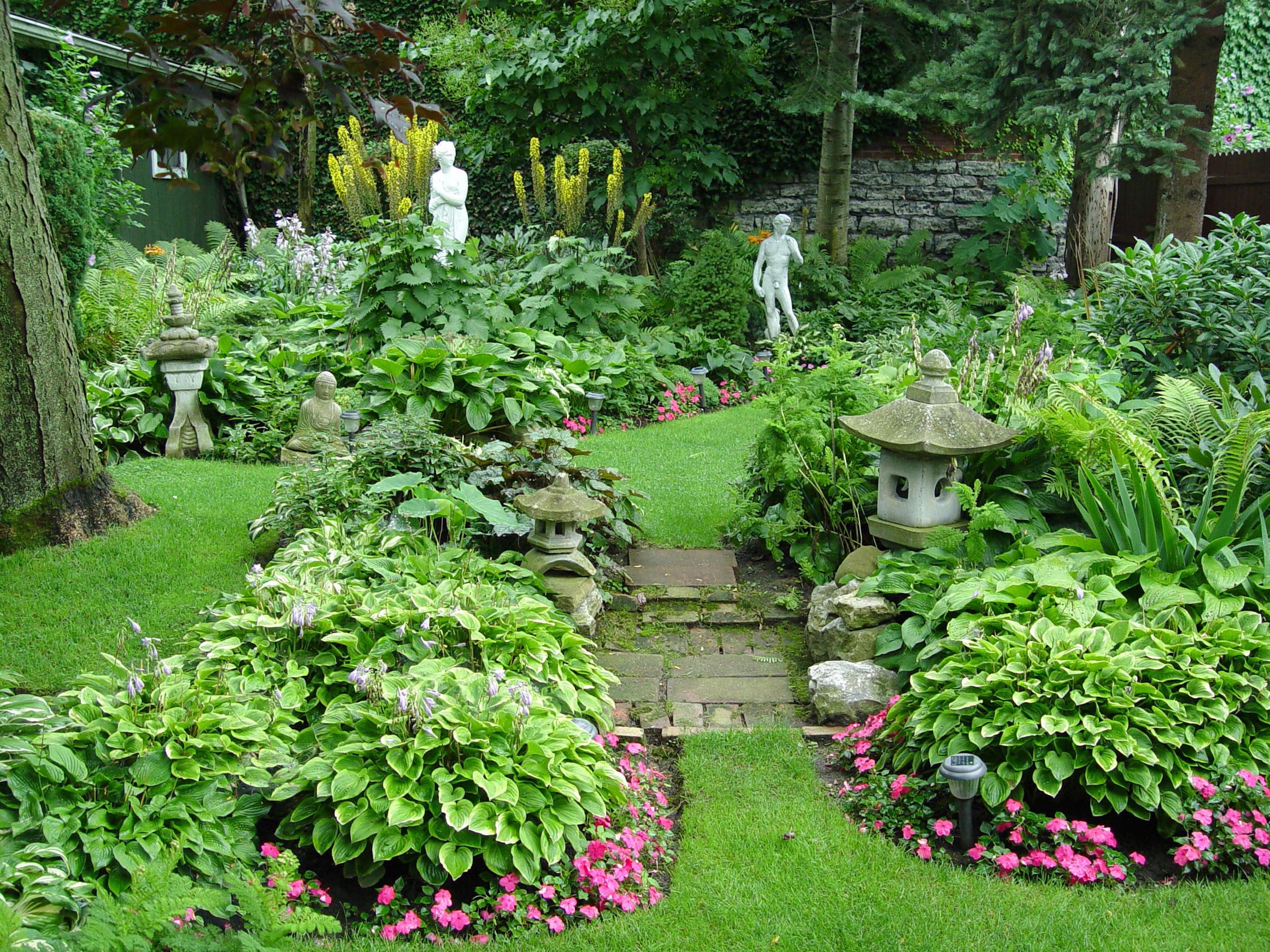
Martin Lemke's gorgeous back yard.

   Marvin Lunenfeld and Gail McCarthy got the ball rolling 15 years ago when they came back from an urban garden tour in Chicago and got their neighborhood interested in what became a 19-home tour.

   People there spruced up their yards and curiously enough, it became contagious.

   Soon, other neighborhoods joined in, and now the momentum has ballooned into gardens all over the city and an event that’s fast becoming a national tourism draw for Buffalo. (See www.gardenwalkbuffalo.com for more details.)

   “My neighbor and I started planting out front, and next thing we knew, others were doing the same thing,” one resident told me. “Pretty soon, almost everyone was fixing up — if for no other reason than they didn’t want to be embarrassed.”

   “You know, the best thing is that it gets neighbors outside talking to one another,” another resident said. “When you actually know the people living around you, you watch out for each other and care about each other.”

   It shows. To me, it was glaringly obvious that the blocks where Garden Walk caught on were almost entirely neat, clean and well maintained. You’d want to live there.

   Driving through other blocks, you’ll see the trash-strewn, graffiti-blighted, old-mattress-on-the-porch look that’s so endemic to U.S. cities.

   I can’t say that gardens fix everything that’s ailing our cities, but it’s sure helped Buffalo. Wouldn’t it be great if Garden Walk was contagious beyond there?

Lawn Brownouts

July 18th, 2010

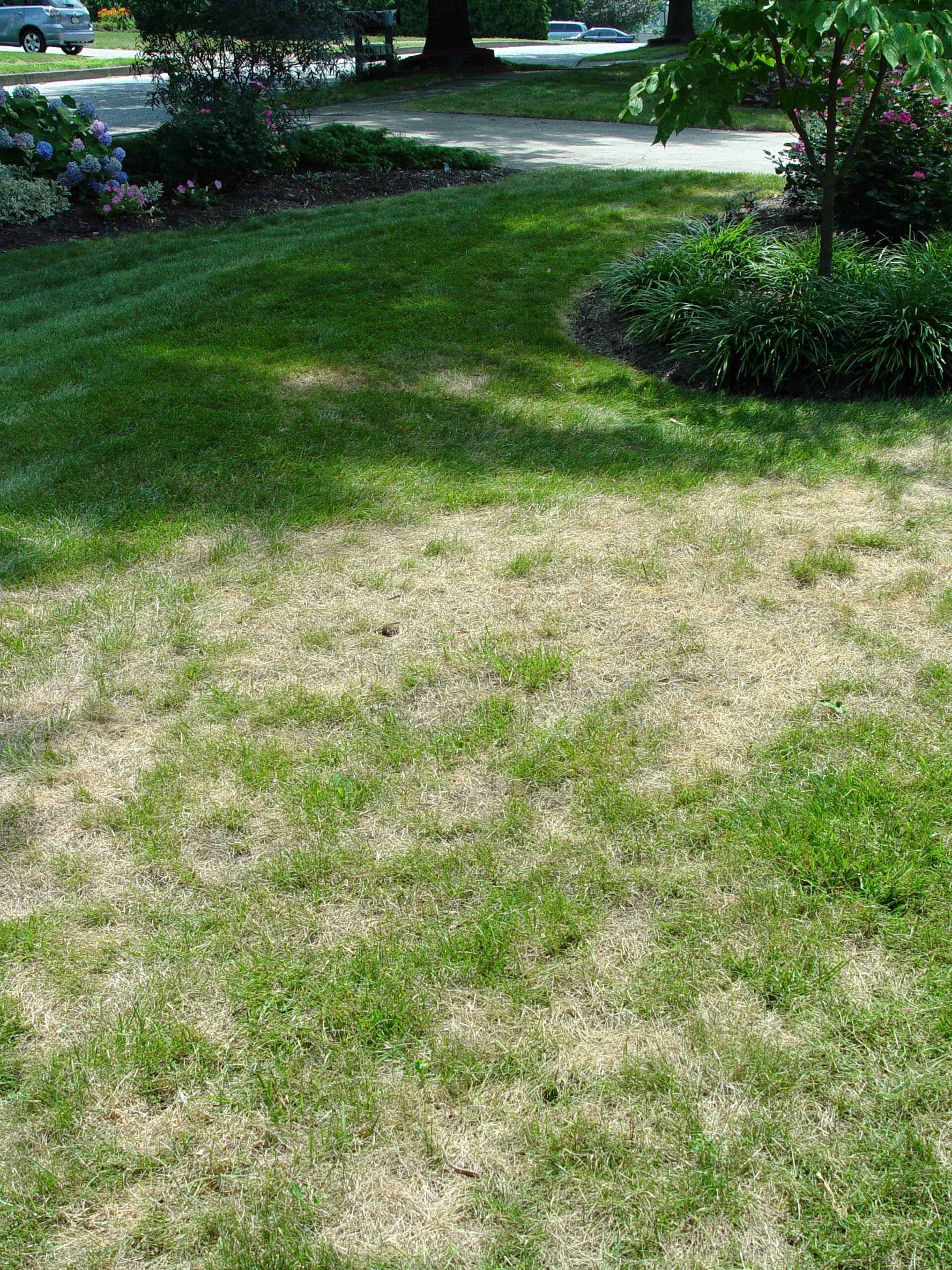
   Interesting thing about how lawns have bounced back (or not) from last week’s rain that followed the three-week blow-torch dry spell.

Notice the brown patches are in full sun while the shady spot is green.

   Some sections have greened up just fine. Others look like the grass went from brown and dormant to brown and dead. Why the discrepancy?

    These five reasons explain most of it:

   1.) Lousy soil. If you’ve got lousy clay or compacted subsoil under the grass, the roots are poorly developed and much more prone to dying off faster than a lawn with deep roots in good soil.

   2.) Hot spots. Most of the dead spots I’m seeing are out in the open where the grass got hammered all day long by full sun and relentless near-100-degree heat. Lawns shaded by trees or protected from afternoon sun by buildings are generally the patches that are green again.

   3.) Scalping. Here’s the biggie. People who cut the grass short – especially those who cut short heading into or during the heat wave – paid the price. Longer grass blades shade the soil better, slowing evaporation and keeping soil temperatures cooler. Those longer blades also don’t dry out as fast as short blades, and they encourage deeper rooting. When it started getting hot and dry, I purposely didn’t cut the grass, and almost all of it came back fine. Much of it never browned out in the first place. Move your mower setting up to cut at 3 inches and don’t cut when the lawn is going dormant.

   4.) Chinch bugs. It’s possible these blade-sucking little bugs are really to blame for some of the dead spots. They’re active in summer and could’ve done their damage coincidentally during the heat spell. Look closely for them or cut the bottom off a coffee can, jam it into a spot near the damage and flood the can. Then look for chinch bugs floating. Lawn insecticides kill them.

   5.) Salt. Dead spots that run along sidewalks, roads and driveways most likely are the result of ice-melting salt buildup from winter. Excess sodium worsens drought effects. The solution (short of a lot of rain to leach it out) is knocking off the use of rock salt or adding gypsum to the soil.

   We’re not done with the heat yet, it seems. Keep those plants watered – especially trees and shrubs planted in the last two years. You don’t want to lose the expensive stuff that hasn’t fully rooted yet. Trees may take 4 or 5 years to really establish themselves. Remember, water woody plants deeply once a week in hot, dry weather – not lightly every night or two.

Trip News

   W. Atlee Burpee Co. has canceled its Harvest Festival this year, but Lowee’s Group Tours and I have retrofitted our planned Aug. 20 bus trip by subbing the morning stop with a tour of Temple University’s Ambler Arboretum.

   We’ll spend the morning touring Ambler’s display gardens and landscape grounds, then have lunch, then spend the afternoon at Del Valley College’s Schmieder Arboretum before spending an hour or so at Michael Petrie’s new garden center near Downingtown. Michael is the genius who does most of the wildest, award-winning displays at the Philly Flower Show. We’ll finish the day with dinner (included) at Firecreek Restaurant. Cost is $99. Sign up by calling Lowee’s at 657-9658 or emailing CKelly@lowees.com.

   Lowee’s also has put the finishing touches on our Oct. 15 behind-the-scenes trip to Longwood Gardens. This one isn’t your usual tour of Longwood. We’re going to visit Longwood’s Production Greenhouse to see how the staff grows and prepares plants for display, plus visit their plant trials, see how they store bulbs, how they control pests and more. We’ll then have a private cooking demo with Longwood’s executive chef, eat a gourmet lunch and spend time learning more secrets from several of Longwood’s senior gardeners in the afternoon. A couple of hours of free time to explore are built in. Cost is $149. Same contact info as above to sign up. Or hit the “George’s Talks and Trips” button above to get details on all of the remaining 2010 trips.


Ireland: It Ain’t Fair

June 30th, 2010

Some of our group lusting over the subtropicals at Ireland's Ilnacullin Gardens.

   I’m just back from leading an 8-day garden-themed tour of Ireland with 32 fine, fun, fellow soil jockeys from central Pa.

   The first thing I plan to do is file a protest with the World Court on behalf of all Pennsylvania gardeners.

   It seems that when it comes to gardening, the Irish got all of the good stuff. We got the Japanese beetles, unbearable heat, blackflies, groundhogs and numbing winter cold.

   Ireland doesn’t have any of that. It’s got moderate temperatures that hover between 40 and 70 degrees all year, plentiful rain (usually), and surprisingly few bugs and animal pests.

   What surprised me most, though, was the range of species the Irish are growing. Despite an ideal garden climate (thanks to the Atlantic Gulf Stream), Ireland has only about 850 native plant species. But plant-lovers that they are, they brought in species from all over the world and found that many of them grew even better than in their homelands.

   Something seemed out of kilter about palm trees in Dublin. But without a Mechanicsburg-like January to kill them off, the Irish palms think they’re on a tropical island.

It's true... palms grow in Ireland.

   Our Harrigan Holidays tour group also saw flame trees from Chile, cypress from Tasmania, alpine perennials from the Himalayas, and oddball flowers from South Africa and New Zealand.

   The biggest hits were gunnera and monkey puzzle trees.

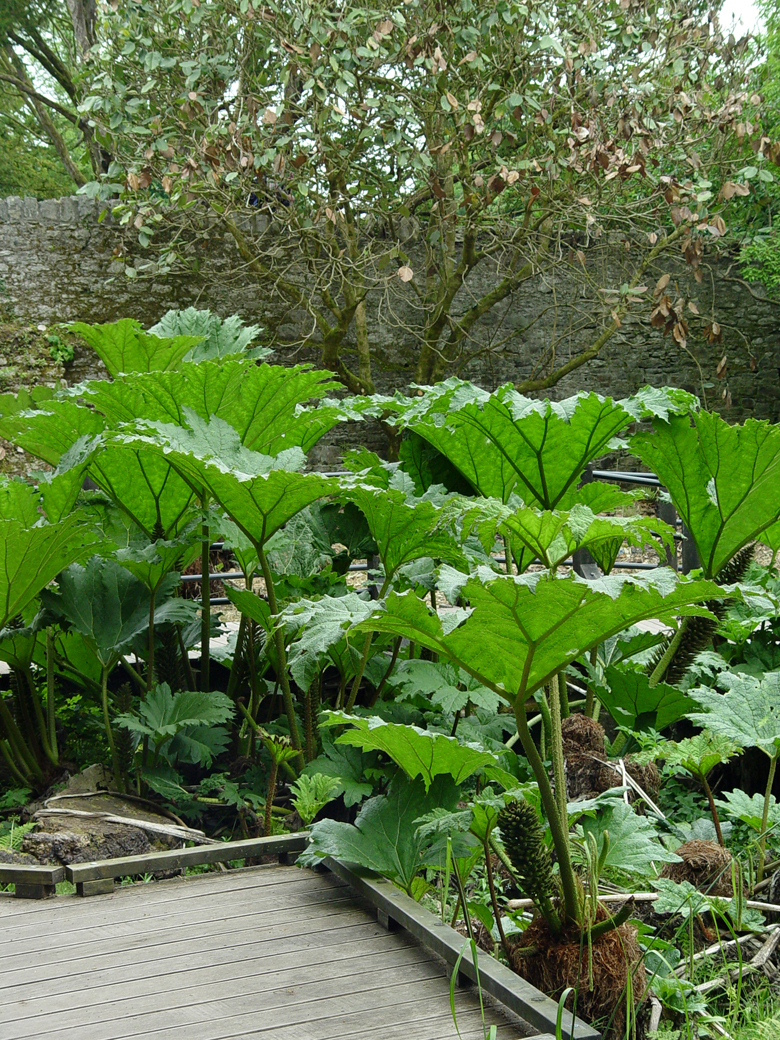
   Gunnera is a rhubarb-like perennial that sends up jagged-edge leaves the size of patio umbrellas. For real. They grow wild in wet areas, especially along stream banks.

   The monkey puzzle tree is a tender evergreen with wide-bladed needles and straight arms that poke out randomly. It looks like something from a Dr. Seuss book.

   About half of what we saw I had never seen before — mainly because we can’t grow it here.  

   Rather than a tour of Irish plants, it turned out to be a botanical tour of the world.

A patch of gunnera.

   Ireland’s landscape also is a lot more diverse than I imagined. It’s not just rolling hills of green.

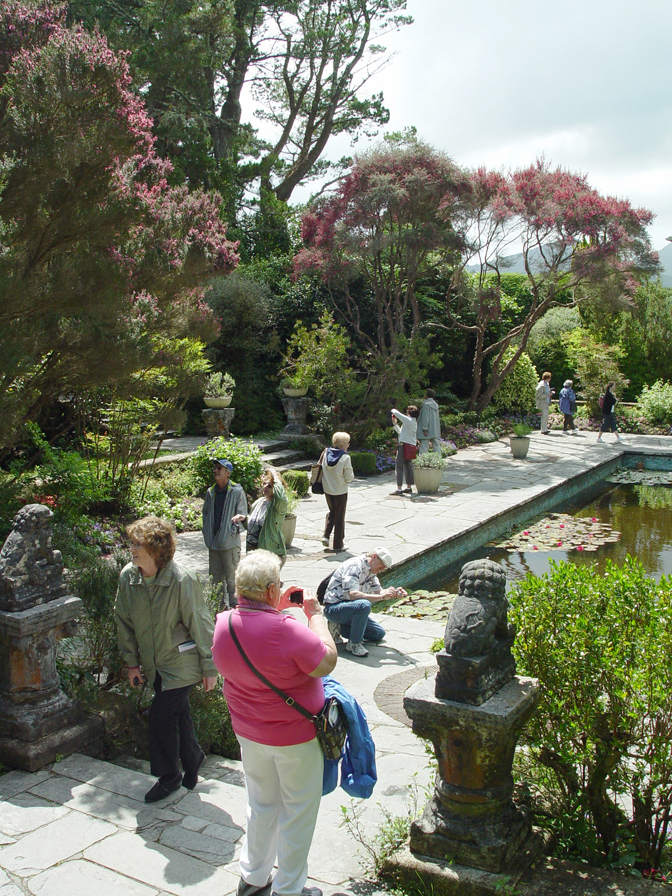
   We saw a native riverside landscape and a pond filled with waterlilies in a countryside public garden called Altamont near Kilkenny.

   County Wicklow’s Mt. Usher Gardens is a woodland setting with a stream cutting through it. It has one of the best tree collections I’ve ever seen.

   Ilnacullin is a rocky subtropical island that supports plants from Zones 8 and 9 — Florida territory.

   Other parts were mountainous like Colorado, and still others were farmland and not that different-looking from Pennsylvania.

Thyme blooming in solid rock in Ireland's Burren region.

   Oddest of all was the moon-like, rocky landscape of western Ireland’s Burren region, which had creepers such as the daisy-like mountain avens, lavender-blooming thyme, a squat version of purple sage and even a few wild pink orchids growing out of a sea of solid rock.

   Surprisingly, we didn’t see many potato farms. Small dairy farms are far and away the most common type of agriculture. We visited one, and I can report that Irish cow poop very much resembles American cow poop.

   I didn’t see any leprechauns, and no, I didn’t kiss the Blarney stone. The line was long. We did see a rainbow, which so far as I could tell, didn’t lead to a pot of gold.

   It did lead to a herbaceous perennial border filled with 8-foot-tall blue delphiniums, golden lady’s mantle and red hot pokers, which suited me just fine.

   I’ll be leading another trip to see the gardens of Northern Ireland next June 18-26. Stops include the Belfast Botanic Gardens, Mt. Stewart House and Gardens, Glenveagh Castle and Gardens and Ballydaheen Gardens, plus a variety of sites and other attractions in and around Belfast, Derry, Donegal, Galway and Limerick.

   It’s priced under $3,000, and that includes airfare, hotels, admissions, guides and most meals. More details are at www.harriganholidays.com or https://georgeweigel.net/georges-talks-and-trips.

   Maybe that pot of gold is in the north…


Garden Tour Extraordinaire

June 22nd, 2010

Lancaster Avenue gardens on Garden Walk Buffalo.

   Lots of cities and towns have garden tours. Six or eight avid gardeners open their yards to the public, people pay $10, and everyone spends an afternoon garden hopping.

   And then there’s Buffalo.

   This city best known for snow also happens to have America’s biggest and best garden tour – a gargantuan effort that opens more than 350 gardens every summer.

   You read that right. I couldn’t believe it either until I looked into Garden Walk Buffalo, an event that’s been growing for 15 years and has now become a national draw.

   This garden tour is so big it runs over two days (this July 24 and 25), and even then there’s no way you can come close to seeing all the gardens.

   “Realistically, visitors can only see a few dozen gardens in the course of a day,” says Jim Charlier, Garden Walk’s current leader. “Less if it’s hot. Seeing even 100 is virtually impossible in two days, though people try. Most try to do a different neighborhood each year.”

   This is an event worth seeing. Last year, Garden Walk Buffalo drew 45,000 “walkers” – more and more of them from out of town as word gets around.

   You’ll see all kinds of gardens, from small cottage gardens to vegetable patches to elaborate landscapes good enough to earn an 8-page spread in Better Homes and Gardens (see this summer’s BH&G Garden Ideas & Outdoor Living.)

   You’re sure to come away inspired with lots of new ideas for your own yard. Either that or depressed at how bad your place looks compared to these Buffalo folks, who have a shorter growing season and fewer plant choices to work with.

   Also in the mix are plenty of restaurants, gift shops, a farmer’s market, an urban garden center and several nice public gardens (a Japanese garden, a university flower trial garden and a rose garden).

   “I would suggest good walking shoes, bottled water, camera and note pads,” says Charlier.

   2010 Walk hours are July 24 and 25 from 10 a.m. to 4 p.m. And did I mention that it’s also FREE?!?

   Check it out at www.GardenWalkBuffalo.com.

More homes on Garden Walk Buffalo. Photos by Jim Charlier.


George Unearthed

June 15th, 2010

By Sue Weigel

    Happy Father’s Day to all you gardening fathers!

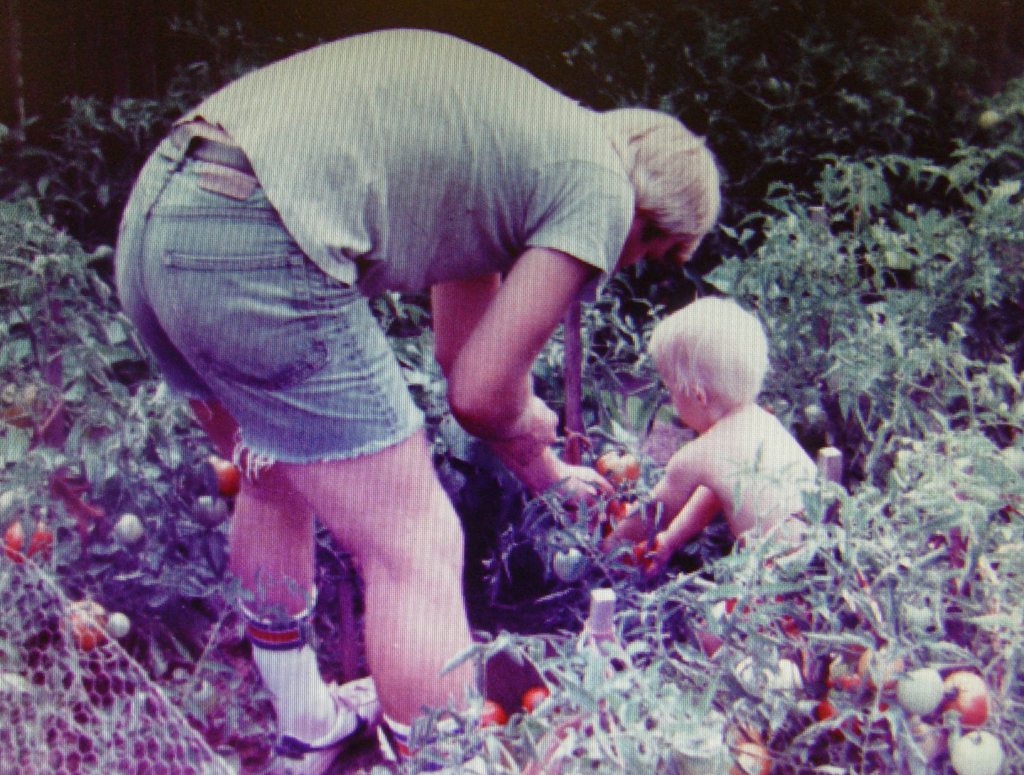
Young George and little Andy picking tomatoes.

   Since many of you have invited George into your homes on Thursdays in the Patriot-News, through this website or through him doing a Garden House-Call, I thought you might enjoy getting to know a bit about what makes George George.

   That said, I have written this week’s posting. George and I have been married since 1979. Yes, that is 31 years!   George would probably tell you the secret to a long and happy marriage is “good gardening.” I believe it is having a sense of humor because he always makes me laugh.

   Just an FYI, I am a nurse, not a writer, or the gardener that George is. You will mainly find me inside tearing out and installing bathroom cabinets and hanging wallpaper.

   Growing up, George had a concrete slab for a yard. It wasn’t until high school that his family moved into a home that actually had a green yard. During his school years and in college, George’s passion was not gardening — it was baseball (he was an Academic All- American catcher at Penn State). I remember his dad had a garden on stilts because of his arthritic knees. They were raised square boxes that he made so he could stand up and garden.

   George’s baseball passion changed to a passion for gardening when he planted two cherry tomato plants when we were first married. He fed them grass clippings and was awed that they got taller than Jack’s Beanstalk.

   George is a lot like my grandfather, Pappy Wetzel, who loved the Baltimore Orioles and was also a fan of gardening. Pappy and Grandma lived on a fruit farm in Orrtanna, Pa. Every Sunday during growing season, we shelled lima beans, ate roastin’ ears and picked apples and cherries right from the trees in the orchard to eat fresh.

   In George’s early gardening years, he would do what he called a “cost/benefit analysis.”  It was his method to keep track of savings on the food he produced. He would proudly bring in 4 green beans, 2 radishes and a handful of cherry tomatoes. Total savings: 26 cents. However, the seasoned gardener in him has saved big bucks by making his own hot-pepper relish, blue-barb jam, currant jelly and apple dumplings, all made from what he grew in our yard.

   George is always trying to plant seeds. He loved gardening with kids and teaching them all he knew.  His method of dandelion removal was to pay our two tow-headed kids 5 cents for each dandelion they dug up. That was a win-win situation, especially since the kids didn’t even know they were working. Yes, George is an organic gardener! In fact, it was a great Christmas when George got fish emulsion and dehydrated cow manure for gifts.

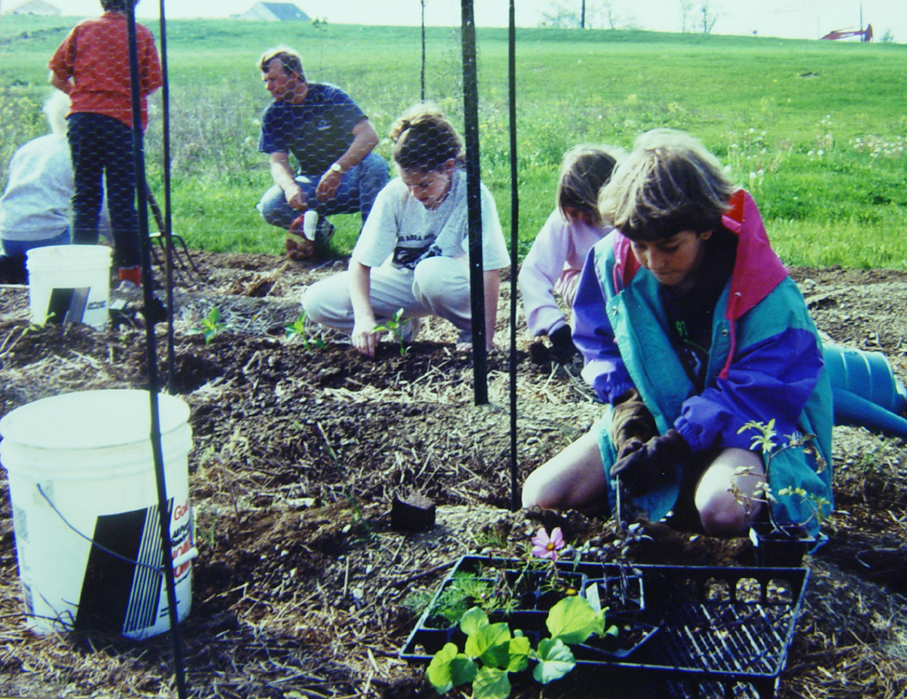
Planting a Plant a Row for the Hungry with the Sunday School kids.

   He was a Sunday School teacher for 18 years. He had the attention of kids for a whole hour, whether they liked it or not. He got permission to plant a garden with them on the church property. It was a great lesson for the kids and included donating the produce to the local food rescue.

   In the first years of Vacation Bible School, we were the leaders of a Bible-times village. George was none other than the village farmer who taught the kids how to garden with plants from Bible times. There was nothing better and more fun for George (and the kids) than hands-on, getting-your-fingers-dirty teaching and learning.

   Cub Scouts was next on his radar.  When the boys decided that one of their rules was “no killing allowed,” George knew he had to stay one step ahead (and preferably 6 steps) of the boys, so he decided to do Gardening 101 with them in our back yard. After everyone survived (including George), he knew he was ready to conquer any gardening challenge, excluding the groundhogs. This is a challenge that is ongoing.

   Over the years, George has turned our one-third-acre property into his “less grass and more garden” sanctuary. No concrete slabs in our yard, except for the driveway and a former square cement slab patio that’s now a plant-surrounded paver patio. George’s yard is like the trial gardens at PSU — kind of a garden test lab.

   He has a little of this and a little of that so he can grade them and let the growers know how they stood up to his standards. So whether it is urine-filled pill bottles to keep the rabbits away, testing the latest garden gadgets or the newest varieties of flowers, you never know what he will be up to next. Funny how our landscape changes so frequently, but we still had the original 30-year-old carpet in our house until a few months ago.

   George is also a competitive gardener.  It was probably all those years of baseball.  He and the neighbor across the street would compare the size of their cabbages and tomatoes. Zucchinis didn’t count! I don’t think anyone could beat his ability to grow and pick lettuce for a salad from their basement in February. He has a three-tiered structure of grow lights where he starts his plants from seeds. He also grows plant cuttings to over-winter his favorite plants for the next growing season. Talk about the “cost/benefit analysis!”

   George is always happy to “chat” gardening. Our son, Andy, just moved into a home in Pittsburgh, and he called last week to tell us he dug not one but two vegetable gardens and got his tomatoes planted. I never would’ve thought I would hear the two of them chatting about things like the pH of soil, pondless water features and blossom-end rot. This is the same son that we sent home on a Greyhound bus from Salt Lake City when we were on our family vacation in 2000. As a teen-ager, Andy was miserable “chatting” with us for a week and a half.

   George now gets his fill of “chatting” about gardening on the bus trips he does. These are people who actually listen to him. At least we haven’t had to send any unruly gardeners home during the trip. Not yet anyway!

   Over the winter, our daughter, Erin, emailed us pictures from California of her “window sill” lettuce and her potted tomato plants. Our kids used to give George “chat” coupons for gifts growing up to grant him allowed time with them. Andy is now 28 and Erin is 25 and much has changed in the past 10 years or so.   George is probably the only father with a paper towel holder hanging in his bedroom (next to the kiddie handprint picture). It was one our son made in 6th grade. 

   Whether it is a nice summer day or a cold rainy winter day, you can find George outside. So if you stop by, don’t bother ringing the doorbell. Just go out back and make sure you bring your pruners, unless you want to help me with my bathroom, then bring your paintbrush.

   So for all you fathers out there, go plant some “seeds,” watch them grow, enjoy the harvest and have a wonderful Father’s Day!

George’s wife, Sue


« Older Ramblings and Readlings Newer Ramblings and Readlings »

  • Home
  • Garden House-Calls
  • George's Talks & Trips
  • Disclosure

© 2026 George Weigel | Site designed and programmed by Pittsburgh Web Developer Andy Weigel using WordPress