• Home
  • Contact
  • Site Map
George Weigel - Central PA Gardening
  • Landscape 1
  • Landscape 2
  • Landscape 3
  • Landscape 4
  • Garden Drawings
  • Talks & Trips
  • Patriot-News/Pennlive Posts
  • Buy Helpful Info

Navigation

  • Storage Shed (Useful Past Columns)
  • About George
  • Sign Up for George's Free E-Column
  • Plant Profiles
  • Timely Tips
  • George’s Handy Lists
  • George's Friends
  • Photo Galleries
  • Links and Resources
  • Support George’s Efforts


George’s new “50 American Public Gardens You Really Ought to See” e-book steers you to the top gardens to add to your bucket list.

Read More | Order Now


George’s “Survivor Plant List” is a 19-page booklet detailing hundreds of the toughest and highest-performing plants.

Click Here


Has the info here been useful? Support George’s efforts by clicking below.


Looking for other ways to support George?

Click Here

George's Current Ramblings and Readlings

Your weed, my wildflower?

October 4th, 2010

   I got this interesting commentary from a reader and thought I’d just share it as is.
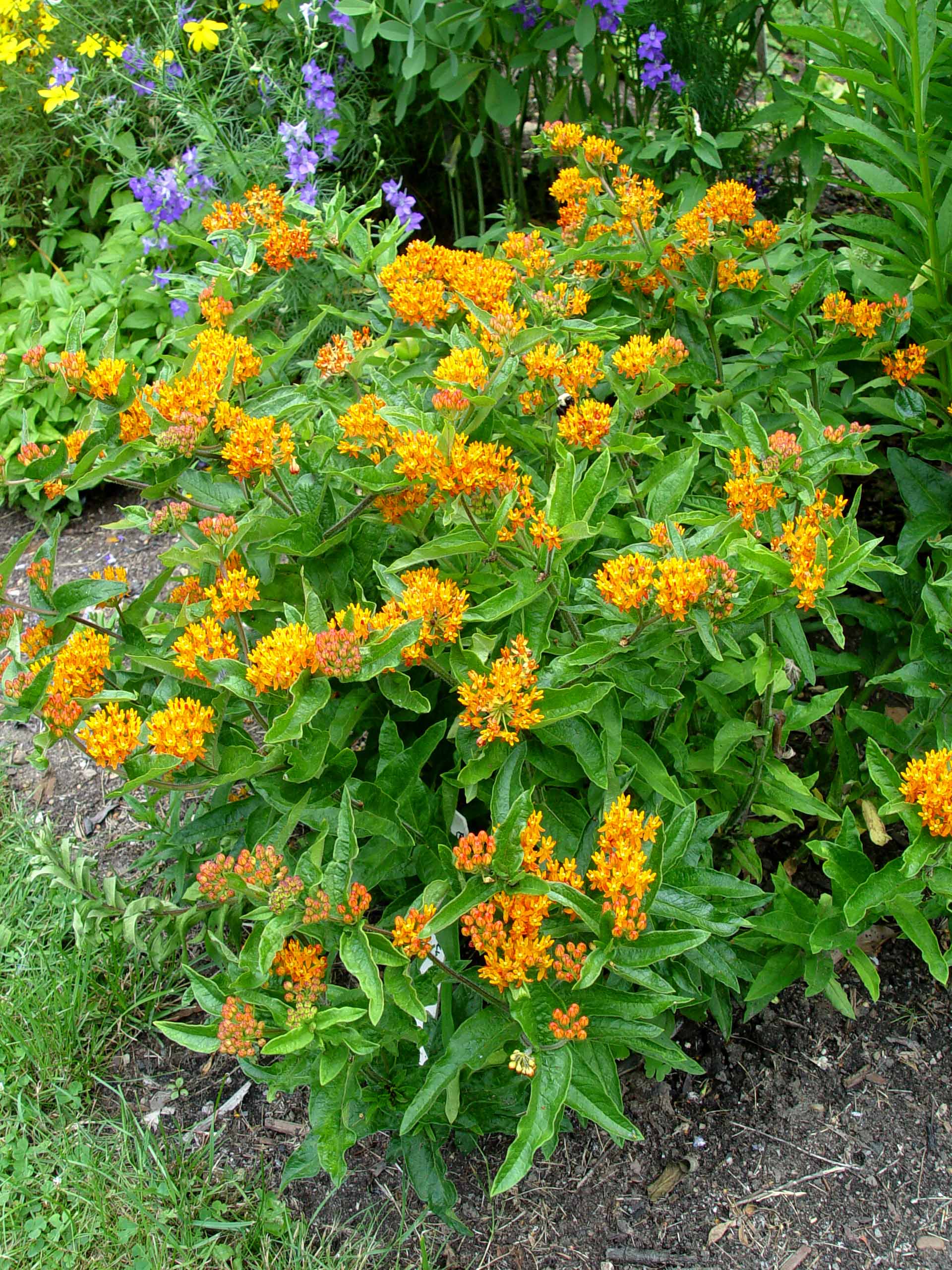
"Monarch butterfly plant" would be a lot better name for this plant.

   “My neighbor and I can’t seem to agree on what is a weed and what is not. I told her that a weed is a plant that you don’t like or one that’s growing where you don’t want it to be.

   “In her yard, a chicory plant is a weed. In my yard, it is not. I once told her I don’t have weeds any more, I call them flowers now. She pointed to a plant and asked if it was a weed, I said no, it’s a white bleeding heart. She pointed to another and declared it must be a weed. I said it was a hollyhock.

    “The most noxious, indestructible, invasive weed in my gardens is grass. I can’t keep it out. I can’t kill it. It grows over, under, around and through my desired plants and laughs at the barriers I try. If I miss so much as a cell when I dig it out, it will regrow.

    “I don’t use weed/feed products because I’m hoping the dandelions and clover will win. I think dandelions in spring look like dapples of sunlight in the yard. I have milkweed growing in my veggie garden — not where I want it, but that’s where it’s happy. Maybe we should call it monarch butterfly plant. That sounds more desirable.”

   One person’s weed is another’s wildflower, that’s for sure… although I haven’t run into anyone yet who’s fond of poison ivy or mile-a-minute weed. (I like the name “monarch butterfly plant.” Milkweed needs a PR agent.)

   The real sparks fly when those at the more tolerant end of the spectrum live next door to someone who takes pride in a perfect green carpet and neatly sheared azaleas.

   Personally, I’m a loose-leaner, but not to the point where I don’t care about my plants hanging over or seeding into neighboring yards. And just because that’s the approach I take doesn’t mean someone else is immoral because of their tidy lawn and topiaried yews.

   It seems to me we all do enough yelling at each other these days on so many other things that this is one area where we be tolerant. If you don’t call my wildflower a weed, I won’t call your lawn a gas-sucking, bay-polluting dead zone. And together we can both curse the groundhogs.

 A few things going on and coming up:
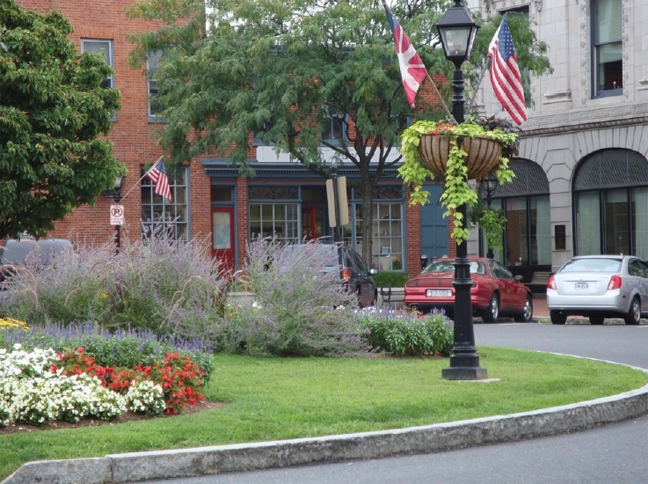
Gettysburg's colorful Lincoln Square.

   Three Harrisburg-area garden-beautification projects were good enough to earn 2010 Community Greening Awards from the Pennsylvania Horticultural Society, the group that runs the Philadelphia Flower Show. Recognition went to the median-strip flower gardens at 7th and Forster streets in Harrisburg (a joint effort of the Western Pa. Conservancy and Pa. Natural Heritage Program), a new landscaped sitting area outside Mechanicsburg Museum Square (done by the Penn Cumberland Garden Club) and the flower beds and hanging baskets that brighten Lincoln Square in Gettysburg (a project of the Gettysburg Garden Club). Check ‘em out next time you drive by these spots. And go here for the full list of awardees or to nominate a site for next year.

   Hershey Gardens closed its Butterfly House for the season last month, but in its space will be a bonsai display of specimens provided by the Susquehanna Bonsai Society. The exhibit opens Friday and will be there through Nov. 14. Bonus fun: You get to vote for your favorite. More information: www.hersheygardens.org.

   Orchid-lovers get their weekend in the sun Oct. 22-24 at “Orchid Follies,” a judged orchid show and sale at Stauffer’s of Kissel Hill, 301 Rohrerstown Road, Lancaster. Besides the beautiful specimens, the show features a dozen orchid seminars and a dozen vendors selling rare and unusual orchids and related supplies. More information: www.skh.com.

   And in case you didn’t hear the news about the deadly emerald ash borer showing up in Cumberland County, I just posted an article I wrote about it here:

Steven Spielberg and summer poinsettias

September 28th, 2010

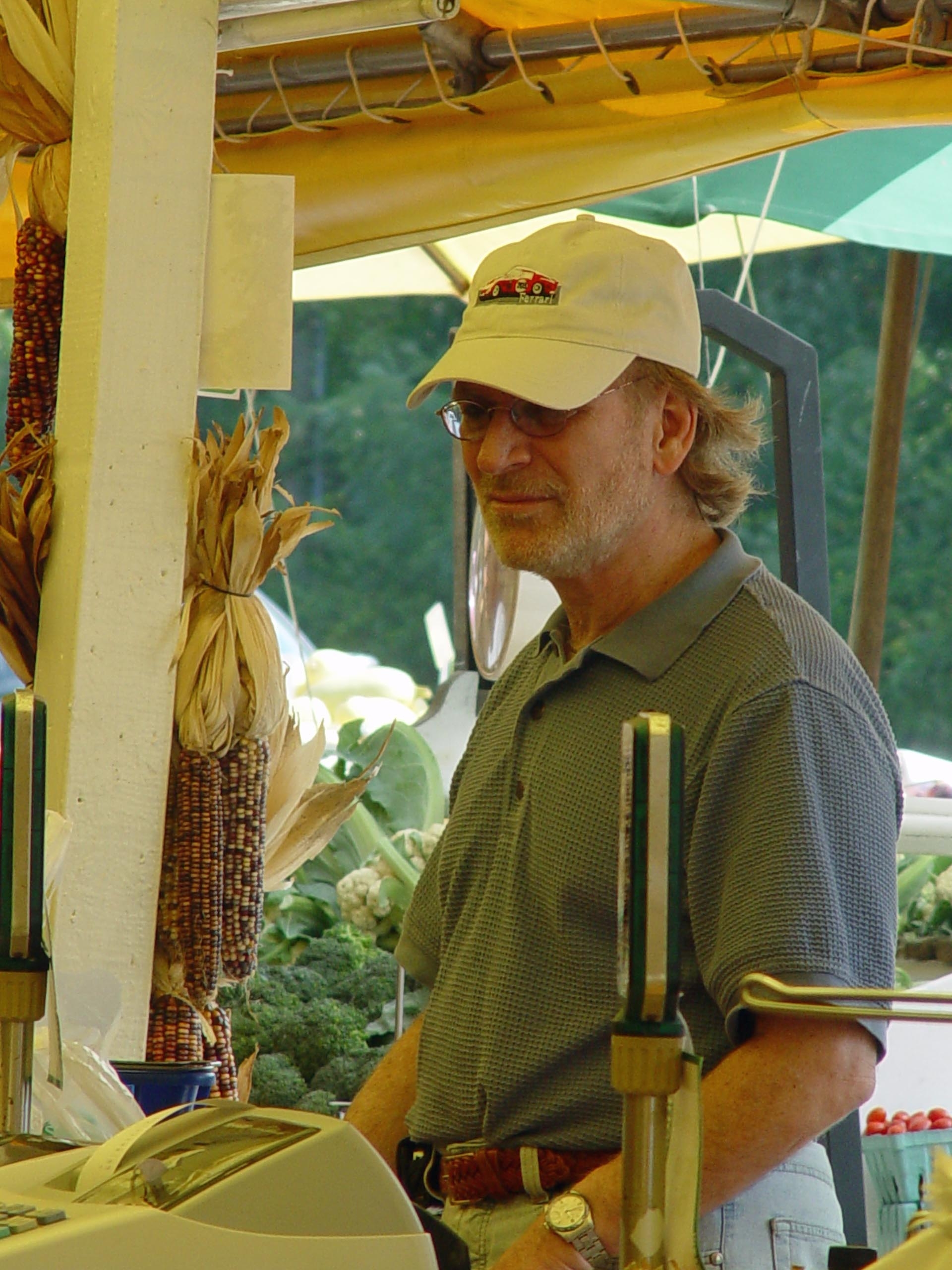
Steven Spielberg in a cameo appearance as a man shopping for produce.

   Just got back from taking a bus load of fellow plant geeks to see some of the great gardens of Long Island — the ritzy estate gardens at Old Westbury and Planting Fields as well as the intriguing private garden of painter Robert Dash (named “Madoo Conservancy”).

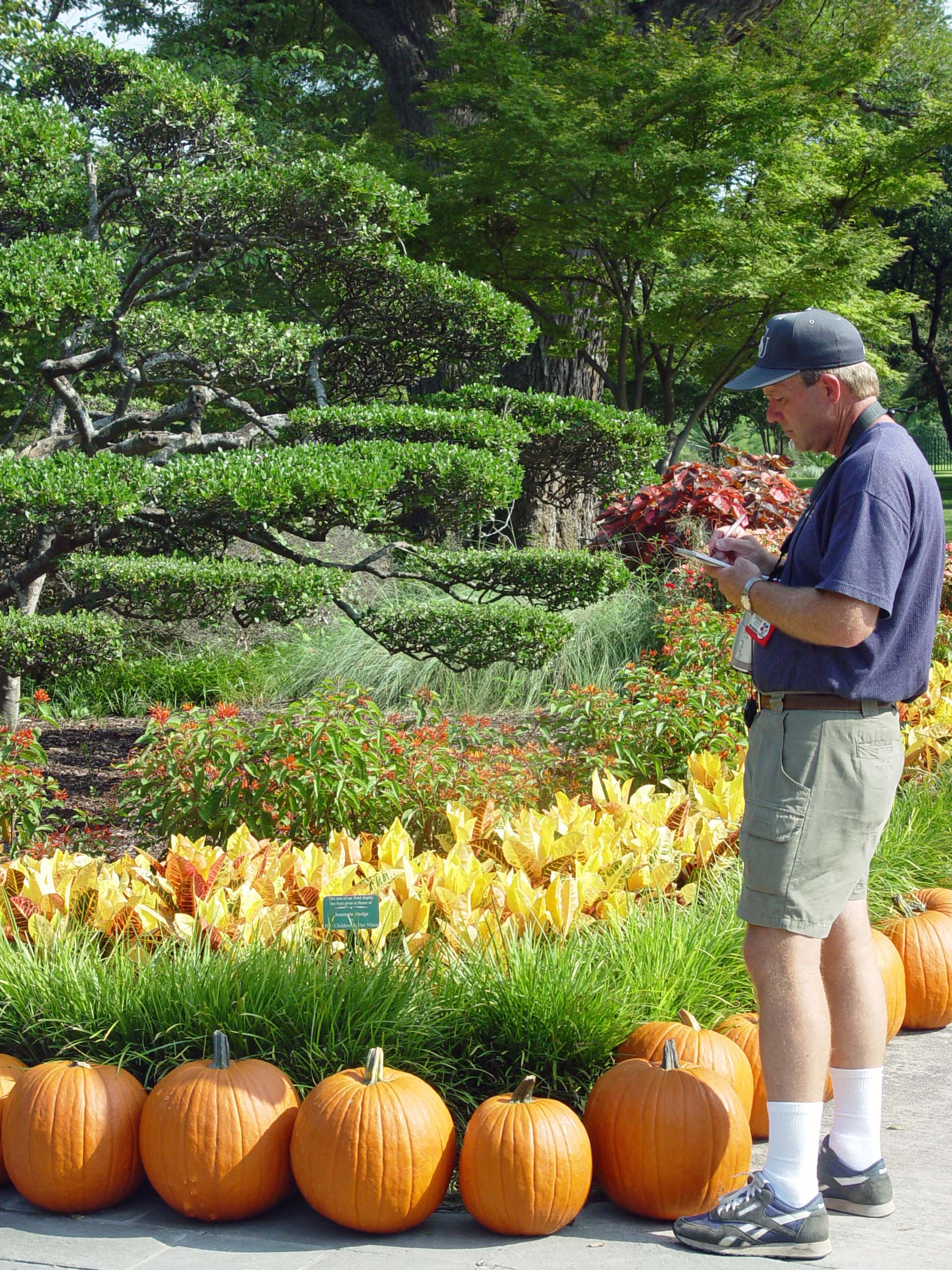
   But I gotta tell you, the big buzz was when we stopped at one of the island’s renowned produce stands and saw film director Steven Spielberg buying vegetables. It was him alright — playing a cameo role of the unassuming bearded guy in a baseball cap, blending in with a crowd of pumpkin-buying locals before driving off in his Mercedes. We were told that he does, indeed, live in the area. It was a thrill to buy a head of cauliflower from the same cash register as this famed moviemaker (especially at a decent price of $1.99).

   Buzz No. 2 was over a really cool plant we saw in the private gardens at the Landcraft Environments nursery — a summer poinsettia. Everyone oohed and aahed over it.

   Summer poinsettia is a tender euphorbia (Euphorbia heterophylla ‘Variegata’ to be exact) that’s related to our Christmas poinsettias. The leaf (bract) shape is similar, but the color is green with lemon edges and random splotches of apricot that look like little aprons here and there.

Summer poinsettia.

   It’s hardy only to Zone 9 so is mainly a summer pot specimen for us. It grows about 2 feet tall and wide. I’ve never seen it in any local garden centers or catalogs, but maybe it’ll catch on and show up soon.

   Landcraft is a wholesale-only, behind-the-scenes nursery that searches out and grows the interesting plants you’ll see at such gardens as Longwood, Chanticleer and the U.S. Botanic Garden. Its plants also sell at a few upscale, cutting-edge garden centers, although none in the Harrisburg area.

   The owners, Dennis Schrader (you might’ve seen him on Martha Stewart’s show) and Bill Smith have beautiful gardens divided into rooms and filled with all sorts of tropicals and hardy tropical look-alikes. More on Landcraft at http://landcraftenvironment.com.

   Old Westbury is best known for its walled-in garden of annuals, perennials, vines and structures that gives the feel of an English estate.

   What I liked best about Planting Fields is its “synoptic garden” that arranges hundreds of species in alphabetical order. It’s like walking through a living plant catalog.

   For more on these two gardens, go to https://georgeweigel.net/public-garden-roundup/new-york-new-jersey-delaware.

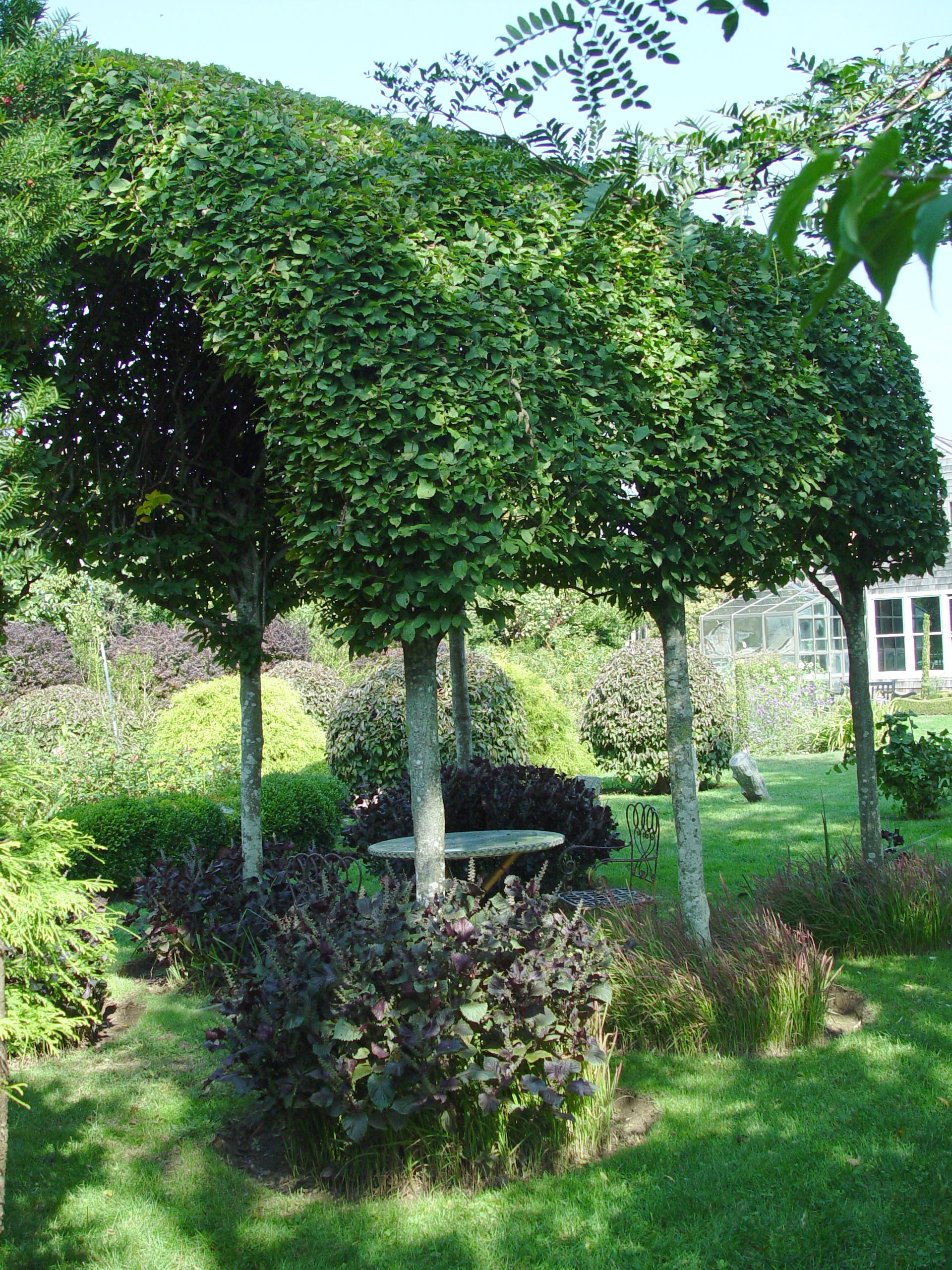
Madoo's living gazebo formed out of sheared beech trees.

   And at Madoo, this 2-acre home garden has surprises around every curve — a pond with a bridge, a “gazebo” made out of sheared beech trees and a pair of junipers trained together to make a 15-foot-tall living arch over a gate.

   Lowee’s Tours and I have two more garden trips coming up this year yet — a day trip behind the scenes at Longwood Gardens on Oct. 15 and a four-day garden-themed Christmas trip to Williamsburg Dec. 6-9. Besides custom tours with Williamsburg decorators and Colonial garden historians, we’re going to hear a concert on the rare glass harmonica, invented by, who else, Ben Franklin. Details are at https://georgeweigel.net/georges-talks-and-trips.

   Closer to home, Kathy and Don Engle — the Shippensburg gardeners whose landscape was featured in the fall issue of Country Gardens magazine — are opening their place for public tours on Sun., Oct. 10, from 1 to 5 p.m.

   The garden is located at 87 Diller Drive, Shippensburg. Tickets are $5 and can be purchased in advance at East Meets West Emporium, 29 E. King St., Shippensburg, or on site on the day of the tour. Proceeds benefit the Shippensburg Garden Club to help fund the hanging baskets the club provides on King Street. More information: Pat Wilhide, 776-3287 or Elizabeth Hammaker, 532-6866.

   I’ll be doing two talks in the next week. On Sat., Oct. 2, I’ll be doing a program on “10 Ways to Be a Greener Gardener” at the Meadowwood native plant nursery, 24 Meadowood Drive, Hummelstown.  The talk starts at 10 a.m., and it’s free. Directions and more on Meadowood are at www.meadowoodnursery.com. Phone is 566-9875.

   Then on Mon., Oct. 4, at 7 p.m., I’ll be doing a talk on “George’s Fall Favorites” — tips on developing a great fall landscape along with the plants to do that — at the Dillsburg Garden Club. The location is the Historical Society Barn at the corner of Harrisburg Street and Greenbriar Lane, Dillsburg. It’s also free and open to the public. Come on out.

   In your home garden, the rain we finally got will help with grass-seed germination as well as make the soil more conducive for planting and transplanting. Now’s especially the time to get busy planting spring bulbs.


Our so-called “low-maintenance” lawns

September 21st, 2010

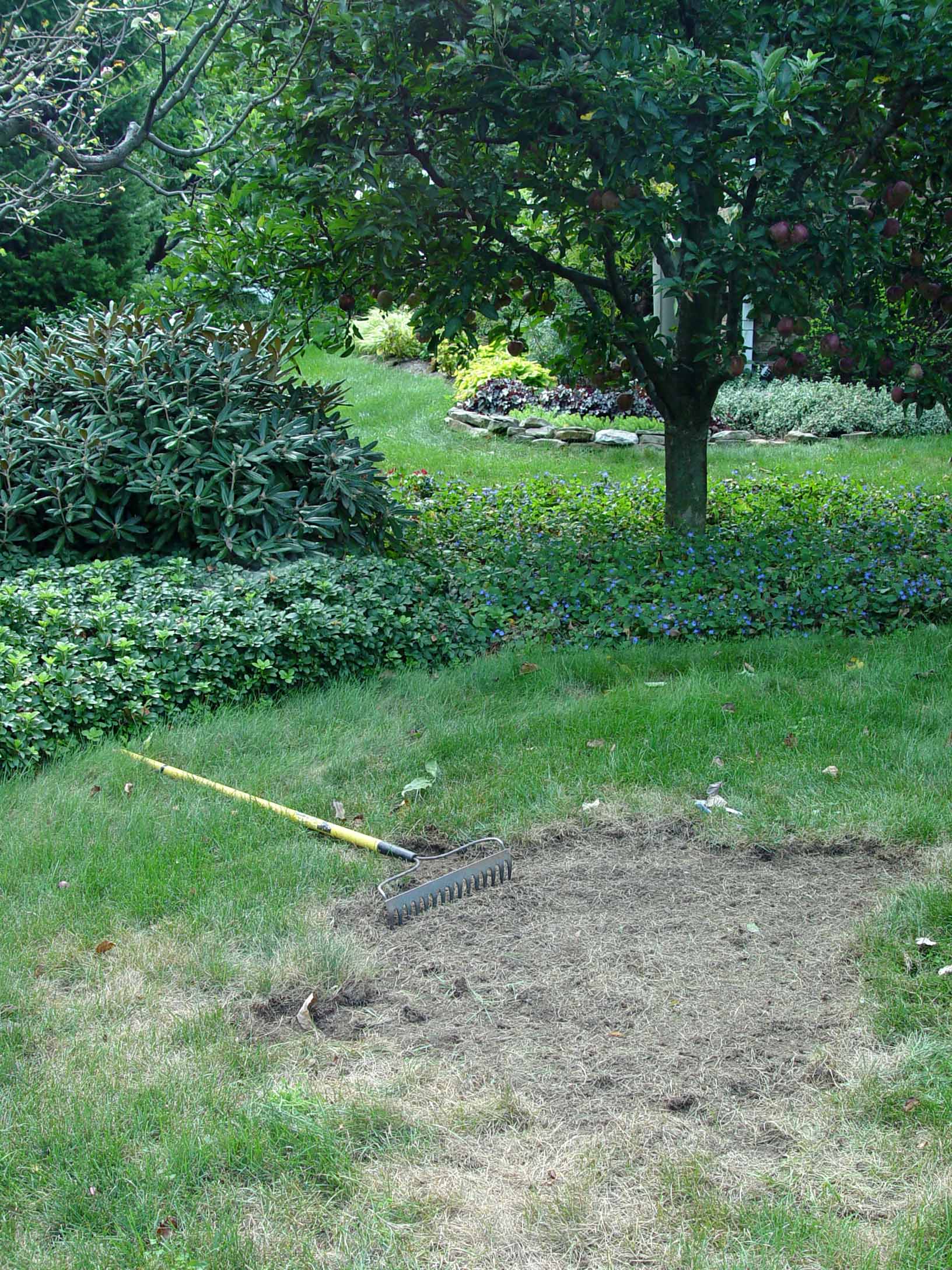
   I just got done breaking my back and blistering my hands this weekend trying to patch the dead spots in my lawn — again.

One of my dead lawn patches. Behind the destruction is an island bed of pachysandra and leadwort that I don't do anything to.

   Every year it’s something. This year it was mainly heat burning out the perennial ryegrass. Other years it’s grubs or chinch bugs or drought or rust disease.

   It seems like every fall, I’m raking off dead, matted grass, loosening soil, buying new seed, top-dressing with compost and then watering, watering, watering until it’s all up and growing.

   That’s not even counting the ongoing fertilizing, raking leaves and mowing 25 times a year when the grass actually grows.

   This is low maintenance?

   When I look around my yard, I can find plenty of other areas (actually most of it) where I put in far less work and get way better results.

   Only the vegetable garden rivals the lawn for work and expense. Most of the ornamental beds take a couple of spurts of effort per year (mainly mulching and a trim), and that’s about it.

   Best of all are the beds of trees and shrubs that are underplanted with groundcover. I’ve got a border of Russian cypress (a low, spreading evergreen), dwarf boxwoods, ‘Biokovo’ hardy geraniums and liriope that takes maybe an hour or two of attention the whole year.

   Another bed is a kidney-shaped island that ties together four trees and is filled mostly with pachysandra and leadwort groundcover, plus a few St. Johnswort ‘Albury Purple’ and rhododendron ‘Ken Janeck.’ I probably don’t even spend 2 hours total maintaining that bed all year.

   Neither of these beds even need mulch because the groundcover makes a dense underplanting.

   Both beds are bordered by lawn. When I add up the mowing time, twice-a-year fertilizing and blister-inducing patching each fall, it’s no contest which bed is better in terms of maintenance demand.

   Sure, it takes more work and expense one time up front to convert the space, but once that’s done, the long-term advantage goes to the ornamental bed. The plantings are also more interesting to look at than one more sea of grass, and they’re far more friendly to wildlife.

   I’m glad I don’t have any more lawn than I do. I’ve managed to reduce it to just the paths through my gardens.

   No, that doesn’t mean I’m a lawn-hater. I like grass as well as any plant, but like any plant, it has its place and purpose. It makes great sense in high-traffic areas, like backyard soccer fields or entertaining areas.

   But too often, we grow big lawns not because that’s our best choice but because it’s our default choice. Grass is quick and cheap to plant, so that’s what gets planted everywhere until the landowner gets motivated enough to replace it with something else. Usually, life gets in the way, and that switch-over never happens.

   I say that since so many lawns are dead now anyway, this would be a great time to rethink whether you really want to keep doing the same thing or shift gears and convert to a better long-term planting.

   If you’re thinking convert, here’s an article I wrote about a former Organic Gardening editor who scrapped much of her lawn in favor of plants: https://georgeweigel.net/favorite-past-garden-columns/shrinking-the-lawn.

   If you’re thinking of patching the lawn one more time, here’s a piece on that: https://georgeweigel.net/favorite-past-garden-columns/lawns/fixing-a-dead-lawn.

   I’ve gotta go rest my aching back now…


Ditching the chemicals?

September 15th, 2010

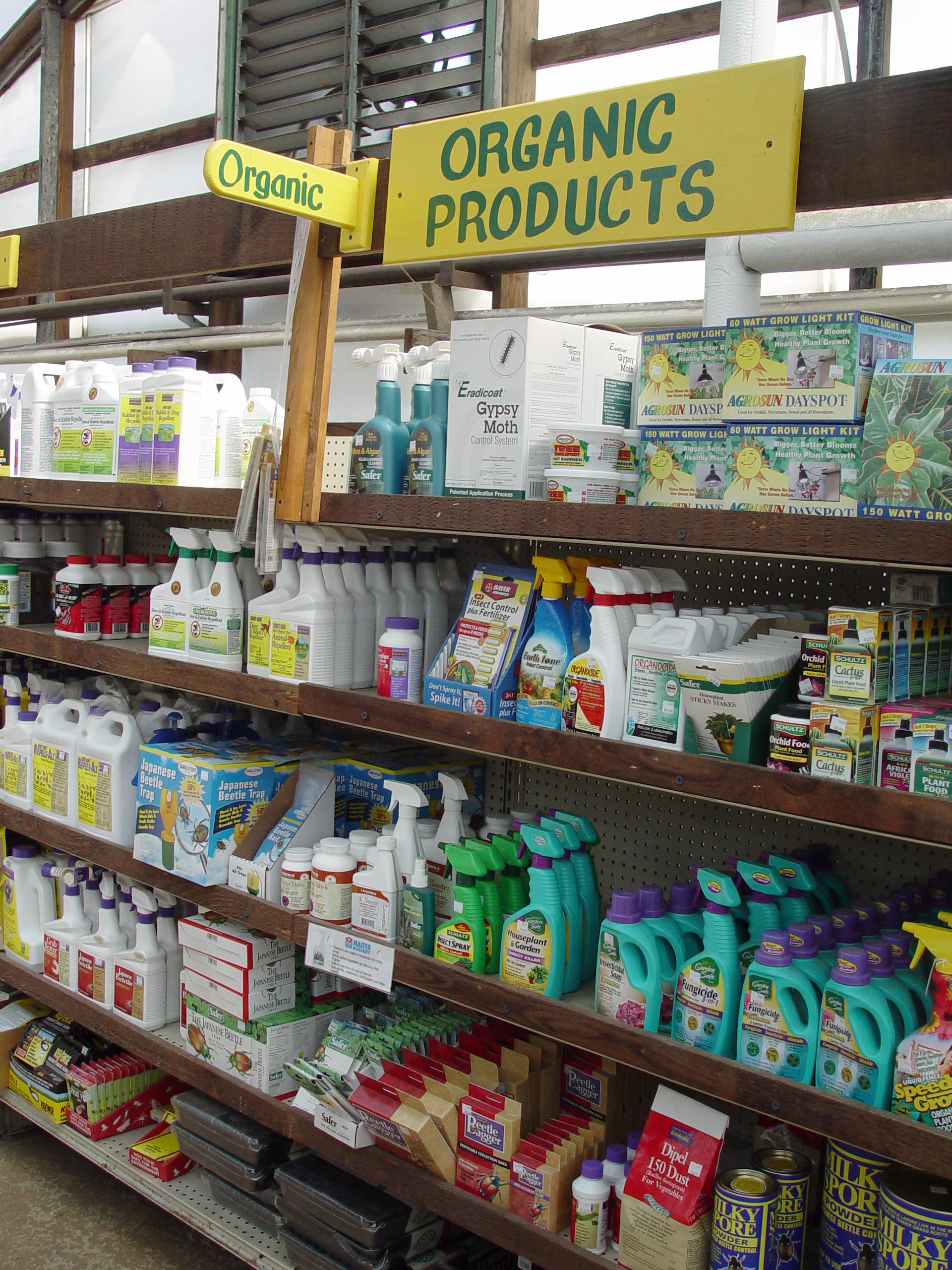
   I’ve always thought the biggest strike against so-called organic products is cost.

Is price now the only barrier keeping organics from going mainstream?

   People might be willing to pay a little more for something they believe is “safer” or less polluting, but few will pay a lot more.

   When a bottle of oil-based Veggie-Pharm costs $12.99 and a bottle of Ortho is going for $6.99, it’s easy to understand what wins out.

   That price disparity is finally shrinking — at least at the big-box level.

   I had an interesting talk about this at last week’s Garden Writers Association conference with a vendor from Eco-Smart.

   This is the Georgia-based company that makes a whole line of home and garden organic products that sell at Wal-Mart, Home Depot and Lowe’s.

   The vendor told me that organics actually have had three main hurdles.

   Lack of availability was a big one that’s now no issue since consumer demand drove big chemical players such as Scott’s and Bayer into the organic arena (not to mention a boatload of small-company offerings).

   The second hurdle was convincing consumers that organics actually work.

   The jury’s still out on that. People are used to seeing dead bugs drop, and most organic or “natural” products don’t work that way.

   For the most part, organics work more slowly and need to be applied more often and in more targeted ways. It takes some readjusting your expectations and game plan. But by and large, most organics are effective in ways that are helpful to non-target life and the environment.

   That leaves cost. Eco-Smart has managed to bring down its organic prices to levels that match their chemical counterparts.

   How? Economy of scale.

   Up until recently, almost all organics have been a niche market filled by single-line products made by very small companies.

   “We can get rosemary oil a lot cheaper when we buy hundreds of barrels instead of one or two at a time like a small company,” the Eco-Smart source told me.

   Another help when you’re big and more diverse — it breeds consumer confidence.

   “When someone tries one of our products and it works, they’re much more willing to use something else,” my source said.

   There’s none of that broader loyalty when you encounter the old “organic section” that has a mish-mash of labels, brands and product names. When you see one consistent line of products, people tend to give it more credibility.

   I’m not sure everyone in the organic field agrees with the importance or impact of higher price. Eco-Smart gets it because their people go into stores and watch what shoppers do when they approach the pesticide section.

   I’m convinced that given equal or even close prices, a majority of mainstream consumers will opt for the organic choice. So long as organics are priced significantly higher, it’ll stay a niche market.

   I’ve always preferred small independent stores to big-box chains, but if that’s what finally breaks our reliance on unnecessarily toxic chemicals, it’s a good thing.

Fixing the lawn — again

   Lots of gardeners are patching their dead lawns once again. It’s getting to be an annual ritual, what with heat, drought, grubs, chinch bugs, disease, etc. etc.

   Mid-September through the end of October is prime time to repair the dead spots. If you missed the Patriot-News piece I did a few weeks ago on how to patch your lawn, here’s a link to it along with additional info that didn’t appear in print: https://georgeweigel.net/favorite-past-garden-columns/lawns/fixing-a-dead-lawn.


Gardening in REAL heat

September 11th, 2010

George interviewing the flowers at Dallas Arboretum.

   You might’ve guessed from news of the tornadoes that hit Dallas this week that that’s where I’m at.

   Anyone who’s been on a garden trip with me knows that bad weather seems to follow me around. Or vice versa. Wonder where I’m at? Check the top story on The Weather Channel.

   Anyway, I’m writing this from the Dallas Arboretum, which didn’t get blown into Kansas but did get slammed by gully-washer rains.

   That’s not all that unusual here. Jimmy Turner, the arboretum’s horticulture director (and a fellow Penn State grad), says Dallas weather is “stark” and extreme – deluges and droughts, windstorms and ice storms, and especially the kind of blow-dryer heat we experienced this summer.

   This is a good place to see what plants can take punishing heat and which can’t.

   Dallas Arbortum’s Trial Gardens even bestow a “FlameProof” seal of approval on varieties that survive the routine 100-degree daytime heat.

   Some of the annuals that are doing just fine are vinca, zinnia, blue salvia, angelonia, wax begonias, portulaca, globe amaranth, pentas, ageratum, coleus, lantana and euphorbia. Nicotianas have mostly flamed out, and many of the impatiens were nearly denuded from heat and drought stress. So were many verbena varieties.

   It’s good information for us to consider if our summers are going to be anything like the one we’ve just had.

   Lots of our favorites struggle in Dallas and are showing signs of scorch (browned-out leaf margins).

   Japanese maples, dogwoods, redbuds, river birch, paperbark maple and even a few butterfly bushes aren’t looking very happy.

   On the other hand, woody landscape plants such as nandina, hollies, shrub roses, plum yew, magnolias, rose of sharon, crape myrtles and boxwoods showed no signs of trouble.

   These are ones we ought to consider if we’re betting on the need to flame-proof central-Pennsylvania gardens.

   Come winter, we need to freeze-proof, too. But that’s for another season.

   Dallas Arboretum is actually looking very colorful and lush for being in such a harsh gardening climate.

   Swoops of bedding annuals are everywhere, shaded groves are filled with both southwestern natives and tropicals, and my favorite spot was a series of “water walls” – sheets of water dropping 15 feet into pools below next to a tropical garden.

   It’s in the upper 90s and very humid here. It’s the first place I’ve ever been where standing right next to falling water didn’t even feel the slightest bit cooler.

   If you want to see more on the arboretum, check out www.dallasarboretum.org.

 Stink bugs and green beetles  

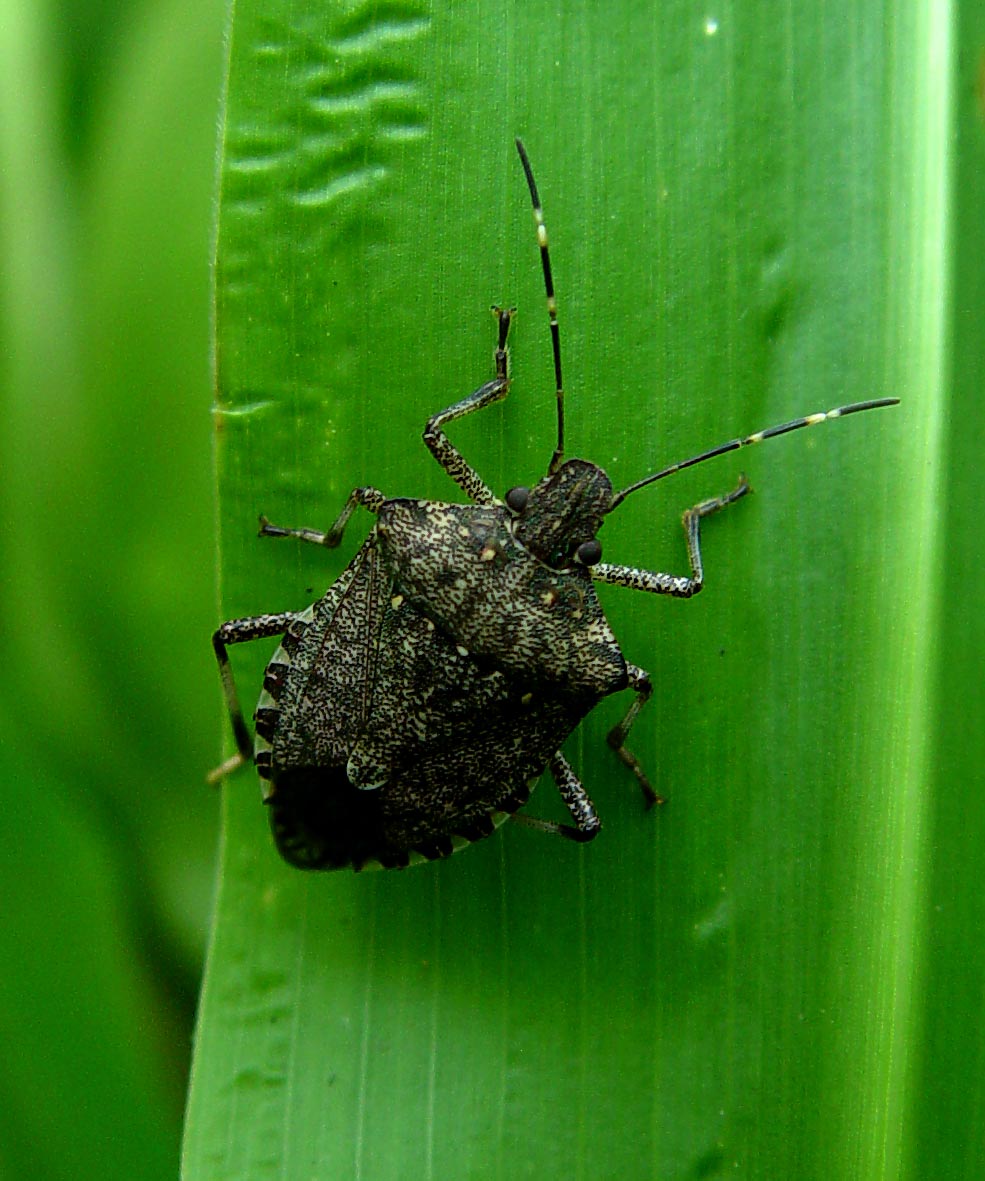
Brown marmorated stink bug.

  More on both of these later, but I wanted to update you quickly on brown marmorated stink bugs and emerald ash borers.

   Both of these are bugs you’re going to be hearing a lot more about soon.

   A lot of people have been bugged increasingly the last few years with stink bugs getting into the house in fall. These are the dark-brown, shield-shaped bugs that smell bad when you bruise them.

   For the first time this summer, this imported pest started feeding on fruits and even some ornamental plants. It did big-time fruit-defacing damage in Adams County.

   It remains to be seen how bad of an outdoor pest stink bugs will become. But one thing’s for sure – the stink bug population has exploded this year, so we’re likely to run into lots of stink bugs in the house in the coming weeks. Look for and seal any openings where these bugs might get into your house as the weather cools.

   In case you didn’t hear, the emerald ash borer has now been confirmed in Cumberland County. The larval stage of this metallic-green beetle bores into ash trees and can kill them in 2 or 3 years.

   It’s a very deadly bug new to the U.S. and one that has the potential to wipe out ash trees like blights decimated American chestnuts and elms.

   No need to take any action just yet, but there’s a good chance you’ll soon be faced with a decision on whether to treat your ash trees every year or two to head off the borer or see them die.

   More on this bug can be found at www.paemeraldashborer.psu.edu.


« Older Ramblings and Readlings Newer Ramblings and Readlings »

  • Home
  • Garden House-Calls
  • George's Talks & Trips
  • Disclosure

© 2026 George Weigel | Site designed and programmed by Pittsburgh Web Developer Andy Weigel using WordPress