
• Home
  • Contact
  • Site Map
George Weigel - Central PA Gardening
  • Landscape 1
  • Landscape 2
  • Landscape 3
  • Landscape 4
  • Garden Drawings
  • Talks & Trips
  • Patriot-News/Pennlive Posts
  • Buy Helpful Info

Navigation

  • Storage Shed (Useful Past Columns)
  • About George
  • Sign Up for George's Free E-Column
  • Plant Profiles
  • Timely Tips
  • George’s Handy Lists
  • George's Friends
  • Photo Galleries
  • Links and Resources
  • Support George’s Efforts


George’s new “50 American Public Gardens You Really Ought to See” e-book steers you to the top gardens to add to your bucket list.

Read More | Order Now


George’s “Survivor Plant List” is a 19-page booklet detailing hundreds of the toughest and highest-performing plants.

Click Here


Has the info here been useful? Support George’s efforts by clicking below.


Looking for other ways to support George?

Click Here

George's Current Ramblings and Readlings

Is It Too Late To…?

November 9th, 2010

   November brought our first killing frost that knocked off most of the annuals and tender veggies. Yank ‘em and compost ‘em, if you haven’t done that yet.

   Fall weather also has brought a lot of questions about what we can still do in the yard.
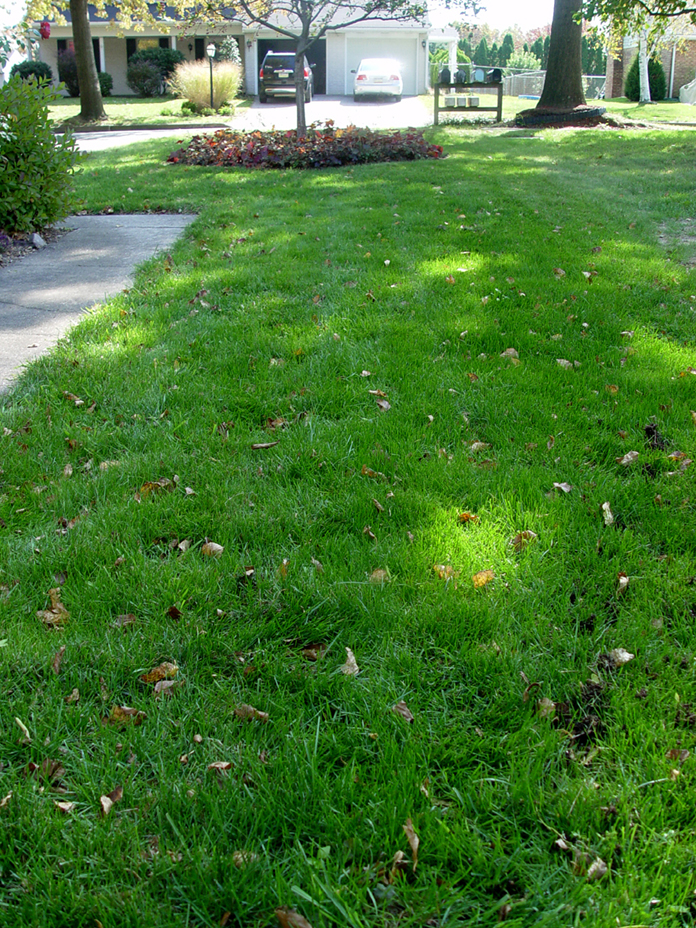
You'd never know this section of my lawn looked all patchy and half-dead two months ago.

   Tops on the list has been, “Is it too late to plant grass seed?”

   This comes from the many folks who lost patches of lawn but who didn’t get around to fixing it back in prime time, which was right after Labor Day.

   The short answer is, “Probably.” If we get some unusually warm and damp weather for the next few weeks, it’s possible grass seed still will germinate. Frozen ground will shut off much growth soon after, but at least it would be a start. Go ahead and give it a shot if you’re OK with 50-50 odds at best.

   More than likely, normal fall weather won’t allow much, if any, germination. Then you’d be looking at re-doing the seeding next spring.

   I patched in early September — right before we got a couple of nice rains. The seed came up great, and my lawn already looks like nothing steamy happened to it this summer. Just like in drumming and bullet-dodging, timing is everything in lawn repair.

   I’m also getting questions about whether it’s too late to plant some last trees, shrubs and perennials.

   Again, it’s a matter of odds. Cornell University did some nice research a few years ago on this question, and the conclusion was that fall-planted plants survive best when they have at least 6 weeks to establish before the ground freezes for the season.

   In our area, that timing equates to mid to late October as the drop-dead date. I’ve seen landscapers get away with planting in unfrozen soil in winter, so that doesn’t mean you have no chance by planting now. It just means your odds go down.

   The reward behind the risk is that you can pick up some great sale prices now as garden centers try to clear out plants they’d rather not store over winter.

   A third question I’m getting is about pruning, especially, “Is it too late to trim the hedges?”

   For evergreen hedges, you can probably get away with a light shearing if you absolutely must. But a better time is end of winter (right before new growth starts) for most evergreens, and right after next spring’s new growth finishes for spruce and pine. Definitely do NOT shear so heavily that you’re back into the bare wood because you’ll be looking at this nakedness all winter.

   Winter pruning is OK for most leafless trees and later-blooming flowering shrubs, but again, I’d rather hold off until end of winter so I can clean up any winter damage before starting on the shaping and size-control work. Early-blooming flowering shrubs (azaleas, rhododendrons, lilacs, weigela, forsythia, etc.) get pruned right after they flower in spring.

   Finally, a few people are asking, “Is it too late to transplant shrubs and evergreens?”

   Yes on that one. The odds go down from here on out, so unless you have no choice, wait until end of winter to move things. Call me wimpy, but I’ll look for whatever advantages I can get when it comes to gardening.


Irish gardens, part deux

November 2nd, 2010

   You may remember me whining after getting back from a trip earlier this year to Ireland about how unfair it is that the Irish have such a great gardening environment and we’ve got groundhogs, Japanese beetles and 100-degree droughts.

Plants grow in solid rock in Ireland.

   Just for that, I’m going back to give them a piece of my mind… and maybe take them some stinkbugs.

   Actually, I’m going back on a sequel trip to take another load of central-Pa gardeners to see what Irish soil has to offer. Clue: This is a place where heather grows out of cracks in cliffs and foxglove grows wild in roadside ditches.

   This trip will be a 9-day, custom-planned, garden-laden tour of Northern Ireland next June 18-26, once again put together by Kathy Harrigan (of Harrigan Holidays, East Berlin).

   Kathy has picked out some of Northern Ireland’s best public gardens as well as other attractions in and around Belfast, the Antrim Coast, Derry, Donegal, Galway and the Connemara region.

   We’ll see Belfast’s 14-acre landscaped city park; the 6-acre Ballydaheen Gardens with its cliff stairway leading into sea caves (something you don’t see everyday in Mechanicsburg); the walled-in formal plantings at Benvarden Gardens, and Kylemore Abbey with its historic gardens recently restored by the Benedictine nuns who own it.

Can't wait to see these gardens at Mt. Stewart...

   But what I’m looking forward to most is Mt. Stewart House and Gardens, supposedly one of Europe’s greatest gardens. Spread over 78 acres, Mt. Stewart has a staggering array of plant diversity as well as glorious views, topiaries, statuary and palm trees (yes, Ireland can grow palm trees).

   If you were at the Ireland-themed Philadelphia Flower Show a few years ago, this garden served as an inspiration for the main exhibit.

   One of the nice things about this trip is that enough other attractions are tossed in to head off garden overload. Even soil addicts like myself like to mix it up a little. (This past year’s group especially seemed to like the tour we took of Dublin’s Guinness plant.)

   Anyway, the 2011 trip will include stops at the Giant’s Causeway (a really unusual but weirdly beautiful coastal rock formation caused by volcanic flow); the Down Cathedral (burial site of St. Patrick); Magees of Donegal (world-famous tweed), the Down County Museum (living history covering 9,000 years of human habitation there), Connemara Marble (origin of the marble in Harrisburg’s Capitol building), Cnoc Suain (a serene retreat) and the spectacular ocean-side Cliffs of Moher and Burren Perfumery in the Republic of Ireland.

   The trip flies into Belfast, Northern Ireland, and returns from Limerick in the Irish Republic.

   The cost is $2,990, which includes airfare, seven nights lodging in 3- and 4-star hotels, daily breakfasts, six dinners, transportation throughout Ireland, tour guides and all admissions. You’ll also get to see me drool over all the plants we can’t grow and get made fun of repeatedly by my wife, Sue, who’s also going.

   A detailed itinerary is at www.harriganholidays.com.

   Or for more information the good old-fashioned way, call Kathy Harrigan at 717-818-3024. Or email Kathy at ksharrigan@verizon.net.

   Closer to home, there are still openings for the Dec. 6-9 gardeners trip to Williamsburg, where we’ll spend time with Colonial garden historians, take in a workshop on decorating with plant materials and hear a concert on the rare glass harmonica.

   More details on that at https://georgeweigel.net/georges-talks-and-trips or by calling Lowee’s Group Tours at717-657-9658 or 1-888-345-6933.


Salvaging Plants

October 26th, 2010

   That brush we had with frost over the weekend was a final warning to get your tender-plant-saving done before it’s too late.

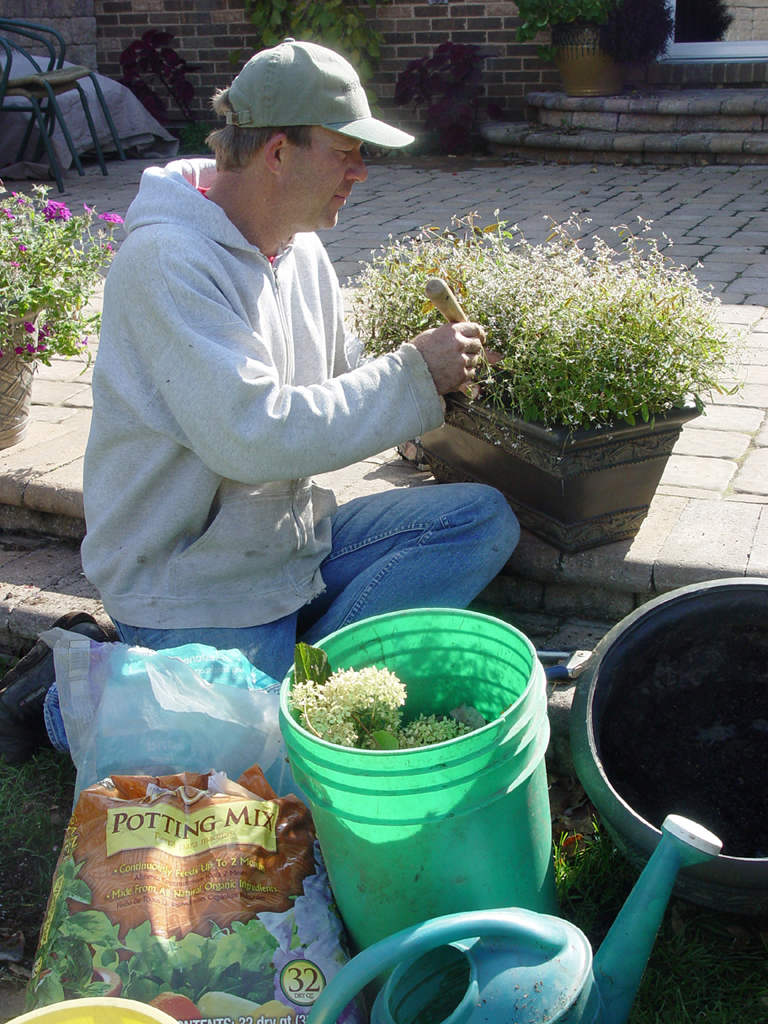
Potting dug-up 'Breathless Blush' euphorbia to save for next year.

   I always save some of my favorite annuals, pot specimens and tropicals by moving them inside for winter. I don’t have a greenhouse. And if you don’t either, don’t let that stop you from saving what you can however you can.

   The only really good plant light I’ve got is a single two-bulb plant-light system that’s rigged up to a scrap-wood frame in the basement.

   That’s where I keep my favorite “mother plants.” These are the beauties that cost $5 or more a pot in the spring but that will hang in there for months more in 55-degree temperatures with good light.

   My game plan is to keep them alive and growing at least into late winter, when I take cuttings that will become new baby beauties by May.

   Coleus, perilla, begonias and Persian shield are some of the ones that work best. For species that don’t produce cuttings very well, I’ll let the mother keep going, then cut her back and put the whole plant back outside again in May. I’ve kept the same one of my favorite pot centerpieces – ‘Diamond Frost’ euphorbia – going for years by bringing it in this way.

   Since the plant-light system is only big enough to handle four 14-inch pots, I’ve got to be ruthless about which plants get this prime treatment.

   The rest end up potted beside the sunniest windows. They’re not going to get nearly the light intensity they need to grow well, much less flower. But that’s OK. The idea is just to keep those roots alive. Cut the leggy growth back at winter’s end and get the plants back outside in good light next spring, and most will be looking great again within weeks.

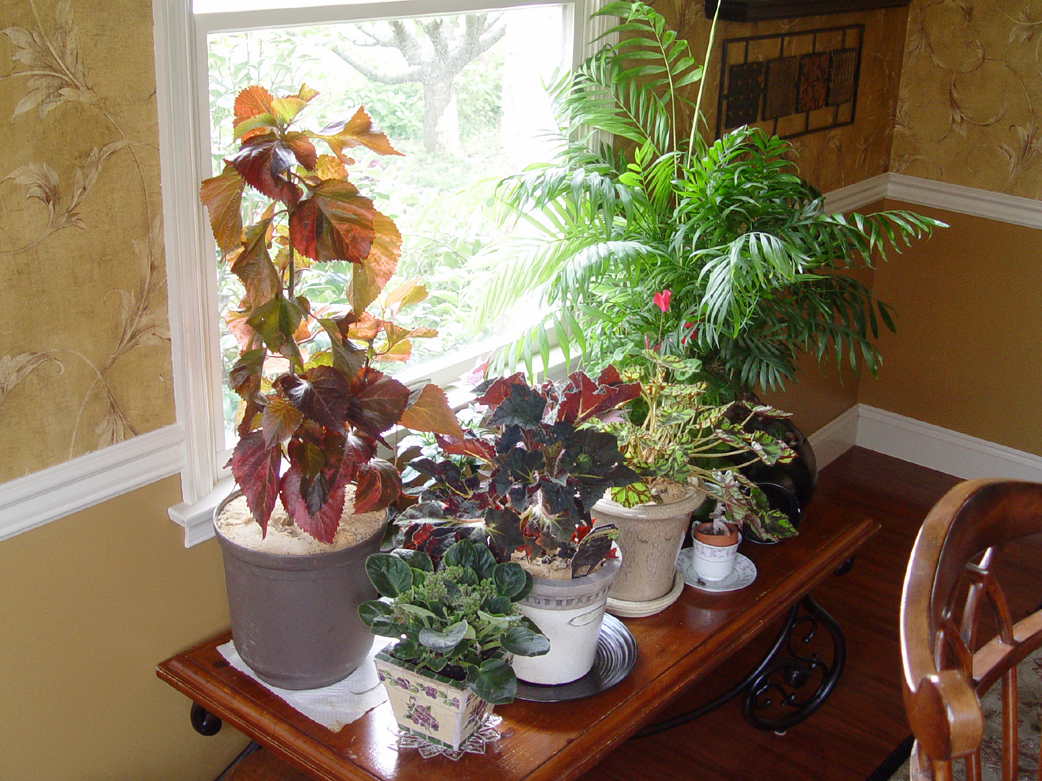
My saved plant lineup for 2011.

   This year my window-side lineup includes two new varieties of saved euphorbias (the white ‘Hip Hop’ and the pink-tinged ‘Breathless Blush’), a copper plant, a black-leafed rex begonia, a red and gold variegated rex begonia, a young night-blooming cereus, a couple of velvety burgundy coleus and a gardenia.

   I also move my houseplants outside for pot use in summer, then bring them back inside for winter. I did that a couple of weeks ago. Houseplants love the heat and humidity of their homeland (most are tropical natives), but if you don’t get them back inside before overnight lows drop into the low 40s, they start to suffer.

   Got any tropical water lilies or other tender water-garden plants? If you want to try saving them, they need to come inside now, too. Some can be potted up to spend winter as indoor houseplants (taro is tops on that list), while others need to be stored in water (one friend says she uses a kiddie pool for this job).

   One other item for the to-do list in the next few weeks is to get anything breakable back inside. I put away my two fountains this weekend along with my rain barrel, the garden torches and several glass and ceramic accessories (a decorative urn, a small statue and some garden art my wife put together out of colorful old dishes).

   Take the hoses in by Thanksgiving. If we get one last dry spell, you might need them to water new plantings before the ground freezes.

   I hate to say the “S” word, but I’m afraid it won’t be long before that gardening-unfriendly stuff starts falling.


Veggie Rookies, Once and Done?

October 20th, 2010

   I’ve been hearing for the past two years about how many folks are giving vegetable gardening a try for the first time.

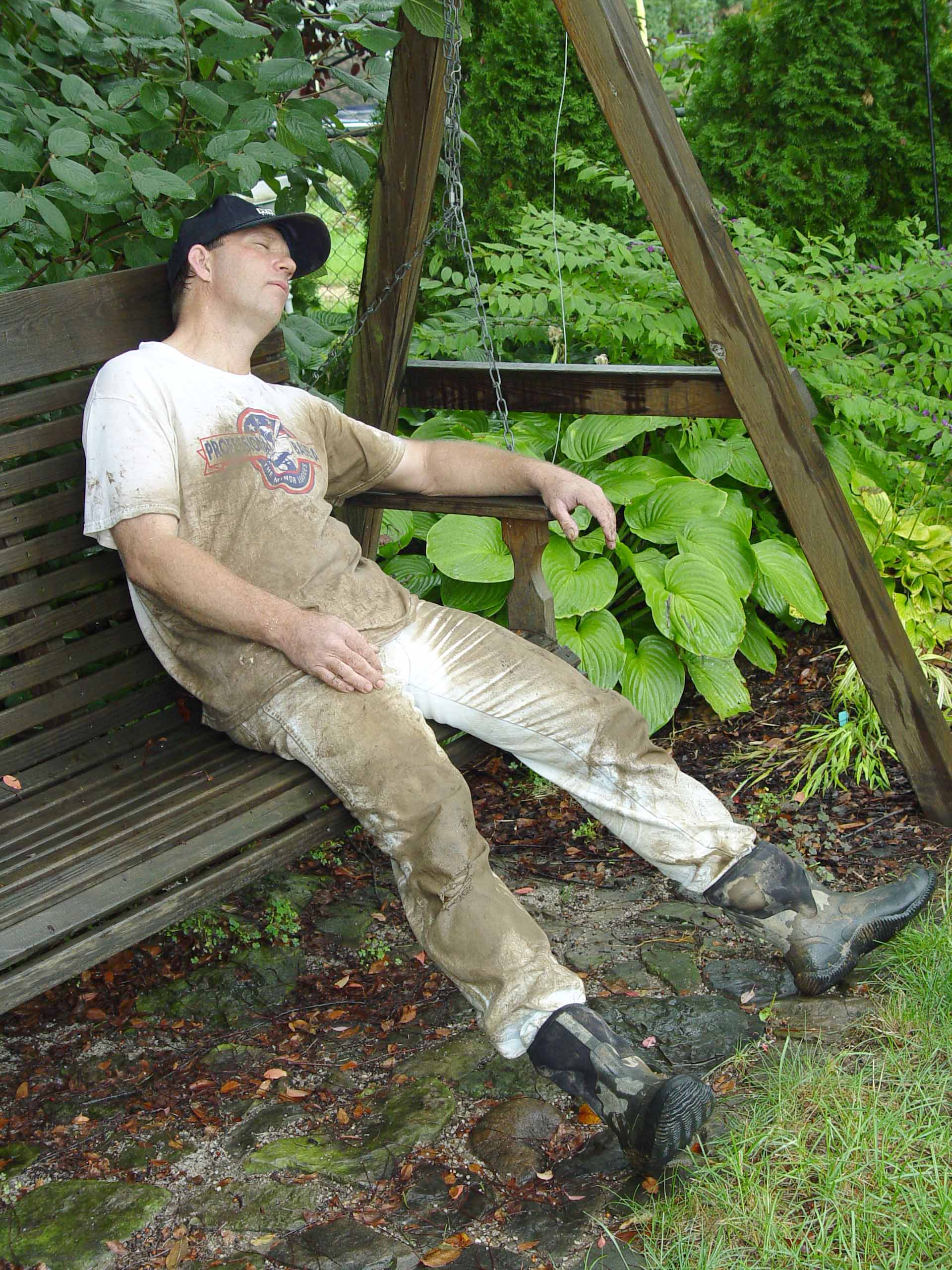
Did new veggie gardeners end up like this sorry soul?

   That’s been great news for many reasons (cost savings, fresh food, better taste, better nutrition, more productive use of land than grass, good exercise, etc.)

   Especially gratifying is how many young folks are giving this a shot. Veggie-gardening had almost become a lost skill before the twenty- and thirty-somethings scratched their heads and wondered why everyone wasn’t growing at least some of their own food.

   But wouldn’t you know it, just when all of those newbies got into it, nature dished out one of the worst growing seasons in years.

   The heat was so oppressive for such a big part of summer that pollination of some crops shut down. We also went long, growth-stunting periods without rain, then got hit with a couple of drenching storms that led to fruit-splitting, leaf disease and plant blow-overs.

   That’s on top of the usual challenges of groundhogs, rabbits, deer, voles, beetles, cutworms, caterpillars, squash vine borers, tomato blight and so on.

   What I’m wondering is how many first-timers are going to say, “Well, that wasn’t easy!” and just pack it in for good.

   I’ve heard a few rumblings in the industry that the veggie revival already has peaked. That would be a shame. But no one really knows at this point.

   I’d like to find out, and so would Steve Bogash, Penn State Extension’s regional vegetable specialist.

   Steve and I have put together a 15-question online survey in which we’re asking new veggie and herb gardeners questions such as what problems they ran into, what they tried growing, how they tried growing it and the biggie, whether they plan to keep trying.

   If you’ve tried growing herbs or vegetables for the first time within the past 5 years, please go to this link http://www.surveymonkey.com/s/VS62KR2 and take the survey.

   Spread the word to other first-timers, too. We’d like to get as much feedback as possible. The survey will close Nov. 19.

   I’ll report on the results here and in the Patriot-News, and Steve and I also will share the results with other interested media and garden-industry sources.


Farming Allison Hill

October 11th, 2010

If you’re at all familiar with Harrisburg’s Allison Hill neighborhood, you probably know it as a violence-plagued, drug-dealer-infested blight zone.

Who’d expect to find a cutting-edge, fully functioning, 1-acre urban farm in the middle of it?

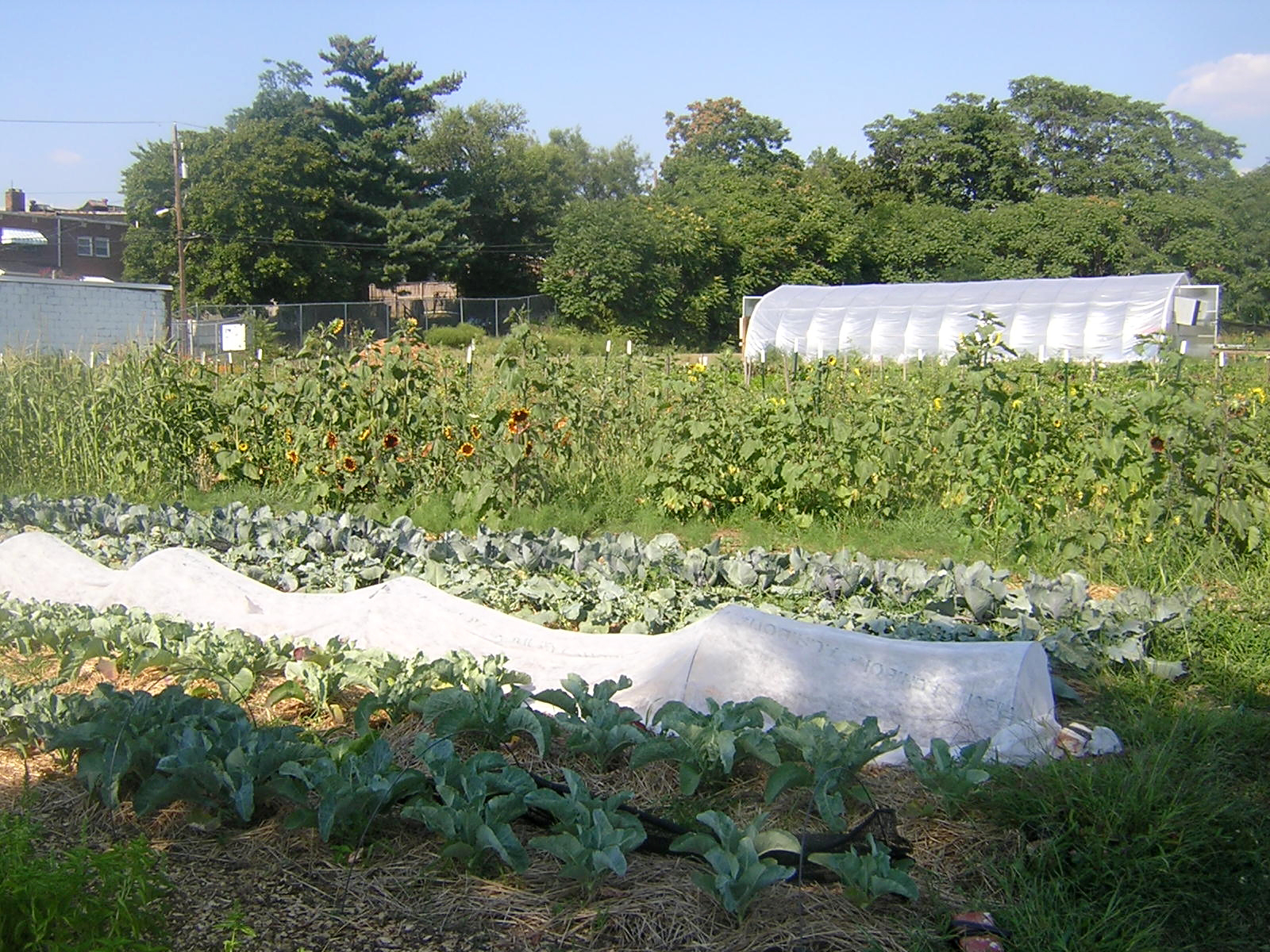
A section of Joshua Farm.

I sure didn’t when I went over to Joshua Farm this past weekend with a group from Slate Hill Mennonite Church to dig sweet potatoes.

This was no meager rectangle with a few tomato plants and a patch of beans.

I was dumbfounded to walk up the steps from the stone parking lot to find wide row after wide row of every imaginable veggie — plus herbs, raspberries, blueberries and a quince tree.

There’s a large greenhouse in the middle for seed-starting, a canopied work area, a two-tank rainwater collection system with irrigation lines, a cold-storage shed, even a wooden outhouse with a nouveau trendy composting toilet. A grant from Lowe’s funded most of it.

An innovative high tunnel — kind of an open greenhouse that’s the latest experiment in farming — is under construction.

It’s remarkable what’s here compared to just 5 years ago.

The 1-acre lot at 213 S. 18th St. was once an athletic field for the long-closed Edison Junior High, now subsidized housing.

For years, the tract grew weeds, trash and rust until Kirsten Reinford came along. Kirsten is one of those special people who not only has a servant’s heart but a gift for making things happen.

Neither she nor husband, Darrel, had any background in farming or horticulture.

Kirsten did work in a greenhouse in college and got some hands-on dirt time by working 4 hours a week in exchange for food as part of Goldfinch Farms’ Community Supported Agriculture (CSA) program.

One day Kirsten and her little boy discovered the blighted Edison lot on a walk 3 blocks from where the family was living.

Somehow, she saw shining red tomatoes where others saw beat-up old sofas.

The Harrisburg School District, which still owned the tract, agreed to a 3-year lease on the condition that it be run by a non-profit and that it benefited city youth in some way.

Planting potatoes at the Joshua Farm.

Enter Kirk Hallett and the Joshua Group — a non-profit already working with at-risk youth, primarily on Allison Hill.

Hallett saw a working farm in the neighborhood as a great way to teach teens a new skill.

Long story short, grant money pays for a handful of youth to work what became the Joshua Farm. They garden side-by-side with volunteers from Messiah College, Elizabethtown College, Penn State University, church groups, Scouts, neighbors and beyond.

The harvest first goes to those who subscribe to the farm’s CSA. Most of the rest is sold at a farm stand on site Mondays and Thursdays from June through October. Kirsten hopes to add a second stand off site next year.

For someone with no training in this, it’s incredible what she and her many helpers have accomplished. The food is just one part of the harvest.

Learning how to garden is sure to give a future to at least some of the teens working there.

Seeing a successful garden has to encourage neighbors to give it a try in their yards.

And to see old blight transformed into new life is the most immediate and encouraging result.

I’m inspired. To learn more or to support the cause as I plan to do, visit Joshua Group at www.joshuagroup.org or call 236-4464. Or see the farm’s blog at http://joshuafarm.wordpress.com.


« Older Ramblings and Readlings Newer Ramblings and Readlings »

  • Home
  • Garden House-Calls
  • George's Talks & Trips
  • Disclosure

© 2026 George Weigel | Site designed and programmed by Pittsburgh Web Developer Andy Weigel using WordPress