

• Home
  • Contact
  • Site Map
George Weigel - Central PA Gardening
  • Landscape 1
  • Landscape 2
  • Landscape 3
  • Landscape 4
  • Garden Drawings
  • Talks & Trips
  • Patriot-News/Pennlive Posts
  • Buy Helpful Info

Navigation

  • Storage Shed (Useful Past Columns)
  • About George
  • Sign Up for George's Free E-Column
  • Plant Profiles
  • Timely Tips
  • George’s Handy Lists
  • George's Friends
  • Photo Galleries
  • Links and Resources
  • Support George’s Efforts


George’s new “50 American Public Gardens You Really Ought to See” e-book steers you to the top gardens to add to your bucket list.

Read More | Order Now


George’s “Survivor Plant List” is a 19-page booklet detailing hundreds of the toughest and highest-performing plants.

Click Here


Has the info here been useful? Support George’s efforts by clicking below.


Looking for other ways to support George?

Click Here

George's Current Ramblings and Readlings

Grub Alert

October 4th, 2011

   Your lawn should be looking pretty good after all of the rain this year (one of the few positives from the incessant deluges).
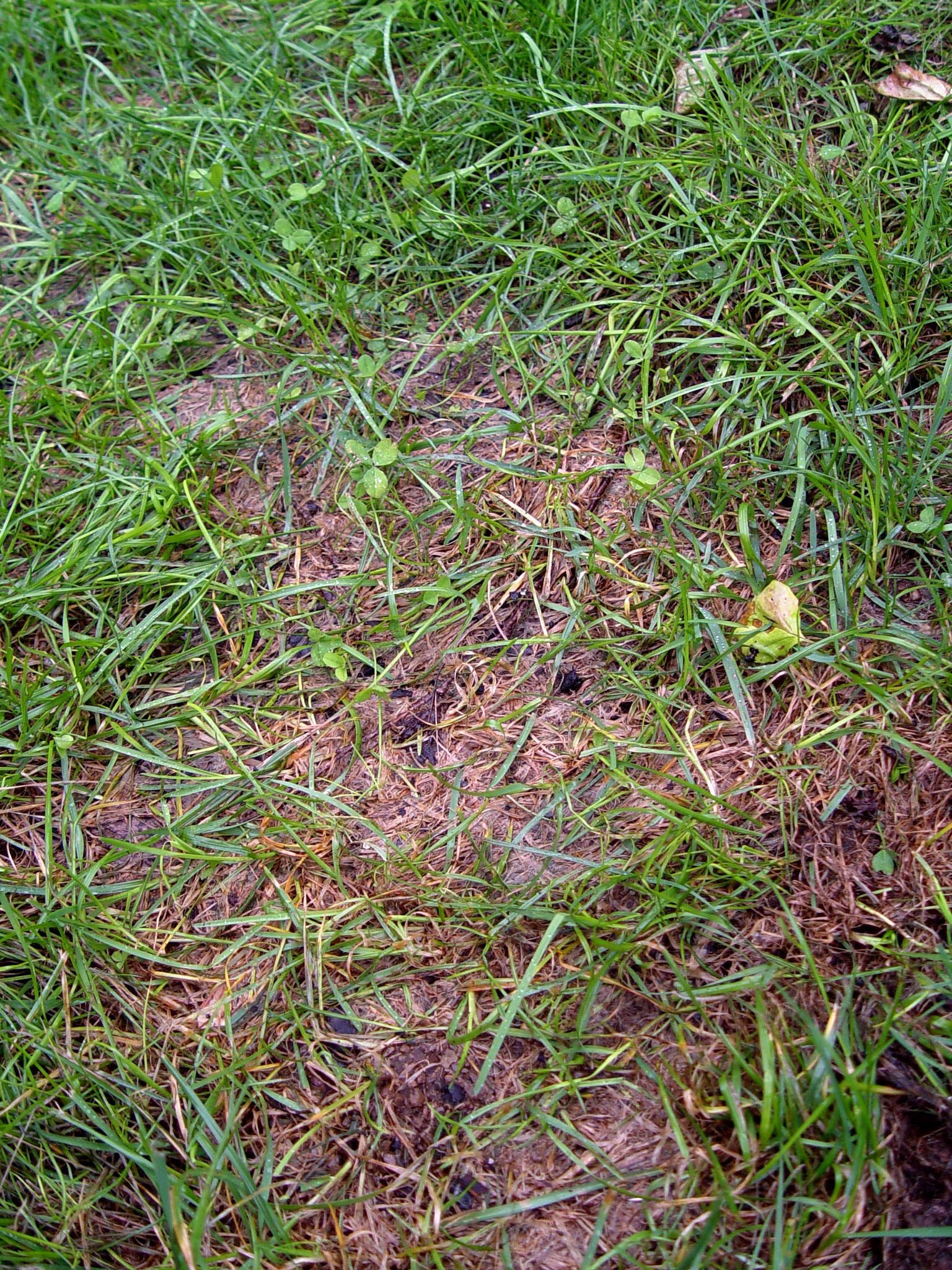
A suspiciously brown patch that should be green...

   The one bugaboo that might get you, though, is beetle grubs.

   Take a good look at the lawn to make sure you don’t have patches that are noticeably thinner or browner than the rest, or worse yet, browning out altogether. If skunks or crows seem to be very interested, that’s another oh-oh moment.

   I was on my way to the vegetable garden Saturday and noticed a couple of islands of brown in an otherwise sea of green.

   When I gave the browned-out blades a tug, the whole section pulled up like a piece of carpet. Underneath were dozens of well-fed grubs – those fat, white, inch-long wormy-like bugs curled up into a C-shape.

   It looked like a community of grubs lying out on the beach… and their lunch was my grass roots.

   A few grubs per square foot isn’t a big deal. Damage is barely noticeable. But when the numbers get up to 5 or 10 or more per square foot like this, it’s enough to completely kill whole patches of lawn.

   I’m not too surprised that numbers are up – at least in my yard. Damp soil in late summer is great for egg hatch.
Read More »


Fungus Fest

September 27th, 2011

A side effect of all the rain we’ve had lately is the unusually diverse bloom of fungi all over the landscape.

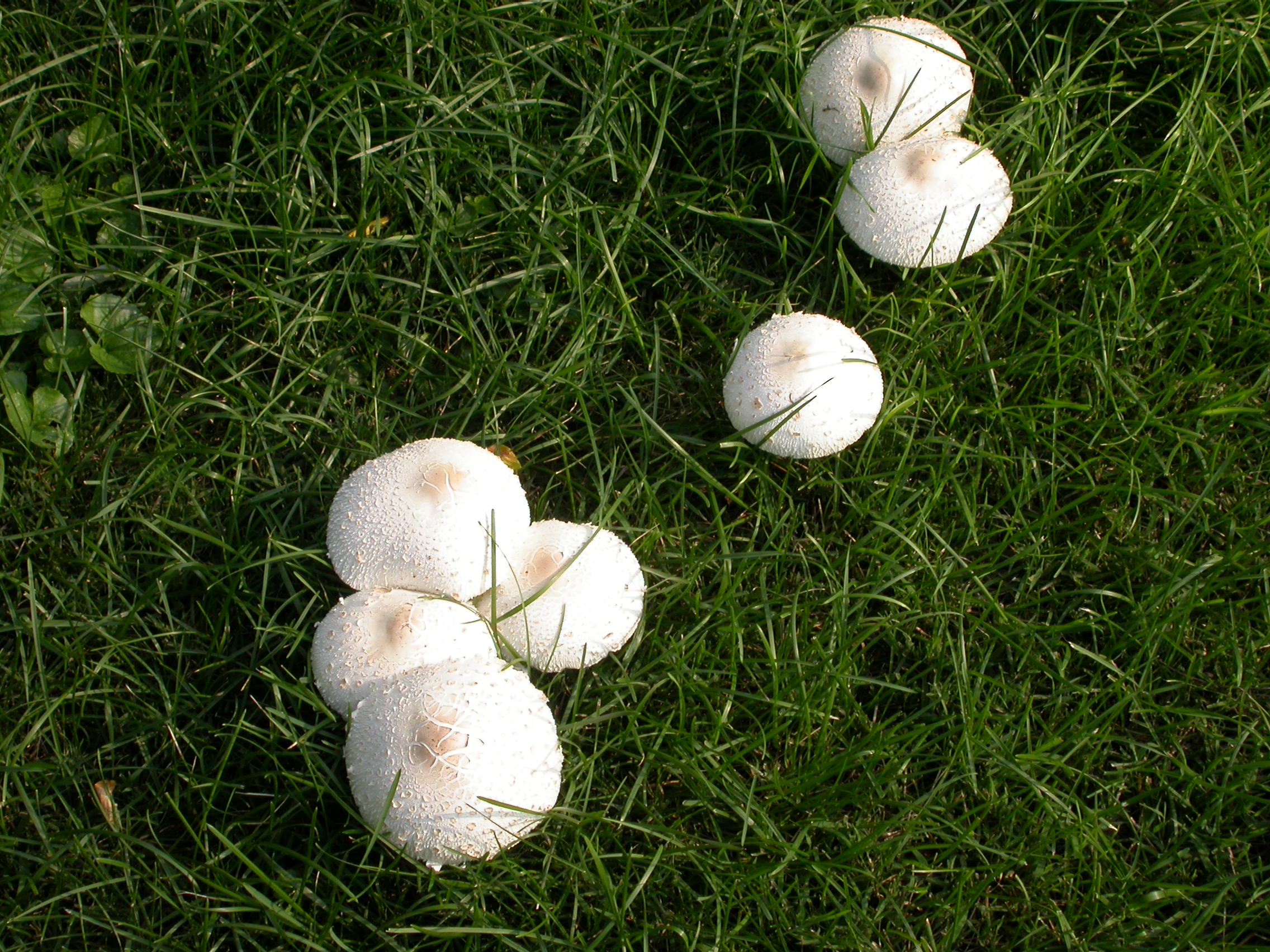
Most of these common “lawn mushrooms” thrive in wet weather and are non-poisonous. But err on the side of caution because a few poisonous species look like the harmless ones.

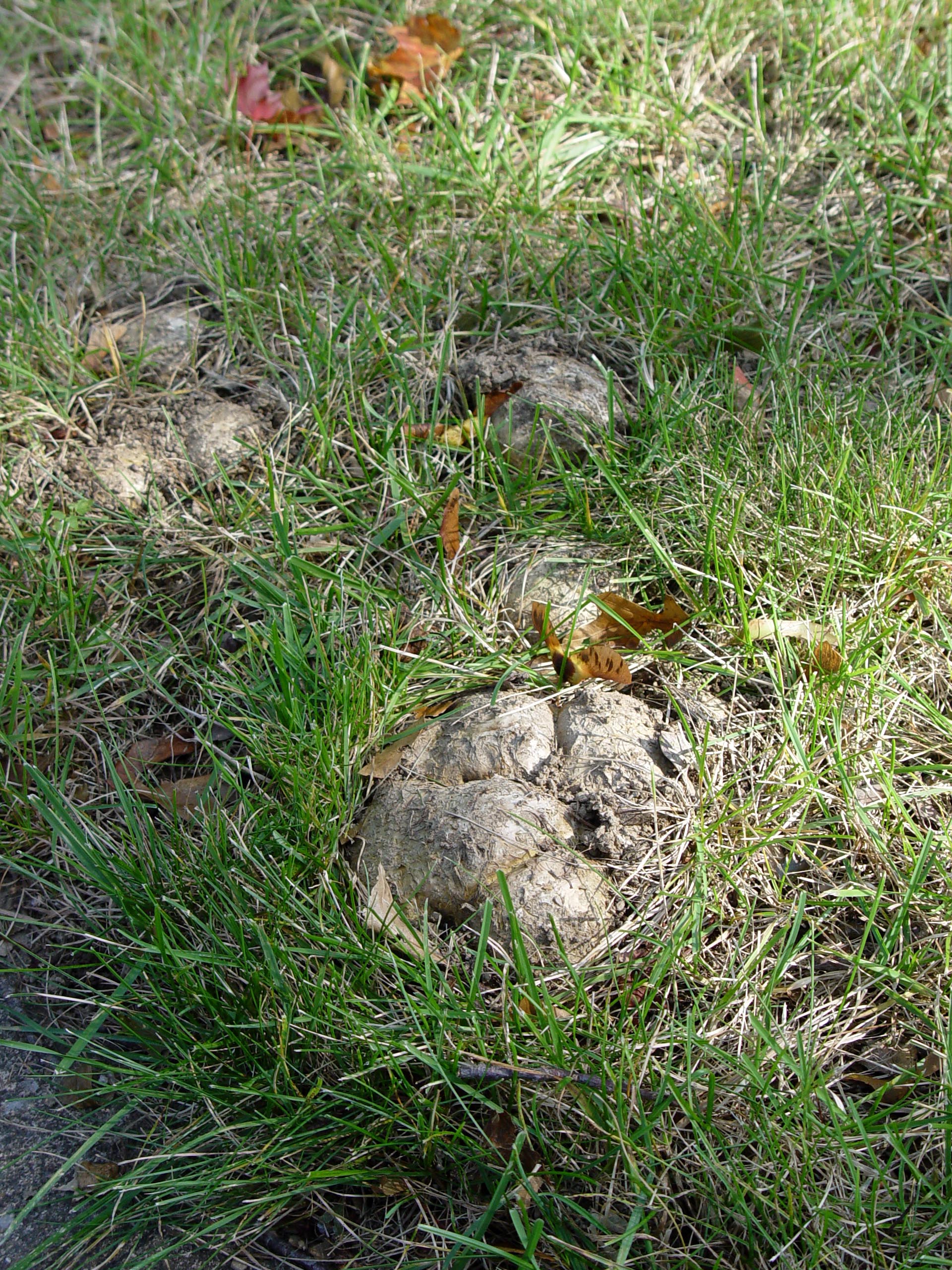
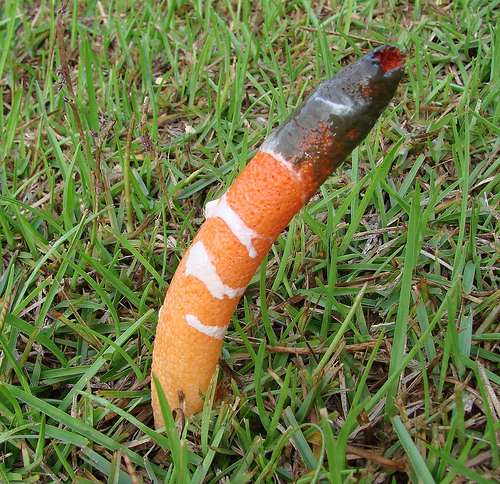
   I’ve been seeing “puffballs” in the lawn (a.k.a. “dead man’s knuckles”); shelf fungus growing out of dead or dying trees; assorted mushrooms popping up in the mulch, and the one that attracts the most attention, the stinkhorn fungus that reminds people of a certain male appendage (albeit orange in color).

   I spent some time talking fungus one day last week with Dr. Gary Emberger, a Messiah College biology professor and one of our area’s pre-eminent fanciers of wood-rotting fungi. Gary teaches a course in mycology at Messiah and has an excellent web site that helps folks ID local mushrooms and such (www.messiah.edu/Oakes/fungi_on_wood.)

The good news is that most of what pops up in our lawns and garden beds is harmless and sometimes even edible.

The bad news is that a few species, if eaten, can make us and our pets sick and in rare instances, even kill. It’s not always easy to tell the difference either because the few worrisome ones look a lot like some of the harmless ones.

The take-away advice is that if you’ve got toddlers or pets – or if toddlers or pets are likely to happen across your yard – it’s best to decapitate and remove the fungal growths. Just bag ‘em and toss ‘em. They’re not toxic to the touch… just when they’re eaten.

You’re not going to prevent them or stop them anyway, says Emberger, and using fungicides to kill lawn mushrooms and the like would seriously threaten the population of beneficial microorganisms (the majority of microbial life).

Below are a few of the most common landscape fungi in central Pa. I can’t emphasize enough to get a definitive ID of anything before you even think about eating it. Otherwise, if intentional or unintentional eating is a non-issue, enjoy the show.

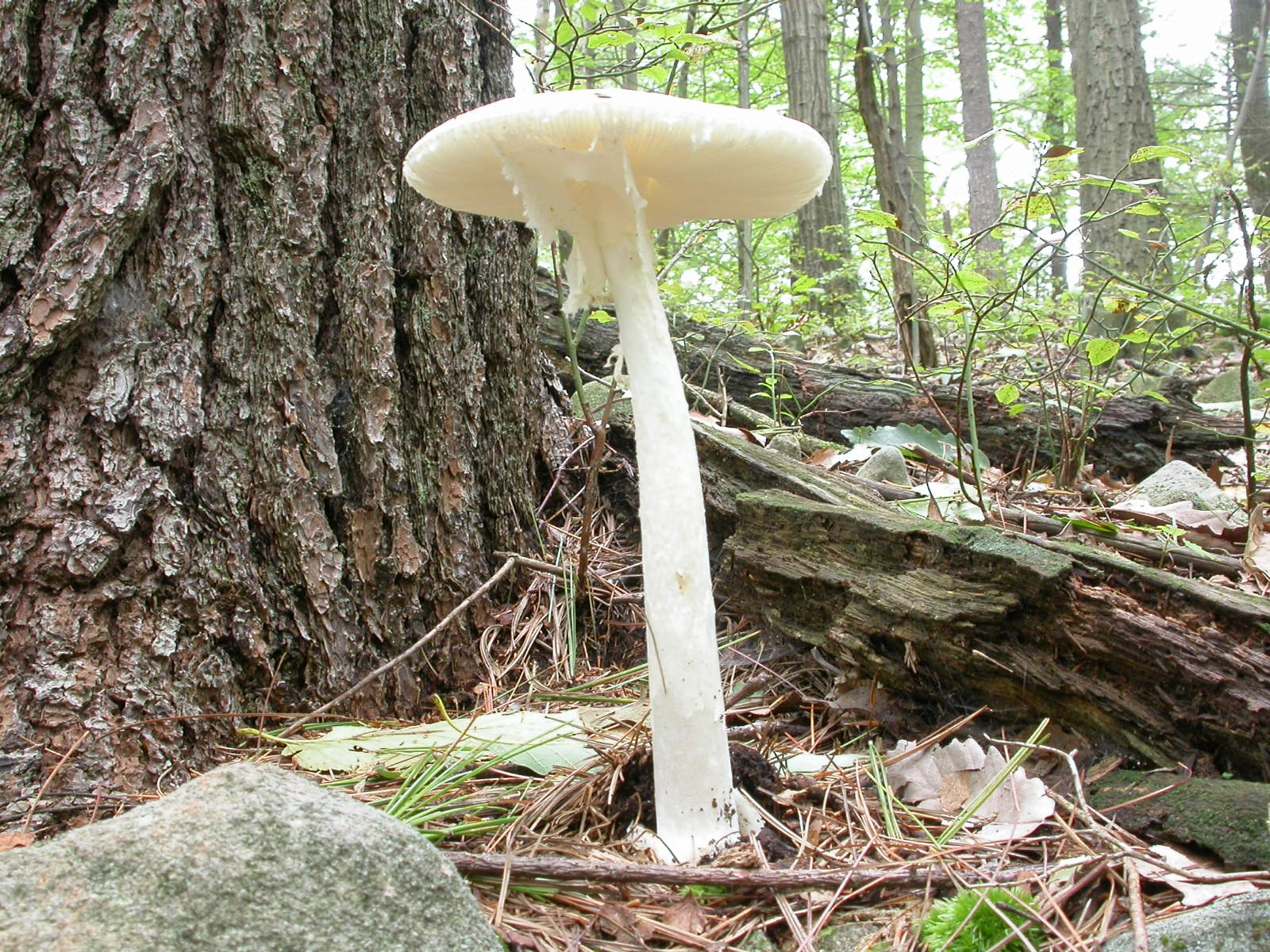
The "destroying angel" -- one of the most poisonous (i.e. deadly) mushrooms. (Credit: Dr. Gary Emberger)

The green-spored lepiota -- will make you severely sick if eaten. (Credit: Dr. Gary Emberger)

A "puffball" fungus, sometimes called "dead man's knuckles." Most are non-poisonous, a few are.

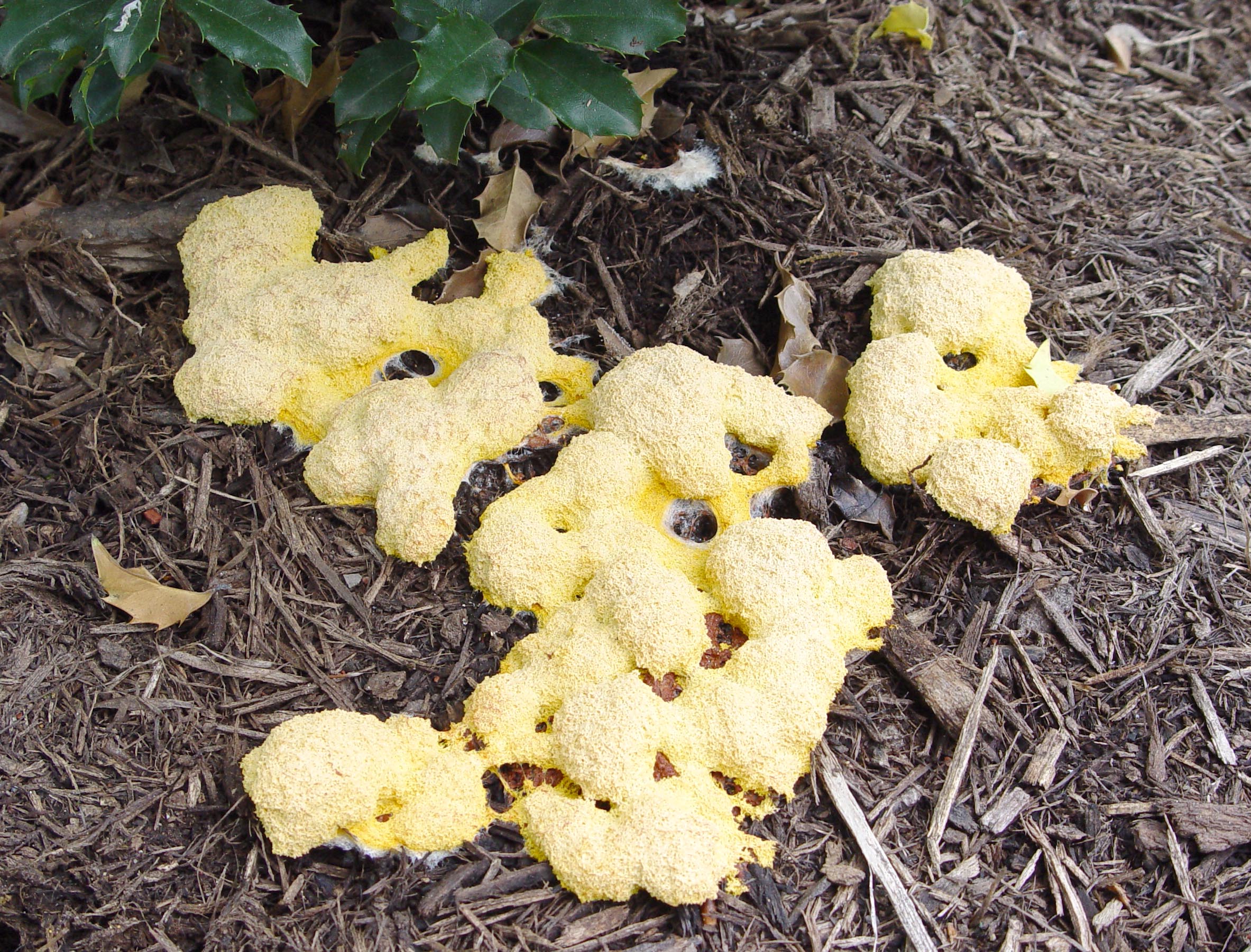
Slime mold, a.k.a. "dog vomit fungus,' starts as a yellowish blob in mulch and dries to a black powder. Not poisonsous.

One of the most curious growths... the stinkhorn fungus. Non-poisonous.

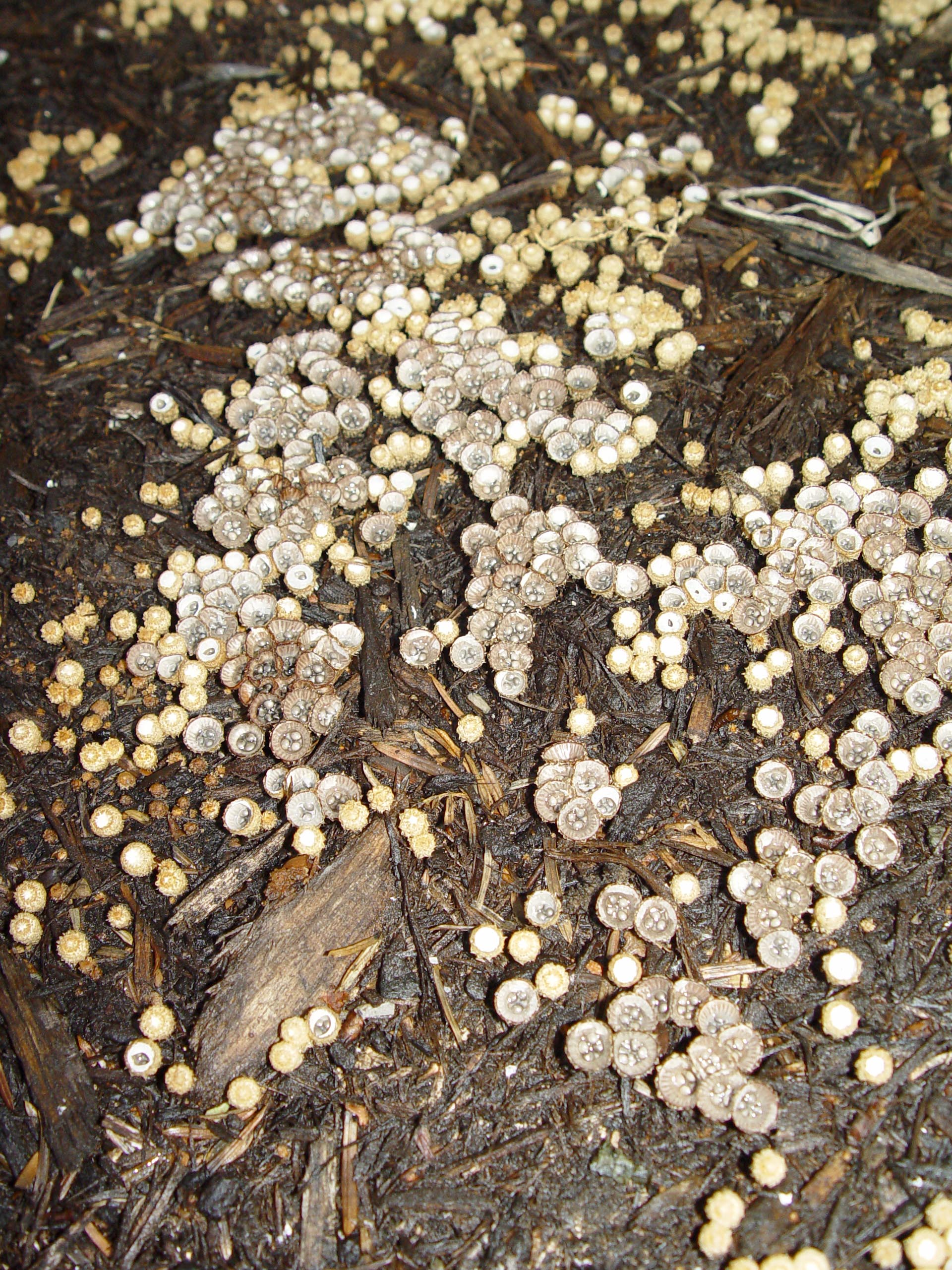
Birds nest fungus typically grows in mulch. Non-poisonous.


Stink Bugs on Stage

September 20th, 2011

   People have been ruefully joking in this disaster-filled year that the only thing we haven’t seen yet is a plague of locusts.

   Stink bugs come pretty darn close.

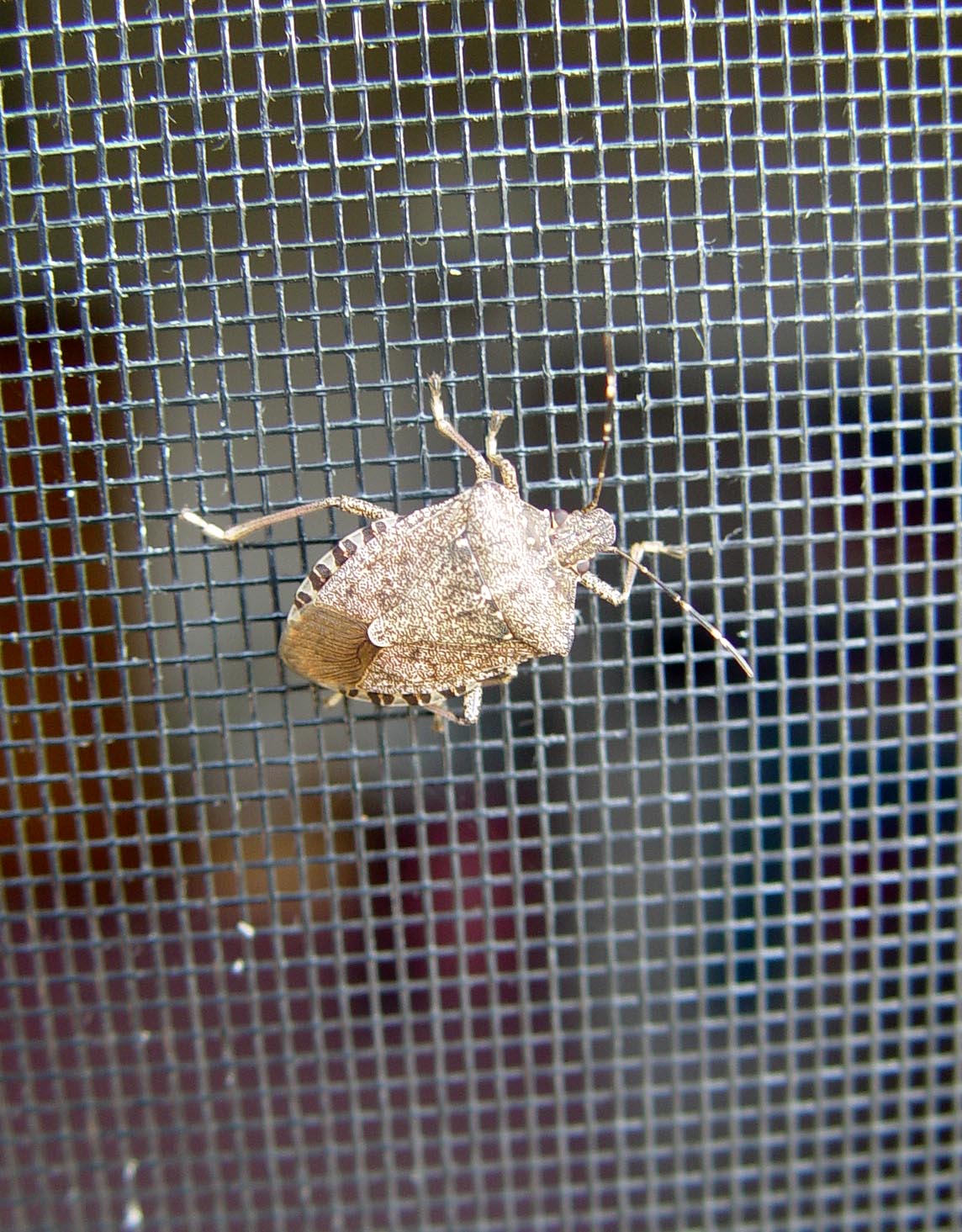
A stink bug looking for an opening inside...

   These shield-shaped invaders have been getting worse every year, and central Pennsylvania is at the national epicenter.

   Some locals get them inside by the bucket load. And according to Andy Strube, the Columbia fellow who invented one of the first indoor stink-bug traps, this season looks to be the worst yet despite all the rain.

   Now’s when these stinky bugs try to come inside to avoid freezing to death over winter.

   At first, the bug experts thought the brown marmorated stink bug was mainly an indoor annoyance. Because of no good natural predator, the population exploded way beyond annoyance for a lot of people.

   Last year was the first the bug became a serious crop pest, destroying millions of dollars worth of apples, peaches, corns, tomatoes, grapes and soybeans.

   University of Maryland entomologist Paula Shrewsbury told me this could end up being the worst bug we face in our lifetime.

   How many other bugs reproduce like crazy, spread virtually unchecked, eat our plants in summer, then come inside to stinkily torment us the rest of the time?

   Even the dreaded Japanese beetle has the common courtesy to confine its mischief to the outdoors.

   So far, I’m not real optimistic about any of the controls.

   Plugging up all the holes and cracks in a typical house is nearly impossible. It’s worth a try, though, and if you can accomplish it, it’s probably the closest thing to a solution. Indoors, at least.

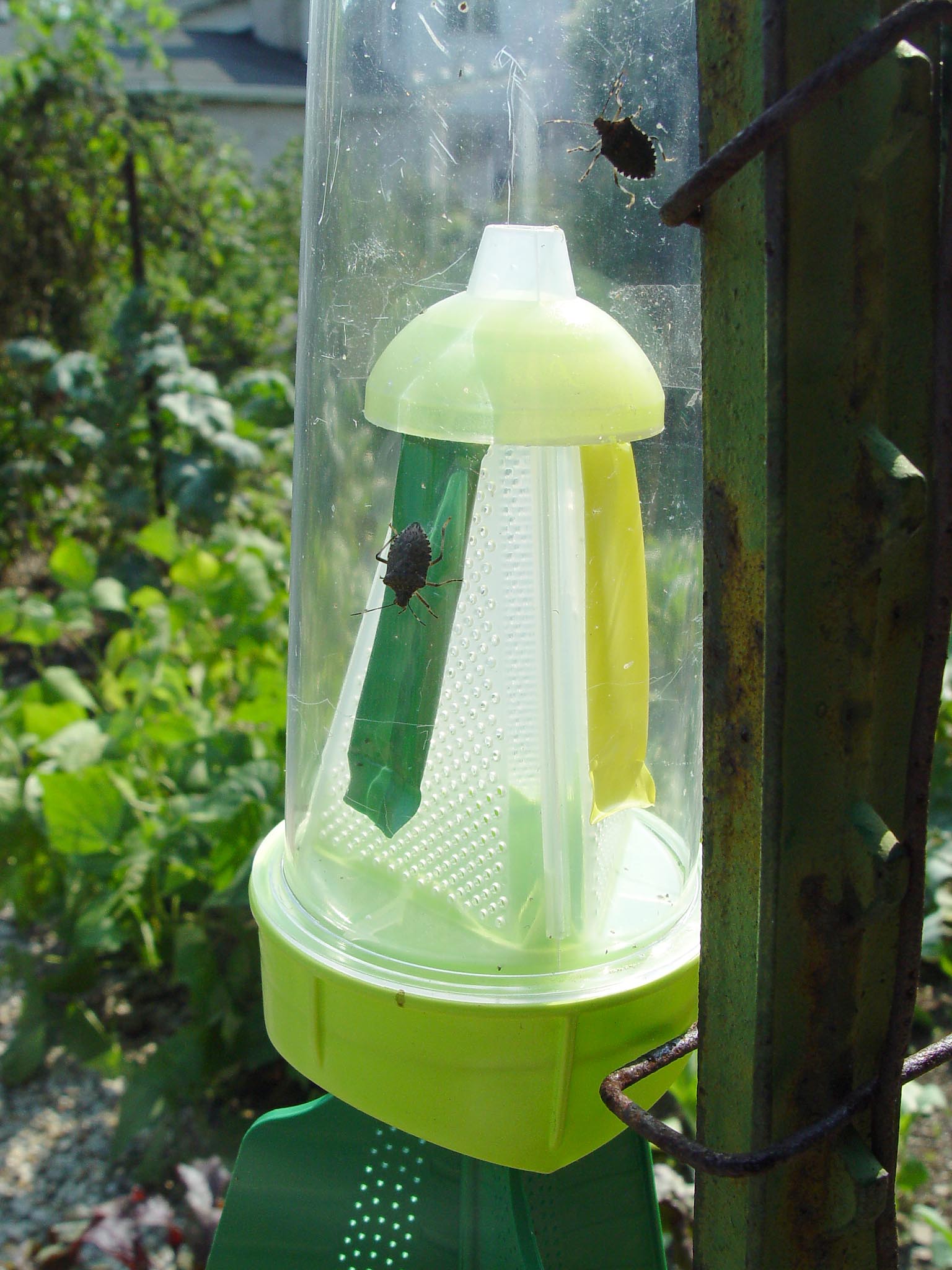
A couple of stink bugs are exploring the outside of my Rescue Stink Bug Trap, but none are inside.

   I haven’t had much luck so far trying to capture stink bugs outside in one of those new Rescue Stink Bug Traps that hit the market in July. Some people say they work great, others not. Seems to me timing and placement make a big difference. Bonide also has a new pheromone-based trap that’s just hitting garden centers, but I haven’t tried that one.

   Trying to spray stink bugs swarming on the siding might make a dent in the population, but timing again is important. For the least toxic sprays like insecticidal soap and mint or neem oils, you have to actually hit the bugs. They don’t do anything to the horde that flies in tomorrow.

   The other problem with sprays is that if you hit a bug on the way in, he might be mortally wounded but not die until holed up inside your wall. Then you’ve got carpet-beetle-attracting dead stink bugs inside the walls or living space.

   The latest weapon is the indoor stink trap. I know of at least four new commercial traps and one do-it-yourself design.

   All get placed inside – ideally in the attic or other warm and/or high spots where stink bugs tend to congregate – and all are designed to lure and then trap the bugs.

   For starters, the Rescue trap converts to an indoor model by adding an LED light kit ($18 in addition to the original $20 for the trap itself). The $16 Bonide trap also is labeled for inside use but uses the same pheromone lures rather than converting into a light attractor.

   Then there’s Strube’s Stink Bug Trap, a lighted, hanging plastic, soda-bottle-like trap with holes that uses a plant-based scent lure and “gooey glue” to capture attracted stink bugs.

   Strube uses a warm light, which he says attracts stink bugs way better than a cool LED or fluorescent light. The sticky sleeve catches stink bugs similar to a fly trap. When it’s covered, you toss the sleeve and get a new one for about $10.

   The traps themselves are $47 to $55, depending on whether you buy online or go to Strube’s new “stink-bug central” storefront on North Third Street in Columbia.

   The fourth trap is the “Original Indoor Stink Bug Trap” from Exton-based nth Solution. This $35 trap uses a light and a “secret sauce” to make what looks like a big, glowing votive, partly filled with liquid.

   The light attracts stink bugs, and the irresistible scent of the sauce compels them to dive in and suffocate themselves.

   The last option is making your own trap.

   A stink-bug-plagued fellow from western Pennsylvania concocted one cheapie model using a cut-off 2-liter soda bottle, some tape and, in the bottom, a $6 battery-operated Sylvania Dot-It LED light from the home center.

   If you want to see how it’s done, check out Julian Smith’s online video at www.youtube.com/watch?v=VwUuHhWYvDA.

   I don’t know which works best, but I’m planning to give all four traps a try in my house this fall and winter.

   All I need now is a bunch of indoor stink bugs.

   And, no, don’t bother calling to offer me yours.

   I just posted an article with more details on all of the what-to-do-about-stink-bug options at https://georgeweigel.net/favorite-past-garden-columns/stink-bug-weapons.

   For another article on why this problem is getting so bad and what we have to look forward to, try this page: https://georgeweigel.net/favorite-past-garden-columns/double-trouble-bug-problem-really-stinks.


Flooded Vegetables

September 13th, 2011

   I hate to tell you, but if your fruits, vegetables and herbs got submerged in last week’s flooding, most of it is probably too risky to eat.

Few vegetables are likely salvageable if they were flooded.

   Even if it just got splashed by flood water, some of it could still be contaminated.

   A few things factor into this – especially what might’ve been in the water, how susceptible different crops are to contamination and how long your edibles were in contact with the dirty water.

   In theory, you should be able to give everything a good scrubbing and eat away.

   In reality, though, pollutants get trapped in the nooks and crannies of the plant parts and even get absorbed into the flesh of skinned fruits.

   Cooking or disinfecting kills bacterial pollutants, but the problem is that’s not all that’s in flood water.

   “Chlorine will kill bacteria, but there may be other compounds in the water like diesel fuel and solvents,” says Dave Swartz, director of the Cumberland and Perry County Extension offices. “Chlorine is not going to help that.”

   Neither will cooking.

   Swartz’s advice: Discard anything that got flooded or splashed.

   In other words, when in doubt, throw it out.

   Not everyone even agrees that soaking edibles in chlorine is a good idea in the first place.

   Some experts say if you dilute it properly and wash it off food before eating, chlorine treatment is effective and far less of a risk than eating bacteria-contaminated produce.

   Others say chlorine is not effective enough to risk eating something that most likely is contaminated.

   Your choice. If you use chlorine to disinfect produce, here are some dilution guidelines from Cornell University: for 6 percent chlorine bleach, use one-half of a teaspoon per quart; for 4 percent chlorine bleach, use 1 teaspoon per quart, and for 2 percent chlorine bleach, use three-quarters of a tablespoon per quart. Immerse for 15 to 20 minutes and then rinse thoroughly with safe-to-drink water.

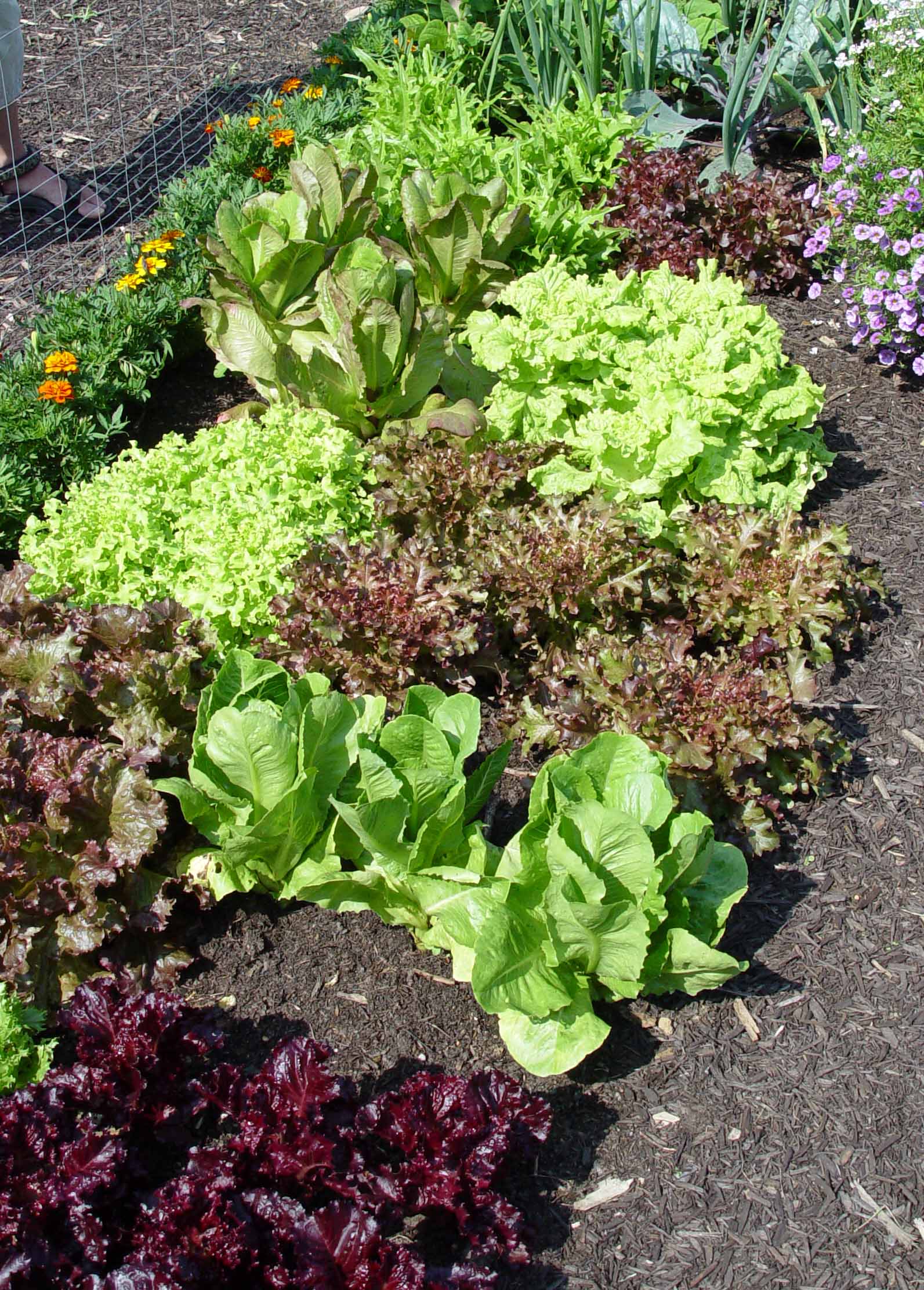
Lettuce is among the riskiest crop to try and salvage after a flood. Those ruffled and layered leaves are tough to clean.

   The riskiest crops to try and salvage after a flood are ones eaten raw that also have nooks, crannies and layers that are difficult to clean.

   These include leafy crops such as lettuce, chard, spinach, collards, kale, parsley, mustard and basil; veggies such as celery, broccoli, cabbage and leeks, and soft fruits such as strawberries, raspberries, currants and blackberries.

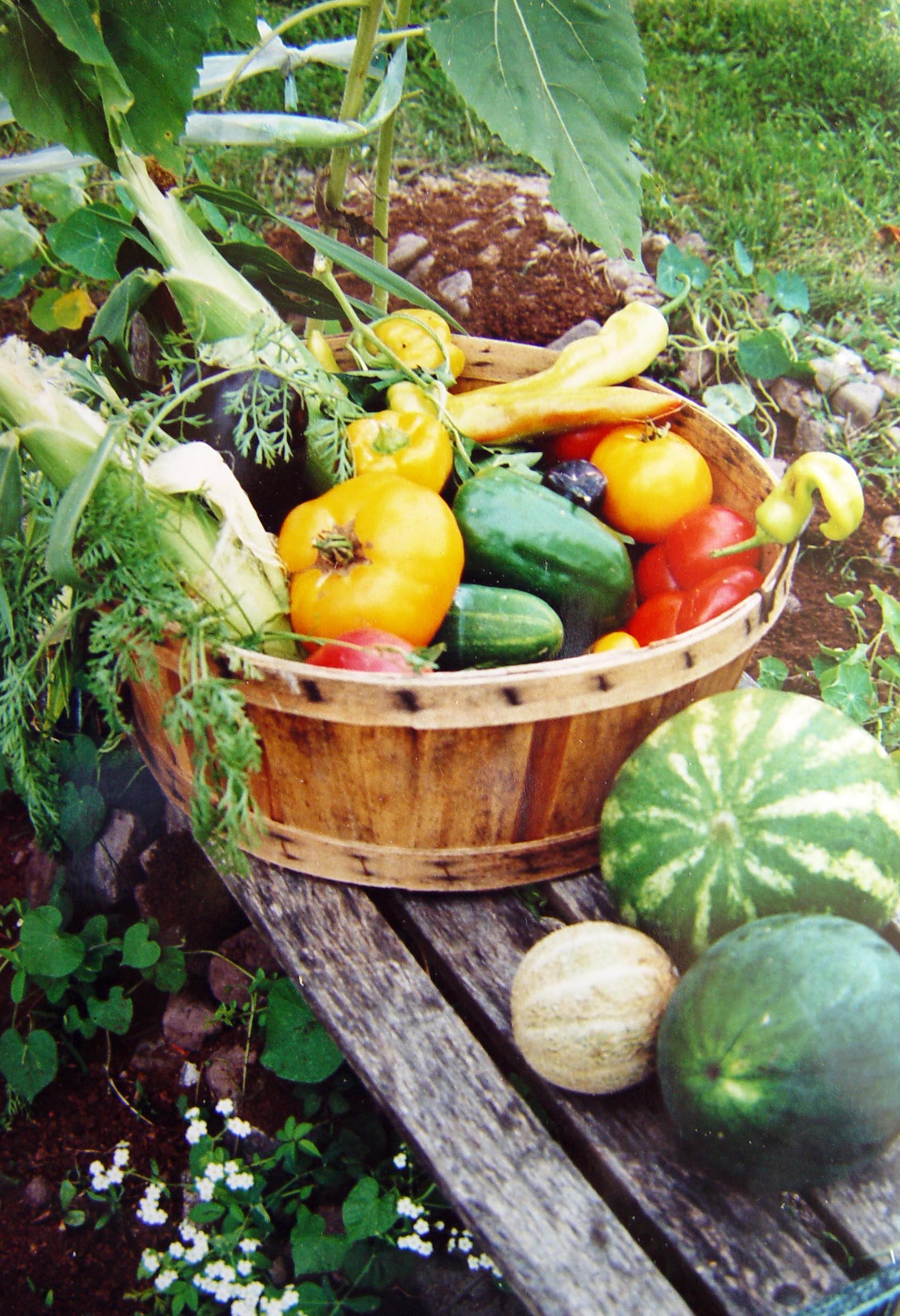
   Slightly less risky are crops with fleshy fruits and thin skins, such as tomatoes, peppers, zucchini, other summer squash, beans and tree fruits (apples, peaches, pears). Hopefully, the water didn’t get high enough to soak your apples.

   Those crops pose more of a risk because they’re more likely to absorb pollutants. So even if you cook them to kill bacteria, you can’t be sure what kind of absorbed solvents or chemicals are still active in the flesh.

   In general, the longer these crops were in contact with the water, the more they had a chance to absorb pollutants.

   A step more salvageable are fruiting crops that have husks or thick protective skins – things like corn, eggplant, melons and shell peas.

   If you can peel away sections of the plant that came into contact with flood water and absorbed most of any pollutants, odds of are decent that the inside edible parts are OK. Cooking well is still a good idea.

   The least risky crops are ones that you normally wash, peel and cook, such as carrots, potatoes, red beets and onions.

   After you’re out working in your flooded garden, be sure to wash well immediately. Let your dirty clothes and shoes outside so you don’t bring any contaminants into the house. And make sure your tetanus shot is up to date. My doctor says gardeners should get a tetanus booster every 5 years instead of every 10 years for “regular” people.

   Also don’t dig in wet soil. You’ll compact the air pores and ruin its texture and future drainability.

   Raised beds may have bailed some people out in cases where flooding got close. But when we get that much rain, there’s really nothing you can do other than think about moving the garden to a higher, drier area if this happens to you often enough.

   The good news is that soil is such a great filter, even a totally flooded-out garden will be safe to replant next spring.

   Combining the effects of sunlight, fresh rain and soil microbes, most pathogens are dead meat in 90 days. Even uncomposted manure in gardens is accepted as being deactivated of bacterial threat in 4 to 6 months.

   Whether the soil will produce as well next year or not is an open question.

   On one hand, soggy soil can become compacted and can lose beneficial microorganisms that break down nutrients and supply nutrition to plants in a form their roots can use. Drowning earthworms isn’t good either.

   On the other hand, some of that deposited silt may bring along nutrients and organic matter that actually improve what you started with.

   In other words, maybe there’s a silver lining in here somewhere…

Weekend Events

   I’ll be at Lurgan Greenhouse and Nursery this Saturday doing a talk on “Gardening for All Four Seasons.” It’s a program that’ll help you make your landscape look good and change throughout the year, including winter. It’s free and starts at 10 a.m. Come on out.

   The folks at Lurgan ask that if you’re planning to go, give them a call ahead of time at 709-8064 so they’ll have enough space set up. If you’ve never been there, this is a full-service garden center in a beautiful setting at 8126 Oakdale Road, Orrstown, about 10 or 15 minutes north of Shippensburg.

   Also worth checking out this weekend is the BEE Local festival at the Fredricksen Library, 100 N. 19th St., Camp Hill. On Saturday from 1 to 5 p.m., all sorts of booths, vendors and talks related to bees and local food will take place. It’s also free. And on Friday evening at 7 p.m., the library will offer a free showing of a new film on the global bee crisis and what it means to us.


Mending Lee

September 11th, 2011

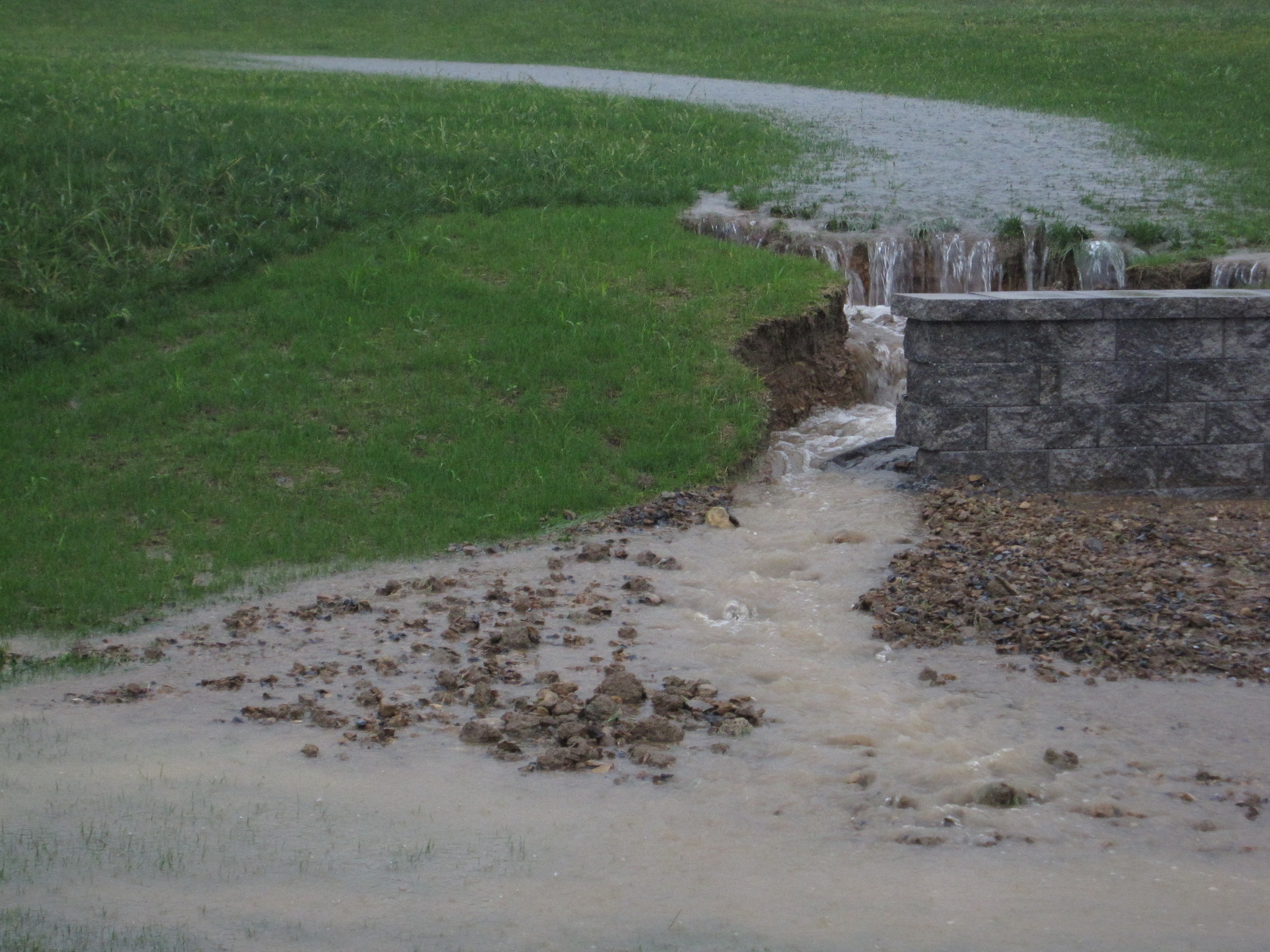
   I was admiring a new back-yard waterfall in South Hanover Twp. the day it flooded last week.

Tropical Storm Lee decided to build a waterfall in this backyard.

   The only problem was that the couple who just moved there didn’t build it, plan it or want it.

   This waterfall was an impromptu one that cut itself into the bank coming down from their neighbor’s yard.

   It actually looked pretty nice, gushing out from around the big retaining wall they had built to head off the drainage problems they feared when their new home ended up 4 feet lower than planned.

   It wasn’t as pretty farther out.

   The newly graded “soil” – more a mix of clay and rock – washed itself out in a big pile on top of the couple’s new lawn.

   That kind of erosion happened all over the place as Tropical Storm Lee dumped Biblical proportions of rain onto already saturated soil from last week’s remnants of Hurricane Irene.

   Even some normally dry areas got surprise washouts.

   Bottom line: We got a lot of fixin’ to do.

   Give your first attention to any plants that got washed out or any trees and shrubs with exposed roots. It doesn’t take long for exposed roots to croak.

   Get washed-out perennials and shrubs back into place ASAP. Odds are it was younger plants with not-so-well-anchored roots that came up and out anyway. Most of these should recover.

   If you can’t get them back into their permanent home yet because the soil is still soggy, at least get them in a pot or planted in higher, drier ground.

Tropical Storm Lee, storm damage, flood damage

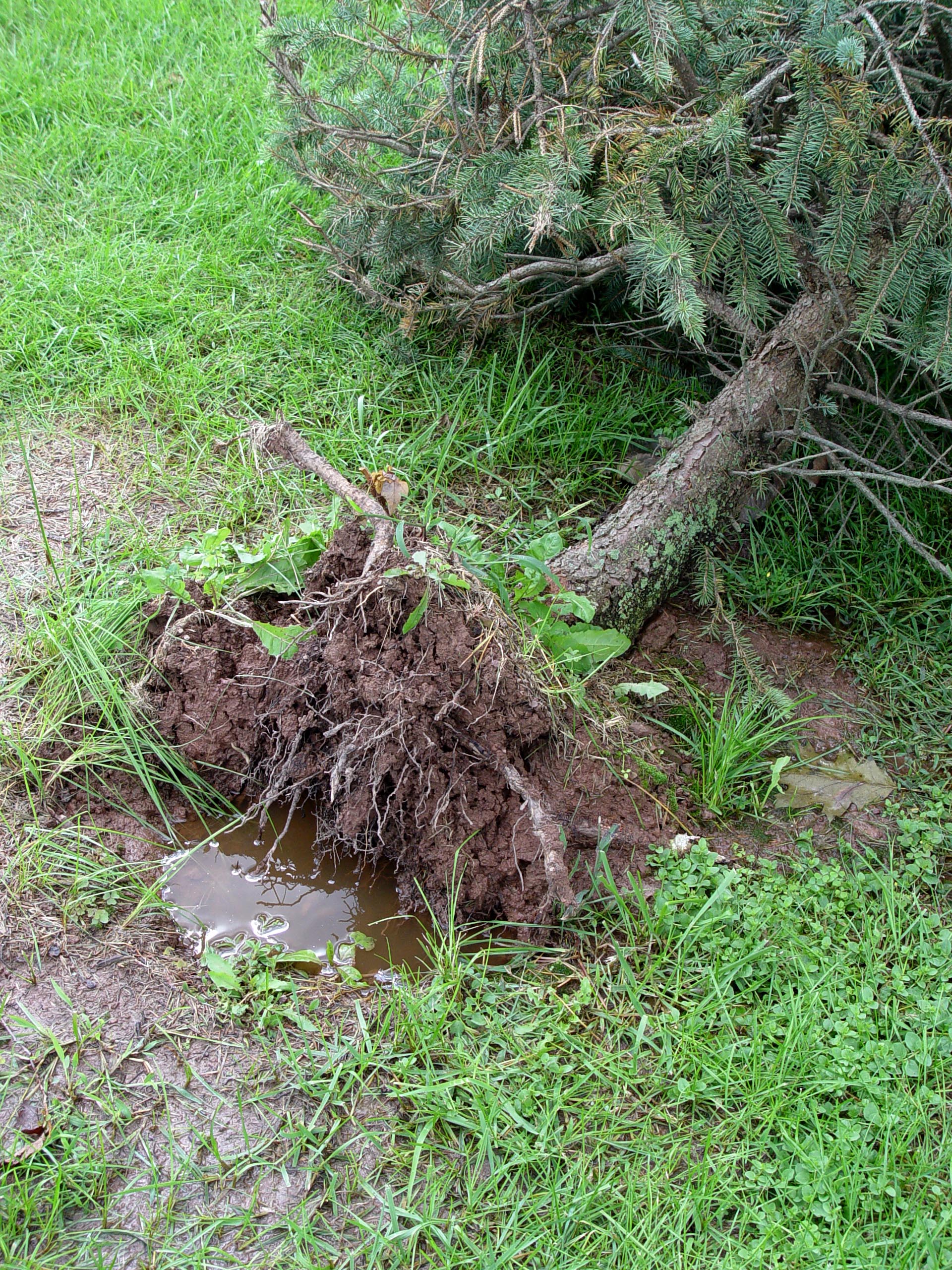
Saturated soil can undermine root support and cause trees to topple.

   Something else I’m concerned about is trees that lost root support in saturated soil. Unlike hurricanes and tornadoes that blow over trees on the spot, floods can do more lingering, insidious damage.

   A tree might look fine now, but it could be loosened and at risk next time a heavy wind comes along. Or the saturated soil will kill off roots and weaken the support in the coming days.

   Either way, keep an eye on big trees and have any assessed immediately that start to lean. The biggest threats are big trees that have a target nearby, i.e. a power line, a sidewalk, a driveway or your house.

   Small trees and shrubs that are leaning might be salvageable. Prop them back up, tamp the soil and stake. With any luck, roots will regrow, and your plant will be back in business.

   Another issue is all of that soil that eroded into new locations.

   On one hand are the people who now have gullies or mini-cliffs where their banks used to be.

   These washouts need to be addressed one way or another. Bare dirt will only continue to wash away and worsen the erosion every time it rains, not to mention dumping mud on the poor guy below.

   If you can recover the washed-out soil and get it back in place, great. Be sure to plant grass or some sort of vegetation to help hold it in place. Now is the year’s best time window to do that.

   Or better yet, build a retaining wall, redirect the source of the runoff by swale or drain pipe, or install a rock-lined channel to at least keep the bank from eroding.

   The other side of that coin is where the soil ended up. If it sloughed off onto a lawn or over a landscape bed, it needs to come off. Get out the shovel and rake.

   Tree roots can withstand the addition of maybe 3 or 4 inches of soil before it threatens health. Shrubs can take almost that much.

   But even 2 or 3 inches of soil up against perennial stems or over top of turfgrass is enough to rot and smother. Rake it off or tell the guy uphill to come and get it.

   He might like to have it back to fill in his gully.


« Older Ramblings and Readlings Newer Ramblings and Readlings »

  • Home
  • Garden House-Calls
  • George's Talks & Trips
  • Disclosure

© 2026 George Weigel | Site designed and programmed by Pittsburgh Web Developer Andy Weigel using WordPress