
• Home
  • Contact
  • Site Map
George Weigel - Central PA Gardening
  • Landscape 1
  • Landscape 2
  • Landscape 3
  • Landscape 4
  • Garden Drawings
  • Talks & Trips
  • Patriot-News/Pennlive Posts
  • Buy Helpful Info

Navigation

  • Storage Shed (Useful Past Columns)
  • About George
  • Sign Up for George's Free E-Column
  • Plant Profiles
  • Timely Tips
  • George’s Handy Lists
  • George's Friends
  • Photo Galleries
  • Links and Resources
  • Support George’s Efforts


George’s new “50 American Public Gardens You Really Ought to See” e-book steers you to the top gardens to add to your bucket list.

Read More | Order Now


George’s “Survivor Plant List” is a 19-page booklet detailing hundreds of the toughest and highest-performing plants.

Click Here


Has the info here been useful? Support George’s efforts by clicking below.


Looking for other ways to support George?

Click Here

George's Current Ramblings and Readlings

The Perfect Christmas Tree

November 29th, 2011

   At least 25 million cut evergreens will end up in American living rooms over the next 4 weeks.

   Some of them will look nicer, hold ornaments better and keep their needles longer than others.
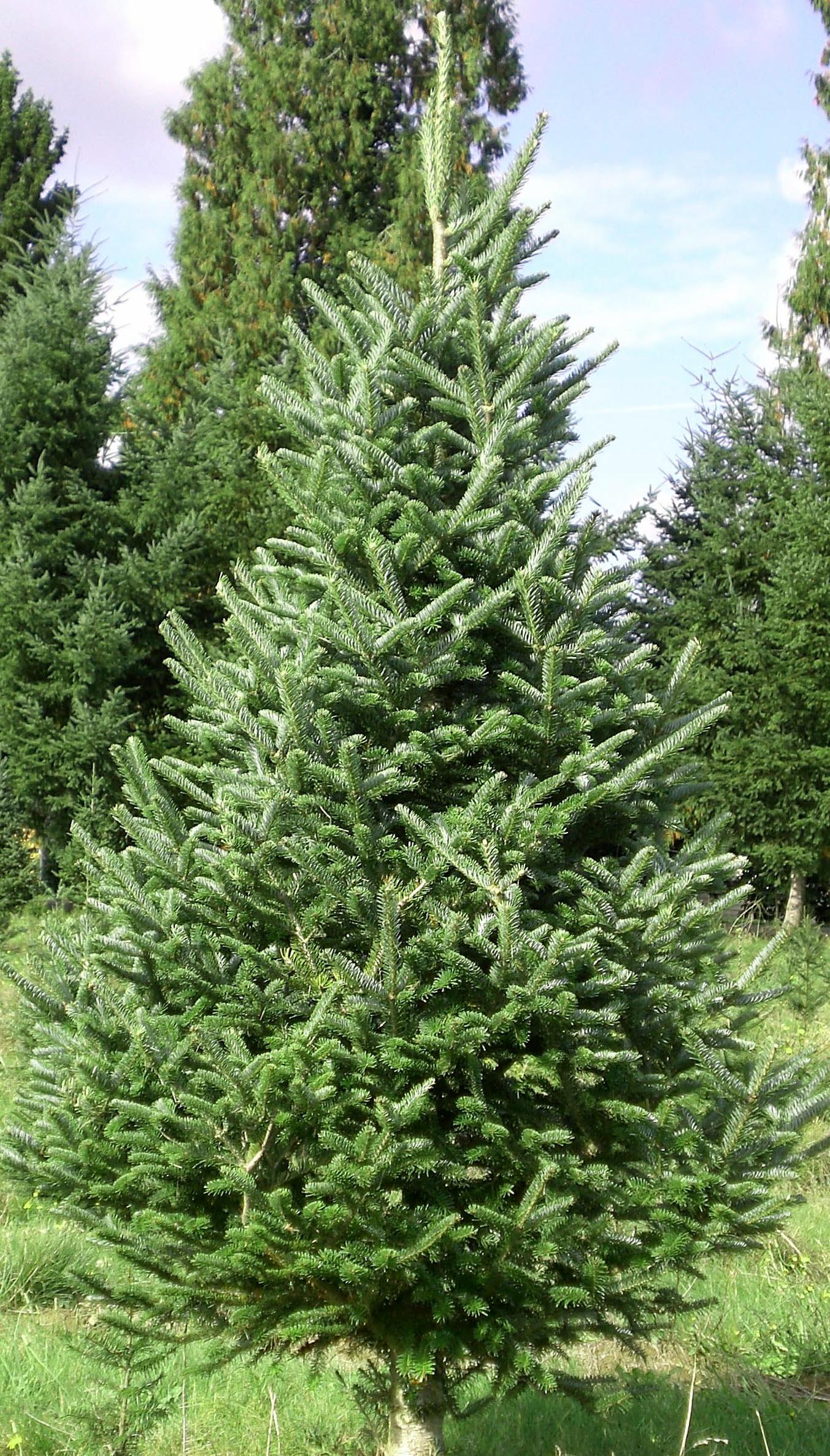
Fraser fir

   Which type makes the best choice? That’s open to some interpretation, but here’s a comparison of 8 species you might encounter — in the order I like them…

   * Fraser fir (Abies fraseri). Fast becoming the favorite. It’s a sleek evergreen with branches that turn upward to reveal silvery undersides to blue-green needles.

   Needles are soft and fairly short at 1 inch or less. Branches are very strong. Aroma also good. Only downside is it’s the most expensive type.

    Needle retention rating: Excellent.

   * Douglas fir (Pseudotsuga menziesii). Not a true fir but has fir-like soft, bluish-green needles that are 1 to 1½ inches in length.

   Branches are strong, and tree has dense, bushy habit. Very nice citrus fragrance. Currently Pennsylvania’s top-selling Christmas-tree variety.

   Needle retention rating: Excellent.

   * Concolor fir (Abies concolor).Also known as “white fir,” this has soft, blue-green foliage with narrow, rounded needles 1 to 1½ inches long.
Read More »


What’s On Your Mind

November 8th, 2011

   Here’s what questions I’m getting lately, along with my Twitter-version answers in case the same issues are on your mind…

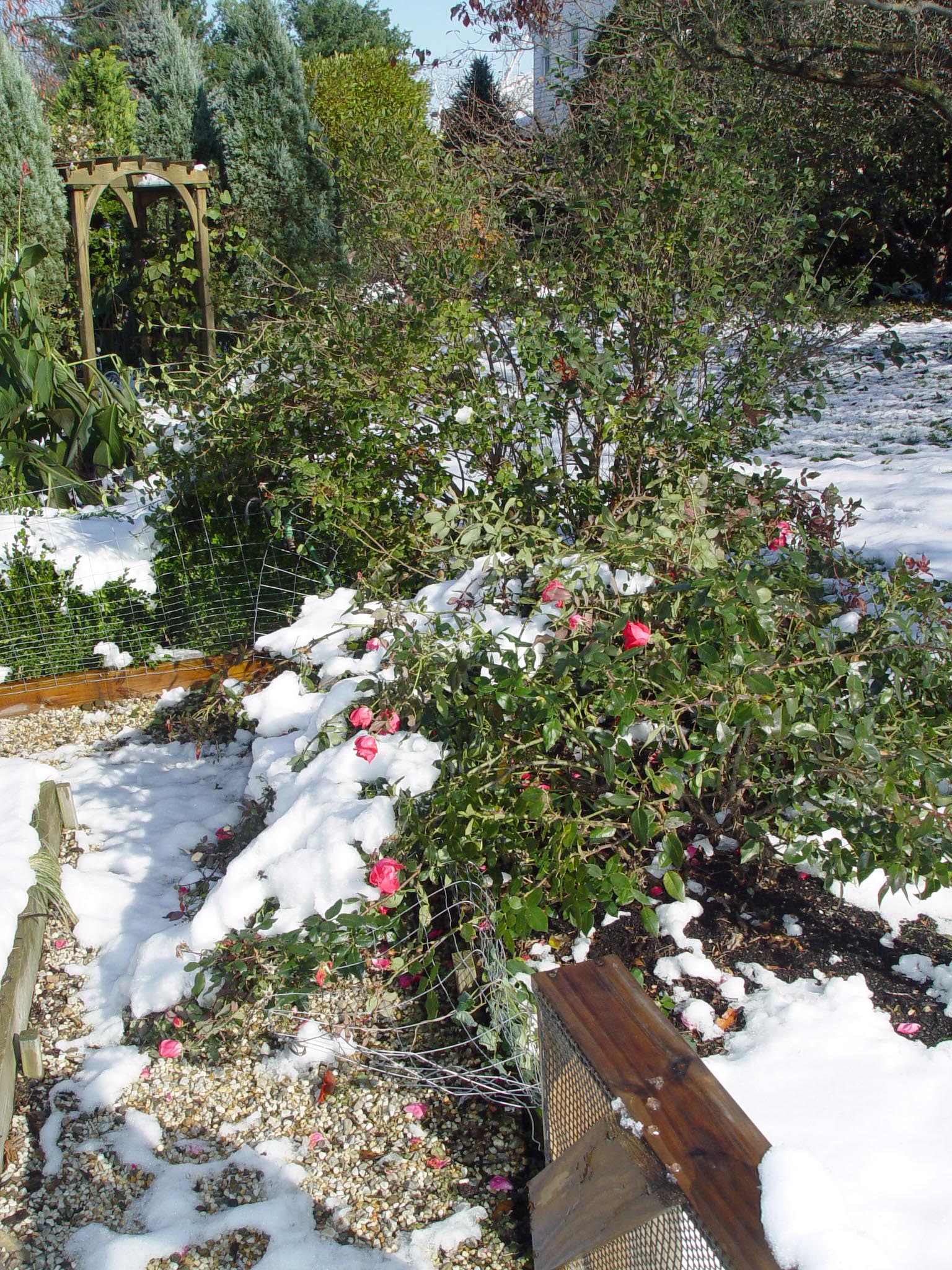
That snow did a number on our shrubs.

    Q: My butterfly bush/lilac/oakleaf hydrangea/etc. lost a lot of branches in that Halloween snow. Am I going to lose it?

   A: No. Prune broken branches back to the first uninjured branch (or back to the trunk if the whole thing snapped) and odds are excellent the plant will be fine next year. It might look a little disfigured for awhile, but even that will improve in time.

    Q: I keep reading conflicting information about whether it’s good or bad to rake leaves out of the garden beds. What do you say?

   A: I’m a leaf-hugger. That old advice about cleaning out the beds because “leaves will smother plants” is misguided. If that’s the case, then how do perennials and shrubs survive in the woods where nobody rakes those leaves?

   The only raking that makes sense is when leaves blanket evergreens and evergreen groundcovers, such as vinca, pachysandra and turfgrass. Or if wind blows so many leaves into one spot that it piles up too high for winter-dormant plants to poke through in spring. (In that event, you can clear them out in spring.)

   Otherwise, let leaves on the ground under shrubs. Let them cover the ground where you’ve pulled annuals, cut off perennials or planted bulbs. Let them alone in wooded areas and tree groves. At the very least, compost them if you can’t stand looking at them.

    Q: Where are all the stink bugs? I’m not seeing anywhere near what I had last year.

Read More »


One More Weather Insult

October 30th, 2011

Another week, another weather calamity. This time it was a record-setting October snow – one that tore the branches off trees and shrubs that hadn’t even lost their leaves yet.

Snow on leafed trees took down a lot of limbs.

Most of the damage I saw was to the fastest-growing, weakest-limbed species, especially flowering pears, willows, silver maples, elms and poplars.

But that snow was so heavy and created so much weight by sticking to leaves that even some moderately strong maples and oaks split.

The good news is that within a day, the snow was mostly off the branches. The warm ground, the sunny sky and the forecasted return to 50-degree days should get rid of this premature 5 or 6 inches pretty fast.

Take heart. We should have a few decent outside days left to yank the annuals, clip frost-killed perennials and take care of other fall cleanup jobs before winter shows up for real.

Read More »


The End Is Near…

October 25th, 2011

   …The end of the growing season, that is.

   We’re already at the point where, in an average year, we’d have had a killing frost already. But since this has been anything but an average year, who knows what’s in store for the year’s final two months?

   You really should have your houseplants back inside by now. If not, go do it now. Hose them off or spray them with insecticidal soap before bringing them in so bugs don’t hitch a ride into the living room.

   For the last few weeks, I’ve been taking steps to sustain tender plants I want to keep for another season.

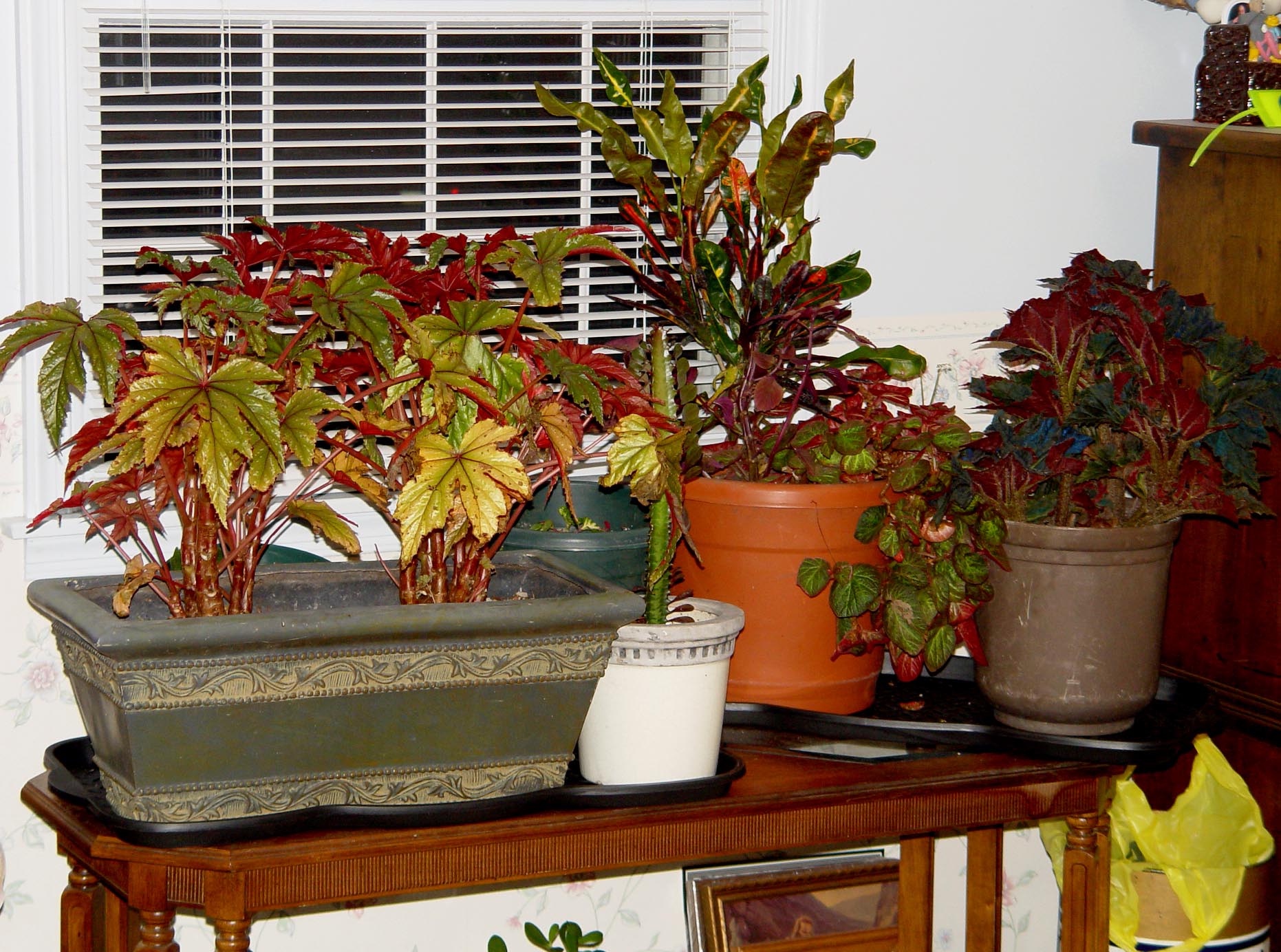
Some of my salvaged 2011 plants.

   The most basic way is to dig up and pot some of those tender specimens and turn them into winter houseplants. I’ve got plenty of them now scattered around three rooms of my house.

   There’s a ‘Diamond Frost’ euphorbia , a ‘Purple Flash’ ornamental hot pepper, a ‘Vancouver’ geranium, a couple of moses-in-the-boat and ‘Black Taffeta,’ ‘Bonita Shea’ and ‘Gryphon’ begonias.

   The second thing I always do is take cuttings from some of my favorite annuals and tropicals that are easy to propagate this way.

   The recommended method is to snip 6-inch pieces off the tips of the mother plants, pinch off all but the top set or two of leaves, dip the bottoms in a rooting hormone and stick the cuttings in a light-weight potting mix that’s kept consistently damp.

   I get almost 100 percent success without even using rooting hormone on plants such as Persian shield, coleus, perilla, iresine and Swedish ivy.

Read More »


Woody Plants in Pots

October 11th, 2011

You’re probably getting ready to pick a peck of petered-out petunias from your pots and pack the pots away for winter.

Did you think about converting at least of couple of them for winter interest?

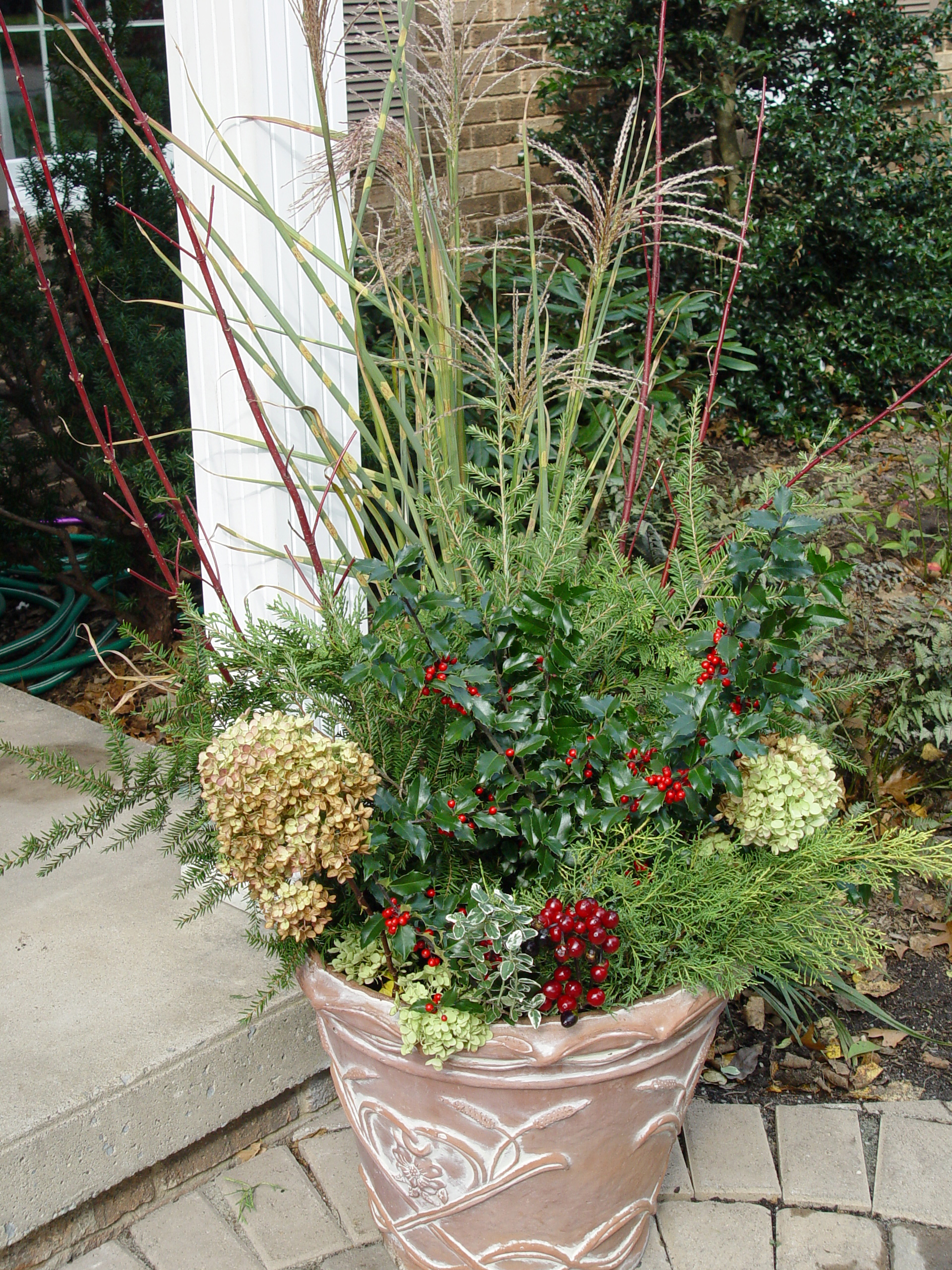
A pot converted to a winter display featuring holly sprigs, dried hydrangeas, ornamental grass, juniper and red-twig dogwood stems.

The quick-and-easy way is to just take cuttings from around the yard and stick them into the soil in whatever bouquet-like arrangement you like.

Some of the best choices are sprigs of fruited hollies, junipers and viburnums; a few stems of red-twig dogwood and Japanese maple; maybe a branch or two of hipped-up rose branches, and cuttings from ornamental grasses, firs, falsecypress and spruce.

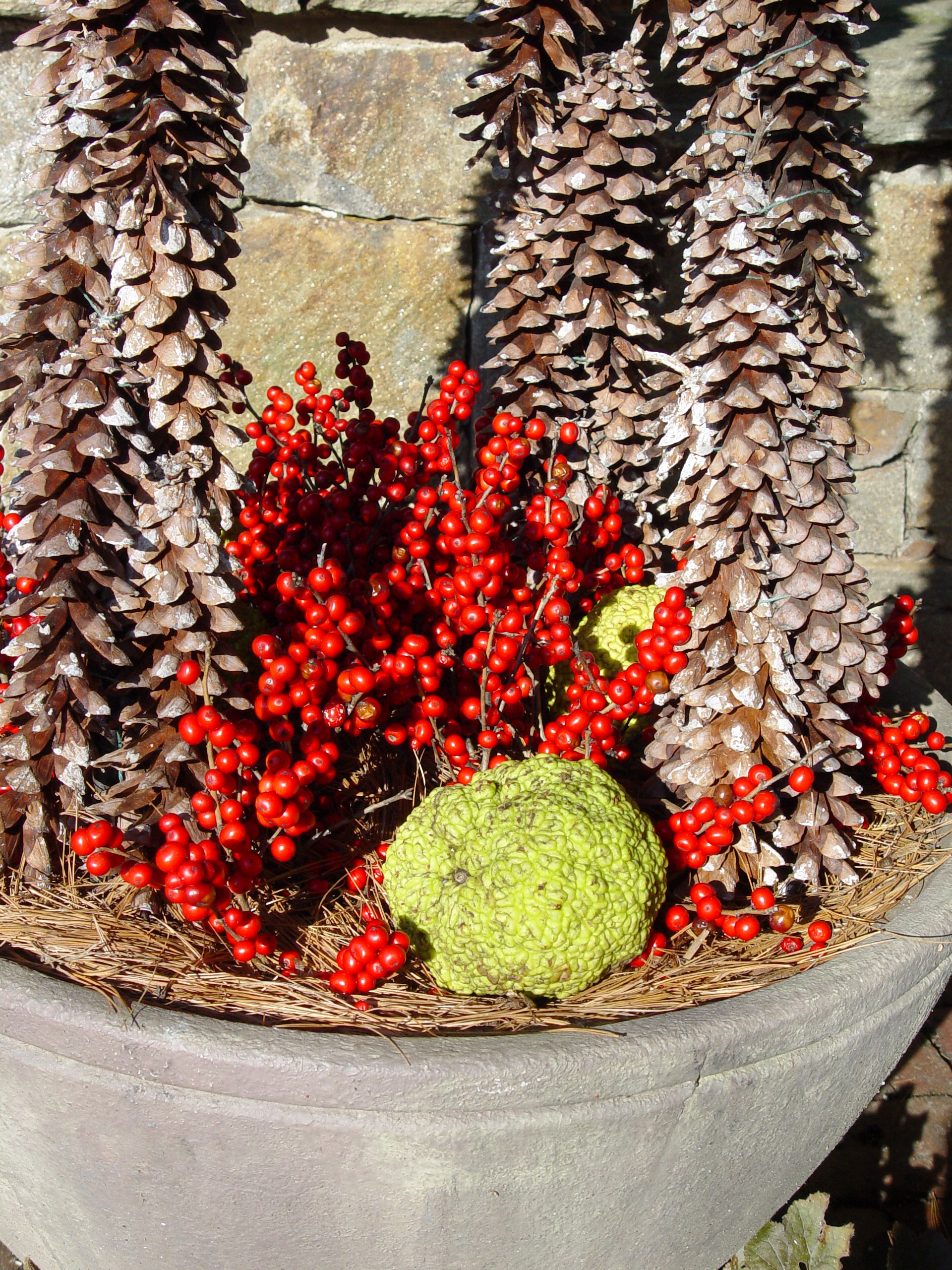
I’m also partial to a few osage oranges. Those are the warty, baseball-sized orbs that fall from wild osage orange trees and look a lot like green lemons.

That little green thing is an osage orange.

But beyond that, most woody plants grow just fine in pots throughout the year.

You just need a big enough pot and a variety that’s winter-hardy enough to stay outside all year long. Otherwise, border-line-hardy and tender woody plants (Meyer lemons, camellias and crape myrtles, for example) need to be wheeled inside a sunroom or garage for winter.

The classic winter pot is a pair of upright needled evergreens flanking the front door. These are ideal for stringing with lights for the holidays.

Come spring, you can either plant them in the ground somewhere or move them to a deck or other strategic spot where you could use a little screening.

Read More »


« Older Ramblings and Readlings Newer Ramblings and Readlings »

  • Home
  • Garden House-Calls
  • George's Talks & Trips
  • Disclosure

© 2026 George Weigel | Site designed and programmed by Pittsburgh Web Developer Andy Weigel using WordPress