• Home
  • Contact
  • Site Map
George Weigel - Central PA Gardening
  • Landscape 1
  • Landscape 2
  • Landscape 3
  • Landscape 4
  • Garden Drawings
  • Talks & Trips
  • Patriot-News/Pennlive Posts
  • Buy Helpful Info

Navigation

  • Storage Shed (Useful Past Columns)
  • About George
  • Sign Up for George's Free E-Column
  • Plant Profiles
  • Timely Tips
  • George’s Handy Lists
  • George's Friends
  • Photo Galleries
  • Links and Resources
  • Support George’s Efforts


George’s new “50 American Public Gardens You Really Ought to See” e-book steers you to the top gardens to add to your bucket list.

Read More | Order Now


George’s “Survivor Plant List” is a 19-page booklet detailing hundreds of the toughest and highest-performing plants.

Click Here


Has the info here been useful? Support George’s efforts by clicking below.


Looking for other ways to support George?

Click Here

George's Current Ramblings and Readlings

They Get It

October 2nd, 2012

   Just as I was losing hope after Harrisburg bulldozed a non-profit group’s attempt to grow a community garden in a crime-plagued neighborhood, along came the Plummers.
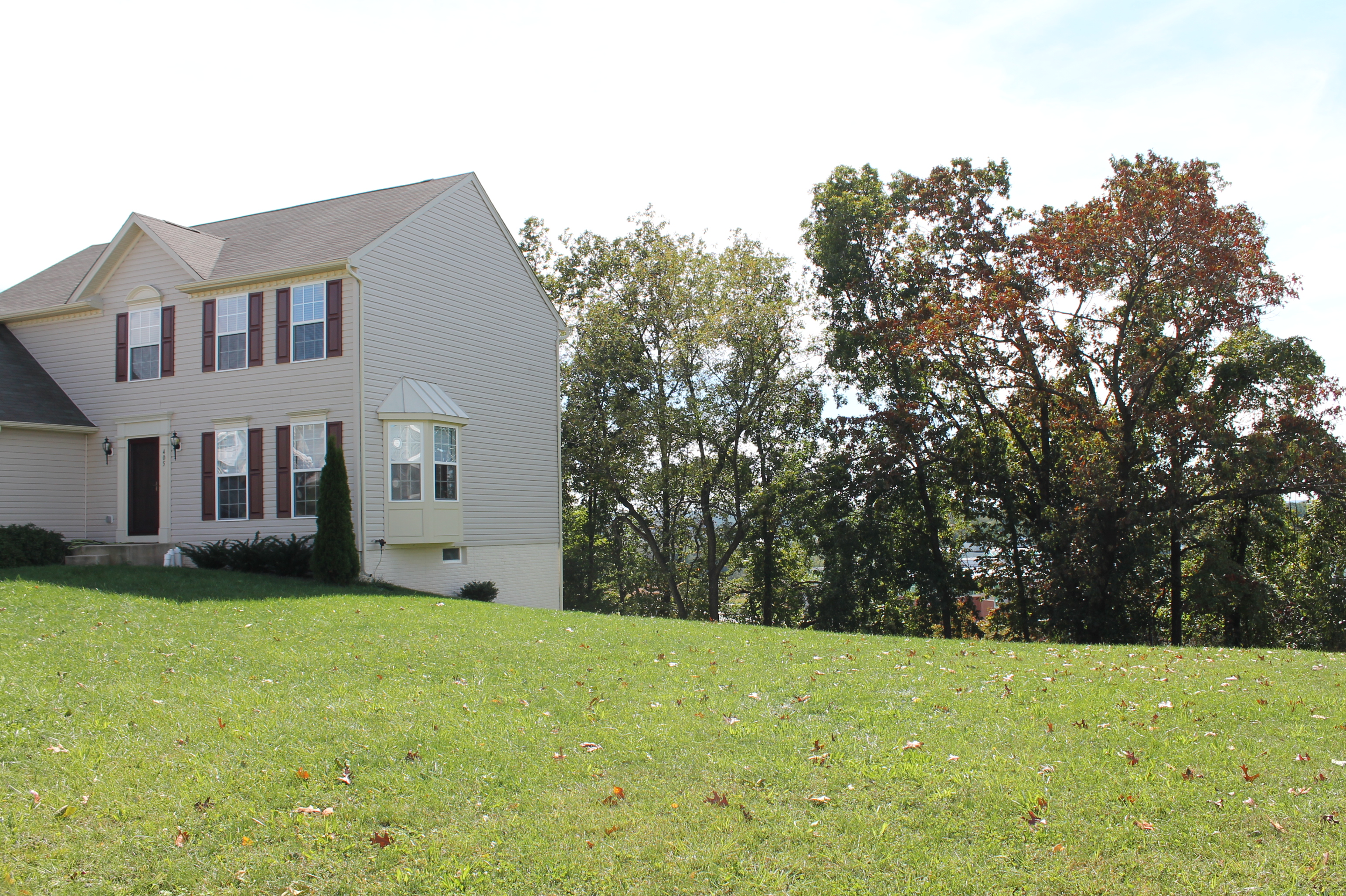
The Plummers' lawn... for now.

   This young couple from suburban Spring Grove (York County) has no connection with the infamous Harrisburg bulldozing on North Sixth Street… none other than they’re the antithesis of that sordid affair.

   Nate and Jessica Plummer are admitted novices when it comes to gardening.

   They’ve got two little girls and recently got their first house in a typical suburban subdivision.

   What restored my hope is what they’d like to do with their third-of-an-acre yard. They plan to do a whole lot more than the usual azaleas along the house, pear tree out front and grass everywhere else.

   Jessica found out that I did Garden House-Calls while searching online for someone who did designs using native plants.

   She told me that she and Nate wanted their little girls to grow up knowing nature, that they wanted the girls to see birds, butterflies, and yes, even bees, and that they wanted to be good stewards with their little corner of the Earth.

   She said they had no interest in maintaining a big, perfect green carpet of a lawn – the unwritten rule of suburbia.

   In fact, she said they’d be happy to end up with little to no grass.

   And she said they were very interested in growing their own fruits and vegetables in place of that Scotts Four-Step lawn.

   I smiled the whole time as I drew a landscape plan featuring a nearly grassless flower-and-shrub-filled front yard, a bird and butterfly garden along the left side and a four-square vegetable garden surrounded by fruit trees and fruit bushes at the back right. And, of course, a couple of compost bins.
Read More »


The Garden’s Gone

September 24th, 2012

Who would bulldoze somebody else’s vegetable garden?

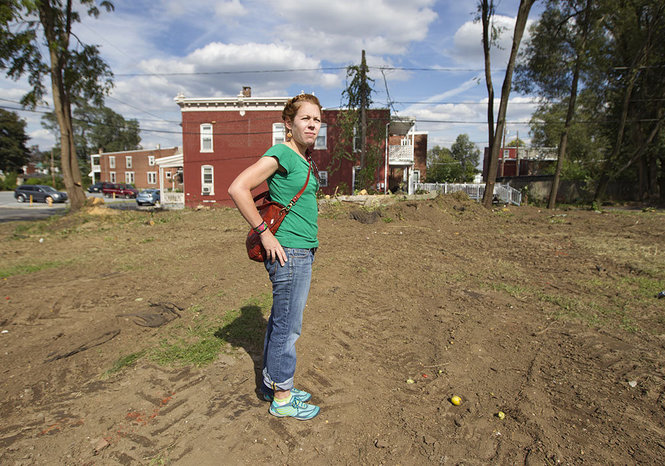
Ellen Crist stands on what used to be a community garden at North Sixth and Curtin streets in Harrisburg.

In case you haven’t heard, the city of Harrisburg would. And did.

Last week, city workers scraped clean the lot at North Sixth and Curtin streets, a site that had been filled with more than $1,000 worth of new planter boxes installed in April by the non-profit Green Urban Initiative.

It was the group’s fourth community garden in Harrisburg – one that turns vacant lots into productive land that supplies fresh produce to interested neighborhood gardeners.

This one ran into trouble with neighbors – one in particular who convinced Harrisburg City Council President Wanda Williams to order that the tract be razed.

Sylvia Rigal complained that the lot became weedy, criminals were stashing guns in the planter boxes, and apparently worst of all, GUI disrespected the neighborhood by coming in and planting without asking if the people there wanted a garden.

From watching a Pennlive.com video interview of Rigal, I get the feeling there’s also some racial and/or territorial tensions underlying this. In it, Rigal talks about “two white guys” from Elizabethtown (i.e. outsiders) showing up to install the garden.

Have a look at the video on Pennlive.com. 

Whether it was simple dislike of veggie gardens (Rigal does refer to the planters as “coffins without a lid”) or something deeper, Rigal’s complaints got the garden bulldozed.

Read More »


The Gardens Above

September 18th, 2012

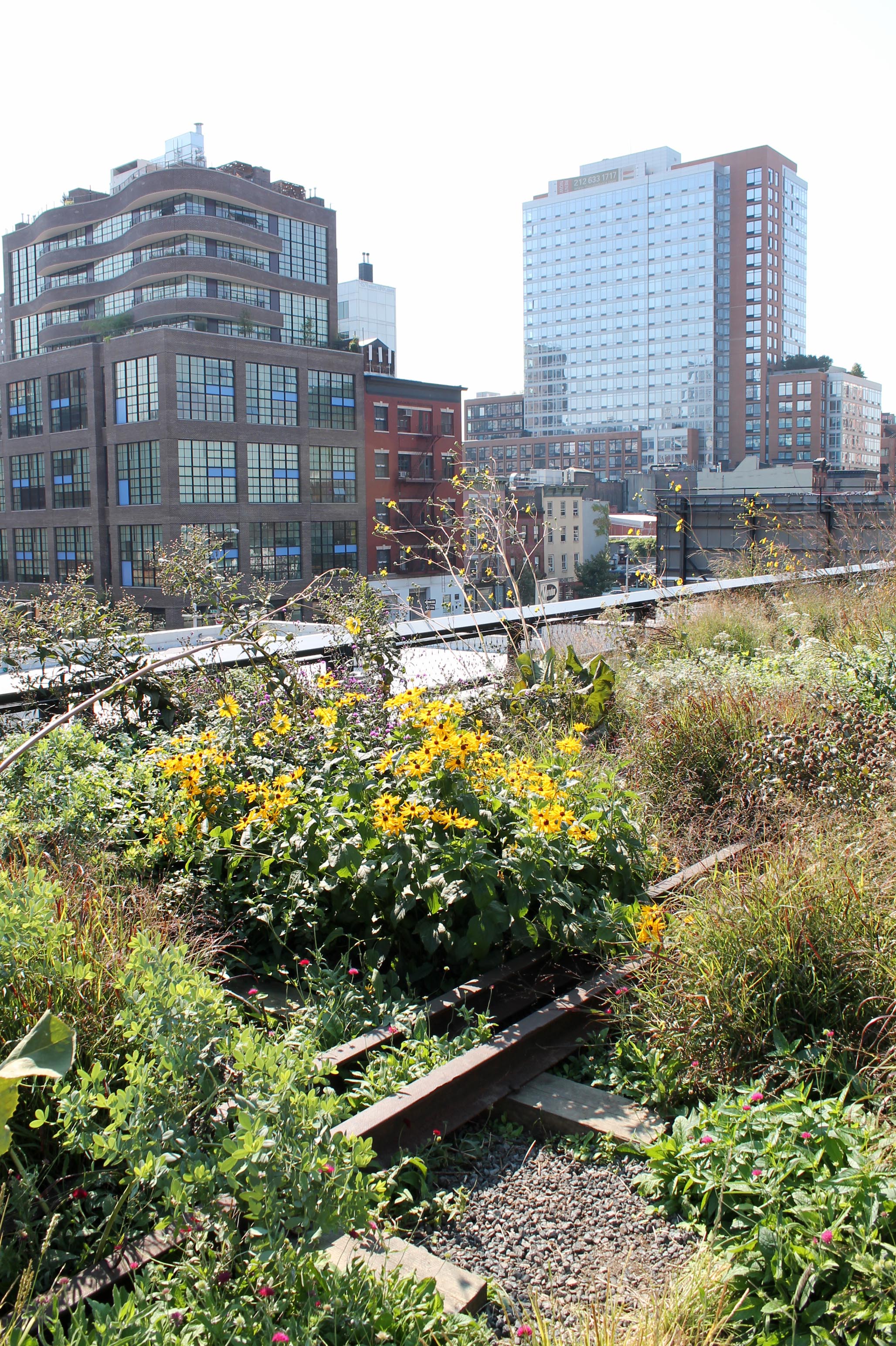
   I got a look last week at one of the rising stars (in more ways than one) of the planted world — New York’s High Line.

Wildflowers growing among railroad tracks on New York's High Line.

    The High Line is a once-abandoned, elevated Manhattan rail line that’s been turned into a park — or “aerial greenway,” as some call it.

   It’s a novel rebirth that’s getting a lot of attention lately as a model for green urban renewal. People apparently are very curious to see it.

   Our Lowee’s bus trip there, for example, sold out and had a waiting list. Manhattan locals are complaining that the site, which had 3.7 million visitors last year, is fast becoming a tourist trap (as if tons of people isn’t already the norm in Manhattan).

   I generally liked the concept. Instead of a rust and concrete eyesore hanging 30 feet over the streets, there’s now a greenscape of trees, grasses and wildflowers with plenty of seating and nice views into the New York harbor.

   One area is a beach-like setting with sumac trees shading large deck chairs and a thin sheet of water sliding across part of the walk.

   Another area is a swath of lawn, and another features a grove of birch trees. Most of the 1½-mile planted pathway is filled with assorted native grasses and perennials, such as switchgrass, amsonia, asters and ironweed.

   We take this kind of setting for granted. Gardens, parks and green spaces are all over suburbia. But for New Yorkers, this is a big deal. To be able to sit under a shade tree, lie on a lawn or watch a butterfly flit on a flower is a treat.

   Most everyone likes this slice of nature on stilts and the improvement it’s brought to the surrounding West Side.

   The main complaint is that rising rents have forced out some long-time businesses and residents (as well as the aforementioned rise in visitor traffic).

   What I’m not so sure all visitors are going to like is the naturalistic planting scheme. If you go expecting gardens in the traditional sense, you won’t find any.

Read More »


Inside George’s Garden Tour

September 11th, 2012

   You know, I’ve been to a lot of garden tours and have seen a lot of other people’s gardens, but until this past weekend, I’ve never been on the receiving end of a tour.

George yakking with tour-goers.

   My yard was one of eight stops on Saturday’s Penn-Cumberland Garden Club “September Song” tour. Despite the atrocious weather forecast, well over 100 people stopped by to ogle the yard.

   It was fun.

   It was nice spending a day yakking with so many other passionate plant people.

   But the whole thing also was pretty exhausting.

   I usually keep my yard in decent shape just because I like the whole process of snipping, staking, weeding, planting, transplanting and transplanting some more. To me, that’s play, not work. Plus I can use the exercise.

   But when you know a whole lot of people are coming to not just see your gardens but to examine them, there’s some extra pressure there. In my case, I figured people would be expecting something nice since I supposedly know what I’m doing.

   So for a couple of weeks in advance, I did some finagling I normally wouldn’t do.

   I dead-headed the roses and flowers to encourage a new round of bloom that hopefully would coincide with tour day.

   I fertilized the pots, baskets and veggies to give them a bit of second-wind energy in case they were thinking of an early fall snooze.

   And I went out and bought some things I normally don’t buy this time of year to fill in “blanks,” such as mums in bloom, mature ornamental hot peppers and a few 6-inch annuals the garden centers were still trying to get rid of.

   Actually, my wife, Sue, worked harder than I did. She was out there sweating buckets (literally) for days, cleaning up the floppy stuff, dead-heading, primping and putting down a fresh coat of mulch.

   She especially focused on “her” bed. This is a garden near the back of the yard that I generously let her have to plant as she pleases.

   Over the years, it’s become a little of this and a little of that. She was determined to not only have it looking good, but to have it looking best so I wouldn’t dare say, “Guess which garden is the only one I didn’t do?”

   I knew she was up to something when one visitor made it a point to tell me that particular garden was his favorite. (He admitted that Sue put him up to it.)

Read More »


Whipping the Yard Back Into Shape

September 4th, 2012


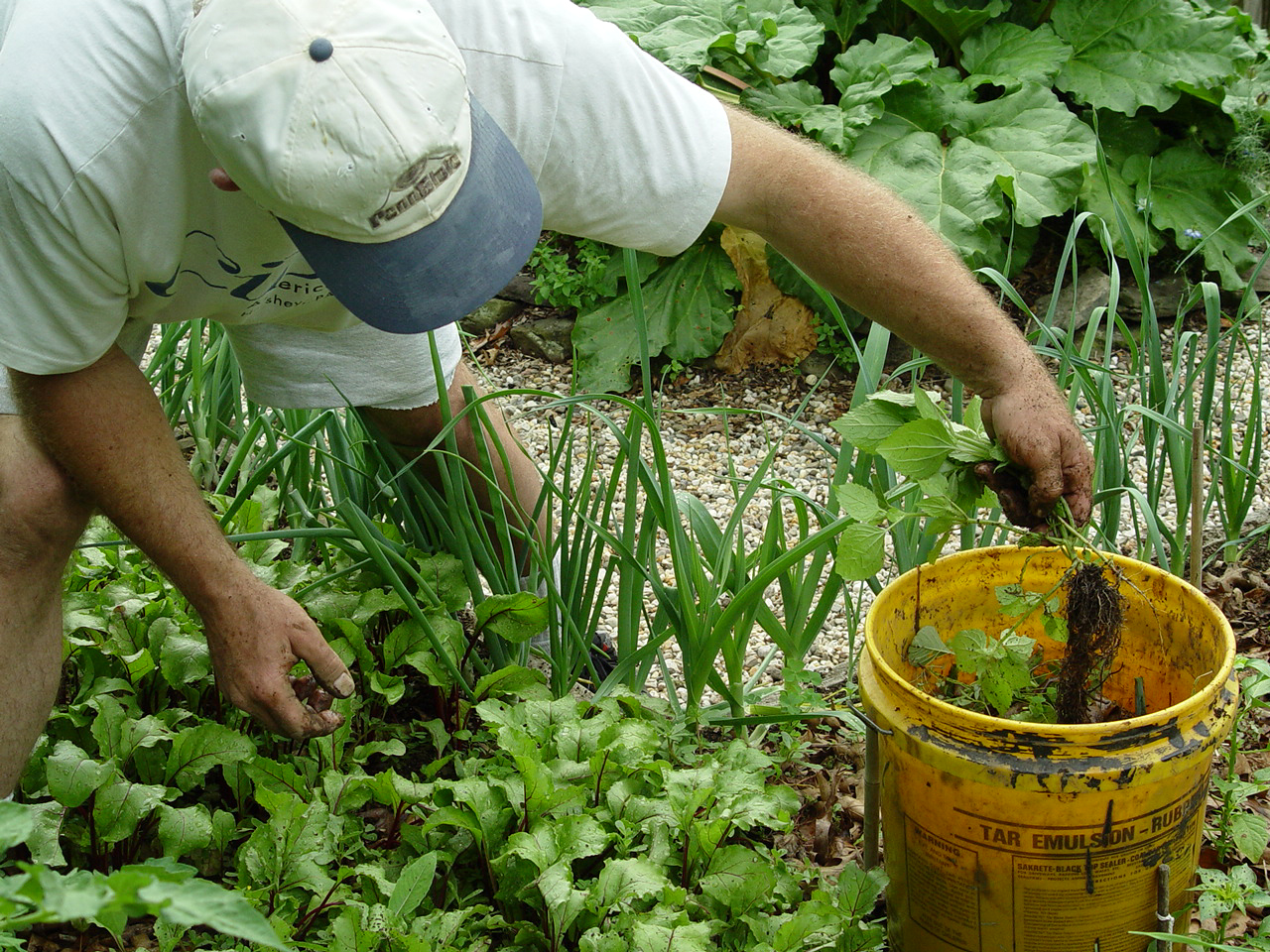
Filling my trusty weed bucket.

   Now that the worst of summer heat should be over (risky words, I know), now’s a good time to freshen up the yard for fall.

   Fall is my second favorite time in the landscape. But it takes a little bit of clipping, weeding and replanting to make that happen.

   Now’s when a lot of people look at the yard and see an overgrown, browned-out, flopping mess. That tempts them to do one of two things: either shear and brutally whack the whole place or just stay inside and not look out.

   I go with Option 3: an outdoor version of a good house-cleaning. I had some extra motivation to get that done over the weekend because our yard is on the Penn-Cumberland Garden Club’s “September Song” tour this Saturday (https://georgeweigel.net/georges-talks-and-trips).

   My wife and I spent much of Labor Day just yanking weeds that somehow managed to sprout despite the super-hot weather. It seemed like a worse weed year than usual to me. What didn’t help in my case was putting down a mulch of leaf compost from the township last fall and forgoing mulching in the spring.

   I usually try to keep about an inch of wood or bark mulch over my beds to hold down weeds and conserve moisture. That’s getting harder both time-wise and back-wise, so I’ve been trying to spread out the work between spring and fall. When I went to put down mulch last fall, the township was out of wood mulch. So I went with the leaf compost instead.

   This is great stuff… about the texture of dark, fine soil. But it works much better as an amendment dug into garden soil as opposed to a mulch on top. I think the weeds actually appreciated the topping of compost.

   Anyway, the yard looks a lot better just having the weeds cleared out and tossed in my compost pile.

Read More »


« Older Ramblings and Readlings Newer Ramblings and Readlings »

  • Home
  • Garden House-Calls
  • George's Talks & Trips
  • Disclosure

© 2026 George Weigel | Site designed and programmed by Pittsburgh Web Developer Andy Weigel using WordPress